Episode 506: Rewrite the Mother Code
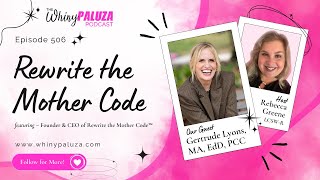
Dr. Gertrude Lyons discusses the "mother code," the cultural programming that shapes how women mother, and her VOICE framework for reclaiming intuition and rewriting limiting scripts. She shares practical exercises like daily emotion check-ins and boundary-setting strategies for women overwhelmed by family, work, and societal expectations.
Chapters
Hello everyone, this is Rebecca Green for the Winey Plousa Podcast, and I am super excited today because I get to talk to the fantastic Dr. Gertrude Lyons. Thank you so much for being here with me today.
Oh, you're so sweet, Rebecca. Thank you, and I am excited, as excited as you are to be on your podcast. I appreciate it.
So sweet. She is such a wonderful lady. Um, I was just telling her, I just watched her TED Talk, so go watch it. I mean, I just— I'm excited. This is a great topic. But let me tell you about her. Um, she is a transformational leadership coach, TEDx speaker, and author of the upcoming book Rewrite the Mother Code: From Sacrifices to Stardust. With nearly 30 years of experience supporting women, parents, and families, she teaches that we are all mothering every day through the way we nurture ourselves, our relationships, and the world around us. Her signature voice framework helps women step out of cultural expectations and redefine care, creativity, and leadership on their own terms. A sought-after speaker and host of the Rewrite the Mother Code podcast, Dr. Lyons brings deep wisdom, warmth, and grounded insight to conversation about identity, intuition, and personal transformation. So now everyone knows Why I am so excited. What a message. You know, it's like I found myself trying to like take in everything you were saying because we're so programmed.
We are programmed. Yep. We're coded. We're wired.
Okay. So start there. Start there. The mother code. Tell us what the mother code is and how you would like to rewrite it.
Absolutely. Thank you for that on-ramp. Yeah. So Um, I, I guess I need to start sending out an updated bio. The book did actually come out, uh, last May, so it's available. Um, it's available where books are sold, so you can get it. Um, yeah, so it, you know, in my work of seeing where, you know, over the years and for myself, uh, that we are the— I've— that mothering is a cultural construct, right? That how we view mothering, how we engage in it, the choices that we make really are wired in from programming from our families and from the culture around us. So we are coded by that. And you know, we're coded with a zillion things, but when it comes to making choices, um, and then a huge continuum around mothering and motherhood, I realized so many of these are restrictive. Not every code is terrible, but you know, so many are restrictive and just give us narrow perspectives of what it is and what it could be. And I would— I was grateful that I was given opportunities to make choices, you know, expand that, that view and that vision to make choices that had I not been exposed, never even would have known were possible for me. So I realized, geez, and once I was engaging in my own growth work and stuff, if I'm having trouble discerning what these are and exposing them or having them exposed until I was right in the middle of them and then didn't even realize I was in them until I look back, I realized this is something I want to study. This is something I really want to, you know, bring forth even more strongly out into the world. So mainly that we can raise our awareness, we can have more choice, and that when we do that, we can create the mothering experience that is our own, that, that we generate, that we decide what our codes are, right? And we can rewrite our mother code.
So can you give us an example of like something that we might feel stuck in with the mother code of what we think maybe we should be doing as a mother?
Yeah, yeah, no, absolutely. Well, I'll back up because one of the overarching mother codes that I really dig into in the book is, is debunking the myth that only, you know, women who have children are mothers.
Oh, yeah.
Yeah. So I make a distinction between mothering and motherhood and the fact that we all conceive, create, and give birth. And this is women, and it actually includes men. But We all conceive, create, and give birth to women, children if we choose, but also our careers, our relationships, our pets, our dreams, our ideas. You know, anything that we're putting our caring, creative, nourishing energy into, we're mothering.
Yes.
But that the most important person we need to mother is ourselves.
So that's funny. That's funny. We're not so good. I feel like I just was a natural mother, like I was just so good at mothering everyone around me. Okay, so how do we buy into the fact that we have to mother ourselves?
Yeah, well, and like you said, you know, you just, you were this natural mother. I mean, I think, you know, when we honor that, it's beautiful. We're not trying to get rid of that, right? Right. Yeah. At all.
Good point. Good point.
But a code is that that's the only part that's glorified. And we have, you know, generations, well, really thousands of years of a masculine-dominated value paradigm that leads us to believe that our needs don't matter. You know, that my purpose here on earth, that I'm, I'm my soul, main job here on Earth is to take care of others, you know, and particularly children and spouses, you know, we're gonna really like do it right. Like, that's how you do it right. So we're not even aware how deeply we're wired that we don't deserve it. It's, it's not a value. We're doing something wrong. We're not a good mother if we also include ourselves in in the picture of who we're tending to.
Yeah. I mean, I remember one of my friends telling me she was going for a really long run when I had little kids, and I was like, hmm, I can't even imagine doing—
Mm-hmm.
Yeah, cool that she's doing that.
And, you know, that, that entails— and that's why, you know, it's easy to say, and most women I say this to, and like you, it's like, oh my God, I We yearn for it. We desire it. I think intuitively we know that everybody benefits when we do that. But the steps it takes, and who knows, like for her, maybe asking her spouse or partner, you know, for support to make sure that that happens, to line up everything, all means that, you know, we've had to ask for things. We've had to value ourself enough and value, you know, that space and time to make it happen. So I'd also, you know, it, it, it takes sometimes some unwinding of layers of, of wiring to just to say, to go for a long run. Right.
Yeah. I mean, I think the turning point for me was as her kids got older, they begged her to go because she was so much better when she did. So that started to wake me up a little bit.
Mm-hmm. Exactly. They know. It's this funny thing because there's this push-pull in relationships, you know, and particularly our kids. They are— they don't mind asking for things. They're going to ask for our time night and day, right? They're going to— they are, until we wire it out of them. But, you know, for—
no, it's true.
They, they have no problem. And so then we're like, oh, oh my gosh, like, they're gonna— they're gonna— I mean, in our ultimate— in our mind, sometimes I think they are— we think they are gonna die. They're not going to like us, whatever all the things we make up in our head are going to happen if we make those choices. But the truth is, it is— they catch on, right? Like, Mom having some time on her own. Yeah, we're all happier for that. If Mom's happy, we're happy.
That is so true. You mentioned intuition, and I think that we have very deep intuition, but we don't always listen to it. So, so can you talk about like, how can we get more in touch with it and listen to it better than we're doing?
No, I'm so glad you brought that, that up because I do weave that in my book a number of times. My publisher or my editor was like, you know, I want to talk about— I talk about it a lot at the beginning and then I kind of weave it through and then I want to give it a whole nother section. And she's like, you already talked about intuition. I'm like, Kristin, we need— this whole book should be about intuition because it's this lost part of ourselves that again has been devalued, has been criticized. Like, oh, you know, can you back that up with science? Well, almost always now in the things that we have intuitive senses of can be backed up by science, but The point is our bodies are speaking to us. We have these senses and men and women have them. Men actually statistically get away with it more saying, I've got a gut feeling about this. And somehow that's okay. I was surprised, you know, to see how much more that happens for them. Believe me, I am just caveat, I'm never man bashing. You know, it's, we have systems set up that are out of balance, right? Yes.
Yes.
And our values, I, I call them masculine-feminine values, yin-yang. That's what's out of sync and out of balance. So I like to say that caveat because it, it's, it's not a gender issue except, except where it is, right?
You know, I understand.
Yes, exactly. So, um, this intuitive sense like, yeah, this just doesn't feel right. Or, you know, I've worked with so many women who they're in the hospital giving birth or post-birth and they know something's wrong. And the doctor's like, "Nope, you check out fine. Your vitals are fine. We don't see anything." And they have to like scream and fight. Serena Williams was one. Like they would not listen to her. And she, you know, had to demand and demand and demand. And she was right. You know, she would've died in childbirth.
Oh my gosh.
Post-childbirth had that not happened. You know, so, It isn't just, oh, it'd be a nice thing to have our intuition more accessible. I think we don't even know what we're missing sometimes by not. So you also asked, how do we start getting in touch with it, right? And interestingly, I find one link to it is also reacquainting ourselves with our emotions, right? And when we can sense and have an okayness with all of our emotions— fear, hurt, anger, sadness, joy— and give them equal weight, give them, you know, voice, expression, allow them in responsible ways, you know, to be present. It's like this mechanism inside of us that leads us to intuitive senses, like like, you know, I'm afraid. Oh, I have a sense that something's not right here. Right? So that's an intuitive part of ourselves. You know, things like a gut clench, butterflies in our stomach, like being aware of senses and reactions, you know, in our bodies is intuitive. Goosebumps, right? Like I've heard people call them truth bumps or God bumps. I love that. I know. But something just happened that I had a reaction to. And then I have, you know, tears might come to my eyes or joy. You know, there's senses that we have when we can really tune into ourselves. And that doesn't, that takes practice if we're not acquainted with our, and you know, we've gotten messages in our, we have a lot of wiring from our upbringings that says, You know, girls shouldn't be angry, or, you know, boys shouldn't be afraid. You know, just those kind of stereotypical, but— and then it's a little bit different in each family, what was okay, what was not. And then that, you know, unfortunately, that's another— well, fortunately, we can unwind it and we can get reacquainted. And it's a beautiful thing when you do. But, you know, it takes, it takes a little bit of work to do that. But we can add little things.
As I'm listening to you explain it, what's coming to me is slow down, because I think sometimes I'm moving so quick through my day that I don't even know how I'm feeling.
Mm-hmm.
Right. Yes.
And that's, that is a practice I'll give, you know, my clients is, You know, in between sessions, like, set your timer, or at the end of the day, take note of, you know, where you felt each of those emotions at some point. Actually, I'll tell you this here, 'cause this is something we did as a family, and, you know, wanting to bring emotional intelligence into, you know, into our atmosphere, that was a way at the dinner table we talked about our day was, each person had the chance to share where did they experience, I named 5 feelings before, fear, hurt, anger, sadness, joy. We called it the feelings game. And, you know, it was so much more interesting, number one, you know, and had just, you know, more relatable data about someone's day. I don't know if you had this, but you ask your kids, how was your day? Fine, you know, or you're not gonna get, you know, the best data necessarily with, with that question.
Well, I have 3 teenagers and they— it's really interesting. Everyone's going to relate to this. One day they'll tell me everything. The next day they're like, don't talk to me.
Right. Not by bit.
I don't—
I'm not telling you. Yeah, exactly.
So yeah, it's quite the, the ride with teenagers. So tell us what inspired the book.
Oh, sure. Well, everything that we've been talking about, it is, you know, the— has emerged through my, through my life, right? Like, through— but particularly from getting married and, and forward, because that's when I started my own growth journey. I had a— I call him my angel— a boss, an economic— he's a PhD Chicago— University of Chicago-trained PhD in economics. So not what you would necessarily expect from this kind of thinking. We're doing litigation consulting, right? Like, this is not the atmosphere for him to say, when I let him know I got engaged, oh well, the best thing you can do is get premarital counseling. And I was like, well, okay, how about congratulations? You know, right?
Well, that's surprising that that's what he said.
I know. And I'm just grateful that I didn't just dismiss it and, you know, kind of be mad at him for being, you know, just— all right. Anyway, I understood because he was actually going through a contentious divorce at the time.
Oh, okay.
So, you know, it made sense in context. And, uh, but I— this was an intuitive sense, right? Like don't dismiss this. It was like this little voice, like, hmm, what, what, how do I feel about that? It's like, oh, I, I feel like I have it made with my fiancé. What do you mean? Like, he's smart, he's handsome, he has financial stability and probably beyond, right? So I'm like, isn't— what else? What's the problem? But then I took a moment and I said, I bet there is something good about this. And then I looked at Oh, well, his parents are divorced, remarried, alcoholism. My, my parents weren't divorced yet, but there was alcoholism in the mix. And I didn't know yet, but on both sides, affairs. This came— I found out later. So I thought, wow, like, if I really want to give it this a chance, this is— this was the modeling I had, right? My, I never heard my dad say I love you, right? Like there was a lot of layers to this that I was like, hmm. And then I wrote him a letter saying, you know, I think we could, I think this might be a good idea and we could use help with our communication. And, and there were other red flags, you know, that I was willing to dismiss. Cause like I said, he was like the perfect catch. Right. So sure. Um, that just opened up a whole new world for us. So he, he came, that was a whole like other miracle, miracle number 2. Like he's like, all right, I guess, you know, I don't know, this is weird. This was in 1990. Okay. You know, this is, this was not couples coaching, was not a thing then. So anyway, I'm saying that going way back then because it started us on a trajectory of growth, development, self-actualization, and something that we stayed with. And I eventually shifted my career to it. But as I was, there were times I was living it so fully. And then after my second child, it kind of turned into all about them, right? Despite I am now director of a family pro, family coaching and couples coaching program. I'm coaching other people, like, you know, your transformative journey is the most important thing. And meanwhile, I like put it on a shelf, right? Like, we were parenting consciously. I learned that for me, that was a distinction. Like, we— it felt like we were still engaged in that, but we weren't because I stopped looking at myself, right? And that was kind of, you know, so that was a big clue. And then years later, when I my kids are now teenagers, one's in college. I'm like, oh my gosh, like, I really did lose myself. And, you know, it was just— I have stories in the book about how I was, you know, the feelings that came up, the regret, the remorse. And it was then that I said, this isn't going to go to waste. Like, I— there's a lot I can learn from this. And I want to share with other women because I had enough of experience and awareness to know like, no, this is something that we need to come together as women and work on because this is a problem. And I want it, I want it more for me, I want it for them. So that got me to do my doctorate. So I got a doctorate in education. I dove into this. And really saw that, you know, that this is the common pattern. You know, that it really is based on, you know, thousands of years of how we've been wired as mothers to, you know, the psychology of it, of the protective mechanisms that come up. You know, like you're raw, you're vulnerable. So even though it's the ripest time for transformation and development, it's also the most vulnerable and scary. And it takes a lot of support. A lot of work to like stay on that path. So I got the doctorate and then I was doing workshops and coaching on it. And then I, it's just one of those things, right? It's like time to do the book, right? Like let's get this message out there even more so and write a book. And that was its own mothering journey. Like books are a mothering, you give birth to books, right?
Oh, when you said that we were mothering in developing things, the first thing I thought of was the book.
Yes.
It's your, your mothering, you're developing and giving birth to a book. Mm-hmm. It's exactly where my head went.
Yeah.
So I'll tell you, my oldest child went to college this year.
Oh, congratulations.
Yeah. Well, thank you, I think. And so I said to one of the amazing women that I interviewed, this great coach, mm-hmm. I was like, oh my God, tell me about your adjustment when your kids went to college. And she goes, You become your, the main character of your life. You start, and I'm like, but I don't want this. So I think that along the journey, even when we have our work and we have our hobbies, I think we still lose ourselves in our kids. I think that it's really, it's really common. So how, how do all of us find ourselves? Because I know all the women listening are like, I'm lost.
I know. And it is a journey, right? But first I'll say, like, a certain amount of losing ourselves— like, this isn't a, oh my God, I got to— you know, I— this has to be like some— I mean, we're constantly giving birth to our children. Like, it is not— you, you— they come out of your body and you're not— you're so not done. It's like barely the beginning, right?
I know. Right.
And sending, you know, your child to college, that was another birthing of you.
Yes.
I have a daughter who got married. That was a huge birth, you know, of letting go. So understanding that, I think this game of mothering but parenting, but particularly I think for mothers that it is, it's this, I don't know if it's a trick of the universe, but I think it's a little, I don't know, there's something about the fact that we're gonna put our loving, all this love and care to something that where the final outcome is they leave us.
I know, it's so bizarre.
You've done it well when they can function on their own and live completely independently, right?
Yay me.
That's why I said congratulations.
I know, I keep trying to tell myself that.
Okay, but it doesn't mean that we don't have feelings about it. Right. And, and it doesn't mean that there isn't a loss. You know, sadness is the loss of something pleasurable, right? Like there's— we get great pleasure in, in tending to our children. Now, what I will say is to mitigate some of that and to help you keep a sense of yourself is by, you know, finding time for yourself, by mothering yourself. And those don't have to take time. And your relationships, if you're in relationship, you know, tending to that along the way, you know, because the traps we can fall into is, you know, the time— it's hard to parent, right? And the time it takes and the energy. So the level of extra effort you do have to put into yourself and your relationship, I— it's, it's not for the faint of heart. It's just the payoff is so— it really, you know, it really does help you at these junctures, right, to know, oh, it's okay if I have my feelings, but I still, I have me, I can get my needs met. I can get my needs met with my husband, or spouse or partner. I can get my needs met in other ways. And I think that gives us, helps us in that regard, right? And having a sense, so this is why I really encourage women to, I call it rewriting your mother code, having a sense of your vision for yourself, having a sense of, What is it? What are the values I'm working to espouse here in my parenting, you know, in my mothering, and measure myself against those. But that also, the benefit of that is, oh, I can apply that anywhere, right? It isn't, this isn't the one and only thing that I should have in my life that gives me pleasure or shows me that I'm needed or that I have value. Because that, I think, is so easy. But we have to actively engage with that and have a sense that my work isn't just something that I do to pay the bills or I kind of like it, but how is it meeting my needs and where is it? And things like that. Those are maybe some broader ways that we can consider. It is possible.
Yeah, and kudos to people making time for themselves and their spouse, because I think what I have found when I talk to women is it tends to go kids, spouse, myself.
And if you work, then you've put that ahead of yourself too.
Oh my gosh, totally. Well, and, and the pets— the pets! Oh my God. Oh my gosh, we do. We put everyone before ourselves. And I think that we were maybe programmed to do that. So it's like constant reprogramming to remember yourself.
It is. And this is where, you know, we can get granular with it, Rebecca. One, just to know that we're standing on the shoulders of like generations of, you know, from the worst of the worst of the way women haven't been valued or their needs didn't— I mean, we were at the level of animals in in cultures, right? Like, that's— we had no more value than the cattle, right? Like, it was— we had a function. So I think to have some compassion for ourselves in that regard. And then, you know, it's little things that I try and emphasize that don't have to take time. It's like, oh my gosh, I got up 10 minutes early and had a cup of coffee to myself. Then you have to So you did that, great. But the real nourishment comes when you celebrate yourself, like, and say like, yes, I did that. I showed that I mattered. I, you know, I took that moment. I woke up and laid in bed and just, you know, took some deep breaths and thought about my day, like, yay, right? So if we can do those things, we're in any little way we're doing it and putting ourselves and giving ourselves any loving attention. We're doing it, right? And we just have to acknowledge it because I'll talk to women all the time, it's like, oh, I didn't really do much for myself. Then they start talking about what things they're weak in, and I'm like, do you hear yourself? Like, you did like 20 things, you know, that— but we also— that's the part of, of, of valuing. Oh, I just thought of one other way. Is it okay if I share?
Yes, yes, please.
Because this mothering ourselves, I really want to like give as a lot of range and possibility and taking time. So we're these loving beings, we're giving this attention, you know, to our children. But something— there's this trick we can do to give it to ourselves, because sometimes we're giving it to them because we didn't get enough of it ourselves, right? So we're like, I, you know, based on some of our family dynamics, it's like we're, we're doing what our we're going to not do what our parents did. And so that can be a little reactive. So there I am, you know, tending to my child. I'll use the example of, you know, I'm holding my baby and speaking to it, and you know, the things we do with babies, like, uh, and like, oh, you know, like just tender— any tenderness we're giving our children. If you can at any point, like imagine that you're holding two babies. You're holding the baby you gave birth to, but you're holding little you. Oh, or you're hugging little you when they like fall down and they're, they're sad about something or they're hurt. Like, it, it's a practice. Like, I'm not saying that's going to come up for you immediately, or after you give it to them, like, take a moment, like, picture yours. Oh, I just gave that to myself too. But kind of put ourselves in, in the scenarios of the things we're doing. And it may sound a little bit weird, or I don't know how it sounds, but it works.
Brilliant. I wish that, I wish that I knew this when I gave birth to my first child. Where were you?
That's why we have to write books, Rebecca, and get them out there and talk to people.
Oh my God, I love I— you, you understand this. I love when a woman is like, oh, and I'm like, yes, yes, I know.
You just did that and I was like, yay.
Oh, you know, when we pass on something. So can you tell us what the voice framework is?
Yeah, so that was something I wanted to kind of put out there is like, what, you know, how do we approach this? How do we approach the motherhood and I mean, it's a longer story that I won't tell. The acronym VOICE, I was working with different elements and it ended up speaking, it ended up spelling out VOICE. And I was so excited because it's like, yes, this is about claiming our voice, right? I was like, oh, you know, one of those little miracles that happen.
Yes, one of those goosebump moments.
Totally, totally. When we step into wanting to explore ourselves, anything, and really start shifting a paradigm, claiming our voice. So voice, the V stands for vision. So we've talked about that a little bit. Like, what does it mean to have a vision for myself? And that's not goals. That's not like, I'm gonna have 3 children, or I'm gonna exercise 3 times a day. This is like, a vision is, My body is a sacred vessel. You know, this is, I tell the truth. I feel my emotions. Like these are the kinds of things that can go into my, I am a woman who blah, blah, blah, right? That like gives us a rudder to navigate rocky territory. It helps us navigate when we make choices that don't align with the culture, the family. So vision, right? Really like this solid place. And then O, O is ownership, right? So this is, well, the opposite of ownership is victim, right? So we're not victims. We do have to take responsibility, but when we own our journey, when we own our reality, our life, that we're the creators and the authors of how we want things to go down, we take ownership. And that's very powerful for us.
Love that.
I, our favorite word that we already talked about, intuition.
Yes, I love that word.
We're giving voice to our intuition. We're bringing it back online. There's a reason it was silenced over the years, 'cause it's so powerful. Like all these things that have been silenced in feminine, divine feminine, however you wanna, look at it for yourself. It's because they're powerful and they, but they, you know, and in balance with the masculine knowledge, you know, intuition and knowing, when they work together, that's when we have magic. Okay, so yeah. C, C is for culture. And I did culture because I really wanna think of us creating a culture of community versus isolation. You know, and navigating the fact that our current culture is set up very isolatory, right? Like, yes, yes. And we're not meant to do any of this, especially motherhood, alone, right? But one of the codes is you're doing it right if you can do it all yourself, right? You don't need help. It's just terrible. And then E, right? E is engage or engagement. Like, so all those things I just talked about, you You need to take steps toward them, right? You need to consider your vision, write it down, you know, um, activate your intuition. So engaging with all of these aspects, and then we're claiming our voice, claiming our voice, claiming our voice, right? Whatever it is.
I love it. Wow. Okay, well, that's a powerful framework that we all need, 100%. And you, and I think that some women— I, I watch it— some women naturally develop a community and naturally have lots of people helping them with all of their children. And some people are very isolated. So, so how can we help the isolated woman realize— how does she get a community helping her?
Nice. Well, that's a beautiful question, Rebecca, and it shows you're caring again, right? Like, here we go. I think it— well, the first thing that came up, I'll tell you, came to my mind in that regard is, is for us to notice those people. So the people who have community, right? We see them. We see the ones around us that isolate and invite them. And then, then they have choice, right? If they've been invited, they may think, you know, all sorts of things are going on in the heads of people who you know, just think they have to, or just saying something like, you know, you don't have to do this alone, or it's okay, you know, giving an affirmation like it's, it's okay to have help. But, you know, inviting people in is because no one— you can only invite, they have to make the choice, right? They have to, but we certainly can open a door and try.
We can.
Yeah. Like my boss gave me an invitation. I could have said, you're just bitter 'cause of your divorce. I don't need what you're giving me, right? Like, and just been superior about it 'cause I was afraid. You know, like we don't do those things 'cause we're afraid. And being curious, and this is another aspect, this whole paradigm of expanding mothering, motherhood, and for women, you know, are act— that explicitly choose not to, to be child— they choose to be childfree, or women who really wanted children but can't, and it's not happening for them, to stay connected, right? I, I really want to open the space, and I think this example is another one, like opening the, the space for each other and seeing each other and seeing what, what we can give each other and stop judging. Because in that old model, we're feeling so insecure and we think we're supposed to know how to do it right. And then we see someone else doing it some way and we doubt ourselves, so we judge them, right? We can't, I, guilty, right? It happens, comparison, all of it. And if we can be more compassionate with ourselves around that, that that's just our fear that, We're doing something wrong. So as we can stop putting each other down for it, then we can come to— like, think how powerful that's going to be, Rebecca, when we all come together. They can't keep us— they're trying. There are powers that be that want to keep us apart, but I don't— we will prevail, as they say.
I mean, when women come together, it's magic. I have experienced it. We are definitely magical. There's something special about female communities. Not men— men are wonderful, there's nothing—
100%. And but we need like— and you know, they can have their time together and we need our time, just us, right? Um, yes. And then, you know, then when we honor what each other has and we come together, that's its own magic, right? They're all They're all equally valued magic, right? Like, agree.
Yes. And you know, and I would think that most of the women listening are feeling, I think the biggest word that I hear is overwhelm, that they're overwhelmed. You know, we're all trying to do it all, the work, the kids, the spouse, the pets, the appointments. We're all doing it all. So can you give some advice to all of the overwhelmed women listening right now?
Yeah. Well, this is a bit of a first-off broader advice. I don't know if you ever saw the Bob Newhart— there was a Bob Newhart bit, and this woman comes and pays like a whole bunch of money, and she says, but I don't have a lot of time. He's like, 5 minutes for whatever, right? Like, I don't have a lot of time, so like, just give it to me, whatever. So she reels off like all of her, you know, issues or problems, and he he writes down on a piece of paper and hands it to her and it says, "Stop it." Right? So there is a certain sense of just understanding that it's all like we're believing a reality that is harmful for us, right? And having compassion for it. So if we can stop the thinking and the guilt, because guilt is just coming at us from the out— judgments from the outside. You know, not our own. So with the overwhelm, I think if we can, you know, start by adjusting our thinking about it, you know, and realizing like, oh my gosh, I have bought into a paradigm that is harmful to me. Like, oh, poor— you know, like, and like, oh, you know, and really like be that little kid, like tender, like, I'm sorry, sweetie, we've Look at what we did. Okay. Like, what do we think? How could we start, you know, changing that? Like, oh, oh, what if I breathe more in my day? Right? What if I stop for a moment? I have little notes around that say breathe. And I, you know, you have to change things up like this, you know, all the time. But, you know, what are little signals that I can give myself? I am a fan of the like note on the mirror. You matter. Like, Saying your name, like, good morning, Rebecca, into the mirror, you know, to yourself, like, I love you. Then you realize, like, it feels good to say nice things to myself, right? It feels good to stop for a minute and say, okay, I want to say yes to everything, but is that really serving me? You know, oh, I'm going to spend a month saying I'm only saying yes unless if it's like a full full-on yes, right? And I'm going to practice saying no. I'm going to say no to something once a day. So I know I just gave you a bunch, but I just want to, like, break it down into, like, you know, and that's why I'm always adamant about giving, you know, coaches assignments, you know, like, just, yes, taking in compliments. I mean, there's so many, like, things that we can do that eases, eases that overwhelm for us.
Well, and a mother said the other day, boundaries. She said the word boundaries. And I think that the more overwhelmed we are, the less boundaries we're setting. Right. And I love that you said practice no, because I love to say yes. You know, it's like the helper in all of us. We want to say yes, but sometimes, you know, I had to say no for tomorrow. I had to.
I did.
I didn't want to, but I can't fit it in. So, so it happens.
It does.
Okay, so what's one small step every woman can take this week today to help rewrite the mother code? What can we do?
Well, I'll go with what first came up in mind because all those things I I would, I would say the first step is, as an assignment that I'm going to say today, is to acknowledge what you're feeling like at least twice today and through the week, right? To stop for a moment or at the end of the day and think back. And fear, hurt, anger, sadness, joy, which of the— where did I feel that? And really to bring our emotions back up online, I think is the groundwork, you know, that it's gonna pay off in so many of the areas that we talked about today.
That's such good advice. So much good advice. Is there anything that I didn't ask you that you want to share today?
No, I think, I mean, I guess I would just say that all of this, and I say this, you know, at the beginning, at the beginning of my book, like, I really want this so every one of us has the opportunity to have the pleasure that's available, you know, in the hard work of mothering, right? That there is pleasure, there's gifts in our pain even, you know, that we can expand and explore. And I want us all to have that experience. But then to know that that has ripple effects and, you know, in our culture where there's a lot of division and a lot of fear and we're like, what can I do about it? That's what you can do about it, right? You can tend to yourself and start breaking some of these patterns for you. You don't know, we don't, we might not see it. We might not know the ripple effects, but it's been studied and proven, Rebecca, that it, that it happens for sure. Cause we are all connected. We didn't touch on the cosmic codes, but that's where it leads us, right? We get, a sense we start to live into that we are all connected. We are never really alone, right? And that, that tending to ourselves, mothering ourselves, is a sacred experience, not another to-do on my to-do list, right? It's actually— it's divine, beautiful, sacred work.
Oh, I love what you're doing. You know that I love this topic. I love talking to you.
Thank you, Rebecca.
Can you tell everyone where to find you? Sure.
Okay. So my website obviously, you know, shows all the things and it's a, it's my name, www.drgertrudelyonsdr.com. And Gertrude Lyons, Lyons is L-Y-O-N-S.com. I have a podcast, Rewrite the Mother Code. I have a TED Talk, Rewrite the Mother Code. It's a TEDx Talk. Love it. And, uh, you can buy my book anywhere. I'm on Instagram mainly, and I just started a Substack. Oh, it's called Rewrite the Mother Code, you know. So usually if you Google Gertrude, Dr. Gertrude Lyons, or Rewrite the Mother Code, it should take you somewhere to me.
We will find you. Well, thank you so much for your time and expertise today. We really appreciate it, all of us.
Thank you, Rebecca, and it's an honor and pleasure to be here.
This is Rebecca Green, and I want to remind everyone to spend every day laughing, learning, and loving. Thank you for tuning in to the Winey Palooza podcast. If you like what you heard, please be sure to subscribe so you never miss an episode. While you are there, leave a review. I love to hear your feedback. Thank you so much for listening. Until next time.
This show has been produced by Market Domination LLC. To discover how you can have your own show completely done for you and turn it into a real published book and become the authority in your marketplace, go to www.marketdominationllc.com/podcastoffer.










