The Whinypaluza Podcast with Rebecca Greene Episode 110 Stop Worrying About Your Anxious Child
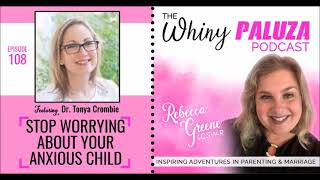
In this episode of the Whiny Palooza podcast, host Rebecca Greene (licensed clinical social worker and mother of three) interviews Dr. Tanya Crombie, a certified life‑coach with an MBA and a doctorate in industrial‑organizational psychology. The conversation centers on childhood anxiety, how to differentiate everyday stress from clinical anxiety, and why parents must first manage their own anxiety before they can help their children. Dr. Crombie shares her personal journey from corporate consulting to parenting‑focused coaching, describing how a “dump‑the‑perfect‑mom” moment with her own anxious daughter sparked her work. The duo outlines practical, low‑threshold tools—box breathing, sensory grounding, body‑awareness exercises, and self‑compassion practices—that parents can model for their kids. They introduce a three‑step framework (Recognize, Remember, Return) for handling anxious moments, discuss three perspectives on anxiety (as a normal brain response, as a universal experience, and as a by‑product of a person’s super‑power), and reveal a counter‑intuitive tip: parents should first practice the desired coping skills themselves and even create a wish‑list of behaviors they want their child to adopt, then model those behaviors. Throughout, they stress the importance of vocalizing failures and self‑care to break the “protect‑the‑child” instinct that can amplify anxiety. The episode closes with promotion of Dr. Crombie’s books (Stop Worrying About Your Anxious Child/Teenager), her website, and social media contacts.
Chapters
No need to whine, it's Whiny Palooza! Have some wine and join us on the Whiny Palooza podcast with Rebecca Green.
Welcome to the Whiny Palooza podcast. I'm your host, Rebecca Green. I'm a wife, mother of 3, and licensed clinical social worker. I also have 3 fur babies at home too. My passion has always been to help children and their families. I always dreamed of being a wife and a mother. Parents are always learning through their struggles, failures, and successes and joys. I am no stranger to this wild ride of parenting, and I know behind every great parent lies a team of supportive friends and family. I want to be part of your support system. I want you to know that you are not alone. We are in this parenting world together. Join me every week for insightful discussions with experts on parenting and marriage, as well as other parents who have found the secret to successes in parenthood. You'll learn tips and tricks to make life with your family better than ever. I hope you will follow along with me while we dive into what it takes to achieve a happy family.
This is Rebecca Green for the Whiny Palooza podcast, and I am super excited to have such a fabulous guest today. I have Dr. Tanya Crombie with me today. Thank you, Tanya, for being, here with me today.
Thank you for having me. I am thrilled to be here and speak with you today and your audience.
I, I told you before I press record, I am extra excited for this one because this is the topic that we all need, every single one of us. And this is the topic that my friends complain about the most. So we're going to help a lot of people today. And I want to tell you a little bit about Dr. Tanya Crombie. She is a certified life coach who loves helping parents manage their children's anxiety. She has an MBA and a doctorate in industrial organizational psychology. She lives just outside of New Orleans with her awesome husband, two amazing kids, including her beautifully perfect anxious child. I love how you describe your— I think it's your daughter, right?
Yeah, my daughter. Yes.
And two extremely barky dogs. We love our dogs, don't we?
I always love when people read that, and because there is no telling— this is especially the time of the year when the UPS man comes, and we may hear from them during this recording.
No problem. My dog is asleep at my feet, so hopefully we won't hear from him. So I want to jump in. I want to learn about you, and I want out what inspired you to get into this line of work.
Well, as you said, I have, um, I had my doctorate in industrial psychology, and I was, uh, for many, many years I worked in corporate settings, and I was a management consultant and that sort of thing. Um, and then I had two kids, uh, back to back. My kids are 16 months apart, so it was kind of— yeah, only parents appreciate when you tell people, like, if you would have told me that before I had kids, I would have been like, oh, that sounds so great. And then when it happens, you're like, oh my gosh, no. And I joke all the time that, like, had it— my son was like this super— he still is super chill kid. So I was convinced that I was a really good mother, and I was going around the grocery store looking at other people where their babies are like melting down. I'm like, They just don't have a good nap schedule like I do, you know. And I had no idea that it was because of him. I thought I was doing these things really well. He took naps, he slept through the night. So the, you know, the curse of anyone is to be smug. And I had that once you have a second child, 16. And I also like, oh, how hard can it be? Uh, this is so easy. I've obviously, I know what I'm doing. So she was completely different. She did not sleep, she did not eat, she did not, you know, all of the things and made me, which was good because it made me have a lot more compassion and realize, um, I— it's not me. I just had a really chill, easy baby, and now I have really probably a normal baby, but compared to him, it was like, oh, what is up with this baby?
Yeah.
So, so yeah, I was a, um, I— at that point with 2 kids, I and my husband and I both traveled all the time, so we realized this is not going to work. I was a stay-at-home mom for several years, and then I started a coaching practice Um, really my coaching practice at that point was for young people because when I had done executive coaching for many, many years, I kept having executives tell me about their regrets, about I wish I would have done this instead. I wish I would have become this instead.
Yeah.
And so I was like, I want to have a coaching practice to talk to people when they're young to make better choices, because nobody teaches you how to choose things, right?
No, I love that.
Yeah, so, so that was what I was doing for many years. And then, um, we moved for my husband's job. And when we moved, at that point, back in the olden days before we did things on Zoom, I had all of my coaching was in real life, right?
Yeah.
So when we moved, I was like, well, I guess I had to close my practice because that's what we had to do back in the day when you did everything. I had an office and everything, so I didn't— so we closed that, we moved, and the move was really— it was right at the beginning of middle school for my children. I had a 6th grader and a 7th grader, and My 6th grader had always been, like I said, she was, she was a very, what I'd call reactive baby. Like everything, if she was tired, if she was hungry, all of those things were big, you know, big issues. And then when we got to school, she was my slow to warm up child. You know, every transition, every new teacher, everything was always, it took a long time for her to settle in. And she, you know, every single year My son was the, like, went into mother's morning out, never turned back, you know, never turned around. And then this one was the peel off your leg child, you know. And she still was like that every single year, every grade was like, Mom, just stay here, just stay with me, just stay, you know. So that was how, just her temperament. She is slow to warm and the move from where she'd always been with the same friends to a new place and puberty and boys and all of the things just kind of put us on a bad, bad trajectory. So it— that was what inspired me to get into this work. It was not, um, by design, and it definitely wasn't a plan. It was, I am hitting rock bottom and I have got to figure something out, um, just for me. And once I kind of figured a few things out for me, I thought I, I kept, like you said, all of your friends start saying, wait, what did you do? What's going on? How did you do this? And you realize there's other people that probably need to hear what I figured out.
This is, this is the topic. This, especially since COVID I feel, don't you feel like since COVID it's spiked up and definitely. You know, it's not even just the children, the parents are anxious too.
Oh, absolutely.
So, so let's start. When I was reading all about you, you pointed out some really great things that helped me realize things even about myself. There is everyday stress, there is real true anxiety, and they're both very different. Can you help us know to actually identify anxiety in ourselves and our children.
Yeah, and I will say that COVID and all the things we've been going through in the last couple years actually makes it tougher because that line has gotten very blurry because we are, we are kind of stressed and then we, when we cross the line into true anxiety, I don't even know that we're always aware that it's happened. Anxiety, if you really, really want to get specific about it. It is something that is impacting your day-to-day life. It's, you know, we all have stress and we kind of are going through and we're still okay, but when we find that you aren't sleeping, you aren't eating, you aren't able to concentrate, you aren't able to do the things, you're finding yourself not doing things because— and the same for our kids, the things that maybe they could do or that you think really they should be able to do based on their age, their developmental stage, their peers, and yet they just can't. They, they can't get out of the car at baseball practice. They can't make it to school. You know, those sorts of things. You are dealing with a true, true anxiety, not just everyday stress.
Well, Anne, I'm glad that you talk about this because You had me thinking about myself, and back in 9th grade when I didn't want to go to school because I didn't know anybody and I really did not want to go and my parents were dragging me to school, that was true anxiety. Today I'm doing everything I need to do and managing my emotions, so it's more stress, like a little stressed, then I realize I need to stop identifying it as anxiety.
Right, right. But we, um, what we do when you say, when you say like managing your emotions, what we often find though is if we haven't been managing our emotions, it will eventually ratchet up to again true anxiety. So it's such a like fine line.
Okay, let's talk about this because parents don't realize this next question. Why is it important for parents to manage their own anxiety and their own feelings in order to help their children?
Well, there are many, many reasons, but I will tell you, it was— that was the secret that I discovered accidentally in my own life where, like I said, my daughter, by the time she hit 8th grade, I called that 8th grade was the dumpster fire year at the Crombie house. It was just a really, it, it was just a perfect storm of all things bad. And both my husband and I were pulling our hair out and we were at each other's throats because the stress level had just ratcheted up so high. And I was being a terrible mom to my other kid cuz all of my focus was on one. And so I was constantly feeling guilty. I mean, it was just, it was bad, terrible. And what I realized was I had to, I had to take care of me too. I was, I was in a really bad place, like I said, and I was, it was impacting everybody else, not just the child who was struggling. So I was like, I got to get a handle on this for me, um, because I'm out of control. I'm not handling this well. I'm not managing my emotions like we just said. So, um, this is, I always laugh when I admit this because it is the truth. The truth is, I had been coaching and having clients and teaching classes for many, many, many years and telling my clients, you guys should meditate, you guys should practice mindfulness, you should do these things. And I— but at the same time, it's always like, but I'm just not a meditator, I just can't do that, I'm not good at it. So I wasn't doing any of the stuff I was telling everyone else that they should do. I knew all the research And that's the other thing. Sometimes we think like, I read the book, so surely I got the benefit from it, right? I've read about meditation, so that should be good enough. I know it, but I wasn't doing it.
Yeah.
So out of pure desperation, I started meditating. And so there were two secrets. Started meditating and allowed myself to suck at it because I had this idea that like, oh, you have to be good at it. And if you're not good at it, you might as well quit. But I was just like, you know what? Sitting here thinking about what I'm going to have for lunch is probably, it's still better than what I was doing. And that was kind of what my meditation practice started as, you know?
Yes. I mean, I'm sorry, go ahead.
Yeah. So, so that was it. And that, as I started doing that kind of stuff, I started practicing self-compassion, which was letting myself be bad and not beating myself up about it. And I started practicing doing some things that were, you know, at one point I might have even thought of them as selfish, the selfish moms that take care of themselves and go to the gym. I'm not one of them. I'm the good mom who never takes care of herself. And I was terrible because I was the good mom, you know? So I started doing that stuff and I started kind of getting little by little by little. It was not a like, ooh, I meditated and suddenly I became a Zen Buddhist. It was like, You know, I lasted for 3 minutes before I started thinking about what I'm going to have for lunch. And today I lasted 4 minutes. Wow, this is awesome. That was how it worked for me. But I also started finding that as I calmed myself down little by little, my child's anxiety went down. My marriage calmed down. We weren't at each other's throats. I had time and attention to give to my other child. Everything started getting better when I focused on just getting myself better. And I started to just be aware because what was happening when I was in the spiral with her, I wasn't able to help her because I was in it. And I wasn't able to notice like, oh, this, you know, the tantrum because we're out of snacks. After school is anxiety. Instead, I was reacting to the tantrum after school because we're out of snacks. But once I started, you know, catching myself and not reacting, I could ratchet down her behavior. I could help her through the anxiety. So it was twofold. One, I had to take care of me so I could even be a helpful parent, be the parent I wanted to be. And two, my child— again, I remember this was a middle schooler, and for those of you out there who have middle schoolers, you know they don't listen to you anymore. The point of when they used to be like, oh, Mommy said this is a great idea— that those days were over for me. That was done. So she— me telling her, and I did, I was like, okay, you need to take a deep breath, you need to do this. She was like, it doesn't work, and she wouldn't listen. But when I did it myself, they don't do what we say, but sometimes they actually do do what we do, especially if they see, wow, this seems to be calming her down, this seems to work, this is what my mom does, maybe I should try it, as opposed to my mom telling me to do something. So it was both of those. That's why it's important.
That is such good advice. And I think my biggest lesson this past year, so I can't tell you, I related to everything you just said, every single thing you just said. And I thought I was such a good mom because everything was about my kids. And I realized this year that I was really neglecting myself and it wasn't making me a good mom. I thought self-care was selfish. Why do we think that?
I don't know. I remember even being judgy again. I, I admitted now to being judgy, but I was judgy about like Well, I don't go to the gym all the time, that I'm home with my kid. And like, why, why do we think that? Go to the gym, everybody out there. Do your thing, do your yoga, do your art, you know, do it.
Yes. So helping us to stay calm through the storm is the things like the self-care and the meditation. Yes.
And meditation, guys, it does not have to be that— what I built up in my mind mind was meditation is this thing. It's like you spend an hour by yourself in a quiet room with candles, and that's— yeah. And so then it was too big, and when you make it big, you won't do it. Same like with exercise. I can't, I can't run a marathon, so what's the point? I did really have that— not marathon, but, you know, I can't run a mile, so what? I'm not even going to do it. And when I said girl, run as far as you want to and you can stop. That is self-compassion. It's just say, go as meditate as 5 minutes. And if you don't even manage to sit here and focus on your breath for 5 minutes, that's okay. When I told myself that, I was able to meditate for 30, 45, you know, minutes. But when I, and the same with running, when I said, if you just run to the end of the block and stop, that is okay. I was running miles.
Wow. Yeah, it's so much manageable in small chunks, all of it. We all look at this like huge thing that we can't attain. We all do it. We're all guilty.
Yeah, with everything. It's like healthy eating, you know, exercise, all of it. It's like, well, I'm not gonna be vegan, so I'm just gonna have another cupcake, right? Thinking like, today I'm gonna have a salad.
Yes.
That's one little thing. Just start here. Yes. Yes.
So you say that there are steps that we can take to help tame our anxious feelings anywhere.
Yes.
This is going to be so helpful. Can you tell us these steps that we can take?
Okay, so there are, there are bunches of them. And I didn't mention this, I teach a college— I teach a couple of college classes and I teach these to my college students. And I think my college classes have nothing to do with any of this, but I do believe often when I'm like, okay, tell me what you got out of my class, they'll say things like, oh, that thing you taught us about rubbing our fingers. They don't remember any of the content, but it's great. It's a life skill.
Right, we all need to learn them.
Yes, so remember the things that you have with you all the time. We always have our breath and we always have our senses, our sense, our, you know, smell, touch, feeling. So those are the anchors that you can use anywhere at any time. So the breath is a great one. It is a great one to do yourself. It is a great one to teach your kids. It's a great one model for your kids, because— and explain. So this is why I got into that little battle with my child I mentioned. It was— that's true story, I'm not making that up— where I would say, you need to breathe, and she'd yell at me and say, it doesn't work. So with your kids, you do have to— I find it's helpful to explain to them that why it works, because then they buy in a little bit more. So with our breath I would— this is what I tell little kids and big kids— our brain has this amazing system to keep us safe, right? And when our brain thinks we aren't safe, it sends signals to our entire body to change the way your body is working. And it's really awesome, and it has kept us alive when we were about to be eaten by a hungry lion the brain could send a signal and it changed the way your pupils were dilated. It changed the way your stomach is digesting food. It changes the way your heart is pumping blood. It does all this stuff within seconds. You start your perspiration, you will sweat, you will do all kinds of different things because your body thinks it's in danger and it's trying to keep you safe. The tricky part is sometimes our brain gets it wrong. Sometimes our brain says, what, we have a pop quiz today? We're about, we're in real danger. You better hit it. And we start having that, that feeling.
Yeah.
So it's very cool. It's amazing. Our body has kept us safe. It's, and if, if the house catches on fire right now, it's awesome because I'm not gonna be using the part of my brain that helps me think, wow, the house is on fire. What should I do now? Maybe I should grab my purse. Maybe I should go out the back door, right? It doesn't do all that. It shuts all of that down. So we will immediately say, there's a fire, I've got 3 options. I should run away, I should hide, or I should try and fight this fire. Those are my 3 options, no other options. And that's great. But when we get it wrong, we have to have a way to say, hey, this is— I'm actually not in danger. The house is not on fire right now. And so we have this amazing feedback mechanism that goes from our lungs back to our brain. Because the other thing about the human body is one of the quickest ways that we could die is if we don't have oxygen. If we are deprived of oxygen, the human body will not exist. It's like, you know, minutes. So when we take long, slow, deep breaths— and that's super important, it's got to be long, slow, and deep— because when we're in danger, we take fast shallow breaths. So the long slow deep breaths sends a message back from our lungs right back to our brain and says, hey, it's okay, we're getting lots of oxygen, we're not gonna die right now, you're okay. So explain that to your kids, and that will— and they may roll their eyes, they may say, oh, that's so stupid, but when they're sitting there and the quiz happens, they will remember that and say, oh, I'm freaking out, maybe I should take a long, slow, deep breath. Or that cute boy just talked to me, maybe I need to take a long, slow, deep breath. Or whatever it is that's freaking them out. And there's a lot in the world that freaks us out, whether we're 13 or 53, right?
It's true, it's true.
So explain it to them, teach them the— a couple little breathing things, and do them yourself, because truly people don't know when you are doing this if you just are sitting there. I like square breathing or box breathing, which is just an inhale, 2, 3, 4, hold your breath, 2, 3, 4, exhale, 2, 3, 4, hold, 2, 3, 4. And with small children, I make the box with my finger, um, with— or even your bigger kids. And I tell them, like, if you're in class and you're sitting there, make the box with your finger on your desk. Nobody sees. I'm doing it on my table right below the camera. You don't know that I'm doing that, but I can do the box. I can also just have— think about having your exhale be longer than your inhale. So count your inhale and then make that exhale longer. So maybe inhale for 5, exhale for 7, or inhale for 4, exhale for 6, something like that. Super easy. Nobody knows you're doing it, but it can calm you down in carpool line. It can calm you down when your boss is saying, where's that report? Or your, your students are asking when those tests are going to be graded, or whatever it is. You have that. And the other thing that you always had, like I said, is your senses and reminding your kids to use their senses. And you were using your senses. Sometimes one of the things I do while I'm driving even is notice the weight of my body. Notice the— and really feel, feel the weight of my body in my chair, feel the weight of my feet on the floor. Feel the weight of my arms wherever they're resting and the weight of my hands. You can do that again in a meeting, you can do it in class, but really pay attention to every— like, try and notice every place that your body is touching something. Even notice where your feet are, feel the, the shoes or your socks. Sometimes I tell myself and others try and find every one of your toes. Just— and it takes your brain, it really takes a level of concentration to like wiggle and feel every single one of my toes. And that forces our brain to focus on something other than what we were focusing on that was making us feel so anxious. The sense of touch also This is when I said my students like this one. Um, try to rub your fingers together with such attention, very lightly, that you can actually feel the ridges on your thumb and your finger. Try and feel those ridges. And again, that just takes such a level of concentration and focus that it tends to calm us down. And we have— again, I can do this under my desk, I could do it in a meeting with my boss, I can do it anywhere, and it will take me out of whatever I'm spiraling in at that moment.
So it's hard for me— go ahead.
No, what were you saying? It's hard for you?
It's hard for me not to do every single thing you're saying.
I'm like feeling my toes and taking deep breaths, but it feels great, doesn't it? As you're doing it, you're kind of like, wow, that does calm me down. And it is if you're doing it. So that's the, the, like, that magic sauce of I've got a child who's hyperventilating about getting out of the car at carpool line, and you are talking it and you're doing it yourself as you're talking it, so it's calming you down. And that calm energy is contagious. Yes. Um, I tell, um, my students, I tell people all the time, like, we are— we have, you know, these amazing brains, but we're walking around in these animal bodies, and these animal bodies react like animals. So just like I said, like for people who know horses, you know, if one horse gets spooked, all the horses get spooked.
Ah, yes.
How we are. If one of, one of us gets spooked— if you've ever been in like a kindergarten or preschool class, one child starts going off, you're like, oh no, the whole barn is gonna go. Oh my God, it's true.
It's It's true. My daughter goes from 0 to 100 like this, and I was going with her.
Yeah.
And I was wondering why.
Contagious.
Yeah. I was like, why is this getting— my husband would be like, oh, the two of you. And I was like, oh, I was like, I have to focus on myself and calming myself. And if I stay calm during her storm, her storm ends so much quicker than when I go with her in the store.
Yes, and, and there, and it, there are a million ways that it happens. And then though, and what I will tell people is, so I teach this and I managed to do it, let's say, 10% of the time at this point. That's after years of practice. In the beginning, it was And, and I could say, oh my gosh, that's so terrible. You like, you've got a 90% failure rate, Tanya. But truly, every time you don't do it is a huge win. Huge. So not getting sucked in 10% of the time is like, wow, awesome. Great for me.
I 150% agree with you because I still find myself apologizing to her for going with her. And I will say, you know, Lily, I'm really trying and I'm continuing to work on this. And now she said to me just yesterday, I was like, you know, you need to calm down. We have a million things going on. Like, I can't get crazy right now. You have to help me. And she was like, I'm really trying. Yes, she's repeating what I'm saying to her.
But that, but that's good because she, they're, they're learning. And I mean, there's so many things they learn from us not doing it right too, because it does take pressure off of them because they're struggling. They are trying. And it's some level, I do think it's good for them to say, you know, my mom's been doing this for a lot longer than I have and she still can't do it perfectly, so it's okay. I'm not going to beat myself up about it because you don't want to feel bad that you're anxious. Anxiety feels terrible, and then feeling bad because you're anxious, it's just like a double whammy, you know.
It's so true. And I have to ask you this because I am so fascinated about this. You have— you said, what is the counterintuitive tip that you give everyone to help with anxious kids? And I was like, I can't wait to ask this question.
Well, it's what we've been talking about, believe it or not. It is the counter— the thing that we immediately want to do, and this is what I did, and what I did wrong, was my child is struggling. This struggle is no different than any other struggle they've had since they were a baby. When they were sick, I took them to the doctor, you know, I gave them the medicine, I sat with them and made the soup and the crackers. And it was all about them, and I never did anything for me, right? And so the counterintuitive— and that's how we work, that's what— that's good parenting, right? And so we, we treat this just like every, every other illness or struggle that they've ever had. They don't know their spelling words, so I'm going to sit down and we're going to fix it. But anxiety doesn't work that way. And so to tell people, it's so counterintuitive, but Work on yourself. Do the stuff yourself. Practice everything. Make a list. This is— some people I've said, because they, they struggle with all of my, like, you know, my son calls it my life coachy voodoo. They don't— he doesn't want the life coachy voodoo. I'm like, okay, here's the simple answer then. Make a list of everything you want your child to do. Make, make that wish list. I wish she would meditate. I wish she would eat better. I wish she would go outside and get fresh air. I wish she would exercise sometimes. And then do everything on that list yourself. Excellent. It's the counterintuitive thing, but it is truly what works.
It totally works. I, I see it in my own home. You're— you nailed it. I love that advice. You talk about 3 different ways to think about anxiety. Can you tell us what those 3 ways are?
Well, one of them, I'm going to, I'm sitting here like, oh, what are those 3 ways? So I think of anxiety as one, like I explained earlier when I was saying like, it's this amazing thing in our brain that was designed to keep us safe. So it actually, while it's, it is terrible. And I never take that away from people. I never want to say, you're over, you're exaggerating. It's great. No, it's terrible. When you are feeling it, it's the worst. Yes. But it is also helpful, and we always need to remember, and, and it's normal. That's a— that's probably the first one. The first step is just remind yourself, oh my gosh, this is how people are designed to work. This is how our brain is designed. So, you know, there's the statistic that as many as 30% of kids before the age of 18, it's somewhere between 15 and 30% who will actually have a diagnosed anxiety disorder, which is, yeah, shocking.
Yeah.
And, and at the same time, what I tell people, especially kids, when I talk to kids, I'm like, and 100% of people are going to experience anxiety at some point.
Yes.
100% of us, because it's the way we are designed. So it's normal. It's helpful. And then the third way that I like to look at anxiety after having done this work— this was something I've come to later as I've worked and had the young people as clients, had the adults as clients— what I find universally, so far I have yet to find an exception, is that the things that tend to make people more prone to anxiety The people who come to me who are, you know, I've always had this, I've always felt this way, there has always been some amazing superpower about them that seems to also make them prone to anxiety. So it isn't like there's something wrong with you, you're broken. It's always been like you have this amazing gift, but when that amazing gift goes too far or we're using it in the wrong way, it, it feels like anxiety. And I can give you so many examples from real life. I had one client, still have one of my favorite clients of all time, police officer, awesome, like a detective. He has been, had many, many major breakthroughs in cases that people couldn't break because he had this, like, his superpower is he feels and reads the room and understands all this subtlety. He can just pick up on all stuff. He picks up, and people love this guy because he, when you talk to him, you're like the only person in the world. He is so focused on you and you get all of his attention. And so it's an amazing superpower. And obviously when you're picking up on all that stuff, you're going to pick up on things that make you anxious. You're going to pick up on other people's anxiety. You're going to notice other people's bad intentions. When you feel like somebody doesn't like you, You're probably right. You know, and all of those kinds of things make you anxious, right? Yes.
No, I'm just, I'm soaking this in because no one's ever explained it to me that way. And you're teaching me about myself. So I really, I did not expect to learn about myself today. But added bonus.
True. Yes. And then now you're sitting here thinking, what is my superpower? What is this amazing thing that I've always, this gift, that also makes me more prone to anxiety. I would say so with my child. My child has a ton of— she has been socially aware since she was a teeny tiny little thing and could pick up on things. And so as an adolescent, when adolescence is that time of the whole world revolves around me, everything is about me, surely this means something about me, right? That's what we all, all are like when we're in that you know, preteen, teenage years. So if she would walk to the lunch table and her best friend wasn't talking and seemed angry, it was about her. My best friend is mad at me. I've done something wrong. What have I done wrong? This means the end of the world, because if your best friend is mad at you, well, what the— the world is gonna end. And it would be this spiral of anxiety because she was picking up on someone else's feelings and then making it about herself. And we all do that. We still do that as grown-ups, but we get a little bit better at thinking maybe this isn't about me as we get older. So her superpower of noticing other people's feelings, I think, is going to be great in life. And she, she does. She'll say things. She picks up— one time she said to me, um, why are you mad at one of our family members? And I— we had just had a meal with them, and I was like I'm being pleasant. I'm being fine. Everything is good. And we got in the car and she said, why are you mad at them? And I was like, oh my God, how did you know I was mad? I thought I was covering it up.
Oh my gosh. I mean, I will tell you, it has made me— it's really good for social work to be a social worker. I mean, those are great powers to have as a social worker. And I think that the greatest advice that I have ever learned and and like you said, I still work on this, is not to take things personally. Because usually someone's emotions have nothing to do with me.
Right. Yeah. Right.
But that, that takes, um, over 45 years to learn because I'm still learning it.
Yeah. It is such a— but when you start noticing the story you're telling yourself, your whole life can change. It is. That's another life skill that I'm like, yes, why don't they teach us that in elementary school.
Oh my gosh, I would so much rather my kids be having like life skill classes than— I'm like, I'm so glad that you have global studies, learn about the universe and the world, but like, how about a life skills class?
Yes, how about a what to do when you, when you fail? Yes, that's it. It is great school, great skills to have.
Yes, so true. You have 3 steps that you talk about And I would love to learn about them. It's recognize, remember, and return. Can you tell us about those steps?
Okay, so recognize is just noticing what is happening because so much of our life we are on autopilot. And we actually, by the time we get to be our age, We have years of practice of stuffing and ignoring and pushing through. That's what we learned when we were in elementary school and we were having a bad day and we cried and the teacher said, you know, pull it together, you got a test to take. So we learned that skill early on, like, okay, so what I'm supposed to do when I feel bad feelings is to ignore them, to stuff them, or maybe to dump them on somebody else. And to blame somebody else for the way I'm feeling. That's a— that's another one that we all do. We learned it a long time ago. And so what we have to kind of unlearn that and now start learning to, um, just notice what the heck is going on with us. Notice when we are feeling— and, and a lot of times what it— I, I use this example with my class I said, sometimes for me it is, wow, I just ate a whole bag of chocolate-covered almonds. What's going on there? What is happening here? Why am I standing in the pantry? Because I'm in the pantry looking around and I'm not even hungry. What is going on here, right? So it's instead of just continuing on autopilot, recognize when you're feeling something uncomfortable, because we don't. And then kind of— and you don't even have to say, oh, what is this feeling? Let me come up with a name with it. If you just get it to like say, I'm feeling something that doesn't feel good, that in and of itself is a huge win. So recognize it and then remind yourself again that This is how we're designed to work. This is how our brain is. This is all normal. Because we do tend to, um, you know, double whammy ourselves. We feel bad, and then we feel bad that we're feeling bad, and we tell ourselves something's wrong with us, we shouldn't feel this way, and, you know, and make it worse. Instead, just say, oh, you know, I just ate another bag of chocolate-covered almonds. I'm feeling I'm feeling, I'm mad. I'm feeling afraid. A lot of time with me, it's fear that I'm just not willing to acknowledge. And with all of us who have children who are struggling, we have a ton of fear. We, and we have, and it's based on actual experience that, you know, what if it's not okay? What if she's melting down at school? What if she isn't able to get through this tryout? What if she isn't able to take the test? What if What if she has a panic attack during chemistry class? You know, all of those things are— and a lot of times it's in the background. I'm not attending to it, but I'm feeling it in my body. And then I'm trying to self-medicate with the chocolate-covered almonds so I don't really have to attend to it. And instead, I'm going to recognize I'm feeling— I am terrified that something's going to go wrong. This is normal. This is a way my body is designed to work. It's a normal parenting feeling, obviously, because there's nothing more personal and more painful and more— we're more passionate about them kids, our own kids. And then just return back to that stuff, the stuff we talked about. Do the— start with the simple, the breathing, the senses, the— and then do the self, whatever self-compassion feels like. What would feel really kind to myself right in this moment? And a lot of times, you know, it isn't the chocolate-covered almonds or the cupcakes. What would feel more kind would be to go outside and take a walk, or just to pet my cat, or to read a book, or, you know, something else to just kind of help me come back to a place of calm.
Oh, that's all so good. We all need to do that every day, all day, a bunch of times.
Yeah. Yes, we do. We do.
Well, and I love that you talk about that. We feel anxious or we feel a bad feeling, and then we feel bad that we're having that feeling. Like, where is the— we'd be compassionate to our friend and right You know, I'm like, why, why can't I give myself that same compassion? I deserve that.
Absolutely. And again, the other amazing thing that we can do, it is such a gift to model that and actually be super transparent and say the words out loud in front of our kids, to say things like, you know what, I just screwed up. I had the worst meeting today and I really want to— I'm kind of feeling like I should be mad at myself and I've screwed up, but instead I'm gonna— I'm really talking myself through this and I'm reminding myself that I did the best I could and that, you know, I'm gonna learn some lessons. There are some things I could do better next time, but I did the best I could with this and I'm not going to beat myself up about it anymore. In fact, I'm gonna do something. I'm gonna go take a walk because that would make me feel better right now. So all saying all of that stuff out loud to your kids again is like, oh, so when I have a bad thing, that's what you're supposed to do. We don't model this for our kids. We don't model— we don't talk about our failures, so they don't know what it's like to— that failing is normal and how to get up from a failure. They need to, you know, and in fact, some of our parenting, myself included, you know, we have Sometimes we get so— there's so much fear in our parenting that we're trying to protect our kids and protect them from failure and protect them from things. And it's a, again, it's a double whammy. One, they aren't experiencing the failures when they're young, like they need to. And two, they, they are getting a message from us that I don't believe in you. I don't think you can handle this. I don't think, you know, I'm so worried about you that I'm going to take over. And that's not the message we wanted. We don't mean that. That's not what we're trying to say, but we can give them that message. And then they internalize that message. So, well, my mom didn't think I could handle not making the swim team. So certainly I can't handle not getting into college, you know, or whatever it is.
Such good points. We do, we try to protect them and it's not good for them.
Not at all.
And we don't realize that. So I'm glad you're pointing that out. And I also have realized even with my husband that I I talk so many things through in my head without him and without the kids. And you know, whether it's something I'm struggling with or something that I did well with, and I'm not talking, speaking about it out loud. So they're not hearing about my successes or my struggles because it's all in my head. So I am trying to be better at telling all of them more stuff because they'll all learn from it. I mean, even my husband is like, if you tell me what you're thinking and how you're managing it and handling it, you're going to teach me things and how I can do it better. I was like, oh yeah, I don't say a lot of that stuff out loud.
Yeah, I mean, I don't either. I don't either. I had just recently, my daughter was sitting at the dining room table with me while I'm preparing a lecture on what's the story you're telling yourself and how to— and she is saying, I'm kind of feeling anxious. And I'm like, well, What's going on? She's like, I don't know. And I'm like, okay, I've got a lecture in front of me on this right here. Why am I not talking to her about what I'm teaching someone else?
Oh my gosh, what do we call it? The shoemaker's daughter, doesn't it?
Totally.
So tell, tell everyone about your fabulous book, Stop Worrying About Your Anxious Child.
Yes, Stop Worrying About Your Anxious Child, and actually Stop Worrying About Your Anxious Teenager is out. Um, it is recently completed, so they are available on Amazon. You can find them pretty much, you know, anywhere where you'd order books. Um, and yeah, I would, I, I would love for people to pick them up and, and let me know what they think.
I mean, this is the best topic at the best time, so I just want to tell you that. Can you tell everyone where they can find you?
So my website is guidanceforthefuture.com, and if you want to reach out to me directly, you can reach me at tanya@guidanceforthefuture.com. So yeah, I would love— like I said, I'd love to hear from people who've read the book or who have questions. Um, go check it out.
So anything else that you want to share that I didn't think to ask you?
Um, you can also follow me on Facebook at Guidance for the Future. There's a Guidance for the Future on Facebook as well. So yeah, connect with me on Facebook or, or anywhere.
Well, I'm gonna go find you everywhere. I think you're fabulous. I could talk to you for another hour, but I'm going to let you go on with your day.
Well, I loved it, and I'm so happy we had this conversation. And we have so much, uh, you know, in common with our parenting and our experiences and even our backgrounds. So it was a wonderful conversation. I loved it.
Well, thank you so much. I really appreciate it. And this is Rebecca Green reminding everyone to spend every day laughing, learning, and loving.
Thank you for tuning in to the Whiny Palooza podcast. If you like what you heard, please be sure to subscribe so you never miss an episode. While you are there, leave a review. I love to hear your feedback. Thank you so much for listening. Until next time.
This show has been produced by Market Domination LLC. To discover how you can have your own show completely done for you and turn it into a real published book and become the authority in your marketplace, go to www.marketdominationllc.com/podcastoffer.










