The Whinypaluza Podcast with Rebecca Greene Episode 094 Self-Led Discipline&Leadership for Children
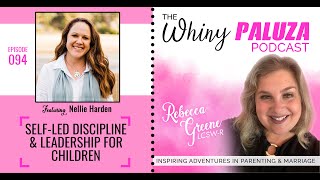
In this episode of the Whiny Palooza podcast, host Rebecca Greene interviews family life and leadership coach Nellie Harden. Nellie shares how personal crises—a husband’s life‑threatening surgery and a daughter’s near‑drowning—propelled her into coaching families to build self‑led discipline and leadership in children. She explains the 6,570‑Day Family Project, which frames the first 18 years of a child’s life (6,570 days) as a design runway that parents architect. The duo discusses the "Happy Hardens" identity, a deliberate choice to seek joy despite challenges. A core part of the conversation is the Discipline Spectrum, a model that moves families from parent‑led discipline (directive + consequence) toward self‑led discipline where children set goals, bridge actions, and celebrate achievements. Practical conversational techniques—asking why, embracing silence, listening, and respecting children as humans—are offered as tools for this shift. Nellie then details her homeschooling journey, describing how necessity, curiosity, and cost led her family to a seven‑year homeschooling experience, and she gives advice to parents hesitant to try it. Time‑management strategies, such as scheduled family walks and protected free‑time blocks, illustrate how the family creates space for connection. Finally, Nellie outlines her suite of coaching products—the Family Architects Club, Family Leadership Academy, Family Success Vault, and VIP day—directing listeners to her website (nelliehardin.com). The episode closes with a reminder to laugh, learn, and love each day.
Chapters
No need to whine, it's Whiny Palooza! Have some wine and join us on the Whiny Palooza podcast with Rebecca Green.
Welcome to the Whiny Palooza podcast. I'm your host, Rebecca Green. I'm a wife, mother of 3, and licensed clinical social worker. I also have 3 fur babies at home too. My passion has always been to help children and their families. I always dreamed of being a wife and a mother. Parents are always learning through their struggles, failures, and successes and joys. I am no stranger to this wild ride of parenting, and I know behind every great parent lies a team of supportive friends and family. I want to be part of your support system. I want you to know that you are not alone. We are in this parenting world together. Join me every week for insightful discussions with experts on parenting and marriage, as well as other parents who have found the secret to successes in parenthood. You'll learn tips and tricks to make life with your family better than ever. I hope you will follow along with me while we dive into what it takes to achieve a happy family.
Hello, this is Rebecca Green for the Whiny Palooza podcast, and I am so excited to have Nellie Harden with me here today. Thank you, Nellie, for being here.
Thank you so much for having me. I love it.
Um, I'm going to tell you a little bit about Nellie. She is a family life and leadership coach. She was called to help families by stepping into their story, uncovering their wants, needs, and developing a path forward to empower them to be the author of the adventure that they have always wanted during this precious window. She does this by building a strong foundation of self-led discipline and leadership for children that they can then take and launch their lives and unique successes from. Well, that sounds wonderful to me. Thank you. Let's help people do this with their kids. And, um, there's so— I have so many questions for you, but I'd like to start with What inspired you to become a Family Life and Leadership Coach?
That is a loaded question. You know, well, I am a mom, of course, you know, and I have 4 kids who are now, as of yesterday, between the age of— we celebrate— there we go. We celebrate 4 birthdays in October in this family. And so we just had that and it Yesterday, and I survived. Oh my gosh, I was like planked out on the couch afterwards, but I was like, I'm caked out, I'm ice creamed out, I am, uh, birthdayed out, like everything. I'm one of those birthdays too, so it was just kind of funny. But anyway, oh my gosh, yesterday, yes, I have 4 kids between 12 and 16.
Oh my gosh.
So it's, you know, there's a lot in there. The middle 2 are twins, and, um So it's, it's just kind of fun. And going into Life and Leadership training was really just born out of my own experiences, like anything, right? And so I— we had a massive transformational event happen to us in, in 2010. And without getting in too much detail, my husband was sick and needed surgery. We didn't know if he was going to make it or not, you know, young 30s. And he was, uh, he had cardiac issues and we didn't know if he was going to make it. And so that's very eye-opening to sit in a waiting room room with 4 kids 4 and under, not knowing if my husband's gonna make it or not. And, um, and then 5 weeks after that— which, spoiler alert, he made it— but 5 weeks after that, um, one of my twins had a massive drowning accident, and, um, and we almost lost her. And so it was just such— those 5 weeks right there were such a pivot for us. And, um, I started my own business and helping people a couple of years later, and I was just helping families. My heart has just always been with families because I do believe that if you can change and better the family, you can change the world. And because you ask any parent anything, any adult anything, and it's like, well, when I was a kid, dot, dot, dot, right? So if we can get in there and if we can like maneuver and massage that childhood experience, to set them up for success, we can change the world. And so, um, I was just, I was just so, uh, touched by that for my own life, uh, for my kids. And, you know, I always have that thought in my head, like, how can I avoid my kid sitting on a, you know, on a therapist couch later going, my mom, blah, blah, blah, right? And, you know, it might happen anyway, probably will. But I was just like, you know what, I'm gonna do whatever I can to, to like avoid that. But also build them. I'm not going to be like the, you know, I give you everything, because that'll end you up on a therapist couch just as much, right? And so, um, so yeah, I had a very big self-development process that went on. And leadership is just, uh, something that has always been curious to me and always been very intriguing to me, because you can be a leader of a family, you can be a leader of yourself, you can be a leader of the world, you could be the leader of whatever. But it always requires that inner compass inside of you. So developing that in our kids change the world. So that's why I do what I do.
Well, I love what you do and I love your stories. And before I move on, your husband and your daughter are okay, correct?
Yes, everyone is good and okay. And yeah, my husband, uh, it would turned out to be like a 4-year endeavor that, uh, we went through. It was this, it was this It was a lot. But, and then my daughter, we had to watch her for like a year for neurological signs. But I mean, both of them just, you know, miracles and really just dipping into wellness. And that was my first point of leadership in helping families was to be a leader of your own wellness journey.
So, oh, well, I am so glad that they are OK and I am so sorry that you went through two hugely traumatic events. It definitely has helped other families because now you're helping others. So there's the silver lining, right?
Yes, there's always a silver lining.
Yes. So your podcast is called, well, your project is called the 65, do you say 65/70? Is that what you should say? The 65/70 Family Project. So I mean, I took a deep dive to find out what on earth that meant. Because I was so, I'm so fascinated. So tell everyone what that means and how you came up with that title.
Yeah. So that 6570, 6,570, that is how many days are in 18 years. And in doing leadership and life coaching for families, it takes intention, which means waking up every day and saying, okay, how can I, how can I serve today? How can I move forward today? How can we build today, right? And so, um, that 6,570 days, that's our runway toward adulthood for our kids. And so that's the project, right? We as parents, we are literally architects of the beginning of someone else's life. And so we are planning and we are designing and we are overseeing and we are building the beginning of someone else's life that everything else they do is going to be based from. So if we're the architects and we're designing this, then our greatest project is this 6,570 days. So the 6570 Family Project.
Brilliant. I mean, so brilliant. I was like, when I first saw it, I was like, what is she talking about? Is that an address? I'm like, where did she get 6570 from? And I was like, so, it's so intriguing though that people are going to find you and be like, I have to find out what that means. I love it.
I love it.
So you call yourself, and I love this so much, you call yourself the Happy Hardens.
Yeah. Yeah.
Okay. So tell everyone why that is, because this is great.
You know, we just set the— so that's our last name and Happy Hardens. It was actually a name given to us a while ago because We smile a lot. We do. And we go around and we're, you know, we're just a happy bunch. But I always want to tell people, it's not because we're happy all the time or that we don't see what's happening in the world. It goes back to that silver lining, right? Like, do you want— do, do we want to go through life just down and frustrated and angry, or are we choosing to find the joy? And so that's why really that we are the Happy Hardens and we've, you know, we've had that hashtag for, gosh, decade plus now. And, um, you know, people see us in town, everything. They're like, oh, the Happy Hardens. I've had letters addressed to me, you know, to the Happy Hardens. And it's so funny and I love it, but it's because we choose to see that joy with intentionality. Not because we're just, you know, living with unicorns and rainbows.
So 100%. I literally just posted that we're training our brain to find what we want to find.
Yes.
Right. And I want to find joy. That's what I want to find.
Right.
So give us a tip. You talk about moving from parent-led discipline to self-led leadership with our kids, and that is like one of your huge platforms. Can you teach us a little bit how can we move in that direction?
Absolutely. So it really is this spectrum of, um, of discipline that happens there. And so, you know, side note, I was an, uh, well, I, I, I was a science major, so biology, psychology, I work in spectrums, right? And so, um, anyway, so when I developed the discipline Spectrum, it really was just so natural to understand that when our kids are born, we're really in this parent-led discipline zone, right? Because that is when— and by the way, the discipline that we are talking about here, we're not talking about consequences, right? We're taught where, you know, you do something and you go to your room or what have you, right? Those are consequences. What we're talking about is developing discipline. And discipline, Jim Rohn's definition of it is my favorite, and that is the bridge between goal and accomplishment, right? And so when our kids are small, small, right, we are going— we are giving them a directive, right? Why don't you go clean the room, clean your playroom, or whatever? And then you go and do it with them, and then you celebrate with them. So you are giving the goal, you are walking through the bridge of action, and you are celebrating that accomplishment with them. Well, when— by the time they leave home, like, we don't want to be the ones that have to go through that, like, give them the goal, walk through the bridge of action, and celebrate with them every time. I will celebrate, you know, until the cows come home, but you need to be able to recognize an issue, devise a plan, and walk through that bridge of action. And that's what we want, you know, that's what adults need to be able to do. And the student, if they could leave home with that, that would be amazing. Right. Instead of, instead of this, uh, you know, the 20s and slash 30s slash 40s, you know, or, or beyond being this like, uh, minefield that you walk through and you're like, oh, that didn't work. Oh, that didn't work. Right. And because you're trying to figure it out. And so, um, yeah, setting our kids up for success in that way. So yeah, we go from parent, uh, led discipline to parent discipline, which is this consequence zone that I'm talking about. Um, so self-discipline and parent discipline are this dance that we play for many years and take up the bulk of our parenting, uh, parenthood, childhood, um, uh, groove that we do, right? And that is, uh, you ask them to do something and they either do it, which is great, they have the discipline to do it, and then they have an accomplishment, or you tell them to do something and they don't do it and then there's a consequence, right? Because And not because, uh, you know, consequences shouldn't come out of frustration. They all— they sometimes can accompany frustration, but they shouldn't come out of frustration, right? Um, but this whole, uh, parent discipline with consequences versus self-discipline, where you are setting yourself up. And I remember for me, I was a foodie when— I still am a foodie, I mean, let's be honest— but I was a big foodie when I was a kid too. And I remember this one time, I think it was like circa 5th grade, so ancient times, right? And we are, uh, sitting there and my mom's like, you can have a Little Debbie tonight. Little Debbie and I were like besties. And so, um, I, I was like, okay. And then I was like, I'm gonna have it at 8 o'clock. And she's like, all right. So we're sitting there, we're watching a show. That was like our— how our family bonded for sure. We're watching a show and it was like 7:58, it was like 7:59. My mom's like watching me and it was stroke of 8 o'clock. I got up and I got that Little Debbie and she was like, wow, you really like held out. And I was like, I said it was going to be 8 o'clock and I was going to, you know, it was going to be 8 o'clock. And so I, that memory always like pops into my head of like first inklings of that self-led discipline that I was having. And it involves Little Debbie.
Hey, it's a good memory. I'm impressed that you waited until 8 o'clock.
But, but trying to help our kids understand when you give that— so to your point, um, how parents can do this is when you give that consequence, have a discussion about it, right? It's not just, oh, they messed up again, here's the consequence, and keep going back and forth and back and forth in this power struggle, right? There needs to be a conversation that happens there. Ask the question, so why did you make this choice? You know, why are you think— what story are you telling yourself right now that made you make this decision, right? Good question. And just wait. You need to just be quiet and wait. Be okay with the silence, and they will eventually answer. One time, my— one of my daughters was not speaking. She was just being that stubborn. She probably gets that from me. She's being so stubborn. We were sitting on a driveway. We were staying at someone's house. And I was like, you know what? I am totally willing to sit right here. The moon was beautiful. And we're going to sit right here on this driveway until we talk through this. Whenever you're ready, I'm ready to hear it. You know, I was like, and just be vulnerable and open enough that if they do have some constructive or maybe not so constructive because they're speaking in the heat of the moment criticism of you, just listen and take it in and digest it and then repeat back to them what you're hearing, right? Because we all have these perspectives that we're seeing and feeling and going through life with. So when someone tells you something, they, they are probably saying it a different way than you're hearing it. So that's why these conversations are so vital to go back and forth with. Well, what I'm hearing is— well, that's not exactly what I'm saying. Okay, well, can you give me more clarification on that? And you guys, it doesn't matter if they're 5 years old, you can talk to them like this, right?
Yes.
You don't have to baby the babies. You can speak to them this way and give them honor and respect of being a human on their way to adulthood. And when we can do that, ah, doors open. They just, they, they fling open for us. And so yes, conversations, asking questions, waiting, listening, and responding, that's always going to be the way to go. And when you're going through the spectrum Such good advice.
I, I, we start, start to see a shift where we don't have to tell them to even do things. We start to see them doing it on their own. So that's when we know, right? That's when we know they're starting to get it.
That's a praise day right there.
I, I wish I could remember what my son did the other day. And I was, I looked at my husband and I was like, did you just see that? Like he's growing up, you know?
And we just, so, um, my twins turned 14 and my youngest turned 12. Like I said, on the last couple days. And, um, when they have birthdays too, like, that's a good conversation to have with them. Like, wow, you know, you are 14 now. Like, that is a big deal, you know.
Old.
Yes. And, and just really giving them that respect and honor of how many years they've been here. Like, what have you really learned in these last, you know, 12 years, uh, for their younger sister and everything? So what have you learned? You know, what are you going to apply that to this year? And just being curious about that and asking them questions, which makes them think. And critical thinking is so vital to our kids today. And it's kind of going down the tubes. And it's up to us as parents to really, you know, raise up that pedestal of critical thinking by asking them questions. So.
I needed to write down all of those questions. Let's hope I remember them.
Good thing it's recorded.
Oh yes, hello, I can go listen to it. It's been a long day. That's all I'm saying. Okay, let's move to homeschooling because I'm always— I'm fascinated by homeschooling. I'm impressed with you. I'm fascinated. Tell us how— you have no idea— tell us how you decided to move to this and how you're able to be successful with it.
Ah, okay. So, you know, I will first start off with saying my husband and I are both like public school kids through and through. Never even— I don't even know if I ever heard of homeschooling except for like watching Little House on the Prairie, you know. And, and they got out of homeschooling pretty soon and went over to the one-room school, right? A schoolhouse. Um, so for us, it really was born out of this necessity that we had been trying many different schooling types for our kids. I just generally work with our kids, and I always had. And I— to what we were just saying, I speak to them, right? And I have conversations with them even when they were small. And we did sign language because that was— I'm terrible at foreign languages, so sign language was my foreign language in college, thank the Lord. And so anyway, I did sign language with them, and they were able to understand that. My point is, by the time my oldest daughter was 2, she was reading, and I was like, okay, so what do we do with this? This is cool. And wait, what? Yeah. And so I, I took her to some preschools and she got kicked out because they were like, um, so there's nothing we can really do with her. And I was like, okay, great. Now what do I do? Like every normal, quote unquote, normal pathway that I knew was like being slammed— the door is being slammed in my face. Because my kid couldn't read or do this or that. And, you know, she had 3 siblings coming up under her. And, um, so anyway, long story short, we tried the private, we tried the Montessori, we tried the public, we did this and that. And, um, it was really just getting to a point because we couldn't afford 4 private school tuitions. That was insane, you know. And, um, our kids were being sent to the library for hours at a time for free read because they were already, you know, through whatever books they had in there. And I was like, okay, well, I noticed her curiosity and her stamina in learning was starting to plateau. And I was like, oh, that's the last thing I want. Like, this kid is so curious and it's so fun. She wants to explore and investigate things, and I want that to keep going up. And so that's why we started looking into homeschooling. And I was as green as green could be when it came to it, right? And I was like, I don't know, I'm going to be like the world's worst. And all I— every fear that, you know, someone could have, I had. Um, but we moved from Indiana to North Carolina in, uh, 2015. And I was like, well, if we're gonna do it, now seems like a good time. And because they— it would be a new school district anyway, blah, blah, blah. So we're like, we'll give it a year. And then that year came and went. And I loved it and they were thriving and I was like, okay, let's give it another year. And we really went year by year. Now we're in year 7 of this endeavor. And what I've loved about it is that we can have those conversations, those ancillary conversations when we're going along and make connections to life and all of this. Like we were doing a— we're learning about the history of science right now, and I was teaching this morning, and there were some words that came up from a vocab lesson that we did a few weeks ago. We were able to make that fun connection and, and talk about a show that we had watched ages ago, um, that had, you know, this, uh, character in it from ancient Greece. And, and it was, uh, The Good Place. I love The Good Place. I think it's so funny. And, um, it had some of these characters from ancient Greece in it because, uh, Chidi was talking to them anyway. It was just so funny. We're like, oh, look at all these things. So it's those conversations, right? And more so when they're having problems with something or issues or challenges with something, we know about it first of all, and we can nip it in the bud right there, right? So if there's any sort of dishonesty happening or there is insecurities happening or there's perfectionism happening, those are all things that we can get a handle of before they've spun out of control and we never even knew it. So yeah, it's been amazing.
So many things I didn't— I knew there were so many benefits, but you just listed a bunch of stuff that I didn't even think about.
My—
I will tell you, my friends and I will talk about this and then we laugh because we have never pulled the trigger because I, I'm laughing at you because I think I would be a terrible teacher. And so what I wanna ask you, just knowing my friends, to someone who's like afraid to take this leap, like what can you say to them to try this?
Honestly, what really got me over the hump, because, and I'll say, I do, people look at from the outside and they're like, oh, you must have so much patience. I'm like, mm-mm, I'm shaking my head. For those of you listening right now, I like big shakes in my head. No, like I do not. Have patience. Just ask my kids. And, um, so yes, you don't need patience. You don't need, you know, to be a saint. You don't need to be a professor. You don't need to be any of this. You just need to be able to talk to your kids, right? And who knows them better than you do? So just talk to them and relate to them and learn. It's so fun. I've loved learning along the way. But one person, uh, who I did not even know that well at all We happened to be standing outside of the public school before we made this decision, and she had homeschooled for just a year or two, and then they came back, and she said, you know, it wasn't exactly a perfect fit for us, but I'm so glad we did it. And I was like, okay, tell me more, tell me more, you know. And she was like, you know what, it just comes down to later on, if you ever look back and say, you know, I kind of wish I would have tried it just to see what it was like for myself and for the kids. If you ever feel like that's going to be a question for you, do it. And I was like, okay, are you sure? You know? And I was like, okay. So I— and I knew that might be a question for me down the line if we kept going down the path that we were on. Would I ever question, I wonder what it would have been like? And so we tried it, and now I don't have to answer or ask that question later on. So that was really the turning point for me. After months and months and months of research, it took this stranger just randomly telling me that one thing that pushed me over the edge.
I was like, isn't that interesting? Well, I give you so much credit. I can't believe you've been doing it for 7 years. You have no idea. I'm blown away. Blown away. So you talk about so many things. Like I said, I have so many questions. I could talk to you all day. How can we show up more for our children?
Oh, I think the key to showing up, showing up our kids in every way is vulnerability. I think it comes down to being vulnerable in our conversations and our stories from our past, um, so that they can grow from them. Um, they don't have to repeat the same, you know, mistakes that we did or go on and do any of that. We— if we can be vulnerable in our conversations in every way possible. I think that is truly the key to bringing connection to definitely communication, right? To growth. All of that can be found in just some vulnerability. And that's what causes us to be, uh, to have our inner compass and be that leader within us too.
Oh, I love that answer so much. How do you think we can be better with our time to feel less overwhelmed? Because I know you're good at this.
Time, time, time. So I have wasted more time than I care to admit, and I have used— I have spent time and all of this. And it really comes down to using time. And what's so fascinating to me is right now I am busier than I've ever been, yet somehow I also I feel like I have more free time, uh, than I ever have before. And what I mean by that is when I do have free time, I am truly free. So like Sundays, I'm truly free, right? Um, at night between 6 and 9, we are truly free and it's because we scheduled it. And I said between, you know, this time and this time we are done. Nothing else is on our plates. We are just, you know, with ourselves as a family. And when I can look at that and know that all day Sunday and then between 6 and 9 during, you know, during the weeks, and then we have some Saturday time in there too. I mean, we're spending like 20 quality plus hours a week. And back when I wasn't so busy, but I felt like I was always busy. I don't know if I had 2 quality hours a week that I was spending, you know. Because it really takes dropping all of that out of your head and being like, nope, it's on the schedule. And right now, my only, my only thing I'm supposed to be doing right now is being with all of you. And it's great. Every day we take a walk as a family. It's like a, I don't know, mile, mile and a half walk or so. We walk the dogs and that is our catch-up time every day. And that is, that's our golden time right there. Time to take, you know, time to go for the walk and we all go. And we all catch up on our days and then that's the launch to our evening. But, but yeah, just schedule it. And if something pops into your mind during that, just write it down. Like you just have a piece of paper, whatever, just write it down and then forget about it, right? You could get to that later. As long as it's scheduled somewhere, then you're good to go, right? But schedule your free time.
That is such good advice. And I'm so jealous. I'm going to go tell my kids. My husband and I walk our dog all the time and they never want to come. And I'm like, I'm like, come with us. And they're like, uh, yeah, yeah.
No, I mean, sometimes they don't want to for sure, but then it became such a special time for us and, and just going around our neighborhood. We love where we live and it's, yeah, that's just where we all catch up with each other and ask how the days are going and have our little conversations and stuff. So yeah.
Yeah. I love that ritual. I love that you have that. You have so many things to offer families. You have The Family Success Vault, you have the Family Leadership Academy. Tell everyone about this good stuff.
Oh my goodness. So yeah, and right now, um, the vault is actually under renovation because I am making it even bigger, better for everybody. I'm so excited about it.
Awesome.
But yes, so I serve people, uh, through many different avenues. I have the, uh, Family Architects Club, which is our community, and that is a club for parents that is, uh, if especially if your kids are between like 9 and 17, any parent is welcome, but it's especially formulated, if you will, for parents that have kids 9 to 17. It's really that middle school, high school time when those conversations are really coming to fruition, the back and forth conversations anyway. And then, um, yes, I have the Family Leadership Academy, which is my, uh, my coaching and life coaching program for families. It's phenomenal. And then I also have a VIP day in case you're like, you know what, my schedule looks just, you know, spread thin and I can't do that. I have a VIP day that I can do with families as well. And so we can get in there and I can give you a 6-month implementation and intention plan just in one day. And so, yeah, we have, we have great resources for people and masterclasses, Discipline Hackers. All sorts of stuff out there for you and everything can be found on my website. So, yep.
So, oh wait, you just said it. So say it again. Tell everyone where to find you. I was just gonna ask you that.
I like to, I'm a simple girl. I love simplicity, right? Uh, keep it super simple. So yeah, everything can be found on my website and even the community, the, um, Family Architects Club, you can, uh, link to from there. So it's nelliehardin.com, N-E-L-L-I-E. H-A-R-D-E-N, NellieHardin.com.
Well, I absolutely knew that I was gonna love talking to you. I was right. Oh, thank you. So thank you so much for being here with me today. I really appreciate it.
Oh, this was a great conversation. Thank you so much for having me.
This is Rebecca Green reminding everyone to spend every day laughing, learning, and loving.
Thank you for tuning in to the Winey Palooza podcast. If you like what you heard, please be sure to subscribe so you never miss an episode. While you are there, leave a review. I love to hear your feedback. Thank you so much for listening. Until next time.
This show has been produced by Market Domination LLC. To discover how you can have your own show completely done for you and turn it into a real published book and become the authority in your marketplace, go to www.marketdominationllc.com/podcastoffer.










