Whinypaluza Wednesday Live Lessons Learned from Turning Red
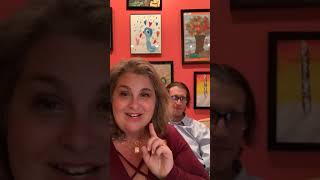
In this live episode of Winey Palooza Wednesday, host Rebecca Greene, joined by her husband Seth and occasional input from their daughters and online viewers, uses Disney/Pixar’s Turning Red as a springboard to discuss modern parenting challenges. Rebecca shares personal anecdotes about her busy day, celebrates Purim, and then dives into the film’s portrayal of an over‑protective mother (Ming) and a teenage daughter (Mei) who transforms into a red panda. The conversation highlights several parenting themes: the pitfalls of over‑protective, perfection‑expecting behavior; the importance of open communication and allowing children to make mistakes; preparing kids for puberty and other bodily changes (the panda as a metaphor for a period); embracing a child’s “weirdness” and individuality; and the need for parents to model calmness (the “cucumber” father) rather than reactive anger (the “Coke” mother). Rebecca reflects on her own tendency to be chaotic and how she’s learning to “tame her fizz.” The episode also promotes Rebecca’s podcast, upcoming book‑club discussion, the Whiny Palooza app, and her TikTok/Facebook community, inviting viewers to share their thoughts on the movie and parenting experiences.
Chapters
Hello everyone! Happy Winey Palooza Wednesday! No need to whine, it's Winey Palooza Wednesday! Have some wine and join us on Winey Palooza Wednesday with the Green Family!
Cha-cha chicken!
Are you running away? You've got nothing to say about the movie?
She ran away!
She doesn't want to talk.
She does not.
She doesn't want to talk!
I guess everybody talks except for Ellen.
Can you get that for me? Yes. Happy Purim! Happy Purim!
For those of you who celebrate Purim.
So on Purim we make lots of noise.
You're not the right house for that, Ellen.
And we eat hamantaschen, triangle cookies with lots of different stuff inside, jelly and chocolate. And yummy stuff.
Yes, lots of different fillings you can try.
Um, yes, we could give you a whole lesson, but we're not going to do that.
Not today.
So happy Purim to everybody celebrating. Yes, we did not really get to celebrate. Um, I wanted to go to temple. I really did. I wanted to go to temple. And this— do you see that? That light is bothering me behind us.
Which light?
Whatever. I'm trying to block it with my head. Don't mind me.
Do you want me to turn off a light?
Oh yeah, which light is it? Turn it off. Let's see if that helps. Nope, it's not that one.
Okay, I'll go turn off the other one.
Okay, you sit. So anyways, this one can go on. Don't mind the technical difficulties over here. Okay, so our temple was having a service tonight and I would have loved to have gone. You are all going to understand when I say this. We had a football meeting, a PTA meeting, dance class, and a voice lesson. We had so much going on, and really all I wanted to do was go to temple and enjoy the service. So I guess in retrospect, that's what I should have done. Oops, lesson learned. Hi, Randy! So how is everyone doing tonight? Have you seen the movie Turning Red?
Disney movie, right?
If you have seen this new movie, we watched it on Disney Plus. Have you seen it? Did you like it? What did you think of it? Did you learn anything from it? I watched it with my daughters, which was awesome because one of my daughters just turned 13 and the main character is 13, so it was like perfect timing for us. And she really resonated with the movie and And she was like, I feel understood. And she felt like the character was representing her and things that she is feeling and things that maybe she hasn't said or has said. I would love to hear from you. I would love to hear what you thought of the movie. I would love to hear what your kids thought of the movie. I heard there's a lot of controversy. Can you help me with this? What— I need to look it up. I meant to look it up before I saw you tonight. And it's been a busy day, so I wanted to know, like, what is everybody—
we do not understand the controversy.
Why are people fighting about the movie? It was great. It was great. Seth has not seen the movie yet.
I have not seen the movie, but based on your, your what you're about to share, I might have to.
So, okay, so my children love to make fun of me, and I just really try to go with it and laugh with them and let them make fun of me. The main character is Mei. Her mother is Ming, and Ming is like over-the-top overprotective. So my girls—
I don't know anybody like that.
I mean, my—
over the top, mildly overprotective.
My girls were making fun of me. The mother would do something and they would look at me and go, you would do that. No, I wouldn't.
We like to tell ourselves that we would. Okay, Seth, is there an example? Yes, example.
I'm gonna give you a couple examples, okay? Example number 1, the daughter, the mother is at school hiding in the bushes spying on Mei in the classroom. Mei is in the classroom and whoever the guard is at school is going after the mother telling the mother that she has to leave. The mother is spying on her daughter. So my girls are laughing away, hahaha, you would do that. No, I freaking wouldn't! Seth, would I do that?
You would not hide in the bushes at school. You are not that extreme.
Did I go to school and volunteer? I mean, my purpose was not to spy on my children.
And you weren't hiding in the bushes, you had official permission to be there.
My purpose was to help out, to see my kid, who knew I was there. I wasn't hiding. So I did go to see my kid But I wasn't there to be overprotective. I was there to help out. Yes, yes.
So to be fair, you've had children request you to be at school to help out.
Yes. Okay, so moving along, I'm going to give you another example.
All right.
Ming has this thought process that her daughter is just oh so perfect. Okay, why do parents do this? I don't understand. Are you perfect? Are any of you perfect?
No, but maybe we want to see the perfect version of ourselves and the kid. Maybe we want the kid to be better than us.
Okay, so this is very upsetting to me for so many reasons. I want us to— it's okay, I have a lazy eye too. I don't have a lazy eye. Who has a lazy eye?
Does Ming have a lazy eye in the movie? Ashley, we're confused. We're looking at two different cameras if that's the issue.
Okay. Oh, do you see my eyes going back and forth? So we are live on TikTok here, we are live on Facebook here. So Ashley, bear with me as I go back and forth. Maybe that's why she thinks I do not have a lazy eye. So okay, backing up.
Yes.
I want us to help our kids learn that we don't expect them to be perfect, and the way that we can do that is by not expecting ourselves to be perfect. So if we normalize that we screw up and we do things wrong and that it's okay, then they learn that they don't have to be perfect, and then they learn that if they screw up, if they mess up, it's okay We know that that stuff happens. I interviewed a fabulous coach who you're gonna hear on my podcast in a few weeks, and she said we want our kids to run toward us with their problems, not away from us with their problems. And if we are expecting them to be perfect, and if we freak out when anything is wrong, they're not going to come to us. Okay, so Jin the calm father in the movie. Mei is gonna go to Jin because Jin is calm as a cucumber. We want our kids to come to us, we have to be calm as a cucumber. That's one of my favorite lines. We don't want to be like Ming. So Ming is a coke. We have talked about this before. Ming is a Coke, she is very reactive and she blows up. May, her daughter, is a calzone and she stuffs her feelings. Well, in order to get our calzones to open up— now Seth can be a calzone and Seth can stuff. Yes. But so I'm a Coke, so if Seth knows that I'm a Coke, he's going to be afraid to open up because how am I going to react? So I have had to learn how to tame my fizz.
Yes, tame your fizz. There's a title for your next book.
Okay, awesome. I'm gonna tame my fizz, and I don't want to explode because if, if I explode, then I turn off whoever's talking to me and they run away. Yes. So Ming, the mother, is a coke, and she gets really reactive and she explodes, and she drags— she throws Mei in the car drags her down to a store to scream at a cashier who did nothing wrong. Oh my goodness, right? Would I do that? No, no. But they were giggling about it.
Like, it's an exaggeration.
It's— everything is an exaggeration. Why?
It's a movie, just like The Goldbergs. It's not as funny if she's chill and normal. Nobody laughs. Okay, the crazier she is, the funnier it is.
So if you watch The Goldbergs Beverly Goldberg is super overprotective like Ming is super overprotective and it makes for really good TV because it's hysterical.
Yes, people laugh at the extreme.
Right, so she's screaming at this cashier who did nothing wrong because her daughter is perfect and would do nothing wrong so it must be the cashier. We all know that's not true. Your daughter isn't perfect, Ming, which she starts to learn, okay? So Mei turns into a red panda. Out of nowhere and scares the crap out of herself. And Ming knew that this was gonna happen but didn't prepare her, which makes no sense whatsoever. If we're gonna symbolically think of the panda as our period, I am telling you right now that my daughter is 13. She knows her period is coming. We have to prepare our children.
Does anybody else turn into a panda in the movie? Or is it just the daughter's the panda and everyone else just thinks this is normal?
The mother and the aunts and the grandmother. So it's a generational thing. Okay, so it's a mom thing, and mom did not prepare Mei. So if we look at the panda as symbolic, like a period—
sure—
she should have prepared Mei that this was going to happen. And when this happens, this is okay, and this is what you're going to do to to handle it. So when my daughter gets her period, I need to pack stuff in her backpack, tell her what to expect. We've talked about going to the nurse. We've talked about if she wants to come home, she should tell the nurse, "This is my first time getting my period. I want to go home, call my mother." Like, we have talked about this. So thumbs down to Ming. For not preparing her daughter that she was going to turn into a panda.
That seems like a pretty big transition to suddenly wake up and be a bear and freak.
And she totally freaked out.
I mean, wouldn't you freak out if I suddenly woke up as a grizzly bear? I would be a little freaked out. I'd be freaked out, grizzly bear.
So her friends, the daughter's friends, were wonderful and embraced Mei, embraced her as this panda, loved what the panda was doing to her. She was coming out of her shell and, and being more adventurous and getting out of the house more. And, you know, Mae was always so concerned with being the perfect kid for her mother, and that can really be stressful for a kid and very hard to achieve— impossible to achieve. Absolutely. So her friends loved who she was becoming, her mother not so much. So the mother, you know, we can all relate to this, the mother's trying to hold on to Mae being young, and Mae wants to grow up and wants to spread her wings and wants to go do things. She wants to go to the concert, she wants to go see her friends, she doesn't want to be home with her mother all the time. So all of this stuff, it's hard to let go. It is hard to let go. I understand. If anyone understands, I understand.
You still want them to be your little babies.
They are. I mean, me and Seth, when they're 80, aren't they still my babies? I guess they don't want me to call them my babies anymore.
That probably stopped a long time ago, way before they turned 80.
—so we'll be dead. So, so Mae felt like her mother didn't trust her. And when you are trying to be a perfect child and get good grades and do your chores and do everything your parents tell you, and your parents still don't give you any freedom at all, then what's the point? Mae is like, what's the point? What am I doing it all for, right? Why? Your kids are going to be like, what am I If— why am I behaving? I mean, they should intrinsically want to behave, but why am I doing all this stuff if it doesn't matter, if they don't trust me anyway, right? So we have to give a little, you know. So it was, it was a wonderful movie with a wonderful message about learning to let go, learning to accept change, learning to understand what other people are going through. And quite frankly the word that seems to come up whenever there's an issue is communication. There was no communication. If Mei was feeling like this, her mother didn't know. She wasn't communicating, she was stuffing, and her mother wasn't making her feel safe to come out of her kill zone and share with her. So I was just like so touched by the movie, so inspired by the movie. I really looked at myself because here I have this calm husband like Jim who's like the steady force in the family. I feel like I juggle everything and get everything done and help everything be organized, but I feel like I'm chaotic in the process. So I have to find a way—
Your fizz is getting shaken up.
Right, but I think that I think I've gotten better. Oh, absolutely. I think I used to be like even more crazy. Like if we had— Yes, you were like the exploding Coke. Right, like if we had to get out of the house, I was like, "Rawr!" So I feel like I've come a long way. So far. But in the chaos of being the coordinator of the family, I have to find a way to be calmer in the process. You betcha. Wouldn't that be wonderful? So it definitely made me look at myself because— when your grandmother used to do— when you see a mother being so reactive in a movie, like so exaggerated, even though it was exaggerated and even though like none of us act like that, it's still a good way to take a look at yourself and to reflect on I don't do that, but ooh, I'm up here and I should probably come down a little bit. I want to tell you what I do see parents do. I do see parents who think that their kids can do no wrong. I promise you that your child is not perfect. That's like one of the biggest promises that I can give to you. So like when someone says to me, Lily did XYZ, Lily said XYZ, I don't get defensive and say, not my child. I know my kids' strengths and weaknesses. I have my eyes wide open to them, and I know my strengths and weaknesses. So, I know that they're gonna screw up. Parents may say to me, "You know, they did whatever," and then I can address the situation and not be reactive and defensive about it. But I have seen with my own eyes people be told about their kids, your kid did X, your kid did Y, and the parents go ape crazy. Not my kid. Well, why not your kid? Why do you think your kid is perfect or that they wouldn't do that?
Why would we make— why would the person telling you that make it up, right?
What's the point of that? Yeah, and I loved that as the movie went on the mother and daughter learned to change their dynamic. The mother learned to let go a little bit. The daughter learned that to embrace herself, to embrace who she is, to embrace that she's not going to be perfect. And the mother also worked on her relationship with her own mother. And what cracked me up is that in the process of not wanting to be anything like her mother, she was just like her mother. So here she sees that the trap, right, is trying to rebel against our parents, right? Isn't that the trap we have to have our eyes open to? I feel like if we work on the issues with our own parents, then you'll see a difference in your relationship with your own kids. Sure. So she was like stuffing it away, pushing it away, and it was right in her face. She was doing the exact same thing to her kid. So I was like, here you are trying not to be like your mom and you're just like your mom. Aren't we all just like our moms? Is that Lily? Hi Lily, she's blowing you kisses. Lily, tell us what you thought of the movie, type in and tell us what lessons did you learn, what did you think of the movie? Tell us, honey. So I think that the best thing about the movie is that when I— what I said to Ella, what did you learn from this movie? And she said to embrace weirdness, okay? And I think that kids are so worried about fitting in and being normal. Normal is boring. Normal's overrated. I tell Ella all the time, normal is boring. You don't need to be whatever you think normal is, just be you, just love you, love who you are, embrace who you are, and embrace your weirdness. We all have weirdness to embrace, right? Amen. Lily says, I loved it, very relatable. Yes, my daughters loved it. Seth needs to— I think we need to watch it again and Seth needs to watch it with us and he needs to tell us what he thought. Yeah, so good movie, thumbs up to the movie, and I want to hear your opinions. Tell us what you thought. Did you like it? What did you learn from it? If you haven't watched it, go watch it with your kid. Don't change yourself for someone else, don't let someone change you. Yes, Lily, awesome lessons. Awesome lessons. We need to be true to who we are, we need to honor who we are, we need to embrace who we are, and we need to remember that nobody is perfect, including our children. Or us. Or us. Yes, exactly. So, um, thank you so much for joining us tonight. I have, um, a really fun podcast this Friday. I think this Friday my book club reviews the Holderness Family book. So back, way back when I— it was my turn to pick the book. We take turns with who picks the book every month. My turn, I picked the Holderness Family, and Seth read it, and I read it, and my book club read it. And Seth and I did talk about it, but I recorded my book club reviewing the book, and I think it was really good, and I think you're gonna love it.
There were some good insightful lessons and I believe the book is called Everybody Fights, Why Not Get Good at It?
Thank you, honey. You're welcome. Zara says being different is okay was her lesson. Yes, and I loved that the main character was like perfect. She was the perfect kid to show kids that you should just be whoever you are, love yourself, embrace yourself. I think— what did she say? I embrace all labels. That's what, that's what May said. I embrace all labels. You know what, if someone says you're weird, thank you. Being weird is not enough. Oh my gosh. So come find me, find my Whiny Plouza podcast, um, find my Whiny Plouza Mom Facebook group. It's, it's all free. Um, find the Whiny Plouza app in your app store. Thank you, honey. And I— hello, Juliette! I have topic requests that I probably haven't gotten to, and I'm really trying to focus on like what is resonating with me each week. But I also love— like, this movie touched my heart, and I wanted to get it out and tell you about it. But Please continue to send me topic requests, and you're sending me podcast guests, and I love all of it. And I'm having so much fun on TikTok. Come find me. You're already with me on TikTok, but Facebook people, follow her on TikTok. Yeah, follow me on TikTok and come have fun with me. My girls got me into TikTok and I'm having way too much fun, right? Right, right. Okay, who's gonna close this out, girls?
Thank you for watching Winey Palooza Wednesday with the Green Family. Chop chop chicken!
Thank you for joining us. See everybody next week.










