Fall Recruiting - Important Things to Know
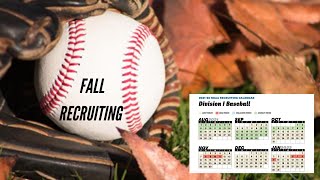
Alex Swenson explains that recruiting doesn't stop in fall. Focus on three things: keep developing as a player, get exposure through video and showcases, and target schools actually recruiting your position. Know the NCAA contact and quiet periods that govern when coaches can reach you.
Chapters
Hey team, Alex Swenson here. Hey, thanks for joining me today. Let's cover what we're going to be going over in this short video. And the first thing is, are scouts going to be recruiting this fall? So we're going to dive in to that. And the second thing is the three key components that's going to help you be successful in recruiting and in your recruiting process. And third lastly, what the quiet period is and the contact period is and why it's important to know the timing of that going into the fall. So let's hop into that. But hey, before we, if you get anything from this video, please smash that like button that thumbs up and subscribe if you haven't already. I put out a weekly video on how to get better on and off the field and just help you with recruiting. Alright, let's hop into it. Around this time of year I get this question often and that is are college scouts recruiting this time of year? As the summer winds down and we go into the fall, are these recruiters recruiting in the fall? And the short answer is yes, absolutely. And the long winded answer is when I was a college scout, coach and recruiter, I had the saying often is recruiting never sleeps, meaning it can't ever stop. Because if you stop recruiting and you fall behind, it can have major consequences to your program and to your coaching staff. I mean the worst case scenario is you get fired because if you have bad recruiting, you have a bad year, 1, 2, 3 years more likely that you're going to lose your job. And what's, what's, why did that happen? There's another phrase that we use in the coaching world is recruiting is the bloodline to your program. If you do not bring in good athletes, then you are going to lose your program. You are not going to survive. Okay? So these coaches have a mindset of hey, we have to be recruiting all the time. We can't fall behind because again, one bad year, two bad years, God forbid, three bad years of recruiting can have major consequences long term. So there is no sleeping in recruiting from a coach's perspective. And I want you to have that mindset for your recruiting process. As a student athlete, you need to have the process of even going into the fall and into the winter. You need to be staying proactive and hey, just playing summer ball or fall ball is not your best options of helping you with your recruiting process. Okay? If you watch this video, you guys know that it can help depending on the player, depending on the team. But honestly, for the majority of us it's not the most bang for your buck as far as playing summer ball or fall ball. And I'll get into that if you go back and watch some of my videos about summer ball. And I talk a little bit about fall ball here as we move on. But I want you to go into this fall with that mindset is, hey, I need to be proactive. And hey, if you're playing a different sport, that's absolutely fine, but you need to stay up with your recruiting. As far as development, okay? The number one thing in the recruiting process is development, okay? That is an easy. It's an easy first step in the recruiting process that people can say, but it is absolutely true. Trust me, I would not say it if it wasn't true. Wise development, hey, if you're not good, the coaches aren't going to recruit you, okay? So you need to continue to improve your skillset depending on what you're looking for. As most of us are, not everybody, but most of us are going for division one. Hey, you got to be really talented. Well, how do you get talented? You have to develop and develop and develop, okay? And then there's other areas that you guys have talked about. This isn't exactly that type of video. Contact me if you need help in that arena. As far as you just don't know what to do in the recruiting process, we'll go over that. I'll be able to help you in that aspect, but stay proactive. So the next thing is also we're going to go over here in a couple minutes is the quiet period and the contact period. But first, let's get into the three key components of your recruiting process is going to help you be successful. The first key component that we're going to go over today to help maximize and get the most out of your recruiting process is exposure. Guys, we have to get in front of these coaches so they can evaluate you and to make sure that you are a good fit for their program. Now, the good news is there's a lot of different ways to get exposed to these college coaches. And the first one that I always suggest is your recruiting video. Super, super important. Now, some student athletes and parents can take this a little bit too far or just not manage their expectations in the sense of like, hey, I'm going to get recruited off my video, meaning I'm going to give you commitment off my video. That's kind of what I'm trying to say is. And guys, that is really, really unrealistic. It has happened before, but it is super super rare. The point of a recruiting video is to get on the radar of these college coaches so they can come see you play in person or you guys can set up a time to get evaluated. Okay? So on top of that, when you send your recruiting video to all these different coaches, they schools that you feel are a good fit, same your schedule, what camps are you going to be at? What showcases are you going to be at, what tournaments are you going to be at? Are you interested in going to their camp? Camp is super important because when I talk about camps, it's a school specific camp. So if the University of Princeton, just using an example, is having a camp, it's really just for them. Usually that coaching staff is just there, okay? So it's really just one school where sometimes showcases they can have 50, 60, 100 schools there. And I highly recommend those because the maximizes exposure. But if Princeton is one of your number ones, your academics are off the charts and you feel like you fit their profile really well, hey, go there and they've shown you a little love and a little bit of interest. Go to the camp, interact with the coaches, okay? That's just another way to expose. So on top of your recruiting video, send your schedule, look which top five schools that you would be interested in going to that camp. Okay? Now the second key component is to make sure that they're recruiting your position. If they're not recruiting your position, don't waste your time, money or energy going after those schools, okay? Because the last thing you want to do if you're a catcher and they're not recruiting a catcher is going to that specific camp. Make sure that they're recruiting your position. Now if you're a pitcher, you're pretty much in luck because every year they're usually recruiting pitchers. It might be a few pitchers or it might be like eight Pitchers they're bringing in. Every year is different but like corner guys, catchers, first baseman, third baseman, outfielders, it's different every year. Sometimes they just don't need your position, okay? And the third key component is to make sure that you fit the profile that they're looking for their player profile that they're looking for. An example, and I see this a lot and it's okay, I want you guys to shoot for the highest, but you also need to be really realistic. But if you're a right handed pitcher and you want to go to the University of Florida, what is their player profile? Usually it's super physical, big, tall, lanky guys that are 92 to 95 plus that has three pitches for strikes that are super sharp breaking ball and a good change up and again fills it up. If you look at their player profile, the guys that are going in and that are there, they probably have 10, 11, 12 or more guys throwing over 92 to 93 miles an hour over consistently. I'm not just saying, hey, you top out at 92, but you're really 80, 88 to 90. Okay? These guys are consistent. 92, 93. If you watch any of the College World Series or the regionals or super regionals, you, you saw that at some of these big time schools. So be realistic with yourself. And again, I don't want you deter you from shooting for great schools. But also give yourself a chance to succeed, man. Give your chance, a self to succeed. So if you're looking at University of Florida, University of Vanderbilt, well, you better be a freshman or a sophomore right now because they're done with seniors and juniors. Those guys recruit so far in advance. Okay, all right, let's get into the quiet period and the contact period. Let's dive into that. All right, guys, I wanted to bring up this calendar. This is the NCAA recruiting calendar for Division 1 baseball. And we are in August of the timing of this recording. So I want to look at the rest of the year going into 2022. And we have the contact period and, and we also have the quiet periods. We're going to actually come back to this calendar, but I wanted to show you what we're going to be going over right here and why it's important. But we need to first go over what the definition of quiet period is and what the definition of contact period is. So let's hop into that. All right, guys, we're going to look at the definition of what the contact period is in the quiet period is. You got a lot of stuff going on on this page, but we're going to zoom in to the bottom right, because that's most important right now and that is the contact period and definition per the NCAA is a contact period is that period of time when it is permissible for authorized athletic department staff members to make in person off campus recruiting contacts and evaluations. So that is just a complicated way of saying that these college coaches can go out to showcases and tournaments and camps and recruit. They can go out and just watch and evaluate you. Some of you guys are aware of the dead period because we were in the dead period for over a year through the pandemic and now the contact period has been up and running over the Last few months and coaches have been out and about. That is the contact period. But now we're going to be getting into the quiet period rather. Excuse me, let's go on and zoom in on the quiet period and read that definition. A quiet period is that period of time when it is permissible to make in person recruiting contacts only on the member institution's campus. No in person off campus recruiting contacts or evaluations may be made during the quiet period. So that's another fancy and complicated way of saying, hey, they cannot go recruit off campus. They can recruit on campus, meaning that they can bring guys on their campus for camps, for visits, to give them tours. They, they can do all of that to offer them on campus. They can do all that as long as it is on their campus. They can't go off their campus and recruit or see these recruits in person. All right, let's hop over to the calendar. All right, guys, let's go on and look at August. As you guys can see, the 15th, we end the contact period, meaning the coaches cannot go out and recruit off campus. They can't go to showcases, they can't go to tournaments, but they can recruit on their campuses. They can have camps on their campuses and recruit there starting the 16th. That will go until the 9th of September. And then we have about a 24 day period of the contact period back on. And these college coaches go out and about and go to certain showcases, tournaments and watch players off their campus. Then on October 11th, we go through a long time, all the way through January, January, where these college coaches will not be able to recruit off their campus. But recruiting, trust me, is definitely happening. And we're going to make sure that we're proactive with that. And when that time comes, we're going to be talking more about that, of what we're going to need to be doing, especially with our recruiting video there and reaching out and picking certain camps to go to and just find ways to maximize our recruiting process and maximize our exposure. But hey guys, thank you so much for staying with me this long. If you got anything from this video, please subscribe and smash that like button and I will see you in the next video. Take care.
More from Alex





Most families are not missing scholarship money because their athlete is unqualified.



Two families DM’d me this week with the exact opposite problem. Same answer for both. 👇

Thousands of families are on a waitlist for something that does not open for another week.

