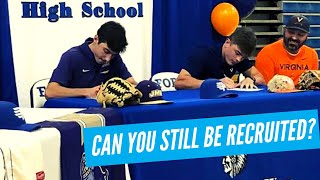
Alex Swenson (YouTube) explains college baseball recruiting and recent NCAA timing: the NCAA dead period ended June 1 and coaches may now have in-person contact (contact period). He reviews the NCAA postseason structure (16 regionals of 4 teams → 64 teams; winners advance to super regionals best-of-three; final 8 teams in the College World Series). Swenson gives year-by-year recruiting guidance: freshman year — focus on high school program and development; sophomore year — begin recruiting work (research schools, build a 30–40 school list, create a recruiting video under three minutes); junior year — be proactive (email coaches with measurables/video, list summer events/showcases, attend tournaments); senior year — accelerate outreach or broaden school targets to D2/D3/NAIA/juco if needed. Video emphasizes being proactive, updating materials, and using showcases now that contact period resumed.
Questions this video answers
June 1 (speaker-stated) - contact period began June 1.
Three minutes or less.
A broad list of about 30–40 schools (reach, target, safe).
16 regionals of 4 teams each, totaling 64 teams.
Best-of-three series.
Chapters
Hey, guys, Alex here. Hey. We have a lot to cover today in a short amount of time. I try to keep these videos as short as I possibly can, but give you a lot of value. So we're going to be talking about the dead period and what that exactly means. It just ended. And also we have the NCAA regionals coming up this weekend. It is the most exciting time in college baseball. And then I don't know if you guys got a chance to watch the SEC tour tournament this past weekend in Hoover. It is an awesome tournament. Some of the best baseball around in college baseball. This is actually a picture of my wife and I winning the SEC tournament with Ole Miss and that club and that coaching staff. Those guys are awesome and amazing and doing great things. But if you can watch as much college baseball as you can, especially this month, because there's so much you can learn, then we're also going to be talking about the recruiting process, what you need to be doing freshman year or sophomore year or junior year or senior year, depending on where you're at. And hey, if you can do me a favor, if you get anything from this video, please select that thumbs up, that like button and subscribe. It helps me tremendously. But with that said, let's get into it. Hey, guys. Had to switch rooms real quick. Had some technical difficulties, but let's get into the dead period. We are officially done with the dead period as of June 1st and we are in the contact period. So what does all that mean? What does the dead period and contact period mean? There are NCAA terminologies and basically the dead period, which has been in effect for over a year, well over a year where college coaches couldn't go out and actually recruit and evaluate players in person. They couldn't have any face to face contact, which means they couldn't talk to a player at a tournament or at showcase because they couldn't even be there, okay? But they couldn't invite them on campus, give them a tour around. None of that could happen, okay? But now we're in the contact period, which means they can have face to face contact. They can talk to these recruits in person. They can bring them on campus, give them a tour, go to a camp, okay? And now these coaches can also go out and do what they love the most, is actually go out and recruit and evaluate the talent that they want to bring on to their campus. So we are officially in the contact period. This is an exciting time and I just wanted to pass that information along to you in case you didn't know that hey, these college coaches are going to be at these tournaments and showcases as we move forward through the summer. The NCAA tournament starts this weekend and it is the most exciting time of the year for college baseball. Think of it as March Madness, but for college baseball, it's June Madness. From June 1st all the way to the end of June, we are playoff baseball. And this is how it works. So there are 16 regionals across the country and four teams in each regional that make up 64 teams that are battling out to be the national championship. But out of those 16 regionals, only one team will come out as a winner and they will move on to the super regionals, okay. Where they will play another opponent for a three game set, best out of three, then move on from that. The winner moves on to the College World Series where there will be eight teams duking it out there to be the national championship. I have a good feeling looking at all the teams there. There might be some Cinderella stories this year, so pay attention. Watch as much as you can because you can learn so much and it is going to be an exciting game. Gains all the way through June. All right, pay attention. They're going to be all over ESPN, ESPN2, ESPNU and stream it. Uh, make sure you check it out as you guys go through June because again, this is where we are trying to get to. And when you get to college baseball, this is what you want to go to. This is the dance for college bases. Pay attention. And again, it is an exciting time. All right, let's get into what you need to be doing, depending on your recruiting class. I talk to parents and student athletes all the time and help them through this recruiting process. And I get questions like when they should be starting the recruiting process, what they should be doing, again, depending on what year they are, and is it too late to be recruited, especially with all of the NCAA changes and college athletes getting an extra year and rosters really getting impacted. Well, we're going to talk about that, okay. And no, it's not too late to be recruited, but we're going to talk about specifically what you need to be doing depending on your year. And we're going to start with freshman year, what you need to be doing right now in the recruiting process. And that. Nothing. Of course, this is my opinion. Okay? But I'm a strong believer in this. You don't need to start the recruiting process your freshman year. And I am all for knowledge. I am all about starting early and getting ahead of things as we go. That's my dog by the way that was just, that just popped up. But freshman year is too early. You need to get acclimated with your high school team. You need to get acclimated with your high school coach. Develop a relationship with your high school coach, Develop a relationship with the older players and get comfortable and learn and interact with your high school program. That's what you need to be doing. Okay, sophomore year is when we're going to get into the recruiting process and let's get into that right now. Sophomore year, this is when we get the ball rolling in the recruiting process. It's important we start the recruiting process sophomore year because we, we are not behind the eight ball. Okay? Now if you're a junior going into your senior year and you haven't done these things, try not to panic, all right? You just need to get on it right now because the time is now. Because we only have, hey, so much time to be recruited. We do have a clock to this. Okay? But hey, sophomores, this is what you need to be doing. You need to start researching schools that you are interested in. You don't have to have this all figured out. Okay, but you want to look into schools that one that you're interested, not only baseball wise. Yes, I get that's what we're going for. But academically, geographically, do you want to stay local? Do you want to stay close to home? Are you willing to go four to six hours away from home? Are you willing to go across the country? You have to start thinking about this again. Don't have it all figured out, but we're going to want to start with a broad list. 30 to 40 schools of reach schools, target schools, safe schools. And again, this list will narrow as we go. There's going to be some schools that we remove from this list. There's going to schools that we add to this list again as we go through this recruiting process. And then, hey, what are these schools in need of as far as their position? What are they looking for depending on that position, whether you're a pitcher, a catcher, middle infielder, a corner, an outfielder, what do those guys look like at those levels? What are their measurables, what is their physicality, what are their actions and their athleticism? And then of course, academically, we've talked a little bit about that. Make sure we got to fit academically, okay. And then of course, character, making sure that your character is on point. I go into a lot of this in my videos, but we can go into that another time. All right, but the next thing, and probably the Most important thing that you need to start your sophomore year is your recruiting video. Okay? And you're going to update this as you go because you're going to get better as you go. But some of the best ways to get exposed is a recruiting video because you can send it out to coaches all across the country and you can get exposed that way. So you need to start your recruiting video now. You can have a professional service do it even though you don't have to do it at all. These phones right here are amazing. The cameras on them are great. You can just do it in your backyard, you can do it at the field, you can do it at the game. You can have your friend recorded, you can have your parents record you. You can record yourself on a tripod and you collect all of that. Okay? When you do your recruiting video, have it three minutes or less. These coaches don't want it any longer than that. They don't need it longer than that. So start with that. So start researching schools, start creating a school list and get your recruiting video down and understand what they are looking for. Let's get into junior year, junior year. This is where we're very proactive in the recruiting process. And when we start communicating with these college coaches, where we start reaching out to these college coaches and we are definitely not sitting back and waiting for these college coaches to find us, that is the last thing that we want to do. And that is frankly how you get left behind, left on the side. So we need to be proactive in this and again, reaching out and finding the right schools that fit us. Okay, and how do we do that? Okay, we start emailing these college coaches and having short, concise emails with the information that these college coaches want, which is the measurables that you have showing your physicality, which is in your video. Okay? We want to have our video as updated as possible, especially by our junior year. And what junior year is the start of your junior year all the way through the summer after your junior year. That's still technically your junior year. Your senior year starts when you start senior year in school. So this is the timeframe that I'm talking about. Okay, so we're sending out that information again. We have all the information you want. We want to. They want to see your athleticism on your video. Okay. As well. But also show your academics in your email that you're sending out of this. This again, get the engagement with these college coaches. So you're starting that communication process too. And then you need to get out in front of these coaches, okay? Whether it's at a showcase or whether it's at tournaments, letting them know where you're going to be in that email as well, having it at the bottom of your email or having an attached copy of your summer schedule of getting the showcases, tournaments and camps that you're going to be at. Because we need to get in front of these college coaches as we're going forward. So being very, very proactive in your junior campaign. Okay, let's get to senior year. If we are in our senior year and we haven't done any of the things that I just previously talked about, you need to immerse yourself in a weekend and do all of these things and start getting your information out to these coach. Okay? Now, if you have done all of these things and you haven't had any luck as far as getting in communication with these college coaches or just being recruited by these college coaches, you need to set your sights on different schools, okay? You need to change your level. So just an example, if you're looking for and have been trying to reach out to all power five schools, okay, or high division ones or just division ones in general, and you haven't had any luck, you need to look at D2s, you need to target D3s. You need to target, potentially junior college. Junior college could be a great option for guys because you can get to still recruited out of your first year of junior college or even your second year, because junior college is only two years and potentially go on to a higher division from there. But it just gives you a little bit more time to develop as well. And there's a lot of good baseball in junior college. But you can also look at NAIA as well. So change your sites of schools that you're targeting during this recruiting process. If you haven't had any luck up to this point, you've done everything that we talked about. Hey, thanks so much for staying this long. I hope you got something out of this video. And if you have any questions at all, I'm going to put my email down in the description and please email me and be happy to help you any way that I can. All right, Have a good one and I'll see you in the next video.