Renee Sferrazza visits Pelee Island Winery in Ontario to taste wines shaped by the island's lime-clay-limestone soils and warming climate. A bourbon-barrel-aged Baco Noir leads into the Wine Dresser blend of Cabernet Franc and Sauvignon, a low-alcohol Meritage, and a stainless-steel Chardonnay with wild effervescence.
Chapters
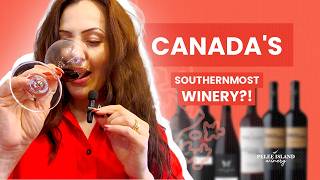
All right, so we are at Pelee Island Winery. This is probably the winery that most people know for Lake Erie North Shore, and there are a whole bunch of different wines here at the winery. This is a winery that truly does carry something for every single palate that's out there, but they also do a good job at creating very unique conversations around the wines here. We have one wine that I just started tasting, which is the bourbon barrel aged Bacot Noir. I always like to say that not a lot of people know they like Bacot, but definitely do if they try it. Done in bourbon barrel aging, you're really going to get a lot more spice and toast, and that's exactly what you get. So it's bolder, it's sweeter, has those boldness in the nose, but on the palate it's really quite smooth and easygoing. Talk about delivery on the palate. Let's get into tasting some more wines at Pelee Island.
Wine Dressers are like our kind of like artisan series.
Why'd you call it the Wine Dresser?
So vine dressers are the— so people used to dress the vines, right?
Yeah.
So it's kind of like an ode to them.
Oh, cute. Right?
Winemakers, feed workers, kind of a mix of that. It's like our winemaker series of wines.
Okay. And it's a split 50/50?
This one is a 50/50, yeah. So we select the Cabernet Franc and the Cabernet Sauvignon that suits the best, age the best. The Laura Vines series is 100%, they're all aged.
It's really bold and very nice. I think this is what people would expect from like a bolder Cab Franc.
Yeah, this is a lighter version of our Yeah, of even the bigger one.
Are you doing classic harvest on this? Are you like pulling it later on the vine, or?
We try to get the, the brix as high as we can. Higher brix means higher sugar level, more color, more flavors, right?
Yeah.
I can let hang longer. So yeah, we usually try to let the, the vintagers here's grapes hang a little bit longer in the vineyard. Like, to make sure we get—
for Thanksgiving, like around October-ish?
Yes.
Okay, because you could really tell it's got a lot of concentration and additional fruit notes, but not intense sweetness.
Exactly.
Which is usually from like late harvest.
Exactly. Cabernet Sauvignon, Cabernet Franc, the later grapes anyhow. Yeah, they come off later in the October. Those ones we eat sometimes even harvest them into November.
Wow, that's amazing. I find like sometimes with Ontario and these grapes, um, you can always harvest them a little bit later and they kind of show a bit more intensity, which is really quite cool.
Year to year different, obviously, right? Still goes with the weather. I always say in the first place farming business, right? We rely on the weather.
So this is 100% Cab? 100% Cab.
100% Cab.
Amazing.
Be a little bit more bold than the one where you just had, because a Cabernet Franc on the other one will soften it all up a little bit, right?
No, but I could see where the Cab Franc in the original kind of like lifted it and gave it a little bit more like berry, graphite-y type. And this is really a lot more like savory tobacco, intense with fruit on the back end instead of on the front end. So kind of switched it around a little bit.
Yeah, exactly. Yeah. So the The Cabernet Sauvignon alone takes all the flavors of the wood much more than the split 50/50, right?
It's really nice on the palate. Very— I love Ontario cabs for the reason that acidity really stays in them a lot easier.
Yeah, a little bit more acidity than California cabs.
Sometimes California cabs have this thing where it's just like, it's intense and then it's intense again. Oh yeah, there's like no break in between. No, exactly.
It's just really involved.
It's just like a lot all the time, which I don't know, I think like even if you do like long aging and long hang time and all that, the acidity always comes through and the like unique minerality.
The acidity breaks it up a little bit.
It does, it's great. It makes it way easier to drink a whole bottle.
Yeah, definitely. And our reds are getting more bold year by year, right? Our sunshine hours are getting more. Our winters are not as harsh anymore. We are getting to the point, not gonna say we're gonna compete with California.
Well, you're almost in parallel, at least for Lake Country. So for this one, what's the soil on the island like?
The soil is like a lime clay mixture over there.
Okay, cool, because it's really clay on this side.
Yeah, over there you have some limestone as well, sand, obviously. It's a good mix for growing bold red wines.
All right, let's taste one more of the Vin Dresser that you guys have.
You want the Meritage?
Yeah, let's try it. Meritage is great. People like Meritage. It's a really good Meritage. This is so cool, and it's only 13% alcohol.
Yeah, yeah, we like to keep the alcohol a little bit more down. 14, 14.5. 5, it's just so personal.
It's a lot.
Just not a fan of it.
That's okay, you said you were German, right? Yeah, there we go.
Yeah, you're right, over there they're even lower, they're like 12.5.
Yeah, it's high. Yeah, exactly. But this is a really great example of like what the South Island can do, what you guys are doing, and people don't always see.
No, it's great.
People see the Lola, they see other stuff that you guys— oh yeah, not this. This is basically the reserve line. Head to Cuba, so to speak.
So I was just having his other people come back.
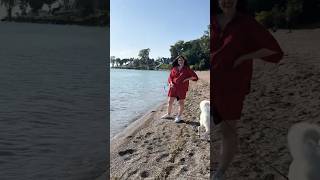
Okay, time to visit. Togo, do you want to taste some wine, bud? He's like, no, absolutely not. He actually hates wine. I love this. Look, you can see the outline of Pelee Island on the back. Instead of taking an hour and a half ferry, you can come here, or you could just do both. Do both. Do both. Why not just do both? Grapes for this one, they're from the island as well, or from a combination of from here and there?
Uh, those ones here, that's 2020. 2020 would be still a combination of from the island and Niagara region.
So blending Niagara, blending the island together as well.
And really just a straightforward Chardonnay. Yes. Stainless steel fermented, stainless steel aged, everything stainless steel, straight up Chardonnay.
No mallow or soft mallow?
Uh, this one would have no mallow.
No mallow at all.
Not saying no mellow at all, because sometimes the white wine just slips into the mellow.
Yeah, it just easily goes into malolactic fermentation without thinking. The reason why I ask is because there's a soft tropicality and almondy nuttiness to it. So it's like very soft and easygoing. That those like apple-y Niagara fruit notes that you kind of get in there really do— they shine through all the time. Niagara Chardonnay, they're like, we are yellow apple and it's slightly underripe. The minerality is so fun, it almost gives that like, you know, Verde kind of like almost wild effervescence that doesn't exist, where minerality and acidity come together to create big bubbles.
That's what we got to work on this year.
This will be really fun and a very, very— I like this wine. I liked it as much as I remember liking it. And I think that if people normally have your ice wine or the Verströmener that you guys do, this is like a total flip across the board. That's nice. Yeah, it was great.