The video takes viewers on an on‑site tour of Hautvillers, a UNESCO World Heritage village in the Champagne region that is celebrated as the cradle of champagne. The host introduces the historic Abbey of Saint‑Périer‑aux‑Gruyères where Dom Pérignon lived and worked, explaining his role in noticing the accidental secondary fermentation that creates sparkling wine and his broader influence as a monk‑winemaker who helped promote the region’s wines to the French court. The narration describes the surrounding Vallée de la Marne vineyards, noting the stage of grape ripening (veraison) and the scenic terraced landscape. A key educational segment explains the Champagne “négociant” system: large houses such as Moët & Chandon do not own their own vineyards but purchase grapes from over 16,000 independent growers, resulting in a mosaic of tiny plots that are blended to create cuvées. The video blends historical facts, cultural anecdotes (champagne served at Versailles), and visual observations of the vineyards, concluding with a wrap‑up of the day’s adventure. The tone is conversational and enthusiastic, aiming to inform casual viewers about the history, geography, and economics of champagne production while showcasing the charm of an off‑the‑beaten‑path visit.
Chapters
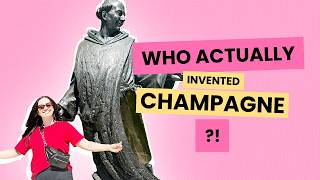
So we're in Hautvilliers, which is really quite cool because we planned on going on a hike today, but visiting this site is quite amazing. This is considered the cradle of champagne. It's a UNESCO World Heritage Site, and it's the place where Dom Pérignon lived. And discovered champagne. He's considered one of the fathers of champagne. Champagne is also a kind of mishap that turned into this fabulous wine that we really love. Everyone in this region was always trying to make still wine, but they would go through the fermentation process, it would cool down, and they would end up sparkling. This is one of the first guys who really noticed it. He worked here at the Abbey de Saint-Périer-aux-Gruyères. We're gonna go check that out as well, but I love this statue of him. You can see there's like little golden bubbles, he's wrapped in a bottle, it's all in the wood of the vineyard. This is the off-the-beaten-path version of visiting Champagne. While you can go to the Avenue du Champagne, which is in Épines, you can also come here. There's so many houses to taste, so many ones that you wouldn't necessarily think of right away, and you're literally in this beautiful vineyard area.
It's such a great spot.
Did you know the entire village is a UNESCO World Heritage Site, recognized as part of the Champagne Hillsides Houses and Cellars?
So all across this village, there's a bunch of little champagne iconography, like this barrel hanging in between here. And you see like little pieces of artwork everywhere in Champagne houses just dotting the street. There's one right over there. There's so many of them within this village because you have the Abbey of Saint-Périer-aux-Villiers, which is just right in front of me over here. This is where Dom Pérignon lived, he worked, he was a monk in this abbey, and he was here during the time when, you know, the monks were in charge of creating a lot of the alcohol that was drunk in France. Really wanted to create a great wine. This is part of this whole story of Champagne, and you have some of the greatest hillsides of vineyards here too.
It's all blocked off right now.
We'll have to get a tour another time, but this is such a fabulous place to visit to see the villages and just the way of life in Champagne. You know, Dom Pérignon did more than just make champagne. He was a winegrower and a winemaker, but he did a lot of work for the region, kind of bringing this region to the rest of France as well. He was such a unique fixture of this area. He's considered the spiritual father of Champagne. His wines were served at Versailles and other places under Louis XIV, the Sun King. So he's had a really remarkable impact on this area in terms of highlighting Champagne and also bringing this region to the the rest of the world.
So these are the vineyards of the Vallée du Marne, and you can really see how they slope down and into the valley as far as you can see, even over there. It's fabulous.
So she just said all the champagne from all the world goes from here, and when you're standing in the vineyard, you really do kind of take in that this is all of the champagne. Yeah, I love it. So the grapes aren't ripe yet. They like just went through veraison. They're like these really tiny berries, and Sham just told me that she could make great chutney out of them because they put gooseberries in chutney.
There we go.
So if you're not making, uh, wine from great grapes, you can make chutney.
Dom Pérignon would be dancing on our heads. Champagne, and I'm thinking of mint chutney. And we're now going to go down this way, walking across the vineyards of Val-de-Marne.
Another fun fact: the big houses don't grow their own grapes. Big Champagne brands like Moët and Chandon are négociants. They buy most of their grapes from over 16,000 independent growers. Vineyard plots are tiny mosaics. The average vineyard plot in Champagne is barely bigger than a tennis court.
So I think it's really easy to start understanding négociant and grower wines when you come to regions like Champagne. All of these vineyards that are around me, there has not been a winery for kilometers. And I'll flip the camera and show you what else I mean by this. You can see that everything is just growing together. Whoever owns these vineyards, they know which plots they have, but you can see that it's just so close together. You can be buying from a grower that has the land out here, or these could be vineyards that you own and they're farther away from your winery. All of these, as far as you can see, those are vineyards across there. Those are vineyards too. There's no winery near them, so there's no estate that's attached to the vineyards. Now, people might own this plot. Somebody, a grower, might own this plot. Somebody might buy something from this block over here, something from that block over there, something from that block over there, and use it to create their full blend, their cuvée, that goes into the bottle. Which is really quite cool. It's kind of hard to picture when you're learning about Champagne for the first time or you're learning about these concepts in French winemaking, but when you're here, you can clearly see it happening before your eyes. Go!
And that's a wrap on our amazing day.
Thank you so much for coming along on this adventure with me.
If you had as much fun as I did, make sure to pop a like on this video. We have so many more wineries to visit and people to meet, so if you want to join in on all the fun, make sure you hit the subscribe button and hit the bell so you don't miss a single drop of all future wine adventures. Cheers, till next time!