How To Win The Game Of Money
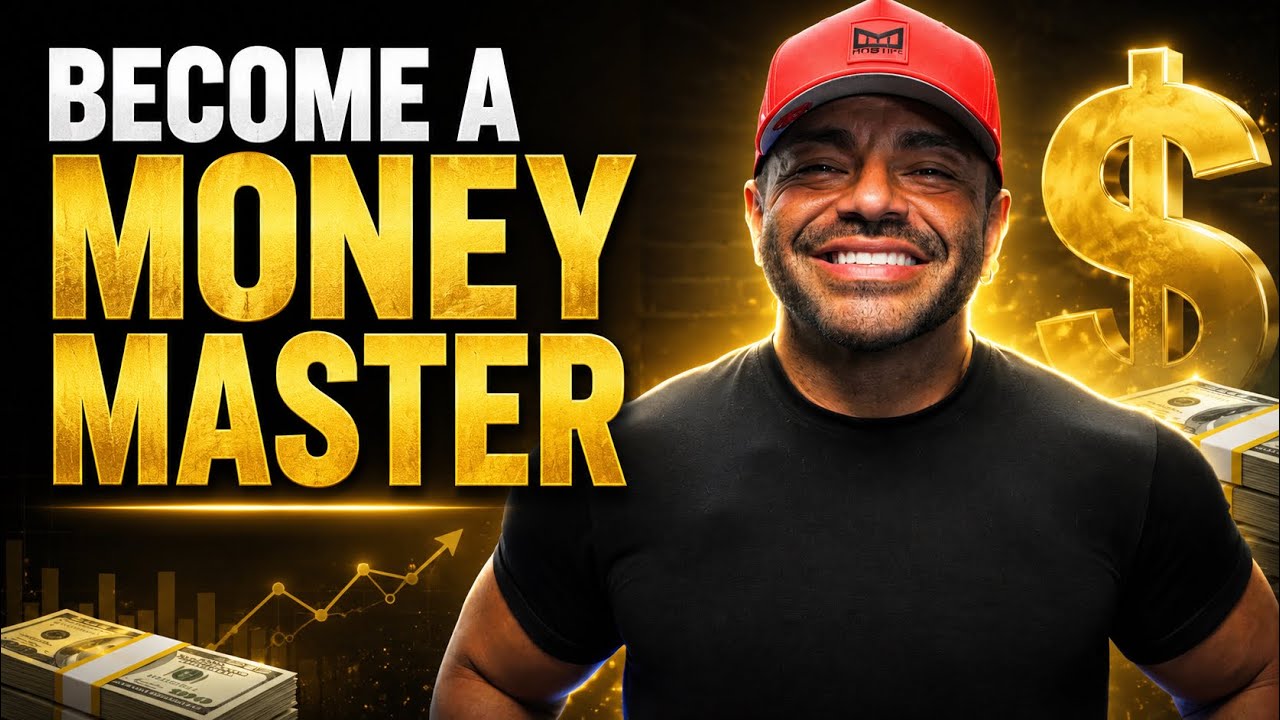
In this 45‑minute motivational training, Rick Pino (Get Wisdom) argues that money operates like a game with explicit rules that most people never learn. He frames financial success as mastering seven sequential milestones. First, he stresses personal responsibility for one’s current income, education, and future. Second, he explains that money flows to value, not time or effort, urging listeners to solve problems, grow skills, and package expertise into scalable offers. Third, he teaches the use of earned income to acquire income‑producing assets, which then fund liabilities. Fourth, he advocates “pay yourself first” by structuring business entities to protect earnings from taxes and build a financial fortress. Fifth, he calls for financial fluency—mastering taxes, leverage, credit, contracts, and negotiation—as cheat‑codes. Sixth, he emphasizes stewardship: living below means, avoiding bad debt, building emergency funds, and using insurance to become your own bank. Seventh, he outlines the three‑step cycle of making, managing, and multiplying money, stressing skill stacking and scaling to achieve wealth that can even generate income while sleeping. Throughout, Pino blends personal anecdotes, biblical references, and practical examples to make the concepts relatable and actionable.
Chapters
What's up everybody? It's Rick Pino here from Get Wisdom. What if I told you that there are rules to the game of money and unfortunately a lot of people spend their whole entire lives never learning how the game is played? They never learn the rules and guess what? If you don't know the rules to the game, you can't win the game. If you never get in the game, you can't win the game. If you don't understand the rules, you can't win, right? So in today's training, I want to be sharing with you The 7 rules to the money game. As soon as you can learn these rules and start applying them is as soon as you can start playing the money game and not have the money game play you. We're talking all about it today in the training. Let's get into it. What does this $100 bill think of you? Think about it. What does this $100 bill think of you? Does it have any opinions about you? Does this $100 bill like you? Is it offended by you? Does it not like you? What does this $100 bill think about you? Well, the answer is it doesn't think anything about you, right? So it's so interesting to me that so many people, they have this weird and false belief that like, you know, money is, money is something that, that happens to them, right? Or they're like, oh, I don't get money. And like, you know, it's hard for me to make money because I just, I don't Understand how it works and blah blah. But the truth is, my friends, money isn't just something that happens to you. Money flows to those who know how to play the game. That's it. That is literally it. And when you learn how to master the game of money, all of a sudden making money becomes very very easy, right? And and I I want to just preface by saying like. The biggest thing that I desire to share with you here in today's training is, is not to discourage you over like, well, gosh, man, that's— there's, you know, Rick's teaching about these 7 steps. And it just feels overwhelming. It's really not overwhelming. Like, if you, if you break this down line upon line, piece by piece, it gets very, very manageable. And here's the good news for you. Okay, you don't have to figure every single piece of the game out at once. Like, I remember being like a little kid and the first time that somebody was teaching me how to play baseball, I was like in the first grade and we were in PE and there's all these rules and all these things and like, oh, you can't run if he tosses it here and you can't do that over there. You don't have to learn every single piece of the rules in order to start playing the game. And here's the fun part, how to start having fun at the game, right? You just need to go little by little. And the more you play the game, the more you'll learn how the game works, the better you understand it. And the interesting part is, is that if you don't get in the game, you can't win the game, right? And so if you come— I don't know about you, but like, I come from a background to where my parents didn't have a lot of money growing up, right? We grew up kind of quote unquote American poor. We grew up many times on food stamps and not knowing where the next meal was going to come from. And, you know, it was always— everything was always scarcity, right? It was like, how are we going to make it? And the problem is, is that, you know, because at the time my parents, they just had no one to teach them the game, they were scared to actually go get in the game and they were just more in survival instead of thriving. And what I desire for you today is to actually show you the 7 milestones of how to master the game of money. So that you no longer have to be like, I don't even want to get in the game. It just seems so overwhelming and scary. No, get in the game, pick up the bat. You don't have to figure out every single piece to every single rule. Just get in the game and start playing the game because the more you play the game, the more you'll learn. Does that make sense? Wave me on screen like this if that's making sense to you. Yes. Awesome. All right, guys. So let's talk about the 7 milestones of money mastery. Number 1. Number 1. If you guys are ready for number 1, drop a 1 in the chat and let's just jump right on in. The very first thing that you need to understand about the game of money is that money comes, money flows, right, to those who take responsibility. Money comes and money flows to those who take responsibility. You have got to start taking ownership of your current financial situation. Like, I have news for you, okay? You are responsible for your current income level. You are. You are responsible for your own financial education. We are, we are alive right now in 2026 where there is so much information available to us. There is literally no excuse to be living the rest of your life in financial illiteracy, right? I don't understand how it works. I don't know what— it's on you. It's not on, you know, your mom or your dad or your grandparents or your friends or your job or whatever. It is on you. You are responsible, man. You've got to start taking responsibility and ownership for your current situation because then and only then when you start taking ownership, that's when you can start really winning the game of money, right? So you are responsible for your current income level. You are responsible for your financial education. You are responsible for your financial future. This is the foundation, guys. Okay? There cannot be any victim mindset. No excuses, right? Like, well, when I was growing up, like, no one taught me. No one taught me either, right? No one knew how to teach me. Like, in the past decade plus, I have had to, like, take ownership and take my own responsibility and say, okay, no one's going to figure this thing out for me. I've got to go out there and get it done. I got to educate myself. It's so interesting because the book of Hosea chapter 4, verse 6 says that God's people perish for lack of knowledge. Right. And so I submit to you, if we perish for the lack of knowledge, then guess what? We flourish when we get knowledge. Right. And so right now, if your finances are perishing Number one, it's your responsibility. But number two, you can change it by simply starting to educate yourself, take responsibility and educate yourself on how this thing works. It's so funny because my family growing up, because we didn't have a lot of money, because my parents didn't know the money game, because the money game was definitely playing them and we weren't playing the money game back then, they didn't really talk about money like around the dinner table. Right? They didn't tell us how much we did or didn't have. They didn't, they didn't talk to us about investing, or even saving, right? Because honestly, at that point, they didn't even know how the heck any of it worked. Like, they had no clue about investing or saving or any of this stuff, right? It was just survival, survival, survival, survival. How are we going to make it? Right? And so now that my wife and I, we have, we have educated ourselves, we've taken responsibility for For our own financial situation currently, our financial education, and our financial future, I sit down with my kids, and this is even before we started making millions and millions or whatever. I sit down with my kids and I say, hey guys, here's where we're at with our money. Here's how much we made this week. Here's how much we lost. Here's how it works. Here's how investing works. Here's why you should save a little bit, right? But not try to save your way to wealth. Here's why you should save a little bit, then invest your way to wealth. Here's how you can create money by creating value. It's so funny because my kids will come to me and they'll, they'll ask for like, you know, they'll be playing their video games or whatever and they want like an extra, you know, can I get, you know, $5 for the extra? They have like skins on their avatars or like, can I get the extra bonus thing or whatever it is? And it used to be to where they'd be like, Dad, can I have $5? And now even like my 7-year-old will come to me and be like, yo, Dad, do you have any problems that I can solve? And I'm like, what kind of problem are we talking about? He's like, I don't know, something that's probably like $10 worth of a problem to solve. Like they're thinking differently about how money works, period. It's not just like, hey, can I have some money? It's like, hey, do you have any problems I can solve? Like, this is what we need to, number one, take responsibility for ourselves. But then number two, we need to teach our kids, man. We got to teach our kids how all of this works so that way they don't grow up like, I didn't know how any of it works. Mom and Dad didn't teach me anything. I always tell you guys this, okay? You are not responsible for the family that you came from, but you are responsible for the family that comes from you. Right? And you may not have come from a wealthy family, but a wealthy family can and should come from you. And one of the best ways that this is going to happen is by you getting very open and honest about, number one, taking responsibility— responsibility, excuse me— for where you are now. But number two, helping and serving your kids learn and understand the money game at whatever level you know how to play it right now. Is that making sense? Yes. Somebody shout yes down in the comments. If you're ready for number 2, drop a 2 in the chat. Okay, so number 1, money always comes and flows to those who take responsibility. Number 2, okay, we're talking about leveling up and mastering the money game. Number 2, money always flows To value. Money always flows to value. Watch this: not time and not effort. We live in a society right now where so many people, because most people, most people don't understand the money game, so most people have this false idea, this false belief. That if you just work really hard, you'll make more money. But it's, it's so sad. My wife and I, we were checking out the other day at— we were visiting her parents, and they have a Walmart there. And man, I can't remember the last time I've been inside of a Walmart. And just because we, we, we're— we live closer to a Target. But anyways, I go in, we go into this Walmart, we're getting a couple things, and we're checking out. And oh my gosh, man. Oh my gosh. there was like this precious— she had to be at least 80-plus years old, this precious woman checking us out. And I just remember thinking like, gosh, man, like the reason— and look, maybe she's there because she's like, I love to be here. But she didn't look like that. She didn't have the look on like, I'm so glad to be here working at Walmart when I'm 85 years old. She had the look of like, gosh, I am tired. I do not want to be here. Like, I don't know about you, man. I don't want to have to end up at Walmart working at Walmart or whatever, you know, like when I'm 85 because I didn't learn how to play the money game and the money game played me my whole entire life. Right? I promise you that woman is a hardworking woman. Right? I promise you she probably was. I don't know her story, but I. I assume she was probably married to a guy who is a hardworking guy, right? A hardworking man, right? Who probably worked hard his whole entire life. And whether he's still living or not, they're at the end of their life. And now she's working at Walmart. Why? Is it because money flows to those who work hard? Is it because money flows to those who give more time? No. It's because money flows to value, not more time, not more effort, right? If hard— you guys have heard me say this 100 times. If hard work alone made you rich, then the donkey would own the farm. Now, please hear me on this. There is something to be said about good work ethic. I'm not saying you got to be lazy. No. Yes, you have to work hard, but you are delusional if you think, as long as I just work hard, I will become wealthy. That's not how it works. The way that money works, okay, this is one of the rules of the money game. The way that money works is the more value you can provide to others, the more money will flow to you. If you're taking notes, write it down like this: income only increases by increasing value, not by increasing effort. Okay? Income only flows by increasing value, not by increasing effort. So what does that mean? How do we increase the value? Right? How do we increase value? Well, number one, you solve problems. Just like I told you, like my kids are saying, hey Dad, do you have any problems I can solve? Right? Number two, you want to make more money? Solve bigger problems, right? Are you always looking for problems to solve, or are you looking for a job, right? Are you looking for, man, how can I, how can I find a really good resolution to this problem? Or are you like, man, maybe I can put in some overtime, right? Solve problems. Solve bigger problems. Right? How else can we increase value? Grow your skills. It's so interesting to me. I was actually talking to my wife about this. It's so interesting to look around and to see people who get to a certain level and they get comfortable enough to where they no longer have the desire to work on themselves Or build their skills or learn anything new because they're like, "Man, I'm good. I'm making enough to where like I'm not living on the street. We got our bills paid. It's all good. Like man, serious? No wonder why you never level up because you have no desire to grow your skills, right? You're if you're not growing your value by solving problems, solving bigger problems, growing your skills." Then guess what? Money is only going to flow to that level of value that you bring to the market. And if you ever desire to make more, you're going to like be knocking your head against the wall thinking like, man, I'm working harder, I'm working harder. It's not about working harder. It's about becoming more valuable. Right? And then watch this, guys. How else can we increase the value so that we can increase the money and have more money flow to us? I'm glad you asked. You can, you can package your expertise into offers. That's why I'm always teaching you guys, right? You got to make more offers. The offer you don't make is the offer they can't take. Think about it. You right now, you have a specific set of skills. Okay? You've been through some stuff to get to some stuff. There's a specific way or ways, multiple ways that you can help people. And right now, if you are still stuck in the trading time for dollar trap, what if you started thinking more creatively and taking this law, this rule in the money game? Okay. Well, Rick is teaching me here money always flows to more value, not more time, not more effort. Okay, so what if I were to take this ability to help somebody with XYZ and package that into an offer that I could scale? Are y'all seeing it? What if you could start thinking creatively with the way that you solve problems for people? Package it into an offer, and then make offers to people to solve problems for them and say, hey, I would love to solve XYZ problem for you. All you got to do is pay me and I will gladly solve it. And the crazy part is, is that there are many, many, many thousands, tens of thousands, hundreds of thousands, potentially millions of people out there right now looking to get the problem that you know how to solve solved for themselves, but you're not there offering to solve the problem for them and charge them. So they're not paying you. That's it. That's literally it, right? Money flows to value. Listen, the game changes when you stop selling time and you start selling results, expertise, Leverage and transformation. You guys have heard me say it over and over and over. We don't sell stuff. We sell transformation. Right? And that's the beauty of packaging your skills, right? Solving problems, growing your skills so that you can solve problems, so that you can package that expertise into an offer that you can scale, man. I'll tell you what, that is way, way, way, way better than getting stuck in the 9-to-5 trap. Because guess what? If you don't start locking in on your business, you're going to spend the rest of your life clocking in for somebody else's business. Right, guys? Number 3. If you're ready for number 3, drop a 3 in the chat. Let's keep going here. Trying to help you guys today. Okay. Number 3. Let me give you guys another secret, another rule to the money game. Okay? This is where a lot of broke people miss it. And this is why a lot of people stay in patterns of poverty and cycles of scarcity is because they don't understand this key right here. Number 3, you must learn how to use earned income. You're going to use your earned income to purchase assets. Okay? And then you are going to use the income from your assets to purchase your liabilities. What's a creative way that you can begin to take whatever earned income you have coming in and invest it wisely into income-producing assets? By the way, until you have $100,000 liquid cash sitting in the bank, the number one best place to invest is into yourself, into your skills, into your knowledge, into your expertise, right? Because what good if you're like, oh my gosh, I have an extra 10 grand. That's awesome. But if, if you don't have the skills to make 10 grand every single day, then guess where you need to invest that 10 grand? Into the skill of learning how to make 10 grand a day instead of I made 10 grand, period. Are y'all seeing this? Right? So number one, you want to invest into income-producing assets. And by the way, if you're still confused over the difference between an asset and a liability, assets feed you, liabilities bleed you. Assets are things that make you money. Liabilities are things that cost you money. Why in the world would you take earned income to purchase things that cost you money? You should instead use the earned income to purchase income-producing assets that generate income for you over and over and over and over. That's the beautiful thing about purchasing an asset. Many times you invest into the asset one time and then it produces for you over and over and over and over. Okay? For instance, you invest into the asset of your own skills. Maybe you join a mastermind. Maybe you join a mentorship. Maybe you go to a conference or you get into the room with somebody who can teach you something, blah, blah, blah. You pay to be there. Then you have these new skills. You invested once and now you have assets or skills that you can use over and over and over again, right? That's amazing. What about like a rental property, right? You take a certain number of cash from earned income and you save it up to go purchase an income-producing asset like a piece of rental property. You purchase the property one time, but then this rental property pays you every single month, right? And not only does it pay you every single month, it's appreciating over time. And then depending on where you're at in the savviness of your skills, you can actually, as you build equity into that property, then eventually you can go cash-out refinance and pull cash out of it, keep the asset. It still produces for you every single month, and then you get tax-free liquid out of it. There's levels to the game, man. And it's with that income that you generate from your assets that you should purchase your liabilities, right? So what are some assets that you should consider investing into? Right. Number 1, yourself, obviously. Number 2, right. You can invest into skills. This is also self, right? But there— I cannot stress to you enough the value of investing into yourself and your skills. Right? And look, by the way, but when you're like, well shoot, man, I made 5 grand, like should I go buy some crypto? Do you have $100K liquid in the bank yet? If you don't, no. That is the dumbest thing ever. You should literally continue. I'm telling you this, there is a level where you can invest into yourself over and over and over and over, learn all these different skills to where it becomes so easy to make money that it doesn't matter if you're investing into crypto or real estate or this or that. You have the personal skills. You have become the person that it takes in order to know how to make money. And that's what I'm saying. Until you get to that point of having liquid, like 6-figure liquid in the bank, invest in yourself, man, because you can literally get it to where I'm telling you, you can make 6 figures in a day. I've done that many, many, many, like countless times. I can't even tell you how many times I've been able to make 6 figures in a day. Not trying to brag, but I've invested millions of dollars into my skills. Right? It took a little bit of time. It took some effort. But thank God I did. Now I know how to make 6 figures in a day. Right? So guys, how else? Systems. I would highly suggest investing in a system. So you might have thought like, oh, he's going to talk about real estate. He's going to talk about crypto. All that stuff is like secondary. That's like way down the road, right? Imagine if you were to invest into a system. So for instance, there was an offer that I saw 2 years ago where somebody could set up— this is before all the AI stuff really started popping. Somebody had an offer. Hey, you pay, I think it was like $5,000 or something like that, or maybe $10,000. I can't remember off the top of my head. But you pay X, And I'll set up this whole entire automated chatbot inside of your inside of your social media platform to where whatever they say, however they respond, the the bot is intelligent and it can respond blah blah blah blah blah and make sales for you within the funnel. And I'm like great. So I invested into a system, guys. That system I only paid like a measly five grand or ten grand, whatever it was, and that system literally made me. Hundreds of thousands, if not millions of dollars, because I had a system, right? Like systems are incredible pieces of assets, digital assets, right? Also, this one's huge. Businesses. Oh my gosh! Investing into businesses, man. Like. I'm in a couple of different partnerships right now in a couple of different businesses. My gosh, investing into businesses is one of the best investments you can make. Why? Because you want to talk about income-producing asset. If you know how business works and you know how to build businesses, you can pop businesses up left and right. And now these businesses just start generating income for you. It's incredible. Right? Of course, cash flowing assets. Cash flowing assets. What are some cash flowing assets? Digital products. Da da da da. Digital products, right? Intellectual property. Like. I come from a background in music, as a lot of you guys and gals know. And you can, you can buy and sell rights to your songs. In fact, you look at these artists like whoever, Taylor Swift or Justin Bieber, your favorite hip-hop artist or country artist, whoever it is, chances are they— all the songs that you know, like, oh my gosh, that's like their— I love that song. They didn't write that song. A songwriter wrote the song. and literally either sold some of the intellectual property to the artist or is leasing out the intellectual property for the artist to use. Y'all don't know about that part of the game, do you? Go look it up. Whitney Houston, And I Will Always Love— that's not a Whitney Houston song. She sings it, but guess who wrote that song? Dolly Parton. Guess who was getting paid every time your girl Whitney was singing? And I will love— Dolly Parton. Dolly Parton was getting paid. There's levels to this game, man, right? Anyways, guys, that's number 3. You need to learn how to use earned income to purchase assets and then use the income from your assets to purchase your liabilities. Anybody ready for number 4? Drop a 4 in the chat. Let's go. Here's what you want to do, guys. You want to learn how to play this money game in such a way That your money starts working harder for you than you work for your money. That's the game right there. Number four, let's go. Let me see some fours in the chats. Let's go. Number four. This one is huge. A lot of broke-minded people don't understand this. They don't get this. They definitely don't do this. But number four. Always. Somebody say always in the chat. Always. Pay yourself first. How many of y'all know if you're not good, you can't be good for everybody else? And a lot of times what broke people do is they will go and they pay their bills first. They'll pay their this thing first. They'll they'll pay for their whatever their you know their entertainment first. They'll they'll buy all this junk or pay all their bills or blah blah blah blah blah and then. at the— after everything is left over, they might— most people don't even do this, but they might save a little bit for a rainy day. Heck no, bro. One of the best reasons why you should consider having a business, an LLC, is because in your business you get paid first. In your business, you can pay yourself first. You can use as much income as you need for business expenses, and then you get taxed last on whatever's left over. As an employee, as a W-2 person who receives money directly to your name, you get taxed first, and then after you get taxed, everybody pays everybody else except for themselves, and then they have what's left over last. Think about that. If you're a W-2 employee, bro, Before the check even hits your account, Uncle Sam already had his grubby hands in your money. He's like the silent business partner who doesn't do anything, just takes the money, right? Like, think about that. You had this tax taken out, you had Social Security taken out, you had this thing taken out, you had this thing taken out, all before it even hit your account. Like you're not even, you're not getting paid first or second or third or fifth in that case, right? Because why? Because you don't know the game. Because the game is playing you. You're not playing the game. You're an employee. Guys, it's so silly to me when I'll scroll on social or I'll see on the news or something and all these people who don't understand the game, they're like, tax the rich, tax the rich. Rich people don't pay enough taxes. Guess what? The reason why rich people don't pay as much percentage of tax as you do is because we know the game. I've heard people talk about like, you know, whether you love him or hate him or whatever it is, you know, Trump, he, he's paid like close to nothing in taxes many, many times. Jeff Bezos, like his company did hundreds of billions of dollars last year. And guess how much he paid in tax? Zero. Tax the rich more. No, man. The rich know how to play the game. The rich understand the game. The rich don't receive any money to ourselves, right? Like, what rich people do is we, we control everything but own nothing. Why? Because if you don't own anything, if you're not receiving directly to your name, You can't get taxed on it. Is this making sense to you guys? Are you guys seeing this? Like, like you've got to start thinking differently, man. Always pay yourself first. Before your bills, before your lifestyle, before your entertainment, before all the other spending, you should be setting aside anywhere from 10 to 20%. Of all income into a little bit of savings, because I'm a big fan of having a little bit of liquid on hand, but more than savings into investments. Remember in the last step, you're like, wait a second, like, use your earned income to buy assets. How do I do that? Like this. Before you— before anybody else gets paid, pay yourself first and make some investments, right? Put a little bit into savings. You can always have a little bit of liquid on hand, right? I'm not talking about trying to save your way to wealth. I'm saying it's really wise to have some liquid on hand, right? Because guess what? A storm is coming. I don't know when, but I do know that it's not always summer. It's not always spring. Winters are coming. I don't know when winter's coming, but it is coming. Consider the ant. The ant is always thinking winter even in the summer, right? Anyone here live long enough to see that there's a storm coming? I don't know when, but there's one coming, and I'm going to be prepared for it, right? Why should you always pay yourself first, my friends? Because this builds discipline, this builds capital, and this builds safety. In fact, the Book of Proverbs calls it your financial fortress. Think about that. Every dollar that you save or invest becomes another brick in the wall. of your financial fortress. And there's levels to this. There's levels to this. You should have— as you start leveling up, you should start building up your financial fortress a little bit, saved, get some stuff invested, start building up that financial fortress. And then after the business starts really taking off, you should build what I call a war chest. What's a war chest, Rick? You should have an account that is strictly Ready for war. Meaning anyone that tries to do any kind of legal battles with me, bro, bring it on. The war chest is ready. Y'all see what I'm saying? Like, there's levels to this. And if all you ever do is live like a broke-minded person and never pay yourself first, you're never going to be set up in a way to where you can win the money game, because the money game's Playing you and you're not playing it. Become someone who keeps the money, not just earns it. How you going to do that? By always paying yourself first. If you're ready for number five, drop a five in the chat. Let's go. Trying to teach y'all some of the skills of the game here. Okay. Number five is incredibly important. Most people will never do this. But I'm telling you this, if you can become the person who does this, you will be light years ahead of the average person. Okay? What is number 5? Number 5 is master, master the little-known financial skills. What does that mean? Master the little-known financial skills. Listen, rich people aren't just financially literate. We are financially fluent. Okay? There's a big difference. By the way, I don't speak Spanish. Okay? I know a couple of words. I know taco. I know burrito. You know, I know a couple of the words. I'm not literate in Spanish. Just because you, you have a couple words in your financial literacy doesn't mean that you're fluent. Right? And guess why? Why do you need to become fluent? Because the more fluent you are, the more you understand, the more you can communicate, the more you can operate, the more you can win the game. Like, I can't go to a Spanish-speaking nation and like, you know, without a translator, make my way around and like have this great time. I'm going to need a translator. I'm slowed way down. Why? Because I don't speak the language. I'm not fluent. Right? Same thing goes for the money game, man. You're going to have a really, really hard time of moving fast and being swift in your financial situation if you're not fluent in the language. So what am I talking about? Mastering the little-known financial skills. What are those little-known financial skills? I'm glad you asked. They're taxes. You got to learn how taxes work, man. I will tell you this, because I grew up in a household where basically we didn't know anything about money. We struggled financially. No one ever taught me about taxes. Right. So years and years and years ago, whenever I started getting into like, you know, God entrusting some stewardship to me with finances, I was terrified of taxes. I didn't know what the heck was going on. I didn't know where to start. I had like my CPA firm and I'm like, just, I don't ever want to have to look, please. You know, like, oh, and like they asked for a document. I'm like, oh God. Like I was just freaked about taxes all those years ago. And now I meet with my accountants all the time. Like we're buddies. Like I'm texting with them all the time, bro. Did you see this crazy new law that's passing? We should do something with this. I'm strategizing with my tax peeps. Right? Like I'm thinking of new strategies of how— why? Because I want— I understood, man, I can't stay scared of these things that I don't know about. I have to take responsibility. That was number one, right? I have to take responsibility for my own financial current situation and my own financial future. And guess what? Taxes is a gigantic part of that. You got to learn the game, right? What's another one? Leverage or debt. So many people are confused about how debt works. So many people are confused. They think that all debt was created equal, and it's not. There is such a good thing as good debt. I have a lot of great debt. I'm thankful for a lot of the debt that I have, man. It's awesome. It makes me money every single month. It's awesome, right? Not all debt is created equal. You got to learn how leverage works, right? You got to learn how debt works. And hand in hand to learning how leverage or debt works, learn how credit works. If you don't know what your credit score is, or if you, if you're scared to look, if you don't know how credit works, if you don't know how to build your credit, if you don't know how any of it works, how the heck are you going to win the game? I'm scared, man. I don't want to have— I don't have to learn that. I remember years ago when it's probably 9-ish years ago when I started getting into business and leveling up and getting some financial literacy. I remember sitting down for 3 months at that point, 10-ish years ago. I didn't know much about anything about credit because again, I grew up, no one taught me about credit. My parents didn't know about credit. No one I knew knew about credit. So I had to learn it myself. So I sat down on YouTube for 3 months And I binge-watched everything I could about credit. And I was like, oh, this makes sense. And I taught myself and I learned the game. And now, honestly, I'm not going to do this. But honestly, now I've helped a ton of people get their credits right. I, I could open up a credit financial firm if I desired to. I don't because I understand the credit game now. Right. And please hear me. I'm not trying to flex on anybody, guys. What I'm sincerely trying to do is encourage you. If I can do this, you can too. Sincerely. Okay. Credit, right? Debt leverage. What else? Contracts. Right? Got to learn how some contracts work. I'm working with contracts all the time. Negotiation. Man, if you don't know how to negotiate, you are missing out, bro. In life, you only get what you negotiate. That's it. In business, you only get what you negotiate. Learn to become a killer negotiator. How do you become a killer negotiator? You learn to position the offer in a way that it is a win-win-win for everyone there. People who don't know how to negotiate well, either number one, they're getting taken advantage of, or number two, they're only trying to position the opportunity in what's in their best interest. But as a good negotiator, When you can position what you're trying to work out, the deal you're trying to work out in a way that is fantastic for them and it's fantastic for you, that's a good deal, right? That's, that's a deal I want to do. That's some negotiation, guys. I'm telling you, when you learn to master the little-known financial skills, this becomes a cheat code to the average person that never learns how this stuff works. You can literally— you guys remember we're talking about playing the game of money today. You remember the cheat codes back in the day? I grew up like in the, in the late '80s, early '90s, and we'd go to the store and they had like cheat code magazines where you can go in and put the cheat codes into Mortal Kombat or cheat codes into Ninja Turtles or cheat codes into Mega Man or whatever it was. And like the cheat code just allows you to like skip way ahead, like in no time. That's what these are. These are cheat codes, man. For your financial future, for your financial literacy. Okay. Number 6. You guys ready for 6? We're almost ready to wrap this up, guys. Number 6. Drop a 6 in the chat. Let's go. Let's go. Let's go. Let's go. Number 6. Stewardship is way more important than the spending. Right? What does this mean? Means you got to learn how to protect the bag. What does that mean? Protect the bag. Okay, well, you've got to learn how to live on less than you make. You got to learn how to live on less than you make, right? You got to learn how to Avoid bad debt. Yes. I'm not a fan of all debt. I'm just a fan of good debt. I am not a fan of bad debt. Right? Bad debt is debt that costs you money over and over and over and over. It's like an ongoing liability, not just a one-time liability. Right? What's another way that you can be a good steward? Learn the insurance game, man. Learn how life insurance works. Learn how whole life insurance works. There's a fantastic book called What Would the Rockefellers Do? And it's about a method called the waterfall method where you can set up whole life insurance and essentially become your own bank. This has been game changer for my family and I. Did you know that you can become your own bank? What? What's he talking about? You got to learn the game, man. You got to learn the game. This is why some families, they, they have this big, amazing, you know, one generation that does all this money and then the next generation, all the money's gone. And then you have families like the Rockefellers who literally stay incredibly wealthy for generation after generation after generation after generation after generation. Why? Because they know how to play the game. So that book, guys, it's called What Would the Rockefellers Do? Go check it out. Learn how insurance works. Learn how to become a good steward. Learn how to become your own bank. There's all kinds of levels to this game. Okay? How else can you be a good steward? Build an emergency fund. No, I'm not just talking about $1,000. $1,000? Are you kidding me? We live in 2026, man. If something goes crazy, it's gonna be way more than $1,000. You need to have a strong emergency fund. Listen, I'm gonna keep it real with y'all. My emergency funds have emergency funds. Are y'all tracking? And it doesn't happen overnight. You gotta work on it little by little. But you gotta get this thing going, right? And lastly, guys, how else can you be a good steward when you're playing the money game and learning how the money game works? Make decisions that are long-term. Learn how to make some long-term decisions. This past year, my wife and I, we did a number of investments. that they're like, in the short run, they're not lucrative whatsoever. Right. But in the long run, they're going to be psychotically lucrative. You have to understand, guys, there is a time and a place in your journey where you understand I am planting seeds for fruit trees that I may never eat from. Y'all get it? Like, I am planting trees right now. I'm planting seeds and trees right now in a number of the things that I'm up to. I may not ever get to eat of that fruit, but my, my children will. My children's children will. That's how we got to start thinking of this thing, man. That's how we can be really good stewards. One of the ways we can is to make those decisions that have long-term benefits. I was able to help somebody recently, somebody close to me, and we did something really cool for them. And basically we set up their their children. Their children are basically going to be multi multi multi multi millionaires. Not today, but by the time they're in their twenties, they will be multi multi multi millionaires. Why? Because we were able to help them. By making decisions that affected the long term and not just the the quick cash grab. Are y'all seeing it? And then lastly, guys, number seven. Drop a seven in the chat. Let's go. We'll wrap it up with this, guys. What's another way that we can master the money game? Glad you asked. You must learn how to make, manage. And multiply your money. It's one thing to learn how to make it. That's a skill in itself. It's another thing to learn how to manage. That's a skill in itself. And then it's another thing to learn how to multiply it. That is a skill in itself. Are y'all seeing it? You have to learn how to make it, then you have to learn how to manage it, and then you have to learn how to multiply it. All right? The final kind of hack, the final cheat code in the money game is called scale. Right? You want to learn how to scale. Listen, if you're taking notes, write it down like this: wealth is a multiplication game. Wealth is a multiplication game. This is where broke-minded people always miss it, man. Is they're they're so focused on their current situation, man. How can I just make a little bit of money? How can just pay a little bit of bills that they forget? No, no, no. Wealth is a multiplication game. In fact, God in my conviction, God in the parable of the talents, he's watching to see not not just only if we can learn how to make it. He's looking to see if we can learn how to manage. And he's watching to see if we can learn how to multiply. You guys have heard me talk about this from time, time and time. I'm a big believer that skills have compound effects on top of one another, right? For instance, it's very powerful to be able to have the skill of sales. It's awesome. You could do a lot with the skill of sales. But you know what's even more awesome? If you know how to sell and you know how to market and you have both of those skills together, now you just became double powerful. But you know what's even crazier than that? What if you knew how to sell? What if you knew how to market? And what if you knew how to write copy, like compelling copy that when people read your words, they're like, oh my gosh, now you're a triple threat. Right? And it just keeps going on and on and on and on. What if you develop the skill of making content on top of all these things? Sales, marketing, copy, content monster. Oh my gosh. Now you're a quadruple threat and it just keeps going and going and going and going to where you can stack all these skills on top of each other. Guys, that's exactly how this works. Learn the skill of making money. Learn the skill of managing money. Learn the skill of multiplying money so that way you can start leveling up and compounding one upon the other upon the other to where I'm telling you guys, it may not feel true for you yet. And I understand because I've been there. But you can literally get to the place where making money becomes so easy you could do it in your sleep. Like I do. I make money in my sleep. It's pretty cool. I make money when I'm awake too, but I also make money while I'm asleep. Not because I'm smarter than you. I'm not. Not because I'm more special than you. I'm not. Because I decided— step number one of this training— I decided years ago to take responsibility for my current financial situation. I decided to take responsibility for my financial literacy, and I decided to take financial responsibility for my financial future. And when you do this, you can start developing skills that you can compound on top of each other. Okay, so guys, here's, here's what I'd like to leave you guys with today. Okay, when you get to this point and you start really getting good at making, at managing, and at multiplying, this is where it gets super fun because now you can reinvest profits. Now you know how to use debt and leverage wisely, right? Now you know how to build systems. Now you know how to create strategic partnerships. I think I mentioned this to you guys earlier this year, back in 2025, I started a very awesome strategic partnership with a friend of mine. We started a business together. And it's built off of AI and it's built off of all these other cool, like, systems we're building. That company, since the beginning of— since, excuse me, since the end of 2025 until today, has done over $20 million. What? Like, what? Crazy. I'm not saying any of this to flex on you. I'm saying this to let you know I have been exactly where you feel like you are right now not too long ago. How does it change? How do I get there? How do I break through? It starts with step number 1. Take responsibility. Take responsibility and decide right now, I may not have come from a wealthy family, but a wealthy family can and will come from me. I'm not responsible for the family that I came from, but I am responsible for the family that comes from me. Friends, all of this is possible. It doesn't have to feel big. It doesn't have to feel overwhelming if you simply go little by little, Step by step and stay diligent with it, you will get to the place where you can play the money game and the money game is no longer playing you.
More from Rick

The Roadmap To Righteous Riches - How Wicked Wealth Transfers To The Righteous