Bringing out The Best in You. Speaking to Educators and those who supports our Kids.
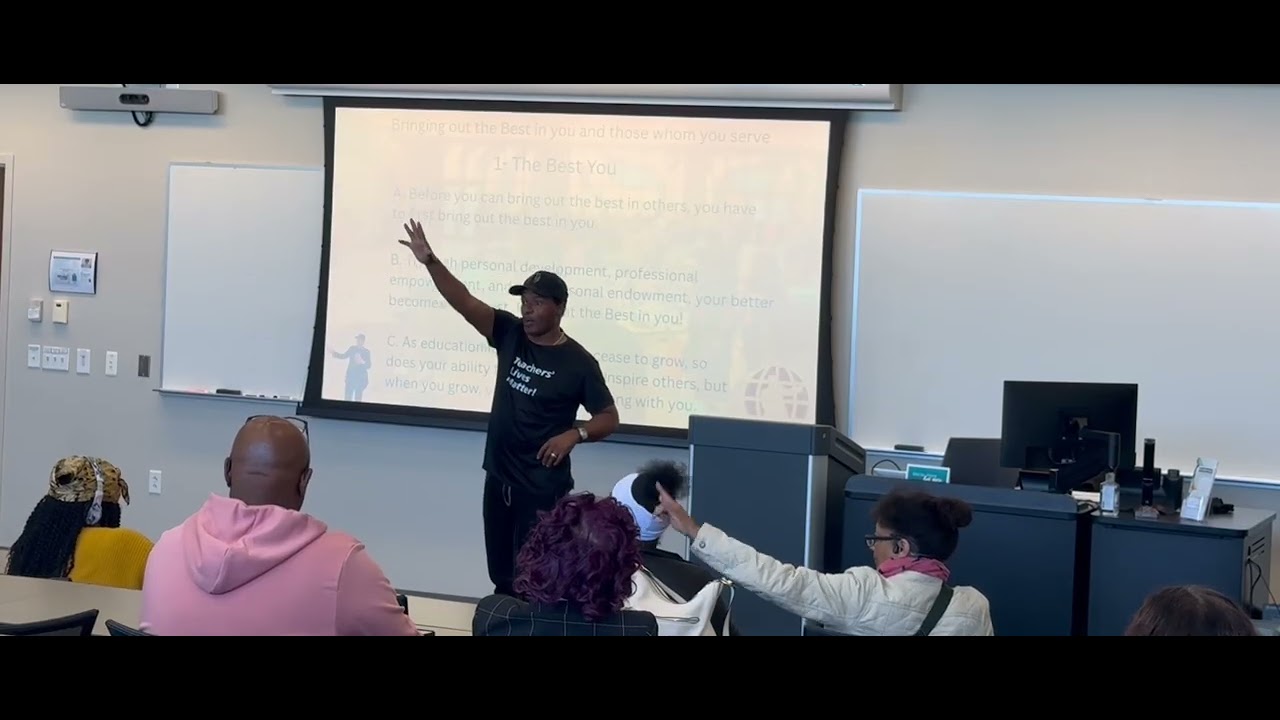
Rico Sharp, who went from homeless teen and prison to founding Student Lives Matter, tells educators they must care for themselves first to serve kids well. He emphasizes heart-centered leadership, staying current with technology, and genuine mentorship as the bridge between despair and destiny.
Chapters
How are you all doing this wonderful Friday afternoon? Good, good, good. My name is Rico Sharp. Shall we begin?
Yes.
Okay, excellent. Uh, first let me start out by saying that I have some books available on Amazon called Bringing Out the Best in You, and I also have Online Leadership Academy, which is an offspring of my books. And I am a leadership developer, leadership trainer, motivational speaker, and a few other things. And I am here today to help bring out the best within you, and I appreciate you for signing up for this Class, and we're going to have a great time. Y'all believe that?
Yeah.
How many y'all believe that? All right, great. I come from Orlando, Florida. Yeah. So I've been up since 3 a.m. in this morning trying to get to you all today, and had to stop in Chicago, and now here I am in Cleveland, and I'm actually looking for LeBron James.
That's mine.
Is it the other way around?
No?
All right, cool. Bringing Out the Best in You is my signature speech and keynote, and it's my signature blueprint. And I draw this focal point and this topic from my own personal life. And I got websites out there that you guys can learn a lot about me on. I'm also the founder of Student Lives Matter and Teachers Lives Matter, and I'm in the process of starting my own speaking academy where I train speakers. Of course, I've been training speakers and training leaders for over 30 years, and so I have a lot of time in this. And I enjoy it. I enjoy being able to help people to live their best life, to discover their talent, their gifts. I enjoy helping people to be able to discover their greatness, not just your potential, because you can die with potential that's never explored. We want to focus on living in your greatness and how to be able to do that. And what is greatness? That, and especially in the position that you're in to influence the lives of kids. I believe that there's something great on the inside of each and every one of us that we were born and created with, and I also believe that we're supposed to live full and die empty, which means that we live a life that is full of strength and power and virtue and wisdom and knowledge and understanding, full of gifts and talents and creativity and originality and authenticity. And we disperse and distribute that in the lives of others, and we pour into people— family members, co-employees, friends, people who are in your inner circle. Kids and everyone else that we come in contact with, so that when our time expires in this world, we die empty, having emptied ourselves out into the lives of others. I also believe that the cemetery is the most wealthiest place in the world, that there are many people in the cemetery that have died with books in them that never got written, poems in them that never got shared, ideas that never got conveyed, you name it. People died with all types of gifts and talents that never came to fruition, businesses that never came to fruition, technology that never came to fruition. And I determined over 30 years ago that that's not going to be how my story ends. I'm going to bring out everything that I have. On the inside so that I can leave it for the generations to come. And so when I say to you, we're focusing on bringing out the best in you, we want to take not only what you have inside, but who you are inside, and bring that out so that you can leave this world knowing that you contributed to humanity.
That's right.
Not just in a good way, but in a great way. All right, let's get started. Point number 1, or slide number 1, I call this the best you. Here's the first thing that I want to share with you: before you can bring the best out of others, you have to first bring the best out of you. How many of you agree with that?
Yes.
Before you can bring out the best in others, you have to first bring out the best in you. So only you can determine what your best consists of, and you have to be true to yourself to know that when you are really giving your best, then you are all in. You're giving your best. But when you're not giving your best, when you're not all in, then you're kind of holding back. And whenever you're holding back, you're not holding back on anyone but yourself. Because you're put here in this world and you're put into systems that you operate in and you're put into schools, you're put into relationships, you're put into the position that you're in to bring out your best, to always give your best. Through personal development, Professional empowerment and interpersonal endowment. Your better becomes your best. Here's what I mean. I've heard people say before that they want to bring out the better version of themselves and be the better version of themselves. And so I kind of thought about that, and I felt like you can be a better version of yourself and not still be the best version of yourself. Does that make sense?
Yes.
You can do things better than what you used to do, but does that mean you're doing your best? Not necessarily so. So you don't just want to be the better version of yourself, you want to be the best version of yourself. And so we want to bring out of us the best in us as educators. As educational leaders, if you cease to grow, so does your ability to empower and inspire others. When you grow, you bring others along with you. Now, I just did a teachers conference in Orlando, Florida, right before our school year began. And one of the things that I shared with our teachers is that you can't rely on 30 years ago in terms of what you have to offer. When you went to school, you graduated, you got a degree. What worked 30 years ago, it doesn't work anymore. What worked 15 years ago doesn't work anymore. Is your degree relevant? Yes, it is. But is your information relevant, right? Is the knowledge that you're delivering in the classroom today, is it relevant? Is it relating to the kids today? Now, I know as parents— how many of you are parents in here? When we're dealing with our kids, you know, our kids feel like, hey, I'm dealing with some stuff, Mom and Dad, that you never dealt with before, that you were not challenged with. To some degree, you got to understand, to some degree that is a true statement. There are a lot of things in this world today that this generation is confronted with that you and I were not confronted with when we were teenagers and when we were young adults. For example, social media is one, right? That's just an example. The advanced technology today. And so you have to remain relevant as An educator, and the way you remain relevant as an educator is that you have to continue educating yourself. You can't rely on what you knew and what you learned and what you accomplished and what you did years and years and years ago, and then want to bring that to the classroom today or to whoever you know whatever your position is, and then think that. The students are supposed to just jump up and grab it and run with it, because it doesn't work that way. It's just like this. Technology is advanced, right? It continues to advance. So 15 years ago, there were certain televisions out, those big old round, heavy, bulky TVs that took 2 people to pick up and carry, break your back trying to pick one up and move it, right? How many of y'all remember those TVs? You still got one? Everybody stretch your hand toward this brother and say, God help us.
God help us.
Because that is no longer cool. We got flat-screen TVs up on the wall, right? And so how many of you remember the old flip phones, the old Motorola flip phones? Okay, those things are out the door, right? You still got yours? I just want to know if you still have yours. Okay, so, so Steve Jobs came along and introduced to us the iPhone, right? And so times have changed, everything has advanced, and now we're dealing with the era of AI. So everything is advancing. So now if the world is advancing, if technology is advancing, if science is advancing, how is it that your teaching and your education from 15, 20, 30 years ago is going to remain relevant in a world that's constantly evolving and constantly changing? And so I say to educators that if you want to remain relevant, you have to go back and pull your degree out and brush the dust and the cobweb off of it and begin to innovate the way that you Bring your message and your teaching and everything that you do in the classroom with kids. You got to upgrade. You have to update. Your computer has been updated, right? You've changed computers over the last 15 years. Some of you have changed cars over the last 15 years. Some of you have changed men and women over the last 15 years. You wanted an upgrade. That's right.
Yeah.
And so when you want an upgrade, you go and you make it happen. And it's the same thing with what you do as an educator. You have to remain relevant in the classroom because what matters is not that you feel that you've done a good job with kids, but that you can see the difference in the lives of the kids that are in your classroom. How many of you are educators? Because I think some of you are. What are the rest of you? Let me just find out, because I know we got some educators, but what position do the rest of you have? Let me ask that.
Social worker.
Social worker, good. What else? Who else?
Recreation manager.
Recreation manager, okay.
I'm an after-school program.
Awesome, great. Anybody else got a different position, different job? Well, we are resource and support specialists, which is a mixture of teaching and case management. Good, great. All right, thank you all of you for being here. Thank you very much. Okay, let's move on to slide number 2, and this is important. I call this the heart of the work. Everything that you do, I need your heart to be involved. A lot of people are afraid to put their heart involved in their work, and by virtue of that, a person is not able, able or capable of bringing out their best. Because if you're not putting your heart in, then you're not passionate about what you do. I work with kids, I mentor kids, All over the country, actually. I mentored men and women that plays in the NBA, WNBA, and NFL. And I have learned some things. And one of the things that I have learned is that when you're dealing with people, your heart has to be engaged. Many people bring their brains and their minds and their degrees and their education, and they let that become the Adhesive or the nucleus that they establish with the people in front of them. But folk know when your heart is engaged with them or not. People know if you are really genuinely and sincerely caring about the person or the people that are before you. I have a saying, that saying is that no one cares how much you know Until they know how much you care. So you can have more degrees than a thermometer, but if your heart is not involved in what you're doing, then you're not maximizing your impact. You're not bringing out the best in you. And oftentimes people fear bringing their hearts and leading with their hearts and engaging their hearts because they don't want to get so committed and involved so deeply.
That's right.
That it becomes an inconvenience to them. But anytime your heart is involved, anytime you love what you do and you love who you're helping, you're going to make a difference. The type of difference that does more than just keep somebody in a classroom or out of a system or juvenile system or some type of home. You're going to keep them out of the grave. And that's what matters the most.
Thank you.
And each and every one of you, with the position that you have, you are called to impact generations, to make a difference. You never know who you're going to raise up next. You never know who you're going to build up. You may be building up and protecting and maturing and training and educating the next governor of your city. You may even be raising up the next president of the United States of America. You just You just never know. You may be raising up the next LeBron James. You just never know. Years ago, I had some flaws in my life in terms of my teenage years, and I, I grew up on the street. I was homeless at the age of 13. I was addicted to cocaine at the age of 13. I got arrested 19 times and sent to prison 3 times. And then one day, Somebody looked at me as a young boy and said, there's something about this young boy. He just needs somebody to love him. He needs somebody to take personal time with him. He needs someone to come and look beyond his faults and see his need and identify the potential and the greatness that's on the inside. And when that person began to do that in my life, That helped me to discover who I am internally and not live with the mistaken identity all my life. And I say to you that you're in the position to be able to look within someone's heart and begin to connect with their heart by bringing your heart in the equation and allowing them to see that you actually care, that this is not about a paycheck to you. This is not about a feather in your cap, but you actually love people, you actually care, and you'll do whatever you can, even if it's an inconvenience. You're willing to make sacrifices. That's when you're bringing out the best in you, because the best of you is not in your degrees. The best of you is in your heart, and it is your heart That makes the difference. Your degrees can help people to go on and graduate from school or get out of the system or straighten their life up. Yeah, there's some things your degrees can do, but when you bring your heart into the picture, you are building world changers. You're building people that will rise up and will love you for the rest of their life. You're able to bring the best out of us. Amen. After all, isn't that how it happened with you? That's right. Yes. Somebody brought their heart in the picture, and they loved you, and they cared for you, and they mentored you, and they tutored you, and they took time with you, and they were willing to pull up their sleeves and get their hands dirty with you, and they went the extra mile with you, and they did some things that normally wouldn't be done, but they did it because their heart was Children are gardens, and you are a seed planted in the fertile soil of their hearts and soul. How many of you believe that? That means that when you invest into the hearts and Into the minds of kids, you are now beginning to determine what their destiny consists of. It's like having a piece of clay, and you form and you mold and you structure and you configure that clay to the shape that you want it to be. That's what you do with kids. When, when a baby is born, sometimes the mother has to take her hand and rub that baby's head to give that head the form that it needs so that that head can be perfectly round, right? How many of you know about that, right? And it's the same thing that you're doing with the hearts of these kids. You are pouring and you are sowing into their lives.
Amen.
And anytime you become the seed, not just plant seeds, but become the seed that is planted into their life with your heart, with your passion, because you care, because you see that child as your child, because the truth is that some of us are the only parent, the only mother and the father that some of these children would ever have, that makes you a surrogate parent.
parent.
That makes you somebody that they come to school looking forward to talking to because you— some of them don't get attention at home. Some of them doesn't get support at home. Some of them doesn't even have a home. And so you're all they have. And so they open up their hearts to you. They trust you. They believe in you. They love you. They need you. They look forward to coming to see you because you make them feel loved and special and accepted. And so whenever you are spending time with kids, you're bringing out the best in them. When your heart is engaged, when you see yourself as a seed being planted in their life, and you realize that this is part of their destiny, And part of their destiny is to have you in their life. And you were chosen specifically to be in their life. It could have been somebody else, but it was chosen. You were chosen. It was ordained. It was destined that it would be you. Why did these kids fall in your hand? Why did they fall in your jurisdiction, in your care? Because you were chosen To help them. Why? Because you have what it takes. And not only do you have what it takes, but you are who it takes to bring out the best in them. And so I need you to, to see what you do as more than a job. It's, it's like a ministry, if you will. It's a duty. It's something that if your heart is involved, you'll do it for free.
Amen.
Not for a paycheck, because you know that you're making a difference and you're invested in their future, you're invested in their life. And if you were working for the government right now and government is shut down and you were not getting a paycheck, if you love what you do, you will continue doing it because you realize that bigger than a paycheck is the impact that you make. See, when your heart is involved This is how you think. You don't walk away from somebody whose future is in your hand. And yes, there's going to be some times where you're going to feel like walking away, but you have to stay the course. Children borrow your belief in them and believe what you say about them and what you see in them. See, you have the capacity to look into their soul and look into their heart and see the potential that they have. But not just the potential, you also see their struggles. You see the things that they're challenged with, and you're able to navigate between their strengths and their weaknesses, their highs and their lows, so that you can channel your energy and your love and your knowledge and your education to really help them to be able to build themselves up. You have that ability to speak into their life. It's like when you were a child, somebody looked at you and told you how smart you are and what you're going to be able to do in life. And maybe that somebody was a father or a mother or a grandparent or an aunt or uncle. Or a friend of the family, whoever it was, they spoke life into you. They spoke success into you. They affirmed you, and you received that in your heart. And even at times when you were not necessarily thinking about it, that seed was growing. Those words became seed that grew and germinated in your heart, and it helped you to grow up. And it's the same thing that you have to do. You have to speak life, speak power, speak grace. You have to speak words of affirmation and tell these kids what they're capable of doing and what they're going to do. You have to look into their soul and see them in their future and speak into their life because you are a seed planted and sown into the gardens of their hearts and minds.
That's right.
Their soul. And whenever you come in contact with them, you're bringing the best out of them. You're helping them to line up with what their future and what their destiny will consist of. So that makes you the bridge, right, between despair and destiny for the youth that you serve.
That's right.
Now, let's go a little deeper. You don't just teach what you know; you impart who you are. That's what you do. You impart who you are. You're not just somebody who is teaching. You're somebody who is reaching. You're reaching into their hearts and you're saying to them, I'm giving you me. Because everything that you teach is a part of who you are. Everything that you share is a part of who you are. Do you agree with that?
Yes.
It's who you are. You're not just giving them knowledge, you're giving them you. And when you give them you, if you're successful, they will be successful too. Because, because I look at it like this: you are what you eat, right? If you eat knowledge, you become knowledgeable.
Right?
If you need understanding, or if you receive understanding, then now you dwell with understanding. If you receive education, now you are educated. And whatever you are, when you pour yourself into the lives of others, now you are giving them not just what you have, but who you are. You are giving Then your first priority is to your mental, emotional, and psychological well-being.
Yeah.
You have to make sure that you are good and that you are strong and that you are stable and that you are mentally balanced and emotionally balanced. You have to make sure that you are taking care of yourself because you can't be all things to all people and not be all things to yourself first. Whenever you get on an airplane and the stewardess goes through the safety briefing, the stewardess will tell you that if the cabin loses Air pressure, there is a mask that's going to fall down from the ceiling, right? And then the first thing they tell you after that is that before you attempt to put a mask on someone else, do what? Put it on yourself. Put it on yourself. Anybody in here ever been on a cruise before? When they have their safety briefing and they go through their drill in the event of an emergency, If the ship starts taking on water, take this life vest and put it on. Before you try to put one on someone else, first put it on you. Why is that? Because you can't save anyone else if you're drowning yourself. You can't help kids if you are not stable yourself. And yes, it's true, We all have some issues at times. We all have certain attacks in our life, certain circumstances. We all have different dilemmas that we have to deal with. We all have our own problems. And there's a difference between you having problems and then problems having you. There's a difference between you having stress and then stress having you. And so we have to learn how to—
Control it.
Like navigate through our personal problems so that we can be in a good mental, psychological state to be able— an emotional state to be able to help others. And so you can't give what you don't have. So before you're able to distribute to others, You have to contribute to you. You have to take care of you. You have to be able to manage your personal life.
Yes.
You have to be able to deal with the things that's happening to your family or your loved ones. You have to be able to deal with turmoil in your relationships. You have to be able to deal with economical pressure. You have to be able to deal with reports from the doctor. You have to be able to deal with a whole lot of stuff. And guess what? And you have to deal with your stuff before you're able to help someone else deal with their stuff. Because what happens is if you do not, then in the event of you dispensing your strength and virtue to— and care and love to Someone else, you become bankrupt yourself. And it's just a matter of time where it's going to show that you're not taking care of you, you're not taking care of home. But I want you to take care of you. Your peace fuels your purpose. Your peace fuels your passion. And your peace fuels your life. Thank you, Rico. Your power. In other words, your state of mind, your peace of mind, is what gives you the ability to be able to be effective while working with us. Number 5, understanding youth mental health. Youth mental health is not the absence of illness. It's the presence of hope, connection, and the feeling of belonging. When I was in and out of the juvenile detention center, because of being in that type of environment, I needed somebody that could step to me and say, I'm going to help you to get your life together. I'm going to help you to discover what should be a priority for you in life, something that you can work towards, something that you can call a goal, a dream, an aspiration. And then later on in life, I found that. But my thought was that if I could have had that sooner, then I could have changed my life sooner. And then I realized that I was dealing with some mental health issues. And children today are dealing with mental health issues that adults are normally identified with. And children are dealing with pressure on their lives today that normally would be suitable for an adult. And so you got some kids that got layers and layers and layers of hurt, and layers and layers of distrust, and layers and layers of pain and abuse. And some of the things that they've had to deal with in their life are some challenges that you and I haven't had to deal with. One of the things that I do, and I, I wrote this curriculum for school called Breaking the Silence, Stopping Gun Violence. And I go around to schools talking about gun violence and the effect of gun violence and how gun violence leads to suicide. I have an event scheduled on November 7th with the Orlando Magic Basketball Association in Orlando, Florida, where I'm going to be speaking to the crowd At 5:30 PM about this same type of stuff and how that all of this leads to mental health illnesses for kids. It's a true thing. Our kids are in trouble nowadays. They need help. And you're in the position to be that bridge between despair and destiny. You're in the position to help them to be able to overcome their challenges.
Thank you.
So you bring hope to these kids, and when you step in the room, you've got some good stuff on the inside of you that you're going to pour out into their hearts. The good book says that a good man or a good woman from the good treasures of their heart brings forth good things. What good things are you bringing forth that is able to contribute to the well-being of these kids? Most lifelong mental health challenges begin in adolescence, so recognizing early warning signs can change a student's entire future. But in order to recognize these early warning signs, you have to be vested in these kids, right? You have to really zoom in and tune into their frequency to understand why they act the way they act so that their behavior won't be seen as something that is just being defiant, but you can understand what's behind these actions that have them acting the way they're acting. Some kids act out because They are trying to scream out for attention so that they can find somebody to confide into, to really let you know what they're really dealing with behind closed doors. And so you have to be able to navigate between their actions and understand what's the motive behind their actions. Why? I know how you're acting, but why are you acting this way? Students can't learn when they don't feel safe or valued. Emotional security must come before academic achievement. Students know— kids know how you really feel about them. They do. You can't hide how you really feel about them.
That's right. Yeah.
I've had some teachers over the years that when I was in school to say some harsh things about me. And I remember one time when something harsh was said about me, I replied to the teacher, I hope that's how you feel about me. But then there are some times when I've had some very pleasant things said about me by a teacher. And it just really stuck with me, and it went with me. And even to this day, I can hear those words echoing and reverberating inside my mind. Purpose is the path to healing. Emotionally healthy educators create emotionally healthy spaces where purpose is pursued. When you are healthy, your kids will be healthy. When you are intact, your kids will be intact. Youth who understand their purpose and potential are less likely to fall into despair, violence, or hopelessness. That's what we do, right? We help them to understand their purpose and their potential. And that they have someplace in life that they can go if they will only just dig deep and begin to trust the process that you're taking them through. The wellness of youth begins with the wellness of those who serve them. Again, you can't give what you don't have. If you possess it, you can distribute it. Our kids are in our hands. We don't just teach youth, we shape lives and build futures. That's what we do. Remember when I talked about the clay? The clay in the hand of the potter? The potter is able to make the clay into whatever vessel the potter feels necessary. Every child carries potential waiting to be unveiled and unlocked. There is no such thing that there is a child within your reach that does not have potential, that does not have a purpose. Maybe it's buried beneath the layers, But it's there. The wellness of youth begins with the wellness of those who serve them. You produce and you reproduce what you have and who you are. You can have stress, but don't let stress have you. As I mentioned before, It's one thing to go through some hardship in life, but you have to be able to manage that and not be driven and controlled by your stress or by your personal challenges because you're working on bringing out the best in you so that you can bring out the best in others. So your personal well-being is your greatest classroom tool. When you are good, Everyone else will be good. We reproduce. We clone ourselves. You teach more through your presence than you do your lesson plan. How you show up in the classroom, or how you show up with a meeting with kids, how you show up and how you deal with kids and talk to them, that's where your impact comes in.
That's right.
What's on the paper, what's on the board, what's in the computer really doesn't matter as much as it does with who you are when you show up. It's you who makes the difference. Your plans, your paper, your assignment, all of that stuff is just the structure to keep the kids moving in a certain direction, but you are the strength in their life, and how you shows up matter. So I say to you, protect your peace and guard your heart, because a healthy and rested teacher or social worker is a wealthy and resilient teacher and social worker. Rico, This is important. Number 9, reconnect with your why. When the workload feels heavy, return to your why and remind yourself of why you answered the call in the first place. Anybody here ever felt like quitting before?
Yes.
We all have, right? You're not making a difference if you've never felt like quitting before. But you ask yourself, why did I sign up for this in the first place? Now it may be that most of you are overworked and underpaid, and you have other options at times in your mind where you're thinking about taking your talent and your service. But then somewhere between thinking about it and doing it, you have a change of heart. Why? Because somewhere in the midst of that you were reminded of why you signed up in the first place. And then you realize the impact that you're making in the lives of our kids, and you realize that most of them, or some of them, does not have somebody like you in their life that can stay in their life to keep them in a place where they can build a life. And that if you Walk away from them, then they have no one. Always remember your why. Teaching is not a job. Being a social worker, it's not a job. Whatever it is that you do, whatever position and title you have, it's not a job. It's a duty. It's a responsibility. It's a calling. And then it's a ministry for you. You and your kids share a common thread. You both need each other in order to be successful. You really do. You need them as much as they need you, because the gift and the talent that you have and the purpose and the passion that you have, you can't do anything with Until you have somebody in front of you that needs it. You are a dispenser, and those kids, they need you, and they cannot move on into a bright future without having you in their life to give them that guidance. When you are happy, your kids are successful, and when your kids are successful, you are happy. Is that right?
Yes, sir.
And finally, student lives matter. Your life matters. And the fact that we all matter means that we're all in each other's life to to be able to support one another. So we must do more than just invest in academic training. We also need emotional wellness, leadership development, and self-care resources. We all have to have that. We all have to take time out to make sure that we are good in every area of our life.
Thank you.
Money is one of the least concerns that we have in terms of being our best and bringing out of us our best. It really is. There are some things in life that's better than money and more important than money, and that is you being you, the best that you know that you can possibly be. Money is going to come to you. Promotion will follow you. Opportunities will find you, but when they come, you need to be a healthy you. You need to be a strong you. You need to be the best you. You need to be in the best position possible. We must do more to secure the future of our kids and our educators and whatever position that you have. I believe that we together can do more to make sure that everyone has whatever it is that they need to do whatever it is that you do. Why? Because you guys are our hope for today, and children are our hope for tomorrow.
Thank you.
Without you, we don't have a functional society today. And without our kids, we don't have a future for tomorrow. So you are equally important as the kids that you train, that you teach, that you counsel, that you mentor, and that you provide resources in the life of. As teachers and educators and social workers and everything else that you do and all of the positions and the responsibilities that you have, you are nation builders, heart healers, and destiny makers or destiny shapers. And when you bring out the best in you, you are able to bring out the best in all of us. And I appreciate your time. My name is Rico Sharp, and I am running out of time. I got enough time to do Q&A if you have any questions for me. Where you from, Rico? Orlando, Florida. I can tell by the accent. What's that? I can tell by the accent. You can tell by the accent? Something. Okay, all right, cool.
So after you was on drugs at 13, and then what happened?
So I grew up in, in the system. I spent years and years and years and years in jail and in prison. And while incarcerated, I met an older white gentleman who had been in prison for 30 years who took me under his wing, who saw in me something different, and he said to me that I'm going to mentor you. And so I became mentored by an older Caucasian gentleman who actually became a father to me, and he helped me to have a change of mind and a change of heart about the life that I lived. And I also— he had a library, and he had cancer, he was dying. And so he made a deal with me for me to buy all of his books from him before he passed away. And so I bought from him an encyclopedia, an almanac, a dictionary, a commentary, a Bible, and a whole bunch of other books. And I turned my prison dorm Into a college dorm, and I dedicated 10, 11, 12, 13 hours a day reading and educating myself. And I went back to school in prison, got my GED, and took this course in prison called Interpersonal Life Skills. And I made a decision while in prison that I'm not going to go back out into society with the same lifestyle. I'm going to go out With a change of heart, a change of mind, a change of direction, a change of purpose. And I did that. And so I was released from prison the last time, uh, November 30th, 1995. When I walked out of prison that time, after having been arrested 19 times and having served 5 years in prison, I had made a promise to myself that my past life is over. And so from that point, I started going back to the streets, talking to friends on the streets and relatives on the street, telling them about the change in my life and how that they can do the same thing. I started speaking in schools and in colleges and jails and juvenile detention centers and prisons. But then I started speaking for the federal government, state government, county government, city government. Then I started speaking for businesses, and I started Started speaking for organizations and corporations that would have me. Started speaking for homeless institutions and mental health wellness institutions and started speaking for corporate America. And eventually one thing led to another. Started a television show, worldwide television show that aired around the world. Started my own radio show.
What was the name of the radio show?
And, uh, and then I started traveling the world speaking internationally. And so today I'm an author. I'm, uh, as I mentioned, the founder of Student Lives Matter, Teachers Lives Matter. I have an online academy called the Best You Leadership Academy. I got these books that y'all are going to go on Amazon and buy before the day is over.
Hold up, sir. What's your book called again?
It's called Bringing Out the Best in You. They're on Amazon. One of them are their leadership books. One of them is the leadership workbook, and they both work as a companion to my online academy called The Best You Leadership Academy. And so here I am, 30— almost November 30th of this year would be 35 years that I have not committed a crime, not not been arrested, not used drugs, and not hurt anyone. Thank you, thank you. And so now I'm doing what I do. I'm helping people to bring out the best in them. So very good question, appreciate that.
So, okay, I'm just trying to figure out if any of the teachers inspired you or, um, When you were in and out?
Yeah, so I had this teacher named Mr. Brown who I absolutely loved. Everybody got a Mr. Brown, somebody, right? And Mr. Brown was that one teacher that would pull me off to the side and speak life into me. Now, I dropped out of school in the 9th grade, and when I dropped out of school, I missed having Mr. Brown in my life because Mr. Brown always spoke something positive He always gave me another chance. He saw in me something that I didn't even see in myself. And that's the thing about kids. You see into kids something that they don't even know they have or know they possess. And Mr. Brown used to tell me that, Rico, one day you're going to make something good out of your life. And Mr. Brown saw me starting to go astray, and he tried to talk to me as a father, but by the time he recognized that I was going astray, I was too far gone. I I was 16 years old. was far gone. My mind was made up that this is the direction that I'm going in. So Mr. Brown planted seeds in my life that one day germinated. And when I finally got my life together some years later, I went and found Mr. Brown and gave Mr. Brown a hug. And Mr. Brown mentored me after I got my life together until the day of his death. And he was a schoolteacher. And that's one of the reasons why teachers' lives matter too. I am not a teacher, but I am here today and I have some level of success in my life because of educators. And for that, I'm eternally grateful. And now I support educators. Any other questions?
What is your philosophy like rooted in? I mean, like, where did it come for the spark? Like, from within you? Yeah, not from what you got from somebody else, but I'm talking about inner.
Where did it— what now? What was the first thing you said?
Like, what read your direction to turn and do what you— it comes from—
it came from within.
Yeah, I'm saying, what was that spark?
So, yeah, it was it was in March 1993.
What you're saying is life changing.
Yeah.
But it's life changing because it comes from within.
Yeah. In March of 1993 is when I began to focus internally and realize that I have something to offer humanity, and I started looking more and more to see what that was. And I started discovering that I'm gifted, I'm talented, that I'm not just this young boy that nobody loves, nobody cares about. I'm not this young boy that has been thrown away and neglected by society. I grew up with some problems in my family, obviously. My father was not part of my life when I was a young boy, and my mother, she was 15 years old with 3 kids. And so she had to give me up for the first 5 years of my life. And not because she didn't love me, but because as a child herself, she couldn't raise 3 kids. Both of her parents died by the time she was 11. So she was out there with no jurisdiction. And boys saw that and took advantage of her. And so I got tossed around from family member to family member, to church member to church member. And I grew up thinking nobody wanted me, nobody loved me, nobody cared for me. So it wasn't difficult for me to run off and try to find a family somewhere else in the streets, which is what happened to me. But while sitting in prison on that last time, I learned to accept myself and to start believing in me and to start loving me. And that if nobody else wanted me, I learned to want me. And that's when I started looking inside.
Thank you.
In March of 1993 and discovered that I am somebody. I need to have self-love. I need to evaluate what my self-worth is, and I need to come in contact with what I possess on the inside that can help me to experience the transformation and the metamorphosis that I need.
Yeah, that's what I wanted to know. What was that pivotal moment for you?
Yeah, yeah, yeah. So the judge kind of helped me out a little bit too.
Man, he's taking no passes.
He said, I'm going to throw you— throw her in prison, and I'm throwing away the key because you are a threat to society. So he helped me out a little bit. I thank him for helping me out too once I got out of that lifestyle. Anyone else? All right, well, let me leave you with this. Always aim for the top because it's the bottom that's overcrowded. Always be willing to aim high and hit nothing rather than to aim low and hit everything. Most people fail in life not because they aim too high and miss, but because they aim too low and hit. Your attitude towards life determines life's attitude toward you. Do not walk in the shadow of those you admire, but discover your own passion and dare to aspire, for then you will realize your Most people don't realize that they possess on the inside all they need to change their life and to realize their dream. But I say to you that life is what you make it. And when the opportunity comes your way, you be sharp and maximize your moment and make yourself a great life. And think sharp, talk sharp, plan sharp, walk sharp, dream sharp, dress sharp, live sharp, and you'll be sharp. Thank you for your time, ladies and gentlemen. My name is Rico Sharp.
Thank you.
More from Rico


Rico Sharp- Mental Wellness Leadership Conference- See the true person before you, not their flaws.


Rico Sharp- Part 4 Bringing Out The Best in You- Mental Health Leadership Conference
Rico Sharp- Bringing Out The Best in You- Leadership Conference. Build your 3 areas of confidence-

Part 2. Rico Sharp Bringing out The Best in You Mental Health Wellness Leadership Conference 8/27/26

Part 1- Rico Sharp Bringing out the best in you Mental Health Wellness Leadership Conference 8/27/26

Rico Sharp- My Brother’s last words to me before he died- Don’t let life kill you. Leadership Event.

Rico Sharp - Keynote: Bringing Out The Best in You. Leadership Conference. 8/27/26

Rico Sharp- Bringing Out The Best in Mental Health Wellness Leaders Conference
I’m on my way to Bring Out The Best In Mental Health Workers for Florida Behavior Health Conference.