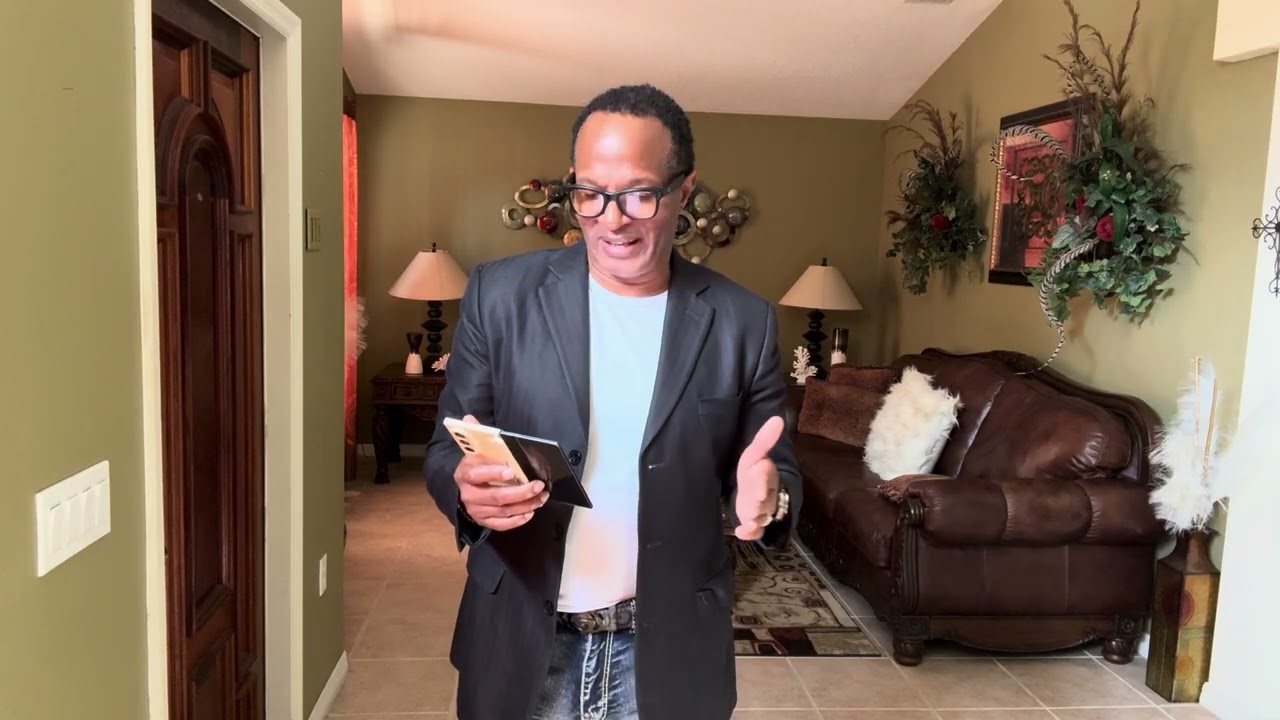
I’m on my way to Bring Out The Best In Mental Health Workers for Florida Behavior Health Conference.

Rico Sharp tells mental health workers at the Florida Behavior Health Conference that they must take care of themselves first. He uses lifeguard and CPR metaphors to explain the stakes, recalls his brother Felix's dying words, and argues that clinicians should share their own experiences to build trust with clients.
Chapters
Good morning, it's Rico Sharp. I hope you're having a blessed day today. I know it's a little early in the morning, but I am on my way on this wonderful Thursday, August 27th, 2026 morning to go and speak at this Florida Behavior Health Conference. And listen, I got my sharp glasses on, as you can see. You know why? Because I got to be sharp today. I got to be sharp as I go and empower these people to step up their game, to step up the support and the services that they render to people who are in need of mental health services, people who are trying to attain mental health wellness. So I'm going to be training leaders today and speaking to leaders. And man, do I have a message for them today. Like, I have something that I feel like is perhaps my best message today that is really going to resonate with those who are attending this conference. I feel like there comes a time— and this is all part of the message— where— and you guys know my brand, Bringing Out the Best in You— I feel like there comes a time when Before you can bring out the best in someone else, you have to first bring out the best in you. And as mental health workers, you have to make sure that you're bringing out your best because this isn't like just a regular 9 to 5. These are people's lives on the line. These are people's mental well-being on the line. This is going to be something that affects families and, and generations and sometimes workplaces. And I'm going in today to talk to them from my heart, not a little cute message where I'm gonna just give a couple of points and give a couple of principles and a couple of practical applications, and then we're outta there. No, no, I gotta dig deep. I gotta connect with their heart. I gotta really like pull out of them the best that is in them. And one of the things that I'm gonna be talking about is that You got to first look at you, and you got to take care of you, and you got to make sure that you are good. You got to make sure that you're okay, because you can't help anybody when you need help too. You can't give hope to anybody when you're hopeless. You can't strengthen anyone when you need to be strengthened, and you can't encourage anyone when you need to be encouraged yourself. So the first thing that I'm going to do is I'm going to deal with them. I'm going to pump them up, empower them, And give them some things that would really help them to be able to stabilize their own personal lives. Another one of the things that I'm going to talk about is that you can't allow for what you do at work when you're serving people who have mental health conditions, psychological conditions, emotional conditions, people who have gone through pain and trauma. They're coming to dump all of that and unload all of that on you, and so you got to be able to make sure That you can handle that, that you can carry the load, and you can be compassionate and have passion, but don't clash and crash. In other words, care about the people, love what you do, but don't take it home with you. Because you got to remember, there's a line that has to be drawn between what you do at work and the people that you love at home, your family members that's looking for you to come home, although you've had a long, exhaustive, depleting day that has exasperated your strength and your emotional energy, you got to have enough energy left and strength left to serve those at home. Whether you're a father, a husband, a mother, or a wife, you got to be able to give to them what they expect and what they need from you, as well as the people who you serve in your mental health office. Now, another thing I'm going to do is I'm going to tell them, hey, look, you got to be willing to understand something. The doctor need a doctor, a dentist need a dentist, a pastor need a pastor, a teacher need a teacher. And a mental health wellness provider needs a mental health wellness provider. You got to find somebody, not just your mom, your friend, not just somebody that is close to you, but you got to find another professional as a confidant, someone that you can go to and say, I need you to speak to me, pour into me, and help me to be, to be all that I can be. Because sometimes I feel like I'm starting to lose myself or lose my marriage or lose my family or lose my peace, my sanity. And my joy, my happiness. And then once you do that, now guess what? You can look beyond just your normal duties and you can dedicate and contribute from your heart everything that the people need that you serve. So I'm gonna— once I get finished with them, and that's just a small piece of it, but once I'm finished bringing out the best in them and pouring into them, then I'm going to share with them how to bring out the best in the people that you serve. I'm going to tell them You got to be able to look beyond their faults and see their needs, right? Understand that people can go through things and have these mental disturbances in their life, and that really not be who they are. There's a season that they're going through. And so I need you to be able to look beyond the very fact that they're still in that season and be able to work toward what they can do and what they can have and how they can live 2 years, 3 years, 4 years, 5 years, 10 years down the road. Also, I need them to be able to not focus on what's wrong with the customers or the guests or the clients or the patients or whoever they are. Whoever they are, don't focus on what's wrong with them. Focus on what's strong about them, right? Don't point on— point out so much their weaknesses. Point out their strength. Point out what they're good at. Because this reverse psychology allows for you to now put in their minds a whole new picture, a whole new projection, a whole new image of them So that they can begin to understand that, yeah, I do have some good things going on with me. I do have some things that I'm great at. I do have some virtues and some characters and qualities and some things that I do really, really well. Because one of the reasons why people stay in a place where they're dealing with the darkness of mental health illness is because they don't believe in themselves anymore. They've lost that contact and that self-faith or that self-confidence. They've lost that self-respect and that self-value and that self-worth within themselves. And I need mental health workers to be able to pour it back into them and say, look, your life is not as bad as you thought it was. Like, like, and then another thing, point out your own struggles and challenges. Share with them, pull your sleeves up and share with them the struggles and challenges that you've had along the way in your own personal life. Because people need to be able to know that they can trust you. They need to be able to know that When you talk to them, that you're talking to them not just from something you read in a book, but from lived experiences, that you've gone through these challenges yourself. Whether it was a tropical storm, whether it was a Category 1, 2, 3, 4, or 5, you've had some struggles, you've had some challenges, and you've had to work through some things, and you were able to work through them, and you gained the victory because you processed the process. You processed the process. You worked the work. And then finally, You know what I'm going to tell them? I'm going to share with them that you are a lifesaver, that you're not just here to give people a medication and send them home. Like, you're not just here to put them on a Ritalin or, or something that helps them to stabilize themselves. You're, you're here really to help make them well. You're a lifesaver. You're here to keep them from the grave. So for mental health workers, sometimes you're the last person that stands between them and an early grave, an untimely grave. And I need you to realize that it's just that serious, because somebody can leave your office and go out there and never make it home, never come back to your office. And the next notice you get, you've been invited to come speak on their behalf at their funeral. So this is serious. You're a lifesaver. You are a lifesaver. And I'm going to share about my brother Felix Sharp and how his message to me was right before he died. Is don't let life kill you. It's so serious that we understand that this is a matter of life and death, that when we're dealing with people and we're trying to help people who have mental health illness, that this is a matter of life and death. So I need you to put on your lifeguard. I need you to put on your life vest. I need you to put on your life support, get your life support tools, and come in and come in ready to perform intensive surgery on someone who has mental health illness, because you never know just how close to the edge they are or just how close to the end they are. And then finally, finally, I'm going to close out with this, and this is why I hit the home run with the bases loaded. I'm going to tell them that you got to make sure that you're giving your all when you are working with mental health patients. Why? Because you never, never know who it is that you're working with and what you're going to be able to do with them and bring out of them and pour into them that will eventually cause for their life to become all that they had the potential and they had the capacity to make it. And when you know what I'm going to do, I'm going to tell them, hey, don't give up on people just because they come in dirty, come in smelling, come in stink, come in a little cray-cray. Don't Don't give up on them. Understand that when you speak to people, you're pouring life into them. You're resuscitating them. You're helping them to revive. You're giving them CPR. You're giving them mind-to-mind CPR, mental CPR. And I gotta share, no one cares how much you know until they know how much you care. But then I'm going to end it with this, with the swing at the ball, and it is, you just don't know Who it is you're going to help and who that person is going to go out and help themselves and how that they're going to be a world changer one day themselves. I'm going to point out because one day this guy that's talking to you was in that place where I needed mental health support. I needed mental health support myself, and because I was able to get it through the different avenues and the resources that were made available to me— thank you, Jesus. I am now helping mental health patients— mental health people, rather. And we all, to some degree, have mental health challenges, believe it or not. And we have stress, we have pressure, we have frustration, we have anxiety, we have anger, we have low self-esteem at times, or battles with our esteem, battles with our weight, battles with what we think people think about us, battles with our self-worth, our self-value, battle with our self-image. Yes, we do. But I'm going to say, look at me. Somebody reached out and helped me, and now look what I'm doing. I'm traveling the world and I'm helping to get people to see the best in themselves and to bring it out of them. I know I took a lot of time sharing this, but guess what? It's worth it. I'm Rico Sharp. I'm bringing out the best in people. I'm going to say I'm going into jails, I'm going into prisons, I'm going into schools, I'm going into colleges. I'm going into churches. I'm going into the federal government departments. I'm training college executives. I'm training CEOs and CFOs. I'm training people in corporate America. I'm speaking everywhere. I'm speaking around the world. One day somebody stopped to help me out, and now I'm helping to change, to empower, and to reinforce the lives of millions and millions of people. Around the world. I gotta go, I gotta get to where I'm going, but I wanted to pull over on the side of the road and share this with you. It's a long video, but I'm speaking from my heart. Listen, if you need a speaker, if you need a trainer, my brand is called Bringing Out the Best in You. Go to ricosharp.org, call me at 321-262-8871, go to Amazon and get my books. Get my books, Bringing Out the Best in You. I'm also working on some brand new books that's going to be released around the holidays. I can't talk too much about it right now because it's a big secret. But listen, I love you. Pray for me. I thank God for you. And let's bring out the best in us. Remember, life is what you make it. When the opportunity comes, you take it. You be sharp now and maximize the moment and make yourself a great life. And think sharp, talk sharp, plan sharp, dress sharp, walk sharp, live sharp, and you'll be sharp. Take it from me, Rico Sharp. I know. Rico Sharp.
More from Rico


Rico Sharp- Mental Wellness Leadership Conference- See the true person before you, not their flaws.


Rico Sharp- Part 4 Bringing Out The Best in You- Mental Health Leadership Conference
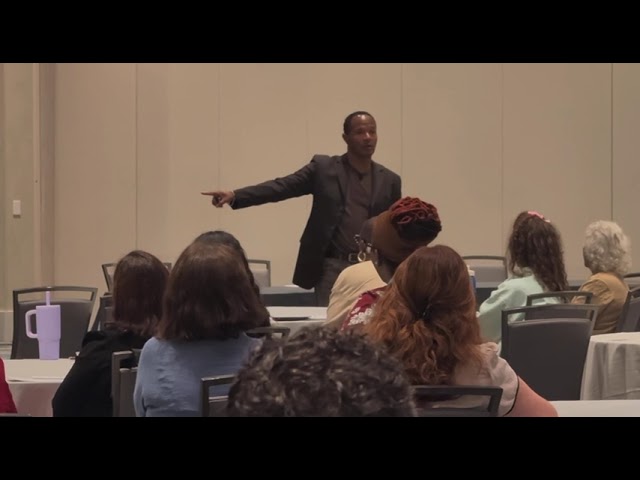
Rico Sharp- Bringing Out The Best in You- Leadership Conference. Build your 3 areas of confidence-

Part 2. Rico Sharp Bringing out The Best in You Mental Health Wellness Leadership Conference 8/27/26

Part 1- Rico Sharp Bringing out the best in you Mental Health Wellness Leadership Conference 8/27/26

Rico Sharp- My Brother’s last words to me before he died- Don’t let life kill you. Leadership Event.

Rico Sharp - Keynote: Bringing Out The Best in You. Leadership Conference. 8/27/26

Rico Sharp- Bringing Out The Best in Mental Health Wellness Leaders Conference