Leadership Workshop for Down Syndrome Leaders.Bringing out the best in you- Rico Sharp
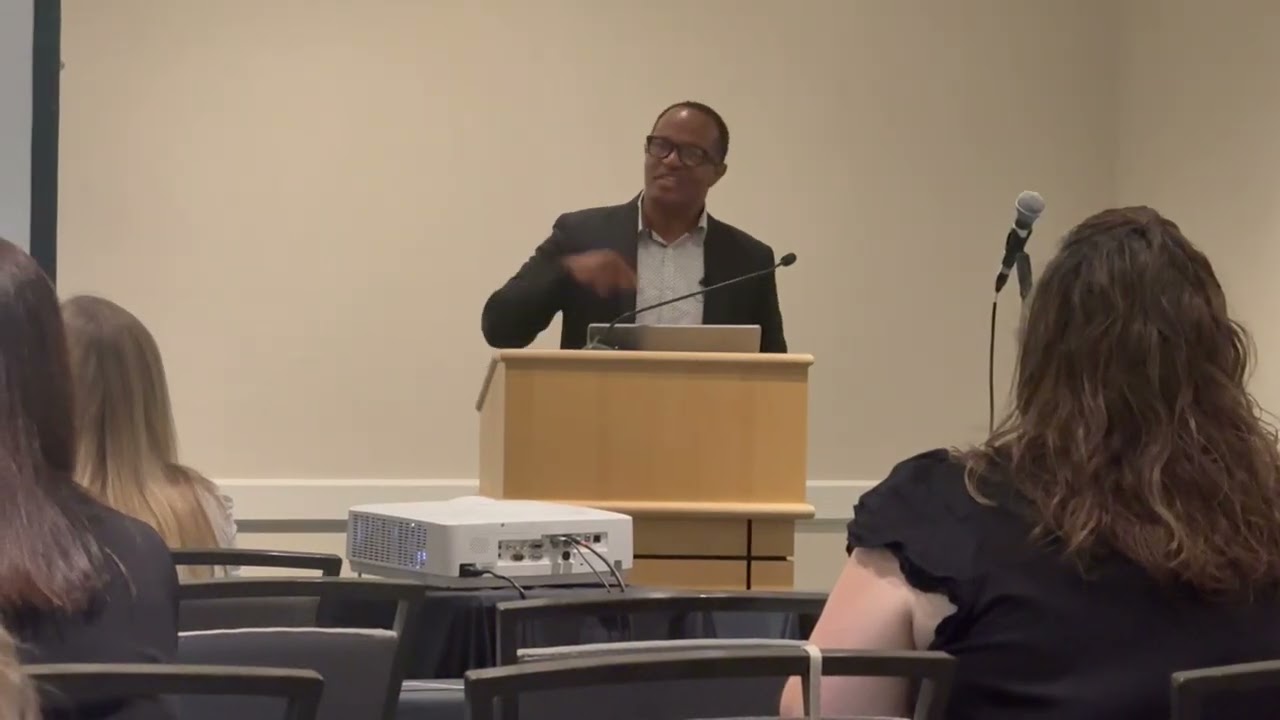
In this 60‑minute motivational workshop, speaker Rico Sharp shares how his experience raising two sons with Fragile X syndrome shaped his leadership philosophy and his work with the Down syndrome and broader special‑needs community. He begins with a personal story about doctors’ bleak predictions for his sons and how he chose to prove them wrong, emphasizing that the world must change its perspective rather than forcing the individuals to conform. Sharp then outlines a series of leadership principles rooted in identity, purpose, emotional intelligence, and heart‑centered service. He stresses that true leaders are the difference, that leaders must first bring out the best in themselves, and that they grow through self‑knowledge, discipline, and continuous learning. The talk covers practical tactics such as using words of affirmation, seeking constructive feedback, building a culture of trust, respect, and belonging, and leaving a legacy that outlives a position. Sharp repeatedly ties these concepts back to his sons, illustrating how they have taught him resilience, optimism, and the power of positive language. The presentation concludes with a call to “be a grave thief” – to leave one’s gifts for the next generation – and a series of inspirational maxims about aiming high, leading with integrity, and living a life that inspires others.
Chapters
My name is Rico Sharp, and I am honored to be your speaker today. I want to focus on the topic, bringing out the best in you and your organization, and I'll begin with slide number 1. This is an AI-generated photo of me and my 2 sons. I have 2 sons that are very precious My oldest son is Rico Sharp Jr. He's 32 years of age. My youngest son is Tyrique Sharp. He's 28 years of age. Both of them are diagnosed with Fragile X syndrome. Fragile X syndrome, like Down syndrome, is a syndrome that have intellectual impairment. We found this out when my sons were— my oldest son was 4 years old, that they were diagnosed with Fragile X syndrome. Doctors basically said that your sons will not have a normal life. They won't have a proper relationship with you as their father. Mm-hmm. They won't be able to hold a conversation, ride a bicycle, drive a car, or do any of the quote-unquote normal things in life. Well, when I heard that, immediately that sent me on a quest to prove the doctors wrong. Mm-hmm. To pour into my sons in a way that I just would not pour into sons that did not have disabilities. I wanted to give them a life that would not be limited by other people's perspective and other people's opinions. And so I really began to work overtime to make sure that my sons would understand that they are perfect just the way they are. My oldest son Rico, one day I was walking by his bedroom and he was watching a video on YouTube, a Nickelodeon video called iCarly. And there was this song that he kept rewinding over and over and over. And when I walked by his bedroom the first time, it kind of caught my ear, but it really didn't stop me. But the song said, one day the world is going to change for you and be so perfect for you. And the second time he rewinded that song, it really began to catch my ear. One day the world is going to change for you and be so wonderful. And then I stopped and I started to think for a moment. He's communicating here. He's saying something to me that's very, very important that I take note of. So I proceeded to walk into his bedroom. bedroom, and I sat down on the bed next to him, and he rewinded it again. One day the world is going to change for you and be so wonderful. And as I listened to that the third time, it really began to resonate with me. And what I discovered is that he was communicating to me that he doesn't need to change. He doesn't need to transform or be reconfigured. To fit the world idea of what a perfect person is like. The world needs to change its view. The world needs to change its perspective. The world needs to understand that our kids, they are perfect just the way they are. They may not fit into the profile of how other people feel like they should fit, but they are who they are and they are uniquely created. And I began to realize that my son is perfect. My sons are perfect. They don't have to change for the world. The world needs to change for them. And it's the same way when you're dealing with the Down syndrome community. The world needs to change. They are created uniquely, and I am blessed today to have 2 wonderful sons. I could not have asked or prayed for 2 sons that brings me more joy, more fulfillment, and more contentment. And I believe this, I believe that I didn't choose my sons, my sons chose me. And I'm so grateful to be chosen. And just like with you, I don't believe that you necessarily chose this mission as much as this mission chose you. My sons having Fragile X syndrome has taught me a lot about leadership, about unconditional love, and about purpose. And they have really been able to bring out the best in me because they've helped me to be able to reach inside and bring out of me gifts and qualities and love and understanding and patience that I didn't know I had, that I didn't know I possessed. And I was thinking about walking into this room today that if my Creator said to me, okay, I can give you 2 sons that does not have Fragile X syndrome, or you can keep the 2 you have, I would keep the 2 I have 1,000 times over. Amen. I am blessed today, ladies, to be able to have 2 sons with Fragile X syndrome, and I love them with all of my heart. And every day I wake up and I put my shoes on, I'm living for my sons. I'm giving them all that I have to give to bring out of them the best that is in them, while at the same time they're bringing out of me the best that's in me. And that's exactly what you do. And Every single day. You bring out of others the very best that is in them, and you're allowing for them to bring out the very best that is in you. So I wanted to just digress for a moment to take this time to say thank you for your service. Thank you for all that you do. Thank you for being the person that you are that works with the Down syndrome community to help them to have the life they deserve. May God bless you. Thank you. And all that you do. Can you give yourself a round of applause? So I want to talk about leadership. Leadership isn't simply changing people. Leadership is allowing the people you serve to change you while you help them become everything they are capable of becoming. And that is so true. And one of the things that I've come to find out about leadership, and I've been a leadership speaker for over 30 years, traveling the world doing leadership seminars for the federal government, for Fortune 500 companies, for college executives, for nonprofit, for-profit, faith-based organizations, mental health organizations, and beyond. And one of the things that I have found out is that when you operate in leadership, it's not about you changing others. but it's about allowing for others to bring out the best that you have in you so that you can better serve the purpose by which you are called to serve. Leadership is not something that everyone is going to do, but leadership is something that when we do it, we do it to bring out the best in others while they're bringing out the best in us. So my first point is that you are the difference. One of the times I was going to go speak for the federal government, I had to do an interview with a peer of 5 people, and this committee laid out for me the requirement and the certification that they felt like was needed for a speaker. And after laying everything out for me, they asked me, they said, Mr. Sharp, Do you believe you have what it takes? And I replied back and said, no, no, I don't have what it takes, but I am who it takes to get the job done. And one of the senior leaders leaned back in their chair and they said to me, you are the one we're looking for. And I came here today to say to you, you don't have to have what it takes when you are who it takes. To be able to serve and make a difference, and to be able to bring out the best in you so that you can bring out the best in your organization and the people you serve and those who work alongside of you. So how do we do that? How do we go from having what it takes to being who it takes? Well, we lead with identity. Leadership begins with knowing who you are before focusing On what you do. We give not based upon what we are talented and skillful in, but we serve and we lead based upon our heart. And we recognize that our identity is not defined by how gifted we are, but by how passionate we are. And this is our identity. So we lead with purpose. We keep our mission at the center of every decision, conversation, and challenge. We understand that serving in this community requires people who have a heart for the people we serve, and this is our purpose. We're making a difference. Mm-hmm. We're bringing out the best in those we serve. While simultaneously they are bringing out the best in us. And then we believe before others do. I often say that sometimes we have to see in others what they possess before they can see it in themselves. We oftentimes call out what we see in others so that they can get a vision of what they possess. When I'm helping my sons to grow and overcome a challenge, I have to be able to see in them that they are capable of doing it, capable of overcoming this challenge. And then I tell them that they are capable of overcoming it, and I help them to see that within themselves. And that's exactly what we have to do. We have to believe that they are capable, oftentimes before they believe it themselves. So, So sometimes other people have to borrow our faith in them until their personal faith in themselves kicks in. Let me say that one more time. Sometimes other people have to borrow our faith and our confidence in them before their personal faith and confidence kicks in. We develop people. The greatest leaders don't build followers. They build confident, capable leaders who multiply the mission. I believe we're called to reproduce ourselves in terms of leadership. We raise up great leaders that would do great things. I believe that a great leader will one day work themselves out of a job. You could be so good at what you do that you learn how to raise up people that can do exactly what you do the way that it needs to be done. And you can then delegate to them the assignment and the responsibilities that you once had to do. And it's not because you were trying to get rid of some of your tasks and assignments, just that when you're great at being you, you bring out the best in others, and that allows them to be able to live life at the realm of leadership. So we're the difference. It's not that we make the difference, we are the difference. There's a difference between making the difference and then being the difference. When I walk into a room to do what I do, I don't go in trying to have what it takes. I see myself as being a person who is the one it takes to get the job done. That's right. And I want you to have that same mindset. You know that you don't have to try to qualify and have certain skills and talents that other people have. You're uniquely designed and uniquely chosen to do what you do. You have the heart, you have the mindset, and you are ready to launch in with all that you have because you are the Can you say this with me? I don't make the difference. I am the difference. Point number 2, before you can bring out the best in others, you must first bring out the best in yourself. So it's important that you know yourself deeply. Understand your strengths, your weaknesses, your values, and purpose. Here's what I say to people. It's very important that you understand your strengths and weaknesses. Why is that? Because when you don't know your strength, you undercompensate. When you don't know your weaknesses, you overcompensate. When you don't know your strengths and weaknesses, sometimes you will step aside from something that you are very well capable of doing. And then other times you would sign up for something that may not be the thing that you need to do at that particular juncture. I would say to you, master your thoughts, focus on what you can control, and think with clarity and intention. Manage your emotions, stay calm under pressure, and lead with emotional intelligence. I know it's difficult sometimes when you're dealing with A community or with people that have special needs. I know that from being a father for 32 years with sons with special needs, because sometimes they require more, don't they? Sometimes you have to give extra, and sometimes it can take an emotional toll on you. And when that happens, it can affect your judgment. It can affect your mindset for that moment. But you have to be able to step back and digress, take a deep breath, and begin to jump back in the ring to know that I have something that I need to help my people accomplish, those I serve accomplish. And I have to do that as a father. Doesn't mean that I don't love my sons. It doesn't mean that I'm not going to ever look at them In such a way, but it does mean that I have to make sure that I'm my best for them at all times. And sometimes I have to make sure that I'm not becoming emotionally burnt out. Sometimes I have to make sure that I'm not becoming physically burnt out. And I have to do that so that I can be there for them when they need me. Because we're— at the end of the day, we're all humans, right? We're all humans. And so we do get tired. But sometimes we're able to overcome our tiredness or weariness simply by gauging our emotional intelligence, simply by mastering our thoughts, and simply by building daily discipline. Small, consistent action creates extraordinary results over time. I love working with my son because it gives me the opportunity To not only be disciplined, but to also help them to become disciplined so that they're able to gauge themselves as much as they possibly can. And then I take responsibility. I own my choices. I learn from my mistakes, and I keep moving forward. When I first found out that my sons had Fragile X syndrome, I didn't know how to react. I didn't know what to expect. I didn't know what that looked like five years down the road, ten years down the road. I had a whole lot of questions, more questions than answers. But one day I just began to sit back and say, "You know what? We're going to do this one day at a time, step by step, hug by hug." Words of affirmation by affirmation, encouragement by encouragement. And as a result of that, I began to build personal discipline, which prepared me to be the best father I could possibly be. And my sons live with me. They always will. And I'm excited about what life looks like. I'm excited for the future. Because I get a chance to see what their life is going to be like. And here we are, overcoming everything their doctor said they won't be able to do. My youngest son is on a different spectrum than my oldest son, but my youngest son can drive a car. They both graduated from high school. They both are becoming more and more Independent. And I'm so excited to see what the next 5, 10, 15, and 20 years are going to look like. And every so often they surprise me, they amaze me. I see them doing things that just really blows my mind, that makes me feel really good at heart because they're defying what the doctor said. would be their limitations. And I'm sure you get a chance to see that too. You get a chance to see the growth. You get a chance to see them evolve. You get a chance to see those you work with go from stage to stage and level to level. And sometimes it's the small things that really gives my heart the joy to be able to see my sons grow up. And my, my fear of Wondering what life would be like for them when I'm gone is diminishing day by day, because the more I pour into them and the more they're able to give back, I'm beginning to see their independence growing and developing. And it gives me more peace, it gives me more joy, and it diminishes the fear of wondering what would happen to them. When I'm no longer here. I'm seeing the best of them come out, but they started this process with demanding the best of me as their father. And every day you walk into your office, every day you go to work, the job that you do, the people that you serve, they are demanding the best in you. And when you give it, you bring out the best in them. Here's something that I've learned. Leadership is a lifestyle. It's not a job. It's not something you clock into and then clock out of. It's not 9 to 5. You are a leader 24 hours in a day, 7 days a week. How many of you agree with that? Your leadership responsibility follows you from home to work, from work to visit with the family members, from the family members to the grocery store. Everywhere you go, life is teaching you something. You're gaining experience as a mom, as a wife, as a daughter, as a sibling, as an employer, as a supervisor, whatever your roles are on the job. You are gaining experience, and that experience that you're gaining is preparing you for all that you do on the job. And so leadership is not something you do Monday through Friday, it's who you are. Leadership is not what you do, leadership is who you are. Life is continually building your leadership experience, your skills, your talents. The grace that is upon your life to be able to serve. Life is constantly developing you for bringing out the best in you. So leadership is a full-time responsibility, especially when no one is watching. Healthy leaders build healthy cultures. Healthy cultures are built on trust, respect, belonging, encouragement, accountability, and integrity. Healthy cultures are built on others being able to feel valued, heard, respected, and appreciated. Healthy cultures are built on people feeling empowered and having the space and the grace to be able to grow and be themselves and bring out of them what's within them. And you create that culture. You create the culture in your work environment that gives other people the space to be themselves and to bring forth what they are gifted and talented in. Everything my brother— Culture answers one question: what does it feel like to be led by you? Like, if you're able to sit across from those you lead and listen to them share transparently and honestly what it feels like to be led by you. That will give you an opportunity to see the areas of your life that you need to focus on building up, strengthening, or toning down, maybe altering or curving in some kind of way. I started an organization many years ago that grew to 3,000 people, and one of the things that I did is I sat down with my leaders and Began to ask them, "What do you feel like are my issues that you have with me? Be honest with me. I'll tell you something. Be careful what you ask for, because you just might get it." And when they began to talk to me and tell me as their leader what they felt like they had an issue with me concerning, and what those things were they felt like I could do differently or. Maybe better. I was shocked. I was surprised. I was blown out of my mind because I thought that being the one who built this organization and being the CEO, that I had it all together. But I finally realized that I was missing some— I was not firing on all cylinders, that's for sure. But it helped me. We call it constructive criticism. It helped me to go back to the drawing board. And to take a deeper and closer look at my leadership ability, to make sure that I wasn't leading in a way that I felt like I was so that I could pat myself on the back at the end of the day. But I needed to make sure I created a culture where people felt heard and loved and accepted and wanted and believed in. And the moment I started adjusting me, it allowed for them to bring out the best in them, and then our culture began to grow. to multiple locations. And I'm sharing that with you because you have the ability to determine what the culture is going to be like at the workplace that you are. I don't know what your positions are exactly, where you work at, but I know that your position is so important that the moment you begin to really take a deeper look, a more intimate look within, and allow for people that you lead to be able to really sit down and talk to you, it will really bring out even a deeper level of leadership within you. People join because of the mission, but they stay because of the culture. When I go out and speak and do talks for people that works in departments that focus on DEI— diversity, equity, and inclusion— one of the things that I share is that everybody wants to be where they feel appreciated. Nobody wants to be where they feel tolerated. How do the people you lead feel? Do they feel tolerated or do they feel appreciated? Here's the fact: when people feel appreciated, they show up early, they stay late, they do things that's not necessarily part of their job requirement. When people feel tolerated, they feel like you pay them just enough to keep them quitting. And they work just enough to keep from being fired. People want to be appreciated, and we create the culture where folk feel appreciated. Point number 5: Lead with your heart, not just your head. This is something I learned early on. No one cares how much you know until they know how much you care. You can have more degrees than a thermometer, but if people don't feel like your heart is involved, then they're not going to give their very best, will they? That is so important to understand. People need to and can feel whether your heart is a part of your service, your leadership. Mm-hmm. We lead with love, compassion, passion, empathy. We understand that great leadership is developed through degrees of the heart, not through degrees of the mind. It's not important to show people how educated you are as much as it is important to show people how passionate you are to not just make the difference but be the difference, understanding again That you don't have to have what it takes when you know you are who it takes. See, I don't have to perform for the people I serve. I just have to give them me, all of me. And when they see the flaws in my life as a leader, because there are some and they will see them, they don't judge me based upon my performance when they know my heart. That's right. There was a time, I think it was in 2008, during the Great Recession, or I call it the Great Recession, it's the only real recession I know in my day and time. But when the market crashed, and my business took a really hard fall, and I had to lay off some employees, and it broke my heart to have to go to my employees and say, I can't afford to pay you. I'm sorry, but I have to stop being able to give you a paycheck. And it just really, really broke my heart. But to my surprise, every one of my employees that I could no longer pay said to me, You don't have to pay me. I'm going to work and serve for as long as I possibly can. Because I know you care about me. I see your heart. I know you love me. If I have to go get a job elsewhere, I'll give you ample notice, but for right now, I'm going to just volunteer until things get better. That made all the difference to me. That let me know right then that I am not alone, and let me know that I got people who loves me just like I love them. And the reason that they decided to stay on the job without quitting was because they have seen my heart in action all along. And when you give people your heart, you get a heart back in return. Say this with me, when I give my heart— When I give my heart— I get a heart back in return. So people follow leaders they trust, but they trust because they see and feel your heart. That's the only reason we trust people, because we can see and we can feel their heart. No one wants to trust somebody that they don't know really care about them and have their best interests at heart. Point number 6. Empower others with words of affirmation. This is big with me. This is why every now and then I'll ask you to say something. I believe in the power of words. I believe in the power of affirmation. My sons taught me that. That's something that, that they brought out of me. I had to help them to realize that you're only limited Based upon 2 things. One, the way you see yourself, right, which is based upon your mentality, your perspective. And 2, based upon what you say or does not say. And so I said to my sons early on, instead of saying, Daddy, I can't. Daddy, I'm not good enough. Daddy, I don't have what it takes. Say, Daddy, I can. I know I can. Say, yes, I will. I will do it. I will accomplish this. And say, I am. I am able. I am capable. And so in everything that I do, I live by this principle of positive affirmation because words are very powerful. They're powerful when they're spoken. And then they're powerful when they're received. And so when you're working with people who have— who are uniquely creative, which is what I use in terms of saying special needs, I use uniquely creative. When I work with people who are uniquely creative, I tell them what they can do. I look into their heart and I say, you're capable. You can do this. You got this. I know you can do it. I can see you doing it. I see it in you, I know you have it. Again, people have to borrow your confidence and your belief in them until their personal confidence and belief kicks in. You are the same exact way, and you know how much it gives you strength and hope when somebody tells you what you're capable of doing, and what you can have in life, and who you can be in life. And so I speak life, I speak positivity, I speak strength. I tell my sons that they can dominate in this area. And you know what? When I tell them that, they trust me, they believe me, and they give it their all. They will try, they will do whatever they believe they can do because The truth is they can do it. Now, they may not do it the way that somebody else thinks they should. They may not get it right the first time or the second time or the third time, but the wheels are spinning, the wheels are turning, they're in motion. So I will always say to my sons, you can do this. You can do it, Rico. You can do it, Tyreke. In fact, let me show you how. All right. Then I jump in there with them and I tell them while I'm showing them, you can do it. And they believe that. And now they're defying the doctor's prognosis. And whenever you speak to the people you serve as a leader, you're giving them strength, you're giving them power to believe in themselves. to be able to bring out of them the best that is in them. I have some books on Amazon, and the books are called Bringing Out the Best in You. And this book came from within my heart as a result of my relationship with my sons. I believe that my sons have been a tremendous blessing in my life. Thank you. I am quite certain that without my son being a part of my life, I wouldn't be a speaker, I wouldn't be a dreamer, I wouldn't be a visionary. I am quite certain that I wouldn't be traveling the world speaking to organizations and training leaders and organizations, that I wouldn't have a leadership academy online or a speakers academy or a speakers agency. I wouldn't be a sought-after speaker by schools and colleges and organizations. I wouldn't have a curriculum written for schools called Breaking the Silence. My sons have brought out the best in me. And I remember not long ago I was working on a project and my youngest son Tyrique came to me and I was really just pulling whatever little hair I have left out of my head and he saw me kind of like having a difficult time. What did he say? And he said, Dad, what are you doing? I said, I'm working on a project that I gotta hurry up and get finished. I don't know if I can get it finished in time. And he looked at me and he said, say I can. And I stopped and looked up at him. I said, what did you say? He said, say I can. I said, I can. He said, say I will. I said, I will. And he said, say I am. And I said, Terry, go sit down somewhere. I taught you that. What are you doing? It blessed my heart to hear him say that because I tell him that all the time. And he reminded me that I can, I will, and I am. And guess what that did? That gave me the little extra boost that I needed to get the job done. I love those boys, just like you love the people you serve. And I'll say this, and we're going to go on to the next point. When the doctors first talked to me, they told me that your son has a disability. And then I began to realize something in life. We all have disabilities in life. So I'm not going to label my son. as being like people with a disability in this world that is so different from everyone else. So then I started using the word special needs. I said, I'm not going to say my sons have a disability, they have special needs. And then one day I stopped saying my sons have special needs, and I said they are uniquely creative. Mm-hmm. And they are uniquely creative. And that's how I label them today. But then I begin to think, we all have special needs, don't we? We have a need to be loved, to be cared for, to be heard, to be seen, to be related to. We have a need to be told that we're special. We have a need to be told that we're wonderful. We have a need to be supported. We have a need for friends. We have a need for affection. We all have special needs. In this world. We are created with special needs. That's why we're born with a void in our life, and we go through life trying to fill that void because we all have special needs. We are uniquely created, and we are uniquely creative. Point number 8, great leaders leave a legacy, not just a position. The work that you do should be done so great that the person that would one day step into your role or your position will chew all of their finger hairs off wondering, how in the world do I fill a position that's been left by someone who has done such a wonderful job, a wonderful job leading, a wonderful job managing? A wonderful job supervising, a wonderful job bringing out the best in everyone. How in the world am I going to keep this culture going that this person created and is now going to vacate because they're going into retirement or they're moving on to something else? See, that's what a legacy is. A legacy is leaving a place so great and so impacted that people will remember you for years and years and years and years to come. That's right. Time. People don't necessarily remember everything you say to them, but they will remember how you make them feel. Mm-hmm. They remember that you make them feel heard and special, that you make them feel important, that you make them feel like they were the only person in the room when you walked in, that even though you were talking to a group of people, that you were speaking directly to their heart. Legacy is when you're able to bring out the best in other people and help them to be able to see in themselves what they particularly didn't see within themselves or about themselves, and you gave them the space and the opportunity to grow and to bring out their best. We make lasting impact as leaders. We build strong relationships. And we leave a place better after we're gone than it was when we found it. Leadership is what I learned something about early on, that it's not about me. It's not about my wants and my thoughts, my demands. It's not about what I want to project to others. It's about letting others have the opportunity to give what they have and to bring it out of them in a way where they're not going to be judged, they're not going to be criticized, they're not going to be treated as if they don't measure up. We learn as leaders to take all the blame and give away all the credit. When something goes wrong, we step up to the plate and say, I'll take care of it. When something goes right, we call everybody together and we celebrate everyone. And as a result of that, we establish the legacy that everyone else will be able to eventually follow and measure up to. Point number 9, great leaders prioritize growth over comfort. So I say to you today, embrace continuous learning. I'm 55 years of age, and I'm doing everything that I can to learn, learn, learn. Learning in my department, in my field, in my career is something that you can never get enough of. So I say to people all the time, in terms of learning and education. It is possible to not have enough education or experience or knowledge or wisdom, but it's not possible to have too much. It's not possible to have too much. And so learning in your field, learning how to bring out your best, Mm-hmm. learning how to relate to others, learning how to guide others, learning how to communicate, Learning how to strengthen others, learning how to build others up, learning how to speak into others words of life, words of affirmation, words of empowerment, words of confirmation. That's something that comes with the job. Until the day you retire, you should always be in motion gathering as much information as you possibly can to make you better. In terms of what you give out. Not because you're working to accomplish what it takes, but because you're already accomplished, because you're who it takes. Step outside of your comfort zone. Growth happens when you take risks and challenge yourself to do more. So I would say to you, set bigger goals. Sometimes you got to step outside of the safety zone, and instead of setting little small incremental goals that you've been doing for the last 30 years, last 15 years, you have to begin to stretch yourself and expand your capacity, expand what you distribute, what you give out, by taking on challenges that allows for you to grow in the process. You know, one of the things that is so true It's that life has a way of giving us on-the-job training. Life in itself will grow you. But then there are intentional growths that has nothing to do with the experiences of life. And those moments, they can only happen because you initiate them. I go to conferences. I'm always online. I'm always reading. I'm finding ways to grow me, to stretch my mind. That's right. To figure out how to bring out more than what I've been able to surface thus far. I learned from the experience, the experiences I have in life. I realized that all things happen for a reason. Some things that I consider to be not so pleasant has a purpose. Things that I consider to be bad and unfortunate, there's a purpose to them. I've learned how to look at life As someone who's turning lemons into lemonade. During COVID-19, I had nearly 15 family members to die, including my father. And then right after that, my brother passed away. And there was some very difficult times in my life at that time, so much so that I wanted to just step away from everything and not do anything. Anymore. But I learned how to grow through those difficult times. I learned that what doesn't kill me makes me stronger. But I had to reset my mindset and look at it as a growing process. And in the event of doing so, I'm still here today. I'm still doing what I do. As much as life has dealt some pretty difficult situations, I've learned how to grow through them. So growth is a daily decision. It's not a someday goal. It's not something that you one day hope to get to or one day is working toward. No, it's every single day. There's growth in everything. And when you prioritize growth over comfort, you position yourself to lead. with confidence, you create lasting impact, and you leave a legacy behind. Someone asked me during an interview— I've done many interviews with television stations and for magazine companies— and during one of the interviews, I was asked, Mr. Sharp, what do you want your legacy to be? And I thought about it. I said, that's a very good question. And so I said this, I said, I want to be known as a grave thief. And they kind of folded their arms and said, hmm, never heard it before, can you explain that? I said, sure, I would love to. I said, you think about it, you were born and created with gifts and talents and skills and greatness and all of these wonderful attributes in your life. And then? There are people who go through life never having discovered their purpose, their gift, their talents, and their skills, and then they just kind of go through life existing, just going from day to day, from job to job, relationship to relationship, just kind of living a casual life in neutral, never really going after anything great, never really pursuing after their aspirations, just kind of hanging in there. Almost as if 15, 20 years ago they stopped dreaming and stopped believing and just started existing and started coasting. Kind of like dying at the age of 35 or 45 or 55 but not being buried until the age of 65, 75, and 85. And I said, and then the result— as a result, they go to the grave with talents unexplored, with books they had in them that never got written, with with songs that never got sang, with poems that never got subscribed. They go through life with ideas, with businesses that never came to fruition, and when they go to the grave, they go to the grave with all of that greatness in them that they never left behind for the next generation. I said, I don't want that to be my story. So I'm trying to bring out of me everything that is within me so that I can give it to this generation and the next generation so that when I go to the grave, I go to the grave empty. I said, because to me, in my opinion, the cemetery is the most wealthiest place on this earth. Not in terms of money, silver, and gold, but in terms of talent and greatness and dreams and aspirations and ideas. But I don't want to take my dreams to the grave. I don't want to take what is in me to the cemetery. I want to empty myself. That's right. from what I have so that I can leave it to those who will come behind me. And I said, that's what I call a grave thief. And they said to me, never heard that before. And that's what I say to you, ladies and gentlemen, as I go to this last point that I have. Be a grave thief. Don't take your greatness to the grave. Don't take What you have to the grave. Leave it for the next generation because you're making a difference with what you do and more importantly with who you are. Great leaders brings out the best in you and in others. So what do we do? We lead with integrity. We do what's right even when no one is watching, even when we know no one will see us and no one knows. We build trust daily. Consistency, transparency, and follow-through not only matters, but it makes a significant difference in those we lead. We show empathy and respect. People may forget what you said, but they will never forget how important and how valuable you made them feel. We hold ourselves accountable. before we try to hold anyone else accountable. So we own our mistakes, we learn from them, and we continue to improve ourselves. Like, we continue to focus on our strengths and our weaknesses, and we improve our weaknesses so that our weaknesses will become our strength and our strength will become our greatness. And then we lead people better. Than they were when we found them. So your legacy is measured by the lives you positively impact. So when you bring out the best in you and in others, you create stronger teams, better results, and a lasting legacy. I believe that you not only have what it takes, but more importantly, you are who it takes. And I'm honored to have had this opportunity to speak with you. I trust that something I said you can take back with you. It's been my privilege. I thank you very much, and I'm going to leave you with this quote that I love to leave with when I do a speech. Always reach for the moon, because even if you miss, you will land among the stars. Be willing rather to aim high and hit nothing instead of aiming low and hitting everything. Most people fail in life not because they aim too high and miss, but because they aim too low and hit. Be willing to do today things that others won't do so that you can have tomorrow things that others won't have. Give your attitude the adjustment that it needs, and life will give to you the fulfillment you desire. Walk not in the shadows of those you admire, but discover your own passion and dare to aspire. For then you will realize your greatness and live a life that inspires. For life is what you make it. When the opportunity comes, you take it. You be sharp and maximize the moment and make yourself a great life. And think sharp, talk sharp, walk sharp, dress sharp, live sharp, and you'll be sharp. Rico Sharp. Take it from me, ladies and gentlemen, my name is Rico Sharp. God bless you.
More from Rico


Rico Sharp- Mental Wellness Leadership Conference- See the true person before you, not their flaws.


Rico Sharp- Part 4 Bringing Out The Best in You- Mental Health Leadership Conference
Rico Sharp- Bringing Out The Best in You- Leadership Conference. Build your 3 areas of confidence-

Part 2. Rico Sharp Bringing out The Best in You Mental Health Wellness Leadership Conference 8/27/26

Part 1- Rico Sharp Bringing out the best in you Mental Health Wellness Leadership Conference 8/27/26

Rico Sharp- My Brother’s last words to me before he died- Don’t let life kill you. Leadership Event.

Rico Sharp - Keynote: Bringing Out The Best in You. Leadership Conference. 8/27/26

Rico Sharp- Bringing Out The Best in Mental Health Wellness Leaders Conference
I’m on my way to Bring Out The Best In Mental Health Workers for Florida Behavior Health Conference.