Part 1- Bringing out the Best in you Leadership Workshop for Corporate Executives and Directors.

Rico Sharp teaches corporate executives that leadership is an identity, not a title, built on heart-centered authenticity rather than authority alone. He introduces a 55/45 rule: spend 55% developing your strengths into greatness and 45% fixing weaknesses. Confident leaders who lead with genuine care create environments where teams bring out their best.
Chapters
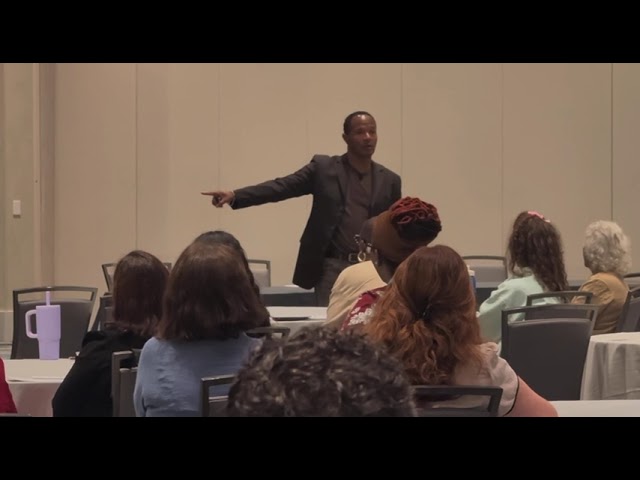
He's a professional speaker, motivator, life coach, entrepreneur, leadership trainer, interpersonal discovery developer, counselor, author, fashion designer, the owner of Sharp Shoe brand, and television personality. He has over 34 years of experience. He is extremely passionate about changing mindsets, uh, leadership development, occupational integrity and interpersonal development. Mr. Sharp has worked with, um, or has been a mentor and a life coach to members of the NFL, the NBA, the WBO. Whether he's speaking to a full room of corporate executives or a group of aspiring entrepreneurs, professional athletes, or students, he's ready to embark On changing their mindset. Uh, there's one other thing I want to point out about Mr. Sharp. Um, sorry, I lost my notes. So with Mr. Sharp's guidance, you'll find that the sky isn't the limit, it is just the beginning. So for all of you, please welcome Mr. Rico Sharp.
All right, thank you very much. Well, certainly it's an honor to I'm thankful to have this opportunity to be here with you today. I'm thankful for Angela inviting me to come and to share with you on the topic of leadership. As Angela mentioned, I've been doing leadership teaching and leadership training for almost 35 years now. I do leadership training for the federal government. I do leadership training for conferences or at conferences, colleges, universities.
Thank you.
Businesses, corporations, nonprofit, faith-based organizations, you name it. I've been around for a while. I love what I do. And what is it that I do exactly? I empower people to bring out the best in them through personal and professional development. And I'm here to share with you some insights and things that I've learned along the way. I think one of the things that's important is that I started an organization several years ago with 4 people and built it to a 3,000-member organization with multiple locations. And so my job consisted of training leaders and delegating authority to leaders and trusting leaders to be able to have the best interests of the business at heart. But more particularly than the business at heart is having the people who are a part of the organization at heart. Because you can be business-minded and not be people-minded. And when you're in corporate America or in the education industry, you have to focus on the people because those are the ones who you are there to impact. Yes. So I want to share with you today on this topic called bringing out the best in you. And I want to start by asking you if you would stand to your feet with me. I have a little something that I like to do before I start my meetings. I want to call this a moment of declaration and affirmation. Can you say this with me? I have greatness on my life.
I have greatness on my life.
All things are possible. All things are possible. There is nothing There is nothing that I can't accomplish when I set my mind and my heart to achieve. I will utilize my gifts, my talent, my creativity to make a difference, not just in my life, but in the human race. Thank you very much. You may be seated. I want you to believe what you say, right? I want you to see yourself actually making that impact in the lives of people that are entrusted under your leadership. And I want you to know that you have everything that it takes to do everything that you need to do. We don't have to go out and find replacements. We don't have to go out and find somebody that has a better resume. Sometimes I'm asked, people say, well, how did you build your organization? And how did you become successful? And how did you get people to be where they are today? And I always say, I built them, right? Leaders are not born, leaders are built. Leaders are developed. There's no such thing called a natural-born leader. If that's the case, then everyone who were naturally born Yes. Are leaders. But we know, according to reality, that that's not the case. You build leaders. You grow leaders. You develop leaders. You mature leaders. And it's not an easy task. It's not a quick task. It's not an overnight task. It's something that takes time, persistence, diligence. Something that takes consistency, tenacity. But through hard work and dedication, you're able to build the leader that you want. So let's start with number 1. Let's start with number 1. And we're calling this bringing out the best in you. First thing, as we get started, there is greatness on your life. And I really need you to look in the mirror. I need you to look in the mirror of your mind. and see the greatness on your life. I need you to look in the mirror of your heart and see the greatness that is on your life. The word greatness has a very peculiar definition. It means notable, remarkable, exceptionally outstanding. That's who you are. That's who you are. It's not just a— it's not just Webster's word in the dictionary. That is who you are.
Amen.
It means that you're important, you are highly significant and consequential. You have what it takes. Not only do you have what it takes, you are who it takes to do great things in life. You possess layers of talent and creativity that you've not even explored yet. You've got greatness on the inside of you, and you're entrusted with the responsibility to bring that greatness out. And to make it become an everyday pattern of your job, your duties. That's your responsibility, to bring that greatness out of you and to put it into practice, right? To extrapolate it and to disperse it, to deploy it into the lives of those who follow your leadership. You're called to greatness. Can you say that with me? I am called to greatness. I am called to greatness.
I am called to greatness.
Come on, you got to do a little bit better. I was about to let that slide, but there's something in me that said, no, they have a little bit more. Come on, give me some more. I am called to greatness. I am called to greatness. All right, that's much better. So greater is on the inside, right? You have levels of leadership potential and leadership greatness on the inside of you, or within you, that's greater than what you're currently operating in. So the first part is accepting that you have greatness on your life. So once you embrace that, once you embrace that you are great— has nothing to do with age, has nothing to do with race, has nothing to do with ethnicity, has nothing to do with anything— you have greatness on your life. And the greatness that you have on your life is changing other people's lives day by day, right? So you're more than a director, you are a life changer. Right, can you see that? You're more than an associate director, you are a life changer. Your responsibility is bigger than just showing up to work every day. You're changing lives.
Right.
The next president of the United States of America is capable of coming from out of your class. They can start here, work their way up, work their way up, work their way up, work their way up. The next Bill Gates is probably sitting in your class right now. The next Mark Zuckerberg is sitting in your class. The next Michael Jordan is sitting in your class. It may not look like it right now because they're in their emphasis stage, right? They're starting out. They're making some transitions in life. But gradually and gradually, life is going to happen on their behalf, and they're going to take what you imparted into them and instilled in them, and they're going to put it into practice. And one day, they're going to come back and thank you. for helping them to discover their greatness, okay? Are you with me so far?
Mm-hmm.
Okay, so let's— let's move a little further. I want to talk about leadership clarity. Leadership is not what you do, it's who you are. There's a significant difference. People who think that leadership is what I do, they clock in and they put on their leadership apron or their leadership garment, their leadership hat, and then when they clock out, they leave their leadership responsibilities behind. But that's not the way leadership works. Leadership is not a job. It's a life calling. It's not a job. It's a life calling. Leadership is not what you do. Leadership is who you are. Say this with me. Leadership—
Leadership—
Is not what I do. Is not what I do. Is who I am. Is who I am. Do you believe that?
Yes.
Okay, so here's a reflective question. You already lead, but can you lead with greater power, greater presence, and greater purpose?
Mm-hmm.
That's the question you have to ask yourself, and to yourself be true. You already lead, but can you lead with greater power, greater presence, and greater purpose? Are you able to give more than what you are presently giving right now? Can you commit yourself to another level of leadership Than what you're operating in right now. So leadership isn't a title or a position that you clock in and out of, right? Leadership is a mentality. Leadership is a personality. And leadership is a responsibility. Leadership is developed in the school of life.
That's interesting.
Therefore, every experience, whether positive or negative, is shaping your leadership ability. And how you respond to it is shaping your leadership legacy. I did some teaching in Tampa—
Thank you.
August of last year for the federal government. And one of the things that I shared with the, the people that attended my sessions— I did 3 workshops with them— is that when you are placed in leadership positions, You're placed in leadership position not to hold a position, but to make an impact. When people trust you and bring you on board, they're not hiring you just to come and fill a position. They're looking for your creativity. They're looking for your passion. You're employed for your greatness. You're employed for your gifts, your talent, your uniqueness. You're employed for your leadership.
That's right.
Capacity. You're employed so that you can come in and line up with the vision and the goals of the organization that employed you so that you can help manifest and bring into fruition the agenda of that organization. This is more than a job. If you think that leadership is, is just a job, then you're probably only contributing about 40%, at best 47%. Of what you really have to offer. Leadership is not what you do, it is who you are. And one of the issues that I see across this planet as an international speaker that speaks on leadership is that people hold back what they really have to offer. And when you hold back what you have to offer, then you create a deficit, and that deficit trickles down And it is seen at the bottom. It starts at the top, but it manifests at the bottom. Everything that happens within your organization, you are responsible for. You have a part in it. And when you hold back, then you are not contributing to the wholeness of what the organization can actually produce. Listen, you are changing lives. And either you're going to change them in a mediocre way, through mediocrity, or you're going to change them in a way that enhances the way people see life and ultimately live their lives. Leadership is in everything you do, both at work and outside of work. Leadership is what we call on-the-job training, but it's not on-the-job training when you step in between school, right, on campus. It's everywhere you go. Leadership is taught by life.
Mm-hmm.
Life is your main principle that teaches and instills in you what true leadership is about. Every day something is happening in your life that is trying to build up the tenacity and the character of leadership. So that when you step into your campus and begin to orchestrate from your department, you can bring with you what you learned at home. You can bring with you what you learned in society. You can bring with you something you learned— maybe it's in the gym that you got a point or a principle that was established in your heart. Maybe it was at a family reunion. Maybe it was in Walmart. Maybe it was at the drive-through at McDonald's. There are always lessons that life is trying to give to you that you can use to refine your leadership ability. And you have to have the mentality and the mindset to be open to recognize those cues and recognize those moments when life is teaching you something about leadership. As a mother, you're learning leadership. As a father, you're learning about leadership. As a husband, as a wife, you're learning about leadership. Everything that you do outside of your campus, It's preparing you for what you do when you step on your campus. And so that's why it's so important that when you step on the campus that you brought with you everything that you've learned in life. People who don't realize that life is teaching them, they do just enough to keep from getting fired, and then they are paid just enough to keep from quitting. But where you're operating and the capacity of leadership, everything around you is giving you leadership cues that you can put within your leadership basket and bring out of you when you step onto the campus. Are y'all with me so far?
Mm-hmm.
Okay, great. Here is something that is very important, and this is missing in a lot of organizations. People believe that they're supposed to lead with their head, and they bring their degrees and their education and the things that they have taught, have learned in terms of the knowledge that they pass on. They bring those things to work with them and leave their heart at home. But I would say to you, bring your heart with you when you step on the campus and lead with your heart, not with your head. Can I tell you that people don't care how much you know until they first learn how much you care?
No.
Nobody wants to be up under the leadership of somebody that all they do is show them how much head knowledge they do, but never reveal what their heart is. I need to know that you care about me if I'm following your leadership.
That's deep.
And I need to know that your care for me extends beyond what I do for you at work. I need to know that you have my best interests at heart because people can read you. People who, who serve up under your leadership jurisdiction, they can read you. They have antennas. Sometimes they'll come to you with something that may not even be a big issue to them, but they want to see where you are, right? They have their antennas up. They want to know that you care about them in a realistic way. And so when they step to you, they're coming to you to see if you care. So it is important that in order to bring out your leadership best, which is a process, That can only be fulfilled through your passion to empower others. It is important that you always step on campus with the mindset that today I'm going to empower the people I lead. I'm bringing my heart and I'm going to empower them. And yes, I care about you. I care about how your day is going, right? I care about how you feel. I care about what life is like for you. I care about the things that's going on in your family. I bring my heart with me. And I know sometimes people pull their heart back because sometimes your heart can be violated. But as a leader at the top, you have to know how to guard your heart without removing your heart from your leadership oversight.
That's right.
You— there will be times when you may be disrespected. There will be times when you may be taken for granted. There may be times when your leadership will be questioned. That's all part of the territory. That's part of the job. That's part of your jurisdiction. Don't allow for one incident or two incidents or three incidents to cause you to renege on bringing your heart to work with you. Because people are looking for leaders that can lead with passion. People are looking for leaders that can love them. People are looking for leaders and will follow leaders that knows how to relate to them and show that they care. That's that's that's some good stuff right there.
That's true.
So what happens if you're leading with your head? You're giving orders. You're making things happen, you're delegating authority, and people are coming and people are standing by you, but there's no real connection. And the first test that comes along that tries your leadership department is going to reveal the cracks and the crevices that although you have people around you, you don't have people with you. And people for you because you didn't show them that you care for them while going through the process of doing what you do from day to day. Every day you show up, you show up with your heart. Say this with me: Every day that I show up, I bring my heart with me. As directors of education, you empower others to achieve and excel in their personal greatness. That's what you do. So, in other words, you bring out the best in others. That's what you do. That's why you are entrusted with the position and the responsibilities and the jurisdiction that you have, because it is your job to help people to discover their personal greatness. and to live in that personal greatness. Every day you show up, everything you do, and who you are is life-changing to those you lead. And can I tell you something? You matter to the people you lead. Not only should they matter to you, but you matter to them. And when you're going through something, even though you may not share it, but because you give concern and you give love and— You're a leader. You give compassion. When you're dealing with something, even though you may not share it with them, they will be able to detect that this is a time where you need their emotional support. This is the time where you need for them to stand by your side, right? You sow it and then you reap it. That's the law of reciprocity. You give it and then it's going to come back to you. And when you have your moment, you won't feel alone.
Right?
When you're going through something, you're going to feel like you're on an island all by yourself. When you give it, it's going to be reciprocated back to you. I call this one leadership confidence. Here's a reflective question: what's the one area that you've been shrinking in that now demands your confidence? Think about that for a moment. What's that one area in your leadership capacity that you find yourself shrinking in? What, what is that area that you don't like to confront, that you're running from, that you're trying to avoid? What is that area that keeps coming up, that keeps coming back to you? What is that one thing that You look at it, you're like, man, I don't want to do it. Not today, not today, not today. And then the next day, not today, right? And then the next day, not today. And then the next day, not today. What is that one thing that you keep trying to evade, that you're just deflecting, and it's recirculating and coming right back to you, and it's not allowing for you to get beyond it? Because life is teaching you, right? You're learning some things on the job. You're learning people. You're learning about you. And life is not going to let you get by without passing this test. Life is not going to allow for you to just scoot on out of work and go home without confronting this one thing. And we all have that one thing that if we could have our way, we'll just sweep it under the rug. But in terms of your leadership confidence, it keeps coming back around because it realizes that there's something in you That you're not confronting that needs to be confronted and conquered? That if you don't confront it, you can't conquer it, and if you don't conquer it, it will conquer you? What is that one thing about you that when you look in the mirror, maybe you don't like what you see or like what you know, and you're trying to avoid it? You don't want to deal with it. And the thing is that whatever it consists of, it has to be dealt with. in order to bring out the best in you. When you're providing solutions, resolving conflicts, and leading by example, when you're making others feel valued, you're operating with leadership confidence. I'm also a mentor, and life coach, right? And I have clients around the country, and I have clients that I have to talk with weekly about their leadership confidence. Some people just don't feel that they have what it takes to do everything they need to do. So I say to people, you're not just— you not only have what it takes, You're the best. Say this with me, I am who it takes.
I am who it takes.
See, that's more important than having what it takes. You are who it takes. And life has graced you with the opportunity to experience or to undergo on-the-job training, which means you don't come in complete, you don't come in perfect, you don't come in with everything that you need to have. But what you do is you continue to grow, develop, And mature. And one of the areas of development is in your confidence. Do you feel confident about the role you've been given? Do you feel confident about the people who are up under your leadership in terms of your ability to lead them, your ability to communicate with them, your ability to get on their level and understand them and read their language, right? Do you feel confident about your ability to bring the scores up at the campus that you're working on? What is that one thing— going back to the first question— what is that one thing that you're running from, that is challenging your leadership, that you keep trying to get away from, but it is so necessary because it brings you back to be? It has so much to do with how you impact other people's life. When I first started speaking back in 1996, I had this inferiority complex. I was afraid to stand up in front of people. I was afraid about what people would think about me. I looked at myself the way I perceived other people looked at me, and I felt like, man, I don't really have what it takes, right? Like, like, I'm not really great at this. But then I realized that I was dealing with and insecurity. And it wasn't so much about what others thought about me. The issue was what I thought about myself. And so I projected what I thought about myself as thoughts and as perspective and perceptions that I thought other people had toward me. And that became a hindrance. And so I started working on me. I started filtering out of my life and out of my heart and out of my mind those negative thoughts, right? And then I started working on my confidence, and gradually and gradually and gradually I started realizing I don't just have what it takes, I am who it takes. And my confidence level began to build. So confidence begins with clarity. When you know who you are, you don't need approval and validation from others. Say this with me, I know who I am. I know who I am. When you know who you are, you don't need approval and validation from others. When you're making decisions in the best interest of others, you're operating with leadership confidence, okay? Leadership confidence comes from authenticity, not perfection. That's a good one. It comes from authen— it comes from being real, not from being perfect. See, even though I've been speaking for a long time, I'm still not perfect, and I'm okay with that.
That's right. I'm purpose-driven.
driven, not perfection driven. And when you're purpose driven, it's okay to not be perfected because your authenticity is that you're doing it to make an impact in the lives of others. Leadership confidence comes from authenticity. Are you being authentic with the way that you lead? And I'll say this to you. To you, leadership confidence isn't flawless. It's real, it's consistent, and transparent. So I would take my leaders out to dinner. I would take my leaders out to conferences. I would take my leaders out for personal vacations. And I would spend time with my leaders.
Okay.
She looks at me like, okay, you wrote that down, right? And one of the things that I would do is when I get into a private room with my leaders, I would talk to them about things that was more personal in my life that I couldn't share in front of other people. Because I wanted them to see the human part of me, right? The part of me that is just like them. The part of me that cries, that hurts, that bleeds.
That's right.
that has emotions just like them. Because sometimes people look at you and your leadership ability and they feel like you got it all together, you don't, you know, how did you get to this place? How did you get to become a Superman and a Wonder Woman? But I wanted people to know that Wonder Woman and Superman, they really don't exist in the capacity that we look at them, right? They're people just like us. And so in doing so, I built a coalition or a continuity relationship with the leaders that then extended beyond that board meeting that I had with them. It began to manifest in their roles and in their positions.
Mm-hmm.
They were able to now give more of themselves because they realized that the leader that they were following were just like them. And so that comfort level is the same comfort level that you have to create with the people That are on your team, that you lead at work, right? The directors and the deans or whoever that follows your lead. You have to have that moment with them where you're able to sit down and say, I understand what it's like to feel lost with a decision that you got to make in 2 days. I understand what it's like to feel like I don't have what it takes sometimes to make this project like I really want it to turn out. I understand that. I've been there. You have to show them your humanity. You have to show them at times your vulnerabilities. And you've got to assure them that just like you figured out how to get through it, they can figure it out as well, and they have your full support. All right? So I think we have enough time to do one more.
Okay.
One more slide, and then we'll break for lunch. Are y'all with me so far?
Yeah. Okay. Is this good?
Yes. Okay.
All right.
I'm gonna borrow some of it. Borrow all of it. I'm making my notes. Borrow all of it. And if you like, I can even email the slides to you so you can have them and take them back to your campus. I'm back on leadership confidence, right? I'm going to drive that point home for a while, okay? I've learned something, that it isn't until you get tired of hearing something that you're finally beginning to get the picture.
Yes.
So you have to have like a repetitious moment that frustrates you Because it is only at that moment that you are convinced that you got it. I got it. I got it. You have to hear something over and over and over, and then you have to write it down. The first time you hear it, you only pertain or retain 30%. When you write it down, you retain another 30%. And then when you go home or back to the office and you go over what you wrote down, Then you retain another 30%. At best, you're able to encapsulate 90% of what you hear. And that's the same for those you lead. Do you have to take this? Leadership confidence starts with leading yourself. I am always working on Rico Sharp, always. I read books. I watch videos. I attend conferences. I go to seminars. Even though I'm a speaker and I speak a lot of places, I'm also sitting in there with my pen and my pad and my tablet, and I'm taking notes and I'm learning. When I'm at home, I'm doing the same thing. In my office, in my private time, I'm learning. Getting up at 3 o'clock in the morning to feed me, I've learned something. That when you don't know something, you have to rely on those who do. And that's where man's manipulation comes in at. So, I'm always working on me to build up my confidence. I'm always working to empower my confidence, right? And I focus on me so much so that I've created habits that some people call ridiculous. There has been times that I would dedicate 12, 13, 14 hours a day, every single day for years, building up my confidence, working on my mind, going the extra mile. Why? Because I believe that if I do today what others don't do, then I can have tomorrow what others won't have. I won't charge you for that one. That was good.
It was good, and then he turned around. And he dropped the mic. Dropped the mic.
You can't lead others until you've mastered your own mindset, emotions, and weaknesses. You have to master you before you can pass on that mastery to others. You're in a very unique position, right? You're in a position where people are looking at you and they're following your leadership. They're following your lead. And you can lead them the wrong— down the wrong path, or you can lead them down the right path. You are capable of messing up everything that you've been entrusted with under your jurisdiction, but you're also equally capable of creating an environment that people can thrive in. And in order for you to do that, you have to work on you, build up your confidence, and make sure that you are mastering your mindset, your emotions, and your weaknesses. Listen, you're not perfect. That's okay. We knew that before we brought you in, right? But what we do expect for you to do is to master your mindset. How do I master my mindset? Through knowledge, through the renewal process of constantly reading and learning, seeking out the books and the information on the internet, getting the literature and the documents that I can get, and spending time embedding myself in that material, in that information, and getting it in my mind, making sure that I eat it, I sleep it, I digest it, and then I wake up the next day and I start the process all over again. I need to master my emotions. I cannot allow, you cannot allow, we cannot allow for our emotions To dictate our decision-making. Your responsibility is to make intelligent decisions, informed decisions, decisions that's based on the best interests of others. So your emotions are not allowed in your decision-making. Now, obviously, when your heart is involved, there's going to be some emotional moments. But you have to pull out a fine razor with a precision touch and sever between your emotions and your decision-making. Because when you're making decisions from your emotions, it's like going to the grocery store when you're hungry.
Mm-hmm.
Bet you never did that before. You just buy all kind of stuff. But when you're making decisions and you're making decisions based on the best interests of others and it's coming from your heart, You're able to control your emotions and put them in the compartment where they're not interfering with your decision-making. And then weaknesses— we all have weaknesses. Come on, raise your hand if you have weaknesses. We all have weaknesses, right?
Mm-hmm.
We're not called to be perfect. We're called to be purpose-driven. Our weaknesses exist, but what do we do? We govern our weaknesses and we separate our weaknesses from our strengths. And while we're focusing on converting our weaknesses into strength, we also focus on developing our strengths into greatness. Did you hear that?
Mm-hmm.
While we're focusing on converting our weaknesses into strength, we're also focused on developing our strengths into greatness. So I will say this to you, dedicate 45% to developing your weaknesses and 55% of your time into developing your strengths into greatness. Don't ever focus most of the time on what you don't do perfect. Focus the majority of your time on what you're good at, and take what you're good at and make it into what you're great at, because that's where your leadership impact comes in at. And that's where your leadership legacy is going to be established from. Leadership confidence is developed in private disciplines before it is shown in public victories. Leadership confidence is developed in private disciplines before it is shown in public victories. What I used to do when I first started speaking Is I would get in my bathroom or bedroom and stare in the mirror for about two hours after having written my speech down. I would stand there and look in the mirror and practice it. I wanted to make sure that I built up my confidence and that I perfected as much as possible that speech. Even though I'm imperfect, I wanted to give my best shot at it. And then there were times when I would sit my family down. Turn the television off if you guys don't mind. Come in here. Let's, let's talk for a moment. Sit down. I need y'all to be my audience. I'm going to stand in front of you for 15 minutes. Turn off the Xbox and the PlayStation and, and get— turn, turn, you know, the TV off. Turn it off. Turn it off. Auto— not down. Off. Sit down and give me 15 minutes of your time, and I will go into my speech to make sure That I was able to do it in a way where I felt comfortable, because my comfort level has all to do with my confidence level, right? And so when I would do that, I would become better and more comfortable, and my confidence level would build, and it would make a difference when I stepped out onto the real stage. So it is what you do at home in private as a discipline that determines how far you can go When you step outside your house, ultimately. Leadership confidence is a muscle, not a miracle, and it's built over time through mistakes, experiences, and small wins. When you focus on the little things that you've been able to accomplish, it gives you the confidence to do big things. Just like setting small goals. and then accomplishing those small goals. What do those small goals do for you?
Builds.
They build muscles, right? And it gives you the confidence to set bigger goals. And ultimately, you're able to set a goal, and without any pre-calculation, you're able to accomplish it. And the last one is a confident leader creates an environment that makes others feel secure, valued, and free To bring out their best. A confident leader creates the environment that makes others feel secure, valued, and free to bring out their best. So, so while we're talking today about bringing out the best in you, I'm going to need you to go back and talk to the people that are on your teams about how to bring out the best in themselves. And what are they going to do? They're going to go into their classrooms, Right? And then they're going to talk to the students about how to bring out the best in them. And it's going to trickle down. And you're going to see results. And ultimately, your school grades are going to— they're going to improve, right? Your state grades are going to improve. And you're going to have more and more success for your organization because it started at the top and it rotated down to the bottom. Let's stop there for lunch.
Thank you.
More from Rico


Rico Sharp- Mental Wellness Leadership Conference- See the true person before you, not their flaws.


Rico Sharp- Part 4 Bringing Out The Best in You- Mental Health Leadership Conference
Rico Sharp- Bringing Out The Best in You- Leadership Conference. Build your 3 areas of confidence-

Part 2. Rico Sharp Bringing out The Best in You Mental Health Wellness Leadership Conference 8/27/26

Part 1- Rico Sharp Bringing out the best in you Mental Health Wellness Leadership Conference 8/27/26

Rico Sharp- My Brother’s last words to me before he died- Don’t let life kill you. Leadership Event.

Rico Sharp - Keynote: Bringing Out The Best in You. Leadership Conference. 8/27/26

Rico Sharp- Bringing Out The Best in Mental Health Wellness Leaders Conference
I’m on my way to Bring Out The Best In Mental Health Workers for Florida Behavior Health Conference.