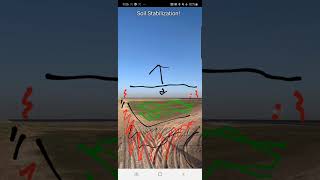
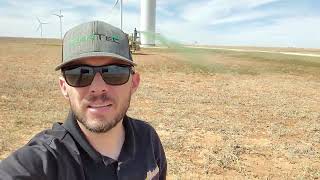
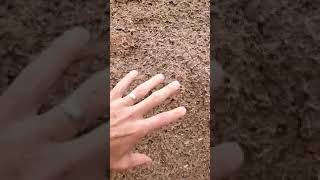
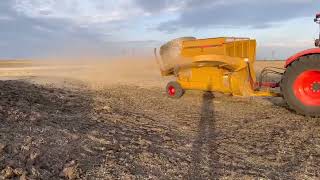
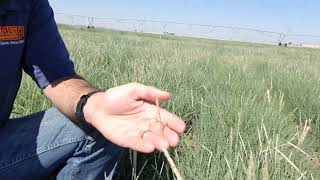
Short narrated presentation illustrating a soil-stabilization project. The speaker contrasts unstable (erodible) soils—shown as brown sky—against stable areas, links wind erosion risk to historical Dust Bowl regions, and proposes soil stabilization (hydromulch) to prevent wind-blown dust, improve air quality, support vegetation growth, aid panel maintenance, and meet SWP temporary/permanent stabilization requirements.
Chapters
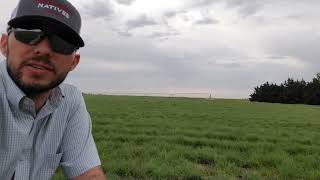
I wanted to do a video illustration of a project we are working on, to be able to. In picture form, in video form, to be able to offer a narrative as to what one is taking place and why it's valuable. The first thing I want to be noted is the sky. If you notice, there is a line essentially here where you have blue sky and brown sky below. So if you look at the brown sky, that brown sky is attributed to this unstable area here. Let's change the color. This unstable soil is highly erodible by wind and water. So in a climate where you have high wind velocities, for instance, where you have wind turbines and you have highly erodible soils, that a recipe for problems. And historically speaking, we have an event that I think we all maybe have learned in history class called the Dust Bowl. Well, the Dust bowl took place in a very specific part of the United States. And that part of the United States is where these highly erodible soils exist and wind exists. So it only makes sense that the potential for wind erosion, dusty skies, are a possibility in these areas. So the solution is stabilization of the soils in, like this area here, which we stabilized with hydromulch, which prevents the blowing of soil, allowing it to become airborne and therefore offering a better air quality. It offers better maintenance for panels, better vegetation management. Because if you notice, vegetation can't grow where the soil is unstable. So until the soil is stable, nothing will grow. And that is a huge reason to stabilize the soil. In addition to air quality, stabilizing the soil for the potential for vegetation is extremely important. So quite a few things going on here, quite a few benefits to understand. Swept requirements are also a component of this. Whereas your temporary stabilization and permanent stabilization, obviously, this area here, you know, the blue area that I'm drawing now, obviously this is not stable, and it's. It's actually a roadway, but it's a temporary roadway which will ultimately need to be stabilized for SWP compliance. So, SWP compliance, vegetation, air quality, lots of things going on in this today. If you have any questions, let me know. I'd be glad to explain further.