Solar Owners League Virtual Workshop
Rhett Kerby and Will Harris explain how to stabilize soil around solar farms. Kerby covers erosion planning and stormwater permits, which require 70% ground cover for closeout. Harris uses rotational grazing and biomimicry to build soil health, raising organic matter from 0.5% to 5% on his farm while reducing erosion.
Chapters
All right, welcome everyone to our third workshop series in the Solar Owners League 2021 virtual workshop. Today we have topic around sort of PV plant maintenance, but also hearkening back to the installation as well. So we'll be talking about vegetation selection establishment and then vegetation management and generally land management on large scale solar photovoltaic facilities. And I'm pleased to introduce two speakers today. We've got Rhett Kirby of KerTech LLC out of Texas. Rhett, can you hear me.
Sir, how are you?
I'm doing great. Thank you for joining us. And we've also got Will Harris of White Oak Pastures out of Bluffton, Georgia.
And thank you for having me.
All right, good deal. Well, so I'll go through a few intro slides and then we'll go ahead and get you guys started. So just a reminder for folks what Solar Owners League is and kind of the things that we offer. So it's a technical user group we launched back in the summer of last year and the purpose of this group is to provide folks with an ongoing technical discussion to work on and figure out things that are happening in real time. EPRI also has a larger solar generation research program where we conduct the actual research. But this user group is meant to, like I said, keep the ongoing engagement between participants on the issues that you're facing day to day. The way that we do that is through monthly webcasts on various topics that are sent in from participants of the group. So I encourage you guys to keep sending those our way so that we can continue to curate good content for you. We have done an annual Face to Face workshop, multi Day Workshop 2019 was the last face to face one and we're looking, we're eager to get that face to face again here in the coming years as it's been really good way to get folks together. We also have a website that I'll show you a little bit about here in a second and that's where we post our publicly available materials reports and white papers for you to look through. And there's a second level of participation where within Solar Owners League the benchmarking, performance and degradation. That piece of Solar Owners League allows folks to send in some facility or plant data and kind of we can, we're able to compare that against anonymously against other similar plants, either by region, by technology type or by kind of design attributes, whether string inverters, central inverters or even, you know, inverter loading ratios. So it's a simplified way to look at your plants and then compare them to others to kind of get that benchmark. So real quick, on the website it's www.epri.com SOL and what you can see here is a snip of some of the publicly available research on the top right and then our sort of webcast, past webcasts that we've held. And as a participant you're able to log into EPRI's website and get the past recordings and slide decks for review. We also have an events tab to kind of see what's up and coming and would encourage you guys if you haven't, to check that out. So a couple of. I mentioned our broader solar generation research program and just wanted to highlight a couple of reports that have come out fairly recently. And one of these, the first one here, the guide to establishing native habitat that's put out through our environmental aspects of solar ran by Kara Libbey. And so that's available and there's links there to check that out. And also out of our solar generation program which is kind of more asset focused, we've got the integrated vegetation management for PV plants and just a few photos from that. It's kind of very applied overview of methods and techniques you may use or want to consider for your plants. So I'd like to highlight some of the things we're doing in the program before we launch off on today's. Today's webcast. So with that said, I believe up first we'll go ahead and get Rhett started here and I'll. I'll transfer your presenter capability now, sir. So you should be able to share your screen at will.
Okay, give me one second, let me share and.
Looks like it's coming up and see your screen now. Want to hit presenter mode? All right, that's looking pretty good, sir.
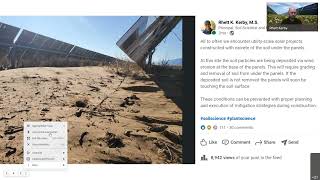
All right, let's see here. All right, thank you guys for the invitation to present today. Can you hear me okay? Is everything coming through okay? Okay, cool. So my name is Rhett Kirby. I am founder and principal and social scientist at HER Tech. And this is just, just a real quick screenshot of kind of the first page of my cv. Thought it may be the easiest way to kind of show a little bit of my background. But my undergrad degrees in plant and soil science or agronomy from Texas Tech. Graduate degree in agronomy or plant and soil science from Iowa State. Founded Ertech in 2014 after an eight year career with USDA where I worked for the Natural Resources Conservation Service as a district conservationist where spent a lot of time establishing vegetation on highly erodible soils and preventing wind and water erosion. Also worked a little bit in I guess a seven year stint in the private industry working for a native seed company, Bammert Seed Company. We handled about 400 different species of grass, flowers and legume species. And so that was really where I had the introduction to what I know of today as, as the, what I'm going to deem construction world and saw an opportunity there to, to really take some of the skills and education experience that I had and implement into the construction world. And that's wind, solar, oil and gas, commercial construction. We, we do quite a bit of things today, but today we are primarily a service provider but we have gradually grown into having a professional services business unit where we work with designers and engineers on really preventing problems before they, before they exist. Because if I'm sure everyone on this call can imagine the risk associated with some of these problems can be pretty extensive. So, so yeah, our services have not only, they're not only in the field as far as. And I'll show pictures of some of the things that we do, but we have really grown into a consulting role as well. So some of these slides that I'm going to show today are snippets essentially from my LinkedIn page which is a great way for me to capture the things that we do on a day to day basis. That may have been where Sean and I met, but you know, I like to document what we do. This is, you know, this piece of equipment here is one of the, one of the pieces of equipment that we have that allows for us to stabilize soil. That's a hydro seeder. It sprays hydro mulch and seed on the ground. But anyway it's a, it's a, it's a nice looking piece of equipment that we really like to show when we have a chance. So wanted to jump from there to the picture that you see in my background, which is native wildflowers in a sandy solar farm north of Midland, Texas. We work and I'll show a map here of kind of the areas that we work. But what I want to highlight in here and for everybody that is part of a construction project of any size, or at least over five acres, is there's going to be some sort of requirement for your NPDES permit or construction general permit which also requires a stormwater plan. And one of the things that I like to really share with a group like this is that stormwater plan is an opportunity for that project to have creativity and really good land stewardship practices implemented. If the stormwater plan is under the control of somebody that actually interprets it that way. The stormwater plan is really, it's a control mechanism, it's a regulatory document, but actually there's really good land stewardship practices listed in there if they're executed right. And so that's something that I like to celebrate is, is let's take these control documents, these regulatory documents, and there's no additional cost. You have to do them anyway or your permit is not compliant and your project has to be shut down. So let's just take what it already is, what is already required, and spin it in a way that, that allows for some creativity regarding land stewardship and whether it's pollinator habitat or, you know, whatever the goals of the client may be grazing. You know, these, these documents can be spun in a way that, that allows for continual compliance, but also some creativity. And you know, really it's not only very environmentally beneficial, but it's, it kind of makes doing what we do fun.
So.
Sean asked me to kind of highlight some of the things that I see, you know, as we work on projects throughout the country. Erosion is a problem. That stormwater plan is supposed to prevent erosion. I mean, that's its idea is to prevent sedimentation from leaving the project. It's supposed to prevent erosion. It's supposed to, it's supposed to do these things. But oftentimes there may be some lack of experience or lack of education in the person interpreting that project, especially if that SWIP plan is delegated to the EPC company, the company that's actually constructing the project. Oftentimes the construction company lacks to be in control of the swip. It allows for them to really have control as to what they perceive as a problem and not. Whereas one recommendation that I make, and I'll make it to this group is especially if you have long term interest in the project, is to hire a third party company to oversee the stormwater plan. That way, things like in this picture right here don't, don't happen. This is due to lack of temporary stabilization during construction, which ultimately led to lack of permanent vegetation after construction. This is a fully operational project where the. I'll turn on my pointer here. You can see this area here. This is a sand, a ridge of sand that's beginning to be, that's developing with time because as the wind blows, this is a highly erodible environment due to wind erosion. And I'll be able to break the country up into some different segments where you can kind of understand where you may have more water erosion potential versus wind erosion potential. But this area is in the Midland, Texas area, which is. I mean, if you can think back to US History, this is the same area as the dust bowl. And what you're looking at here is exact same scenario that caused the dust Bowl. Massive disturbance and lack of stabilization. Construction companies, you know, this all began with engineering a project in a fragile ecosystem that it doesn't rain much, has a whole lot of evaporation, which I'll talk about later, and very highly erodible soil.
So.
And a lot of wind. And so as the wind travels over these panels, it swirls and it deposits this sand that's moving throughout and creates a mound between the panels so much that this, that this will eventually work its way over into becoming or interfering with the panels themselves. And a lot of times the soil will be eroding away from the pile post, which jeopardizes the integrity of the whole racking system. The racking system, you know, then can, you know, fall over lots of different problems. But grading or removing sand inside of these panels is not cheap. Stabilizing this site after this sand is removed is not cheap. Regulatory compliance regarding this is not cheap. So the financial risk associated with lack of stabilization during construction by the construction company ends up being very expensive. Another concern that I would be very. That I would like to relay to this group is if you're acquiring, if you are in acquisition of a new solar farm as an owner or operator, do your due diligence to make sure that it's stabilized correctly to where you don't purchase a problem like this. That happens quite a bit where I'll receive a call that says, hey, we need to engage you to come and evaluate after the purchase has been made. And I'm like, wow, this is really expensive problem you purchased. And I wish there would have been an opportunity in the due diligence process to have these conversations because that's really when it should take place. So I mentioned precipitation. When it comes to stabilization and vegetation, really, there's two criteria that dictate the ease in growing vegetation, and that's precipitation and evaporation. So I'll toggle between these two maps. The first map is rainfall. This, this, this line right here is a pretty significant line in the United States to where east of this line, you are looking at about 25 inches or greater. Vegetation can be very forgiving and easy to establish in these areas. What you see in these areas, more than a limitation of precipitation, is a limitation of soil health due to disturbance during construction, a lot of these areas have great topsoil, but the subsoil is not good at growing vegetation. So what you run into here is after construction, you may have vegetation problems, but it's not likely due to rainfall. It's likely due to soil health for some reason. Then you come west of this 25 inch rainfall belt. Now you just strictly have limited rainfall. You can imagine that you can have the best soil in the world, but if you don't have rainfall, plants struggle to grow. You couple this map with this map. Now, this map is called pan evaporation, which is a measurement of how much water would evaporate out of say a swimming pool. When it says a pan, it means like a pan that you would a cooking pan. So you could think of it like in a swimming pool. This may not be coming through very clearly, but this is 105 inches. So in these red areas, you in a swimming pool, you would evaporate 105 inches of rain. I'm sorry, 105 inches of water in one year.
That's a lot.
That's nearly 10ft of water that's going to evaporate. So a plant growing in this area has a tremendous struggle to grow. Especially you back up when you couple the amount of evaporation with the fact that it's only going to rain here, 10 to 15 inches a year. But you're evaporating 105. So you are in a depth. Those plants have to grow in a deficit in a water, soil moisture deficit annually. So the species selection is important. Your stabilization is important. Preventing erosion is important. These red areas here become very challenging to grow vegetation. So as a developer.
Oh, sorry to interrupt, but I just had a question on that. This is Sean. You talk about species selection and stormwater permits. And I was wondering if at some point or you're going to get to like there's these stormwater permit minimums that, you know, the minimum requirements to get your stormwater, you know, species to veg for temporary vegetation and permanent vegetation, you know, and then talk. Those are the minimums. And then talk kind of toward those best practices as that, you know.
Yeah, definitely. You know, I don't know that my slides necessarily talk specifically about the minimums of those permits, but. But yes. So temporary stabilization is defined by the stabilization during construction of land that has been idle for 14 days or longer. So if you open up land, meaning you clear it off and the construction process is done with that area for a little while or even from now to the end of the project, that area is supposed to be stable, so if it rains, it doesn't erode. So you've got 14 days from the time that you finish your dirt work to stabilize it. So it's generally, it's kind of hard to establish vegetation within 14 days unless you've got just the perfect growing conditions, perfect temperature. So that's temporary stabilization, that is to prevent erosion during the project. Now, permanent stabilization is what you need to close out the permit that requires 70% ground cover. So those permanent species, and so your species selection will be different. And if you're temporarily stabilizing an area, you're probably going to choose and your SWP will identify these things.
But that.
Doesn'T mean those are minimums. You don't have to go with the species selection in the swp. In fact, I would highly recommend at least evaluating what, what is put in there because, you know, it's generally a cookie cutter type plan. But generally your temporary species are going to be some sort of annual, maybe some sort of small grain wheat, rye, annual rye grass, you know, just something that will last probably one growing season and then, and then it will have achieved its life cycle and then unless it made seed, you won't see those plants any longer. Permanent species are perennial, meaning like a tree, they grow back every year. A lot of your grasses are perennial, meaning they grow back every year. Like the grass in your yard would grow back every year. And so that's the permanent species are what you need at the end of the project. And you need 70% coverage before you can issue a notice of termination to close your permit.
Does that.
Thanks for that distinguishment. Yeah.
So back on my maps here, I wanted to really, because I know solar developers work all over the country and the things that I'm referring to are not going to be in your geotechnical report. That's often when I work with engineers, I ask, well, what kind of site evaluations have been done and it's well, we've got a geotechnical report. Well, the geotechnical report is great, but it doesn't really take into account the erosion potential and, or potential to revegetate in working with engineers. I was just on a project last week and the engineer said, well, this is going to be a vegetated site. Correct. And it was. I laugh, I smile at that because that in their mind that's, yeah, it's going to be vegetated. But what's not well understood is the amount of effort that it takes to go from construction to vegetation. The engineer thinks yes, it's going to be vegetated, but there's really not much conversation as to how to get it there. And so that's where I like to jump in and say, hey, we'll take into account the water erosion potential for permitting. Where are you going to harvest and stockpile your topsoil? You know, there's a lot of these soil health biological aspects that need to be taken into consideration in addition to the geotechnical, which I considered more of the civil engineering project information. So this is a map of water erosion.
Maybe if I can interrupt real quick because I'm still trying to wrap my mind around the two maps that you had shown about the rainfall and the evaporation. So if you're trying to grow vegetation and you know, we'll pick on your location that you've got in your background or panhandle of Texas, and there's that 80ish inch difference. But that's only if you set a, you know, like you're saying a pan of water out there. How do I translate this map into something that's more about kind of plant transpiration? Right. Is that the same kind of. Is there a way to look these things together?
Yes. So that's a great question. Because evaporation from a pan and plant transpiration are proportional. What's different in that proportion differs from species to species? And I don't mean to get off in weeds, talking about, no pun intended, but I don't mean to get off in, I don't mean to get off in the weeds talking about the difference in evaporation and transpiration, but they're proportional. So basically means when I think of 105 inches in this red area, that means it's extremely hot and dry. And that means plants are going to have to, you're going to have to have very targeted species selection that, that are able to withstand that level of stress due to heat and lack of moisture. And I mean, I'm not trying to scare anybody. I'm just saying you have to be very strategic and very thoughtful because planting grass, there is a very distinct line in my mind that kind of runs all the way up and down the United States. This area over here versus this area over here. The amount of, the amount of thought and effort that needs to go into revegetation is considerably different. You have, you have struggles here that you don't have over here and vice versa. But there is definitely, there's definitely consideration that needs to be given because these are two different styles. Two different, two different, you're going to run into different issues in each area. But if you try to take tactics that are, that work in this area and apply them over here, it's not going to work. Broadcast seeding, where you throw seed out on top of the ground and it rains the next day and it germinates and you have success. If you come here and try to do that. If you throw seed on top of the ground, it may not rain for six months and your seed blows away or the birds eat it. And so there's difference. Your practices and your approach, your means and methods need to be considered. And really there needs to be a lot of thought in that. Like I said, don't mean to get too distracted here, but yes, definitely your pan evaporation is going to be proportional to your plant transpiration. So did I answer your question, Michael?
Yeah. Thanks.
So in the planning process, in addition to the last two maps, one thing that is to be considered is the potential for erosion. Because ultimately during construction you have a responsibility through your construction general permit and your swip to prevent erosion. That's your regulatory responsibility. Now you also, if I was involved in the project, I would say you have a responsibility to me as the one responsible for. If my job is to grow vegetation, then there's a responsibility to ensure that the topsoil is there when it comes time for me to have this project express vegetation. And so that's to me why it's important to have a conversation around the 30% prior to the 30% design phase as to what is the water erosion potential for this site. This is a map and here is your legend of areas that have low or none to low to high precipitation. I'm sorry, erosion potential. And this is based on slope and the physical properties of the soil. So that's. And when I say physical properties of the soil, I mean the difference in sand, percentage of sand and percentage of clay each. Each soil type erodes differently. This calculation is based on bare ground. Most construction projects are bare ground during construction. So this is fairly applicable to what you would see during construction. And so what we propose during the planning process is to take these areas like this red area and create a, an erosion control treatment area for this area. Same with these orange areas. And to proactively plan for erosion to take place during construction. Now, depending on where you are in the world, if you're building solar farms out in the west, it may not rain for a long, long time and you may could get a whole solar farm built before you have an erosion potential or erosion Problem, you come in this area, which is where I'm currently spending a lot of my time, is in the eastern side of Texas, where you do have 30 to 40 inches of rain and you have high erosion potential and you have problems with gullies being created during construction and even after construction, if it's not stabilized correctly with enough grass to prevent erosion. So that would be a recommendation of mine, is to take into account the erosion potential of the soil during construction. Now, mind you, depending on the cut and fill design, this can all change. If their project requires a lot of grading, then they may create slopes or they may flatten slopes because of the cut and feel. So there needs to be some level of interpretation from this map coupled with the cut and fill or the. Or the final grading plan. And so those are a few things that may not be taken into account at the civil engineering phase.
But.
But if. But when you talk about, from managing the biological components of a project along with your regulatory requirements, this is something that definitely needs to be taken into account. Talking about water erosion, just real quickly, some of the work that we've done in the past, taking a very unstable waterway where the sides are eroding away, which you may see in a project, or you may have a design that has a constructed waterway as you go further east in the country, you have soils that struggle subsoils, meaning the soil underneath the topsoil, like in this picture here, that do not grow vegetation very well. The top, where the natural ground is, grows vegetation just fine. But when they dug out this waterway and exposed the subsoil, no vegetation would grow. And it's because it's. The term is fragipan, which is a soil physical. A soil term meaning that it's just going to be real clay like and very hard for roots to penetrate. But if you. What we did here was we smoothed the sides, we put erosion control blanket down, and underneath that erosion control blanket, we put the native topsoil that we were fortunate that this site did have a topsoil stockpile. So we were able to replace the topsoil under these blankets and under this concrete matting. And the concrete. The purpose of the concrete matting is where the concentrated flow or the water is going to run on a daily basis or out on a rainfall basis. And so that's the purpose here, is you want the bottom of your channel to be permanently stabilized using some sort of mechanical means while the vegetation grows in. But today, this site is completely vegetated to the point that this concrete mat is essentially not visible Any longer. A few other slides talking about water erosion potential and how to address it. This is a project actually in New Mexico, where they had done extensive civil or grading work on a fairly steep slope. You can see here we contoured quarter logs, which are coconut fiber logs to break up water flow. Which are these lines here? Those are coconut core wattles. Same thing here. They're laid out on the contour like little dams. And then we applied, had we sprayed or hydraulically applied biotic soil amendment, which is essentially compost. And that, that's going to provide the seed a good medium to germinate in. Because if you just throw seed out on top of this ground that's been disturbed during construction, it would think of it like your yard or your garden. If you just throw seed out and expect it to grow, especially in a harsh climate like this, it's not going to work. So there has to be some solutions in place that, that allow for the seed to actually germinate. And then this area express vegetation. And some of those, some of the. In a solar farm, what we see oftentimes, especially in the cut and fill areas, are we see these hard and compacted areas. When they finish blading, they roll and make it make the ground extremely hard. Think of this as a garden. If you were to plant seed, you would have to break up the compaction, which is what is done in this picture. The compactions being broken up or decompacted. We soften the soil. And then here we place the seed in that soft soil and cover it with straw molt. That straw mulch does a few things. It helps prevent evaporation. You know, we talked about the amount of evaporation from a pan, but the evaporation from the soil surface is significant also because bare ground, like in the top left picture in direct sunlight can reach 175 degrees Fahrenheit. So if you can imagine the amount of moisture that's evaporating out of the soil when you cover it with something that has some reflective properties and has the ability to intercept sunlight before it heats up the soil, the amount of moisture that you retain in your soil is much better, allowing the seeds that you placed in that soil to actually have an opportunity to germinate. So there's a little bit of thoughtfulness that's required. And it's not rocket science. It's like, you know, if it was your yard or your garden, you would do these same things. But oftentimes in commercial construction or civil construction, the same, the same practices for some Reason are not considered. All right, somebody. Let me figure. Somebody just asked a question. I saw it pop up. Let me pull up the chat window now.
The question. So I'll throw it out here for you.
Yeah, please do.
Yeah. And just one comment before I do. I was recently looking at an image from a FLIR camera that showed that bare ground versus short vegetation versus taller vegetation. There was a significant temperature difference. And. Yeah, that maybe. Maybe it was yours. I don't know.
But, yeah, I don't know if it was this one or not.
I recently saw that, too. And it's. It's amazing from a, you know, biological, you know, perspective how that helps. But the question is, could you mention the term for the soil that was on the slopes that was not helpful for growing vegetation? So I don't know if it was the compaction piece or maybe the watershed.
Fragipane here. I'll spell it in the group.
Fragipan.
Or more flame term is mud soils. Fragipan is actually a technical term.
Nice. Thank you.
Yes, sir. But I mean, I think everybody has seen muck soils or fragipant soils. It's nearly the same consistency or texture that you would for potter's clay. It's really slick and really slimy, and you can mold it and compress it and really shape it into something that is muck soils, especially when they're fully saturated with water, they don't drain well. They create pythium, which is disease you have fungus, you have. When soils don't drain well, that creates problems. And so anyway, that's some of the symptoms that you could see with muck soils or fragipant soils. Topsoil, on the other hand, is by definition well drained. So when it gets wet, water flows through it, it remains moist, but it has air in it. And. And it's not compacted and hard like. Like a muck soil would be. I was just going back through the chat here, and, Sean, thank you for helping me. If there's any other ones that I've missed.
I don't see any other ones, so I think you can continue on or you've pulled on a few threads that I'm interested to get Will to talk about during his. You talked about the compost bees. You've talked about the. Yeah, just a number of different pieces, but, yeah, let's go ahead and continue. And if anyone else has questions, please keep them in the chat or come off of mute.
Here is a picture of our seating operation. We have about 10 of these units where we're able to plant hundreds of acres a day into solar, into the solar world. If you notice this soil here, it's going to get hot. For example, as Shawn mentioned, bare ground. And this is all in centigrade or Celsius. So you're looking at 40, nearly 44 degrees as compared to 24 compared to standing vegetation. 19 Soil biology, the organisms that live in the soil and plant vegetation. So proteins break down at beginning at about 115 degrees Fahrenheit. This is well over that.
You.
So if you allow for this bare ground to, to exist, it's not naturally going to heal itself. It may in some environments. And I shouldn't be so, I shouldn't be so conclusive that that's not completely accurate if you're. It's really hard for bare ground in full sunlight to heal itself because temperatures become so high. What you normally see is you'll see weeds that are very opportunistic and advantageous or really tough. You'll see weeds grow in these areas first. And as those weeds begin to shade the soil a little bit, you may have some desirable species begin to grow over time. As a land steward, my goal, I don't want to see weeds grow first. I want to see the desirable species grow first. So to me that means we need a plan to take these areas that are going to naturally struggle and we're going to help accelerate that process to allow for them to grow the desirable species of whatever desirable is to the project. But it does transition from shade to less shade to no shade. So one of the, one of the things that, and this is not, I mean I'm an advocate for solar, I'm an advocate for wind, I'm an advocate for land stewardship. And to me this is a great opportunity for us in this group to demonstrate how we can take land and make it better than what it was before it was a solar farm. And so if you read here, the top picture, it was degraded rangeland when it, before it even started. Like by that me, I mean it had been over grazed for. And these are fairly fragile environments. This is that same area that I was showing earlier, north of Midland, south of Lubbock, that central Texas area that I circled. These areas are fragile in that any sort of disturbance, even if it's grazing for an extended period of time, is going to influence the plant community. So in this top picture here, these are invasive species that are indicative of continual overgrazing. So this area, just knowing the history of this area, this was probably grazed for about 150 years. And so over 150 years, grazing animals and will can touch on this grazing animals if left in the same pasture. So if you put a fence up, which is, had a fence around it, obviously, and you leave livestock in that area for an extended period of time, they will eat or select the plants that taste good. Just like if you went to a buffet, if you crowded everybody in this call at a buffet and left us there for days and days and days. We would eat all the good stuff first and then all that would be left would be the things we don't like, like, I don't know, broccoli, I don't know, whatever would be left at the buffet at the end of three days of all of us at the buffet is exactly what this top picture here, this is a buffet of vegetation that has been selected through for about 150 years. So what you see left is everything that, that nothing wants, any part of wildlife doesn't want part. I mean, this has very little benefit to the ecology of the area. And so for us, as in this, in this call, as those interested in solar, we have the opportunity to take land that was probably not very ecologically beneficial to begin with. And I know other parts of the country have prime farmland. I know there's other conversations to be had as well. But for the sake of this area of the country, we have the opportunity to go in, develop reclamation plans, install pollinator habitat to take what was degraded ecologically, ecologically degraded land and turn it into ecologically sustainable pollinator habitat while the solar panels function. So not only can we, not only can we collect or take sunlight and turn it into electricity, we can also take the land underneath it, which is a non renewable resource, and be sustainable stewards of that non renewable resource. So that's, I like to concentrate on the fact that yes, we are concentrating, we're discussing renewable resources such as solar, but there's a non renewable resource underneath it, and that's the land. And that non renewable resource deserves conversation and deserves thought and has a tremendous opportunity to impact the ecology of the area.
That's a great point, Rhett, thank you.
I'm going to scroll through these real fast, Sean. These are just a little before and after, so you can you kind of get to pick. Do you like what's here on the left with sand blowing and landing and soiling your panels and even sandblasting the glass? Or do you like to have grass and this is dormant grass in the wintertime. Another picture here, grass or forb species. The top is before, the bottom is after. Sean, that's all I've got. I know I may have went over time. I don't even know what time it is. But. No, I wanted to give you the chance to take the reins.
Yes, sir. No, no, this is really good. And I honestly think it's a great time to transition. You've pulled on a couple of threads that I know Will. Will want to pick up on, and yeah, I think if anyone has questions or thoughts as we continue the discussion with, with Will, you know, throw them in the chat and we'll, we'll, we'll come back to them at the end of this. But I wanted to reserve the next. We've got about 40 more minutes scheduled, so that's about a perfect half and half there.
But.
Yeah, Will, I don't think you, you plan on sharing slides, but I want to give you the opportunity to kind of, kind of take the reins here and tell us what you're doing at White Oak Pastures. And. Yeah, I think the floor is yours, sir.
Good. Thank you. Sam and I really enjoyed the conversation. We come to most of the same conclusions from very different places. Great, great.
Thank you, sir.
So I'm White Oak Pastures in Georgia is my family's farm. We my grandchildren of the sixth generation on the farm, and they're their babies. Now I run the farm with my daughters and about 180 other people. We pasture raise five red meat species and hand butcher them here on the farm. We pasture raised five poultry species and hand butcher them here on the farm. And I consider myself to be first and foremost a grass farmer. When I have long had a real phobia about solar voltaic facilities, I'd seen so many of them that I thought the land was atrociously managed. And when I heard that a friend of mine had sold a solar operator 1425 acres of land near my farm, I couldn't have been much unhappier. And I agonized over it to the point that I chose to invite the CEO of the solar company, that would be Reagan Farr of Silicon Ranch, to come here and let me talk to him. And I had a real goal in mind, what I wanted to accomplish. I thought I had a snowball chance in hell of actually accomplishing it. It was a Hail Mary pass, but I couldn't see another piece of land destroyed by a poorly managed solar array. Reagan came and listened to me, and a beautiful partnership has evolved from it. And my message to him is the message I'm going to give to you. Now what I'd like to do is change the way you think, think about managing the land under solar arrays. First of all, I'd like to say, before I start, I'd like to say that I have incredible respect for the intellect or intellects that could figure out how to capture the energy of the sun through technology and send those electrons down a wire for somebody to use hundreds of miles away. I think that's absolutely incredible and I have enormous respect. But what would be ludicrous would be to believe that a person who had that skill set or that kind of technology would understand the things that are going on from the ground down. And the way I've seen land managed under solar arrays I think is proof positive that that kind of intellect doesn't exist in the same person. So I want to show them another way. And I started out by explaining that ecosystems evolve over millennia. And there are so many ecosystems on this planet. Deserts, alpine marsh, long grass prairie, short grass prairie, jungle, tundra, in our case, savannah. And further in almost all the land. We have very, very few exceptions. We humans have used technology to do a lot of damage, sometimes destroy the ecosystems that any given place on the earth had evolved into. But the land longs to return to the ecosystem that it evolved from. There's a predisposition for that land to return to. This land here in Bluffton, Georgia longs to become savannah again. And it will do so. Nature is powerful. The land will return to its previous ecosystem. If you don't do one of five things or some combination of five things. And I'm going to explain them to you because I think it's important that you understand one. And what may be the most damaging would be cultivation. I think Rhett said that a lot of that land out there had been grazed, cultivated. It does incredible damage to the land. You know how when you go into a freshly till feel, it smells good. That earthy mushroom smell. It does smell good, but that's your microal fungi dying. You've killed it or killing it through the cultivation. So cultivation is bad, has unintended consequences. The second one is spraying pesticides on. I'm not even going to get into that. But spraying pesticides to, you know, the word side comes from death. To spray pesticides on the land to kill a target pest, you kill other things. Unintended consequences. The third one is burn to burn land to. And that is probably the most innocuous. Fire has been around as long as lightning has been around. But that kind of natural fire varies a lot from the Kinds of fires with built up material that we have today. And now we're getting down to the last two. This is where I want to talk to you. The other one, the fourth one behind cultivation, spraying and burning, is mowing. Mowing, mowing looks very innocuous. We think that you're mowing your grass, you do nothing wrong there. But in terms of the ecosystem, yes, yes you are. When you mow and you cut that excess plant material and it lies there on top of the ground, only about 30% of it will ever become food for microbes. The rest of it will oxidize just like you burned it. So what? Good land. One of the principles of good land management is to build a healthy microbe population in the soil. We talk a lot about carbon these days and carbon is building carbon is essential. We need carbon in the soil. We can go on and on about it. But building carbon in the soil is only one of the cycles of nature. The microbial cycle is just as important. And we'll talk about the other cycles later if we get time. The last way of controlling excess vegetation is grazing. And all of the best ecosystems of the world evolved with grazing ruminants. Huge herds of grazing ruminants being slowly chased across the landscape by predators. Whether it's buffalo being pursued by wolves in the Great Plains or gazelles and wildebeest being pursued by in the Serengeti, or caribou being pursued by polar bears in the tundra, doesn't matter. That animal impact evolved all of the best lands on the face of the earth. And it's because it is such a natural system that feeds the cycles of nature. We talked, I talked just a minute ago about mowing off excess vegetation. And 70% of it oxidized. Well, that's not what happened. When a ruminant grazes it. When a ruminant grazes excess vegetation, it goes into that 5 gallon in the case of sheep, 40 gallon in the case of cows, 5 gallon fermentation chamber. And in that fermentation chamber, those microbes, which are similar to the microbes in the soil, break that excess vegetation down into what could be considered microbe food. So when that sheet, that's what we're talking about, defecates on that land, 70% of that material will go to feed the microbes in the soil. And feeding the microbes in the soil is what is so essential. Nick Devries, who's the vice president of engineering for Silicon Ranch, told me that the most expensive post construction expense he had was erosion control. I understand it because that's true on my farm as well. We got 3200 acres and we struggle with it or used to struggle with it. But did you know, bet you didn't. That grazed land will absorb 20 times more water than mode land. There's university research side by side, 20 times more absorption. Well can you imagine how much less erosion problems you have if you absorb them? 20 times as much water. You know on my farm here using animal impact and not by animal impact, we emulate it's biomimicry. We emulate what wild ruments did. It's a hard animal impact followed by a long recovery time. Not the continuous grazing that Rhett showed you in that picture he had when we. In 20 years of managing that way our organic model on my farm has gone from a half a percent to 5%. Now put that in perspective for you. 1% organic matter will absorb a 1 inch rain event, about 20,000 gallons of water. I'm going to say it again. 1% organic matter will absorb A 1 inch rain vein. 25 gallons water, 5 inches. 5% organic matter which is what my soil is now will absorb a 5 inch rain event a half inch which is what it used to be. Half an inch. If you're interested in this, I invite you to look at our website whiteopastures.com and under the land stewardship segment you will see a life cycle assessment that was done on my farm by a environmental engineering group from Minnesota called Qantas. And it will show you, it will document to you scientifically that the storm has increased its organic model from hypersen to 5%. So my point to you is that can be done under your solar arrays. You know, I'd like to change the way you think about manure right now. You know we've all been raised telling funny little jokes about manure in one form or another. But manure is currency. Manure is currency for microbes. Very liquid. I don't mean liquid like solid liquid gas. I mean liquid like when that animal flops that manure back on that land those microbes can go to work on it immediately. And I would suggest to you it's the only way you'll have a healthy microbial population. I'm in the part of the world that Rhett showed you on his map. It's 52 inches of rain. 330 or so frost free days a year. We grow a lot of forage. That's good news for me as a grass farmer, bad news for you all as solar operators. I do want to say one more thing that I think is important. I also need to change. If you are interested in grazing under your solar arrays, and I think all of you ought to be disappointed in you if you're not. You got to think about how it looks differently. Solar operators are mostly that I've met are mostly engineers or business people. They think vegetation management means it looks like the golf course at the country club. And that's not the way you build organic matter and microbial population in the soil. My goal under the silicon ranch array that I manage is to generate grow as much vegetative matter as I possibly can without shading their pounds. I want to see it. I want to see it thick. I want to see a lot of vegetative mouth because as Rhett showed in his slide, it keeps the soil cool, allows the microbes to grow, will eventually be consumed and dropped back down so the microbes can consume it. And it's just a better way of doing it. I am optimistic about the future of. So I've gone from hating to hear one's going in to being pleased when I hear that one's going in. If indeed you understand the ecosystem, understand the natural cycles of nature and cooperate with them and make improvements rather than degradation. Thank you all for letting me talk to you.
Yeah, thank.
Thank you, Will. I really think there's some insightful stuff in that, in that there. And you know, I think maybe we could continue or even check to see what. There's a comment here from Rhett talking about just a clarification on the pastor that he showed was and over graze or graze over and over again in the same spot. And the tactics you're talking about are more of a rotational style. And I know that you've got. You're working with that solar owner on their facility with animals to do the vegetation management in the way that you were discussing and was just curious if you talk a little bit about if you're using rotational grazing or kind of some of that.
Yeah, sure. So rent is exactly right. If you use continuous grazing, the animals just out there can walk anywhere in the enclosure they want to go. They're going to do exactly what Rhett said. They're going to eat off the desirable species, leave the non desirable species and you will actually have overgrazed plants and undergrazed plants in the same parcel. That's very undesirable. Our emulation of nature putting large groups in a small area and moving them. Every day my shepherds and cowboys.
Take.
The place of the predators. In moving the animals every day we move them seven days a week. We enclose with portable poly wire, electric wire, what we want them, what we think they'll eat. Next day we enclose another area and move them into it and make them really graze down hard. Animal impacts, we want to see it gets very competitive with these big herds and flocks in these small enclosures. They pretty much eat everything. That's the desired result. A lot of urine, a lot of feces, a lot of that cloven hooves pushing that material into the ground exactly the way the buffalo did or did what the caribou do and animals in Africa do. It's a lot of labor in it. There's a lot of movement. One thing that Rhett mentioned is when you start out with a denuded surface like so many of us do with a newly constructed solar array, there is a natural succession of plants that you can just expect. Big tap rooted annuals are the first ones that come in. They're opportunistic. That's the way it was designed. Nature designed it. Those are the ones. You don't want. Those ones going to grow really high and shade your panels. They're not going to create as much continuous vegetation material as you want to protect and feed the microbes. Some of that equipment that Rhett shows you is state of the art for establishing those perennials. Perennials come later in the secession. It's unfair to expect a good stand of perennials in a freshly denuded land. That's not the right succession. You expect to see big seeded annuals come in. Then as the land improves, there starts to be some microbial activity, starts to be some organic matter in the soil. Perennials can be established. The perennials are what you want. I don't believe there's anything including trees that do a better job of sequestering carbon, particularly in this ecosystem. And it's biomimicry. It requires the land manager to think of how the land evolved pre European intervention free technology and emulate that. When it's done correctly, it's beautiful. In the abundance of nature manifest itself, you'll keep the dust off your panels. It'll keep the yellow rosinous pines pollen that we have here off your panels. A lot of good things I want to set aside, some I'll set asunder. A presupposition a lot of people have.
Is.
Having a shepherd graze panels for you and maintain them and maintain and build the land is not a cost saving measure. This is not a situation where if a sole Operator said, hey, you can come and graze my powders for nothing. It's free land. But I expect you to keep the vegetation down and build soil. I wouldn't do it. Managing the vegetation the way we do it is very labor intensive. We have to do some mowing initially. We have to do some mowing initially. I told you, when you start out with a denuded soil, the first thing that comes up are the big tall tap rooted and those I will know. We graze it and follow it with the mower. And then over the years we expect to do less and less of that until we're pretty much dependent upon the animals to do all of it. This is not meant to be a system that will save you money. This is meant to be a system that will, it will save you money on your vegetation control. It should save you a lot of money on your erosion control. Also build your land dramatically. And if we ever do see that unicorn that they call carbon credits, hopefully put some money in your pocket with that.
Great. Yeah, thanks for that, John.
I may touch on some of those things that Will just mention. And biomimicking is, I mean that's a, you know, that's a great way to think about it. And, and building solar with concrete and steel is to me, I think of the infrastructure is, is binary. It's like you can engineer it, you can build it, you know, you can. Everything is to spec. But the things that Will and I are talking about, they're, they're, they're dynamic. And you, I don't know of any other way other than through experience and living in this world of dynamic variables, of. I mean this, Will's obvious, I mean it's obvious that Will has, has spent a lifetime of managing vegetation and managing land. You know, I'm, I've got 20 years experience out of college doing it myself. And that's like Will said in the beginning, it's not to take away from the intellect that goes into the building of the infrastructure, but it's just a different skill set and a different discipline that's not to be overlooked as to managing that land. And Will's exactly right. If you're looking to do the most inexpensive option, what, what, what we're referring to as land stewardship, it's not, it's not going to be cheap and it's not gonna, it's not free. You know, there's cost associated with it but, but yeah, over the long term I think of a lot of these costs are, are front loaded. You know, you may Spend a lot of cost. In years one through, depending on where you are in the country, one through three, one through four, you may spend quite a bit of money establishing those desirables. Like Will mentioned, the way I think about it is I'm going to try my best to interject the desirables ahead of what the, what Mother Nature is going. If I don't, something's going to grow there, right? I mean, so something's going to grow there and we get to choose what it is. Either we let Mother Nature grows the tall, deep rooted annuals that Will was referring to that you don't want because they're so big they shade your panels and you can't, there's cost prohibitive to mow. Or we can jump in there and try to establish desirables ahead of what Mother Nature is going to do and we kind of, we kind of get ahead of it. And in years one through three, develop a plan to implement shading the ground, planting the rat seed, mowing or grazing, and really go develop a plan that allows for us to mimic what nature normally gets to over an extended period of time. Mother Nature may have four or five years of those tall, rank, big plants and then another five years of, you know, less, you know, more grassy species. And then, you know, after 50 years, it may be back to where it was. But my goal is to say, let's jump out ahead and take that 50 year mother nature trying to get back to where she was. Let's consolidate that down and help control erosion, plant desirable species and get in there to where in years three or four, we've, we've, we've accelerated that natural succession to establish vegetation that does mimic nature. It is able to be grazed. It has value to pollinator habitat. And so I guess that's my addition to what Will was saying about we're just trying to get ahead of Mother Nature because doing nothing isn't the answer either. That's terribly expensive.
Well, that's a good point. And a lot of the participants on the call likely work for organizations who are trying to balance that upfront capital costs versus the ongoing operational costs. And while it takes a year to get the plant installed, or two, depending on the size, right. You've got 25, 30, 35 years. And even that might just be the current interconnection agreement. But you know, once you've established the infrastructure to connect a electricity generating system to the grid, you know, that may be what that land use is for longer than the life of the first PV system. You know, maybe photovoltaics will continue to be at that place or some other technology. And so yeah, I guess I would throw a question to both of you, but maybe start with will and ask if folks are looking to take this longer term view. Is there one or two maybe design decisions that, that you've seen be helpful? Whether it's, you know, maybe lifting the PV array a little bit or have the sites you've worked on, have they done any engineering to make it compatible with a grazing methodology or some other like what are the things that folks should potentially consider in their design?
It's situational, but I like to see the minimum amount of soil disturbance possible. I'd love to see grading minimalized, very expensive anyway, I like to try to get ahead of it and get some perennials established before when I still get out there with a big grain drill. Most of the perennials you establish pre construction will be destroyed, but there will be some left. I think that's very cost effective to do that. There's actually an approved Department of Energy grant that Silicon Ranch and White Oak Pastures and Michigan State University and some others have been. It has not been awarded. It's been awarded. It has not been funded to build what we call a cattle tracker, which is experimental power van conventional pv. What we're grazing under with our sheep is off the shelf technology. I think that being able to graze cattle as opposed to sheep would be very beneficial. Per capita lamb consumption in this country is less than 2 pounds per person per year.
The.
Consumption, per capita consumption for beef is 40 something pounds beef per person per year. I feel strongly enough about solar grazing that I really do believe that the economic incentive is there for there to be after some point all of it to be grazed a little bit situational. But grazing is certainly a very attractive option and cattle being able to grow beef would be more cost effective so that the amount we would charge would be less. I would, I would graze beef under pounds cheaper than I would graze sheep under pounds for a lot of operational reasons.
Thanks. Thanks for that. Rhett. Do you see brought your screen up. Do you have other thoughts on some of those front end design decisions?
Yeah.
Sean, can you share my screen with the group or is it already.
I believe it is, yeah.
So you know, I'm not a. I mean I don't know much about racking systems but this is, this is one area, this is one solar farm that, that we, that we manage the vegetation currently through mowing. That doesn't mean it will always be mode. But if you notice the height of. And I'm sure somebody in this fall can tell us exactly. You know, these are, I don't even remember what they're.
Yeah, those are dual axis trackers and on pole mounted structures which I would say a large percentage of this new solar going in will be on the kind of shorter single axis. But yes, I think the point you're making is a little bit of a raise.
Yeah, yeah, I would, I would agree with everything Will said. I, I think the sheep or sheep grazing is great. To me that's, that it's really, it's. You have infrastructure throughout the United States that's much better suited to handle cattle. You have landowners that, that are, they have infrastructure in their operations that allow for cattle grazing. Yeah, I completely agree that I think you would have a grazing sheep. Grazing Indian livestock is great. But as far as from a practical standpoint, I do think that you would see more interest and maybe, I don't even know, maybe better utilization through cattle grazing just because it is, it's predominantly what's grazed in the United States. It's just, it's, it's just what's, what's here. That's not to say sheep aren't good.
And so those cattle have a 40 gallon fermentation chamber versus a 5 gallon fermentation chamber. Cattle we over a thousand pounds as opposed to a little over £100. So the amount of impact they have on the soil is greater. You can accomplish the same thing with sheep, but you can do it a lot faster with cattle. I think that you fellows will know this better than I do. There's been pushback in some particular agricultural communities. You know, this, this land's been farmed forever. You're taking it away from the farmers, never going to our culture again. And this, this negates that discussion.
Absolutely.
Well, and there's looks like connection backyard as opposed to a. Well.
While Will's connecting. Sean, I'll say that, you know, I went and I've been involved in some litigation work where landowners adjacent to a solar farm, their perception, a landowner's perception. When a landowner looks out the door and sees a solar farm where either the land is completely bare, there's no, there's no vegetation, or there's those deep rooted annuals that Will was referring to that get 8ft tall. In either case, a landowner, a neighbor, a land steward of any sort, I mean, I'm not a landowner, but I drive down and I mean I own a little bit, but I, you know, I drive down and, and, and I See a solar farm. And you know, as a, as a steward, I'm like, wow, that looks terrible. And it's like, and it's, and it's not because the people that manage the solar farm, it's not because they are bad people or anything like that, but it creates a perception that solar managers are not adept in managing solar. And that creates a perception within the community of neighbors and the community in general that really shuns solar. And, and then it's just a, then it's just a race to the bottom and, and it spirals out of control as far as the conversations and, and different things. Whereas if, if, if solar farms could look like the picture behind me, landowners I think would be very interested in saying, yeah, I could, I have an opportunity to, if, if I want to lease my land for solar, I have an opportunity for them to take my land and steward it in a way that's not only beneficial from a renewable aspect, but it's also, it's also sustainable from an, from a soils standpoint, vegetation standpoint, livestock standpoint. I mean, all these other things begin to roll together that really make sense from, from a land stewardship or a land owner's perspective.
And, and you're talking about stacking value, right? And, and there's certainly challenges on the front end permitting side with NIMBYism and things like that, which I talked about totally get. But if you can. And we've got a lot of talk in the industry and we've actually got work that we're trying to spin up around agrivoltaics. And you know, as the, there's a situation in the industry where, you know, in certain electricity markets where there's too much solar on the grid, sometimes those plants get turned off and they're not, you know, no longer generating revenue for a certain amount of time. But perhaps through these more thoughtful approaches, there could be other revenues or cost reductions that, that happen in that same land. I'm not sure if, you know, that's a piece of a future.
I want to respond to Ms. Kathleen's questions of the damage to the panels from cows rubber law. And that's exactly right. I think those are concerns that can be mitigated fairly easily. Grazing several hundred acres of panels with sheep and the panels were just off the shelf and proud to say that no sheep has lost his life in the making of this movie. We have had almost no damage to panel or animal in the almost year and a half that we've been grazing it. So we're very proud of that there will be to put cattle under. There would be some design needs and primarily they would need to be taller. Y' all know the engineering. They're going to be a little taller. We're going to have to be a little more stout because a little more wind on them. As far as guarding against the cattle, I would envision not making them so big the cows couldn't damage them, but arming them, it wouldn't take just a little bit of a barb, strategically placed to prevent the cow from rubbing up against it. The purpose of the DOE research grant would be to determine how to do that cost effectively.
So that would enable some, I guess, behavioral change amongst the, the animals essentially over time.
You know, the, you know, put barbs on barbed wire to keep the animals from rubbing up against and destroying it. And strategically placing those barbs on areas of the panel could be done on a humane manner that would discourage the animal from damaging your property.
Thanks for that question, Joanne. Appreciate that. Keep those coming. We got a couple more minutes left till we get to the our scheduled time and yeah, maybe we'll just kind of pause here to see if other folks want to jump off or jump into the conversation. You guys have been doing a great job.
Yeah, I'll add one in here real quick. This is Michael again. And so, you know, given that this kind of synergy that can happen here with solar, it may take some time, right. Are there metrics that folks could use to make sure that they're doing it right? Because I mean, if you're going to take, you know, a thousand mile journey, right, you better be stepping in the right direction and keep on that path. And so again, for this kind of long term relationship, you know, what are some of the metrics that folks may consider to make sure that they're on that kind of right path?
So that's a good question. And I don't know how many of you have ever heard of Savory Institute. Alan Savory is considered to be the father of holistic range and pasture management. And as part of the Sabre Institute, we practice what's called eov, Ecological Outcome Verification. And it is a series of tests that are done some annually, some every five years to determine whether or not a parcel of land is making ecological progress, if it's getting better and better or worse and worse and not changing it. And I like it a lot because it's outcome based. It's not a problem. Process verification. You actually physically go in and look at certain indicators, environmental indicators, and make the determination. Yes, I'm doing the right things going forward. So we have set up those transects on the properties that we manage for Silicon Ranch and we're monitoring them and we'll be able to track the progress. Personally, I bristle with confidence that we will be making followed progress because I've been doing it for 25 years. But that scientific procedure is in place for verification. Good question.
And I'll add to that too. There's quite a few organizations you have the Savory Institute, the Noble foundation, usda. You know, there are quite a few different organizations that can help you determine those metrics. Or private. I mean, there's private people involved too, that can, you know, help you determine what those metrics are and make sure they align with your project goals. I mean, that's one of the things that we do within our company is develop those metrics and provide the monitoring on a project. Whether it's pollinator habitat or grazing or whatever your goals may be, there's metrics. And I think the way I would answer that question is understanding and developing metrics and then monitoring against those metrics would be a good place to start.
Great, great, great answers.
I'm happy to keep the chat open for a little longer. We still have some folks on the line, so I've definitely seen, you know, we've been tracking the scorecards for pollinators in certain areas. We've got ongoing work within EPRI to kind of assess some of that, those efforts. And I think Will and Rhett, kind of what you both rhymed with each other there is that, you know, not just having a process, verification, right. But actually going in there year 1, 2, 5, you know, having a sustained check in, essentially, that is what kind of proves things out. Not just that you had a plan or an intention to do good, but that you're actually making that, making that good happen.
I think that's important.
One of the things that is a little different about monitoring the dynamic world of soil is that your monitoring takes place daily. And Will, who's a manager of land, I don't mean to speak for Will, but he's made me too, from a construct. I manage construction land. We're making decisions every day that may change based on rainfall, may change based on weather conditions. So to simply say I'm going to monitor every month what happened during that month, you may needed to have been making decisions within that month to affect that outcome. So. So making sure that you're not only monitoring and are comfortable with that interval, but make sure that you have the. Because it's a dynamic. It's a dynamic challenge where you have the ability to change course every day. If it rains, if it doesn't rain, if you have this problem or that problem, you know, these are the, the, these ability. The ability to make these changes on the fly and be fluid and nimble will affect what you're. What you're monitoring ends up showing.
Appreciate that, guys. And I think that with that, we'll probably work to bring it to a close for today, but would love to, you know, continue the conversation, keep working together and finding those common. Common areas of interest. So. Yeah, thank you.
More from Rhett
More Contouring to Reducing Sheet Flow and Check Dams to Break Concentrated Flow!