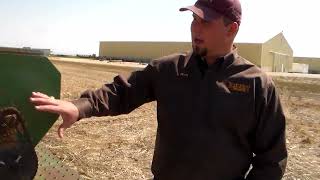
Rhett Kerby explains how wattles control erosion on hillsides by managing water flow and preventing gullies. The technique works for both concentrated and sheet water, keeping soil moisture intact on utility-scale land disturbances.
Chapters
Maybe it's not too windy. Maybe. Maybe you can hear.
I wanted to talk today about concentrated flow versus sheet flow. You can see this area right here, which is essentially a waterway, is an area of concentrated flow.
So what we're doing today is we're flagging where to place wattles to break.
Up this concentrated flow to prevent the.
Formation of gullies over off this hill. Now, your erosion potential changes from concentrated.
Flow to sheet flow.
And so, meaning the water has the potential to sheet off of this area and move down the hill. Sorry, I'm dirty. It has the potential to move in sheet form down this hill. So the water is going to fall down this hill as a sheet.
And.
And we are placing these flags on the contour. So that's completely different than what we were doing in the concentrated flow area. You can see here's another concentrated flow area. So we're going to stagger wattles through down through this channel to break up the concentrated flow. But we're also placing wattles on the contour to prevent sheet flow from moving into as quickly. Moving into the concentrated flow area as quickly. So we're keeping the water where it. Keeping the water on the hill, slowing the water down in the concentrated flow areas, all for the opportunity for the soil to infiltrate or water infiltrate the soil, making the soil moisture greater and more available Moisture available to the plants to grow and establish on this. On this area that is susceptible to.