Rob Henderson on Why Upper Middle Class Whites Have Gone Woke
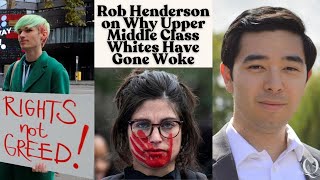
Rob Henderson, a Cambridge PhD candidate, explains why upper middle class whites embrace woke politics. He draws on psychology, military service, and time at Yale to argue it's a form of social signaling and status competition among elites.
Welcome to the Quillette Podcast. I'm your host, Jonathan Kay, a senior editor at Quillette. Quillette is where Freethought lives. We are an independent, grassroots platform for heterodox ideas and fearless commentary. If you'd like to support the podcast, you can do so by going to Quillette.com and becoming a paid subscriber. This subscription will also give you access to all our articles and early access to Quillette social events.
My name's Toby Young. I'm an associate editor of Quillet, based in London. Today I'm going to be talking to Rob Henderson, who is a PhD candidate at the University of Cambridge. He obtained a BS in Psychology from Yale and is a veteran of the US Air Force. He recently read a piece for Colette entitled America Exports Cancel Culture to the World, in which he related how a video interview he'd done with a Dutch magazine about Cancel Culture had itself been cancelled. Rob, welcome to the Qualette podcast.
Hi, Toby. Thank you. It's great to be here.
Tell me about that episode in which you recorded an interview with Dutch. Was it a magazine? And it did very well, but then they took it down.
Right? Right. Yeah. So I wrote about it in that Quillette piece. So this journalist from NU nl, which is apparently one of the more widely known news websites in the Netherlands, journalist, reached out to me, asked if we could record a couple of segments on Cancel Culture, just based on some articles I'd written in City Journal and Psychology Today and elsewhere. And so we recorded a couple of short segments. I discussed what I see are some of the problems of Cancel Culture, and some criticisms and conversations seemed to go very well. He got back to me a few days later, showed me the video. Most of it was in Dutch. I think the only conversation that was English was my conversation with him. But overall, it looked very well done. I noticed it had gathered something like 176,000 views over the course of three days, which are apparently pretty big numbers for the Netherlands. And then I noticed it was taken down. So I asked this journalist what happened, and he told me that his editor said that the video didn't meet their profile. And so I further questioned him and said, well, what does that mean? Was this video taken down? Because, you know, there were some parts of it that were critical of Cancel Culture. And he basically said, yes, that the video was too sympathetic to the victims of Cancel Culture, and his supervisor deemed it necessary to take the video down. So I found it ironic that this video about Cancel Culture was then canceled.
As a result of this experience, it gave you some insight into the way in which cancel culture has been exported by America to the rest of the world. And I think you quoted, was it a sociology professor in that piece saying that even as recently as a year ago, something like that never would have happened in the Netherlands. But because of America's soft cultural power, and because cancel culture has escalated so dramatically in America even in the past year, it is now successfully exported this poisonous culture to the rest of the world, including the Netherlands.
Right. So I talked to a friend of mine about this Dutch guy. He was a postdoc sociologist, and I asked him about this and he said, you know, this is just so strange to me because apparently the culture of the Netherlands is such that people can discuss these issues openly. And this idea of cancel culture is very strange to him. He said that it is very much a sort of American influence. And I think there is something to that. You know, I was born and raised in the us but I've been in the UK for the last couple of years, and I've sort of seen just how strong the influence of American culture is. We see some of this with the recent protests. I mean, something happens in Minneapolis and then suddenly there are protesters gathering in London trying to take down Winston Churchill. And so I think that, you know, throughout the 20th century, America was known for their soft power for exporting things like, you know, Coca Cola and Elvis and blue jeans and so on. But I think now, you know, in addition to products and culture, music, Hollywood movies, we're also sort of exporting these social and political beliefs that, you know, that people are adopting because they see America as a sort of cultural leader.
I've got a slightly different theory, but probably less well thought through. But I've often puzzled over why it is that the Anglosphere seems to be more prone to cancel culture and to these kind of quasi religious woke cult movements than countries outside the Anglosphere. And my theory is that it's rooted in the Protestant tradition, which Puritanism stems from. And it's a kind of revival of some of the psychological underpinnings of non conformism within the Christian tradition, much of which kind of involves identifying a small group and as the elect and pushing others outside that group in order to maintain its moral purity. And this seems to be what's being reenacted in these kind of post Protestant cultures. So even though America seems to be one of the central gravitational focal points of cancel culture, nonetheless, it also has roots in other parts of the Anglosphere and also Curiously, in other European countries with a Protestant tradition, like the Netherlands, like Germany. But you don't see it thriving nearly so effectively in countries like Spain or Italy or Greece or Russia, which never really had much in the way of a Protestant tradition. Do you think it's actually, it's not just that this culture has found particularly fertile ground in America because America's always been prone to these kind of great religious movements. It's more than that. There's something about America that explains the origins of this phenomenon.
Yeah, yeah, that's very interesting. I mean, I've heard similar ideas before about how the sort of history and traditions of religious life in America is related and maybe has helped to give rise to what we're seeing now with the social justice movement and WOKE ideology. There's probably not one explanation for any of these things. I think all of these can exist alongside each other and all contribute in some way. But yeah, I hadn't considered just how strong this is in the Anglosphere and then. Yeah, in the US in particular. But I also think that there are like some psychological underpinnings, as you said. And. And of course, like, because I study, you know, social and evolutionary psychology, that's where I see a lot of these social trends. And that's just sort of my bias. And so. And one thing I wrote in that the piece for Colette was how this idea of cancel culture, of ostracizing or eliminating dissenters, I mean, this is something that exists in foraging communities and hunter gatherer communities. You know, it's sort of a very old human tradition that predates the US or any country that exists today. And so I find this to be a sort of interesting revival of that. It's safer. We're not, you know, necessarily murdering people or, you know, abandoning them. But I think a lot of the drive is quite similar to find someone who said something that violates the moral standards of the community and then to just ostracize them, to castigate them and in some cases make an example of them to bystanders, to witnesses, so that we can collectively see that this person has violated a norm. And now you all know not to do that. Yeah. So I find that aspect to be interesting. And then also the ways that beliefs and opinions can spread. The way I look at it, based on a lot of research in psychology, is that people are very quick to adopt what they perceive to be high status opinions. And so if a prestigious institution or a well known person expresses a belief, people are much more likely to just adopt that belief themselves. You know, whether it's someone at a prestigious news media institution or, or whether it's someone out of Hollywood, we will listen to those beliefs and take them into consideration. And so I think this is something else that's going on among the educated class. In particular that the media that we consume, we're seeing these people say certain things, repeat them over and over. And now I think this is having some effect on public opinion.
And now a message from our commercial supporters at BetterHelp, the online counseling service that helps people everywhere become happier and more productive. At betterhelp.com, you'll connect with your professional licensed therapist in a safe, private online environment according to your own schedule, using secure video phone, online chat or text. Anything you share is of course strictly confidential. While BetterHelp isn't a crisis line, new clients can start communicating with their counselor in under 24 hours. When self help methods aren't enough and you seek professional counseling, BetterHelp can connect you to a network of thousands of licensed therapists and you can switch therapists to make sure you get the right fit. Licensed counselors include specialists in sleep, trauma, family conflicts, LGBT matters, grief and self esteem. So many people are using BetterHelp that they're recruiting additional counselors in all 50 US states. BetterHelp is more affordable than traditional offline counseling. There's no awkward waiting room and you can message your BetterHelp counselor at any time. Financial aid is available in some cases. Join over 1 million others who are taking charge of their mental health by visiting betterhelp. That's H E L p.com quilet Listeners get 10% off their first month service with the discount code. Corlette. Just go to betterhelp.com quillette and now back to our podcast.
Yes, I wanted to ask you about that. I think you've written very interestingly about how expressing declaring your fealty to the woke agenda is a form of social signalling. It's a way for members of the elite or want to be members of the elite to to signal that they've embraced the code of the elites. They understand the language, they understand the norms. It's a way of declaring their fitness for membership of a professional guild of some kind. But the curious thing is that whilst cancel culture and the woke cult clearly does play that role. And the interesting thing about that analysis is that it's so at odds with the self understanding of people as they engage in this signaling in which they don't think of themselves as preserving the power and influence and status of A tiny socioeconomic elite. They think of themselves as trying to dismantle it and make it more accessible to people outside those guilds. But under the analysis you presented, it's almost the opposite. Their understanding is actually completely at odds with what they're actually doing. But there's another curious feature about this, which is that often this culture is used as a way to displace members of the elite to make room for the people who are outside the golden circle. If you can push people out of it by cancelling them, then you can somehow create space for yourself. Or even if you can't do that, you at least satisfy yourself that you have successfully denuded someone else of the status you desire. So when elites signal their membership of the elite by expressing fealty to this kind of neo Marxist code, aren't they in some sense mistaken? Because that code can so easily be used, and to a certain extent it has evolved in order to be used to displace their membership of the elite? It doesn't it seem like they're playing with fire when they issue these solidarity statements with BLM or go on these protests? They're actually exposing themselves to possible cancellation themselves.
Well, I think that risk is part of this sort of procedure or part of the initiation into membership, taking those kinds of risks. But to your point about how the ideology can be used to displace elites, that is something that I've been thinking a lot about. I mean, I think that there are a lot of aspirational elites who sort of have the credentials, but maybe they're fairly early in their career. I mean, the most woke tend to be college educated millennials, maybe late Gen Z. And I think a lot of them would like to have more prestigious occupations, you know, create opportunities for themselves in certain career fields like journalism or in universities or in media or what have you. What we're seeing some of the most intense manifestations of cancel culture. And yeah, I think that a lot of them would love to create loyalty tests for more established individuals in those fields and hope that they fail. And if they don't, then to just keep pushing the ideology to a point where a respected figure in one of these occupations will finally sort of not say the right thing or make a mistake. If these strategies don't work, then they can always go back and find a tweet that they wrote in 2011 or something that they wrote in a newspaper article in the 90s. So there are many ways to eliminate people from these places and allow themselves to rise up in those career ranks. I Mean, there are many reasons for it, but one reason for what happened recently at the New York Times, in my opinion, was to create space for some of the junior staffers there. We saw James Bennett and James Dow both recently get fired from their positions as op editor, deputy op editor after the Tom Cotton op ed. And of course there was all this debate about whether this was right and what the motivations were. But I think one motivation was a lot of those junior staffers would probably love to have been the op ed editors or create some space for themselves in rising up at the New York Times.
I think that's right. I think that does capture a lot of what's happening so of sociologically and explains why this particular successor ideology has managed to gain such purchase amongst recent graduates, particularly graduates of elite institutions, that it's essentially a kind of sophisticated job creation scheme. Given that, why do people who have the jobs that the revolutionaries want to eject them from so they can take those jobs for themselves? Why do they go along with it? I mean, that's a sort of slightly perplexing thing about cancel culture is that it's effective because the elites themselves, who have everything to lose and very little to gain, seem to embrace this revolutionary ideology, even though it seems contrary to their own self interest. And you often see powerful white middle aged heterosexual men repeating verbatim phrases from books like white fragility and engaging in racial self flagellation. And you sort of think, well, surely the next logical step is for you to stand down and to make way for a younger person, ideally a younger person of color. And you can't surely reasonably sustain this level of self flagellation and carry on reciting from this catechism without having to eventually fall on your sword. Why doesn't that dawn on them? Why do they sort of so enthusiastically embrace something which is ultimately going to prove their own doing?
Well, I think a lot of them think that by doing these things they will be able to keep their positions. And I think a lot of it is related to sort of status and respect and acceptance. I think a lot of older people, you know, I speak, you know, as a millennial here, but I think a lot of older people are quite cowardly and quite weak. I remember in 2015, I was at Yale during the student protests over Halloween costumes and everything, and about 200 Yale students marched to the Yale president's house in the middle of the night, and they woke him up with megaphones and signs and they read him a list of demands. So he woke up, went outside and listened as they read their list of demands to him and a student newspaper interviewed him after. And he basically said, like, oh, you know, the students were exercising their rights and, you know, it was perfectly fine what they did and it was a reasonable expression of whatever. And so I remember reading this and thinking, like, what is going on here that the president of Yale is bowing before these, you know, 20 year old students? And I think that there's like an element of cowardice there. And I think that there's this sort of unwillingness to, or maybe lack of confidence in themselves to just say, like, I am in a position of authority, I have some amount of power and influence and I know more than you. And there's nothing wrong with saying that, I don't think. But I think they're very fearful of saying something like that. In part, I think, because, you know, a lot of the boomer generation grew up in an era where authority was to be distrusted. Right. Like the late 60s, the 70s, the era when they were in college. They sort of, I think, identify with these young people who are challenging power and in some ways want to be those rebels. They view themselves as these rebels beneath all of their, you know, occupational prestige. And so I think they hope by mouthing the right words and, you know, attempting to pass the loyalty test, that they'll be accepted and that they'll be able to both keep their position while also being the rebels in their own mind.
Yeah, that probably has a lot to do with it. I had this theory that the reason that woke culture, a culture that originated in grievance studies departments in minor universities, the reason it sort of penetrated into the kind of heart of the media industrial corporate complex is because if you are running a company, even if you are a shareholder in a large American corporation, there's something kind of more palatable about being confronted by demands to diversify, to introduce unconscious bias training courses, to hire more people of color and so on, to include more women on your board. All that's quite doable without fundamentally altering the hierarchy of your firm which guarantees your high status. Often the people making the demands, they're not complaining about the differential between the highest wage earner and the lowest wage earner. They're not trying to get a better deal for the cleaning staff or the, you know, custodial staff, the caretakers, we call them in this country. If you are someone who depends upon a kind of hierarchical capitalist structure for your money and your power and your social status, you can hold on to that whilst giving into many of these demands. It's different from the Occupy protests, which seem to have a more kind of old fashioned socialist, egalitarian agenda. This new kind of successor ideology doesn't make nearly so many demands of the 1%, only asks that they become a bit more diverse, not that they give up their wealth.
Right, that's really interesting. I have noticed that a lot of the so called changes involve things like taking down statues or renaming a building or the name of a football team. And all of these things are sort of economically costless or, you know, involve minimal cost. And I think, yeah, there are a lot of these sort of symbolic changes in lieu of sort of a real economic redistribution or the sort of Occupy Wall street demands of economic transformation of the country, which, you know, I wouldn't even necessarily want. But I do think that those in power are trying to find ways to placate the protesters without actually having to pay anything in terms of their material wealth. So that's a really interesting point, if.
You want to be really cynical about this. I think it was either Ross Duhat or somebody else I think, wrote a column in which they said that one of the reasons large American corporations like Nike and Coca Cola have embraced the woke agenda is because they know that it drives ordinary people completely round the bend and makes them much more likely to vote for Trump, which actually favors their long term economic interests. You know, rather than have a Democrat in the White House who might want to kind of introduce more regulations or break up some of these monopolies, as long as they have a Republican in the White House, they're essentially secure. And the best way to do that is to drive ordinary people completely not so bananas by embracing the kind of woke bollocks.
That's very interesting.
I wanted to ask you a bit about your background in the US Air Force and whether that gave you background in the US Air Force and whether that gave you a kind of unique perspective. When you were at Yale, when you were moving among the privately educated elites, were you able to see them more clearly than the members of those elites because you were something of an outsider in that institution?
Yeah, it's an interesting question because, you know, I could probably see a lot more than others in some ways. And at the same time, I was probably blind to a lot of it too. You know, I think that when you join a new social group, in some ways, when you notice certain things, that's, that's an indication that you're an insider. But also noticing certain things can mark you as an outsider as well. And so coming from my Background, you know, grew up in a sort of poor working class community, joined the military later and so on. Like, I came to Yale with sort of fresh set of eyes. I mean, I was completely bewildered in a lot of ways by just how different the people were, the kinds of things that they were interested in. I was so curious about the sort of limits of certain kinds of open mindedness that they had. Now, when it came to political beliefs, for example, I mean, there was a very sort of rigid view of what's right and wrong. But when it came to, say, relationships, you know, polyamory or, you know, any other kinds of, like novel sexual relationships, there were basically like, no limits to what they thought was okay. Things like drugs, things like open borders. I mean, it was a very liberal campus. And what was interesting for me was that, you know, in the military, I was sort of the token liberal in some ways. I was, you know, sort of raised by center left Democrats in the US and so in the military I had met, you know, a lot of staunch Republicans, conservatives, libertarians and so on. And then when I got to Yale, suddenly I was viewed as a conservative, even though, you know, my views hadn't changed. So I went from being the token liberal to suddenly being the token conservative. That was interesting. And then, of course, the class element was something that was strange to me. I mean, being in a place where I think it's something like there are more people from the 1% than like the bottom 60% in terms of family, socioeconomic status. There was this discomfort with their wealth. No one openly talked about money, and it was sort of seen as whatever, declasse or sort of crass. But there was also this at least professed concern for the downtrodden and the disadvantaged. But when I saw student protesters, it was never for the, you know, the poor people who lived in the town that Yale is in, New Haven, Connecticut, which is a very poor town. Yeah, they just seemed to care more about their own position, their own status. They strove for policies that would help themselves more than anyone else under the guise of helping the most disadvantaged, which I found very interesting.
I came across a phrase in a Dickens novel recently to describe that phenomenon you've just described, which was telescopic philanthropy, whereby you can't see the needy in your immediate environment. You can only see them when you look through your kind of telescope. And they're often very, very far away, nowhere near you.
Oh, no, no. I saw a lot of that. You would be in like the sort of what we call the Yale bubble of the University. And then, you know, one or two blocks down there would be homeless people shooting up heroin and sleeping in the streets and begging for money. And the Yale students did everything they could to avoid those areas and to not really leave the places that they were certain were safe. So, you know, they spent four years saying, you know, they care a lot about New Haven, and then they leave and never think about it again. They only think about Yale.
Is Cambridge similar or is it completely different?
I mean, there are some similarities. There are homeless here, there are some poor people here. But as far as like the way the students are, I would say it's quite similar. Their attitudes, I would say it's less like intensely political as Yale was, which might have had something to do with basically the time that I was at Yale, 2016, election and whatnot. The sort of general attitude is the same, the sort of social class divisions. There's a lot of similarities here. And that was one of the things I was hoping would be different. One reason among others, why I came to Cambridge was because I thought it would be different from the US I thought that maybe the social justice ideology wouldn't be quite as, as intense here. But just a few months after I got here, Jordan Peterson was disinvited, my friend Noah Carl was fired. And so, unfortunately, it's not that different.
Finally, I wanted to ask, I think in the past, I think I might have suggested to you that you expand your theory of the leisure class, which was an essay you wrote for Qualet, into a book. It feels like you'd be ideally placed to write a kind of sequel to Thorsten Veblen's book in which you substitute woke signaling for conspicuous consumption. Are you thinking about writing that book or are you going to write more of a hillbilly elegy, J.D. vance type of book?
Yeah. So I've signed to write a memoir. And so this book will be more of a sort of straight life story mixed in with a few sociological observations. And I do plan to touch on luxury beliefs in this book, but for the next book that I do, it may be luxury beliefs. I would love to explore further the sort of signaling theory from biology and economics, sociology, delve deep into social class. I mean, I think this phenomenon is so interesting that it's almost completely isolated from what I can tell among the educated. I don't know of any blue collar people who are on board with what's going on. And I know quite a few and a lot of them are either a, like totally unaware, like they don't even know that it's happening, which is kind of funny. Or they're just like confused. They're just not into it. And there was a recent study, I think it came out last year, at least, written about in the Atlantic about how progressive activists are, you know, something like three times more likely to hold postgraduate degrees, much more likely do earn $100,000 or more per year, much more likely to be white. This is very much a sort of elite educated phenomenon, and I would love to delve deep into how beliefs, you know, luxury beliefs have in many ways replaced material goods as indicators of social class.
Well, that sounds very interesting, Rob. It's been really great to talk to you for quite and thank you very much for talking to.
Thank you for listening to this episode of the Quillette podcast. Quillette is where free thought lives. We are an independent, grassroots platform for heterodox ideas and fearless commentary. If you'd like to support the podcast, you can do so by going to quillet.com and becoming a paid subscriber. This subscription will also give you access to all our articles and early access to Quilet social events.