
Through the lens of compassion everything changes | James Doty
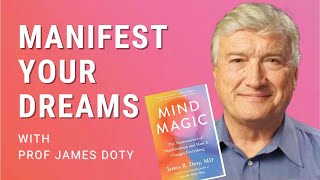
Neurosurgeon James Doty explains how manifestation works in the brain through attention networks and "value tagging" of intentions. He shares how moving from fear to love through self-compassion rewires your mind, and describes practical tools like visualization and a six-week program to embed new patterns.
Questions this video answers
Stanford University's Center for Compassion and Altruism Research and Education (CCARE).
November 15, 2025
Due to be published early to mid May (year not restated in transcript).
Chapters
Hi, I'm Dr. Stan Steindl. Welcome to Compassion in a T Shirt. I appreciate all your support. Just in the last week or so, my channel has been made a YouTube partner. I'm not sure really what that means, but it's a nice sign of the growth of the channel. Don't forget to subscribe. Today I'll be speaking with my dear friend, the one and only Professor James Doty. Professor Doty is a neurosurgeon, author, renowned public speaker, and founder and director of Stanford University's center for Compassion and Altruism Research and Education, or C. Care. His first book was into the Magic Shop, which was a bestseller and a favorite of mine. His current book is Mind Magic the Neuroscience of Manifestation and How It Changes Everything. Mind Magic is due to be published early to mid May. In this episode of Compassion in a T Shirt, Jim talks about Mind Magic and offers profound insights and some practical tips on how to manifest the life that we want. And so I bring you Professor James Doty, Foreign Jim Doty. Welcome to Compassion in a T shirt.
Well, thank you for having me, Stan. I. I of course have been a long time admirer of your work and also that of your colleague Paul Gilbert and your other colleague, what's his name? Kirby something. Yes.
Associate Professor James Kirby. Yes, yes. Our mutual friend.
Exactly.
I adore your new book, Mind Magic, and I was hoping to really focus on that in our conversation today. And to do so, I thought we may as well start at the beginning, the first line of your introduction, in fact. You write, the universe doesn't give a fuck about you. I hope I pronounced that correctly. But what is your thinking behind that?
Well, just to. Before I tell you that, just to put the rest of the phrase there, which was the universe doesn't have any fucks to give. But I think what I was trying to emphasize was the fact that so many people look outside themselves for answers and are waiting for some entity, something, something to tell them what they have to do to change their life, or if you want to use the term manifest. And the reality is there is nothing outside yourself. And when people are always looking for that guide, that person, that thing, in many ways, they're giving their self agency away because they're waiting for somebody to tell them. And the problem is, unfortunately, and I'm sure you probably experienced this either in your own life or with patients, somebody will say, you know, I have this incredible idea. I would love this to happen. I could see myself doing this. And then the person says, you're never going to do that why do you think you can do that? And the problem is they put these negative thoughts into your head. And oftentimes people give up on their dream or their goal or their inspiration. And it's really unfortunate because in some ways this contributes to what all of us have to varying degrees, which is negative self talk and negative self talk. Of course, once you say it is not possible, I cannot, then that becomes truth. And I think that's what I was really trying to emphasize. The other aspect which I think is critically important is especially among young people, is that based on what I would say is Western capitalist narrative of success, which is wealth, power and position. They equate that with happiness. And as a result, many young people especially are focused on, oh, that defines success. If I do this, that will make me happy. And the problem is that then they have a narrative in their head of what they want. But that is far different than, if you will, what they need. And the challenge is having people understand that. Because once you understand what you need, it has an impact on actually what you want.
Yes, now that's, there's a few things there, I think, which are, you know, it is actually profound to think about that. Actually it's not as simple as sending our wish out into the universe and expecting something in return. I suppose it takes action and it takes some sort of sense of agency to do that. And yet we can often, well, ourselves or others can really undermine that sense of agency through the criticism or negative talk from others or even just that, that negative, you know, critical talk within ourselves. I suppose we, we kind of undermine ourselves and that causes us to manifest other things. Actually, we'll, we'll get back to, to that in, in a moment. But the subtitle of the book is the Neuroscience of Manifestation and how it Changes Everything. So, and, and the concept of manifestation, it's often used in, you know, popular culture or self help books or that sort of thing. But, but, so what do you mean by manifestation?
Yeah, thanks for asking. I would say that when I use that terminology, what it means is to, if you will, embed an intention in a manner in which it has the maximal possibility of occurring. And it's actually a process. It was interesting. You made the statement it takes work and, and also that people are manifesting all the time. Now I would make a couple comments. One is, this is in some ways like an athlete. Let's say you decide to run a marathon. Well, you don't start running 26 miles the very first day. So one aspect is to understand it doesn't happen immediately. And it, and it also takes work. Now, somewhat of a paradox would be me making the statement based on what you said about the first sentence is God only helps those who help themselves. So this isn't. You just sit back and go, okay, well I want this, I'm waiting. Where is it? How come it's not happening? And so I think you have to understand one, what are the obstacles to you manifesting right now? One aspect is you don't have enough knowledge about it to maximize that possibility of manifesting something. Two people create obstacles to their ability to manifest. And I think three, they get lost because they view this as concrete. And what I mean by that is they say, you know, as an example, I want a red 1997 Porsche with a stick shift. And you go, well, yeah, I appreciate that, the exactness of your description, but the reality is it doesn't work that way. There are a lot of external factors that play a part here. So. And I'm not advocating that you should ask for a Porsche, although we can have that discussion, but what I am saying is that whatever that thing is you're trying to manifest, it oftentimes it doesn't get down to that grittiness of detail, although it can, but it usually doesn't. So if you get a 2000 green Porsche, well, that's pretty damn good when you had nothing. So. So I think you have to put into context. And the other thing is, the reality is that while you have your own energy, internal energy and power, the fact of the matter is there are other things that conflict with that. And if you want wish to manifest something, well, there are some things that can be barriers to that. And it's not because you're not doing it right. It's either the time is not right, what you're asking for is unreasonable and not possible. As an example, if you said, well, I want to be one of the first people to land on Mars in the next five years, that's probably not going to happen. So you also have to put it in the context of, of reality. So, and this is to say they're necessarily absolute barriers, but you have to put these things in the context of reasonable possibilities, not so far, the chances being that low, and somehow it's magically going to happen. It doesn't quite work that way.
It's kind of action, but also sort of wise action. I mean, understanding what the barriers might be, how to work around them, but also knowing that not all things we may wish to manifest will necessarily arrive for Us. But nevertheless, it's still useful to work towards them because other things might arise that are also good or sort of help us to live the life that we want.
Well, I think that's exactly correct. The other thing I would comment on that people forget or are not consciously aware of is the fact that many people carry baggage from their childhoods and they don't understand how that can negatively impact their ability to manifest. Because, as you well know, oftentimes every decision somebody makes, whether it's about how to function in terms of interacting with people, how to function in a job, how to function in a relationship, all are affected by the baggage that each of us carries. And if you have a complete lack of awareness of how that baggage impacts you and how, frankly, oftentimes it interferes with your ability to live the life you want, that's part of the problem in and of itself. So on some level, you have to do an examination which you could sit there and call, you know, what are the potential obstacles that are impeding me? As an example, I'm sure with some of your clients, you have people who repeatedly marry the alcoholic and they. And then they break up and they go, that's never going to happen again. And then the next thing they're, you know, dating an alcoholic. And. And the problem is they don't understand what are the drivers that are making them do those behaviors. Well, if you don't understand the drivers or what is causing that, then you're going to be marrying the fourth alcoholic. Right? I mean, that impedes your ability to manifest because there's an underlying current which you don't understand, which is negatively impacting you and is actually the driver, and you're not the driver.
Actually, what you're sort of alluding to there, I think, really comes into chapter one of the book where you ask the question, you know, like, what are you already manifesting in your life? You know, it's a confronting thought in a way, because it just invites us to kind of consider our own role in. In where our life is heading. And, and. But, you know, rather than things just simply happening to us, I suppose, you know, it's sort of. It's that kind of reflection, but it also reminds us that we have that. That agency.
No, I think that's exactly right. And the problem is, who's doing the steering? Is it you on a conscious level, with full understanding, or is it your subconscious and that baggage which is doing the driving? And your eyes are closed to that reality? And therein lies the challenge, I think, for Every person, because our identity. It may seem as though we're communicating. Everything's all together. We seem to know what we're doing. But the fact is that there's another thing in there which isn't telling you. They're actually doing most of the driving.
Yes, that's very interesting. I hadn't thought of it like this, but there's kind of a sort of an unconscious versus conscious manifestation. Manifestation is happening all the time, really. And what can change, especially working through your book or the program that we'll perhaps get to later. That's the end of the book. But, you know, the idea there is to bring manifestation into consciousness, I suppose, and start setting intention and so on. One of the things that really did resonate for me personally, Billy, but also professionally, is you discuss the role of shame. Tell us about the role that shame might play in the life that we're already manifesting or wittingly or unwittingly.
Well, I think this is a term that was popularized by Carl Jung and. Or the shadow self, if you will. And this is the part of ourselves that we actually don't like. The part that has done bad things, the part that has hurt people, the part that we would not want to confess to people that we've done these things or actions that have been dishonest or unfair or unreasonable. And. And so what most people typically do is they push them away because, you know, who wants to sit there, go, you know, well, I lied to my wife, and I had an affair, and I'm a bad guy. So you sit there and you create all these excuses and separate yourself. The problem is, though, that when you do that, that part of you is always still there. And when you are in a situation where you're tired, where you're weak, where you're hungry, when you're exhausted, this shame that you've been pushing away suddenly jumps back at you and often results in you doing the worst type of behaviors. And. And it could be related to different types of addiction. Drugs, alcohol, sex, gambling. Where. And. And the problem so often is that some of the things that create shame are often interactions with loved ones in the past. And as an example, if you had an abusive alcoholic father, and you know, he does these actions, but then says, I love you and hugs you afterwards and I'm so sorry. Well, then you equate this abusive behavior with love. And so then you put yourselves in these positions where you get into abusive types of situations because you're. You want that feeling of love and connection. And. And then you create shame because you have insight into that part of you that' being a nice guy. And in fact oftentimes relates to these different events that have occurred in your life and you're carrying that with you. And so the reality is you, you have to be friends with that. You have to be friends with your shadow. And this is not to sit there and say, oh, well, I'm a bad guy. And I accepting I'm a bad guy. But what it is doing is it's saying, I understand where that comes from, I am aware of it, I accept it and acknowledge it. But the very fact that I do that decreases its ability to have control over me. But when you push it away all the time, then you give it power to come back and attack you and put you in a very bad situation. And that's how I sort of look at it. And until you've dealt with that, it's very hard to manifest because that's always things that are going on in the background for you. And when you're able to calm that down, accept it, then you're actually much more able to think clearly, I believe. And again, the goal here, as you said, is we're all manifesting, but it's like, you know, learning to run a marathon. We're all manifesting, meaning we all walk on two legs usually, but that doesn't mean we're ready to run the marathon. And what I the analogy is that you have to practice, you have to show up, you have to train with people or get knowledge based on people's prior experience to maximize your ability to actually run a marathon and to do it correctly and without injuries to yourself. And that's really what you're talking about. So, you know, everybody every day says, you know, I'd really love to have this, but if you say it once and it's done well, the likelihood of that actually happening is very, very low. But if you commit to the process which is analogous to the training, then every day is an opportunity to strengthen that. And as you know, there's the saying, what fires together, wires together, right? And so when you use these different types of practices which we know create new neural pathways, and this is in the context of neuroplasticity, our ability to change our brains, then every day you're strengthening those pathways and which means you're getting in shape to run the marathon. Yeah.
Shame is such a painful emotion, isn't it? It's threat based. It's textured with anxiety and anger and sadness and all sorts of other very Difficult emotions. It's very backward looking in a way, and it's very inhibiting. And it has an inhibiting effect on anything that we may kind of at another level wish to manifest. It sort of really inhibits all of that. Although then at other times, as you say, up it comes and all of a sudden now it's the driving force and it drives us towards certain actions that take us even further away perhaps from the thing that we wish to manifest.
Well, and then you get guilt, which then creates that ruminating cycle which makes it all even worse. Yep. Now in some ways, and I think it's a fair statement, really what we're talking about is the choice between living in fear and love. Right. Because the negative aspects here are the fear based aspects. And when you're liberated, then you can focus on love. When you love. And what we're talking about is shifting from threat mode or engagement of the sympathetic nervous system to engagement of the parasympathetic nervous system. And what happens then is that is fundamentally the shift from fear to love. When you love, you're open, you're honest, you're accepting, and your different cognitive networks function much better. Your executive control network, which gets things done, if you will, but it is associated with having access to memory experiences, but also creativity and productivity. This is completely inhibited when you're in the fear mode. So the goal here is to understand that and then use that to maximize your ability to manifest. Because when you're in that mode, all of these cognitive networks work much better. Because frankly, we evolved to be in the love mode and not the fear mode. The fear mode is an evolutionary holdover which in modern society actually interferes with our thriving as human beings. And so it's not going to go away though. But we have to learn how to deal with it. And one aspect of that also is emotion regulation.
Yeah, your book really promises to give us a sense of the neuroscience behind all of this. I mean, I think that's really an important part of the angle that you're taking around, kind of manifestation is what's the neuroscience there? As a neurosurgeon yourself, I mean, that's the kind of the sort of the more unique expertise that you're bringing to all of this. And you're thinking about things like sympathetic nervous system, parasympathetic nervous system, the way that we are trying to make a shift and to cultivate parasympathetic nervous system activity so that our executive function can kind of work in a, in a forward looking, you know, manifesting the life that we want kind of a way rather than a fear based fight, flight, freeze kind of situation that, that mainly just holds us back or manifests a life that is more sort of full of suffering. I suppose in a way.
No, I, I think that's exactly right. And I, I think another aspect we should also mention is how the popular culture has promoted a narrative that is not beneficial in regard to manifestation. And in some ways it's like religion. And what I mean by that is experientially, over millennia humans have learned the power of compassion, which means caring for others. And this is how we even evolved as a species. We are one of the few species that doesn't run off into the jungle or the forest. Our species has to be cared for. So we have created a genetic imperative that rewards us for the decades of caring that are required to bring up our offspring. And when we do care, what happens is of course our reward centers are stimulated. We are shifted into this rest and digest parasympathetic nervous system. Our physiology works its best. The problem though with the woo woo pseudoscience that has been promoted in popular culture is that it promotes a narrative that is completely the opposite. In fact, I hope this book is the antithesis to books like the Secret. The Secret promises you quote unquote getting everything you want based on the quote unquote law of Attraction. But the way it is defined or sold is that you get whatever you want. And oftentimes it is a self serving narcissistic narrative. I want a Porsche, I want to live in a mansion. I want a million dollars. And it's promoting the western capitalist narrative of success being equated with happiness. Now I will certainly tell you from my own personal experience, as you know, I came from very challenging background of poverty with suffering because of my father's alcoholism and my mother's suffering due to a stroke and her being chronically depressed and attempting suicide, being on public assistance. And I bought into that narrative. And part of it was that the experience I had based on my book into the Magic Shop was meeting a woman in the magic shop who did teach me a mindfulness practice. And she taught me a visualization and manifestation technique. But I had no self awareness. So she said, make a list of 10 things you want. Well, it was. And because of my interaction with people I thought were successful, it was, I want a Rolex watch, I want a Porsche, I want a mansion. I want to be worth a million dollars. I want to be a doctor. And the reason I wanted to be A doctor, though, was because I was profoundly influenced in the fourth grade by a pediatrician who came and spoke to my class. And he treated me with respect and answered my questions as if I was important, and he cared for people. But anyway, I made that list, and I got every one of those things. But when I had them, you know, here I have a mansion overlooking the bay in Newport Beach. I have a penthouse on the top of a building in San Francisco. I have a villa in Florence. I have a Porsche, Ferrari, a BMW, a Range Rover, a Mercedes in my garage. I'm dating, and I was single at the time, dating, you know, beautiful women. I have everything. And in fact, my friends are telling me, man, you're so lucky. You have everything. This is amazing. You must be so happy. I was never more miserable in my entire life than when I was in that situation. And the reason was, every action I did, getting back to the word shame, was trying to decrease the shame that I had by seeking outside affirmation of my worthiness. And the problem is, the only person who can make you okay with yourself is you. And so climbing each of these mountains, whether it was going to medical school, becoming a neurosurgeon, becoming a successful entrepreneur, I would be at the top of the mountain waiting for this thing to fill the emptiness. And there was nothing ever there. I was just as empty. And as a result, I was unhappy and miserable. And the only thing that changed, finally, was actually a profound event. Where in early. Was it 1999 or the end of 1999, but whenever the dot com crash happened, in six weeks, I lost almost $80 million. And I will assure you that that does get your attention. And, you know, I had borrowed $15 million based on the price of the stock that I had, and now the stock was worthless. And so my banker basically called me up and said, you know, how are you going to pay that loan back? And, of course, I had to deal with my lawyer because I had all sorts of things also associated that had to be dealt with because I was poor. In fact, I was $3 million in the hole. Now, the interesting thing about that was, as a result of that very profound event, I went back and I reflected on my life. And, you know, it was like, here, theoretically, I had everything but what went wrong. And. And the problem was, I realized it was because everything was about me and what I wanted. And when you're focused on you and what you want, actually, that is a very, very unhealthy thing, because again, it gets back to sort of living in the fear mode, because it's all about you. And you're afraid of being authentic and who you really are because you're concerned about being judged and having people aware of the brokenness you have inside. So after this period of reflection and I spoke to my attorney, it turned out that I had made a bunch of donations to charity based on stock that I had and a company that hadn't gone public. And it turned out that the lawyer actually had not filed the paperwork. And in fact, they said, look, Jim, you actually don't have to give that money away or the stock away. And I thought about this, and I made a decision that liberated me. And what I mean by that is that the driver of my behavior was the shame or the fear of being poor. And so everything in my mind was, how do I show that I'm not poor? How can I accumulate wealth? And that's going to make me whole? So I actually made a decision to go ahead and give that stock away to charity. And by doing so, that liberated me because the. The poverty issue was no longer the driver. I gave it away, and that ended up being $30 billion. But the amazing thing is, you know, I set up charity housing, health clinics around the world, I funded blood banks, I developed programs for adolescents with aids, hiv, I set up programs for the disabled. I endowed chairs at multiple universities, I funded research, and I tell people that. And, and I want to emphasize, also my worst day is I'm a neurosurgeon regardless, and I still make more than 99.9% of people, so it's not as if I was living in my car. So I. I don't want people to somehow feel sorry for me. There's absolutely nothing to feel sorry for me about. I was very blessed. But my point is that I went from rags to actual riches, if you will, and then I went back to rags. But through that period of self reflection, it was no longer about the money. And I became actually extraordinarily rich in other things. And those other things were relationships looking through the world through the lens of compassion and how everyone is suffering. And also the profound way in which my life then unfolded, which was one, the creation of this center that focuses on compassionate Stanford, but also because through that I was able to meet the Dalai Lama, who became not only our founding benefactor, but became a friend. And then I became the chairman of the Dalai Lama foundation, which, you know, who has that opportunity. But more importantly, I became friends with Archbishop Tutu, I became friends with Thich Nhat Hanh, I became Friends with Eckhart Tolle, Byron, Katie, Sri Sri Ravi Shankar, Pope Francis. And I've had the greatest joy, pleasure, honor of meeting some of the most evolved spiritual leaders in the world. And the message is always the same. If you focus on caring for others, being of service, then everything changes for you. And as you know, the Dalai Lama has said, if you want to make others happy, be compassionate. If you want to be happy, be compassionate. And fundamentally, the key to this book is changing your perception and being of service to others. And then you get everything you actually need. And it relates to the difference between hedonic happiness and udamanic happiness. And as you know, hedonic happiness is associated with maximal pleasure, minimal pain, and it's transitory and shallow. And this is when I want a car or Porsche, I want a Rolex, I want the mansion. And every time you get one of these things, which is promoted in a consumer society like the west, yeah, you feel good for a little while, but it's transitory. When you focus on the other, then that gives you meaning and purpose. And that is very powerful because that activates all the positive aspects of your physiology. Your pleasure centers are stimulated, your peripheral physiology works at its best, because that is who we're designed to be. And so if you look at how the brain works, the maximal way in which you get a positive effect is where you're looking through the lens of being of service. And that is also how you maximize your ability to. To manifest. And that's the shift from the fear mode to the love mode.
There's a very moving part of the book where you do describe finding that list that you wrote as a, as a boy or, or teenager or something. And, and yes, it says sort of Rolex, doctor, million dollars, mansion. And then I think it says island, which you hadn't mentioned a moment ago, but the island was even a part of where you were up to island in New Zealand somewhere. And then success. You know that that was the list that you had written, and you know that it's actually interesting really, isn't it? Because although it wasn't spelled out on the list, what that young version of you was, was actually trying to manifest was, was that sense of worthiness. And you were approaching it in a childlike way. I guess you were just assuming, based on society's demands or expectations or what society promotes as kind of happiness and success, you were just drawing on that, which seems fairly reasonable, but there was some wisdom in there already that what you were trying to manifest was worthiness. And it Wasn't until later with, with that sort of experience and wisdom that you had developed and, and, and sort of was really sort of forced upon you with the, the whole.com crash. You know, suddenly you wised up to it. It was kind of like, okay, that's actually what I've been trying to manifest all along is my own inner sense of, of worthiness. And, and that really shifted. That shifted to that the sense of worthiness can be manifested from relationship and service and helpfulness and friendship and all of that sort of thing. And that was the big shift. You mentioned, the woo woo thing. And one of the things I quite like about this book, Mind Magic, is that you still use a few woo woo terms. So for example, manifestation itself, but you then re envision it a little bit or sort of make a little shift to it in a way that kind of really relates to the neuroscience behind it and perhaps what something like manifestation might be. And I think in what you were just saying, you were alluding to kind of inner power. Inner power is another one that you mention in the book. So, so from your point of view, because that sounds a bit woo woo at first glance, what is inner power?
Well, again, in many ways it comes back to negative self talk. And, and that's the negative aspect of the power that we have, right? If you tell yourself it's not possible, by definition, it's not possible. If you have that type of respect perspective, you're creating limitations and belief or limited beliefs, right? If you say I cannot, you cannot. And so the reverse of that, of course, is an unshakable belief in your ability to do anything. Now when I say anything, that's within reason, but anything, meaning you have a choice about the work you do, how hard you work, and in fact, what people don't appreciate is that there is a body of literature that shows just thinking as an example, about increasing your muscles or your strength without doing any exercise whatsoever. You can increase your muscle mass by just thinking about it. And, and this is this idea of unleashing your inner power. And I hate to use a term that Tony Robbins uses, but that's what it is. You have, if you have immense power within yourself that until you recognize that, then you don't. And as an example, I always use the analogy, every time you make a negative statement, it is like placing a brick on a prison that you're creating for yourself. And as you say it over and over, the prison walls get higher and higher and it gets darker. Yet you have the key, if you will, to escape from the prison. And it is the belief or understanding that you are the person who created the prison. And when you understand that the prison no longer exists at all for you. And so that is the gift and the power that is within each of us. And until you recognize though that you are sitting there having the key in your pocket, but you don't know that it's sitting there, I think at this.
Point you bring in self compassion into the book. And so what's your take there on how self compassion might help us to manifest the life that we, we want or that we really truly value?
Well, again, it comes back to what we were just discussing because many of us have constant negative selft talk. And I would suggest to you the human condition and also the nature of how we respond to perceived threat actually is the creator of that narrative. The problem is we believe it as truth and it's not truth. It is something that is genetically imparted in us that is a side effect of something that's positive. But unfortunately it results in this negative self talk. And how do you change that? Now, one of the techniques that John Kabat Zin has promoted, of course, is his mindfulness practice. But in that practice the, he says to ignore it, and, and that's one of the reasons you get the positive benefits from it. But I have always said that there are two other parts that are critical to that practice, and one of those is self compassion. Because if you're looking through the lens of hyper criticality at yourself, and as you know, many of us are the most hyper critical about ourselves, more so than anybody else, yes, then you are looking through the lens at the rest of the world being hypercritical about everything about the world. So instead of ignoring these thoughts as they come up, my statement is, and this is what Ruth in the magic shop taught me, which is you change those and you refuse to let them pass by. You sit there and say, I am worthy, I deserve to be loved. I am not that way, I deserve, I can do anything, et cetera, et cetera. And that has an effect, number one, on further negating that type of negative self talk. But it also decreases the noise in the sense that when you repeatedly say I am worthy, I deserve love, it changes that where you know it's not true. And every time that thought comes up, as soon as it comes up, you challenge it in your head, it starts pushing it away. It doesn't, it doesn't affect you and it's not there as much. And at least that's the technique That I have used, that I have found has liberated me from constantly beating myself up. And the thing is that when you are able to diminish that or decrease that negative self talk, it changes your view of the world, but it also changes how other people react to you. And what I mean by that is that I'm sure you have interacted with people who always have this negative attitude and nobody wants to be around. I mean, not only are they beating themselves up, but they're just negative about everything. And who wants to be around that? And what I found is that when you change that perspective where you're kind to yourself, you appreciate your own worth, then you look at through the lens of understanding that one, everyone is suffering and two, everyone deserves love. And I know that may seem woo woo in some ways, but I think it's fact. And even in my own situation growing up as a child, I used to carry a lot of anger and hostility towards my parents. And it wasn't because I felt they didn't love me, I just felt that they were not there for me. And as a result, you know, I was saying, God, why can't it be this way? Why can't they be like other parents, et cetera, et cetera. And what I realized though, they were suffering and they did not have the tools to overcome their suffering, so how could I be angry at them? And I changed then through the lens of I love them, it's not their fault, they're doing the best they can. And that changes then how you interact. You're no longer having anger towards them. The other aspect is again, as I was saying when I was filled with anger and hostility and despair and hopelessness, again, those feelings are not just within you, you're emanating them in every action you do. And that scares people actually or pushes them away from you. Because you're always suspicious, you're always critical, you don't believe them. Once you change that and you carry yourself with this sense of I am worthy, the world is for me, I can do anything, then everything about you changes. And this is actually the power of compassion to change your life, other people's lives, and is the fundamental key to maximally manifesting the life that you deserve.
We understand manifestation, we explore what it is we're already manifesting. We start to understand the brain and that it's tricky and that we're trying to make these shifts from fear to love. And then we cultivate that kind of inner power and we cultivate self compassion, trying to reduce some of the obstacles you sort of said at the beginning, embedding our intention. And embedding our intention in the subconscious, I think, is how you're phrasing it in the book. What's the subconscious in your view? And how do we embed our intention there?
Sure. So as you well know, there's the conscious state, the subconscious, and the unconscious. Now, you know, the unconscious are those things within us that we don't have any access to. And part of it, of course, is how our body functions. Generally we don't have access to that. The subconscious, though, is a place we have access to and it relates to how we're functioning on a more on the level of making decisions and how we react and respond. And we can impact that or influence that. And as I mentioned in the book, people don't appreciate that we have about. Let's see, is it 10 million? I always mess this up. I always say either 100 or it's 10 million bits of information a second that's coming in to our sensory organs. Yet we on a conscious level only have the ability to respond or be aware of maybe 50 to 100 bits of information. So it's very limited. But the key to embedding our intention or embedding something into our subconscious has to do with what we call value tagging. How do we put a tag on an intention so that it impacts our subconscious, and so you have to value tag it. So if you look at the various cognitive brain networks, and these are areas of the brain that are not necessarily specifically designed, but they're areas of the brain that work together in certain instances. And one aspect is called the task positive network, which is to make things happen. And typically this includes the executive control network, which has access to experience, memory and actually implementation of actions. And this is in your frontal areas. Then we have the salience network and the attention network, and then we have the default mode network. So when our mind wanders where we're not focused on a task, this is the place where it is self referential. It creates narratives, it doesn't implement them necessarily. But when we engage the task positive network, then it takes that, if you want to call it desire or intention, and then it embeds it into our salience network. And the salience network, I use the analogy, is like a bloodhound which is always sniffing around for opportunities, or some people would call it synchronicity, to implement your intention. But to do that you have to engage the attention network so that you are focused on that thing you want the salience Network then is engaged to look at every possibility to have that occur. Once it identifies, if you will, that thing or the associated thing that can help it manifest, then you engage your executive control network to implement it. And let me give you a couple examples. I'm sure you've been at a party where there's a lot of noise, and if you hear your name above all the noise, you will hear your name and you'll turn to it. Well, why is that? Because your identity is deeply embedded in defining who you are, so you're attuned to that. And the same is true when you've been able to embed an intention. And the example I use is what happened a few weeks ago where there's a project that I'm working on and I embedded it, if you will, into my attention and I'm at a coffee shop that's very noisy, yet above all the noise, I heard somebody talking about something, the same project that I'm working on. And as a result, I went over to these two individuals, introduced myself, and it turned out that we're completely aligned and working on this project and we're working together. Well, my. If you want to call it the Bloodhound or the Salience Network, if it had not been engaged, I would not have been attuned to that possibility. In fact, I'll give you an example from being a neurosurgeon. Obviously I see a lot of people with different medical conditions. And oftentimes a person will say, I have never heard of that before. Gosh, that must be really rare. Now, obviously in my job I see these conditions all the time, but somebody will say, gosh, I have never heard that. Two months later I'll see them in my office and go, the most amazing thing has happened. I run into five people with the exact same thing. Well, why is that? Because that became embedded into their subconscious. They stimulated their Salience Network, their attention. And then it was always looking around. If you heard that term or somebody mentioned it, and suddenly you're presented with it, there are all these people around with it, and it works very much the exact same way.
That really helps. Those examples are great. It makes a lot of sense, exactly what you're saying. And it's funny because a lot of us know it in a way. We know that when we're in the market for a particular car, suddenly that car seems to be everywhere on the streets kind of thing. But it actually happens in very profound ways as well. So the intention around the life that we want to manifest suddenly we Start to notice opportunities, for example, or we might start to notice things that we can do or choices that we can make or whatever it might be that just gradually, as you say, it takes time, but takes us in that kind of a direction because now the intention is embedded. I really appreciated the idea of the filing clerk and the bloodhound. You know, that little section of the book was really great. I was going to ask you to elaborate on that, but you sort of have there. And that idea of the bloodh really, really seemed helpful. There are some great practices throughout the book as well, and the one around visualizing your intention is a great example. Can you just sort of describe, I guess, in words the practice itself and how this kind of practice might work for the reader?
Sure. Well, I would say that in many ways this is a type of mind training. And in fact much of it is based on what people would call a meditation or mindfulness practice. Because you have to calm the mind, you know, you have to relax, you have to calm the mind, and you have to attune yourself to do these practices. And while we did talk about sort of the woo woo pseudoscience nature of how manifestation is pred presented in modern culture, you know, I talked about the nature of religion. It is experiential. And that religious experience then gets wrapped in a dogma of religion and associated with that culture. Right. And in many ways this is what happened with manifestation. You know, manifestation has been around since, you know, you can find it in Vedic scriptures from India. You can find it in writings in the first and second century AD by the Hermetics. And it's always been there. So it's an experience people have had and through over centuries it's been refined and defined in some ways. And they're fundamental techniques that experientially have been learned. And then those get wrapped around the woo woo and the pseudoscience to present it as something that it's not really. But that's not to say that the practices that have been created to manifest are not true. And so what you need to do is first of all, again, be able to sit in a calm state, because that gives you the access to all the positive aspects of your physiology, both mental and peripheral. But it also then allows you to use your sensory organs in the maximal way to manifest. So how do you do that? You use all five of your senses. So the first thing you do is write down your intention. So you are actually physically writing something which has a tactile experience of doing that. You then read it Silently So you're using your eyes, if you will, you read it aloud, so you're hearing your sensory organs and then you visualize you actually doing it. And that combination of things are the things that if you. Again we get back to what fires together, wires together, what you're doing is. And through repetition and through those actions, you are laying down the neural pathway, you're reinforcing the neural pathway. And now you've actually created an ever strengthening neural pathway. And those actions in and of themselves increase the likelihood of you manifesting by many, many fold. And again it's, you're now learning the lesson from how do you become a marathon runner? You have to engage in practices that demonstrably work and you have to do it over and over again. So it's not one and done. You have to show up, you have to do it. And again, this is part of, you know, God only helps those who help themselves. You can't sit there and wish for it and every day wake up, go, I wish for this, I wish for this. I mean, what I did as a kid, I literally would do this hundreds of times to the point when I tell people is, you know, when you start visualizing this, it starts oftentimes out as sort of a cloudy piece of glass you're looking through and you can sort of see the shapes and shadows, but there's not enough clarity. The more you do this over and over again, this, the, the window, if you will, start to become clearer and clearer until you see a crystal clear picture of yourself or what it is you're trying to manifest. And once you're at that level of clarity, then you have maximized your ability and you have, if you will, given the bloodhound, the ability to find the right file.
You also gave the, the example of Jim Carrey there, I think. And, and one of the things that I appreciate in the book as well is, is the other anecdotes or, or case examples or, or people that you talk about and describe how, how they perhaps were able to, to do this sort of thing, this manifestation in, in their own lives. And, and Jim Carrey with his kind of check that he wrote to himself sort of thing, and then eventually, not sort of half a dozen years later or something, it's kind of manifested.
One of the insights that Jim Carrey had, which I mentioned, is he would get in front of people and it was about him and that's why he wasn't as successful when he then realized his job was about them and he was there for them. That's when things changed. And I'll give you another interesting example. I'm sure you're familiar with Jimmy Page and Led Zeppelin, right? Well, they interviewed him one time and he said something quite profound, which is in some ways similar. He said, you know, I've done a million concerts and the one thing I hate to do is to play Led Zep. I mean, to play Stairway to Heaven, right. I have played it a million times. I am so tired of it, I hate playing it. Right. And so every time though, he went out on stage, he would have this anger and hostility for the people who were requesting that he play Stairway to Heaven. And then he sit there and he said, I had an incredible insight. And I think it was maybe with some help or advice from others. He said, what I under finally understood though, was that it wasn't about what I wanted to play the, you know, the more recent music. I realized that the people who are coming to see me, their lives were profoundly affected by that song, or they associated that song with key events in their lives that were meaningful for them. So he said, when I came to that realization, everything changed. Because I did realize it wasn't about me. It was about giving these people the gift that I had given them earlier and how it had profoundly affected them. So now I am happy to play that song for them. Yes, yes.
There's a. There's a real journey, isn't there, for somebody like that to make that recognition? I know that Paul McCartney, at 82 or whatever he is, he doesn't really need the money, but yet he still tours. And I think he's talked about that. That is the main driver is, is the people and, and what he can sort of give back to them in a way, after all they've given him over the years.
Exactly. And so it's a two way street. He has given them a gift, they give him a gift. That is how it works. And if it's all about you, you don't give the reciprocal gift.
Chapter 7 is titled Pursue your goals passionately. Because it's really sort of ultimately about action. I mean, sometimes, as we said at the start, manifestation can be presented as kind of putting your wish out there and then waiting for the universe to deliver or something. But as a wise man once said, the universe doesn't give a fuck about you. So we need to, I don't know, find that the strength, the enthusiasm, the passion, the determination, the courage to sort of take action and pursue the goals.
No, that's exactly right. It gets back to what I had said earlier, which is, God only helps those who help themselves. Not that I believe in God, but it's true. You have to show up and you have to do the practice. The more you do it, the more you strengthen those neural pathways and the more likely it is to occur. But again, it has to not be focused only on self. It has to be focused outside of yourself for a goal that is larger than yourself. And. But what happens, though, is one of two things happen. Either you change what you think you want, right? Because when you're of service to others, it changes everything. And you are benefiting from so many other things that, oh, well, I thought I wanted a Porsche. What I actually wanted was relationships with people. And I was confused that I thought if I had a Porsche, that would make people like me, right? Versus saying, you know, I did these things, and it was incredible. I helped all these people. I become friends with these people, and it turns out that, gosh, you know, one of them had a Porsche, and. And he said to me, said, you know, I know you. We've talked about this. You know, hey, you know, do you want to buy from me? I'll give it to you at a discount price so you get it. But it's not starting with you I want. It's like I am being of service. Oh, man. Now, this other thing has happened, and it wasn't necessarily what I was asking for in the sense as the primary thing, but it was something I had wanted. And now it's. It's visualized or it's manifested itself. And. And I will tell you, this has happened over and over in my own life and where people actually had then gone out of their ways to do things that, yes, it was sort of sitting in my back burner, but I hadn't emphasized it, but it was things that I actually wanted. But my main purpose wasn't about that. It was about doing something else. But it had these other things happen, or I realized that what I thought I was wanted really wasn't what I wanted or needed. There were other things that were more important or more valuable.
It's kind of that moment where we recognize that we've put the cart before the horse and so we want to try to now put the horse before the cart sort of a thing.
I think. I think I get it. Sort of.
Yeah.
Yeah, that's some bizarre. I understand what you're trying to say.
I think what it is that I'm trying to say is that it's. Yeah, we get clarity around the motivation and what the motivation is behind it all. And when we, when we realize or notice that the motivation is actually that more inner sense of ourselves and our love and appreciation and sense of worthiness for ourselves, then maybe things like Porsches may follow. They haven't for me yet, but anyway, that's not the motivation anymore. The motivation is that sense of self and building that well.
And the thing is, when you understand this idea of your own worthiness, many of these things that would be associated with sort of showing off or displaying, you realize they're worthless. As an example, I live in a very nice house. I am extraordinarily blessed. I in fact drive a Porsche. And I do not feel guilty about that whatsoever. 1. But the key point here is if all of that goes away tomorrow, I'm okay. And I think that is a key point because some people so identify themselves with their things, they think that's where their value is. Your value is in you and who you are as a person. It has nothing to do with things. Things are great, you should enjoy them, but that should not be the primary driver of your behavior. Because again, as we talked about the difference between hedonic and udonomic happiness, these things are transitory, shallow, short lived, and letting them go and not having attachment to them is really critically important. And as you know, and you can look at Buddhist philosophy, but I think it's a truth. Attachment and craving are the greatest causes of suffering for people. And so if you don't have attachment in that fashion, then you don't suffer again. Another aspect of this which is also important is gratitude. Listen, I am thankful for every positive experience and negative experience and I'll mention that in a minute, but for every positive experience, because they're just a joy and it's incredible and it's fantastic, but that neither defines me nor am I attached to that. The other thing people I think get confused about is when something goes right for you, you get this sense of elation and feeling good. And many people want to keep that. You know, they want, I want to feel good all the time. And this is oftentimes why they chase after things. You know, I want to have that sense of exhilaration, that competition, that winning, that race, that dopamine hit. And on the one hand that's fine, but if that becomes your absolute focus and you don't focus on anything that's happening other than that one, you may get that goal, but what you've lost in the process of getting that goal is something that can't be recreated and that's being present in the moment. And oftentimes that journey to that destination and the people you're with is much, much more valuable than the actual thing you get at the end of it. The problem is when people get attached to that and they keep trying to recreate that is again, suffering. The other interesting aspect though, is while those positive aspects in our lives are wonderful to have, we also have negative experiences. And of course, all of us want to avoid them if we can. But if we really reflect on what we get out of these two extremes, frankly, it's the negative experiences that actually are the most powerful and that create who we are as human beings. Because one, you have to recognize they are also transitory. And while they're horrible at the moment, the fact that you overcome them, you understand and learn about resilience, you understand and get insights into people and people's behaviors, then in many ways they're incredible gifts because you. They give you the tools and if you want to call it the armor of living in the real world so well, both have their purpose. The key part of that is though, to develop a. To develop a sense of equanimity. And what I mean by that is it's great to enjoy the highs. It's great, or I should say, don't get lost in the lows. Both are transitory and have this evenness of temperament where you're not lost on either extreme. You appreciate it, but it doesn't define you and it doesn't send you into, you know, a spiral downward because again, things have a tendency to even out. You just have to be patient. And of course that's challenging sometimes.
We want to take action. We kind of want to hold our manifestation goals a bit lightly. We want to stay open and strategic, sort of nimble wise, and it won't all happen at once. But we also want to take opportunities. We want to sort of practice gratitude, stay calm and composed, not give up sort of thing.
No, that's right. And as I mentioned before, you know, I created this thing called the alphabetical heart, which I mentioned in the first book. But in some ways that relates to this because it gives you a set of not sure if tools is the right word, but it gives you an understanding of these different aspects that center us and actually in many ways by doing so allows us to maximally be able to manifest. And of course Those are the 10 letters of the Alphabet. Compassion for self and others. Recognizing the dignity of every human being. Practicing equanimity. As we just discussed, an important aspect is forgiveness. You know, you get so distracted by your anger associated with an event or when you think of that event, then it, it creates an environment where you're not able to manifest because you're carrying too much emotion associated with that person or event. And of course gratitude, which we just mentioned, but you also have to combine it with humility. You know, oftentimes what limits us is our own egos or our false sense of self import. And then of course this has to be combined with a sense of integrity and values, how you bound your behavior. And also a realization that we have responsibility for those who are vulnerable, those of us who have been blessed and by living in this world and being comfortable. And this is this idea of justice because we're all in this together. And also of course, kindness just simply being present and not necessarily even having an agenda. You just want to help somebody because they're a fellow human being on the path. And of course all of this is contained by love. And again, again, this has taken us full circle from the sphere to the highest aspect of who we are as humans, which is love.
Yes, that's the, the sort of, the real kind of task of life, isn't it? Is, is those that, that shifting from, from fear to love. Not easy, but certainly something that we really try to persist with.
The.
The book finishes describing a six week program to master Manifestation. I thought that was a really very helpful kind of addition. Lots of books will have sort of suggestions and so on, but you've really packaged it into something very practical that people can literally take away and sort of start to implement over, over the six weeks. How does that kind of work?
Well, initially I was just writing the book, but as I got more and more into it, it became evident that there were different ways you could parse it and there were ways in which you could create a narrative you could practice. And as I realized that then, that's how this transitioned into this six week program. Now it is listed as a six week program, but the reality is it could be eight, it could be ten, it's whatever you need to reinforce the lessons from the book. I have to say though, as you notice, many of them are laid out in a formal manner and the first part is often the same. Now, as I was doing the audible version of this book, I have to tell you that reading those first, you know, three parts of each lesson, which are very similar, was like, oh my gosh, I've just said this now for the. But the reality is that. But the reality is that that by doing this and, and because, you know, I've done these things so much that, you know, they're automatic in my head. But the reality is many people really appreciate laying these out in a step by step fashion because, you know, in some ways they're just learning and they need that type of repetition. And again, I have to say, many of the people who have read the book actually really appreciate that aspect of it. Where initially I was sitting there going, well, maybe I'm just repeating this too many times and, and you know, maybe it's not really needed. But after people, you know, read various and sundry drafts, it was evident that that was an important part of the book.
Yes, definitely, I would agree. We're training to run the marathon after all. And so we're needing to have that kind of practice and repetition. And the way that you commonly start with the physiology and the psychophysiology of it all and helping to calm the body and create the body posture and so on, it. It's repeated, but it's not repetitive, I suppose is is the, the sense that I have. Well, congratulations on the, the new book. Your first book, of course, into the Magic Shop was also a favorite of mine. But, but this follow up, Mind Magic is a, it's a great mix really of theory and information, personal anecdotes and case examples, practical tips and then the program at the end. So what, what else is, is happening for you? So at the moment maybe you're having a rest?
No, unfortunately that's not possible. Well, you know, it's interesting because people sit up and say, wow, you do all of these things and, but you know, if you're doing something you love and you enjoy and is helpful to others and obviously it helps you, then it's not really work there. Actually I'm working on a new book already which I just finished Outline. Really?
I had, I had no idea. That's exciting.
Well, you know, it's funny because I, I have three more non fiction books and three fiction books. So the next one will probably be Gut Instinct, the Neuroscience of Intuition and why It Matters.
Love it. Very interesting.
Yes. Yes. Then the other one is the Neuroscience of Love.
Okay.
And then the next one is My Life as a Neurosurgeon. Successes, Failures and Mistakes. But the other thing I'm working on is, and have been working on, which you're of course very familiar with, is this mental health app for people with the stress and anxiety of living in the modern world, which uses an emotion assessment engine combined with a conversational AI knowledge base of compassion Focused therapy, which I know is dear to your heart, and psychology, which is combined with a human like avatar that actually talks to you. And I'm very excited about that. And I don't know if you had a chance recently to look at the website. We've sort of updated the website and the avatar continues to improve, hopefully. But I think that is going to be, at least from all indications, a very powerful tool for people to help deal with their own stress and anxiety of living in this world. So that's happy. H A P P and and then of course, at the center for Compassion and Altruism Research and Education, we're continuing to develop programs. And as you know, we have the Applied Compassion training, which is a several month long program where you get a certificate, but we also mentor you on creating a capstone project which you take back to your workplace. And many of the graduates have found that very, very powerful. And then of course we have programs for compassion and self compassion, not only for the average individual, but programs for first responders as well as corporate training programs. And you know, the science is quite clear. As I've repeatedly said throughout our conversation, when you look through the lens of compassion, it changes everything. And in fact, in the context of the corporate environment, fear as a driver of success in business is a dead end proposition. But when you imbue a corporate entity with compassion, recognizing the dignity of every employee, making them excited about working there because you're doing something or offer opportunities to do something to improve the lives of others, you cannot pay for that. That increases your productivity, your creativity, it decreases health care costs, it decreases human resource costs. So that's very powerful. So lots of fantastic things. And again, I just want to emphasize I'm extraordinarily blessed and I'm thankful and I have immense gratitude to be in this world, to be able to do what I'm able to do.
It's all amazing stuff. I'll put the links to those various things in the description if people would like to check that out, or to engage with your work and perhaps even be in touch. But thank you, Professor James Doty, for speaking with me on compassion in a T shirt.
And let me just make one last statement because I. I think it's important. Every one of us has the opportunity to improve the life of at least one person every day. Sometimes it's just a hello, sometimes it's a hug, sometimes it's opening a door, sometimes it's sharing a meal. But so many of us forget that we have that power and ability. And I would suggest that if you do that, that will make you a happier person.
Thank you very much.
Thank you.
More from Rob









Tony Robbins Helps Her Use the Power of Her Own Mind to Manifest A Better Life