10 Year Anniversary Exclusive: The Disruptors Watch Launch & The Best Investment Classes Revealed
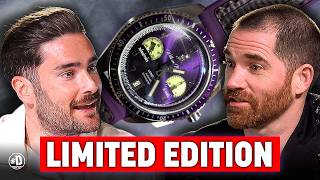
In this 10‑year anniversary episode of the Disruptors podcast, host Rob Moore interviews Johnny Garrett, founder of William Wood, to unveil a ultra‑limited, collaborative timepiece celebrating the milestone. The conversation weaves together a deep dive into watches as an investment class versus traditional savings, the mechanics of brand exclusivity, and the economics of watch flipping. They detail the design of the special edition – only ten pieces worldwide, each hand‑numbered, housed in a fire‑alarm‑style Italian leather box, and featuring an amethyst‑set 10‑o’clock index and uniquely coloured bezel. The pair discuss the collaborative design process, the decision to keep the watch’s branding personal (William Wood rather than a legacy name like Rolex), and the auction‑style bidding system with a fair reserve price, directing listeners to robmoore.com/tenth. Ownership includes exclusive perks: annual owner gatherings at French châteaux, a dinner with the founders, and potential access to Rob’s business network. Throughout, Johnny shares his collecting philosophy – buying for love, not speculative gain – and offers candid opinions on iconic pieces such as the rainbow Rolex, the Amiga Swatch, the Apple Watch, and Hublot. The episode blends market data, personal anecdotes, and brand vision, positioning watches alongside cars and property as alternative assets while highlighting risks like theft and liquidity.
Chapters
There are only 10 of these watches on the planet, and this man created them. Is a Rolex better than a savings account?
You almost want the price to be extravagantly high to make it feel like you have access to an inaccessible brand. Some of the best craftsmen in the world are in China.
350 grand with a Velcro Yeah, strap and a bit of plastic. Is it a scam or is it good brand? If you've got a good Rolex, you've got fairly quick liquidity, haven't you? What's one watch you'd never buy?
Quite controversial, and it's the Apple Watch.
I think they're wanky. What's the biggest mistake most people make buying a watch? There are only 10 of these watches on the planet, and this man created them. Now, no, these are not Rolex, but Jonny, is a Rolex better than a savings account?
Ah, in this day and age, quite possibly. Really, quite possibly. There's, um, so many different possible asset classes that you can put your money into these days, and we've seen over the last few years such surges for certain brands in the luxury watch industry. So if you pick the right, the right model and you get in at the right time, um, and I guess you don't follow the hype and you get there before, you're a bit of a visionary right, then, then yeah, quite, quite possibly.
So does it depend on the Rolex? Because, you know, you've got some in the window and it's like you've got to go and buy 3 or 4 of those before you get the Daytona.
Yeah.
Or is it any Rolex?
Yes, there are certain models to look out for specifically. And as you say, if you approach any of the, the retail boutiques, the one that you really, really want is obviously always the, the exhibitor's only piece. And you have to purchase a certain quantity of watches before you're even considered, um, or be very, very tight with an authorized retailer, um, to be able to get your hands on the one that you want.
Um, let me ask you about that. I want to come back to the Rolex savings account because I've actually got some numbers on this, and it might shock you, uh, because it, it's not even close. Um, but is it a bit of a scam that Rolex and other watch companies make you buy a few in the window before you get the nice special piece? It's, um, or is it good brand?
It's, it is the, the industry in the world that we live in now. Um, and you can see it right across watches. You can see it right across different car brands as well.
It's just— Porsche!
Exactly.
Ferrari.
Yeah, yeah, you got something in your throat there, Rob. Yeah, yeah, it's absolutely insane how you have to be directed to a certain, um, amount of depreciation— basically money that you're just going to throw on the fire— with a certain brand before you can be even considered, um, for certain levels or certain models that watch brands offer or luxury car companies offer. So yeah, it's, it's, it's mental, and it seems to just be something which is accepted now. It's very, very difficult to be able to buy the, the watch that you want without a real solid history and accreditation with a certain brand.
Yeah, I can't make up my mind if this is a scam or if this is a great brand, because we like to buy things that are exclusive and we like to feel special. So if there isn't an air of arrogance about the brand, if they're not standoffish I recently read, and I didn't know this, but, um, the sales assistants in Hermès, or Hermes as us English people say, the female good-looking shop assistants are taught to be aloof. They're taught to be standoffish, a bit rude, a bit looking down on you to make you come to them.
Yeah.
So there's this mystique and arrogance about some of these big brands. Ferrari have it, Rolex have it. And I can't make up my mind, and I want to go down there more because I feel like if an authorized dealer says, you know, look, you've got to buy 5 Porsche Taycan Turbos and we'll get you a GT3 RS, or, yeah, you know, you've got to buy a load of these Rolex in the windows and we'll get you a Daytona, I feel like, okay, well, if you can guarantee me and there's a small number, maybe I'll play the game. But they often dangle the carrot, they say this, and you don't get anywhere close. So is it a scam or is it good brand?
I think it's—
it's— get off the fence, John.
I think it's good branding, right? Yeah, yeah, I do, I do. Because at the end of the day, that they're trying to— they're trying to keep that mystique, aren't they? It's like if you purchase a, uh, a Richard Mille or a Bugatti, you, you almost want there to be a limited amount of people that own that product. And also, the crazy thing is if you want that watch or that car to be serviced or repaired in after-sales, you almost want the price to be extravagantly high to make it feel like you have access to an inaccessible brand, right? You don't see many people who are trying to take their Bugatti or their Richard Mille anywhere other than their authorized retailer to try and pull a fast one and get it—
not down the fast MOT shop.
Exactly. And because you want to have that sense of, I'm, I'm part of an exclusive club here. And so I think it's good branding.
Okay, all right. So I've got some data on this. Um, a fairly standard Rolex Daytona, not one of the more rare Zenith movements or more quirky ones, in 2010 was 8 grand-ish, and then it got up to the peak of 24 grand in 2025. It may have corrected a little bit. Always do your research because, you know, this— prices can change. But if you put your money in a savings— if you put £8,000 in a savings account, even a high-interest one, that would be £10,002 in the same time. But inflation has probably made it a negative return. Yet the standard Daytona, not the rare one, has gone from £10,000 to— even if it's only £20,000.
Yeah.
So is a Rolex better than a savings account?
It's a great argument that you're putting forward there, and it's quite, um, I mean, those numbers are super telling, but the part that the viewer has to listen to is it's trying to guess the future, isn't it?
And also, it's true, you can go back to the past to guess the future.
Of course you can.
So I've got a '79 Daytona, it's called the Big Red, and it was something like £800 in '79, and it got up to £85 grand, yeah, at the peak. So surely if you just go back and look at the prices of the '70s and the '60s Daytonas, and then you work out what their retail price was.
Absolutely. But you could say that about many different asset classes. And what I would say is, as long as the viewer is looking at possibly doing an investment like that as a sliver of their overall cash position, then yeah, absolutely, take a, take a, take a punt, or maybe a calculated risk on doing something like that. Okay, but if there's somebody who has— who just has 8 grand and that is all the money that they have—
gonna challenge you on this—
and they put all of their money into that watch—
gonna challenge you on this—
that is, that is a pretty, pretty bold move.
Gonna challenge you on this. Okay, okay, fine. So you can get at the moment, yeah, a Rolex Kermit, I reckon, for about 9 grand. So that's— I think it was the 40th anniversary, the Submariner with the green bezel.
Yeah.
Yeah, so let's just call it 10 for round numbers. Yeah, I'm going to argue that it's better to have 10 grand in a Rolex Kermit than is a savings account. Bear with me. Number 1, you wear a Rolex, you feel good, you know, you feel sharp. Um, number 2 is people will notice it. It might open a few doors. People do say to me that certain watches or certain cars open doors. Number 3, you're not going to go and spend it on something stupid. Because a lot of people spend their money on something stupid. Number 4, if your bank's empty, you're going to go and make more money. So my friend Grant Cardone, he told me that at the start of every year he gets rid of all of his cash. He doesn't waste it, he invests it because he wants to be hungry every year. And the hungrier you are, the more you're going to go search for food.
Yeah.
But if you've got a nice little comfortable, you know, I'm 21, I've got 15 grand in savings, oh, this is nice, makes you feel a bit comfortable. So what do you think about that as an argument for having your 10 grand in a Rolex?
It's a pretty strong argument. Um, you, you need to back yourself as a person who thinks that if they spend the money and put it into a watch like that, which will definitely feed, um, their confidence and hopefully move them into those bigger, bigger sort of secret rooms in life, you know, getting you to the next levels. If you back yourself and think that you can trust it and do it, then you might be the type of character and profile that could do that kind of thing, putting all of your money into a watch or an asset class like that.
Now, just for clarity, I didn't necessarily say all of your money. No. But, you know, I just said that 10 grand might be better than savings account. And here's the funny thing. You own a watch brand and I'm having to pitch you that this is a good thing. And you're the guy that owns William Wood.
Yes, yes, absolutely. Um, but what I would say is I've always grown, um, my assets in more of a, a longer-term conservative calculated kind of way. But I totally get what you're saying because there are definitely soft elements to watches, clothes, uh, cars, houses that actually give you, um, more confidence and gunpowder really to, to be able to grow to that next level without a shadow of a doubt. It's that intangible side that sometimes you can't see. But it's crazy, isn't it, how some people can without a shadow of a doubt just walk into a boutique and put, I don't know, 50, 60, 70% of their life savings down onto a watch, and others will really have to sit there and consider and, and, and go back to the website 15 times, ask the wife, you know. Some people are really impulsive and some people will just really have to sit and and, and think about it. It's crazy, the character types.
Yeah. Now the thing as well, why I'm going to back this Rolex as a savings account, is because pretty much anywhere in the world, if you've got a good Rolex, you've got fairly quick liquidity, haven't you? You know, no one's going to turn down a Rolex Kermit.
It's true.
Or a Rolex Daytona. Obviously box and papers helps, but, um, so it is actually fairly liquid. Compared to, you know, maybe some of the more boutique-y brands.
Yeah.
All right then, so watches or houses? Like, if you only had the choice between investing in watches— so, you know, rare, classic, vintage— because some of these— Paul Newman's Paul Newman, you know, or some of these really rare Rolexes and Pateks, $10 million, $15 million plus. I mean, some of them were hundreds, not thousands, hundreds 40 years ago. But if you only had a choice between investing in rare watches or investing in property, which one would you choose?
Oh, if I, if I had my investor hat on, I would say property. But if I had my enthuser and passionate hat on, I would say watches. Yeah, because I mean, I'm talking to the expert here in property. As you said earlier, you just have to literally look back at, uh, the, the dawn of history and real estate and property prices and where they've gone. And they're always heading in a certain direction. Yes, they take dips, but they always are heading in, in, in one direction if you know what you're doing. But again, you could say that about watches. I think you need to just be able to study both of the markets and know exactly really where an opportunity lies. Um, but if you pushed me, I, I'd probably have to lean to property.
Yeah, so, um I'm kind of going the other way a bit at the moment, but give me some— I'll give you some context. So, um, at the moment I've got one 100-apartment block in the pipeline, another 100-unit, um, development we're doing. We bought a row of shops, um, and like when they're done I'll be at 580 units. And I, I now just want to keep buying more watches and cars.
Yes.
Yeah, but I suppose because I've got 580 units under my belt, it's easy for me to say, of course. Um, but you know, Mark and I for a while have wanted to get an industrial unit and, you know, put all of our cars in it and build a big glass office so my sales team can be on the mezzanine. Yeah, on the phones doing business, looking over the cars. I was, I was with Tim Schmee, and he's done something similar.
Yeah.
And I kind of want to focus more on that now because the thing that watches and cars has that nothing else has is the passion. Like, I love property, but I don't wear it on my wrist, you know. I don't show, oh, look at my property portfolio, you know. But a watch is a talking point. Like this one-of-one. Yeah, this is a one-of-one that you made for me for—
stunning—
for the show Disruptors. Yeah, there's, there's not another one of these that exists on the world, in the world.
Yeah.
And you know, like, I'm sure you don't mind me saying, but it's not millions of pounds. I mean, it's I think it's priceless. Um, but you know that the passion that you can put into, say, watches and building a car collection is not the same as the stock market or gold or silver or property. And surely as well, once you get passionate and you just love doing it anyway, why don't you just build the knowledge?
Yeah. And, and as you say, when you, when you're purchasing in an arena that you're passionate about, you're actually not that bothered, if you're being honest, about whether it's going to go up or down.
That's the key, isn't it?
You know, absolutely. Because at the end of the day, there's so little things in life that you can grasp, um, passion and interest from these days that if you have money to be able to be blessed enough to be able to purchase these things, you should do it. And you shouldn't feel guilty about doing it as well. You know, there's so many friends that I have who will actually make a purchase and, and that they're sweating and, and, uh, yeah, they feel sort of, um, embarrassed that they've made the purchase at the end of the day. And you shouldn't. You should embrace it, you know. If you can afford it and you enjoy it and you love it, you should go for it. Um, but that's the beauty of passion. You should not be focused on whether the price is going to go up and down. But something that—
but it's probably more likely to go up if you're passionate about it because you build more knowledge.
This is the thing. Yeah. If you look at your YouTube videos and your algorithm, If you look at my news feed, all it is is just watches and cars, watches and cars, watches and cars. To follow up to cars and money, watches and cars would be the next one. Yeah. Um, because you love it, you know, you sat there and you're listening to a long-form piece of content for 3 hours and it feels like you've just been really thoroughly enjoying it. By the end of it, you, you become a bit of an expert in that field.
Yeah.
Which is so awesome. And then you can take those calculated risks. Something that does knock me a bit is flippers. Yeah.
So, and actually, this is why maybe Rolex and Ferrari make you wait.
Yeah.
Because it's going to ruin their brand if you get a nice exclusive and then you just flip it.
Of course. Yeah. And how frustrating is it when you literally have on your vision board or whatever that you are desperate to get this watch or this car, and there's people who are literally just buying and selling their slots or positions as if it's just a transaction and you know that you would love that thing, you know, you'd be cleaning it every day, you'd be making sure it's serviced and wearing it with the right outfits, and somebody comes in and just, just flips it straight away and makes it— makes double money on it, and you can't even get on that list because there's so many smaller rooms that you have to get to, you know, buying all of their products to even be considered. It's, it's crazy.
So it knocks you off that there are these flippers, but can you blame them if they can double their money?
Well, if I was in their position, actually, Rob, I wouldn't be doing it.
Just, just be—
just because I own a watch brand, so I know how upsetting it can be. With our company, when we produce a limited edition run of 250 watches, which is already a small run of watches, as you know, in, in the scheme of, uh, of the world, there'll be customers who'll be so devastated that they've missed out on it. And then when I see that watch up on eBay, you know, I'm thinking, how dare you, you know? But I need to detach myself as the founder, especially when it's got my grandfather's name on the dial. Yeah, you know, so there's a heart connection there. It's, um, it's a pretty hard thing to do.
Yeah, yeah. But I, I suppose over time you can do the same as what some of these big boutique brands are. You can start to choose your customers, you can make smaller runs, you can do smaller runs and invite your best customers. Yes, Audemars Piguet used to be brilliant at that, and we've had you've been on the show before.
Yeah.
And we're friends, and I've talked about that. I love that brand, and they, they just treat— treated you so well, and they looked after you, and they made you feel special. And you buy some nice watches, and you get invites and things like that. And, and now there's none of that.
Yeah.
Well, not for me anyway. There is for John Mayer, of course. Of course there is for Rob Moore.
John Mayer for every brand.
Yeah.
Yeah.
Um, so yeah, so is that something you might do with William Wood? Uh, you know, you might over time make 25 or 50 and invite your 25 and 50 best collectors.
Yes, yes. And we do that kind of thing now. We're up to year 9 now, so we'll be celebrating our 10-year anniversary very soon as well. And, uh, we are at that point. We even have sort of small enthusiast groups on WhatsApp and Facebook where, um, people can actually give directions sometimes of how we want to design a new collection. Now that can sometimes be chaos as well because too many cooks can obviously spoil the dish.
Yeah.
Um, But, but I think it's important, especially these days, where, as you say, you're so dedicated to a brand like AP, or were, and they just, they just turn around and all of a sudden— and it's very fast, isn't it? It's like ripping an emergency belt. All of a sudden you're just no longer invited to these, um, watch collector get-togethers or, or dinners or events. So we try and keep it as exclusive as possible. Yeah, but Rob, that's hard as you become a bigger brand. Even things like limited edition serial numbers. Customers used to be able to email us and go, Johnny, I love 007. Everyone wants 007 because of James Bond, of course. But as you become a big brand and you sell those collections out quickly, it's very hard to still service the same customers. Yeah, when you were in year 1 or 2 to year 9, and those watches sell out so quick, can you still give that 007 to that customer? When maybe he was 24 hours too late because he was on holiday in, I don't know, Dubai, and the watches have gone.
Yeah, you know, so, but then it's difficult, but then we all want something we can't have. Yeah, so if it's gone, he was too slow and he has to wait till next time.
Exactly. And that's, that's how it is. Yeah, especially in the independent watch space when watches are limited edition. We're not just saying that to try and like sort of judge up views. Like, genuinely, when they're gone, they're gone.
Yeah.
And we still get emails today saying, I would love the purple Queen's Platinum Jubilee watch, which was built—
well, I tried— was that the one I tried to get?
Well, there you go.
You were one of them. At least you would not let me have it.
No, I was not letting you have it.
I think it was yours.
Yeah, it was my number one I was wearing. And but we made 100 pieces celebrating the Queen's Platinum Jubilee. They sold out literally in a heartbeat. Yeah, we probably made too little, so it was probably our, our mistake. But at the same time, there's a beauty of people coming to the website and seeing things sold out.
Yeah.
And signing up for the limited edition releases.
And if you think about the longevity of your brand, yeah, it's probably good, isn't it?
Absolutely.
Because you could probably have done 500 of those and then kind of like, in a way, yeah, sold out in terms of the brand. So what is the vision for the William Wood brand? Do you want to be a high-end exclusive boutique brand? Do you want to be sort of like a, you know, more accessible price but more for the masses brand? What's the vision?
The vision is we, we would always want to release watches which are sort of within a price point of anything from £1,000 to say £7,000. That's, that's the kind of—
unless they're a 1 of 10.
Absolutely, 1 of 10 makes them extremely rare.
Yeah.
Um, Because this is a brand which is dedicated to my grandfather, who was a firefighter, and that they're made from genuine upcycled firefighter materials.
So the strap is the fire hose.
Exactly.
You've used materials in the helmets.
Absolutely.
Yeah.
So straps made from fire hose. When I set out on the journey 9 years ago, we thought that there was just red fire hose used by fire departments. We've now got 9 different fire hose strap colours.
Oh wow.
All donated to us from different fire departments around the world. We've upcycled the equivalent now of 5 Olympic-size running tracks of fire hose.
Wow.
Into our watch straps.
Yeah.
And as you say, we take an original 1920s British brass firefighter's helmet, we melt it down in London, and we turn the— for example, on these watches that we're wearing, we turn the chronograph pusher buttons and the crown from the 1920s British brass firefighter's helmet into the elements on the case. So you know you have 100 years of firefighting history on your wrist, which is pretty cool.
And I Makes you completely unique.
It makes—
it can't be another watch brand that does that.
And that answers your earlier question. That's what we're trying to do. We want to be always seen as a British family-run independent company, so privately owned, and we want to have that feeling that we're not owned by a big conglomerate, that you have that, um, that lovely firsthand experience, but that you want to tell that story and share that story with other friends and family. Because we find that our customers become our biggest ambassadors for the brand. Yeah, it was crazy in the first few years. Word of mouth was like outpacing social media, which is mad. Now obviously social media is like a real fire engine room of the business. Yeah, excuse the pun.
See what you did there? Yeah, we should just edit a little.
Exactly. Um, but we'd like to get to the stage— the vision is we'd like to convert an old closed fire station in London, New York, and Sydney into our concept store.
Oh, that's got to be done.
Oh man, imagine going in, it has all of the original ornate features. Yeah, everyone's wearing sort of upcycled fire hose aprons. You can see our watches being built. Yeah, when you purchase a watch, someone will go up to the storeroom, come down the firefighter's pole if, if health and safety allow it. You'll ring the big old fire bell, you know, to mark the fact that you're part of the William Wood family. And so compare that to walking into Bucherer or a Rolex boutique, you know, going into an old fire station, sitting in an old vintage fire engine. That is how you want to buy a watch. Yeah, let's be honest.
Wow. Okay, so if LVMH or Richemont came to you with $100 million. Yeah, but they've got 51% of your company and they want to start— well, we're not sure we like the design of this, we want you to make this, you want you to make this— would you do it? I think that $100 million—
I know, Rob, I know, and you'll dangle that carrot. I think every time we sit down you'll dangle that carrot. But I really don't see much of a difference between where we are now in comparison to maybe pocketing 100 million and giving 51% of the business away? Because the one thing that you can't buy, which is priceless, is freedom. And I don't just mean creative freedom. I mean, if with my granddad's name on this, this is a company which is obviously very wedded to my family, um, and my loved ones. How difficult would it be if LVMH or a big conglomerate came in and we're trying to take my grandfather's name and honor in a different direction. That's not worth $100 million, you know. That's not worth a billion. I know you might think that sounds ludicrous.
No, no, I'm asking you because that happens a lot. You look at brands that get taken over by them.
Yeah.
And they essentially just become mainstream. Yeah, I get it. But then they lose the individuality and the, the uniqueness.
Of course.
And they all— what they all seem to do is just try and make every watch. If you look at Like Breitling, I think Bremont were taken over by Richemont, I believe that to be the case. And, you know, they've just become more homogenized and everything— watch just looks like it's the same watch that would, you know, be in a shopping center. And Breitling are trying to make every watch— IWC, I've given IWC feedback, they probably don't listen to me, but trying to make every watch.
Yeah.
Whereas they're brilliant with ceramics, they're brilliant with pilot's watches. Why don't you just make ceramics and pilot's watches? All right, some people will argue the Da Vinci or the Ingenieur are classics, which they are, but they're trying to make everything.
Tell me about it.
And then what are you?
Yeah, but why are they doing that?
I mean, money, profit.
Yeah, absolutely. They're trying to appeal to everybody. It's like Breitling as well. The direction Breitling have gone in is crazy.
They broke everything.
Yeah, and they also brought out these really colorful watches which were designed for like, um, surfers and outdoorists, and it just didn't suit the Breitling brand. It makes me think a bit about Jaguar and the rebranding that they did there, which was obviously just wild.
But it's like, yeah, and their history, you know, they had aviation history. I remember I bought the— do you remember the Emergency?
That was beautiful. Exactly.
What a great watch. What a great concept. Yeah. We used to have a laugh with my mates when we used to go out pissed. Is anyone gonna— you used to get fined if you set off the Emergency Bacon. And like you said, now it's just anything and everything for everyone. But then again, I get the fact that you've got a board, you've got shareholders, and you're looking at numbers and you've got to make profit, and they pump hundreds of millions in and they need to get a return.
Yeah, but are people not getting bored of that? I guess they're not because their numbers are just going up and up and up. When you walk into a retail watch boutique these days, do you not just find that they're all the same? They all look— they all look identical. It's like plush marble, it's It's mirrored, it's chromed, it's like, do you not want to see something extremely unique and different and also go through like an immersive experience? Like what I was saying about the fire stations earlier. If you, if I said that we wanted to convert old fire stations to the LVMH board, do you not think that they'd think that I've absolutely lost the plot? And they'll be like, right, this founder's now on 49%, give him 2 years, we'll start to push him out, push him out until it's so uncomfortable. And then you've just lost everything that you spent building.
Do you think you'll ever get investors?
Well, we, we're quite blessed to have got to the stage that, that we are at now without them. And, and I do manage the business in a way— I, I used to work in banking for almost 15 years, um, so I got to the point where I, I knew that it was all about net cash and making sure that Whatever happened, we tried to avoid any unnecessary debts. We always had enough in the bank and we reinvested the profits. So we're luckily enough now that we're in a place, Rob, where I don't think we need investors for the vision that I'm trying to pull off. If we were trying to pull off a vision of achieving revenue in excess of £100 million, then yes, we, we would need to go down the route of taking on investors. But I'm all about trying to grow this thing in a sustainable long-term way.
And maybe you could get— jumping in— maybe you could target people who love watches, like for example Kevin O'Leary, you know, loves watches. I know you've, um, he's got, um, your watches and he loves them. Yeah, but maybe if you, you know, a bit like on The Dragons, they pick the person who's got the industry experience. If you pick someone like Kevin O'Leary, he's not going to tell you what to do.
No, of course.
And he's got— he's going to see the vision of the fire stations and he's going to support support that.
So that's— is that possible? That's definitely possible. And as you say, we produced a limited edition one-of-one watch for Kevin. Yeah, he wore that. He was— he wore that on his podcast that we were interviewed together on as well.
And he's actually made him a red strap.
Yeah, exactly. Yeah, we believe we have one of the coolest red watches in the world. Yeah, that was obviously my pitch to him at the time.
Yeah.
And he wore it on Shark Tank as well for September 11th, which was really cool.
Yeah.
But I definitely see if you are going to go down the investment route, if you have somebody who's actually passionate about it like a Kevin, I mean, it's not just the money that comes into the business, it's all of that knowledge, the network, and the passion, you know. It could be every year you produce a Mr. Wonderful limited edition.
Yeah.
And just by him posting about it once a year, yeah, is going to really fire the business up.
Right, be honest, would you wear a nice watch in London?
What do you class as nice?
Expensive.
Um, probably not.
It's sad, isn't it?
It is sad.
It's really sad that you work hard and you want to reward yourself and you want to look good and you want to connect with people. Everyone I know is either not wearing nice watches in London and they're buying cheap watches and wearing those. A lot of footballers are now wearing fake watches when they go out to London on purpose, not because they want fake watches. Yeah, they just don't want their nice watches getting nicked. Yeah, isn't that sad?
It's very sad because then it begs the question, when are these watches ever actually getting out of the safe for you to wear it? Are people just literally walking around the house wearing their watch and just putting it back in the safe once they've worn it? Or they're just going to certain really exclusive events and then they're getting maybe a driver to take them there, driving there themselves so they feel safe enough to wear it? Because when you go to places like Dubai, as I know you visited recently, You can be like, all right, yeah, literally, here they are. Yeah, unbelievable. You can just literally take your watch off and, and leave it, and there's, there's safety there, you know. Um, it's terrible.
And, but you know what, some people say to me, oh, Rob, it's not that bad. Well, I don't know if you saw Knightsbridge, the Rolex at Hyde Park One. Yeah, a load of guys in helmets went there in the middle of the day. Yeah, and heisted the place out. And in one week there were 3, um, you know, maybe sort of independent-y watch shops where people are smashing and yanking off the window and sweeping up all the watches. People don't do anything anymore, they just film it.
Yeah, I know. But, but also, can you blame the workers in the shop for not doing anything as well?
Is it worth it? No, they've probably got a fucking machete.
Exactly. Yeah, that's the thing.
No, I don't blame them for that.
It's, it's not worth it.
I blame the— well, I was gonna say I blame the police, but then it's higher up where they're not getting the funding.
Of course. Yeah, it's, um, then they're not getting the funding to be able to protect the city properly, and, and people are seeing an opportunity and taking advantage of it. And it's, as you say, going back to your earlier point, no, I wouldn't feel safe wearing a, a lovely watch around London. But I, I would like to know, how does that compare to other cities around the world?
You know, well, like you said, Dubai, no problem.
Yeah.
Um, I don't know, I mean, everyone just says London. You know, the people I know that travel around the world, they don't say Paris, they don't say Sydney. Yeah, they all say London. But then I think that's also because London was such a hub for the whole world.
Yeah.
Um, you're a British watch brand.
Yes.
Do you think a British watch brand can ever have the credibility of, you know, the Swiss-made?
It's a good question which is posed to us quite a lot. The challenge is, is Britain used to be the powerhouse of watchmaking pre-World War II. We had all the skill sets, we had all the watchmakers, and then when World War II happened, obviously a lot of our obligatory service, we had to go and fight in the war, and that was when the rise of the Swiss watchmaking industry came about.
Right.
And it's so sad now because the UK doesn't have the infrastructure to be able to produce watches at scale. So for example, if we received an order of, I don't know, 3,000 watches from a fire department, let's say, in the Middle East, even if we wanted to, it would be extremely difficult to be able to deliver the watches on time and on budget if we tried building them in the UK. Right, because we just haven't got the watchmaking craftsmanship, the machining, the infrastructure, the polishing. Yeah, it's just not here. And it's such a shame that you have to, as a British brand, you have to push a lot of your craftsmanship to Switzerland. Now obviously they are first class, their execution is phenomenal, but it would be wonderful to be able to do it in England. You know, it would be fantastic to try that. Your vision Well, no, because it's— you would need so much firepower and resources to do it, right? I think—
so you're a British watch brand, but you make them outside of the UK?
Yeah, we'd have to— we have to make them predominantly in Switzerland. Now, we do a lot of the upcycling in the UK. These watches here specifically have been assembled in Great Britain, which is pretty epic.
The only 10 in the world, perhaps one of the most rare watches in the world. These were all made in Great Britain.
Yeah, all assembled in Great Britain.
Yeah, well, we'll come to that in a moment because we're celebrating 10 years of Disruptors. Yep, we've done a little collab. William Wood x Rob Moore. Yep, John Mayer x Rolex. Eat your heart out. Yeah, but we have 10 of these. I'm going to do something a little bit special for my fans of Disruptors. I've had, um, I've had a few people already when I've just put pictures up saying, how can I get one of these? Well, um, you maybe could get one of these, but I think it's a nice unique point because on the Swiss made thing, some of it I think is hype. Swatch has Swiss made written at the bottom. Yeah, that's sort of like a, that's a, a, a 5 quid quartz movement.
Yep, crazy.
So is it a bit like hype, Swiss made? I remember I bought a Gucci watch, she had Swiss made written on it.
Yeah, it's, um It's, it's one of those things where I think people assume Switzerland has luxury.
Yeah.
And, and that, which it does bring an excellent craftsmanship to it.
Yeah.
But German watches are excellent.
Yeah.
Japanese-made watches are excellent.
Some of the boutique Japanese brands, tell me about it.
But the most controversial of them all, I don't understand why the world don't realize that some of the best craftsmen in the world are in China. I know that sounds crazy. Yeah, you'll find that so many Swiss luxury watchmakers will have their watch cases produced in China and then shipped to Switzerland because the execution of watch case production is better at scale in China than it is in Switzerland.
Because not the Disruptors 10.
No, absolutely not.
No, no, these are the UK.
Absolutely. So, but it's just for the, for the viewer to understand that, um, China produces the majority of the world's manufacturing goods these days. And as soon as you hear possibly made over there, people want to stand away from it.
Right. So let's do a couple of fun questions and then we're going to talk about the William Wood x Rob Moore Disruptors collaboration. Rank these 4 brands in order.
Okay.
Okay. So start with 4th. Yeah, third, second, first. Fourth being, yeah, and first being the best.
Okay.
Okay, so Richard Mille, Rolex, Audemars Piguet, Patek Philippe. What's four?
I'd say Richard Mille is fourth. Fourth? Yeah, yeah, Richard Mille fourth.
Oh wow, I mean, that's controversial. Okay, the third?
AP.
Wow. Second?
Rolex. Oh, and then Patek Philippe number one. Yeah, you can't, you can't beat Patek, but I'm quite a traditional person myself anyway. They've just got it so right. Yeah, passing watches down for generations to come, that's what watchmaking is all about. Yeah, it's just their designs are timeless. Yeah, aren't they?
But Richard Mille, I mean, they're probably the most expensive, like, yes, well-known high-end brand. Of course, they're like very outrageous with their, um, you know, with their tech, and they're disruptive, and they do things you shouldn't do. Or apparently shouldn't do, like a really super light complication.
Sure.
But you put them forth.
Put them forth. Yeah, it's just, it's all, it all comes down to taste, doesn't it? And going back to what I said earlier, being more traditional, right? The, when you look at a Richard Mille, I appreciate the craftsmanship, it's wonderful. I also, I like the F1 and the racing heritage to it as well. I think that's really special as a car enthusiast. I just can't get my head around the prices. Yeah, but again, it comes back to the conversation we had at the very beginning of the podcast. It's almost like they're setting the prices because by owning that watch, you feel like you're part of a very, very exclusive club. The problem with RMs as well is there's so many fakes these days.
This is it.
You don't know whether it's real or not.
Well, I've learned that there are wealthy people who are buying fakes, and, um, Carl Hartley, my friend, co-host on Cars and Money. He said he was at a hotel and there was 3 people in the swimming pool wearing their RMs, and they're not waterproof watches, the ones that they were wearing. Therefore, they're obviously fake.
Yeah.
And he stays in really nice places. And like, if everyone's wearing fakes, why would you want to wear the real thing?
Yeah, exactly. It devalues the brand. I mean, you see that with Louis Vuitton, don't you? There's so many people who have the fake Louis Vuitton bag or the Gucci gear.
Um, did you remember the days when Burberrys were faked everywhere? And like, that's— I feel bad for the brand. Yeah, because, you know, illegal stuff is going on to devalue the brand.
But, but it's more— but at the same time, they can't complain too much because it's more eyeballs on the brand, whether it's real or whether it's fake. More people are wearing the brand, you see what I mean?
Yeah, maybe. Yeah, I don't know. I mean I don't know how it's hitting their numbers, but, um, you know, I, I've had Richard Mille and I've sold them.
Yeah.
Um, I, I'm not gonna risk wearing a Richard Mille in London.
Of course.
Yeah, you know, my friend Yanni got targeted for his RM 11 and, um, you're properly targeted.
Wow.
And, um, so they're gone. No more Richard Mille.
Don't you find it odd though, the feeling of it on your wrist? Because a lot of them have the, the Velcro strap, the lightness to it.
You've not been into those ones. Yeah, so I had the RM 72 in gold, I had the RM 11 in gold, and even though they have rubber straps, because I've got them in gold, I like a weight on the watch.
Yes, me too, personal preference.
Maybe a, maybe a dress watch I like to be slim. Yeah, but other than that, I want a bit of, of weight. Yeah, so I, I didn't buy the, you know, carbon-y things for 350 grand with a Velcro strap. To me, that, uh, like, in a way it's genius. Yeah, of Richard Mille and like, but $350 grand with a Velcro strap and a bit of plastic.
Yeah, but, but also kudos to them that they've been— yeah, I build a brand that has— that asks for those kind of prices and can gain it, you know. It's, um, phenomenal respect.
But, um, but no, I like— I like to feel that I'm wearing it.
Me too.
Although I suppose, you know, with Nadal, if you're playing tennis— yeah, I don't play tennis, but okay. So yeah, that was interesting. And you put Rolex above AP. You like traditional, but AP or more of a traditional brand?
I'd, I'd put Rolex more traditional than AP. Yeah, um, but AP has some beautiful, beautiful models, and I think they've got a bit expensive. Yeah, they have. If you look back 7 or 8 years ago to now, it's, it's insane, isn't it, the direction of travel that they've gone in? Yeah. Um, but nothing beat— I mean, a rose gold AP is pretty, it's pretty special. And also that the polishing and the brushing of the bracelet is just It's, it's sensational.
Yeah, yeah, I agree. Okay, what do you think of icing out watches, you know, getting a watch and, you know, sticking diamonds all over it? I trolled Andrew Tate for this on my show because he iced out a watch and he said, look, Rob, I'm, I'm half black, you'll never understand. And so I had to just go, okay, yeah, I did. But yeah, what do you think about that?
It's, uh, it's very American, isn't it? It's very rapper. It's, it's, it's linked to the culture. Um, it's like the Diamond District in New York, you know, they're selling these chains and bracelets and you're looking at them. I mean, as a Brit, you're looking at them. I don't know anybody who owns like a diamond chain or a diamond bracelet. I think it's very—
in Britain, you mean?
It's very British, isn't it, to be quite subtle, I think, and quite like, I mean, quintessentially British.
Imagine doing that in London. You come back with no head and no hands.
Yeah, literally. Being iced out.
Yeah. So what would you do then? This one of one that you made me.
Yeah.
This is a one of one Disruptors watch. No one else has it, and I'm— and I didn't flip it.
Yeah.
What would you do if I came back and said, what do you think, and I'd iced it out?
I go, that's hideous.
So you're not a fan of icing out?
I'm not a fan of it.
And does it devalue it as well?
I think it does, but again, it's through the eyes of the beholder, you know. Somebody who loves icing out watches might go, wow, you've really added value to that.
But then try and resell it.
Yeah, try and resell that. Yeah. So personally, I'm not a fan, but it's a big, big market in the US.
So I'm going to read you 10 watch brands and you're just going to say overrated or underrated.
Okay, let's do it.
And then if there's follow-up, we'll talk.
So TAG Heuer, overrated. Breitling, Overrated.
Omega.
Underrated.
Amiga Swatch.
Underrated.
Hublot.
Underrated.
I've seen those cat memes.
I know exactly the cat meme you mean by that.
Cartier.
Underrated.
We used to be friends.
Apple Watch, uh, overrated.
Richard Mille, overrated. Audemars Piguet, underrated.
Rolex, underrated. Patek Philippe, underrated.
Right, we have to go first, and actually we'll save Hublot till last. I mean, so yeah, but you've given me two very tight categories.
Overrated or underrated?
Yeah, yeah, yeah, yeah, of course. Um, so TAG, you said overrated. Yeah, I mean, they're, they're in every shopping center, aren't they? Yes, the Monaco's lovely, and it's got— I do like that, but yeah, too commercial now.
But don't you always see TAG as that watch that the 18-year-old buys as their first decent watch? Yeah, so you can't blast them too hard.
No, I agree, it's the gateway into—
it's the gateway into a nice mechanical watch.
Yeah, yeah. Okay. Breitling, we already talked about. They're just—
I just don't know where they're going.
No, I don't know what they are.
I don't think they know what they are.
You said underrated for Amiga. Yeah, like gold watches at 30, 35 grand for an Amiga. Yeah, but like compared to its history, I think it's— what has it got now? It's just mass-produced.
I think whenever I think of Amiga, what I hold on to is that James Bond aesthetic. And when you think of the 007 with that lovely— it's like an aged champagne indices, you know, all the indices are aged champagne. It's so beautiful with that Milanese bracelet. Nothing can beat that.
But this is old, like, what about their new stuff? Yeah, that's making anything and everything.
They are again like Breitling, they seem to be going in an odd direction moving forwards now.
But I'm going to ask, how many watches do Omega make per year? Do you know?
No.
So apparently Rolex make about a million. Is that about right?
Yeah.
So surely Omega must make more.
Yeah, you think we're more than a million?
Let's have a look. How many watches do Omega make per year? Let's see what Groq says. 500,000. Oh wow. 700,000 to a million. It seems to be, um, Rolex is estimated at 1 to 1.2 million. So interesting, Rolex make more but they have a more prestige brand.
But that's because Rolexes, I mean, they're the number one, aren't they? The popularity there is next level.
How could you say Omega are underrated?
I just like them.
Yeah. Okay. And then Omega Swatch, you said underrated.
The reason for that is, is because what I really respect about what they did there— have you noticed that people that have insane high-end watch collections will wear an Omega MoonSwatch?
I agree.
It's so cool.
They are cool. I actually agree with you. I think they're really underrated because Um, they— people are getting into the journey of nice watches for £200 and something.
Absolutely.
And you can wear them in London.
Yep.
And you know, you're safe. And they're also hard to pull off because they've got like— yeah, the strap. I think there's a— I mean, I wondered why Omega would do that collab because I thought it might drop down their brand equity. But Omega did the opposite. Well, Omega and Swatch are owned by the same company.
Yeah, exactly.
Um, And, you know, they can keep playing around with bringing new models out. And the Limited, I think, is— yeah, I actually think it's a brilliant collab.
It was genius.
Yeah.
And it created the hype, didn't it, of everybody trying to get the certain color they wanted. The queues outside of every store.
Yeah, yeah.
There was crazy resellers on those things. There was.
I mean, I remember in lockdown I bought one of the Neptune.
Yeah.
Paid £1,500 for it. No way. Yeah, I did. I mean, they went— then the Neptune, which is like the blue stat first run of watches. They, they got to like 2.5 grand.
Insane.
Because you couldn't get one in the shop. Of course, they're only, what, $250 retail?
Yeah.
Um, and I, I just bought every one. I just think that they're fun. Yeah, I agree with you. You said Hublot is underrated.
Hublot's great.
What the fuck?
What the fuck? I think Hublot's a fantastic brand because they drop like shit. Yeah, but the way that they push their designs. Because in the teens, I always saw Hublot as like quite an outlandish watch for a footballer, you know, around the 2010s onwards. But now I think they're making very elegant designs and they're really pushing their craftsmanship, right?
Okay, well, you would know better than me on that.
Yeah, the designers there are doing great things in my opinion. But I really rate Hublot. I actually think that they've compared to where they were, the direction they're going in, I think, is the right direction. And you can't say that about many watch brands these days.
All right, okay. What would you say is a good watch to start with, whether investing or at least you want a nice watch and it won't drop too much in value? Where would you go?
What kind of age are we talking, and what kind of budget do you have?
Oh, well, there you go. Um, let's say you're it's your first nice watch.
Yeah, okay, go there.
And budget, let's say, I don't know, let's do a $5,000 and then let's do a $10,000.
Okay, well, that's a pretty chunky budget for a first nice watch. I'd say first nice watch, I'm saying budget would be around $2,000. Okay, okay. And I'd be looking at something like a Longines. Yeah, beautiful Longines you can get these days.
Would you buy an older one?
As opposed—
no, you'd buy a new one?
No, I would just, I'd just buy a new one.
Yeah.
I'd be looking at maybe an Oris. Oris don't have bad models these days as well, you know.
Yeah.
And again, they have a lovely Swiss-made movement in there. And there's an Oris shop which seems to be on almost every high street around the world. Yeah. You could even consider a TAG if you wanted. Oh, you lent back there though. It's because if you're considering something with a stainless steel bracelet Tag is a nice option to go down. If you want something which is a little bit different, again, something like Oris would have, um, some other maybe nice khaki kind of bracelets that you could go for.
All right, and then 5 grand?
5 grand, you've got to look at an entry-level Rolex if you can. Yeah, you know, Submariner. Everybody knows the Sub. It's the most iconic watch I think Rolex has ever made. Yeah, um, So I'd be jumping in somewhere at that kind of level.
Okay.
And you know, it's, you know, it's going to hold value at that point as well, don't you?
Yeah. And then 10?
Um, at 10K, I mean, the thing is, Rob, if you're looking for future, if you want to know that your asset's going to hold value, I would stick to Rolex because at the end of the day, it's the brand that's going to hold the value the best, in my opinion.
Yeah.
Um, so I jump in at a Rolex model around the 10K point as as well.
Yeah, yeah. And like I said, you can get a used— well, obviously they don't make them anymore— Kermit 40th anniversary.
Yeah. And also, for, for the, for the viewer as well, I would recommend that you do try and look at smaller run limited editions like that, something a bit more obscure or not made anymore. Yeah, yeah, even better, even better. But something a little bit more obscure is great. Um, vintage as well. People overlook vintage, but again, it depends on what your, your style is.
But you, you get better value when you buy vintage, don't you? Because you've not got the initial depreciation.
Absolutely, yeah. Somebody else has taken the hit time and time again.
Yeah.
So yeah, they would be my options.
Why did you not mention William Wood?
Well, because a William Wood customer is usually somebody further in their journey. You buy a William Wood watch when you've already got the Rolex, when you've already got the watches that have ticked that I'm doing good in life. The reason that you come to our company is because you want something different. You want to feel special. You want to tell the story to your friends and family. And usually our customer base already has a nice watch collection going, and they've realized that it's not all about having something that makes them feel in a certain way. It's actually more so about buying something that they have a deep connection to. Yeah, um, it's funny, as soon as somebody buys a William Wood watch, usually their Rolex, their Breitling, their Omega gets put to one side and this becomes their daily wearer.
Yeah, and I, you know, for me as someone who's bought a lot of watches, yes, definitely everything you said. I just also think value, because I feel like some of the, the newer watches this—
the—
like, loved AP. I think some of the prices on their watches, there's just not the value there anymore. No, I just don't think they're— like, you know, I love the Royal Oak, and you've got the Royal Oak Chronograph, and you just look at that, I don't know, 4, 5 times more than the Daytona, and it's essentially like the same watch.
It's crazy.
And, um, and I'm just like, nah.
Yeah, what are you paying for?
Getting a bit mugged off. And yeah, you know, these are different, like, because of the rubber strap— or that it's not— is it rubber, the hose material?
Uh, it's rubber.
Yeah, so because of like the hose material strap.
Yeah.
And you know, you've got the quick release technology, which a lot of the classic watches don't. We can change the straps over.
Yeah, but more, more than that, Rob, we use 316L stainless steel grade cases. so do the best brands in the world. Yeah, we have a double dome sapphire crystal, scratch resistant, so do the best brands in the world. We have a Swiss, Swiss-made movement in there, so do the best brands in the world. So it's like, as you add up these components, all that you're paying for with other brands is their marketing budget.
That's it.
Yeah, that's it.
Wow, it's crazy. All right then, um, I'll tell you what, I'll save a few of these. You've got some fun ones and a couple of serious ones. Till after. Okay, let's talk about our collab.
Let's do it.
So we have here 10 William Wood x Disruptors watches. So Johnny and I, um, Johnny, the founder of William Wood, um, we became friends after you came on the show the first time. Yep. And you really kindly made me a one of one.
We did.
And I asked, I like the bronze, so you made it in bronze. And the lead time was really good, and it's a very unique looking watch, and it has Disruptors and my signature on the front, and it has Disruptors on the back. On the back, yeah. And it's been engraved. And so that, you know, we became friends.
Yes.
After that. And so I can't remember how it came about, but I think we were just riffing some ideas.
Yep.
For the 10th anniversary, and So it's actually happened. It is for real. If you're watching or listening to this, it means it's for real and it's live. Yeah. And it's happened. And I wanted to keep it really exclusive. I'm not in a rush to do any of this. I want these 10— I was going to say limited edition, but they're more than that. Yeah, they're very rare watches. There's only 10 of them, and I have a one of one. So I want, I want these to go to 10 people who are passionate about the show, passionate about watches, passionate about British brands, passionate about business that isn't, you know, global and homogenized and just shareholder profit-driven. So there's a lot into this, and I think you did a lot. So for example, you did a lot of design in the watch. There's 3 strap options. Yep. You've completely uniquely designed the outer box, the inner box um, everything. So can you talk through what you did?
Yes.
In these 1 of 10, and you will have a chance to, um, make a bid. I'm going to auction them. Like I said, I won't rush it, you know, I want to make sure that, you know, it's right for you. But I will give you a link to make a bid, um, and obviously we'll take the top 10, not just in value but most relevant bids. Yeah, we're also going to, um, I had an idea when NFTs come out. Okay, so, um, I actually made a few NFTs and, you know, customers get to use them for life. But I had an idea, couldn't a watch act as an NFT? I.e., you've got a really exclusive watch, oh yeah, you can come in to the, the speaker green room. Oh, you have this watch? Yep, you get a reservation. Very cool table. Yeah, you can have come and have a dinner with myself or yourself. Um, so this is actually what these are going to be. The— these watches, these Disruptors, uh, 1 of 10, um, these will get you access to special private events, dinners, and things like that. So we're doing a bit more than just the watch.
It's very cool that it's like a badge of honor. Yeah, yeah.
And it's like access. Yes, it gives you access. Um, so do you want to tell us about them? What you did?
With pleasure. So the beauty of these watches is it's a combination of the William Wood brand and the Essence and bringing it together with Disruptors. So we chose our best-selling Triumph collection as the base model here. And the beauty of this watch is when you look at the dial, it's got two sub-dials which are inspired by the pressure pump gauges of a fire engine, right? So when you look at the 3 and the 9 PM, it's got the lovely pressure pump gauges that you would find when you open up the rolling shutters on the back of a fire engine.
Wow.
And then the checkered marking all around the dial is the exact marking off the side of a British fire engine. So when you see that sort of Battenberg design, those checkered marks, we've shrunk that down and we've turned it into the seconds track. The chronograph stopwatch, the front of it— so the whole watch is being anodized in candy purple to obviously represent the brand. So the front of it—
and it is the exact purple, exact color match, Pantone color. Yeah.
And so the front of the chronograph stopwatch hand looks like the chime that you find inside of a vintage fire bell. Yeah, and the back of it looks like a firefighter axe head. Again, when you look at a watch like this, you would have no idea that all these little subtle details have been thought through to be able to bring the watch to life. And then on the dial, we've obviously got the 10-year anniversary and Disruptors to show that it is celebrating 10 years of the Disruptors Watch, Disruptors Podcast. The straps are made from purple fire hose. Now, it took us about 5 or 6 years of searching to find purple fire hose, and we found it from a Japanese fire department.
Wow.
And they quite kindly donated it to us, and then we upcycled it and turned it into the watch straps themselves. As you say, the watch straps are all quick release, which means that you can rotate between the purple fire hose, or we have also an upcycled firefighter jacket and trousers strap, which is this one here.
And that actually, I think, goes with the buttons and brings out the sub-dials nicely.
It looks class. It looks because it sort of drains the purple back into the dial and it makes it more subtle. But we also have a stainless steel quick-release bracelet as well. Yeah, so just by pushing the quick-release pins in again and not having to get those tools out, yeah, you can put the stainless steel bracelet on it. Now the chronograph pusher buttons and the crown made from the 1920s British brass firefighter's helmet, all melted down in London and turned into the pusher buttons. And as you turn the watch over It's actually got a unique one-of-a-kind stamped marking in the back that says disrupting for 10 years, which is pretty, yeah, pretty damn cool. And then you can see into the inner workings of the watch. So the movement itself is a Swiss-made Sellita SW510 movement. It's got a 48-hour power reserve. It's a real rugged workhorse of a movement, but it also feels lovely. When you unscrew the crown and you wind to power it, or you set the date and time, it just feels like a lovely substantial movement. And of course, it's got the start-stop chronograph pusher buttons on the sides, and you can reset the chronograph pusher option by pushing the, the south-facing chrono option, which is really cool. So we've basically combined both of the brands together to make this very special watch. Each watch has a limited edition engraving between 1 and 10. I don't know how you're going to allocate the numbering.
Well, I think I'll probably, um, probably the highest bidders will get the number 1.
That's a good way of incentivizing the bids.
Yeah. Um, so they're actually numbered. They're not just— because some limited editions, it says the number, but it's actually just out of 500.
Yes.
Um, or whatever number. But so this is— so there'd be 1, which is 1 of 10.
Yeah.
2 of 10.
Exactly.
3 of 10.
Yeah. So each one is limited edition engraved with a serialized number, and you'll never ever again make any of these specific watches.
No. Yep, so there are only 10.
There's only 10 in the world. Yeah, so it's crazy how exclusive they are.
It's—
I can go as far as saying that it's the rarest public collection we've ever produced. Wow. Which is crazy. And Rob, the packaging's insane too. So it actually looks like a fire alarm. So it's a genuine Italian leather box, yeah, which is finished in red with black fire writing. And as you open it up, it looks like you're actually opening up a fire alarm with 3 cushions, your watch in the middle, and your 2 straps on the left and right cushion. Wow, pretty special.
Very special.
Yes.
And I feel very privileged that you've partnered with me on this.
It's been a delight.
I don't know any other content creator, podcaster in the world that's got this collaboration, or any kind of collaboration like this.
Yeah.
And I actually prefer that it say William Wood than if it say Rolex. As much as that would be flattering, it's not as personal.
No.
And I think you've saved the best detail till last, haven't you? The number 10.
Absolutely.
On the watch.
Yes.
Yeah.
So we basically, we wanted to make the 10 so significant because of the 10-year anniversary So the 10 PM indices, we've taken the amethyst stone, amethyst representing 10 years, and we've actually carefully cut that and place it in situ at the 10 PM indices. So as you look at the dial and you count around the sandwich cutout indices, it then goes to the number 10, which is pretty—
so the number 10 is replaced by an amethyst? Yes, a purple stone.
And the bezel? Yes, as well. Is finished in a different color number 10. So as you look at the different 10-minute markers, the number 10 on the bezel has a light pink color, which again draws out the, uh, the number 10 accent, which is special.
So there's a lot of detail and love and very much history and disruption.
Yeah, and it was— it's worth saying as well that it was designed together. This was a collaboration because sometimes brands just go off and design something, but we were— so we were back and forth and Yeah, and I asked for some—
so I asked for some details around the number 10.
You did, yeah, yeah. And we were able to, to pull that off. So whoever the lucky 10 people who get this watch, it's going to be surely one of the rarest watches in their collection.
Wow. So if you would like to go and have a look at the watch, we'll put some nice photos up on this page. Yeah, we'll re— we'll just reshare this story. The link is robmoore.com/tenth. T-E-N-T-H. Rob Moore dot com forward slash tenth. So before you finish watching this episode or listening, go and have a look at that page. Pause the episode, stop the car, write down the link, because we only have 10. I will not rush to let these out. I want to make sure that the right 10 people get these. And I thought the most fair way to do this, rather than putting a price on it, because they kind of are priceless, yeah, you can't really put a price on them. So what I'm going to do is I'm going to put a reserve, which I think is fair. Um, I, you know, these aren't going to be £500, they aren't going to be a grand, but they're not going to be 20 grand or 50 grand unless that happens to be what the highest bid is. But I'm going to put a really fair reserve because I want most people to have a chance of getting one, especially if you've been a die-hard fan of the show for a long time and you're a fan of William Wood. So you're going to be able to go and put your bid in. Now, I won't rush accepting the bid. So this is our 10th year. I might take a few weeks, a month. I'm telling you we'll have hundreds of bids.
Yeah.
And we will do— obviously the highest bids will get the, the lowest numbers. So robmoore.com/tenth, T-E-N-T-H. And I mean, this is very generous, um, but Johnny's agreed that, um, we can pop over to the South of France and have a lunch together.
Absolutely.
So if you own one of these watches, you'll be able to have a dinner with myself and the founder of William Wood. And at least once a year I'll put on an event for the owners of these watches. Maybe we'll go somewhere nice for dinner. You might have to pay this time for the dinner, but I'll make sure we'll do one, at least one social event a year. I might even invite you to some of my special business events. You know, I've got quite well connected over the last 20 years, so that'll all be part of the William Wood x Disruptors 10 Years 10 Watches experience. So the link is robmoore.com/tenth. T-E-N-T-H.
The dinner will be fun as well, to see everyone wearing the watches. That's going to be epic. Yeah, there's 3 or 4 lovely châteaux around Aix-en-Provence which I can recommend to go to.
Yeah, so maybe some people might collect the watch for the first time. Yeah, at the château. Yeah, I kind of like to hand them out.
Yeah, it's a good idea, as opposed to post them out. Yeah.
Yeah, all right then. So what's the rarest watch you've ever seen or held?
I think it was probably the rainbow Rolex.
How much are they now?
Oh, I think they're about $250 USD maybe. Yeah, yeah, yeah, rainbow Rolex.
Is it— is it— what is it like to hold?
Beautiful. Yeah, yeah, yeah, the craftsmanship's insane. And seeing the way that they've actually intricately placed the jewels is crazy. I saw a video with producer Michael. He obviously likes bright colors. Yeah, I think he has one or had one in his collection. But it was just— the reason it was so striking and taken aback, because it's just such an in-your-face kind of watch. And so that was pretty cool.
Yeah. And what's the biggest mistake most people make buying a watch?
For me, I think it's when somebody purchases the watch out of the future appreciation growth rather than the love of the watch. I know it's controversial, Rob, but I'm big on collecting things that you like because you like them, not because you think that it's going to just gain in value. So buy things where you have a— you wear your heart on your sleeve, you know?
Yeah. Is there any modern watch that you think might become a classic?
Yeah, the Amiga Swatch, definitely. Wow. Yeah, yeah, it could.
Yeah, I I think that you could be right about it, especially if they stop making them.
But again, it's the fact that the people who own them, it's so varied. I see some people who have them just because it looks great in their collection, but also it's affordable to them. But as I say, I know that I've seen some billionaires wearing them.
Yeah.
So the influence that they have, and they're going into meetings wearing them, it's, it's almost a flex.
Yeah.
To be like, I'm wearing a watch that's made of of, you know, plastic. Or—
yeah. Which watch would you never buy regardless of the price, even if you could get it really cheap? Just one watch from now. I mean, for me, sorry, but it's Hublot. Yeah, I wouldn't— would probably wouldn't pay £10 for a Hublot. Um, and I don't like dissing, but I'm not dissing, I'm just giving my opinion. And I'm definitely not the first person that's given that opinion.
Yeah.
And if they make a lovely watch I'll go buy the watch, you know. And there are some brands like Franck Muller, there's a couple or three of those watches that I really like, and then there's a lot that I really don't.
Yeah.
So I always like to try and stay open-minded. But yeah, what's one watch you'd never buy?
My answer is probably quite controversial because it's not what you're probably going to think it's going to be, but it's one of the best-selling watches in the world, and it's the Apple Watch.
Oh, that's not a surprise because, yeah, like, Apple Watches almost— I think they're wanky.
Well, the challenge, the challenge—
I mean, you've got everything on your phone.
Yes.
Does what you watch.
But where I can see the value in it, because I'm trying to protect the firefighters here, is when you have a job which is an active job and you're trying to track your steps.
Um, yeah, but like a firefighter, you can get like a, uh, what is it, a Whoop?
Yeah. Yeah.
But by the way, your phone tracks your steps.
Yes.
Yeah, I use my phone to track my steps.
Your phone does track your steps.
I remember when the Apple Watch came out.
Yeah.
And all these people are wearing it like this, and I'm like, I've probably worn watches because I want attention, so I couldn't really knock that. But then they're like checking their email in a meeting and it's beeping in front.
It's rude, isn't it? Yeah, I know, it's really distracting.
And they're not doing this because you can't fucking see.
I know, Rob. It's— that's the point. That's one of my pet peeves. I think Apple Watches should go in Room 101, you know? Yeah, it's, it's mental. As you say, when the message comes in, it's like, well, aren't we having a conversation?
Yeah, I'm sorry.
It's like, it's like having your phone face up having dinner, you know?
Yeah, yeah, I agree. No, that's not controversial. Um, I agree with you.
Okay, good. Yeah, yeah.
And, and on that note, we'll end the show because we'll end on something we agree on. There's plenty we agree on, but I still am shocked that you think Hublot are underrated.
You should check out some of their new models.
Well, I'm going to because, like I said, I like to be open-minded. I've had some people on the show over the years that I didn't I didn't think I would agree with. Maybe some people are more left of center or whatever. I challenge myself to listen and learn, and I always do. So I'm going to give Hublot another chance.
Great, with pleasure. Please do, and send a few images of the ones you like to me.
Yeah, that— you might be waiting a while for that. And then, um, if people want to maybe get, um, a bit more knowledge on William Wood, or they maybe want to purchase a watch after they've, you know, made their bid for the Disruptors Watch, where should they go?
So they should go to williamwoodwatches.com. We also have many different social media accounts, but Instagram is probably the best, and it's @williamwoodwatches.
All right, Johnny, thanks a lot for coming over from France.
Yes.
Yeah, because you left the UK.
I did.
Anyway, we'll save that for round 3.
That's podcast 3. Yeah.
Thanks, Johnny.
Thanks, Rob.
More from Rob

Meet the Man Taking on Britain’s Failing Fast Food Industry & Building Young Entrepreneurs