Grenade CEO Exposes The Brutal Truth About UK Taxes & Building a Billion-Dollar Company | Al Barratt
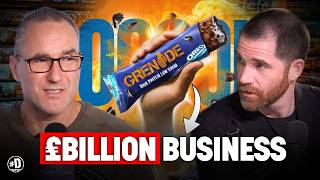
Al Barratt built Grenade from a protein bar concept to a £611 million company, selling to Mondelez for £200 million in 2021. He went without salary for four years while paying staff, tested 44 failed formulations before getting the product right, and used Entrepreneurs' Relief to manage capital gains taxes on the exit.
Chapters
As of last year, it was just shy of a billion dollars.
How much tax did you pay?
You had to go there, didn't you? Yeah, so we paid—
Alan Barrett, the CEO of Grenade.
One of the UK's fastest growing brands. We're disrupting chocolate and we just need to stop punishing people for taking risks.
Do they even want to support entrepreneurship? Why aren't they?
This just has to change.
What's your biggest fuck-up?
There's been a lot of personal sacrifice over the years and I had to choose then between my wife or my business. I kind of chose what is the biggest scam in the fitness and health industry, do you think? The biggest scam?
Al, are you allowed to disclose how much you sold Grenade for?
Yes, yeah. So we sold, we sold, we've sold it in various increments over the years. We've done 2 rounds of private equity, 2 rounds of trade, so I've done 4 Grenade deals in total. Starting off with £35 million in 2014 to Growthpoint Capital. Then £72 million in 2017 to Lion Capital. And each of these events, I kind of cashed shares, rolled shares, and kind of kept going. In some instances, I, I hit targets and earned shares back. Um, but then we did a, a, um, the most lucrative then for me in terms of the shares I had at the time, uh, we did 2021 for £200 million, and that was to Mondelez, who have only ever bought two businesses in the UK, Grenade and Cadbury. That was 2021, and then 2024 we'd taken the business to £611 million at that point. And then that was it, then I was kind of out of shares, and then they said, would you like to stay? I said no, the reward for good work is more work, basically. So I said no, I just don't need to work behind a desk. But actually Mondelēz have been and actually are the best partners we could ever have. And, you know, $300 billion market cap, they own Philadelphia and Belvita and Cadbury and Oreo and whatever. So been really helpful. They moved our offices then from Solihull where we were at the time, we moved up to Bournville to go into Cadbury HQ. And then we came up, we actually spent a year, I stepped down as CEO last year, after my earnout. But we came up with a year figuring out before the earnout, figuring out actually what the future would look like for me, because they're very smart in acquisitions they've done. They know that if founders tend to leave, you know, that fundamentally alters businesses and brands, mostly negatively, because brands are extensions of their founders. And actually, I didn't want to leave either, but I also didn't want to work behind a desk. I didn't want a job. So we came up with this deal in this— where I'm in this founder role, and I kind of go where I'm needed, and it's actually brilliant, absolutely brilliant. So I had a few conditions. I didn't want to see any spreadsheets ever. I think I've said I haven't seen a spreadsheet in a year. No board meetings, not done a board meeting for a year. I don't want a boss, so I've got no boss. I've got no deliverables as well, which is actually— it gets better and better, doesn't it? So, and I wanted my best friend who's had worked at Grenade with me, Tom Murphy, I wanted him to be CEO. He was number 2 at the time, and which he didn't want that job. And I said, if you want me to kind of do this founder role, I think Tom should be CEO. And he did accept, and he's an incredible CEO. So I get to work with my best friend every day on the brand that I built, and I can help and add value and sort of go around the world. And it's actually really enjoyable because I've got so many other investments as well. That we can just kind of combine them all. So as long as I don't do anything that competes with Grenade, it works really well. So actually everything I'm doing at the moment now is actually very beneficial to Grenade, even in different businesses and stuff as well. So it's actually working really well. So I'm a year in, probably do another couple of years of consultancy role. It's actually quite good because for me and my mental health as well, I've been 15 years at Grenade, so to suddenly not be there and then, you know, sell your business, sell your brand. It's a real shock. It's like sort of— it's like, I don't have kids, but I imagine it's like selling a child, which is probably quite tempting. But, you know, a bit like it just one minute it's there, the next it's not. So it's actually working really well. So yeah, so we basically, we started Grenade with a £500 Passport to Exports UKTI startup loan, and then as of last year, it was just shy of a billion dollars. Um, so I think there's just so few people who've done that in the, in the UK as well. I probably know most of them, it's a short list. Um, and I'm 49, so hopefully still young enough that I've got, got some years left, um, as well. But it's tricky balance, isn't it? Because, you know, you don't want to be in a business or a brand potentially too long, because I've got no kids, there's no point me sitting there when I'm 70 and you know, people are cleaning up around me and stuff, you know. So the timing all seemed to work well, so it's been good so far.
Wow, what a journey. Um, so maybe we can talk through that journey a bit. Um, so you each time you what, sold a percentage of the company and then you had like a growth plan to go again and again. Was that always the plan?
Yeah, pretty much. Don't need to have it in 3 increments because I mean, oh God, the world is so changeable, especially now, and Businesses are risky. Everything is fraught with risk. And I know plenty of people who've built bigger businesses than Grenade, who've got a lot less out of it, especially American sports nutrition companies, because only ever a lawsuit away from potentially losing your brand. And where you are trading in the US, you've always got 3 or 4 lawsuits on the go. And even ones where you're completely in the right, you can still lose. You can still win and yet it bankrupts you. And I'm not sure that's a win, but technically you've won in court, but you've lost lost your brand. So you're always worried about that. There's a lot of brands out there have got a lot of money as well who just sort of throw money at lawsuits and just kind of distract you and drain your time. It's unbelievably hard work, you know, as you, as you can imagine. And you, like every business, you have these peaks and troughs where you just think, oh God, is it worth it? You know, so you never know what's around the corner. And some friends of mine, again, have built big businesses in the US, had offers to sell them of over a billion to turned it down and subsequently got nothing as well. So it's— with us, I mean, we, we did our first deal in sports nutrition actually before we even invented that bar. So at the time, had we not invented that bar and we'd have done our £35 million deal, um, you know, we, we'd have a business now still, we'd have a brand now, but we'd probably sell half the sports nutrition now that we were selling 10 years ago. So if we hadn't invented that bar, that itself was just an unbelievable deal. As it was, As the brand got bigger and it adapted and evolved, and we pivoted into food and protein bars, and now we do, you know, well over 100 million bars a year just in the UK, and we're selling bars in 80 countries. And that's the opportunity that, you know, Mondelez can see, because obviously we've been disrupting chocolate quite a bit. So, you know, you are where you are, and whenever there was an opportunity on the table to take real money off the table you have to think about it really seriously, um, because a lot of—
i.e., cashing your shares—
absolutely. I mean, yeah, there are, there are definitely, you know, there are, there are brands out at the moment that are, you know, valued, um, in the billions. They've sold, you know, small percentages of shares and, you know, and, and got an enormous EV for the brand, which is great, um, and they might continue to grow and they might not. But I think, you know, we've actually managed to crystallise the full value of Grenade. You know, it's like I said, over £600 million last year. So whenever we had money on the table and you think, you know, you could, we could have made a lot more, we could have also made a lot less, and you think, actually, you know, this is real money, we can de-risk a bit, we can get a helpful partner, we can hit the reset button and go again. And that's, you know, that's quite powerful. There are deals again I probably wish I hadn't done, potentially with hindsight, But you know, we are where we are. And actually everything touch wood's worked out pretty well. So, you know, can't complain.
Yeah. Well, some of those deals that didn't work, I'd like to talk about those a bit later. We personally have always been, 'cause Mark and I, we haven't taken any money off the table. We haven't sold any shares and we have been scared. We know like you, many successful entrepreneurs who have had bad experiences and you know, VCs, private equity come in, and they can also ruin a business, can't they?
Absolutely, yeah.
How did you manage for that not to happen?
Yeah, I mean, how I've managed to get through 4 big deals and still end up where they want me running the companies, I mean, you know me, so how I've not been fired over the years is a miracle, to be honest. Because I have always, I've always had this entrepreneurial flair where, you know, entrepreneurs are a nightmare to work with. You know, there's good and there's bad. And you know, when I first came up with the idea for this protein bar in 2014, Growthpoint Capital come along and they just invested £35 million based on the sort of what I wanted to do the previous week, which was selling sports nutrition. So, but you know, the ink was barely dry. I'm like, oh, we could do this. And they were all ex-invest tech and they've kind of like got this 3 or 4 year plan. And I've never really had a plan in my life. I kind of make it up as I go along. So I said, we're going to do these protein bars, and they were absolutely horrified, and they told me not to do it, and I just did it anyway. And on the— so I've always got— and to be fair, luckily it's always paid off. So I did say, if these bars don't sell, I'll buy them all myself, and that was 50,000 bars back in 2014. So I'd still be eating them, to be honest, if that was the case. But actually, but yeah, but one of the guys there did say, look, you know, we kind of— part of this is you've just got your gut feeling which was really good actually.
So they did give you some autonomy?
Yeah, it was, it was, it wasn't a yes, but it was, um, it was as close to a yes I was gonna, I was gonna get. And again, ultimately, look, we know, we don't know some of these things. You have to try, um, you're going to fail, which is fine. Fail really quickly, learn, and go again. That's absolutely fine. And I think people are so scared of failure If you don't do it, you've already failed. So I think you've just got to fail quickly and just take the learnings from it, because, you know, I'm not the oracle, and I could make great products. I can't make people buy them. I can't make retailers list them. So there's— you have to be very, very flexible and adaptable. And, you know, you're right. I mean, I know the experiences I've had with sort of private equity and trade, And I've probably got about the best experiences of anyone I know, if I'm honest, and it's still been fairly shit. So I can't imagine, you know, anyone would have perhaps had a better experience. But you're right, you know, you're getting married when you do these deals, and, you know, they kind of own a part of you. And, you know, it is what it is, and it's a distraction. You know, and we did a deal with, in 2017, with Lion Capital after Growthpoint. We kind of outgrew Growthpoint, I guess, a bit. And then Lion came along, who were experts in brands. And at the time, you know, they'd done deals with Jimmy Choo and GHD and Kettle, the potato chip brand, All Saints, Weetabix, really understood branded stuff. And again, I think we got a little bit unlucky. And I get on great with Lyndon, who's the founder. But I think I only met Lyndon about 3 times. I think on the last deal he made £108 million. So, you know, he didn't do badly bearing in mind that was 3, to endure me for 3 meetings, it wasn't a bad return, was it really? It was £108 million. But I think we got a little bit unlucky in where they were on their investment cycle because, you know, they invested at £72, they tapped out at £108, at £200. So, you know, they had an incredible return as everyone has who's backed me and the team and Grenade, they've all done really well, which is brilliant. But I think we had at Lion, they were going through some stuff at the time, and I think we had about 5 brand managers in sort of 3 years. So you'd kind of start off on one plan and then they'd leave, and then someone else comes along and they've got a different plan. So you just end up kind of doing this all the time. And as an entrepreneur, you know, I can do that, I can zigzag on my own, I don't need someone zigzagging for me. So, um, Yeah, the, the, you know, so I've always gotten well with whoever we've worked with, but, but it is a real distraction. And again, they will sometimes come in and say, oh, we should do this as the brand, and you don't want to disappoint them. So you kind of then you end up going down a route that you don't really want to go down. And that's probably been good for you and Mark because you've always done what you two have wanted to do. Yeah. Whereas like, I, you know, one of the people that looked after us at, um, at Lion Capital, you know, veganism was kind of becoming big at the time. This was kind of 2017, 2018. Um, and he just really wanted to make vegan products, and I just didn't want to do it. So we did do it, and it didn't sell, you know, and I sort of lost 2 years of R&D time. I'd have just been doing something else. It was my fault because I shouldn't have done it, but also they kind of planted the seed. And because they're your partner at the time, you kind of— it's easy to get sucked into these things, and they grow arms and legs. So you can definitely get distracted with these deals for sure. If you don't need the money or the help, just don't do it. 'Cause I think you need money, help, or potentially sort of de-risk. And like I said, this stuff's really risky. So, you know, if you can get cash off the table sometimes, it's, you know, that's valuable.
Yeah. Thank you. And obviously Grenade is most famous for these protein bars and they've been amazing for you. Do you actually know how many protein bars you've sold in your entire life?
I'd stop counting at over 500 million. A few years ago, we'd be knocking on for a billion bars. Easy billion, billion bars. The protein bars, obviously we're disrupting chocolate. So, you know, are protein bars the healthiest thing you can eat? No. Are they as good as having a, you know, just a plain chicken breast salad?
No.
Are they better for you than confectionery bars? Yes. So we just provide an alternative where we know people are going to make a bad decision on nutrition. And I was actually saying to you, like, in a petrol station, because people are going to pick up a Red Bull and a pasty, um, or they're going to pick up, you know, crisps or chocolate bar. And you are just better off just having one of our bars and just not having the sugar, having the protein. Your body recognizes it as food, you feel full. Because the thing, when you have a chocolate bar, you want another chocolate bar, whereas actually when you eat a protein bar, you don't. You want another protein bar because it does fill you up. So we probably haven't given ourselves enough credit as to all the people we've helped over the years who've lost a lot of weight just through Grenade, just by making a better choice and actually just being more organised with what they eat and when. And, you know, not demonising, so, because there's no such thing as good and bad food, you know, I eat whatever I want, but we have to do it sort of in moderation. And in the UK, we've kind of got a real snacking problem, which just leads to, you know, overeating. And we just try and help people to make better choices and everyone's busy, and where you're in a situation like a petrol station where you're going to probably make a, you know, a bad choice, just try and help them make a better one. And, you know, and to get protein bars into petrol stations sounds really easy, but it was so hard. We had to sell shares in our business to do that. We had to sell shares to Rontec to get listed in their stores. Because if you imagine a petrol station where you've got, you know, the best-selling products in the UK, um, all the chocolate bars. Yeah, exactly. Yeah, just, you know, just confectionery, chocolate crisps, snacks, you know, milk, bread, tea, coffee, Coca-Cola, you know, all all this stuff's in there, you know, these— they're just the biggest brands in the UK. They don't have elastic shelves. So for us to go in, something's coming out, you know. What are you taking out? So, um, yeah, we did the deal with Growthpoint and Rontec. I think Rontec ended up with like a 1% share or something of Grenade to get the listing, and he gave us, um, he gave us one site. So, and, um, it's the kind of deal Mark would do. But you know what, it was actually fab. We learned loads. I went and met Entrepreneurs just get on with entrepreneurs, don't they? And I went and met Gerald, who owns RonTech, who's just a real character anyway, and got on well. And he just, he liked me and just gave me a shot. And he said, where do you want to be in the store? And I said, I want to be at the till point. And he said, no, he says, you don't want to be at the till point because everything sells at the till point. He said, so you won't learn anything. So it's actually really good advice. I'm gonna put you at the back of the store. So he put us at the back of the store and we were out selling Mars bars 10 to 1 at the back of the store.
Wow.
So that gave us then— like, I love a path as an entrepreneur, I love a journey. And we had one petrol station, and then he'd got 500, I think, at the time, of either 350 or 500. It was a lot. And he gave us one, and we got 10, then we got 50, and we got the whole estate. And now we're in every petrol station in the UK. There's 10,000 of them. Um, and it just gave us the hand-to-hand combat. So once then we proved that we could do this, we could disrupt confectionery from the back of the store. And there's nothing wrong with Mars bars, by the way, but again, if you're a petrol station forecourt owner, they make nothing on fuel. They make money on what they sell in the store. And every time they were selling one of our bars, they were making £1.50, and every time they were selling a Mars bar, they were making 13p. So you can kind of do the maths as to what they'd rather sell. So we were out selling them in rate of sale and cash margin, and the petrol— the garage operators just loved us, absolutely loved us. So every time somebody went in to buy petrol, where they say, do you want to buy a grenade bar? Which is actually quite good. So, you know, if you can just get thousands and thousands of, you know, mini me's kind of doing stuff for you, it's really powerful. The power of compounding, Rob, as you were saying about yesterday on your social media.
Yes. Yes. So are you saying you launched a protein bar and you weren't competing with protein bars, you were competing with chocolate? Yeah.
Was that the plan? Yeah. Not really. Really, no, we didn't realize what we were doing, to be fair. We— it wasn't— I'll be honest with you, so it wasn't a master plan. So like, I know, let's go and— let's go and fuck up chocolate just to be a pain. We, we were, you know, we were, we were a sports nutrition brand just making product that people would get benefit from. And as products started to get quite expensive and quite technical, all they can only be sold in certain places. So all the places that you could buy our fat burners and our pre-workout products, we were already in. We were number 1 on Amazon. We were in Tesco NutriCentre. We were number 1 in Holland and Barrett. We were 2% of GNC's entire turnover. And we'd sort of run out of places to go. And a couple of things were happening. We'd run out of kind of retail space. And we had a, you know, a nice lifestyle business. This is my 2014 sort of $35 million valuation lifestyle business. You know, felt like it could just be more. And a couple of things were happening. We had run out of retail space, and consumers are kind of running out of money, um, because a lot of our stuff was quite expensive. So we were selling products that were, you know, between £50 and £80, so they weren't going to be in a petrol station, and it was quite a considered purchase. And I wanted something— I wanted to take what we'd learned and to put it into a product that we could put in more places and more people could afford. That was the original plan. And we'd been working on protein bars for a couple of years because I just couldn't find a good one. So the art of this really was just disruption. It was just actually people are buying protein bars and I don't think they're that good. I can make a better one of these.
So we speak in terms of the way it tastes.
Yeah, the way it tasted. I mean, they were just like dog chews, really. You know, they were just, they were just really unpleasant to eat. Very chalky, very chewy. They hadn't really changed in 30 years. And it's interesting. So They hadn't changed in 30 years because nobody was buying them, but no one was buying them because they hadn't changed in 30 years. So at some point, someone, whatever it is, if someone can just come along and just do something better, it's surprising how many people you can actually bring with you on that journey. So the first thing was making a really good protein bar that I felt I would eat and I would enjoy, put it, you know, make it affordable. So £2.50 as opposed to, you know, £50 for a complicated pre-workout product. Um, it wasn't a considered purchase, so you didn't have to go into Holland and Barrett and be sold the product for the benefits of it for 30 minutes to, to part with your money. Um, and we just thought then if we could, we'd have all this white space ahead of us where we could put protein bars, and then, you know, hopefully then people would buy us instead of chocolate. I mean, I never dreamed that we could— we'd basically overtake Cadbury, which is basically what happened. Um, you know, I became obsessed with the data. I mean, we were very quickly the number one selling protein bar in the UK because that wasn't difficult because they weren't selling. Um, but then when we got into the top 20 of confectionery and, you know, like, we overtook Twix and stuff, and I've, you know, I've got like, you know, no idea how many Twixes were selling, but I was surprised that we were selling more than they were. And then we quickly got into the top 10. And I think the top 10 at the time was like, you know, it was for the— well, the top 5 was like Ferrero, like Kinder, it was Mars Bar, Snickers, Dairy Milk, you know, just the best-selling chocolate bars in the country, none of which had been— none of which were new. They'd, you know, they'd all been around for a long time. I think the new kid on the block, the confectionery, was like Whisper, and that was like the '80s, basically. So we hadn't realised it hadn't been disrupted, but, you know, we didn't sort of wake up like with some sort of evil mastermind plan, you know, to kind of go and overtake Ferrero and that. But that's actually what happened. So, and then, you know, as we ended up with our 2021 deal, we had Giovanni Ferrero on the phone and Cadbury on the other, and they both wanted it because we'd overtaken both of them, and nobody likes to be number two. So we ended up in a good situation there.
So you played them off against each other?
Absolutely, yeah.
Yeah.
Absolutely. And then one of them pulled out and we couldn't let the other one know that they pulled out. It was a one-horse race. So it was— and then they came back in again. But yeah, that was actually— that was really— I mean, with hindsight now, it was a great position to be in, to have two people really want it. But it was very, very stressful. I flip-flopped a lot. Between who we do the deal with. Yeah. Um, you know, to be honest, and then actually, and should we do the deal at all? Because as I said, it was kind of my baby, and we were very happy just to keep on going. But, you know, you could keep on going, and I know regs could change, laws could change, consumer habits can change, lots of things can change. You know, um, we'd already had obviously a scare through COVID where retail had been really disrupted. So, you know, anything could happen. And I remember chatting to Lyndon from Lion Capital about whether we should do this deal. And we're like, 200 million. And I'm like, we can get more for this. And he actually said, I think he said, yeah, pigs get fat, hogs get slaughtered or something like that. And basically just don't be greedy, let's do the deal. There's a good deal to be had here. And I'm really glad we did it, to be fair.
Yeah, great story so far. Thank you, Al. I want to come back to the business side of it. But this is nagging in my mind. How much tax did you pay?
Yes. Yeah. Sorry to kill the fucking mood, but— No, you had to go there, didn't you? Yeah. So we paid 20% on our shares. This is actually— it's a really good point, to be fair, because there's a good point to be had here. When we did our first deal, we had entrepreneurs' relief of— It was £10 million at the time. I think it's €1 million now. Yeah, it's €1 million.
Yeah. So yeah, our first €10 million.
We paid a million of tax.
Yeah, 10%.
Yeah, which is incredible. Yeah, it is 10%. Yeah, you're right. Um, yeah, um, so we did the deal, uh, there, ladies and gentlemen.
That was our Barracks.
I'm never coming back. I'm never coming back. Keeps inviting me to do these. Yeah, um, not anymore. So, um, and you know that I'm just saying it for the benefit of everyone. I know. Yeah, no, it's a good— and then for the rest, we paid 20%. It was, um, and you know, you know, we've never set anything up in a clever way to not pay tax. But when we— I wish we had, but when we were—
and was that capital gains tax? That's what that was, because that's 28% now.
Yeah, exactly. Yeah. So this was the point we had back in 2021 where, you know, we just sort of coming out of COVID we knew that COVID was going to have to be paid for somewhere. There were rumors of CGT and whatever going up. And we thought we're better off doing a £200 million deal at 20% tax than doing a £300 million deal at 40% tax. Because at the time there was a rumour that CGT was going to match income tax. Do you remember?
Yes. Yeah, I do. Yeah.
Well, imagine then just kind of doing the deal for more money and being worse off. Yeah. So it kind of, you know, pushed us into doing the deal when it was there, because otherwise we probably would have carried on, right? Um, you know, to be honest. Um, but it's amazing, isn't it, then, how just those changes can really fundamentally change what you do in a business. And yeah, for the first time in my life, it was actually how much tax we pay that was dictating whether or not we do a deal. Um, and again, I mean, you know, it's only going one way, isn't it? Um, yeah, thanks to Rachel from accounts. Um, so Yeah, I mean, I really feel sorry for anyone now that's kind of up against this with the tax and stuff that we're paying. And yeah, it's pretty criminal really. And like, we were chatting earlier, I've got absolutely no issue at all paying tax. And I know some extremely, extremely globally wealthy people, I've had this conversation with all of them, and they've all said the same thing. They've got no problem paying tax. They've all gone offshore because of the amount of tax that gets wasted. They'd rather have a choice where their tax money actually goes. Into charities or whatever. It's not about tax avoidance, it's about actually spending it well, because governments, no matter which government it is, they just don't spend money well. So that's, you know, that's why I think a lot of rich people probably get a bad rap. It's not about them keeping the money for themselves, it's about the waste, or not having waste rather.
So, you know, what 2 or 3 things do you think, or could, the government do to support entrepreneurship? Do they even want to support entrepreneurship? Why aren't they?
It's a great question. I think because, like most governments, they don't— they've never generated any money for payroll. They've never had to find payroll on the end of the month. They've never created something from nothing. I know they've inherited a mess, but most governments probably inherit a mess. They're just not business-minded. I think you need— I'm not really a fan of Trump, but I do like that US-style cabinet he's got where he has got business people coming in. Just offering perspectives on business and advice. But I do think that, you know, the corporation tax rates should be lowered. They've got to stop punishing general, you know, PAYE, just hard-working average families, where I think, was it £45,000 a year now? If you're over £45,000 a year, you're not a working person or something. It's like, it's bonkers. I have got these definitions about what a working person is. And how low the thresholds are. Um, I'd bring entrepreneurs relief back. I'd make the UK an absolute hub for startups, entrepreneurialism, uh, you know, cheap financing, um, and just attract the best, brightest people here to build these incredible businesses. I mean, you know, it's, it's what, it's what Dubai are doing. Um, so, you know, I don't think we, we don't need zero tax, but we just need, uh, we need lower tax. And we just need to stop punishing people for taking risk. Because, you know, if I think now, like, the risks that we took, you know, at one stage we were down to £27 in the bank. It was never about the money and building a big brand, you know. We were trying to do something consumers got benefit from and, you know, run this business. Um, but I think if, if we'd have thought there was just nothing at the end of it, I don't know why we'd bother. I said to you earlier, actually, and I've got, I've got family that, you know, work hard and work shifts in the NHS and whatever, and their alarm must go off. I don't know how they get out of bed. I just don't know how they do it with— at the end of the month they've got nothing to show for it, or less than they had the previous month. So this just has to change, you know. And look, ultimately as well, and it's unpopular, but they've got to cut welfare. They've got to cut welfare. There's just too much waste, you know. 1 in 4 people now in the UK is disabled. I just don't believe that can possibly be true. And it's just too easy for people to say, oh, I've got anxiety, or, you know, there's just too many reasons not to work. And there's too many people addicted to benefits after COVID, which, you know, I get. If there's no incentive to go to work, of course people claim benefits. I don't blame them, you know, we'd all probably do it. So there's just, there's just, we've got to start to help people, I think, to help themselves. You know, the Brits are a hard-working entrepreneurial race. Yeah. You know, it's a nation of shopkeepers, isn't it, as Maggie Thatcher used to say. But I think they've got to stop getting beaten up. And as I was saying earlier, I pay huge amounts of tax in the UK. I just can't see what I get for it. You know, the roads are pretty shit. I've got no kids. I've got no kids in school. There's no streetlights where I live. There's no regular rubbish collection where I live. I don't use the NHS, luckily, because I'm healthy. But if I needed it, I'd probably just go private. There's, you know, and again, I'm probably paying for— I've never done the maths— probably hundreds of thousands of people to not work. It's got to be. So, you know, do I think this is going to continue? It just can't. It's just not sustainable.
Right now we have a banking crisis, a potential global recession. If you'd like to learn how to cash in on the crash and not just survive but thrive in challenging times, I invite you to join us at the Moneymaker Summit Live. The link is robmoore.live/money. I'm subsidising a small number of tickets from my Rob Moore Foundation, or for a very small upgrade fee, you can get special VIP tickets where you meet me personally, you'll get your book signed, there's VIP dinner with 6 multimillionaires, and bonus money mindset sessions, as well as the special 3 days on on getting your tax bill down, your income streams up, my 8 stages of building wealth, my formula for riches, and much more content at robmoore.life/money. The agenda, the details, the dates, and the speakers are all at the link robmoore.life/money. Many people might not know what you did before Grenade.
Yeah, so I had a distribution business prior to Grenade, so—
And was that your first business? Um, what did you have before that?
Yeah, I had one before that. If you think I was— yeah, personal trainer. So I'll give you a quick rundown. So I dropped out of school when I was 15. So I, um, I absolutely hated school. So, um, I did well at school, but, um, again, we can spend hours ranting about the education system, but it just wasn't really for me. I've got a really good memory. They teach you something, I'd regurgitate it back, and that meant I was clever. I never really understood how that worked. Um, so I got a bit frustrated with school. And I left when I was 15 and I went to do work experience in my local gym and I ended up working in this gym then for £70 a week for a full week. So less than £2 an hour. And that was in the '90s. So well below minimum wage even then. And I absolutely loved it. I just loved working in the gym and I just learned a lot. And I had a personal training business and my first client, that personal training business, I still speak to every week. He's 83 now, and I made friends for life and just learned a lot about business, especially by some of the gyms I worked at where they weren't the best business people. So I learned how not to run a business as well. Most of it was common sense, like you'd know if you'd lost the takings on the way home, um, from the gym, that probably wasn't good business. But the owner used to do it on a regular basis, he'd lose and he couldn't pay me that week, he'd lost the takings. Um, so Yeah, I learned how to not treat your staff. Um, and I ended up then setting up a distribution business importing supplements into the UK, mostly from America. Um, and I went around gyms who didn't want to buy my supplements, so I had to put the supplements in on sale or return. And I'd go back the next week, and if they'd sold, they— I'd replace it and they'd pay me. And if they hadn't, I got nothing. And I drove around for a lot of weeks and got absolutely nothing. And I just persevered with it. And I remember the, yeah, the one gym, I think it took me 3 weeks to get— I think, yeah, I sold him a box of— I put a box of flapjacks in this gym that were costing me £10. I put them at £15. There were 24 in there. He was selling them for £1 each. And 3 weeks on the trot, I went back to see if he'd sold these flapjacks. I think it took 3 weeks for him to pay me and I made a fiver even though I'd probably done 60 miles in my car. But it just felt like I was making money. Yeah. And I actually, I just learnt how to scale that. And yeah, that was my distribution business and I fell out of love with that business. I got sick of being a middleman back in 2007, 2008. And actually we were having this chat earlier, I actually had a tax investigation. With that business where they mistook me for someone else. It was the worst 6 months of my life. And they— the taxman, even though I'd done nothing wrong, beat me up to the point the day after this tax investigation, and I was completely exonerated even though it cost me £100 grand in accountancy fees. I sold my business the next day. And it almost feels like we're getting back to that situation again, doesn't it, in the UK where, you know, this was 20 years ago where they just took all the wind out of my sails. I sold that business.
How did they mistake you for someone else?
They got my VAT number mixed up with someone else. Um, so that we— they were— and it took a while to kind of flush out, so they couldn't work out where there were these sort of mismatches. Um, and again, I was banking a lot of cash, perfectly legitimately, but they just don't like cash today. So, um, I got a tax investigation and like everywhere they— and again, I was out, I was 26, I was doing well, I was doing really well. And when you do really well, the reward is kind of being punished.
Yeah.
And beaten up for it. So it kind of feels like we're, we're back in, in that situation again, unfortunately. But, um, so you sold the business because you'd had enough? I'd had enough, yes. And I was going to go and live in America. I sold that business to my best friend at the time. I worked for him for a year for free because I genuinely cared about that business and the customers and the suppliers. So I wanted to make sure the business thrived, which it still does, and sold that business and then set up Grenade with it. Yeah, with a £500 loan.
So you obviously weren't that pissed off about.
It was about— well, it's what it was. But in— I think in the year handover of working with my friend, um, I just— I then didn't go to the, um— it didn't go to the US. And, uh, yeah, probably had a change of heart and then set it— yeah, set up Grenade. But we did set it up as a hobby, um, initially. So it was a hobby that turned into an obsession. So it's probably not many people have flicked the hobby into a billion-dollar brand. Yeah. Um, but yeah, it was just something to do to just because I love the industry, I like helping people. I'd learned a lot from the distribution business, right? And I wanted to change that model of just going around gyms, sale and return. And I wanted to build something bigger that could go into retailers and supermarkets. And I wanted to have a go at a branded business that was mine that was just purely weight loss, as opposed to all the other stuff that we've done in sports nutrition. So yeah, that's what led me to Grenade. So although Grenade was a startup, I've been in the sports nutrition industry for 20 years when I started Grenade. So I didn't know exactly what to do, but I knew what not to do.
Yeah.
As well. So yeah, I'm 49 now, so I've been in this industry for 35, 36 years next year.
Wow.
So it's all I've done.
Yeah.
You know, really. So I know all the suppliers, I know everyone well, I know what consumers want, and I'm still passionate about health and fitness and longevity. Yeah.
So if you've been in this industry for like 35 years, what is the biggest scam in the fitness and health industry, do you think?
The biggest scam? I mean, there are definitely products out there that you get, actually, you've got a few types of products, actually. You, you— and this is why I set up Grenade. There are definitely products out there that are just, um, not effective and well marketed. You get products then, um, that are really effective and badly marketed. And then my idea was to have something that was well marketed and really effective. It sounds stupid, but until we came along with Grenade, we kind of had the idea that it was easier to keep existing consumers happy than keep looking for new ones. And I say that because a lot of the brands I sold in sports nutrition, their model was kind of, say it now, ripping off consumers. They were making product for sort of £2, selling them for £40. A consumer wasn't going to get much benefit from it. They'd take the margin they made and they'd use that margin to go and find another sucker. And that was kind of the American model. And that's the thing I fell out with, um, I fell out of love with, with my distribution business. Because with my distribution business going around gyms and putting stuff on sale or return That model doesn't work for me because I need repeat custom, because I'm going to those gyms every week and I need stuff selling over and over again. And actually, we got the idea from Grenade, really from like Red Bull and Pepsi, where we thought, well, actually don't need many products. You need one that's really good that people buy over and over again, that's protectable and memorable. So a lot of the things that we solved kind of formed the brand, not the other way around.
Right. So when you say protectable, do you mean the intellectual property?
Yeah. So the name, it's a very, very copycat industry. Right. So again, you know, you asked in terms of scams in sort of sports nutrition. I mean, anything where there's kind of like multi-level marketing where you've been sold something by someone who's been sold it by someone, anywhere where there's levels of margin, I'd be super, super careful. Um, but ultimately sports nutrition certainly, and it started off really just with athletes and sports people, you know, hence the name, but we knew lots and lots of people could get benefit from, um, from, from sports nutrition if they knew what they were doing and if they knew a bit about diet and training and if they could sort of get off their ass. Um, so, um, yeah, we, we, we made sure that we could build something that was just very easy to remember. And, you know, the name Grenade— I'm really interested in the military, I've got lots of friends in, um, special forces and stuff. And, um, you know, combine my two passions of military stuff and, um, and supplements, you know, to come up with Grenade. But then even having that Grenade bottle, you know, we had a really effective weight loss product which we still sell called Therma Detonator. And we just didn't want to put it in some generic white bottle that everyone was going to copy, and it was just going to sit on a shelf with all the other products in a white bottle and look exactly the same, and no one was going to remember. So, you know, as a brand, being memorable is just absolutely key, more so than ever now. Actually getting bombarded with adverts 24/7, but if you knew the name, you could see the bottle. If you'd seen the bottle, you'd know the name. Yeah. So, and that, that works in every country around the world. A Grenade is a Grenade. So although it sounds very abstract for a sports nutrition brand, it was kind of actually, it's something that people have really been able to remember. Also, the logo works. So if you just put like a grenade logo on a wall, you can see it works two-dimensionally, three-dimensionally. It's actually quite a clever shape. And if you trademark that shape, it's very easy to protect because it's someone's either infringed on it or they haven't. It's not like it's a circle, you know, and it's, it's subjective. So if someone's copied you, it's very obvious they've copied you. So yeah, and having that, you know, and Grenade bars again, it's kind of, it's been very easy to protect. So we've got something like 200 trademarks, design marks, pending patents. And again, it's something that Mondelez like, because when they came in, you know, we were protected globally. We'd spent a lot of money doing it, and most people just don't do that. So there are holes in brands, and there were just no holes in Grenade.
Right.
So that's, that's been quite helpful.
Yeah, awesome. Is it important that you start with a clear mission and vision, or can you just crack on and does it sort of create itself over time?
Yeah, you do. They definitely create themselves and evolve over time. You've got to be flexible. I think you have to, you have to know the destination, um, you know, the destination might change, but it shouldn't change to a completely different destination. But you've got to know roughly where you're going. How you get there is entirely up to you. So you'll always course correct as you go because I can promise you, you know, how you'll get there won't be how you think you'll get there. So it's absolutely fine.
But, well, you didn't know.
No, no, no, not at all. We, we'd got— I mean, we went from, you know, weight loss capsules to, yeah, to protein bars. So it was, you know, yeah, pretty, pretty far from where we started. You can still do all the other stuff as well, but I think if an opportunity presents itself, it comes back to this, this testing and learn— testing and learning. We've tested loads of products that haven't worked. There have been really good products that just haven't taken hold. I mean, in fact, the stuff now that's selling that we were selling 10 years ago. So we were doing like high protein coffee 10 years ago and now you see it like Starbucks are doing it, right? And then we were doing that 10 years ago. We just couldn't get it to sell. But you know, see how Starbucks do with it. But we've been quite early to quite a few things. A friend of mine actually invented lactose-free milk and that nearly bankrupted him, which— and it's really popular now, but he invented it in the 1970s and no one knew what lactose intolerance was. So you can just have a really good product. Can have bad timing, um, to be fair. But, um, in terms of— I think something you have to get straight with any brand, just values, like just your core values. And your core values for your brand will be your core values. They won't be different. They shouldn't be different because a brand is an extension of you. So if, you know, you've got a property business, um, you know, and, uh, you know, your core values are you're a real shitbag and like screwing everyone, then probably your property business will be doing the same. But you know, if you're, you know, she's your mum. She's going to be a politician then. Yeah, exactly. Let's hope that doesn't apply to any of you. But you know, but if you're just, you know, hardworking and fair and, and I'm a landlord myself, by the way, I've never lost a tenant I wanted to keep. But I also, I don't run it as well as a lot of you guys do in the sense that I don't think I've ever put anyone's rent up either for years, just because if I've got a good tenant that's just paying, I just leave them to it. 'Cause I just value, just, so I've probably got tenants sat there paying half market rent, which is very quietly, but you know what? That's absolutely fine. I'm fine with that. We are doing a review at the moment. Yeah. 100% rent rise. As you can imagine. Yeah. So—
I like the way you said, I've never lost a tenant I wanted to keep.
I wanted to keep.
Yeah.
Yeah. Well, I've never lost a member of staff I wanted to keep either. No, but I think, you know, your values are really important. And, you know, I've worked for minimum wage, so I have empathy with people. And I think, you know, that's something the governments don't have. Unless you work for minimum wage, you can't possibly know what it's like to work for minimum wage. I used to put— I was very lucky to have a car. It cost me all my money. It was a G-reg Fiat Panda. You know, it's not glamorous now. It wasn't glamorous then. I was like an 18-stone bodybuilder. I used to get so much abuse in this car. So, so much road rage because everyone hates Fiat Pandas, they're like Nissan Micras. So I used to get so much, and I'd get out and everyone would shit themselves and realize I was actually quite a big unit. So I had this car, and I used to go to the same petrol station daily and put fuel in every day because I couldn't afford to put fuel in for the week. So, you know, so I understand times are tough, and I think these things all feed into your core values. So, you know, we all We know how we like to be treated, therefore, you know, we should treat people how we would like to be treated. And I think just with Grenade, we always had these core values which we didn't actually formalise for years, but it was just treating customers like royalty, just doing it our way or not at all. You know, we, yeah, we do it well or not at all. We never do anything by sort of half measures. We pride ourselves with doing the right things. When COVID came along, you know, we had a million cans of a new drink, a grenade energy drink, which was just about to go into Tesco, front of store, meal deal, and COVID happened. So they delayed the launch. We gave the whole lot to the NHS for free. We could have sold it. We could have sold it. You know, we just had the same with protein bars going into Scandinavia, and then Ukraine kicked off. So we had half a million protein bars. We donated them to food banks, you know, brand new protein bars, but they've got Scandinavian writing on, so we couldn't sell them in the UK. So we gave them to Ukrainian troops and stuff. So, you know, just giving things away, I just think, you know, it's cost us a lot of money over the years, but I think these things come back and pay dividends. So I think basically just don't be a dick and just be a good human being is a really good place to start, you know, in terms of brand values. Because I call in favours all the time, and I've literally done it today, of people I met 30 years ago at the gym.
Yeah.
You know, so my first personal training client, Stuart Sapcut, he now owns Sapcut's Group. Huge property empire, and he's one of my closest friends. And I've— I need some help with a Sainsbury's I've got, and, um, I've just said, can I get your thoughts on this? And, you know, I said, I'll happily pay you. I know he's not going to charge me, but, um, I'll happily pay you. And he's like, oh, of course, anything I can do for a great friend. You know, that's just a 30-year friendship paying dividends. So, um, yeah, brand values is an interesting one, but, um, you, you know, you can work on it and formulate them over time for sure. Just have like, you know, just have 2 or 3.
Yeah. Another question that was asked is, and this isn't me, but what's your biggest fuck-up?
Biggest fuck-up? There's probably loads. I mean, I suppose I don't think this is actually a fuck-up, but I guess you could say it was this way. I mean, I guess if I'd known that we were going to end up where we were, where we did, you know, where we have, and build such a valuable business, I guess we wouldn't have done all the private equity deals along the way. Because, you know, have— but they have helped us get to that destination. Could we have done it and I retain, like you and Mark have, you know, 100% ownership of my company? Maybe. Um, but I've got all the money to do everything I want to do, so I just don't need more money to, to do that. So I don't think it's a fuck-up. But I guess if you were to say, you know, I could have made more money, but like I said, I could have easily made less. So I don't think that's a fuck-up. Um, I mean, there are people that we hired that I definitely wouldn't hire again. Um, I mean, there's been a lot of personal sacrifice over the years. I founded Grenade with my now ex-wife, so the clue's in the title there. Um, so, but you know, but Jules and I are still really good friends. We got divorced in 2018. Uh, Lion Capital, actually, they, they sacked her. Um, that was a really sort of shit time, and I had to choose then between my wife or my business, and I kind of chose the business because that was also good for my wife, whereas just choosing Jules potentially would have been bad for the business and therefore bad for everyone.
So you had a gun to your head?
They had a gun to my head, yeah. It was kind of left arm, right arm, so did that. Ultimately, you know, that did sort of split us up. Really? Yeah, because I didn't back her. So, you know, was that a fuck-up?
You know, shall I interview her next week and see what she says?
Yeah, sure, yeah, she'll go— But, you know, we got— and again, you know, we probably would have split up anyway, but potato, potato. But no, so, you know, all this stuff just gets thrown at you, and I honestly, I don't think of things as fuck-ups or failures. I just think of it as learnings. So like, you know, we have— I know it sounds really, really cheesy, but we did like 44 variants of protein bars that didn't work. Like, some gave me a rash, some gave me the shits, and stuff, and gave a lot of people the shits. And we'd come in the next day and compare notes and go, "Oh God, have you been up all night as well?" "Yep." "Okay, not doing that one." But we sort of learned, and again, they're fuck-ups, but they're also, we learned 44 ways not to make the protein bar that we wanted. So I think it's a glass half empty, glass half full. To be honest. The fact I'm really struggling to think of a fuck-up is probably quite good because there are lots, but I think you just can't see them.
Scaling your business. Many entrepreneurs struggle with scaling.
Yes, it's hard.
Yeah. So have you got any tips on that?
Yeah, I think that the scale probably comes from the team. So I think it's the hardest thing I think about business is getting the right team. It's getting people to follow you, especially when you start off and it's just you. That's why actually a lot of businesses, there's two founders, two people, because straight away you've got one person that supports you. Which is, which is a help. So in our case, it was myself and Jules. So once I sort of convinced her, you've then got to go and find someone else. We found our swim lanes fairly easily. I think like you and Mark probably have, you've both got your stuff that you, you're good and bad at, and you're in those swim lanes, which is good. Yeah. Um, beyond there, it's kind of identifying what you need, and it's tricky because you need everything. Um, the first person we hired actually, who only just left about a year ago, she was with us for over 10 years, we hired like an office manager that was just a someone that Jules knew from the gym, and she could just sort of look after the warehouse, accept and take deliveries and stuff, and just answer the phone and just keep on top of things while we were away and at meetings and traveling and stuff. So, um, but we hired all sorts of different salespeople and marketing people, and I, I realized early on that no one was, was as good at marketing and selling the business as we were. No one was as good at doing NPD as I was, and I needed to be going and doing all the the meetings and stuff. And I think I, I managed to get things off my plate I was crap at and didn't enjoy, things like finance, which I can do but I just don't enjoy it. So we, we quickly filled sort of finance roles, admin roles, um, and that was it then. Then you are just looking for, you know, salespeople, marketeers, social media, warehouse people, um, and slowly and surely, you know, you'll, you'll, you'll gain 3, you'll lose 1, you know, you'll gain 5, you'll lose 2. You know, just this quick hiring and firing, um, all the time. You know, you're— especially if your, if your destination is changing and the products you're making are changing, in our case, and, you know, you always need something different. You know, we, we could start a week and, you know, one week we didn't have boots, the next week we had boots. So we'd never sold boots before, so you need someone that knows how to handle boots. So the— it's so dynamic and fluid in terms of hiring and firing people. You keep on sort of getting these generalists and also you're a startup, so it's risky, so nobody wants to work for you because they think you might go bust. So, you know, we didn't— we paid everyone and we didn't pay ourselves. So for 4 years we never took a salary, but everyone else got paid. So we literally earned nothing for 4 years. Um, I think our accountant made us accrue for £500 a month or something like that. But, um, as you're sort of refining and developing the people, this is where the scale comes from, because unless you get the people and the team and you can amplify this and simplify what you do, you just, you just can't get the scale, right? I could do most things in that business. I still probably could, um, but I can't do the work of 150 people, obviously. Um, and we also designed the way the business ran for efficiency. So, you know, profitability comes with efficiency, which comes with, with ease. And my distribution business that I said I sold, I had hundreds and hundreds of products It was quite a complicated business, and selling things sale or return, it was really admin heavy. So when I— and I had, um, hundreds of customers and, you know, quite a few suppliers. When I started Grenade, we flipped it. We had one supplier and had two customers, and I did one product, and the products were palletised for efficiency. So our thermodetonator, our grenade product, there were 960 grenades to a pallet. So rather than do 960 individual orders, had it been like an e-com web business, I'd have needed quite a few people to do that. I would just sell that pallet to Tesco or Amazon or a distributor, and therefore, you know, to do tens of thousands of pounds of business and, and do a warehouse movement could probably take me, you know, 5 minutes on a Monday morning, for instance.
Yeah.
Um, so we made the business efficient in terms of what we were selling, how we were selling it, and how we were doing it. So, you know, we were generating good revenue that wasn't actually taking as much time. I know this is kind of unique to what I did, but it was a warehouse operation which traditionally, again, you know, require quite a few people and are quite complicated. So we kept it as simple as possible. I really like simplicity and I can't stress enough how important simplicity is. I've been really fortunate to spend some time with people who run incredibly complicated businesses and they make it look so easy. I was in Africa in 2016 at Richard Branson's place with Richard, and he was showing me Virgin Galactic. And it's like, you know, it's space, it's quite complicated. Not to them. You've got an iPad with about 20 questions on. It's like, you know, how long's a trip last? What's it cost to build a spaceship? You know, blah blah. How many people does it see? You know, what will we charge them? And it was like, I couldn't believe how simple the questions were. And when you, when you figure out the answers to the really simple questions, let someone else go into all the complicated stuff. So I actually thought that was, you know, and that's someone who's very heavily dyslexic. So I thought it was actually quite interesting how simple you could make certain businesses. So simplicity is definitely key.
So the final question I've got, which was from you all, is, Al, if you had to start another business today and it wasn't anything you've ever done, what would you do?
Oh, that's a good question. I do think about this constantly. I'm fairly well diversified. I've got quite a bit of property. I like commercial property, not residential. I can't say too much on camera, you know what it is, so don't drop me in it. But I have got an opportunity to build something overseas at the moment, which is on a different continent, which, yeah, is probably quite exciting that I'm considering. Oh, what would it be? I do like— I think I probably— I like brands where consumers are probably getting a shit deal, if that makes sense. So if you can identify something that's being done quite badly and it's something everyone uses and you think, I could do that better, I think you probably— it's your civic duty to give it a go, to be honest. We were actually chatting earlier, weren't we? I've just bought this new— this bed. It's really clever, this. It's called an Eight Sleep, and it's like a sleep pod type thing. And it just regulates your body temperature when you sleep. So it warms you and cools you throughout the night. You just get the best night's sleep. And, um, I, I would love everyone to have that because everyone needs more sleep. And I'd love a way to do that business so that everyone could have one. I think in future everyone will have one of those.
Well, because at the moment they're a bit expensive.
Yeah, they're just too expensive at the moment. But I don't think it's difficult technology. I'd potentially do something like that where I could scale it. Yeah. Again, not to make money, but just to do something that people would get benefit from. Yeah. And if you make money, then that, you know, fine. But I never start a business to make money. That sounds stupid. But, um, I think if something's a bit of a passion and you enjoy it and it solves a problem, there's probably money to be made somewhere. But you can figure that bit out as well. All right, is that helpful?
That's very helpful. Thank you.
You're all going to go and start these sleep beds. There'll be like 800 bed companies. Just, just check it out. It's, it's really good. It's really good. Thank you very much, everyone, and please give a big warm round of applause for Al Barra. Thank you, cheers, thank you.
More from Rob

Meet the Man Taking on Britain’s Failing Fast Food Industry & Building Young Entrepreneurs