Katie Hopkins on The Death of The BBC
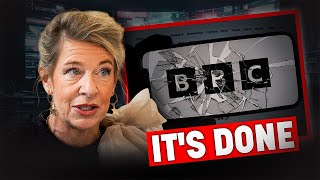
Conversation (YouTube interview) between Rob Moore and Katie Hopkins (uploaded by Rob Moore on Jan 6, 2026). The guests debate Donald Trump’s lawsuit(s) against the BBC (disputed damage figures mentioned: £5bn, $10bn reported), Hopkins arguing the suit signals a boundary against fabricated reporting and expressing that the BBC is morbidly obese and should be downsized or defunded. They discuss the long decline of mainstream media, the migration of influence to independent platforms (examples: Piers Morgan, Joe Rogan, Dan Wootton), and concerns about algorithm-driven content incentivizing outrage over journalistic standards.
Chapters
What do you think of Trump suing the BBC for not 1 billion but 5 billion. 5 billion?
It's 10. On the BBC homepage right now. It's 10 billion, allegedly. So that's a new figure.
So she's going up and up.
Every day it's up and up, yeah. Trump suing the BBC for however many billions, I think is terrific, really. I think it puts a real marker out there. He's not doing this for the cash. He's not doing it because he wants to fight another lawsuit. He's a litigious president that wants to make a clear boundary. You cannot just make up stuff about me or other people. And I think that's the message he's trying to ram home with a price tag attached.
So you don't think he's a bully.
Imagine being the world's leading broadcaster, the nation's broadcaster, BBC Verify. If there's one place you can trust, it's us, the BBC. Are you confused in today's world? Trust us. Oh, and then we're just going to edit someone's speech. Speech so that they say something they didn't say. I fail to see how that would be, Trump being the bully. I think that's the BBC being schooled by Trump, which I'm very much enjoying.
Five billion, though. I mean, that could bring down the BBC.
I think the BBC needs to be brought down. You know, I think it's become inflated, full of ego, full of hot air and not much output. I think if it was a, a private enterprise or a private business, you'll know better, but it would be closed down immediately or least 30% of the staff removed. I think it should do a couple of things that it does well. I think it does radio brilliantly well and it's a companion for many, many people in their homes. And I think there is a sort of global news service it could be part of, but there is no justification for taxing the British public in order to fund something that is what is effectively morbidly obese and on its way to death.
So you think this is the start of the end of the BBC, do you?
I think no, Trump is not the start of the end of the BBC. The start of the end of the BBC happened when they got rid of Top Gear and when they allow leftist lunatics to make non commercial decisions for the whole of the enterprise. The end of the BBC has been a long time coming. We're going to witness the grand finale.
And what do you think it means for media?
Super exciting time right now. For media. You know, you and I have seen this play out over years, but the collapse of mainstream media and the new platforms emerging. So Piers Morgan attracting his 30 million pound investment into a new kind of platform that's basically a collection of YouTubers. I hear other big names that maybe I used to work for, wanting to have a big platform where they just pull different successful elements into a new channel. That seems to me the way that news and broadcast media and all media is going. And I'm super excited for it. Yeah.
So I initially was a few years ago because I like the thought of independent media. I mean, obviously you need to find good sources of correct information and not everyone's a journalist like they think they are.
True.
But I do. I like free markets, I like competition. And, you know, the BBC has been essentially a monopoly, so there's not been competition. And so, you know, all these independent creators like Joe Rogan was, you know, one of the starts of it. I was, I was really a fan of that. But now I'm just seeing it just move down a level because, you know, for example, I know Dan Wootton really well, you mentioned peers. But I just see now he sort of walks or gets fired. He's like, I'm independent, but actually he's still backed by Rupert Murdoch and now he's just got a load of funding. He's still going to be. The mainstream media is just going to move to him and he's still not going to be a bit of a puppet, is he?
Yeah.
So see what I'm trying to say.
I totally. And that was an explainer about the platform with Piers. But of course, Piers would be the opposite of the kind of media that I would be paying attention to, because Pierce has always been controlled, will always be controlled, and will always be in the pockets of those that fund him. But I do see how people who are willing to go out there and take risks, who get out on the pavement and do storytelling from pavements, I can see how pulling those people together makes a lot of sense. I still think that people will go to. I went to today, the BBC homepage, to see what the BBC news is.
Did you not feel dirty doing that?
I did. I had a little Kleenex wipe up after. No, I'm being honest. Right. So I look at the BBC homepage, I look at the Guardian homepage, and when that doesn't exist anymore, will we miss it? Will we miss something that has that stamp of authority on it that just isn't some other YouTuber? You know, what was that thing of credibility, where will we find it again? I think those are all questions that I don't have the answer to. I remember when I moved from the sun, which I actually, I loved that newspaper, and I was in print on a Friday and Daily Mail came and got me, and then they were going to make me their online columnist. And I remember even then thinking, well, I don't want to do that. I like to be in print. I want to be in the white van on a piece of paper. Is it all just a degradation of something? Which I think is sort of similar to what your point is. Are we. Are we aiming to a lowest common denominator of media? Where's. Where's the bar going to be set? Who's going to hold the standard? Yeah.
Yes, because like I said, I'm a fan of independent media, but now maybe we're just going to have a billion opinions. Do we need any more opinions?
Do we need any more opinions? And so instead of it running to a bar standard, a journalistic level of integrity, which I would argue the BBC lost a long time ago, are you just going to have people who are so geared to the algorithm and so geared to performance metrics of content that what you're getting is just content delivered in order to achieve the performance metric? So the system is controlling the content as opposed to humans controlling content. We're feeding the algorithm, we're feeding the tech monster. Now the relationship has changed and is that a good thing? I think probably not, yeah.
Because I feel like mainstream media, which I do agree is dying and being disrupted, and I think that's good. But I think that a lot of that power has just moved to social media, which has maybe now become kind of like the mainstream replacement. Because this thing you mentioned about algorithms, I said earlier, every week, as a test, I post something nice and positive. It gets no views. The more angry you are, the more views you get. And I do lay awake at night a couple of times a year thinking, you know, is the tail wagging the dog? Am I sharing what I want to share or am I playing to knowing what can get engagement? And here's the thing, if you're an artist and no one looks at your work, are you an artist so you need views? If you're a creator, which you are, and I am, do you feel that paradox?
So I've. I've watched this kind of play out and I've seen the shift with social media. So to your point, the journey went from mainstream media to social media, becoming the new face of news and the kind of reinvigorated Twitter x the new, you know, the number one source of news globally, blah, blah, blah. But people still haven't necessarily woken up to the fact that social media has moved. So social media was about the number of followers you have. So you have 1.5 million followers on Twitter, 1.5 million on Instagram, whatever you have. And those followers would follow you and you'd be making you have a relationship with maybe 10% of them in a realistic manner. That's all changed. And people have seen it very specifically recently on Instagram. Now, it is not about followers. It is, you are not playing to a crowd that you've won. It is now the algorithm that feels.
Like a con to me.
Yes. So your content will no longer be seen necessarily by your followers or people who have chosen to subscribe. The algorithm will decide what it places in front of you. So it doesn't matter now if you've got one follower. If you create that moment, you've got every likely chance to be viral. So you could say it's egalitarian, or you could say it's a complete con, because the followership that you've built up is now virtually meaningless to you. It's meaningful to AI and the algorithm. So the power's gone back to tech. And that is a whole different landscape. And it's why, to your point, you're saying you post something positive that you just felt and literally could maybe get five. You may have millions of followers, you'll get maybe five views. Ben Fogel did this about a week ago. He's always posting something. Ben Fogely. And for people who don't know Ben Fogle, think cozy. Sunday morning Times, new newspaper, pretty wife, lots of pretty children, horses and lambs frolicking in the fields. That's Ben Fogle. And he put on Instagram. Is anyone out there? Because in one week from getting 6,000, say, likes on a post, he was getting two or three because the algorithm had kicked in and people couldn't understand what had happened. So it's this dawning realization by creators that what they've created has gone back to zero sa.
More from Rob

Meet the Man Taking on Britain’s Failing Fast Food Industry & Building Young Entrepreneurs