The Truth About Tommy Robinson
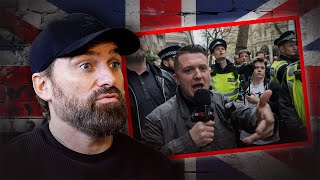
Rob Moore interviews about a UK free speech rally where organizers claim turnout in the hundreds of thousands to over a million, far exceeding media reports of 125,000. The speakers emphasize the rally stayed peaceful but warn of possible escalation if political trends continue.
Chapters
So you were at the free speech rally, weren't you? Yeah, and it's funny because the mainstream media reported that there were 125,000 people there. I wasn't there.
You were.
Were there 125,000 people at this free speech rally?
I would say, mate, that was close to. And I fought on the day. And I'm quite good with numbers. I called a million and a half people. I called 1.5 to 1.8. 1.8 maybe a bit too, but okay, way well over. Definitely 1 million. And this is just where we were. Yeah, right. Definitely. As it all went down, definitely between a million and a million and a half people.
Right, so not125,000 that the mainstream media.
Yeah, well, if it was125,000, then if you want to shock the media and you want to shock government,125, 000 people. If that's 125, 000 people, you've let in double the amount of that this year alone.
That's how many people have. Yeah, we've let in quarter of a million people.
Yeah. And these, these are numbers, right? People go, no, they're inflated. And I'm like, they tell you what they tell you. You can't trust the mainstream media or the government with any statistics. Yeah, they lie about the numbers they did during COVID They lie about again, the, the numbers are the number of deaths, you know, to, to scare you. They're. They're lying about the numbers of the people coming in. And this is what I said. If that was a million, if that was 100, you know, double that. And that's the amount of people they've let in this year or the amount of illegally illegal people that are roaming around this country. That's base layer. Quarter of a million, you know, more than that. Yeah. I said, so you do the maths now. Let's flip it on its head. And people like, wow, you know, because the people that actually believed that that was 100, which is not many, but.
But, yeah, but a lot of people still lap up the mainstream media, don't they?
I still dying, mate. I think, I think there's a certain generation, I think the older genera, you know, from your 70s to your 90s, that generation now, or maybe sitting in your mid-60s, that I, I always see that they still lap up the main. They watch news. Yeah, it used to be incredible, but now, no, our generation, the younger generation and the generation above us, they don't. That's what. That's why people are rising up.
Yeah.
You know, that's why people can call over, over a million people onto the streets of London. This is, this is the power that we've got, the grassroots people. Yeah, this is the power that we've got. That was a show of force, you know. Yes, we went on that, we walked it. We told everyone to stay calm, do not play into the hands of, of, of, of the, of the media.
Did you see any violence?
None whatsoever. All I felt was pride, national pride. And I felt, I felt safe. I felt more safe than I've ever felt walking through London.
Safety in numbers, like you said.
Numbers. And. Yeah, and just, just be warned, that was a show of force. We can, we can implement that again and with more numbers. You know, because of the Charlie Kirk situation a couple of days prior, a lot of people didn't come out because they thought, you know, and there were concerns amongst the ranks as well. And the orders were under no circumstances is there to be any aggression, any violence, and all the way down to frustration. I don't want anyone to get frustrated. This is a celebration.
Yeah.
However, however the orders could change. And if it carries on the way that it's going, and from what I know, the orders will change.
You mean from, you mean from the people, I assume, I take it you don't mean from the police, the military.
From, from certain organized, certain people that can amass millions streets. The orders were peace, festival, freedom of speech, keep it. No frustration, no anger, no violence. They, that, they. That was the, the order.
Yeah.
The orders of the day. Okay. And if the government and the country carries on the way it's going to, those orders may change. That's all I'm saying. And this is, this isn't a threat. This isn't, as you know, I'm not saying they're going to change violently, but you know, there could be a, a step up, a ramp up to, to the next one.
What do you think? What's Tommy Robinson really like? What's the truth about him? Because there seems to be like a polarization of him and what he's doing.
I like Tommy. I like what he stands for. He is a grassrooted individual. That's one of the people. He's very smart, he's very intelligent. I keep a distance from any of this sort of external sort of politics that, you know, but I like the way that he calls out journalism. That's what I really like. I like the way that he calls out reporters and I like the way that he calls out what he knows, you know, with his religious beliefs and his religious backing and his religious, you know, background and his beliefs and that. I don't get involved in that. I talk to him as. I talk to you as a person. You know, we have a laugh together. I talk to him about his messaging, I talk to him about his journalism. That's as far as work goes. Yeah, he's a political activist, I'm not. And we keep that very separate. It's like, you know, I know a lot of people in the under underworld, you know, the top of. Top of the underworld, if you wish, but I never get involved from a, from a working standpoint or from a, you know, from a working relationship standpoint. It's just, it's friends, it's, it's, you know, we keep that respect mutually separated. And that's exactly what I do with Tommy. I like that because I liked his last two pieces of, of journalism work that he done. I loved about the Southport and I loved his, his last piece about mainstream media, about, you know, what real journalists are about and reporters and, and I love that, that piece of work and I sort of keep it from there onwards and I don't get involved with all the, all the political sort of activist stuff and. But yeah, I like him. He's. He's, he's a good guy and he speaks a lot of sense and yeah, he's someone that you go, you know, he's got belief, he's got a passion, more power to him. You know, just, just be careful how you implement it. And I think what's really important above everything is unity. You know, he brings people together. He's not going to bring everyone together because guess what, we come from different backgrounds, different cultures, different religions, different, you know, we've got different morals, principles and values, you know, but he can bring people together. And when you can unite people and you can unite a nation, a country, a town, a community, then you're doing something right. And that is my overall thing, which I know I can do. I know I can unite people. I've got a knack for it, you know, there's no ulterior motives, you know, when it comes to bigotry, racism, bloody, you know, religious, you know, I just see people for who they are. And I was. All I want people to feel is safe and secure in a society where that should be, that shouldn't be an added extra, that should be guaranteed for them. And I want to bring people together so they can thrive as well. I know what we're capable of right. I know that's what I've done my whole life, especially the last 10 years in, in the media. I've got the best out of people. I look in, I realize what they're capable of. I pushed them to a certain extent where they start to believe in themselves. And now it brings people together. And all I want to do is ultimately, I spoke about before, I spoke about, you know, teamwork and team building, and, you know, I just want to bring those elements and amplify them, you know, tenfold and make them work in a community. And I want to do it. Sam.
More from Rob

Meet the Man Taking on Britain’s Failing Fast Food Industry & Building Young Entrepreneurs