Tom Bilyeu: How I Exposed The Biggest Scams in The Nutrition Industry & Made a Over $1Billion
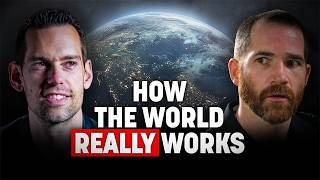
This is a YouTube video titled "Tom Bilyeu: How I Exposed The Biggest Scams in The Nutrition Industry & Made a Over $1Billion" created in July 2025. It features an in-depth interview or talk with Tom Bilyeu discussing his experiences as a billionaire entrepreneur, the challenges and downsides of success, insights into the nutrition industry scams, and his philosophical views on life, emotions, suffering, and fulfillment. The content is a monologue or interview format primarily with Tom Bilyeu and an unnamed interviewer, focusing on personal development, business, and health topics.
The pursuit, not the having that matters.
What are the downsides? Being a billion dollar entrepreneur?
It damaged my marriage. I was working 120 hours a week. It was grueling.
What's the biggest scam you ever saw in the nutrition industry?
Biggest scam is. Oh, God, it's so dangerous. So dangerous. We are in a state of decline. Printing money is theft. We add a trillion dollars in debt in like every hundred days. That's not sustainable.
Is conflict necessary to be successful?
Your emotions are data points. The unexamined life is truly not worth living. You're having a biological experience. And if you want to suffer, choose poorly and you will suffer.
Tom, what's the secret you've never shared or a story you've never told?
Oh, good Lord. I don't know if I've ever talked about this on a podcast before. This is the first thing that came to mind. So.
Tom, is it true you're worth $400 million?
No, but the Internet would have you believe. And I, I let the Internet say whatever it wants to.
Well, that's actually the reason I asked because whatever you look on the Internet, it varies wildly. Can you give us any clue? Is, is it a bit high, low?
It's nine figures. That's all. That's all I'll tell people that's. That's not the kind of thing I want out on the Internet anyway, so.
But nine figures is seriously impressive.
Thank you. Yes, it is life changing, to say the least.
Does it matter to you? You know, because people say money doesn't really matter, but I think maybe it does.
Well, so money is, is more powerful than people think, but it isn't what they think. So what people think it's going to do is make them feel about themselves the way they feel about other people. And it does not do that, but it is the great facilitator. So it lets you do things, you can marshal resources. So it's wildly powerful and I want lots and lots more of it because it will let me do lots and lots more things. But, uh, I learned, thankfully, before I actually made money, I learned that it wasn't going to be able to touch my self esteem. And ultimately my self esteem is the thing that controls my quality of life. So I'm very eager for people to understand what money really does because it's super useful and what money does not. Because if they chase money, thinking it will solve their emotional problems and then they get it. That's where you get real despair. Because they sell their life for money, thinking. Well, but When I finally get it, then I will feel like I've crossed some sort of finish line. And you feel exactly the same. Whoever you become in order to get the money is who you become. The money won't change it. It's the person that you became that was capable of making the money that's going to matter to you.
You said something very powerful there, Tom, which I agree with, which is you're literally selling your life for money. Because if you think about it, you're exchanging your time for money. Your time is your life, therefore you're selling your life for money. Do people really understand the power of that statement?
No people. So, look, the unexamined life is truly not worth living. And I really encourage people to come to understand their own motivations and quite frankly, to formulate a theory about how the world actually works. It's why I shifted from mindset to more world affairs is I began to realize mindset's a big part of this process. Building a business is a big part of this process. But ultimately the world works in a certain way. And if you understand how the human mind works, that will help you. If you understand how collective bodies of humans work, that will help you. If you understand things at the state level, that's going to help you. So, no, people do not have usually an overarching theory of how they work, how the world works, and that leads them to suffer needlessly. And ultimately life is really about refining your sense of the what, how the world works, so that your predictive ability is extremely high. No one's ever going to hit 100%. But the more you can refine your ability to say, if I do this, I'm going to get this outcome and that person will react in this way, the more you can control your life. If you have no predictive validity, which we're living through this really weird moment where people embrace what sounds good, not what actually works. And I think that is something super deranging in terms of quality of life.
So how does the world work?
All right, that's probably better to segment things out, to really be able to go deep. So if you want to talk about the. The grand overarching theory that I have is that you're having a biological experience. Now I say that's my overarching theory because that's going to influence your own life. That's going to influence your personal interactions. It's going to inter influence how you think about marketing, for instance, is all game of psychology. It's going to influence how you think about leadership. It's certainly going to influence or better influence how you think about politics. And getting people to, like that's what I want on my tombstone, is you're having a biological experience. I just want people to understand that. I've been saying that long before the whole debate about biological reality. I just completely got caught off guard that that was a controversial statement. But to navigate my own life well and to not be beholden to my own emotions, I had to come to understand that I'm having a biological experience. I have a brain, and that brain works in relatively predictable ways. And if I could, instead of trying to judge it, if I could just map how it worked, gain that predictive ability over my own brain, then I should be able to navigate more wisely. And so nothing has informed my success more than my research into the human mind. And everything around us that we see is the product of human brains. And so that is a. A really important thing for people to master. So anyway, that. That's the overarching way to think about the world is that it's all a bunch of people in the grips of their biology.
So in order to master this powerful mind, are you saying we need to be able to have an objective view of how it works as opposed to a subjective or emotional experience within it, which clouds how it actually works?
Well, I think the real answer is that you are not going to be able to have an objective experience. There's a bit of a meta there in that once you realize that you are having as close to an objective experience as probably the human mind is capable of, but it's understanding, okay, I am going to have a subjective experience, but that subjective experience is malleable. And I can shape what I call the frame of reference. So everybody has a frame of reference. The right analogy is to think of them as a pair of glasses. Those glasses distort everything, and the lenses are warped. And so you view the world through these funhouse lenses that just warp things in these crazy ways. But you can actually shape the lens. You'll never be able to get rid of the distortion, but you can control the distortion. So the cheesiest example is you look at a glass that has a liquid in it that reaches the halfway point. Is that glass half full or half empty? That's frame of reference. Now, that colors everything. So left and right divide in politics. Right, that. That is frame of reference. And so your frame of reference is very simple. It's made of three factors. Your beliefs about how the world actually is, your value system about how the world ought to be and your biology. And those three factors will determine how you see the world. How you see the world will influence how you navigate the world. The people that you interact with, their frame of reference will control your interactions with them. And really the collision of your two frames of reference, once you understand that your own frame of reference is malleable. And if you want to see the world in a different way, then you can actually shape that lens by changing your beliefs, by changing your values, or by altering your biology. If you don't believe me, go take ecstasy. You will not be able to not feel an over sensing, overwhelming sense of love for people around you because of the neurochemical cocktail that will flood your brain. And so that's but one of many examples of how just a slight alteration of your neurochemistry changes the entire way that you view the world. And so if people could just carry that with them all the time, that your beliefs have a. Actually it's not as acute, but it's a far more profound impact on your life than a drug because it, it literally controls not what you look at, but what you see. And if I could get people to embrace those two elements, oh, I'm looking at the world through these distorted lenses and I can control the distortions, then you could change people's entire experience.
So if life's a biological experience, what's the purpose of life?
You get to decide. But if I look at the closest thing again to objective reality, I would say that the purpose of life is to feel the way you want to feel in that moment. Now how do you do that without it being deranging at the societal level? Because we are a social creature, the way to make a human flourish is a very simple recipe for fulfillment. And it is. You have to work very hard to gain a set of skills that you find interesting for your own reasons that allow you to pursue what I call an honorable goal, meaning that it uplifts you and others. If you do that, then you will be ever marching towards fulfillment in a way that elevates you and the community. If you're doing that, you will have a positive emotional state that can withstand even mourning. And when you think about how can something withstand loss and mourning, because happiness certainly is not going to withstand that, then you're really onto something. And the only thing that I know of is fulfillment. If somebody has a better recipe, I'm certainly here for it. But that has been the central focus of the thing that I pursue in my life and the thing that to your question about what's the purpose of life? That, that I have chosen to act as if I were put on this earth to help other people find that path to fulfillment. And so the whole idea of impact theory, which for people that don't know me, is the name of my company, my theory is that you can help people get a, an empowering mindset which is one that's going to lead you to fulfillment through entertainment, that you can help shape somebody's distorted lens with these empowering ideas if you can hit them on an emotional level. And so that's what I've again decided. I don't believe I was actually put on this earth to do that, but that's what I've decided to make my purpose and everybody gets to choose theirs. And I would just say, be very careful, choose wisely.
Why? Why should we be careful and choose wisely?
Well, now, now we get to the, the holistic view. You're having a biological experience and if you want to suffer, choose poorly and you will suffer. If you, however, want to align with your biology and know that millions of years of evolution have put these algorithms running in your brain that will make you feel good or bad, depending on what you pursue. And it wants to ensure that you have kids that have kids. So I know there are algorithms running in my brain that make me feel good when I do the things that would traditionally lead me to have kids, that live long enough to have kids, and they make me feel badly when I'm doing things that would have historically led me to not have kids that have kids. And so I'm very thoughtful. And that's where I came up with that recipe. I just thought, okay, what are the things that evolution would blindly. Because I don't, I don't think it's a conscious activity, but what would a blind watchmaker need to positively incentivize and negatively reinforce? And so this is why hard work feels good. This is why being lazy ultimately erodes your sense of self. This is why we need to contribute to the group. And people that isolate themselves, their odds of or their rate of suicide just absolutely skyrockets. Because we are a social creature, we are more likely to survive being a part of a group. The group is more likely to thrive if we're all contributing to that group. But at the same time, you run into the freeloader problem. So I mean, look this, I man, we can go as deep as you want on this stuff, but it really is this hyper interconnected web of things that will always lead you Back to you're having a biological experience and just teasing out like what are all the things that lead into that? And it really does come down to pleasure and pain. And that's it. Certain paths, certain choices will be pleasurable, certain will be painful.
So you said about if you want to suffer, but is suffering not part of the journey towards the fulfillment? Is struggle not part of the journey? Do we not to need to face conflicts of other people who challenge our values? Do we not to deal with need to deal with hard challenges head on? You know, to be able to build a nine figure company or have a, you know, deal with a big lawsuit or whatever. So isn't suffering the way suffering is.
Not the way suffering is certainly unavoidable, at least as I have experienced. Monks may tell you that there is a way to escape that trap. But again, you're having a biological experience. Nature is trying to use both pleasure and pain to move you in the right direction. But suffering really is your brain telling you something is wrong? Now the question is, is it telling you that your frame of reference is wrong? And so you are suffering over something that you shouldn't be suffering over? You should not suffer over hard work. Hard work is wildly advantageous. The ability to endure suffering is incredibly useful if you're making progress. But you really do want to be mindful of suffering. You want to be mindful of your emotions. Your emotions are data points. You don't want to be beholden to your emotions, but you certainly want to be aware of what they are. You want to ask yourself why you're feeling that emotion, whether good or bad. You want to ask, does this emotion serve me? Is it moving me forward? Or is emotion simply shorthand? And I'm not taking the time to figure out what the conscious representation of my subconscious emotion is, because emotions just be abundantly clear. Are your body, including all the microbes in your microbiome, saying I don't want you doing this or I want you doing this, and if you take the time to go, whoa, I feel this emotion, what does this mean? Translate it into the lower bandwidth conscious mind where I can now assign words to the thing that I'm feeling. Because emotions are very high bandwidth way of taking a lot of data and saying, hey, all of you know, whatever 70, 000 points of data that you would never be able to parse through right now, they make you feel this way, Just react. So there's a tiger in the bush. I'm scared. I have the desire to run away. Just run. Don't think about it, don't try to process, just run. Very effective. But in a business or in a marriage or raising children, if you get mad and you lash out at your kids with no sense of like, what's this going to do in terms of shaping their frame of reference as they get older, their sense of emotional stability, of being loved and connected, you're not thinking about that, you just, I'm mad, so I act mad. Now you can have this cascading effect of the unexamined life, never thinking about it, all these unintended consequences. And now because you didn't translate the, again, high bandwidth emotion into the low bandwidth conscious words, you don't end up going where you want to go and you're just being thrown around by your emotions. So taking it back to the idea of suffering, people shouldn't freak out if they're suffering, they should be able to weather that storm. But if you don't ever figure out why you're suffering now, you're just sort of blindly doing something stupid potentially.
Okay, so if I can get this straight, are you differentiating between a negative emotion, which is feedback from the body versus then compounding it with your own added emotions on top, and suffering more than you need to?
Not trying to put a super fine definition to suffering. So I'm not trying to be semantic about it. What, what I want to convey is that suffering isn't, as you said, the way suffering is going to be encountered. But I don't want people to feel like, oh, I'm suffering, I must be doing it right. I want people to go, this is my goal. I'm running a test now as to whether this moves me, this action moves me towards my goal, going back to that idea of predictive validity. So I think that if I do this thing, it's going to move me closer to my goal. And then it's like, oh, I did this thing and I'm now suffering. Okay, that's a data point. Very useful. It doesn't mean I'm onto something, it means I'm suffering. And so now I want to understand, is this suffering useful or is it counterproductive? If useful, keep going. If counterproductive, stop. I mean, if anybody that's ever worked out in the gym knows that there is pain, but this is good pain and I'm going to end up with stronger muscles because of it. And then there's bad pain, I've overdone it, I've torn something, pulled something, whatever. And if you keep working out when you've torn the muscle. I get it. You think, I don't want to be weak. I want to push through this. But now you're just making something worse. You may have a lifelong injury. So this is why you have got to translate emotion into the logical part of your brain and say, okay, why am I feeling this? And what is my goal here? Where am I trying to go? And is this behavior actually moving me towards my goal? This is a thing I find with, with people at all levels of their life. But it's extremely apparent with entrepreneurs. They don't have clarity of their goal, so they just feel something, oh, this will be cool. And they don't think about their customer. They just think, this sounds rad. And I'm going to make this product because it feels rad. I'm going to do this marketing message because it feels cool. And they never look at the data to see, is this working? Is this not working? And they'll do that in their marriage, they'll do that in their dating life, they'll do that with their kids, they'll do that with their soccer league, whatever. Like, people just make that mistake over and over and over, and they end up in these cul de sacs because they're never asking themselves a very simple question. Am I progressing towards my goal?
So, progressing towards a goal, is it unavoidable to experience both pleasure and pain?
At the end of the day, you are going to do a thing, and it's either going to be pleasurable or painful. And the important thing is to figure out why. Why does this feel good? Why does this feel bad? There are things in life that feel awesome, and most of them will give you herpes. So it's like you've got to be really thoughtful about. Just because it feels good does not mean that it's actually taking me where I want to go. And just because it feels bad doesn't mean that it's not taking me where I want to go. This is why I'm saying there. There is no suffering is good or bad. Suffering is a data point. And as long as you translate that into a conscious assessment of the situation, it may mean lean into the suffering. It may mean stop doing this immediately.
So do you think everything, situation, event, person, has an equal set of upsides and downsides?
That would be impossible to say without getting into specifics. So at a general level, no. It would be unwise to say that anything has that sort of predetermined outcome.
Okay, so you. Something can be all good and not bad or all bad and not good.
Sure. And I mean, look, we have to distinguish how we're defining good and bad. So I have a definition for good. Please understand when I say anything like this, I assume your goal is honorable. If you are a horrible evil person that just wants to see others suffer, then this won't make sense. Assuming your goal is honorable, I say something is good because it moves you towards your goal. And I say something is bad or wrong because it moves you away from your goal. So yes, something can be hyper effective at moving you towards your goal and it can be hyper ineffective and moving you away. And just be completely. Is it going to be a hundred percent? Probably not. But directionally it is so close to that you might as well just see it in those binary terms.
If you feel an emotion, Tom, let's say just use the word get triggered. Are you able to delayer it such that you know that this emotion actually comes from something that happened 25 or 30 years ago or is part of your childhood and actually it's not really relevant in the present moment?
I probably wouldn't have the clarity to be able to walk you backwards to the exact thing in my past that caused that. I haven't found that to be super, super necessary. But I do go back to oh, I have an insecurity about that. And so I'll be if it's a negative emotion, I'll almost always be able to track it back to the source. Like, oh wow, that's interesting. I didn't realize I was insecure about xyz. So yes, that if people are thoughtful and they are not judgmental about themselves. If you journal enough, the odds that you'll be able to say in a single sentence of 35 words or less, I feel this way because of this thing now. Some people may be able to attract that back to why they have that insecurity for me, as long as I understand, oh, okay, I have an insecurity about this. Then I just start going, how do I fix that? What would I need to do to get rid of that sense? Or how do I leverage it?
So three random examples that might help. So when I was really young kid, my mum took me fishing and I got a hook stuck in my thumb and when I walked down the river now my morning. Yeah, very fun. And when I walk down the river now in the mornings, even though I know that's not going to happen, as soon as I see a fishing rod, I immediately feel it. I also had a nurse try and put a needle in my vein 30 times and my arm blew up, bled all inside, and now I'm petrified of needles. I also know that sometimes when people talk to me in a patronizing demeanor, it reminds me of when I was in my headmaster's office getting told off by the headmaster. So there's three things I can track back to very young, which get triggered by life situations. Now, obviously the needle and the. The fishing hook are sort of specific physical things that my body's like, whoa. But you know, when people talk to you in a certain way and actually they. They're not the headmaster from when I was at school. And I. I'm not being naughty and punished in this moment, but the emotions can flood you and then you can project out to that situation and damage that engagement because of what happened in your past. Is that something that you think people do and can be controlled or the event can be. The reaction can be changed?
Because.
Well, I guess what I'm trying to say is we don't want to let our past baggage come and affect the journey towards our goal and derail us away.
Yeah. So it is inevitable that people are going to have those big emotional reactions. Being able to track it back, though, is super useful. And if you can do that, that's amaz amazing. And yes, I think people can very much unwind those kind of emotional triggers. It's not going to be easy. The older you get, the harder it becomes. But it is always possible. And that goes back to again, change your beliefs, change your values, alter your biology, and some of that to really go into the biology. So there's a process called myelination. So what's ended up happening is every time you see a fish hook or a needle or you feel like you're getting told off, you've so associated that with this thing in the past that you had this big emotional response to that your brain now goes to conserve calories. I'm going to myelinate these connections. So see a fish hook feel this way to make that emotion actually more efficient, because the brain is a just calorie hog. And to make your thoughts and emotional states more efficient, it literally hardwires those patterns. And so now the actual easiest thing for you to feel in those situations is the way you don't want to feel. And this is how people end up creating problems for themselves. So this is where now you have to let those atrophy. And the best way to let them atrophy is to create a new association. So what do you want to feel when you think of a hook or somebody's telling you off or whatever. And now you're gonna have to practice that. You literally have to go through it over and over and over and rehearse it. And it starts with catching yourself. So it's what is known in psychology as a pattern interrupt. So you're gonna pattern interrupt. You have to realize, oh, man, this person's making me feel that way that I feel when I'm being told off by the headmaster. Remember, I promised myself I wouldn't react emotionally because that doesn't serve me, not because this guy's not a dick. Maybe they are. But I'm still not going to react emotionally because that doesn't move me towards my goals. So, okay, cool. I'm catching myself. Pattern interrupt. I'm going to do whatever you're going to do to stop yourself from emotionally spiraling. Could be a simple mantra that you say. So, for instance, I remind myself if I ever start to feel overwhelmed, I don't do overwhelm. Doesn't mean I can carry an infinite weight. I can't. But by reminding myself that I don't do overwhelm, I can assess this one and be like, okay, do I need to be tougher in this moment? Or do I need to say, I can't do that, I need to back off. But either way, I don't do overwhelm. So I'm not going to let myself get, you know, completely out of whack here. I'm going to take a step back. I'm going to whatever I think that this situation warrants. So by doing that, pattern interrupting, practicing feeling a new emotion, going through a new cycle over time. And it will take time to. You'll be able to atrophy those old connections and build new connections. And then, look, there are far more intense ways you can do through therapy or pharmacological interventions with psychedelics, Whatever the case. May be some really interesting data coming out of studies on that now. But yeah, if I were having that sort of high emotional reaction to something that wasn't serving me, I would find a way to atrophy the wrong setup and hardwire something new.
Right now, your personal data is being sold and exploited and probably without you knowing, knowing every day, countless companies are invading your personal privacy by buying and selling your data for their profits. But the good news is, there's a way to opt out of this. And this is why I'm excited to partner with Incogni. Because what Incogni do is they work hustle and force on your behalf in the background to Remove all of your personal data from all of these intrusive databases, marketing lists and companies. So to stop the spam and protect your privacy, go right now to incogni.comforward/disruptors to get an exclusive 60 discount off an Incogni plan. That's incogni.com forward/disruptors. Or click the link in the description. Is conflict necessary to be successful?
Oh, yes. Now it becomes a question of, are you good at knowing when to lean into the conflict and when to give grace? So grace is one of those words. It sounds super lame, but it really is the best word that I can think of. So here's how I think of it. All of us are morons in a thousand little ways. And I will often see people force other people to embrace all the ways that they're being a moron. And that, to me, is really stupid. What you want to do is remind yourself, ah, yes, I have all my weirdnesses where I do some dumb thing where I'm pushing on something I shouldn't push on. I'm telling a little lie to save face, whatever, whatever. All the things we want that other person to acknowledge in real time. And I'm like, classic example. You're in an argument, you know you're right, they know you're right. But they don't have an exit ramp. You're not giving them one. You need them to admit that they were wrong. That's. That's a very unwise form of conflict. Now, I might say, hey, we're not going to do that thing. But I might. I mean, depending on the situation, I may offer them and say, oh, I mean, weren't you saying something like this before? I. I might even be just regurgitating your own idea. Now, I may know that's a lie. They may know that's a lie, but it gives them an off ramp where they were like, yeah, actually, I was really into that idea. That one works a shocking amount of the time. But knowing that I could just as easily be the person that's now doing a dumb behavior because I've done so many dumb behaviors in my life. So I'm going to give that person grace. I don't need them to embrace that. I'm not going to run around saying like, oh, my God, that person just couldn't admit when they were wrong, which you see online all the time. And I would just be like, cool, I get it. I hope you give me grace. When it's me being foolish, I'm going to give you a little bit of grace. I'm going to offer you an exit ramp so that you can save face. And then as long as we're doing the thing that we need to do to move towards our goals, and I'm a happy camper, but if we're doing something that's not moving me towards my goals, I'm freakishly blunt and I really believe that people need to face their inadequacies. And so I'll tell people, like, hey, this is the thing you're doing. I don't think it makes any sense. You're not good at this. It's something I say here all the time. People, they can just say to my face the things that I'm not good at. And I will equally say to their face, these are the things you're not good at. I will say it in front of other people, which is like, leaders will tell you that's terrible. I will tell you if you can't do that, you're. You're never going to get where you want to go because you create a whisper culture, which is terrible. It's a whole different topic. So I will tell people to their face, I will say in front of other people, this is what you're not good at. But I will also make sure that I'm giving them an exit ramp, that I'm making more deposits about the things they are good at than I'm making withdrawals, pointing the things that they're not. So, yes, you, you cannot be afraid of conflict, but man, you need to be artful.
What are you not good at then, Tom?
You want that in alphabetical order or order of importance?
Our order of importance. Like the, the biggest thing.
Okay, yeah. So the biggest thing that I'm not good at is my memory is God awful. And if my memory were better, I would be, I mean, I guess, depending on how much better my memory was. Twice as successful, 10 times as successful.
Criticism or praise get in the way of your goal or your mission?
Well, that's for sure. I don't think you should let anything other than your ethical compass get in the way of your pursuit of your. Your goals. As long as you prioritize your goals. Well, so for instance, my number one goal is not success. It's not my business, it's my marriage. And so I prioritize that accordingly. And again, I don't let anything other than my ethics get in the way of my marriage. So, yeah, I think that that's very, very important.
And do you think it's very easy to get distracted by Both criticism and praise.
I think it's very easy, especially by criticism. While it's a very sort of advanced level class to say to somebody, hey, don't believe the praise or don't like, give into it. Don't let it overrun your emotions because then you open yourself up to the criticism. And that is very true. But I think just the vast majority of humanity is so caught up in the negative things that are happening to them, man, give them the wins. So my advice for the average person is you have to be really, really careful to have a value system that you believe in that is stated that you are clear about, that you are living in accordance with, and that every day you just run a tally. Did I live in accordance with my values? If you lived in accordance with your values and today's a win and you should feel good about yourself. If you didn't live in accordance with your values, then yeah, you should say, hey, I didn't do it today, I'm going to do it tomorrow. I'm going to refocus. But that way when people are coming after you, you can look inside and say, am I living in accordance with my values? And as long as you assess your values and you believe that they're honorable, then cool. I have honorable values. I'm living according to them. The fact that other people disagree, fair enough. Like I'm, I can't control what other people think, but I can control whether I live according to my values or not. And I really believe that is the single most important thing that will control the quality of your life is how you feel about yourself when you're by yourself. So, yeah, I think people should be really thoughtful about that.
What are the downsides of being a billion dollar entrepreneur?
I mean, look, mo money, more problems. That is for sure. That is very, very true. When people think that there's something they can get from you, they will come after it. So you have to be careful. But other than that, to become that kind of person, you've really stacked a lot of skills. And so I just wouldn't spend time complaining about it. The reason I can't give like a super fast downside other than, yes, legal things, that's, that's going to be real. That's definitely in the mo Money, mo problems book. But to become the kind of person that you need to become in order to generate that kind of wealth is, is worth all the trade offs. Okay, so what are the trade offs? You're going to work a lot. There's no doubt about that. You're going to have to have a level of clarity that other people don't have. You're going to have to get control of your emotions. It's a level of discipline that's really, really intense. You are going to sacrif things. It's just a reality. There's only so much time in the day. Yeah, I mean the, those downsides are real. You're going to get things like family members that need financial help. They're coming out to you. You're going to get people to ask for your advice and then don't take it. But yeah, I mean, ultimately those are really, really a small price to pay for gaining the set of skills that allow you to execute at that level.
So you founded Quest Nutrition. What would you say was the biggest scam you ever saw in the nutrition industry?
I mean, honestly, the biggest scam is perpetuated by the food industry itself, which is when we were at the height of Quest it people didn't understand that sugar was the problem. And so the over consumption of sugar will literally kill you. And that message now is not really controversial. But whoa, boy, 10 years ago that was controversial. So that is terrifying to me that people were told that fat is the villain, that carbs are a. Okay. Many people still don't understand that there really isn't biologically a difference between just carbohydrate and sugar. By the time it becomes glucose in your bloodstream, it's the same thing. So look, I won't say that when n of 1, when I eat high sugar foods, ice cream will let ice cream be a stand in or.
More from Rob

Meet the Man Taking on Britain’s Failing Fast Food Industry & Building Young Entrepreneurs