World's No1 Growth Hacker on The Dark Psychology Controlling Social Media - Brendan Kane
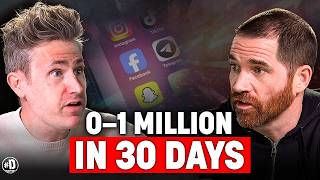
Brendan Kane, who built a million Facebook followers in 30 days, explains how algorithms optimize for attention and which storytelling formats actually work. He breaks down the psychology behind what keeps people scrolling and how creators can use it without losing authenticity.
Questions this video answers
Yes.
Facebook.
About 100,000 pieces of content.
15,000 hours.
Over 500 formats.
Chapters
With one of these, you can reach millions of people. Could it be the thing that launches us into World War Three?
Is it true you went from zero to a million followers in 30 days?
Yes.
Tell us how you did it, and then can you tell us how you do it today?
Focus on one thing and one thing only. If you focus just on that, you will become successful. Governments are definitely manipulating these platforms.
I'm forced to do that by the algorithm.
Not forced to go. You choose to do it.
All right. I've got a therapist already.
The algorithm is a mirror of.
You will AI what, wipe out personal brands?
Yes. That's where the real scary stuff comes in.
I'm quite scared. Are the algorithms manipulating us?
It's a great question. I would. First, let's define, like, what the algorithms are, because there's a lot of myths and demonization about the algorithms. They serve one purpose and goal, and that is to keep people on the platforms longer so these platforms can serve more ads, which.
Which sounds like manipulation to me.
They are manipulating us to keep us on the platforms longer. Yes.
Yeah.
Are they manipulating the way that we think and our politics and things of that nature? That's a whole nother question. Because we have to remember the algorithms don't actually create content.
Human beings create content, but the algorithms can suppress content.
Yeah.
Did Mark Zuckerberg recently come out and basically admit it?
Yes. Yeah, he did. He said, at the behest of the US Government. However, we have to keep in mind that over a billion pieces of content are posted across these platforms every single day. So we're talking about a fraction of a fraction of a fraction of a fraction of a percentage. Now, should they be doing that? Yeah, we are.
I mean, how do we know?
Because we see that in the data. We see that in all the content that's pushed out there. So is it right, what was done? No. Did Zuckerberg do that on purpose? No, he was forced into that.
But again, it could have resisted, couldn't he?
It's very difficult to resist the US Government and the presidency of the United States to say, we're not going to do that, because. Yeah, okay, government regulation and controls come in. So could he have. Does he have a choice in the matter? Yes. But are there consequences with certain choices that you make? Absolutely.
Right. So really, in a lot of ways, then, how the algorithm is. Is based on who's the president.
For a very small percentage of the content that is published. Yes.
Yeah.
So but again, look at. Let's just look at Mr. Beast. He is the most subscribed person on YouTube. Is he the most subscribed person on YouTube because of who is in the presidency's office? No.
No. But he also has got PG content, so.
Yes, but still. But that's where we have to kind of delineate, like, what we're talking about in terms of the algorithms or these platforms suppressing content. Are they suppressing certain types of content? Yes. Is it right? No. We can get into the whole argument about free speech, but we're talking about a such a small percentage of the content that is published across these platforms. They are there to manipulate our attention. They are there to manipulate how long we spend on these platforms. That is proven. I mean, these, these. They're literally using psychology that casinos used to keep people, you know, with the slot machines and keep gambling. There's variable rewards and there's deep psychology built into this. They have teams of human behavioral psychologists that keep training the algorithms and training people to be addicted to these platforms. So that in and of itself is definitely true.
Right. So there's like five roads I want to go down here, and I'm going to try and go down each one. So the first road is when you have a conversation with someone and then you go on your phone and go on social media and there's an ad or content directly linked to that conversation you just had. And the first time you saw it, you thought it was a coincidence. And then it keeps happening. Is that manipulation of the algorithm?
Is the phone listening to us? No. Is there manipulation of all the data and all the interactions of all the people and the places that we go and the things that we do? Yes.
You don't think the phone is listening to us?
No, because. And there's a few reasons. Number one.
So it's just a coincidence every time?
No, it's. They're the smartest behavioral mapping data people in the world. Like, you've got to understand how much money these platforms are making and how big of a team and data scientists.
And how much budget you have.
Exactly. I mean, these people. This isn't like back in the day when we remember, like MySpace and Friendster, where they were just kind of throwing stuff at the wall and hoping, like, something would stick. Like, these companies are super successful for a reason.
Yeah.
Now, the reasons I listen, I'm not on the inside. This is from my interpretations and everything that I kind of see it being in the space for 20 years.
Yeah.
If the phones, or let's just. If the social networks were listening to US, Facebook, Instagram, TikTok, WhatsApp number one, the mobile devices, iPhones, Apple would have to be in on it because they cannot do these things without that permission. And we know from Tim Cook and Apple they are vehemently against these types of practices side I say but what do they have to gain out of it?
Billions of dollars?
No, no, of course they do.
If they can listen to our conversation.
No, I mean in terms of supporting social networks doing it, if they wanted to do it, why would they just harness that technology for themselves? Why would they let everyone else do it? I, you know, because they have like for example imessage is a social network. People don't look at it that way. Yeah, but they would knock out the ability for all these other platforms to do it and then just keep it for themselves. That's the way that I look at it. Number two is do you know how much battery drain we would get if it was actually listening? 247 we get battery drain anyway. I know, but on top of that, like do you know how much data would need to be processed and how much would need to go into it? Yeah, but no, I don't, I, I don't believe that it's listening.
Okay.
Devices.
The, the skeptical part of my brain based on what's happened to us in humanity over the last five years and six months, the conversation we were just happen. I wouldn't be surprised. But that's fair enough. Okay, so the phones aren't listening to us. Okay. Next road down the algorithm though is when whenever you look at anything, you get a load more of that.
Yeah.
Is that, is that manipulation?
Well it's again, it's manipulation to keep you on the platforms longer because I'll.
Tell you what pisses me off. Pisses me off when I've followed A, B, C, D, E because I want to and I'm getting E, F, G, H, I that I don't want just because I stop and have a quick look at. Why is this being shown on my feed?
Well, you can just retrain it. You just start looking at the other content again, it'll start serving that content to you.
So first point we definitely agree on and that is the amount of people that hate on me on LinkedIn. And about once every 10 days I intentionally do a really positive happy post. Undeniably sunshine and rainbows. No one watches it, no one listens to it, no one comments on it. And then the death of the uk, the death of London, something about the algorithms and millions of people watch it and the haters come in and Hate. And they don't get the irony. Why don't you just comment less on what you don't like and don't want? Unfollow it. Give the algorithm some feedback. No, I'm not interested. Follow and engage more on what you do. And then is the algorithm going to be a mirror of you?
Well, the algorithm is exactly what you said. Just said. It's a mirror of you.
Say that again.
The algorithm is a mirror of you.
So if a lot of people aren't happy with the algorithm, so they're consuming.
Other content, so they have to look.
In the mirror then and take responsibility. It isn't the algorithm. It's the algorithm that's showing you what you chose to look for. Yes, yes, but there's no but there is about the. For you feed the stuff that you get pushed on without checking it out.
Again, they're pushing things based upon the behaviors that you're implementing on.
So it's not just random.
Nothing is random. Nothing is random in these platforms. The reality is, again, these platforms are built and designed to make money and they print cash. Why? Because they make you addicted to the platform. So why is the algorithm, if it's designed to keep you on the platform longer, going to see content that you don't want to watch?
Because it might have an ulterior motive, like whatever party it wants to get in power.
But why would it. Why would it go after that alternative motive instead of printing cash? And again, we have to look at content like Mr. Beast. Why is he the most subscribed person on YouTube?
Because he has spent, what, 15 years mastering it.
Yeah, but if it was all about the demonization of humanity and putting people in power, political motives and things of that nature. It's not even just his main channel, his philanthropy channel, which he gets a lot of hate from, which is. Yeah, says something about what we were just. What you were just talking about has 28 million subscribers. Yeah, but then there's other positive people out there that are having, you know, like, there's like channels like the Dodo, which is all about rescuing animals and things of that nature. You know, there's people like Mel Robbins and Tony Robbins that have success and attention. So like you said, there is this vortex. And I think we need to look at ourselves as human beings of why are we attracted to the negativity and that polarization of diving into it with our comments and our attention?
I just think that. Is that not just human nature? Are we not wired to be more attuned to a threat than a reward.
I think you hit it spot on. So if we think about like what people think, social media is this like brand new invention. Yeah, it's just storytelling at scale. So when was the first story ever told?
Probably around some fire. 10,100, about 50,000 years ago.
But what were those stories? They weren't fairy tales, they weren't political conversations. They were stories about survival, how to hunt, what to fear, how to build tribes to protect ourselves. So stories from the very beginning stage of us are built on survival, are built on fear. That's ingrained in the human DNA.
Right.
So in some levels it does make sense. Now the question we have to ask ourselves is can we evolve beyond that? Where that doesn't have to be the core aspect of.
According to. According to you, we've had 50,000 years and I don't think we've done very well, have we? We haven't, no. But then maybe it's also cyclical because I face many dichotomies, demons, you know, existential crises as a creator, because I used to be an artist and, you know, I think about these things deeply and I know if I post anything about the death of the UK or how bad a digital ID or a cashless society is, I know I'm going to get millions of views. And on the one hand, I really believe it's fucking important to talk out about these things because if we don't, then we are going to be completely controlled. On the other hand, I feel like, am I feeding my own doom and do I become a doom monger and am I really serving people? And do you understand the I honor?
Well, the first question is, are you providing value with your perspective on those subject matters? Are you helping people find the clarity that you believe that they need to find through that message being shared?
Okay, so that makes me feel better because the answer is yes, because I put, I intentionally put solutions at the end of all my content. Sometimes people miss it, they just see the problem and not the solution. But I always put solutions and I get hundreds of messages a day with people saying, look, you know, you're brave for speaking out. Thanks for speaking out. Really love the work you do. Keep doing the work you do. So surely the best metric of if you're providing value is what people tell you. Yeah.
So there's a difference between what you just walked through and what you're doing and doing clickbait to just garner the attention.
But I also know the game.
I know, but that's, you know, so.
Sometimes I feel a Bit dirty.
But again, it goes back to why are you doing it? Are you doing it just to manipulate attention and people, or are you doing it to try and help people on their journey?
If you want. Do you want the honest answer? Yeah, both. Because if I don't get views I can't achieve.
Okay, but there are thousands of ways that we can get views. We did, you know, we had a strategy session together a few weeks ago. Like, for example.
Okay, so now let me. Let me rewind, not retract, rewind. I am not creating any content to manipulate because that was the word you use. Let me state that. But I want to get maximum views. And so I know how to use certain words or images or phrases or themes that will get attention.
But that's a form of manipulation. And I'm not saying it's necessarily probably more.
I'd probably more call it influence than manipulation.
Mass persuasion, which is a form of manipulation. And I'm not saying that in a negative way.
Well, yeah, we're kind of getting into semantics. Yeah. But I have to get in with the thought thesaurus and look at that. Okay, maybe you could. But then at the same time, I'm forced to do that by the algorithm.
You're not forced to do. You choose to do it. Let's just take an example of somebody.
We talk about, a fucking therapist.
But let's talk about.
Okay, I. I am influenced and manipulated to do it by the algorithm because if I don't, my content doesn't get any views.
I disagree.
I think you do.
Let's talk about. Let's talk about somebody that we talked about in. When we had what was a coffee in London, your friend Simon that was memorable for you. Your friend Simon Squibb. Yeah. He's doing man on the Street. Positive.
What is your dream now? A lot of his stuff is, you know, fighting against the education system. He's picking fights online.
If you look at the things that go viral and break through, it is about exposing people's failure to pursue their dreams. There is an underlying positive message. Now, does he do those political things? Yes, but if you look at the views on those political things, they. They completely bomb to the positive nature of it.
Yeah.
So I just completely disagree that you have to go polarization, complete negativity in order to break through on social media. There are plenty examples that you don't have to. Again, Mr. Beast Philanthropy Channel. If it was all about that, then why is him curing a thousand blind people going viral? Why would that ever go viral? If it was all about the polarization and negativity about content, the dodo, about rescuing animals from animal shelters that are about to be killed and things. Why would that ever go viral?
So I agree with you to a point, but then I could just say, well, go on X and find a positive post on X. You won't find one. And it's all polarization that goes viral on X. So for the argument that you're creating in the positive, which could be the.
Outlier, I'm not saying that negative doesn't go viral. I'm not saying that that's not the case. I'm not saying that you can't find millions of examples of negativity going viral. Billions. What I'm saying is there is an alternative route to it. Positivity does and can go viral in the uk.
Can it?
Yeah. On social media it does.
Yeah.
Because this is, I mean like our team has spent 15,000 hours researching content. So I'm not looking at this from the standpoint of somebody that just started becoming a social media manager two or three years ago.
Yeah.
Like we have done the hard research and when we work with clients, not a single time do we ever recommend something that is negative in nature and they have massive success. We've generated 60 billion views and 100 million followers for our clients. And it's not predicated on negativity.
Do you, do you mean zero negativity? Because polarizing isn't necessarily negative, you know, and a fear or pain based headline isn't necessarily necessarily negative. Like for example, warning about the upcoming recession and crash, which I think is coming high, likely to come. You know, people are. If I said, oh, you know, make some money in these times, you know, get rich in, you know, this moment in history, no one's going to click it. You know, if I said house price crash warning, people will click it. That's not negative. It's just the slant and angle of the headline that people react to.
Do people react to it? Yeah. Yes. Yeah, yeah, yeah.
And as someone who's taught people money in business for 20 years, most people do nothing until things are bad. You know, with their finance, they do nothing until it's bad. So you have to warn them of the problems because otherwise wouldn't they all just be wealthy and rich?
Yeah. But even with those warnings, do they become wealthy and rich?
Well, more of them make the change. Like more and more people now are investing in silver and gold because of what's going on in the world. And long term, silver, gold.
What percentage though?
I mean, Well, I haven't got the data.
Yeah. How would you get that? I'm not disagreeing with what you're saying, by the way. I'm just saying. No, I am just saying that there is another side to it. Yeah. Is we all kind of. Is the thing in. Even like Mark Tilbury, who we talked about, Cody Sanchez, who we talked about, like, are they overtly negative in their messaging in terms of Mark?
I mean, Cody's sometimes plays the polarization game.
Polarization versus negativity are two different things, though.
Like, I think that's what I was saying first.
Yeah. But I think we need to make the distinction here because. Because I hear a lot of what you're saying is social media is just a cesspool of negativity. That's the only thing that will break through. It's the only way to have success. What?
I think I said those words, but.
I'm not saying that you said that. I'm saying that that's what I hear a lot.
Yeah.
And I just want to kind of point that out.
Yeah.
I'm not here to say that those things don't work. And I'm not here to say that there's not a ton of it.
No.
I mean, I'm here to say that there is another side to it, that you don't have to go down that route in order to be successful.
Yeah. And we also did say that the Algorith is like a mirror, like a reflection of you. And, you know, going back to my existential crises, I have maybe that I'm exaggerating slightly, but these things do sometimes keep me up at night. You know, if you're an artist, you probably want to feel like you're doing work that's true to who you are as an artist and what you want to say. And you don't want to feel like you're churning out a load of prints just to for, you know, make some money rather than paint original pieces. And, you know, when that hangs up, up on in the gallery and someone criticizes it, you know, you can stand behind why you think it's a good piece of art. And I find that social media just, you know, sticks the finger in the wound of that. And fundamentally, your question to me was, do I feel like I'm doing good work? Mostly, yes. Because of course, we will sometimes post something that's. Sometimes you interview a guest, you're like, what's that? Right. But I. Because I'm in the game now and I know the game. I can have a choice between, you know, how to get rich and happy or warning recession looming. I know which one. You know, it's undeniable which one's going to get the most clicks. And if I don't play the game of getting the most clicks, it's like me painting all my paintings at home and never taking them to a gallery and now we're never seeing them.
Yeah. I'm just saying that there's different ways to play the game. There's different contextual ways that you can shape those things. Like, I spent two years in journalism working with one of the biggest journalists in the United States. I know exactly what you're talking about. I tested 70,000 pieces of content. I know what works, what doesn't work, and things of that nature. Well, you laid out, will that work? Yes. Are there 10 other ways that you can contextualize that that doesn't have to be overtly negative in order to do it? Yes, that's. That's all I'm here to say. Now, I think the interesting conversation is like what we talked about in terms of, you know, storytelling in human history is people are up in arms about social media and thinking that social media is destroying human civilization. But if we look back over the course of human history, it's just history repeating itself. Is again, why do we overtly like negative content? Think about back to the Roman Empire, sitting in the coliseum watching people kill themselves or kill each other for. For entertainment. If we look at what was, what was predating social media, we had like tabloid magazines, we had, you know, news organizations, we had newspapers and magazines that controlled the distribution of what the messages were talking about. We're going out into the world, and if we go back in human history, they are doing the same things that you're talking about, manipulating the perception of human behavior. What we think, what we feel just through other mediums. The only thing that social media has given us is it's truly democratized communication to the masses.
Decentralized it. Yeah.
Meaning that any one of us, like.
You and I here now, like you and I. Yeah.
Like 30 years ago, could we be reaching and talking to as many people without a massive team, a massive budget, a TV deal and things of that.
Yeah. And a huge studio like the BBC. No, we couldn't. And now we can.
Yeah.
And I think that's a great thing.
Yeah.
Do you.
I think it's an amazing thing if we understand it. Because to your point is now that, you know, with these things in our pocket, every single one of us has one of these I'm telling you, that's.
Fucking listening to you. Yeah, I'm telling you.
So but with one of these, with one of these, if you tell the right story in the right way, you can reach millions of people. Now, that can be used for good or that can be used for evil. And as we also forecast into the future with deep fakes and AI, the real question then becomes, and I'm not saying it is, could social media be the next weapon of mass destruction? Could it be the thing that launches us into World War Three? You know, governments are definitely manipulating these platforms in order to. Yeah, I don't know the ins and outs, but there's a lot of clues that, you know, China is leveraging TikTok in America to collect a lot of data on individuals and probably doing nefarious things with it. So there is an immense power that has been created. And the real question is, what does the future of humanity look like with that immense power? Is it going to be used for good or is it going to be used for bad? Now, again, the only difference between past and present is you. I the average person on the street can reach millions and millions of people with whatever message they choose to put out into the world.
Silver has crashed. It's back to its price in 1974, and I'm going to buy more. And if you'd like to learn how to invest and build multiple streams of recurring income, I recommend you join Money School. Money School is my global financial education platform to help as many people on this planet get better financial knowledge. For less than four Starbucks coffees a month, there are hundreds of hours of courses, resources and masterclasses going back a decade to teach how to make, manage and multiply money and gain financial freedom. So join thousands of other money and freedom seekers on the link Money School and start today your journey to financial freedom and more money. I want to ask you in about a minute to talk through Your experience of 20 years in this game and you know why we're talking. And then I'd like you to say, what would you do if you were starting again on social media to build a big audience and, you know, be a creator?
So when I started, social media was 2005. So at this time, MySpace was a prominent player. There's 25 million people in MySpace, about 6 million people on Facebook and YouTube was going into its first year. So back then, social media was super simple. You get somebody to follow you, you post a piece of content and people see it.
You DM each other on one platform.
And they, yeah, one platform and they hear you, they see your message. However, as social media grew, there was more and more people added it. By 2010, we were at a billion people. Today we're at 5.2 billion people across these platforms. So in my experience, the big thing that happened is the algorithms, what we've been talking about. Cause the algorithms didn't exist in the beginning. It was just post and be seen. But as more and more people came on these platforms, there had to be a decision. Because if we open up our favorite app right now, there's probably 150,000 pieces of content that could be seeded to you based upon all the people you follow in the content you've engaged with. They can't see that much content to you. So you're saying, so it has to prioritize.
There had to be an algorithm.
There had to be to prioritize what you see first. What are the first five or ten pieces of content that you see in that? So my experience over the past 20 years is really dedicated to one thing and one thing only. Understanding why some stories break through, go viral versus why some stories fall flat. Because social media is not a mystery, it's not a black box. It is storytelling. The best storytellers rise to the top. Whether you agree with them, you don't like them, whatever it is, the best storytellers rise to the top. It's literally survival of the fittest of the best storytellers. So in terms of how I would approach it in terms of content, if I was starting from scratch, starting from zero is everything that I look at is from a storytelling lens. And on social media, there are what called formats, which are structures that have proven to succeed time and time again. So we mentioned Simon Squibb. He uses the man on the street format. That is a format that can be used across any industry, any sector. Now, the interesting thing about that format is, you know, the first time that.
Was ever used, well, you told me, so I'm going to pretend like I.
Don'T know, but 1954, the first season of the Tonight Show. So 70 years ago. So this is where again, it goes back to storytelling. And social media is not something new. It's history repeating itself.
Just the vehicle.
Yes.
Yeah.
So essentially, the way that I look at social media and what I would recommend doing is find the format that represents who you are, that's authentic to who you are, and the message that you want to represent, and then study it in depthly what makes that format tick. Because everybody, as they look at Social media, they're looking at the iceberg analogy, the tip of the iceberg. They only see the top 1% breaking through, not the 99% of people failing. So, for example, at our company, what we would do with man on the street is we open up a spreadsheet. We put 20 of the high performers, 20 of the average, and 20 of the low performers. And we've done this specifically with Simon Squibb. And we'll spend about 15 to 20 hours cross analyzing what's the difference between him using that format and generating millions of views versus him using that format only generating a hundred thousand views. So we look for these things that are called performance drivers, that drive performance up and drive performance down. So it's things like pacing, tonality, the hook, the first three seconds, tension. Is there a perspective shift? What's the effect on the viewer? So if you want to start from scratch on social media, focus on one thing and one thing only. How do you become the best storyteller possible? And the best place to start is to find the format that matches the message, matches your communication strengths and weaknesses, and feels authentic to who you are and what you want to represent.
Okay, so we've got to know each other. Well, we knew each other a few years ago, but we've connected because from my side, I feel like I want a bit of help to find what is that one style? But I struggle with the one style. I like doing content on the move. I find it quite easy. I don't really like doing scripted content in the studio. I've done a bit of scripted content in the studio and that's blown up. So that makes me want to do more scripted content in the studio. Images work well on Facebook. My shorts can be repurposed on multiple channels. There's like three or four different styles of shorts we're doing. I did some man on the Street. It blew up. But that's A Man on the street is some of the highest investment of time to create content. It's difficult with, you know, I'm a busy guy, so I suppose you would look at my content and go, well, it's a. I'm doing fucking everything. I don't have a style. Can I still succeed as a creator or have I got to create one style?
Well, number one, you are succeeding as a creator. So that's. It's just. There's levels to the game. It's like, how, how good do you want to be? How. How high do you want to break through?
But is the real question is there Also, who are you as a person and what's the context of your life? I'll give you an example. If I go live, I would say 5% of the time I fuck up the content. If I do a one minute pre record, I would say 5% of the time I nail the content. And I don't mean posting it and it getting views. I mean actually just doing it. I did a one minute video outside Starbucks and it took me 93 takes 93 to do a one minute video. And in the end, the only reason I fucking finished it is because I'm stubborn. So this is my deleted folder here. I don't know if you can see that, but there are hundreds of up one minute shorts. But if I go live now on Facebook, it gets virtually no views because Facebook aren't pushing lives anymore. I was getting millions of views a day on lives, they're not pushing lives anymore. So I don't think it's as simple as pick your style. Do man on the street get the best at it. Or maybe it is if you're like that kind of person. But I'm not that kind of person. I don't want to do 93 takes for one minute video. You and I here, we're just doing this, we're chatting, it's natural. And we can get 100 clips from this. Do you see what I mean?
Yep. But this is a format. This is one of those formats that you can explore, you can express.
So you're saying I should do this and nothing else?
No, I'm not saying that. I'm saying that find the format that matches what you want to do and master that.
Okay, so for me, live content, but the social media channels, like, they're not bothered about.
But why does it have to be live? This is.
I'm only answering your question.
No, but this is. This is not live.
No, but you're changing the context of the question because.
No, but live is not the format.
Well, no, live for me is the format.
It's not a format because anybody can go live and not use a format. There's different formats within live. So just because you go live doesn't mean it's a format. Anybody can click record and go live. I can go live on Instagram and just, you know, talk about anything. But. And again, it's like you look at like Twitch streamers. What percentage of Twitch streamers are successful?
I don't know, but I guess it's less than 1%.
Yeah, but then, because again, mastery of a specific format.
Yeah, yeah.
Like, you know, but this is essentially live in a way. What you're saying is you don't want to be scripted. What you're saying is you don't want to be constricted to confines of doing content in a specific way.
I'm saying I find it a lot harder because I will do it if I get rewarded with reach, engagement, and positive impact. And like, I stopped doing Facebook Lives probably three months ago. And because I was doing good content that would have got millions of views pre and post Covid. And now we'll get 20 or 30,000 views and it will take three days. Like, I disagree with you that it's not a format. Because if sitting in the studio and doing a voice over for a, like an AI edited overlay is a format, then so is going live. So you can challenge me in a minute. Let me just finish. So like, for me, I can go live. I know what I'm gonna say. I don't need a script. I hardly fuck it up. Bang, let's go. And I'm getting millions of views. Then overnight I go live. I don't get any views anymore. But I'm the live guy, so let's just keep going live to no one. No. Okay, I've clearly everyone's reels. It's reals, Rob. It's got to be reels. Now do reels, Rob. My team, Rob do reals. You don't understand. It takes me 93 fucking takes to do one reel. And if you did, you would ask me. But I do them anyway because I want to get my message out and I want to be successful. And I'm a stubborn. But I don't want to do reals. But the social media platforms are. It's the only way I can get views versus lives.
But it's not. First off, you know, you're going to.
Be in a therapy session when you.
I love it. I love it. Number one, if you want to go live, go to Twitch. I mean, the whole platform's built for that. But going live is not a format.
It is a format.
It's not. How is it a format? What's structured? What's the structure? Because, like, I can go live right now and just sit here, you know, like watching me type on a computer. You can go live and give a monologue. Somebody can go live and have a Q and A. Somebody can have go live and start breaking down news clips. Like there's formats within the structure. Yeah, live is just a feature. It's not a structure of storytelling. So, like let's just. Let me give you an example. Let's just say that we turn these cameras on and we were going live.
It'd be even better.
Okay. But what's the difference?
I like a live audience. I'm natural, and I overthink. Okay. So if you, like, you know what.
You could do is you can have a live audience in here. There's nothing saying that you can't. And I'm saying, like, a good friend of mine, Myron golden, he literally does. Lives twice a week in his studio in Tampa, and it performs really well.
Yeah.
You're so focused on live as a feature instead of looking at it from a storytelling perspective. In terms of what you said, in terms of your frustration of reels, then stop doing that. When we talked before, we said, man on the street. You don't have to do that. You don't have to go and read off a template prompter. You don't have to read off a script. We've analyzed over 500 storytelling formats. There are so many to choose from that can tap into what you want to do. I think what you're doing is you're. I'm feeling the frustration because you're doing things that you don't necessarily want to do, but you're seeing success with it. And that. I've seen this cycle happen time and time again with that.
That's kind of like what being an entrepreneur is a lot of the time, isn't it?
Yeah. But there's some level of enjoyment there. Otherwise you wouldn't do it.
Yeah.
And I. I'm an entrepreneur, too. It's the hardest fucking thing you're gonna do in your life.
Yeah.
But we do it because we do love it on some level.
Yeah. And I shared my frustration. Like, I'm not expecting anyone to cry me a river. And it makes me rich. And I'm overall very happy. I would like to find my format and be in the flow.
But I. I love that you're crying me a river. Because what you are saying can be fixed. There's a solution to it. You don't have to keep doing what you're doing and sit there and do 93 takes. There is no reason you have to do that.
Yeah.
What's keeping you a prisoner of this is the success that you've seen.
Yeah. Yeah. Success can be a trap.
Yes.
Yeah. So what? So are you saying fuck the algorithms, Fuck the response, fuck the views. Just find your format and go. And just have faith and think. Think long term and push through what.
I'm saying is ignore and push all those things to the side and focus on how do you become the best storyteller possible. And I promise you, if you focus just on that, you will become successful.
Okay, thank you. I feel like I can do this now.
You can do it.
Will I wipe out personal brands and creators? You're seeing more and more faceless content. Like I unfollowed, think it was Lad Bible or Unilad, because they're posting a lot of stuff now that's just created by AI and it's not real to me anymore.
I think we have to ask ourselves, what timeline are we talking about here? Are we talking about five years from now, 10 years from now, 50 years from now, you know, in the next five or 10 years? I don't think so. I think AI well, you know what the biggest decision is going to be that controls, that ultimately controls what happens with this is the social media platforms, are they going to allow 100% AI driven content?
Because didn't YouTube recently ban it or.
No, the CEO just literally came out and said, why should we panelize content for being 100% AI generated?
Oh, oh, so they've done the opposite.
Yeah, I think initially they said that what they were trying to protect against is content farms. People just seeding like tens of thousands of, you know, crap content to these platforms. But the CEO recently did an interview, the CEO of YouTube recently did an interview, was like, why should we penalize content that's 100% AI?
Because it's not real, it's not human, because we don't know what.
Well, let me ask you more.
If it's true, if it's authentic.
Okay, well, what about animation, movies? Is that real? No, I mean there's real people writing it. There's.
Yeah. Voice acting and there's the storytelling models behind it. Yeah, I mean, it's a good question.
And to be honest, it's just like these platforms will dictate the future of how we interact with this. My personal belief in the next five to 10 years, I think that there's always going to be a demand for person, you know, like a real person. I think that there will be a demand for AI driven content. Now, if we're thinking 50 years from now, I have no idea.
Yeah, because like a piece of content that I've been seeing on my feed a lot is like a supercar and then a horse or a bull or an animal crap, you know, walks all over it and it's obviously AI. I'm like, get off my feed.
What's going to happen three years from now when you can't tell that it's AI?
Well, this is, this is why I asked you the question. Yeah. And it's dangerous.
It's a very. Because when we talk about like, because then social media being a weapon of mass destruction.
Yeah.
If you're putting out deep fakes or even if they master deepfakes, if you're putting out, you know, some type of video of something happening in Ukraine or China or something that triggers people into action. You know, just think about what recently happened with Charlie Kirk's assassination. Imagine a world three years from now where we have all of this AI driven content and at that point we can't determine what's real and what's not. That's where the real scary stuff comes in. And that's where it's like these platforms have to make some tough decisions about how they're going to police content that's not real. Now at the same time.
And what's your opinion on that? Like put a flag in the ground. Should they or shouldn't they police that strongly?
I think they have to police it strongly, but I think that there has to be some technology built that, that controls it on the blockchain in some way. However, let me just point out one other thing.
Okay, I see how you're.
No, no, no. Because this is a major concern. It goes back to your concern about social media in general is how much fake stuff is being put out there today by real people.
Yeah.
I mean there's, there's real people disseminating false information, fake news, things of that nature. Now what AI does is it makes it a lot more scalable and quicker. And quicker.
Yeah. And, and it could be faceless, which means the scammers can hide behind it.
All, or you can have a face and somebody that performs at a very high level, that looks calm, collected, versus some nut on the other side of the Internet where you can totally tell this person has no idea what they're talking about. But the reality is we have a problem with disinformation today. Now, how you police that, it's a challenge because like in America you have freedom of speech and it's just like, well, then who's going to be the bearer of.
Yeah, you don't really have that in the uk. Yeah, yeah.
But it's scary and I don't know what the future holds. I think that at least in our lifetime, I think that there's always going to be a demand for in person or authentic connection with people. Because we still even coming out. Post. Covet. Because before COVID you were telling me you guys were doing all these events.
Yeah, post.
Yeah, post Covid. People are coming together. They want to see things in person. They want something real and tangible. Like you look at Taylor Swift's tour, like how many people turned out for that thing because they wanted somebody real. Now, does that mean the next Taylor Swift may not be maybe an AI character that people buy in? Yes. But they can't replace that in person experience and that connection with an actual human being.
Yeah, I'm quite scared.
Yeah. I mean, it is scary. But there's hope with it too. I mean, it's not all negative. Again, the reality is these platforms has democratized communication to the masses. So we just hope that people with a positive message, people that can transform the world in a positive way, will get the platform to do that now because they have the tools accessible to them.
Is it true you went from zero to a million followers in 30 days?
Yes.
Really?
Yeah.
And what platform was that?
Facebook.
Okay, can you tell us how you did it and then can you tell us how you do it today if it was different?
Yeah. So the way. So it's not like I just woke up one morning and did this. I have spent years working with movie studios, journalists, professional athletes, actors and celebrities. And I was just testing everything. I was testing. I probably tested 100,000 pieces of content, just kind of understanding what worked, what didn't, things of that nature. And one of the things that, that before I did it, that really was an eye opening experience is I worked with this journalist, Katie Couric in the United states for about two years. And I did about 220 interviews with her everywhere from Joe Biden to Jessica Chastain to DJ Khaled to Jay Leno, all across the board, even Kim Kardashian. And the fascinating thing that I saw in the data and all the testing is celebrity wasn't moving the needle. It was the underlying story that drove it. Like, the most viral video we did was with a guy named Brandon Stanton, the founder of Humans of New York. And over all of those interviews. So it just seeded. The idea in my head is like, okay, you know, because when I would talk to people like friends and colleagues, and I said, hey, I'm seeing a pattern here. Like, you can create an audience from scratch if you're not on tv, if you're not a celebrity or any of these. This was back 2015, 2016. So it's not like what it is today. Where everybody and their mother is talking about social media management and virality and all these hacks and tricks and things. So I just looked at all the data and I said, okay, I'm going to run this experiment of demonstrating that anybody can build an audience in a short period of time. And I thought about, well, who am I going to do it on? And I thought, why not myself? Because I wasn't on tv, I was behind the scenes. So I used it purely as an experiment. I didn't use it to turn myself into an influencer. So I leverage everything that we talked about. I identified the formats, I identified the structures, and over the course of 30 days, I just kept testing, refining, testing, refining different content, different messages and things of that nature. So for me, I was testing like podcast clips, motivational quotes, you know, certain formats about talking heads and things of that nature for me to test what it would take from people, starting from scratch, to build a million followers in such a short period of time. So it wasn't like I had this grandmaster plan that I'm going to turn myself in the influencer of this specific niche or space. But to your latter question of how anybody can build an audience is spend as much time as possible identifying your format, researching and analyzing that format and getting good at storytelling through that. And if you do that, you could probably scale faster than I can. Like I know somebody, you know. I think he, a friend of mine used the man on the street format for photography and he had already been successful on TikTok, but he took those videos onto YouTube. Alex Stemp.
Yeah. Yeah.
So he built an audience of 20 million people.
I think he did it really quickly.
Yeah, so. So he's a good friend and we've done some, some work with him. But when YouTube shorts first came out, I think he generated a million subscribers and YouTube shorts using his pre existing content of that in like 10 or 14 days. It was something crazy.
Well, when Mark Tilbury, when back in the clubhouse days, he did this format where he'd put like a wig on or something and two characters, one label.
We call it.
Yeah, what's it called?
We call it two characters, one label. So to explain to everybody, you play two different characters.
Yeah. And then. Because then everyone was copying him. But of course he wasn't the first to do it, although would like to say he was, but yeah, that character blew him up.
Yeah.
And then once he'd blown up on one platform, which was TikTok, he was able to convert that over to YouTube.
Well, I don't, I Wouldn't say he converted it to YouTube. He used the content on YouTube. That drove the audience.
Yeah, but I saw both, I saw both him and Simon do it, whereby they got really big on TikTok and they were driving the traffic to YouTube. They were using it.
It's a small percentage of the growth. The content has to carry the weight. Right, okay, yeah, but, but you know, one was the first time that that two characters, one light bulb format was used 1400 BC, 1920s by a comedian, Buster Keaton.
Right.
But you know who did it that most people will know is Mike Myers in Austin Powers.
Yeah, yeah.
Where he played Austin Powers and Dr. Evil.
Yeah.
So again, it's history repeating itself. People like to think that social media is this brand new thing.
Yeah.
But it's just pure storytelling.
So in addition to mastering one format, what else can we do to grow as a creator or leveraging social media?
I would say it's interesting, I would say kind of a little bit. What we talked about is understanding human behavior, understanding, you know, communication and connection. Because why do people buy into creators is because they feel some type of connection to them. So I'll give you an example is when I was first starting on social media was like, it was like 2007, 2008, there was like an article in Variety magazine that came out where they polled teenagers of who their favorite celebrity was. And like four or five of the top ones were YouTubers at the time above, like Leonardo DiCaprio, Robert Downey Jr. Why? Because there's a big difference between when you watch somebody on film in a passive experience versus when you're watching somebody on social media where it feels more active, it feels more intimate. One of the biggest mistakes, you feel.
More connected to them. Yeah.
And this is so I worked with Taylor Swift very early on in her career and one of the things that is the reason for her success, and it's not because of anybody else, it's because of her, is she realized that social media is a one to one platform. People think it's a one to many, but it's one to one. So you think about when we are consuming social media, we're on the train, we're on the bus, we're on the couch, we're not sitting in a stadium, we're not sitting in a movie theater. So the more that you can understand how to communicate and connect with that single individual on the other side of the screen and realize you're not speaking to a stadium, you're not speaking to millions of people, but you're connecting to one person, you're building that relationship with them. That's when things really start to break through.
Yeah. Yeah. Because I remember when I launched my podcast, it was really weird because people would come up to me and say, rob, I feel like I know you. Because they've consumed 10 or 20 or 30 hours of listening to me through their own choice, as opposed to being slammed an ad. And it completely makes sense to me now why people connect more with creators than they do movie stars.
Yeah.
Because, you know, movie stars are. But it's also very distant. You don't feel like you know a movie star. You feel like you know a creator.
But also the way that this format is set up, and only when it's successful, if you. And you're successful with feels like you're in the room, listening into a conversation, it feels like you're there. The podcasts that are not successful, it just feels like an interview.
Yes.
This is what makes Joe Rogan so successful is like, it feels like you're literally in the room with him. And the same thing with this. It feels like you're in the room with you. That's why they have that deep connection with you. It's not just the amount of hours they spend with you, which is a contributing factor, but it's the environment, it's the experience that you create within this format that allows that to happen.
Thank you. How important is attention? You know, they used to say a few years ago, it's the attention economy. How important is it?
It's everything.
Okay, so should we go and create a criminal offense in order to get attention?
No, I said attention is everything. How you get attention. There's different ways that you can get attention, and we talked in depth about this. There's. I lean toward doing the positive ways of capturing attention, choosing formats where you're spreading positivity, you're motivating, you're connecting with people. You're not using clickbait or negativity on purpose in order to manipulate them. But attention is everything. Because no matter what business, no matter what industry you're in, if you're not gaining the attention, your competitors are.
Yeah.
And you will just ultimately lose to that. And I'm assuming that's why you're doing all these podcasts while you're taking 94 takes and pulling your hair out.
Because 93.
Okay, well, we're gonna do one more after this.
No, we're not. That would break me. Yeah. So what you're saying is attention is everything, but you're not saying that all publicity is good publicity.
Correct?
Yeah. And I. And I agree with that because they used to say that, didn't they? Yeah, but I don't think Prince Andrew would think that all publicity is good publicity, so. But attention is everything. I kind of the analogy for me, because I used to be an artist is it's like being an artist, but no one's seeing your work. Are you really an artist?
Yep.
And surely a part of artists. Being an artist is great marketing. So you can get as many people as possible seeing your art. And if that means making a controversial unmade bed and defecating in it, or cutting up a shark and putting it in a tank for people to go, that's not art. Oh, yes, it is. Oh, no, it isn't. That's a part of the art. So I would say that attention is part of the art.
Yeah. I mean, you look at a thousand percent is look at Banksy.
Yeah.
Banksy's not the most talented artist ever, but.
But he does stencils.
Stencils. But he mastered the art of mastering attention, plus his art, and that is what made him one of the most famous artists.
And the mystery. He added the mystery, which is a.
Part of the attention. Yeah, it's part of the campaign.
Right.
But even like on a smaller scale, let's just say that you're working within a corporation. Like, if you don't have the attention of the higher ups and somebody else does that's less talented, how are you ever going to rise above the ranks? So when we talk about attention, it doesn't have to be millions or tens of millions of people. It like. And people ask me this all the time, what is virality? Like, what is going viral? To me, it's not about a number. Is. It's about the impact that you're having with your goals and your business.
Isn't it relativity?
Yes. Because like some people, and I'm sure you see this, some people have millions of followers and are making a hundred thousand years. And there's some people with a hundred thousand followers that are making $10 million a year. Yeah, It's. What is the foundation? How are you leveraging the attention that you get into something bigger?
Yeah.
And that's what most people think. And one of the things that drives me crazy is when people hear the word viral and this is not their fault is that they've just been trained to think that virality is. I have to do a silly TikTok dance video, I have to jump off.
A roof and I have to get 10 million views. Yeah.
When in reality is anything goes viral, taxes go viral, insurance goes viral, warranties goes viral, real estate goes viral, any subject matter, any niche can break through and drive results for your business without changing who you are, without being somebody else, without having to do something that's not connected to who you are. It's just again, it comes down to the way that you tell the story that makes what you do interesting to the general population.
Should you in any instance ever run ads or buy followers on social media? No, you shouldn't.
You should never buy fake followers, bots or any of those things. What happens is if you buy followers, that means that you don't know how to create content that's going to connect and break through. And as we've mentioned, when I first started in social media back in 2005, it was you get somebody to follow you, they see your content. Today, there's no free wins. Just because somebody subscribes, somebody follows your account, doesn't mean they're going to see your content. Some people will buy followers because they want to get exposure on a podcast, on a stage, or things of that nature. I don't recommend buying it, but if you're going to leverage it for something bigger and you just have the understanding your content's not going to break through, then that's consideration you can have. But I don't recommend it. What I would recommend is just get, just spend the time to get good as a storyteller, because again, all the followers in the world are not going to be anything if you don't know how to tell stories that break through, if you don't know how to connect.
And then what about you create content on platforms and then you like run ads to them or you boost them because there's those features, isn't there?
So I would never run an ad on an underperforming post. What I do sometimes recommend with certain clients is if, let's say you get a video that gets 500,000 views, a million views, 10 million views, and it's driving leads for your business, you know, you're seeing tangible results and the video plateaus, then you can put paid ads behind it to continue that growth if it's driving the business results for who you are. So that practice can work extremely well if you're doing it behind content that's already proven to work because all ads do, all boosting does, is skip the line in the algorithm. It doesn't force people to stop and watch it.
Yeah, okay, yeah, that's Interesting.
But paid advertising is a very, very powerful tool if it's leveraged. Right?
Yeah.
Okay.
And let's say you wanted to start today and maybe make 10 grand a month and maybe on like 10 hours a week as a creator on social media, what would you do for me?
In my business, you probably have a different expertise and background. I would just create a service based business like consult in some way, create a consulting program, teach people an expertise that you've accumulated. Because again, like $10,000 a month is not a difficult number to hit.
No. Well, it's one consultation client a month. If you charge ten grand for your consultancy.
Yeah.
And you could, you could generate those leads on LinkedIn.
Yeah, 100%. And then from there you can build upon. That's the, from my experience, and I'm not saying it's the end all the easiest way to hit $10,000 a month is, is find something you're an expert in. And it doesn't mean you have to be the best expert in the world because we're talking about $10,000 a month. You don't need a lot of people to pay you money to make that money. But something that you are an expert in or something that you can become an expert in and start creating content around that and lead that attention into some type of consulting or service based offer.
Yeah. And actually that's a lot easier than monetization on social media. You know, at the moment on Facebook, I'm getting maybe 70 to 90 million views a month and that makes maybe $11,000 a month. That's surprisingly low.
Yeah.
Whereas I could make $11,000 from one post driving traffic to money school or having someone come to an event. And people often think with social media it's monetization, but the best thing is it lead generates for your business is. That's what you're saying.
So the way that I look at social media is, is social media isn't the business. Social media is the growth for your business. Can you monetize like you said, to make money off social media? You can, but it's, it's pennies on the dollar of building a business off the attention off the back of it. And the numbers have to be so big for it to make any type of financial sense.
Yeah. So I've never asked this question on my podcast before, but is there anything I haven't asked you that I should, or is there anything a subject matter that you want to discuss while you're here?
I think the big thing that I want to Reinforce. Because I saw the frustration that you had, and I've had this frustration myself is you do not. I just implore people, don't do something because it drives success. Do something because it feels authentic to who you are and you're going to enjoy at some level. Obviously it's going to be hard. There's hard work involved. But find a way to express the message that you enjoy. Don't try to be somebody else. Don't do something because you saw somebody else go viral with it. Create a format. Find a format that, that connects with you again. I feel your energy in this format. Like you are amazing in this format. In this contract. I don't see you pulling your hair out. Outside of the frustrations of you talking about creating content in other formats.
No, but the continual acquisition of really good guests and the creating the thumbnail else. You know, I'm going to Monaco next week. I have to go to Dubai. This is a full time job. Yes, but you enjoy 12 companies or something.
Yeah, but I can see in this experience I do enjoy it. You enjoy the experience I do enjoy. And I assume you're doing it because you see the benefits on all the other businesses that you have.
Yeah, I'm a stubborn bastard. So I'm 1400 episodes in and I'm kind of doing it because I'm 1400 episodes in as well. Just like I did 93 takes on a video. I don't really like quitting anything.
But you don't think it creates opportunities for you?
Oh, this definitely creates opportunities for me. Masses of opportunities. 26 billionaires I've interviewed, amazing people I've met. I've done loads of business. However, this is called Disruptors and I've interviewed Andrew Tate and Bonnie Blue and Nigel Farage and Jordan Peterson and Brendan Cain. And if I'd have gone a bit more in a lane, see what I did there. If I'd gone a bit more in a lane and a bit more in a niche, it probably could have served my business better financially. Financially.
But aren't you doing that now?
How'd you mean?
You said you're creating different. Other podcasts.
More Money. Yeah.
Yeah.
So my, my new, my new show, well, it's an evolution of an older show called Money. It's called More Money. Yeah. That is a little bit more honed in.
Yeah.
And the people that watch that generally go to money school and then they generally come to Money Maker Summit. So, yeah, I am doing that. But now I've got both of the brands to do. Oh, we're launching Cars and Money in January where I've got to go and meet millionaires and billionaires in their car garages. And that's not just going down the road or them coming to the studio, that's going to Monaco and Dubai. But I should just do one format.
Well, you are doing one format in this context.
Yeah, but a lot of different.
Again, like there's two ways to look at it. Way number one, everything, this disruptors is the, the tip of the spear of the awareness model for you and you take that awareness model into these sub niche podcasts or the other perspective is.
That'S what it is.
Or the other perspectives, you can just stop this. Nobody's forcing you to do it. Nobody is putting a gun to your head and saying you have to do it. But I think you actually enjoy this and I think that there's a lot more opportunity that comes out of this and the frustration is holding you back from. And I get it. I get frustrated too. I'm not like, I'm not sitting here and saying that. I don't get frustrated with training cards.
I'm not feeling any judgment and even if there was, it wouldn't bother me. But you've hit on some points like no, no, I don't have to do this. And actually we have been thinking about ending this on the 10 year anniversary, just going like, you know, in a boxer wins a world championship and instead of carrying on and becoming a journeyman and becoming a cabbage, just peak and fuck off. We are actually thinking about that especially if our other brands blow up. I originally designed this brand to be a completely separate brand from all my companies and that's why I've not really used it other than for the attention and getting hundreds of millions of views a month post Covid. You know, my companies were challenged, it's another story. But they were challenged and you had a million a month overhead and we had 100 staff. So we were like, we should use this brand and not just have it as, you know, Rob Scott, whatever thing, but we should have it a little bit more honed in towards building the business as well. So we had to make a strategic shift because there is a third option. Just carry on doing it and do what the I want, interview who the I want say and do what the I want.
And there's something to be said for that. Yeah, I mean that's what Rogan does. Like he doesn't care. He just interviews it. He does it because he enjoys doing it and that shows up authentically.
I Guess the paradox is often when you just do it purely. Or fun often when you do it purely authentically, that is the best way to get to the top. Let me ask you this. It's a bit random, but I wanted to talk about it. Did you watch my Andrew Tate, Bonnie Blue?
I watched parts of it, yes.
Okay, so what did you think about that? And how does that link to algorithms? And, you know, that's my most talked about show at the moment.
Yeah.
What did you think?
I mean, I think it's. Number one, it's brilliant from a hook perspective to bring two completely polar opposites of perspectives together in the same room. And again, I think that the reason it works is not because it's not just because you have Andrew Tate and Bonnie Blue, because how many times have both of them been interviewed? Thousands of times.
Separately, you mean?
Yeah, yeah.
Or.
Or even just separately. Yeah, not together. But like you, you've had success with Andrew Tate. That's generated millions of views on its own. So I think that the. The hook perspective of bringing them together is interesting in and of itself. But again, I think that the reason that it works in the confines of you hosting it on this podcast is not because they're in the room, but the environment that you created to open up that conversation and the questions that you asked is the reason it made it successful. Because I just want to point that out. I think that some people have this false mindset that, oh, if I had Bonnie Blue, Andrew Tate in the room, I would get millions of views on that interview. They wouldn't, because they wouldn't know how to manage that, how to create that experience within the confines of what, a format. So, yeah, that's what I think from a hook perspective. I think it's brilliant. And I think the reason it worked is one, because you have these two polar opposites coming together, but two, because you executed it in such a way that just built. It built the tension in such a way that kept the retention of what the algorithm was looking for.
Right, yeah, because we had awful issues with demonetization on that. And, you know, I don't need the money. I mean, I want the money, but I don't need the money. But worse for me, for the demonetization is the restriction in views you get. We had all sorts of fuckery with that. We were getting about 35% click through on the thumbnail. And anyone who knows anything that you just don't get that, yeah, you're normally happy with six or seven or eight or whatever. So the algorithms do kind of have some control.
Well, you have to look at it again from a business perspective. Demonetization comes into play because. And I was a part of this. So I helped build one of the first advertising companies for TrueView when it first launched YouTube's ad platform. And it was the wild west before. And I don't know if you remember what happened, but YouTube was promising brand safety. And then people found out there was no brand safety involved. Like your videos were being, you know, your ads are being sent, seen against terrorist videos and things of that nature. So it's one, there's a business aspect to it. Two, I realize it sucks. Three, it's a very difficult problem to solve when you think about the volume of content across these platforms and how they have to protect, not necessarily the audience, but how they have to protect their core business model, which is the brands and advertisers that need to feel safe promoting on it. That's where the demonetization comes in. I can't speak specifically to how demonetization impacts reach, which I'm assume it makes sense that it would. I don't know. I don't know the ins and outs of it, but it sucks. But at some level, like, they're dealing with such a massive scalability problem and they have to protect the underlying core asset of their business. I don't think it's a reason of inhibiting free speech, I'll tell you that. I don't think they're suppressing it because they don't want Andrew Tate and Bonnie Blue to spread their minds.
So you don't think it's the Matrix and all that stuff? You don't?
Well, living in a simulation, I think that's a whole nother podcast.
Maybe that's our round two sometime.
Yeah.
You know what? I don't mind saying this because, you know, in the world of content, when anyone gets demonetized or. Or they think they're shadow banned or deplatformed and they. They lash out at the platforms. It's their platform. If someone comes into my living room, if their shoes are muddy, I'd like them to take them off. I don't want them to come into my living room and bitch about me and take a piss in the plant pot because it's my living room. And if it's on YouTube, I kind of. It's like, it's YouTube. It's their platform. I can always go to Rumble. I get that. But it did me off as well.
Yeah. I mean.
I mean, because I took a lot of risk doing that episode.
Yeah, but I mean, it paid off. And not as, you know, not as much as you would like, but it still was wildly successful.
Yeah, maybe it, maybe it was more successful than I thought. You don't know, do you? And you know, you always have because we saw the demonetization, we saw what we had to do to try and change it. And then we, we had to edit it to get it through. And then therefore we had to take out some of the stuff that. Yeah, yeah, it was.
I mean, just think of YouTube as a big television network that you have access to upload. Like what would you have to go through to try and get that interview on television? It would be a lot worse to get on there and the, the reach would be a lot less. Now I think you bring up a good point. 99 of people that I that think they're being shadow banned or not.
No, they're not. Their content just isn't right. Yeah, yeah.
And it's not about that. It's not about them. It's not that their message isn't sexy enough or uninteresting enough. It's the way that they're delivering it that's causing it to fall flat. But I think that there's an over reliance on this excuse of shadow banning and oh, it's suppressing my reach on purpose to get me to boost my post. It's, it's not those things. I'm not going to say it never happens because when we started the conversation there was, some of that was happening, especially we were talking about COVID and vaccines and you know, the Hunter Biden laptop and all those things that have now come out that the US government was causing that content to be suppressed. But I assume that 99% of people creating content are not creating content around those subject matters.
Yeah, yeah. So you want to tell everyone what you do, where to follow you.
Yeah. So I founded a company, Hook Point, and we do exactly what we talked about is we match people with, with their ideal format and basically we do all the analysis. We've spent, as I mentioned, 15,000 hours analyzing over 500 formats. So we match people with their perfect format. They can learn more about it@hookpoint.com they can get a free copy of my book that breaks this all down if they go to hook.com forward/disruptors. So for people listening to the podcast and then they can follow me on Instagram undenkain, they can DM me on Instagram LinkedIn. I check my DMs and things like that.
Okay, so Brendan with an A and Kane with a K. Yeah.
B R, E, N, D, A, N, K, A, N, E. Just like to.
Be clear on these things. And then it's hookpoint.com forward/disruptors. Yeah, like we did that. I didn't know you'd done a special. Yeah, Off. That's kind because.
And that's like this.
That's a proper book, isn't it? It's not just.
Yeah, no, this is. This book took like three years to write. No, it's not.
Yeah.
And literally go to Amazon and see we're actually selling the book. You're getting it for free. It's not like some, Some. Some magical ebook that we just whipped up with Chat GPT.
Yeah. Yeah. Excellent. Brendan, thanks for coming on the show. Enjoyed.
Thanks for having me. All right.
Sam.
More from Rob

Meet the Man Taking on Britain’s Failing Fast Food Industry & Building Young Entrepreneurs