Selling A Story Not Features With Rory Woodbridge Senior Director of Product Marketing @ Pleo
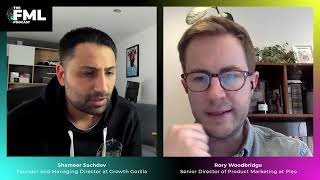
Interview (FML Podcast) with Rory Woodbridge, Senior Director of Product Marketing at Pleo (published June 12, 2023). Rory describes his ~15-year marketing career (about 10 years in product marketing), previous roles at Amazon, Google/YouTube, and startups, and his current 18-month tenure leading product marketing at Pleo. He explains Pleo as a European spend-management fintech (smart company cards, expense & reimbursement, invoice management) serving companies of many sizes (customers cited ~25,000 businesses). Key themes: translating complex fintech topics into simple messaging, building customer trust (partners such as JP Morgan and MasterCard, in‑house fraud prevention, strong support), and prioritizing storytelling and launch narratives over feature-led launches. Rory outlines product marketing responsibilities (insights, competitive intelligence, win/loss, messaging, GTM, sales enablement), gives examples of successful narrative-led launches (multi-entity management, Cashback, Pleo Invoices), and describes his T-shaped product marketing team and hiring priorities. He closes with Pleo's ambition to continue innovating and improving how it brings products to market.
Questions this video answers
About 15 years in marketing, ~10 years in product marketing.
About 18 months (at time of interview).
Just over 25,000 businesses (quoted by interviewers/guest).
JP Morgan and MasterCard.
June 12, 2023.
Chapters
Welcome to the FML Podcast. The podcast on a mission to uncover actionable insights, explore the latest trends and to catalyze your fintech's growth. Join growthgorilla's founder and managing director Shamir Sachdev and some of fintech's hardest hitting marketers and leaders.
Welcome everyone to today's episode of the FML podc. Today we're joined by Rory Woodbridge, Senior Director of Product Marketing at Pleo. Rory, thanks for jumping on the podcast today.
Hey Shamir, thanks for having me on.
Let's start at the beginning. Could you tell us a little bit more about yourself and your journey so far and kind of how you ended up at Pleo?
I've been working in marketing for about 15 years, 10 years of those spent on product marketing. Started off my career in the world of startups and then found myself working for some pretty big tech companies. So I did a stint at Amazon working on their music products and then I actually spent, I spent the bulk of my career in product marketing at Google and YouTube also working on that music product. So I was one of the first people in Europe working on Google Play which is, which is now I think the world's biggest apps and games store. And as part of that we launched Google Play Music and then YouTube Music a few years later. But having done that for a while I then sort of found the itch to go back to startup world and went to a very small startup as their head of marketing and then, and then eventually ended up in Sas. So first at a company called Whereby who Norwegian Video conferencing platform. And so I joined them at as their director of product marketing but also their first marketing hire. And this, this was at the, the height of the pandemic so you can kind of imag sort of it was blowing up. There was so much interest and so much growth and kind of the company was having its wildest dreams realized and so trying to get a grip on that and yeah, build out their marketing team from scratch and while also trying to kind of execute on every kind of marketing strategy and did that for, for a while and then eventually found myself at Pleo, which is both a SaaS company and a fintech company specifically it's a spend management platform that offers smart company cards, invoice management, expense and reimbursement management and basically everything a finance team might need to manage its company spending. And so yeah, I head up their product marketing team. I've been there for the last 18 months and it's been a pretty fun time.
So Far you've given us a quick overview of kind of sort of what Pleo do and who they are. Who are pleo's primary audience? Who are your target audience?
Company wise I guess it's, I guess it's companies that find themselves spending a lot like at the employee level. So you know companies that do a lot of business travel or maybe like entertain clients or do a lot of project based works, you know like consultancies are like a really good example or like marketing agencies where they're, they kind of you have or even architecture firms, you know. So anything where you might have a project and it's got expenses associated with it and you want to get a grip on that. But increasingly it's kind of any company that spends money on, on software or subscript it's like office supplies and everything. So size wise, yeah we're for big companies, we're for small companies and we're now available in a lot of European markets.
Kind of where I like to start really is almost that comparison between I suppose your sort of previous roles at Google, Amazon, YouTube versus Pleo. Really what do you think are the noticeable differences in, in marketing a fintech versus say Amazon Music or YouTube Music?
There's a lot and there's a surprising amount of similarities too I guess kind of big difference wise. I think it's difficult making anything happen at a big company just by the sheer nature of the size of the place and kind of new ideas can be difficult to sell. People are a bit suspicious of them. Teams may be sort of yeah aren't as like welcoming to new ideas as you might find at a startup or a scale up and then you also just have sort of the, I guess the bureaucracy maybe that comes with big companies is usually about like 10 layers of sign off and then you get to launch day or the day before and you find out there's like a VP didn't know existed and they haven't approved your project and so everything, everything gets scrapped and it can be very frustrated and you can kind of almost get used to being told no. I think that's why you maybe see like limited innovation or dwindling innovation at kind of big companies because eventually if you're not structured or the culture doesn't incentivize that kind of like new ideas can come from anywhere. People get too nervous about taking risks and things plateau. So then what I found when I joined a company like whereby so when I joined them they were going for a real growth period but for the most part we're sort of just north of 100 people, it was just that it was so valued when it came to people bringing new ideas, but also people that would show action. So I think in startups and scale up, the most impactful thing you can do is take action and people really respond well to it. Just trying things out, seeing what sticks and then scaling the things that work. And then you look at a company like Pleo, where I am now, and it's the best of both worlds in some way and it's a bit more sizable. So there is this sort of expectation that maybe you have a bit more strategy in what you do and there'll be a kind of requirement that you've put thought or data into your ideas and the projects you want to work on. But there's also such sort of an enthusiasm for new ideas and entrepreneurialism because that's the nature of it. You're still in a very fast growth phase. You're still kind of like you're on a mission to take over the world. And so people really welcome that, but with the right level of kind of scrutiny.
One of the biggest things or barriers that marketers see when marketing a fintech is that they feel that creativity can kind of be inhibited because obviously there's things like, obviously compliance and regulations and similar sort of things that are in place that kind of beat away at that. Have you kind of come across that at Pleo or has that not affected you in your role?
Yeah, of course, of course. Because I'm still fairly fresh in the fintech space, coming to terms with the fact that, yeah, I work in fintech now and don't get me wrong, I like it a lot. But it was, maybe it was a sort of a mysterious space up until this, this point of being in it. I think maybe two things stand out. I think one is that, yeah, like the, like what you're talking about, like compliance regulations and also like the, like the infrastructure, the how it works. It's all quite complex stuff, isn't it? It's not super straightforward and it gets even more complicated at like the local level. And so Pleo operates in like multiple markets and there's all kinds of like regulations and local requirements to do with like tax and yeah, as you say, compliance and so communicating that in a way that's like kind of easy for the consumer to understand and not just that, like making it interesting as well, you know, like, like PLIE really prides itself on its ability to do striking, bold, interesting marketing. So for me it's like finding that right level of detail at the right time to be talking about these different things. And there's that old phrase of like if you're explaining you're losing basically. So you need to avoid that temptation in your kind of a lot of your marketing collateral to, to like get into the weeds on the detail of explaining. You kind of want to instill that confidence in the consumer, provide that level of detail they might need on things like when they're evaluating you for things like compliance but like not get too into that too soon. So yeah, just sort of simplifying the complicated stands out as one challenge. And then the other thing I notice in Fintech that is more prominent than other verticals is like the idea of trust. And this is probably obvious to you and anyone who's listening who's been in fintech for a while. But money is such a sensitive thing, it's such an emotive thing and that's at the consumer level or the B2B level. Right. And especially with everything that's going on in the economy with but both like personal finances and corporate finances. So people want to have a really good relationship with the companies that they trust their money with. They want to really get the size of those companies. So communicating in a way that creates and fosters trust is incredibly important. And like thankfully the company I've joined, Pleo is in this great position to do that. We're kind of one of the original players in our product category in Europe and so we can speak to a real legacy and everything we've achieved so far. We've been doing a lot of this lately. Kind of feeling like, yeah, feeling very good about our payments infrastructure, the partners we work with like JP Morgan, MasterCard, our security credentials, you know, we have our in house, an in house fraud prevention system, you know, so and then even basic stuff like never forget the importance of like things like customer support. Our support team is they're so good and they're in house and they live and breathe the product and customers knowing that they can speak to someone quite easily about the product that's going to know it inside out and understand their problem that all and us making that very clear that that's the case. I think that all helps with that feeling of trust which come back to the original point.
I want to as I said take a bit of a dive into I suppose Pleo's growth over the last couple of years. But before we do that just kind of give us a quick overview of what is product marketing's role in the overall marketing ecosystem, marketing infrastructure, not just at Pleo, but company wide product marketing.
In tech in the modern sense of what it is is effectively a bridge between the product teams in the business. So product, product design, engineering research and the commercial parts of the business. So marketing, sales, customer success, just sort of being a communication bridge but also making sure those strategies align. Doing that by ultimately being one of the sort of the main representatives of the voice of the customer. But there's just a lot of kind of interlinking between the two. Making sure that product work is being effectively communicated through all the distribution channels that a company might have. So sales and marketing and all the different offshoots of marketing and vice versa, that kind of what we're doing from a marketing point of view and a brand point of view comes to life in the product. How that sort of plays out on a day to day like the sort of things that product marketing owns. At Pleo we do a lot of things focused on insights. So we do competitive intelligence, we do all the win loss analysis, we do a lot of kind of customer research. Who is the Pleo customer? What does the buyer journey look like? What are the Personas of the people that buy and use Pleo? You then got kind of the creative part of our jobs. So messaging and positioning and sort of narrative and storytelling. Then there's the bit we're probably most famous for which is like bringing products to market. So like go to market like typically a tech company will have a large release slate for each year and product marketing will drive the sort of how you communicate that and bring that to life as well as post launch adoption and adoption driving initiatives. And then finally sales enablement is a massive part of what we do. So typically kind of any kind of enablement relating to the product is typically driven by product marketing.
I think it's a wonderful segue into. My next question really is Plea has been massively successful with their customer acquisition retention as well. I think you've got just over 25,000 businesses using Pleia at the moment.
I think so. I think that's the latest number. Yeah.
What do you think's been the kind of secret success for Pleo and its sort of rapid rise and growth?
There's the reputation for sure because we were the original company in Europe doing this. So we've got a sort of a real reputation of trust and as a result and if you're going to go for a spend management solution, it would make a lot of sense to go with Pleo because we do stand out for that reason. There's the brand, the brand itself, that striking visual identity that Pleo has, that was a big reason personally wanted to join the company. There's the people too. I think our customers really appreciate our people and the fact that we get really good feedback about this, like our presence at events, like I think we really stand out and it's, we just hire like really good human beings who aren't, who aren't going for that, that bullish hard sell all the time. They're real people who are able to form genuine connections with our customers. But I think ultimately like the thing that does like stand out and it's like the primary reason, like you've seen that growth and then you see that retention, like you say, which is super important is the product itself. And again like this was another big reason for me why I joined Pleo. I was, I was previously a customer. I was very familiar with the Pleo product. But yeah, when it comes to ease of use and like the quality of user experience for anyone who spent even a short amount of time with that Pleo app, the Pleo product, people like simply just prefer using Pleo like if it's a choice. We find like for a lot of people it's like, it's a. What's one of the few work apps I think that people actually like having on their phone because it's so simple to use. In fact it's like, it's so intuitive that you don't actually have to use it that much. And I think people appreciate that. But yeah, super simple. It just feels really nice to use and so I think that's what creates I guess genuine love for a product. And then as a result you get a lot of like growth just from like word of mouth and customer advocacy.
Taking it a step back, you know, and almost like thinking about what seeded the growth in kind of the initial stages. So I was going to say you've only been there 18 months, you didn't do the go to market piece, did you?
I mean, I mean, well, I could talk about it a little bit. Like Pleo's got very good at certain marketing channels very quickly, but when you're a marketer a lot of the time you find you can have the best strategy in the world. But if you don't have a great looking brand and aesthetic then kind of it all falls apart. And so I think the fact that Pleo's brand and they work with a great agency called Koto, like on this sort of very distinctive like the color Palette. The fonts are like really cool. Like they use like very, it's that kind of Scandinavian sort of chic look to it. But also yeah, like we use a real sort of variety of illustration styles. We have a very striking photography style and I think if you pair that with like a culture of experimentation in like your marketing mix and like trying all these different slices of ads and like we particularly had a very powerful go to market on kind of the, the performance, the ad side. I think that's that, that's where you really start to see that, that magic.
Happen on the performance side. Yeah, I get hit by Clio, you know, on Instagram quite readily. And the irony is that actually I don't really see them all that much on LinkedIn. And you would think for a B2B proposition that would kind of be their go to. Is any learnings around that is any sort of particular reason for that?
Well, I think we're trying stuff out all the time. But I'd say like, for me like the most kind of effective thing we do on, on Linked again it comes back to like the quality of our people. Like our Pleo employees have a lot of presence on LinkedIn and are really creative in kind of how they go about building their personal brands. We have some people that have an incredible presence from our sales team in the local teams. They have an amazing presence on LinkedIn and I think LinkedIn is more community based almost and I think it pays to be credible there to be putting in original content, original thoughts, like starting conversations and making the most of like I guess our organic content. Because we do have a lot, we have a really rich blog, we put out ebooks and things and all the time and our leadership team take part in lots of content and podcasts like this. And so I think that's kind of what we're doing in LinkedIn and we see great success. Especially like for me is yes, I'm heading up product marketing. I, I love seeing that part come to life. Like when we do a new product launch and see the weight of like hundreds and hundreds of players getting behind something and doing their own twist on why they're excited about a feature or product.
Obviously within your role, you know, you spoke a lot about, you mentioned obviously insights is a big part of it being the voice of the customer. Has there been sort of any surprising moments when you look to those insights and you've had feedback come back to you about features that perhaps you've already implemented and you think, wow, really didn't expect traction or as much traction with that or features that you perhaps hadn't thought of and you've had to relay back to the product team.
We try and make sure that product marketing insights find their way really early in the product development. I'd like to we're not just there kind of in that late go to market stage. We're there at the point of conception or maybe sometimes even a product feature is conceived as a result of some product marketing insights. And one of the things I really recommend if you're not doing this already if you're a product marketer that works for sales teams, is introducing a win loss analysis program where you quantitatively look at like okay, what are the reasons being tagged as losing deals according to sales teams but also making sure you're interviewing customers that recently either became a customer or didn't because they tend to be really frank, especially if they're not talking to the person that they were in the sales process with. Can you can get so much, so much gold from those? Because it's sometimes really hard to know from like sales feedback around what features do we actually need to be building versus what's just like a kind of a recency bias. So I'd say yeah, like partly like our release later this year is informed by those like okay, where are our biggest gaps? I think like in terms of surprises, I mean I'm not sure this is maybe this is partly insights base, but I was, I've been impressed by sort of the immediate take up of our what we call our multi entity management offering. And the reason I it's gone down incredibly well in the take ups being like really fast from the off with our customers, both new and existing. I was surprised by that because you hear the phrase multi entity management and it doesn't sound too sexy. It sounds quite complicated. And not a lot of people would instantly know what we meant by that. But what we did was we took a real kind of storytelling approach, sort of the classic product marketing. You know, I've talked about it a lot. If like you launch a narrative, you launch a story, you don't talk about the features or the name itself kind of led with that approach. We found immediately that customers got what we were talking about and have jumped on that part of the plier product and what it is, it's this ability that allows you to manage all of your spending across. Like if you're a larger company that's got multiple entities, you've got multiple like kind of you've got your UK entity and your Germany entity and so on. You can manage all the spending and expenses and get that nice visibility and control over all of that. And take up's been great. And the competition since rolled out like a similar offering and they've gone with the same name and they've kind of like adopted what we called it. And so I think, I mean, that's some really good, effective product marketing work.
I'd say tell me more about narratives instead of features.
So I've got a. This is a good time to plug it. I run a substack newsletter called the Product Marketer and I talk about this quite a lot and I've written specific posts about it. And it's. Yeah, this idea of launch narratives, not launch, don't launch features. And the reason I talk about that is because in our world of like tech fintech SaaS, there are no moats when it comes to features. There are kind of no features that your competitors can't build. So the way you tell your story is the way that you differentiate. But also it's such a kind of typical misstep when you're launching a product to just talk about how it works or talk about it in the terms of your own company. And kind of the, here's why we launched it because, I don't know, some customers asked for it. And so when you're launching something new, create context, introduce the problem for the customer and try to tell the bigger picture about why this thing matters. And so that's what we try and do. And we also try and just sort of like, okay, what could be a fresh approach to this? Because there's a good chance somebody's already built a version of this product. But what's our unique, interesting perspective to this? So, yeah, so that's what we do. And I think, I think we see great result from it. And like, I think typically customers end up being a lot more engaged and enthused by. We take this approach. And it also resonates a lot with our commercial teams who have to go actually tell that story each day, you know, like. And it's. And I think it's a much more interesting sales conversation when you're sort of taking that approach as well, rather than it's a sales call and it's like, sure, let me take you through the 10 steps of how this new product works.
It's obviously a step beyond, you know, they always say, you know, set sell benefits, not features. It feels like selling the narrative is obviously the step beyond that. What does that look like from a, like a Framework perspective. Are we talking user stories, case studies, you know, leading with those sorts of things or we talking about down all the way to the messaging that we're putting on on the site, content across the website, on our home activity, all of that sort of stuff or is it a bit of everything?
Yeah, it's a really important question because the reason I use the phrase narrative is also because it implies like you don't just have launch day and move on. Like what you're doing with product marketing is you're shifting perceptions about something, about, about your company. You now do something that you didn't do before or you want a customer to think slightly differently than they did before. And that's never going to happen overnight. So you're going to need to tell that story repeatedly in different ways over a long period of time. And yeah, it's through kind of every touch point you can get your hands on that you think matters. And I guess like an example would be that Pleo is like famous for its smart company card offering and expense management. For a number of reasons, but like a lot of it down to like customer demand, we have evolved into an all in one spend management offering. And a big part of that was us creating an invoice management product very simply called Pleo Invoices. And so like a feature led approach to launching that would be, hey, Pleo now has an invoice management product and you can pay and schedule and approve all of your invoices within this product. And isn't that great? And this is how it works and there's 10 steps and it's got these features and it works with these integrations. But the better version of that is to sort of get this perception that you want to want to shift around. Pleo is now the place for all of your business spending. If you are spending money as a business, Pleo is the place for you and you can do all of that. You can manage your reimbursements, your card spending, anything to do with ATM withdrawals and now invoices. But an even better or best version of that is to actually make it about the customer. Talk about what's going on in the market. Obviously right now, economically it's difficult for a lot of businesses. Businesses are looking to obviously save time and money and a lot of that means that they're looking to consolidate tooling and increasingly looking for kind of all in one solutions. Because of that they want to be spending time in high quality tools, but as fewer tools as possible. So they want to like work with Products that are great at doing many things. And so that's a more interesting way to then introduce the solution of Pleo invoices. Remind the customer of the problems they have, talk about the fact Pleo has a solution for that and can solve not just invoices, but a number of things. And then, yeah, sure, we can get into how it works, but that's maybe for later on in the journey.
I said my last question around this is when you're building these narratives, I think we're also very familiar with value propositions. And. And there's always some sort of. You come across brand steering wheels and brand triangles and all these matrices and all this sort of stuff. Do you have like a framework for building a narrative? Is there a one pager that you have or a process that you go through in order to extract that narrative?
We've been iterating on that with every launch because I think what we've analyzed in. Obviously you think you've done it all when you've been in product marketing for 10 years, but you've never done this job at this company, at this point in this company's lifespan. And with that, with a unique setup of product teams, I'm lucky to have a team of very accomplished product marketers with huge amounts of experience. And we're all still like, what is the right approach for Pleo? And we take this approach like it's a lot more driven by the heart than maybe a lot of companies do their product marketing. It's like we talk a lot about how do we want customers to feel from this narrative. So we don't have a hard set framework right now for how you carve a narrative. But we do do a lot of collaboration and scrutiny and go like, is this actually the story we want to tell? Is this something different? Are we talking about the outcome or the benefit? Are we offering something different and new to the conversation, or are we just sort of going over already sort of trodden ground? So it's a bit of a fluffy answer for you on that one.
Taking narratives over features into mind, I suppose, taking that approach in a market where you've got high levels of competition and very, very similar products. I suppose what you're really doing at that point is, like you said, you're selling the story. Is that the approach that you take in a market that's got high levels of competition, you know, narratives versus features. The better way to go, I think.
It 100% is because when there's heavy competition, you can almost get kind of Feature blindness, you know, like so many features, so much feature parity, it's hard to see the wood for the trees. I think if you do consistent storytelling over a longer period of time about what your company's about. For example, say for many months now we've been sort of reminding customers of Pleo's, I guess more serious credentials in the, in our spend carriage. In fact, we've been here a lot longer. Our partners are very credible and we talk a lot about safer spending. That stuff matters in the long term and if there's a feature missing, we can probably build it. But that kind of credibility, that in house knowledge and that kind of how well regarded we are in the space, that's obviously going to really benefit us in the long term. Especially when you think that it does take a while to tell these stories and then I think it's like learning quickly about what features really resonate with your customers and doubling down on those because we're adding new improvements to plea all the time. But sometimes you have to really pay attention to what are the ones that fly. And like for example, last year us turning on Cashback went down so well with customers and so that's become very like a very popular part of the offering. And I think again that was another campaign we were really proud of where we use cash back as the kind of very obvious like crown jewel in a wider story about it pays to use Pleo. Pleo saves you a ton of money every day in very straightforward ways like Cashback, but also in hours saved just by sheer kind of for every time you're using Pleo, you're not spending hours and hours chasing your employees for receipts or spending hours in spreadsheets trying to manually process things. So yeah, I think longer term narrative bets are way more important. Just sort of, yeah, another week, another feature. Here's what it does.
I think you see that a lot with sort of early stage companies that it's very, very feature led. They take the view that they need features in order to acquire market share. Although I think that's true. I sometimes think actually just having a really solid proposition, having really good branding and a solid message can a focus on perhaps a particular sector, for example, is sometimes all you need just to get that critical mass of users that allows you to get to that next stage, right?
Yeah, totally.
Otherwise you end up just having a long list of. You get those SaaS, pricing tables, all the long lists of all of the features that you do have and you end up going down the path of being another Choice for your prospective user.
Totally.
You mentioned obviously having a really solid product marketing team. I just want to spend a few minutes on what does the ideal product marketing team look like. What are the bodies and job functions you need within a solid product marketing team and what are you looking for as an individual, you know, within your team members.
So I think like product marketing is when it's, when it's at its best, when it sits at the heart of a business and it's working on like the, the problems that are central to the business itself, not purely marketing or purely product or purely sales. And so when I'm like setting up a product marketing team, I try and have that structure reflect that of the business like priority wise and try and have it kind of mirror somewhat the shape of product and the shape of marketing. How we've done it at PLEO is we've hired in quite a T shaped way, you know, where everyone is a very good all rounder but tends to specialize in something. So we have someone who specializes in competitive intelligence, we have someone who's really focused on sales enablement, but they're all able to kind of take on any of the work that you might need from a product marketer. We built out the team pretty much from scratch when I joined and that in itself it was quite a challenge because you're trying to insert a brand new function that not many people know about or understand into a large growing business. So that itself trying to educate on that was tough. What was really important for me was that they be real product marketers. There's a lot of people out there that have product marketing in their title and you quickly get into chatting and you're like, oh, that's not really product marketing in the modern sense. I was looking for a group of people that could really articulate it well because I knew that was going to be part of the job, that we were going to have to go out and do a lot of education about ourselves and what we were going to be doing at pleo. I think beyond that I look for people that can communicate the impact they've had in previous roles or in their current role. People that are clearly going to thrive from collaboration because lots of time that is the job, you're in constant communication and collaboration with other teams, kind of just moving things forward. So somebody that gets a kick out of that. And I think, yeah, I guess people that can balance the creative with the strategic and can tell a compelling story out of difficult, complicated things.
We've covered an awful lot today I think my last question really is, I mean, what does the next sort of 12 to 18 months look like for Pleo? What's in the master plan?
Well, I mean for me, even though I've been here 18 months, I feel relatively new here. But I personally think, think Pleo is one of the great European like fintech success stories. So I think ultimately we want to keep on earning that reputation and continuing on what's been like a pretty extraordinary journey so far. I think we're leading the way for a lot of European fintech businesses, so. And I'm proud to be part of that. And so we'll continue to innovate, we'll continue to put the customer and customer obsession at the heart of what we do for sure from at the more like day to day level for me, what I'm thinking about, yeah, we've got some big product pieces that we're going to be rolling out this year that I'm very excited about. I want us to get even better at making noise with our launches. I want us to get world class with our marketing and our product marketing and how we bring products to market. And I hope that we also continue to stand out in our space. So both the, both the spend management category and the wider, I guess, fintech space doing marketing that you wouldn't expect from like a B2B fintech company.
Fantastic. Really enjoyed our conversation today. Before I let you go, I'll quickly run, you know, finish off on our quick fire round. What podcast are you listening to right now?
I feel bad because I haven't been listening to a marketing or business one lately, so I don't know how relevant this is going to be, but I think it's important to keep on learning in all different ways. And so I've been listening to a podcast called the Rest is History most recently, which I really have to recommend. And they do different kind of parts of history each week. So this week I've been learning about the end of the Vietnam War, I think continuing to learn things about the past, learning things about the world. I think I guess good ideas and good inspiration come from anywhere, but I recommend that one. Aside from that, I guess most recently on the marketing side, I've been going down a bit of a rabbit hole of content on HubSpot because I'm just really kind of engrossing that story. I think they're such an impressive company in what they've built over the past few years. There's some really good, like Sasta interviews with their founder Brian, that Yeah, I definitely recommend.
Other than Pleo, what's your favorite Fintech product or app?
I don't know if you saw the wise rebrand lately. I think they did a fantastic job. So I've been pretty obsessed with that lately. Just kind of such a, like it's beautiful work and there's a really nice like sort of twist and background to what they've done. But I think they've done just such a thorough job from like a brand and marketing point of view and product design. I've been thinking about that a lot and yeah that informing kind of my state of mind right now and then well before we were talking about them a product I was really impressed by the user flow and what a great kind of product led journey it was actually yonder the credit card product. I think that's such a great example of a modern slick signup experience. I was really impressed by that that recently.
What's the best bit of life advice you've ever received?
The one that stands out I think does ring true because I think it's like works across personal and professional is you get what you put in. I know that's really simple. I do think it pays off. You get what you put in in life both in a work setting and with relationships and friendships. You know, if we're talking about the work side, I think come to work with a great attitude, invest your energy, show people you care and do care and people will meet you there.
Amazing. And what's perhaps one thing that I haven't asked that perhaps I should have?
I mean I could probably do a whole podcast with you about like mistakes I've made and like marketing fails and disasters that have happened on the job. So yeah, I think maybe I've dodged some questions and only talked about the things that things have gone well.
Do you want to give us a quick highlight of a blunder? Not something that obviously paints you in a bad light, something that we can look back on and laugh.
In retrospect, anyone who's worked on email marketing knows that the stress that comes from email marketing because it's one of the only ones that you can't undo. Like a website page you can fix, you know, an event you can work out on the fly. But yeah, I remember some email clangers, you know, where we've said, I don't know, we sent the same email six times to thousands of users, you know. Yeah, it still, still brings, yeah a lot of PTSD over the years working with email. So a lot of love to anyone, any, any CRM managers out there.
I was going to say that anyone who, who, who's run department or CRM managers has undoubtedly done that. My advice there is remember one thing with marketing, nobody dies. I think just remember that and, and, and, and it'll make you feel better.
So true.
Rory, thank you very much for coming on today. It's been an absolute pleasure speaking with you.
Thanks so much.
Shamir the FML podcast is brought to you by growthgorilla. To find out how our marketing growth experts can boost your fintech's growth, head to growthgorilla.co.uk and make sure to search for the FML podcasts in Apple Podcasts, Spotify or anywhere else. Podcasts to file don't forget to click Follow to ensure you don't miss any future episodes. On behalf of the team here at Growth Gorilla, thanks for listening.
More from Rory
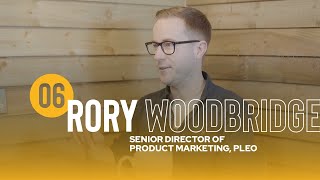
Spotlight On #6 - Rory Woodbridge, Senior Director of Product Marketing at Pleo