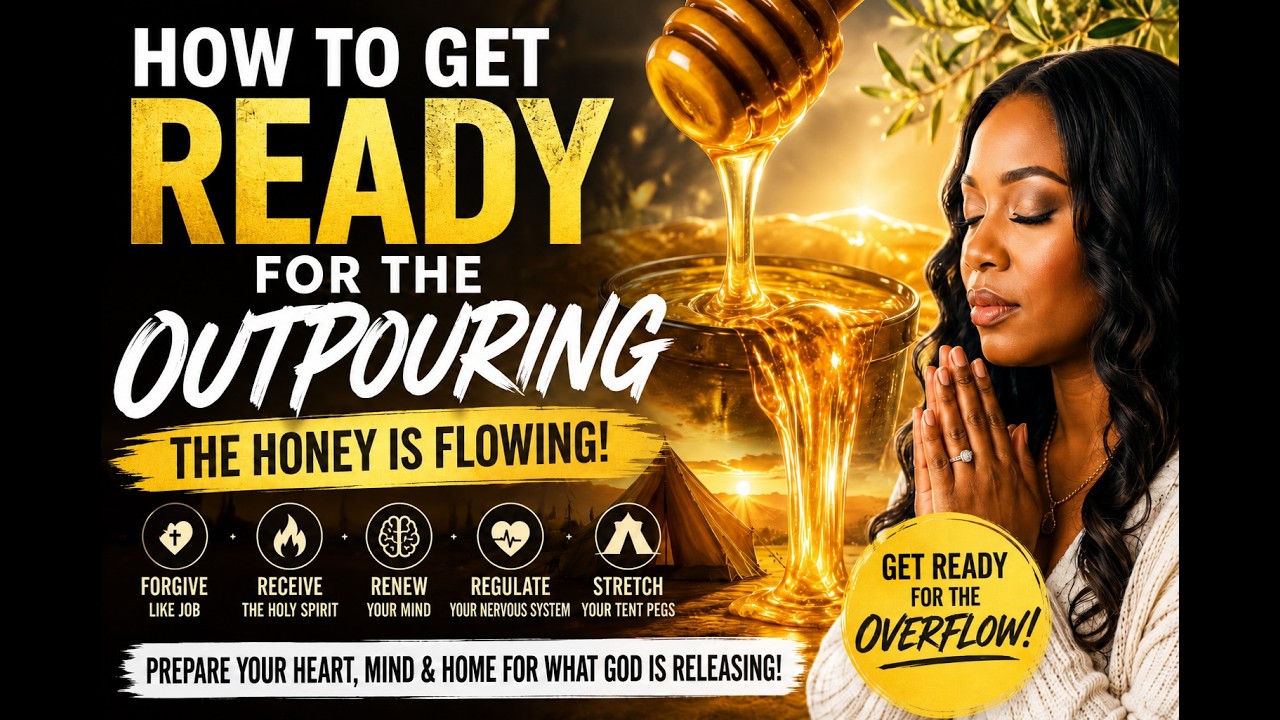
In this solo episode of the Rewired for Purpose podcast, certified Christian life‑and‑brain coach Rosangela Atte explains that purpose is not merely an intellectual concept but a lived, daily walk. She opens with the biblical injunction to “do” (James 1:22) and argues that taking consistent, purpose‑aligned actions rewires the brain through experience‑dependent neuroplasticity, engages the dopamine reward system, and shifts the nervous system from avoidance to activation. Rosangela illustrates this principle with biblical figures—Abraham, Moses, Esther, Paul—who moved step‑by‑step in obedience. She then offers three mindset shifts (fear → faith, perfection → progress, self → service), explains how perfectionism is a survival‑based flight response, and grounds each shift in Scripture (2 Timothy 1:7; 2 Corinthians 12:9; Proverbs 16:3). Two short somatic practices (a 4‑4‑6 breath and a grounding posture with a “here I am, Lord, send me” declaration) are presented, with neurophysiological rationale (parasympathetic activation, pre‑frontal cortex engagement). Rosangela delves into the Hebrew word “hineni” and the Greek “apostolon,” linking ancient language to the modern act of commissioning oneself. She reinforces that procrastination and perfectionism are fear‑driven, while obedient momentum creates dopamine‑driven confidence, citing Habakkuk 2:2‑3 as a scriptural model for writing and running with a vision. The episode concludes with a prayer, a call to listeners to step into obedience, and an invitation to connect for coaching via email.
Chapters
Hello and welcome to the Rewired for Purpose podcast, where faith meets neuroscience, healing meets identity, and women rise into the fullness of who God created them to be. This is the place where you will learn how to turn your pain into purpose. I'm Rosangela Atte, your host, certified Christian life and brain coach, prophetic voice, Mentor, wife, mother, and grandmother, and I'm a woman on a mission to help you renew your mind, regulate your nervous system, and break free from the lies that have kept you stuck. My heart is to empower you to walk in your God-given identity and discover your purpose. We've talked about identity, we've talked about discovering your purpose, but here's the thing: purpose isn't just something you know in your head, it's something you walk out your daily life. James 1:22 says, do not merely listen to the word and so deceive yourselves. Do what it says. Knowing your purpose without walking it is like having keys to a car and never driving it. The power isn't in holding the keys, it's in turning the ignition and moving forward. Purpose walked out changes how you wake up, how you show up, and how you impact the people around you. It's not about perfection, but it is about obedience. And here is where science and faith beautifully align. When you begin to take consistent steps toward your God-given purpose, your brain literally rewires. This is called experience-dependent neuroplasticity. Every time you take action, whether it's writing, speaking, encouraging someone, serving in your calling, you strengthen the neural pathways connected to that behavior. Over time, this builds momentum and makes purpose-driven living your default mode. Isn't this just amazing? But when fear, procrastination, and self-doubt stop you, the brain strengthens avoidance pathways. And that's why staying still feels harder than moving forward sometimes. Walking in purpose also activates the brain's dopamine reward system. Dopamine isn't just a feel-good chemical. It motivates you to keep going. When you act in alignment with your assignment, I didn't mean to make a rhyme there, your brain rewards you with energy, resilience, and joy. Proverbs 16:3 says, commit to the Lord whatever you do and he will establish your plans. The science agrees. Commitment plus consistent action equals transformation. Purpose always requires movement. Let's look at a few biblical examples. Abraham— he didn't just receive the promise. He left his homeland and walked step by step toward the land God would show him. Purpose begins with faith in motion. Moses— his purpose wasn't fulfilled in Pharaoh's palace. It was fulfilled as he walked with God through the wilderness, staff in hand, step by step. Esther— her purpose required courage. She didn't just know she was queen for such a time as this. She risked her life and walked into the king's presence. Paul, he didn't just have a Damascus Road encounter. He walked city to city, shipwreck to prison, carrying the gospel with his feet and his pen. Purpose without action is just potential. Purpose with action is kingdom power. Here are 3 mindset shifts that help you move from knowing to doing. From fear to faith. Your brain is wired to avoid risk, but faith invites you to take holy risks. 2 Timothy 1:7 says, God has not given us a spirit of fear, but of power, love, and a sound mind. From perfection to progress. Waiting until you're ready is often avoidance. Neuroscience shows us that progress, not perfection, creates momentum in the brain. And I'll be the first to admit, I am guilty of this. I am a perfectionist, not because I'm proud of it, but because it was my survival mechanism. I grew up in an extremely chaotic, drama-filled, toxic environment. And since I couldn't control my circumstances, I developed a way to control my environment with perfectionism. Perfectionism is a type of flight response. It shows up as avoidance, procrastination, and endless preparation because you're waiting for things to be perfect before you move forward. But here's what I had to learn with God. Perfectionism will paralyze you, but faith will propel you. When children grow up in chaos, the nervous system adapts by searching for safety. If we can't find safety in people, we try to create it in systems and control. The brain learns, if everything is perfect, maybe I'll be safe. Over time, this rewires the stress response into perfectionism and avoidance. How to let go of perfectionism using biblical truth. Scripture reminds us, my grace is sufficient for you, for my power is made perfect in weakness. 2 Corinthians 12:9. Commit your works to the Lord and your plans will be established. Proverbs 16:3. God never asked us to be perfect. He asks us to be faithful. The 3rd mindset shift is from self to service. Purpose isn't about making your name great. It's about serving others. When your why is bigger than you, your brain gets out of self-preservation mode and steps into kingdom Let's embody this message with 2 short practices. Inhale through your nose for 4 counts, hold for 4, and exhale slowly for 6 counts. As you exhale, whisper, Lord, strengthen me to walk in my purpose. Repeat this 5 times. Why does this work? This activates your parasympathetic nervous system, Calming fear signals and opening your prefrontal cortex, the part of your brain where vision and strategy live. Stand tall with feet firmly grounded. Place your hand on your heart and lift your other hand upward. Say, here I am, Lord, send me. Notice how your body feels— open, strong, and ready. Why does this work? Somatic alignment tells your nervous system you are safe, present, and available. It turns obedience into a full-body declaration. Now let's look at what we're actually declaring when we say, here I am, Lord, send me. The Hebrew word Isaiah used is hineni, which doesn't just mean I'm here. It carries the deeper sense of I am fully present, surrendered, And at your disposal. Every time in Scripture that "Hineni" is spoken in Abraham, Moses, and Samuel, it marks a turning point. It's as if the person is saying, "I stop running. I stop resisting. I am ready." Then Isaiah says, "Send me." In Hebrew, that's "shelakeni" from the root "shalak," meaning to be commissioned, to be appointed with authority. This isn't just about Going somewhere. It's about being set apart for God's assignment. And when the Old Testament was translated into Greek, the phrase "إِدَاوُ إِغُوَ اَيْمِ أَبُستَيْلٌ مِي," that word apostolon is the same root as apostle, literally one who is sent with authority. So when you stand in that posture and pray Isaiah's words, you're not just making a statement; you're stepping into a lineage of men and women who responded to God's call with wholehearted availability. You're telling your nervous system, I am safe, I am grounded, and I am ready to walk in purpose. And you're telling God, commission me, make me your messenger. Procrastination and perfectionism whisper, wait until it's all clear, until it's polished, until you feel ready. But here's the truth. You may never feel ready. Purpose doesn't wait for perfect conditions. It requires obedient movement. Habakkuk 2:2-3 says, write the vision, make it plain on tablets so he may run who reads it. For still the vision awaits its appointed time. It hastens to the end. It will not lie. If it seems slow, wait for it. It will surely come. It will not delay. Notice what God says: write it, make it plain, and run with it. Not analyze it, not polish it until it's flawless, not sit on it until you feel qualified. Why? Because when you write the vision and run, the act of obedience activates momentum. Neuroscience backs this up. Progress, even small imperfect steps, literally rewire your brain, releasing dopamine, reinforcing motivation, and building new neural pathways for confidence. So when you sense God's assignment, your response isn't, I'll wait until I'm ready. Your response is— I'm ready. Like Isaiah, here I am, Lord, send me. Now here's the key: once God reveals purpose, we don't procrastinate, overthink, or wait for everything to be perfect. Perfectionism is just a dressed-up form of fear, a survival mechanism that tells you, if I can control every detail, I'll finally feel safe. But purpose doesn't wait for perfect conditions. Purpose requires movement. When Isaiah said, here I am, Lord, send me, he wasn't perfect. He wasn't polished. He wasn't fully ready, but he was willing. And willingness is what activates destiny. So here's the truth. Purpose doesn't demand your perfection. It demands your participation. Each step of obedience, no matter how small, rewires your brain for confidence. Neuroscience shows that momentum builds dopamine and dopamine fuels resilience. Every yes to God's leading literally trains your nervous system to trust him more. That's why we shift from waiting into walking, from hesitation into holy momentum. Let's pray. Heavenly Father, thank you that you created us not just to exist, but to live with divine purpose. Lord, for every woman listening, I ask that you give her courage to step out in faith, break off fear, perfectionism, and procrastination. Replace them with boldness, joy, and obedience. Holy Spirit, guide her steps, open doors that no man can shut, remind her that her purpose isn't pressure but partnership with you. And as she walks in obedience, may her life be a blessing to many. In Jesus' mighty name, amen. Thank you for tuning in to the Rewired for Purpose podcast. If this episode blessed you, please follow, download, leave a review, and share it with a woman who needs to hear that her pain was not wasted. But that God will use it for purpose. And if you're ready to go deeper, to renew your mind, regulate your nervous system, and step into your God-given purpose, you can connect with me for coaching, resources, and next steps at theshifthercoaching@gmail.com. Until next time, keep your eyes on Jesus, your heart rooted in his word, and your life anchored in obedience. And always remember, you were created to shift into the fullness of who God designed you to be.