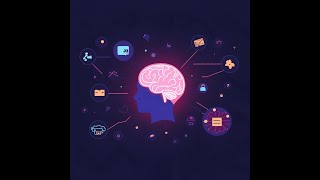
This content was created by Ruth Kusemiju. This content was uploaded by Ruth Kusemiju. This is a YouTube video titled "Day 14 Write Record Challenge - 5 AI Terms You Need to Know (Without the Confusion)" (created 2025-02-18). It is a short educational monologue by Ruth Kusemiju in which she plainly explains five core AI terms—AI, machine learning, natural language processing (NLP), large language models (LLMs), and neural networks—using everyday examples (Netflix recommendations, Gmail spam filtering, ChatGPT/Siri/Google Translate, examples of LLMs like ChatGPT/Claude/Bard/Gemini/Perplexity/Llama, and facial/voice recognition). The speaker invites viewers to leave questions in the comments.
Chapters
AI sometimes can feel like a secret language. You hear words like neural networks, LLMs, and it sounds complicated. But today I want to break it down into simple, very clear explanations. No tech speeches, no jargon, no highfalutin words. Just going to be giving you real world examples that you can relate to. Okay. And I— my aim is that at the end of this video, it's a very short one, you'll understand AI terms like a pro without the confusion. Okay, so let's go. Now, there are 5 AI terms you need to know. You don't need to know the entire glossary from A to Z. There are 5 things that you need to know, and these are like the 5 core terms. One is AI, which is artificial intelligence. Two is machine learning. 3, it's NLP, what we call natural language processing. 4 is LLMs, that's the large language models. And then 5 is the neural networks. Now I'm going to be taking this 5 not in any particular order, but probably the way I mentioned it, I'll try to explain and give an example. Now AI, that's the artificial intelligence, basically is a software that learns and makes decisions like a human. An example: when Netflix recommends shows based on what you watch, that is AI. Okay, cool. Netflix is saying, because you watched this, you should see that. Two is machine learning. So machine learning, or ML, is how AI gets smarter over time by studying patterns. Very good example is your Gmail. So your Gmail's spam filter learns from millions of emails to block junk messages. Cool. 3 is the natural language processing, or NLP. Basically, NLP is AI that understands words. NLP allows AI to read, to write, and understand the human language. A very good example is ChatGPT. Siri, and Google Translate. These platforms use NLP to process and respond to text. Next is the LLMs, which is the large language models. LLMs are massive AI models that are trained on huge amounts of text data to understand and generate human-like responses. And we know examples of this already. ChatGPT, there's Claude, there's Bard, there's Gemini, there's Perplexity, there is Llama. There's a lot. There are a lot. And last but not the least, we do have neural networks. Now, neural networks are inspired by the human brain, and they help AI recognize patterns like faces in photos, or voices in calls. A very good example is the facial recognition on your phone, and then the voice assistants. They use neural networks. And so AI necessarily doesn't have to be complicated. And sure, by the time you go through these 5, you'll understand the general principles of— I mean, the, the, the general terms of AI, right? And once you know these terms, you're good. So AI doesn't have to be complicated. So is there an AI term that you've heard but don't understand? You could drop it in the comments and then I will do my best to explain it to you. I'll see you guys tomorrow.