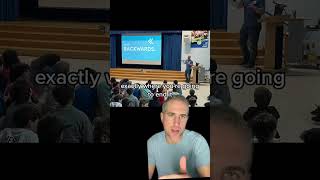
Ryan Maloney tells students to start writing by deciding what emotional change you want the audience to feel at the end. Then make your protagonist lack whatever they'll have gained by that ending. With those two points locked in, you can map every plot point needed and arrange them like a puzzle.
Chapters
This is a tip I give to students when I'm asked to speak at schools. When you're creating your story, instead of working from the front to the end to figure out all the beats of your story, work backwards. Think about the ending first and the change and the feeling you want people to have. Then go back to the beginning and start your story exactly where you're going to end it, but the character doesn't know as much as they do at the end of the story. Once you have the ending and the beginning, you know all of your plot points. You can— now you can go through and work through in a linear fashion and shuffle around the pieces like a puzzle and see what feels right in your outline. It's a little bit like a magician. They know the ending, the punchline of the trick, so they have to figure out how to get you to that point. So they'll go back to the beginning and they'll do all their hand tricks and hiding cards and all that stuff. They'll figure out what all needs to be there in place to get you to that final punch.