In this video, Ryan Maloney narrates the end‑to‑end process of creating a kids’ fitness card game called “Buff Boardwalk.” He begins by explaining his personal motivation: turning his love of drawing and fitness into a tool that makes exercise fun for his children, who otherwise prefer screens. He adopts the Lean Startup’s Minimum Viable Product (MVP) approach, ordering blank cards, sketching simple concepts, and quickly testing them with his daughter to gauge reaction. The MVP validation confirms that even crude drawings can convey gameplay and spark interest. Ryan then discusses his artistic workflow, choosing Procreate for rapid high‑resolution sketches over vector‑focused tools like Illustrator, and explains his branding decisions, including the playful name “Buff Boardwalk” and the development of a hot‑dog mascot. After finalizing 50+ character illustrations, he sends the design to a small‑run printer he found on Baba, noting costs and minor production quirks. The first limited run serves as a signed prototype for further testing and potential Kickstarter funding. Throughout, he emphasizes the importance of keeping requirements minimal, iterating based on real‑world feedback, and eventually confronting the hardest part of any creative venture: marketing the product. He ends by urging viewers to share the video with anyone interested in making kids’ exercise enjoyable.
Chapters
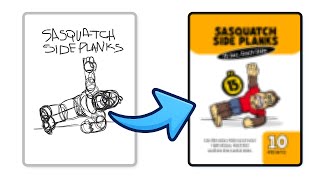
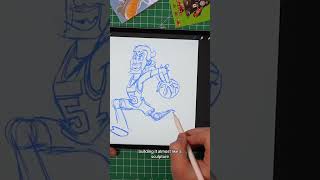
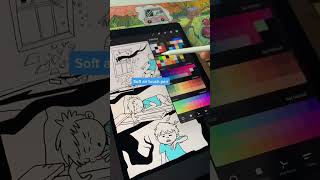
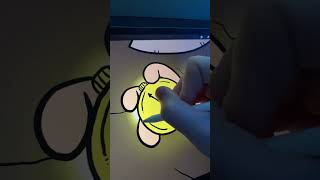
If there's one thing better than drawing, it's when your drawings move people. It's great to practice art and draw all the time and post, but I was feeling like, look at me, look at me, look at me. Like, I needed my drawings to do something. There had to be a point to motivate me. Then one day I got an idea from a problem I noticed. I love to work out. It's essential for my creative process and for fighting off my dad bod. Whenever I asked my kids to work out, they'd give me the stink eye, like, nah, screens are better. And I can't blame them. When you look at fitness equipment or doing workouts as kids, you have no idea why you're doing it. But what if I could use my drawings and turn those into a game that made kids think exercising was fun? That was the lightbulb moment. I would create a fun card game that motivated kids to work out. A 1v1 game where each player did a workout to earn points and they raced to 100 points or to the end of the deck. We'd have wild cards along the way to throw a wrench in the opponent's workout. The first step is validating your idea. This is done with an MVP, a minimal viable product. I learned this concept from the book The Lean Startup. It's a must-read for every artist. It will save you thousands of hours. An MVP lets you quickly get real-world information before you spend months and tons of money developing something that people may not even like. I ordered blank white cards from Amazon and started sketching my idea. The point of an MVP is to put it in front of somebody and get their reaction. You want to see the look on their face. Do their eyes pop open? Are they confused? Are they happy? Do they want to see more? You don't need a lot of detail. You just need to get the point across and start gathering feedback. Whenever I start a new project, I always think about Elon Musk saying, question the requirements before you begin. Why is something there? Why would you even need that? If you don't need that, do not put it in the project. Eliminate before you even begin. Set boundaries for yourself, restrictions. This is going to force you to come up with ideas and stop you from overthinking and potentially sabotaging your project. If something isn't needed, it's gone. Sometimes you'll be shocked at how quickly you can create an MVP and you'll feel like this isn't good enough to show anybody. And that's usually a good sign. I thought there's no way anybody will understand how to play this game. These drawings are too crude. You can't really see the instructions. Options, but I gave it to my daughter and she immediately knew how to play it with her friends. I love this though, this is so fun. Before giving her this game, she was resistant to any exercising, so I immediately saw that this could be a tool that breaks down that wall from resistance to fun. Makes sense? Yeah. I wanted to feel like the counting and the adding and the like. Once the MVP was tested, it was time to draw my characters and put final artwork on these cards. For drawing the characters, I use Procreate. Now a lot of people come at me in the comments saying you're going to print these, you need to draw it in Fresco or Illustrator for sharp vector lines. But I find if you draw at high resolution in Procreate and these characters are going to be pretty small on the cards, you're not going to notice a huge difference. Plus, I can knock characters out really quickly in Procreate. When I'm drawing in Fresco, as much as I love it, I get too precious about it and I'm pretty slow with my drawing and I'll overthink. And the whole point of this project was to not think, to just test, get real-world feedback, and get things out there quickly so I don't sabotage it and I don't quit this project. I don't remember where the name Buff Boardwalk popped in my head, but I thought it'd be kind of funny if kids were thinking they were doing this workout to get buff. And Boardwalk, I was thinking it was originally going to be a board game that you lay on the floor and you go around like Monopoly or Candyland, which I may turn it into that in the future. Again, I pulled back the requirements. I said, do I need all of that? Would I need— I don't want to design the board, that's going to take too long. So I just right down to the cards and kept the name Boardwalk. I just thought it was catchy, and I also like when names have hooks in the language— repetitive sounds, but, but, or hard hooks like branding is so much fun. Hopping into Illustrator, designing logos, figuring out the fonts, the colors— I love this part. For the first run, I'm adding this buff hot dog character. This may change in the future. I'm thinking that future packaging may show kids having fun or a variety of characters. I'm not 100% sold on this yellow or this hot dog character. It might be too off-putting, but moving forward, gotta move forward, gotta get to the finish line. In total, I ended up drawing 50+ characters. With everything designed, it was time to send it off to the printer. This is the printer I used. I found them on Baba, and here's what it costs to print this entire game. Because I use this MVP process where I'm not overdoing things or taking major chances without proving something first, the cards came out almost perfect. There are a few things on the wild card, like the edges on the top, some white borders that I'm not 100% happy with, but I only ordered a limited amount of packs that I'm going to end up selling or giving away to people as signed first runs. This is not the final product. I'm still in the testing phase. And I might end up launching a Kickstarter there. I think it has a pretty positive mission, so I'm still excited about it even months after having created it. So I gave it to my daughter and let her flip through the cards and watch her eyes light up. She was the original tester, and I'm so happy that she got the first pack. Big fan of that MVP process— keep it simple, test, get real-world feedback, then add on top of it once you prove that it's needed. Now, as I wrap up, it is time for the most difficult part of any creative process, in my opinion. It's spreading the word. So share this video if you know anybody that wants to show kids that exercising can be fun. Thanks for watching.