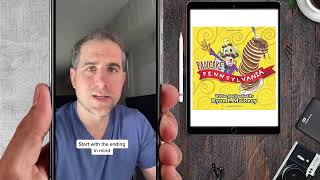
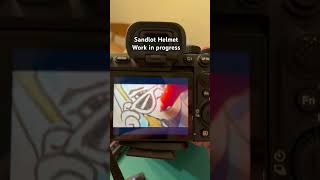
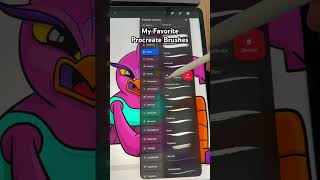
In this first episode of a ten‑part series, Ryan Maloney walks viewers through his end‑to‑end process for designing an NFT collection for spoken‑word creator Josh Terry. He begins by articulating a design philosophy that works backwards from the ultimate goal of customer delight and word‑of‑mouth promotion. He then outlines a structured brainstorming routine—dumping every idea onto paper or an iPad, using a concentric‑ring elimination method, and drawing inspiration from high‑selling NFTs and a vintage Ted Williams baseball card to envision a tarot‑style trading card aesthetic. Ryan demonstrates rapid prototyping: sketching multiple concepts simultaneously, creating a 1080 × 1080 Photoshop document, building layout and typography in InDesign for quick iteration, extracting a still frame from Josh’s video, removing its background, stylizing it in Procreate, and animating layers in After Effects. Throughout, he stresses the importance of a fast feedback loop—sending a rough prototype to Josh, capturing his preferences, and iterating without getting bogged down in perfection. He also shares practical mindset tips for staying focused through the “valley of despair” that follows the idea‑generation high, and highlights the toolchain (iPad/Apple Pencil, Photoshop, InDesign, After Effects, Procreate, Illustrator) that enables swift creation and revision. The video ends with a preview of upcoming work on icons, 3D depth, and further refinements.
Chapters
If you've been on TikTok for a while, you know Josh Terry's work. He's a spoken word writer who reads all of his videos like this, and you can't help but watch each one because you think to yourself, this one isn't going to resonate with me, but then it resonates with you, and it keeps resonating and resonating, and then he looks deep into your soul. All jokes aside, he's a really smart guy, and it's worth teaming up with him to create an NFT collection. This will be part 1 of a 10-part series where I take you through my entire process of creating an NFT or any product from scratch, starting with no idea to a finalized product. Like and follow and ask questions in the comments. I'll answer every single one. The next video, I'll walk you through my brainstorming process where I dump all my ideas onto a piece of paper or an iPad. Let's get started. Let's talk about what goes through my head when I'm designing a product for myself or for a client. In writing, there's a technique where you write the end first. I do the same when designing any product. But the ending for me is word of mouth. It's the delight of the customer or the client. This is kind of crazy, but I envision two people having a conversation. Think about the customer or the client telling somebody about the product I created. They're excited to tell people. I think about the words they use. You have to try this. You have to see this. This was worth it. This was genius. Amazing. Anything short of the customer or client using those words to express how they feel about something you've created for them is a failure. On the flip side, what if they said something bad about your product or didn't say anything at all? That's also a huge failure. Now I map two paths backwards. I try to envision why this product was amazing or terrible. Here are some of the reasons that a project would be amazing, and here are some of the reasons that a project would fail. It's almost time to start brainstorming, and we will in this video. Before we brainstorm, I want to lock some thoughts into my head. Knowing that this is the path that I'm working backwards to an amazing project, In order to add this value, I need to have conviction, bring my ideas from experience, execute quickly, and focus. Because right now we are in the high of the idea. Pretty soon after brainstorming, we will hit the valley of despair, and I need to be focused and ready to battle through this. And working backwards from the blah path, if I'm lazy, scared, scatterbrained, questioning, or afraid to make mistakes, this project will be a disaster. That ends the mumbo jumbo woo woo portion of this series. Let's get creative. While I'm drawing, I'm going to keep Josh's videos playing in the background. I do this with music videos and you get completely absorbed in the artist or the brand, and it helps you tune in to whatever you're going to create is going to be tuned in with that brand and their audience. Josh has a very distinct style, from his profile photo to the angle of the videos. I'll start there. In the middle of my brainstorming session, my Apple Pencil died. Gotta plug it in to charge it and use the finger. I could easily use this as an excuse not to do the work, but I gotta keep moving forward. Instead of working on one idea, I'm going to draw 4 at the same time and just sketch out rough ideas. I move as fast as I can through my drawings without thinking too much. At this point, just put every idea you have on paper or an iPad. When I'm brainstorming, I think of Josh Waitzkin's technique for learning anything. The outside circle is my first brainstorming session. Every session, I move in a ring and eliminate ideas as I go. I start to zero in on something that works closer and closer until I hit something. To me, it feels like fishing with a net instead of fishing with a hook, trying to capture one precious idea. While I'm brainstorming, I'm also looking around online. I'm looking at the activity of the highest-selling NFTs. Then I came across this Ted Williams card, and I thought to myself, it'd be really cool if Josh's ideas were cards. I'm sketching ideas for Josh Terry's NFT. I'm moving in tighter on the idea. I'm bouncing between Josh's work and this card art that inspired me. I'll write out the information that each card needs to have. Sorry, my Apple Pencil's still dead, so I'm doing it by finger. All right, there should be some charge left. I think it should look like a tarot card meets a baseball card with some moving graphics in the background. I'll make this shape and put Josh's face in there and put the title of the card at the top. I'll make a rough sketch to see if it feels right to put his face on the card, and I think it does. The final NFT won't look like this. This is just a rough sketch to get the concept on paper. Now that I have my sketch done, I'm going to build a prototype using Photoshop and After Effects. In Photoshop, I'm going to create a new document at 1080 by 1080 at 300 resolution. I'm going to create a new document at 3.5 by 2.5 inches at 300 DPI, then copy and paste that in, scale it down and align it. Let's make the card art. I have a rough concept sketch that I feel pretty confident about. I think a card will work. But I wanna move fast, get feedback from Josh, and verify my assumptions. So I'll build a prototype and email it to him quickly. When working with new partners or clients, it's important to understand their tastes as quickly as possible. Figure out what they like, what they don't like, why they think something will work or won't work. Memorize their feedback so each project becomes more efficient and quick. Never make a client or partner give you the same note twice. This is the first time I've worked with Josh, and judging by the emails, He's open to exploring brand new visions, so that's what I'm going to bring to the table, are just some fresh ideas that he can look through and see what he likes and what he doesn't like. With that said, you need to have thick skin and be ready to change things because the good ideas will win. It doesn't matter who's right and who's wrong. You also don't want to make this process painful or time-consuming for your partner or your client. One time, a powerful executive at a big, big media company gave me some really good advice: spare me the details and get it done. I've been zeroing in on a concept for Josh Cherry's NFT. I don't know if this idea will work, but it's worth exploring. Build a prototype quickly to get feedback as quick as possible. I'm going to start building the card prototype in InDesign. I use InDesign because it's very quick to change this information and duplicate cards, so I can have multiple cards and just change up the numbers or the names on those cards. Time for basic card setup. So I type in the information extremely rough. I have a front and I have a back with the entire script. You want to make the prototype look nice, but you want to move quickly. I need to get this to Josh to get feedback as soon as possible. Let's design this. I want the card to have the feeling of a tarot card, so I do some research. I want it to feel new age. I browse examples of work online, not to steal ideas, but to get inspired. A way to come up with new ideas is to pick something you like from one thing, combine it with something from another. I'm looking for inspiration when it comes to a color palette and typography. It's easy to fall down the design research rabbit hole, so keep this quick and get to design. I'm designing Josh Terry's NFT prototype in InDesign right now. I'm designing the card using textures, color shapes with different opacities, and experimenting with typography. All right, so I have the front of the card design and a little bit of the back design. I'm not going to design the back too much because I want to get to the Josh ASAP. Here's a look at the front and then the back. I'm just going to keep playing. I want to get feedback before I even design that to make sure this concept is headed in the right direction. But before I do that, I want to add Josh's face.— to the center panel. Josh sent me this video to work with. My idea is we add a still frame like this to the center panel of the card, only I'm going to break apart the background and the foreground of Josh and stylize this in some way, maybe with a watercolor texture. And then it's going to animate or wash out and then start moving around as the card rotates or plays. I'm still going to figure that out. To create this animation, I'm going to use a combination of Procreate After Effects, Photoshop, and I'm still just working this out on the fly, so I'll let you know anything. I'm planning the design for Josh Terry's NFT card right now. I have a concept of creating a trading card or collectible card line, and I'm going to mix in some animation, but this is just to develop a prototype to get over to Josh for feedback. So in After Effects, I'm going to drag the video and create a new comp and find a still frame without text on top of it. When you do design work for years and years, you can sort of hear your client's feedback in your head before you even deliver it to them, and I would bet that Josh doesn't like this open-mouth pose. So I'll let him know in the email I can find a better frame, but I'm going to start with this for the concept because when I want— when the animation plays, I want it to be from that first frame and be seamless. I'm going to go to Composition, and I'm going to export a frame as a Photoshop file. Make sure the resolution is set to full. I accidentally exported it as quarter, and now it's a very small Photoshop file. I have got it open in Photoshop now, and now I can break apart Josh from the background. Just for time's sake, I'm going to use the Remove Background button. 90% of the time, it works all the time. In this video, I'm going to send off my proof of concept NFT to Josh to get feedback. I'm going to adjust the settings in Photoshop with curves and lowering the saturation. Then I'll send it off to Procreate on my iPad. I'm going to draw some sketchy lines similar to Josh's TikTok profile pic. I like the drawing. I'm going to export that back to my computer as a Photoshop file, import it into After Effects as a composition, retain the layer sizes. Drop it on top of the video. Now we can animate each one of these layers. I'm going to use a simple ink wash with an alpha inverted matte and keep the demo simple. I thought about this for a long time, and I think the age of— Now this is very rough, but it's enough to send to Josh for feedback. Back in InDesign, I add Josh's head to the card. I import that card into After Effects. I'm going to add a light sweep to this. There we go. I'll add some background texture and send this off. I'll send this to Josh, get his feedback, and either kill it or keep This week I'm going to revise Josh's NFT. Right now I'm working on icons for different categories of his writing. After sketching the icons out, I start to build them in Adobe Illustrator. I go through several iterations and try to figure out a style that works best. I remind myself that speed is more important than perfection, so I try not to get hung up in the details and get to moving and redesigning the card. I create a spot in the upper left-hand corner and lower right-hand corner for the icons. I make the frame in the center 1920 by 1080 so his full video can play along with the captions. Back in After Effects, I slide his video into place and add a mask so the series icon in the lower left-hand corner fits over top of the video. In the next video, I'm going to add some 3D depth to this card.