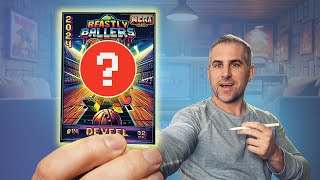
Ryan Maloney walks through creating Beastly Ballers, a 1990s-style trading card series inspired by Garbage Pail Kids and NBA Jam. He shows his 7-step Procreate workflow from sketch to final art, then lays out cards in InDesign and orders 5 sets of 25 printed cards, getting his 10-year-old son Luke's feedback on the stats and design.
Chapters
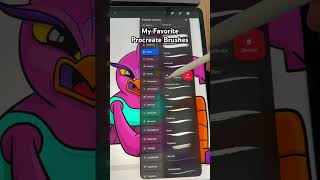
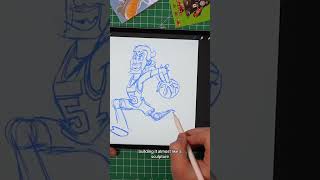
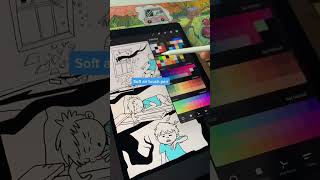
I've had this idea for a long time. What if I could create a 1990s-inspired trading card series with my drawing? In the next 7 minutes, I'm going to show you how I draw these characters on the iPad in Procreate and to set up the cards to create mega rare Beastly Ballers Retros. I'd create Beastly Ballers basketball players and I'd release them in different series. I released an original series, a Sewer Slam series, and now these are the Retros. And this time I'm actually going to get the cards printed first. Let's start with the idea. I've always wanted to create a trading card series using my strange drawings. Growing up, I was obsessed with sports cards and trading cards like Garbage Pail Kids, Pinnacle, and Upper Deck with their disgustingly detailed characters. The weird artwork of the early 1990s and the explosion of the video games like NBA Jam gave me the crazy idea that maybe someday I could grow up to create my own card series. But this idea always seemed like it was too big to create, so I put it aside for decades. But slowly, the characters came to me and they wouldn't leave me alone, so I I'm gonna push Beastly Ballers forward. Beastly Ballers was an experimental project I created a few years ago. Like so many projects I've sent off to the project graveyard, I let Beastly Ballers fade off and die. Then NFTs got popular and I thought, why not just post them? And I was blown away when they sold. Now before you get all, ugh, another NFT video on me, I look at cards and NFTs the same way I look at videos, plastic, or paper. They're distribution methods. And if you want to build your social perception around liking or not liking a medium or distribution method, go for it. Today we're focusing on turning this character into a physical card you can trade. I think with any project you start, you need to get really clear on your vision, and sometimes it's easy, but sometimes it's the hardest thing you can ever do. Beastly Ballers just came to me in small pieces, so I could never really fully get the vision. But now I'm starting to envision Beastly Ballers ultimately as an endless multiplayer PlayStation Sports combat game. Since I can't even code a line of ActionScript in Flash, I'll stick with what I do best, and that's drawing and creating the characters. When I draw, I follow a 7-step process. Step 1: Research and inspiration. Research shouldn't be boring. Find things that excite you and put them in a folder. I'm looking at basketball photos, basketball art photos, and old Nintendo and video games. Fill up on ideas and inspiration until you're too excited to research anymore and you need to draw. I've narrowed my idea down to some sort of a Steph Curry meets a devil type of beastly creature. Let's call it DeVille. After you have your research done, force yourself to commit to the idea and finishing the drawing. It's very simple to want to give up and quit within a minute of starting. Know that you're going to push through this. Set a timer, sit down and draw until the timer goes off. Don't worry about the final result. Step 2: Let's get sketching. Sketching is practice. You don't win the championship at practice, but you don't win the championship without practicing. So sketch, sketch, and sketch some more. I sketch with a blue Crunchy Cow pen in Procreate. When my brain sees blue, it knows we're not going for perfection, but flow. Get the ideas out. Erase, move, sketch, rework. Pay attention to the signal between between your heart and your stomach. When you feel a twinge of excitement, that's a sign it's time to move on to the inking. Inking is fun and frustrating. If you want to draw smooth lines, figure out if you like to push your lines or pull your lines. Spin the Procreate canvas around so you can get the right angle. The undo button is your best friend. Here's another tip to draw smooth lines: draw through your lines, then erase. This will stop your lines from being scared. Scared lines aren't smooth lines. And just because I tell you to draw one way, that doesn't mean you have to listen to me. Don't ever listen to anyone when they tell you how to create something. Find your style through practice and repetition and things you like to do and things that work for you. Disregard everything else, even if it's stuff I'm telling you now. Ink's done, time to color. Colors are a gut feel. Lay down your base colors as quickly as possible. Drag and drop from the color palette, then change them up using the hue slider in the settings. With shadows, add a new layer, set it to multiply, 15% opacity, and draw on one side of your character. With highlights, I pick a brighter color. Add a new layer on top of these and just tap these in sparingly. It doesn't take many highlights to make it pop. We're just about done. Let's add in some details. Lines, shading, dots, rips, drips, slime, spit, ooze. Perfect. This beastly baller is looking, uh, beastly. That's the only line I could come up with there. So let's recap my drawing process. Research, sketch, inks, colors, shadows, highlights, details. Get a set process down so you don't have to think when you go to draw. Thinking is the enemy of creativity. I just made that up. I don't know if that's actually true. And it's sort of not true. It's good to think. Now let's set up the card in Adobe InDesign. You could set up your cards in Procreate, Photoshop, or whatever program you have. I like using InDesign because I can quickly duplicate, change names, numbers, export to high-res files. To me, this is one of the most fun parts of this drawing process, seeing the cards come to life. We thought about the gaming aspects and the power-ups and made sure they were added to the cards. I also got some help from my son Luke. He's 10. He knows a thing or two about cards. Do you actually pay attention to those?
No, like the shininess. Like for some you could just do like, you see like the shine on it?
Yeah. Yeah, you could do Shooting, passing, and defense in Power Rank.
It should be like, like it depends like what the player is like. They could be like really good at defense but bad at passing and shooting.
Yeah. Thank you, Luke. This is why I had kids. Luke told me what to focus on and what to get rid of. That's hugely important. Whenever you create something, don't be afraid to show it to your target audience and just let them speak. Listen to what they're saying. Take that in and eliminate things that don't work for them. But sometimes keep that thing in there that they think doesn't work for them, but they're on the edge. Now it is time for my least favorite part of the process, and that's printing. I have spent so much money on printing. Seems like we're still in the Middle Ages when it comes to printing. But I found a decent one online, and I ordered 5 sets, 25 cards, and some fancy packaging. Now the packaging is going to be a little bit different. I went with bags instead of foil wrap. This could be a major gamble. Now we sit around and wait. They're here! All right, let's see what these look like. Whoa! Wow! Let me introduce you to Beastly Ballers Retros. Oh yeah, the first officially printed Eastley Ballips, ultra mega super really really rare. I'm, I'm still working on that part. Let me know what you think of these, and maybe I'll send you a bag. Thanks for watching. My lesson yesterday and I