How To Make A Graphic Novel - Try these 6 tips to get it done!
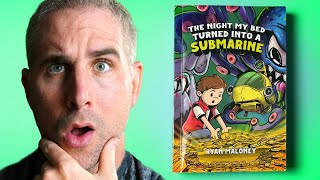
Ryan Maloney finished his 430-page graphic novel The Night My Bed Turned into a Submarine and distilled six tips: keep your first book under 200 pages, work backwards from what readers should feel, and use a daily 45-minute writing block. He also tricks himself into starting by limiting sessions to 15-45 minutes.
Chapters
If you've ever thought about making a graphic novel or a comic book, I want to share 3 tips to help you create that project quicker and 3 tips to help you stay focused to make sure you actually finish your project. I recently finished this book 430-page graphic novel called The Night My Bed Turned into a Submarine. It took me 3 years to write and draw. I definitely could have finished this in a year to a year and a half if I know what I know now. I could sit here and tell you all the mistakes I made, but that would be a 5-hour video. So I've compressed everything down into 3 tips to help you finish your book quicker and 3 tips to help you actually finish your book. Tip #1 is to clarify your story. The way I clarify my story is I work backwards. Today you're starting off with just the desire to create a graphic novel. I want you to envision this: your graphic novel is done. You walk into a bookstore and you see it on the shelf. You see two kids pull that book off the shelf. Now follow those kids to the cash register. They're about to check out and pay a certain amount of money for your book. What did you put in that book to make it worth buying? When those kids walk out of the door, what do you hope they feel when they go home and read your book? That feeling is what I want you to start writing your book with. That feeling is going to clarify your story and clarify who you are writing your story for. When I first started this story, my son took the first few pages to his kindergarten class without my permission. They were just rough sketches and a made-up story that didn't even make any sense. The teacher emailed me back saying, "Luke brought your story to class. It's pretty cool, but it was really hard to follow." Those words hit me pretty hard. I knew when I went to make this full book, it had to be absolutely clear what was happening in the story and who this story is for. I didn't want any of the feedback after this book was done where it was on shelves, to come back saying people didn't understand what was going on. So really, clarity was my number one goal, and I hope it can be yours too before you even start your project. Tip #2: Keep the amount of pages in your book in check. In other words, maybe don't make a 430-page graphic novel on the first attempt. Just don't aim for anything over 200 pages. The inspiration for this graphic novel came from Amulet. When I first saw Amulet, I looked at this book and I thought to myself, I will never be able to write and draw 200 pages. So I dove in. I wasn't sure if my story story was working, so I kept writing, kept writing, kept writing, and all of a sudden I had a full movie script, and that alone was, I don't know, a couple hundred pages. So I knew I would have to go through here, and if I turned this entire thing into a graphic novel, this would be an 800-page book. So I even weeded this down. But what I recommend is aim for 200 pages or less if this is your first graphic novel. It's probably just a good practice to keep it at 200 pages or less regardless. Don't do what I did. It cost me 3 years. Short stories can still be a hit, so aim for under 200 pages. Tip #3: Make sure your story works. You heard me talk about it earlier in this video when my son took the early draft of TNMB into his class and the teacher said it wasn't clear. I was crushed. What I wish I would have done at that point was go back to my script. I wrote my script in Apple Pages on the iPad. I wish I would have stayed here, even refined my outline before I got to this script. I would have talked my outline out to my audience, to the kids that I was writing for, family members and friends that understood what I was talking about and could give decent feedback. I would have worked the outline, simple bullet points about what happens in this entire story, and then I would focus on writing the story more than rushing it and getting into the drawing. A good outline to use that's been around for 1,000 years is the Hero's Journey. You don't have to write it beat for beat, but go on YouTube and search for the Hero's Journey and borrow some of those beats. You have a character who needs something, who crosses a threshold, who meets a guide, on and on and on. Follow that template and you'll feel pretty good about your story before you even get into the script phase. One of the hardest parts about creating a graphic novel, a comic, book or any significant creative project is just finishing it. Shiny objects and other YouTube videos are begging you to click on them, go watch this, go listen to this, but you have a job to do. A job that might not pay off for years and it might not pay off at all, but you will learn a lot from it. I'm proud to say I actually finished my graphic novel. It's done. Sure, there were 432,067 distractions in my way, but this was the one that just kept me going. This is the one I focused on and worked on for 3 years straight every single day. At one point I was even trying to make like a drawing puppet YouTube channel. I've never sewed anything in my life, that would have been a disaster. With that said, let's talk about 3 tips to keep you focused in finishing your graphic novel or comic book. Tip #1: The Jerry Seinfeld Technique of Writing. If I had to pick one thing to tell anybody I ever talk to about how to get something done, this is the method that I use. Sit down every day and create for 45 minutes. Whatever it is, you have a 45-minute block to sit down in your chair and do that thing. Every day you do it, you earn a red X. Your goal is to earn a red X for 30 days straight or more without breaking the chain. Earn those X's. When you earn those X's, you develop your skills and you finish projects without worrying about finishing projects. You get much better, much quicker. Tip 2: Trick your brain. Right now, your brain is watching YouTube. It does not want to go and do anything, create anything. The task of creating a graphic novel seems so huge, it's so monstrous that you won't even start on that project. The way you do this, the way you get started, is to tell your brain you are only allowed to do something for 15 minutes. It's just a little reverse psychology. If you want to get a kid to eat something at dinner, tell them they can't eat broccoli, and all of a sudden they're interested in that thing. Say, "You can only eat one piece of broccoli tonight," and they'll do it. Your brain is the same way. If you tell your brain you can only do something for 15 to 45 minutes, Just that act of getting started gets the brain relaxed a little bit. Now you're into it, you're 30 minutes in. By the time 45 minutes comes and you have to stop, your brain doesn't want to stop. It wants to keep going. And actually, it's sort of hooked on that thing you're doing. So the next day, it's going to want to do that thing again. You're going to create a habit and a healthy addiction to continue working and building up your project. Tip 3: Aim past the finish line. When I started this graphic novel, all I thought about was the day that it was going to be done. It would be a total relief. But I also know that once you get close to the finish line, you let up a little bit. Slow down, you start to take days off, you get a little bit lazy because, you know, the finish line is coming and it's just going to take care of itself. But what I like to do is shift the finish line 10 yards, 20 yards past that initial target. When you are aiming for the finish line, you go right through the ending without thinking about it. So by the time you start getting lazy and taking days off, you're already done with the whole project, and those last few days are just finishing touches. So that's 6 tips that will save you a ton of time. It'll probably save you a year. I know it would have saved me a year if I knew that when I started this book. Quick recap: Tip 1: Clarify your story by working backwards. Think about somebody reading your book after it's done and the feeling you want them to have. Now when you go back to write and draw your book, think about that feeling and that reader throughout the entire process. 2: Keep your page count in check. 3: Make sure your story works. And the 3 tips to help you stay focused and actually finish your project: The Jerry Seinfeld technique of writing. Trick your brain. Aim past the finish line so you don't get lazy and let up. Before you finish the book. Speaking of finish, I am finished here. Thank you very much for watching. Good luck in making your graphic novel or comic book, and I will see you again soon.
More from Ryan
Drawing Mr. Beast into a Beastly Baller trading card #art #drawing #tradingcards card
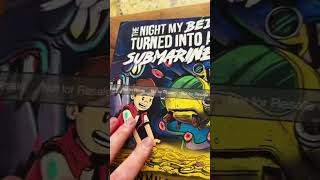
The first draft of my graphic novel #art #procreate #originacharacter #graphicnovel #drawing