My Paid Ads Made $54M in 2025 (Here’s How)
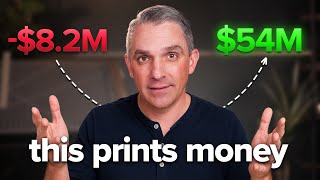
Ryan Deiss explains how an $8.2M paid ad program produced ~$54M in revenue (~378,650 leads) and distills three core lessons: (1) targeting is effectively dead—use messaging to 'target' (direct call-outs, problem-statement ads sourced from customers or AI, and boosting viral organic posts); (2) accelerate buying with content-binging—use YouTube as a content-binge factory with a pillar content piece and 5–7 splinters to compress the Zero Moment of Truth (7 hours, 11 interactions, 4 locations); (3) stop treating acquisition as a funnel and instead treat it like a popcorn popper—segment leads into now/later/never via hand-raiser campaigns and market differently to each; track performance with scorecards (follow-up video promised on scorecards).
Questions this video answers
$8.2 million
$54 million
~378,650 leads
>2% click-through rate and <40% cost per click
7 hours of content across 11 interactions and 4 locations
Chapters
We just spent $8.2 million on paid ads and it made us $54 million. And in this video, I'm going to show you the three big lessons and the seven secrets that we discovered that got us that 6.5x return on our investment. Now, if you don't know me, my name is Ryan Deiss. My partners and I manage 17 companies across our $200 million holding group. And one of those companies just happens to be digitalmarketer.com so, yeah, we're pretty dang good at marketing. And what I'm going to show you now are some of the coolest things that we figured out after investing over $8 million of my own money. This is going to be fun. This is going to get tactical. So let's get into it. Lesson number one, targeting is dead. That is right. One of the big promises of digital marketing, really, for the past, I don't know, almost like 20 years, was the ability to micro target and in on your perfect prospect. And for years and years and years, that's exactly what platforms like Facebook and Instagram, Meta and even Google allowed us to do. Obviously, this had a lot of different privacy concerns. There were also a bunch of issues that came along when Apple came and said, you know, hey, meta, you can no longer track across our platform. Long story short, targeting just got chopped and chopped and chopped to the point where now Meta has basically said, forget about it. You just can't target anymore on our platform. So where does this leave us as marketers? Well enough. It kind of takes us back to the old school days of advertising where messaging reigned, and that is where we are today. Messaging is key again. So these are three ways that you can leverage messaging, not to just make your ads more effective, but to actually target. So the first thing that you can do is simply do what we call a direct call out ad. Now, as the name suggests, a direct call out call out ad is when you call out directly to your ideal target market in your ad. So for example, you might start your ad with something like attention dog owners, if you happen to be targeting dog owners, or attention Westlake moms, if you happen to be targeting moms in the Westlake area, or attention seven figure business owners. The point is, if you want to target a specific demographic, if you want to target a specific ideal client, you don't have to do the targeting in the back end of the system. Just say who you want to target. And guess what? The algorithms are pretty good at reading who you want to target and serving up just those folks super simple, but believe it or not, it works. The second strategy that works really, really well from a messaging perspective is what we refer to as problem statement ads. Again, as the name suggests, a problem statement ad is an ad that where the messaging of the ad is a problem stated in the words of the prospects. So basically a big problem stated in their own words. So for example, if I had an E commerce business where we sold fitness products to stay at home moms, I might have an ad. I struggle to find time to exercise because my kids need constant attention, or getting to the gym is needed nearly impossible because I don't have childcare options that fit my budget or schedule. The point is, every single prospect has problems. And if you can figure out what those problems are and if you can state them verbatim in the prospect's own words, that is the ultimate scroll stopper. It's kind of like you're reading their minds. Because really the best way to make a prospect feel understood is when you can describe their problem better than they can. And that's exactly what a problem statement ad does. So how do we source these? Well, the first thing we can do is we can go to our sales team, our customer support team, or we can just do customer interviews, we can go straight to the source, we can find out what are our prospects saying, what are the problems that they're expressing in their own words. And this is absolutely where I would start. The other tool that we have at our disposal is of course AI. So I would encourage you go to ChatGPT, type in a prompt like hey ChatGPT, I want you to act as my ideal client or avatar or what are 10 common issues, challenges and problems that you face on a regular basis. Please list these as actual statements in your own words. If you do this, it will give you 10 statements that if you compare them to what your prospects have actually said, it's amazing. I want you to brainstorm 30. Now once you have 30, what I want you to do is I want you to run a $10 a day test for five days, a split test for five days. And I want you to figure out which of these problem statements are going to get the highest click through rate and the lowest cost per click. And these are super simple ads, okay? We're not going to get fancy with the design. And what we're looking for is an ad that gets a better than 2% click through rate at a lower than 40% cost per click. That's kind of the target benchmark. Once we know that, we know the problem statements that most resonate with our audience, we can then leverage those for additional ads. If you've got the solution, amazing, you've captured their attention, you can offer them the solution. The third big messaging strategy that is working for us in this post targeting era is simply to boost the organic posts that happen to go, quote, unquote, viral. So what I'm talking about here is if you're posting on the different social channels organically, you're going to find that there are some posts that just happen to outperform the other posts. So when this happens, take that post and create it as an ad. What we do, it's really, really simple. We'll take it, we'll recreate it as an ad, we'll add a call to action. At the end, we'll put some spend behind it. And what do you know? All of a sudden it's one of the most effective ads that we run. And it kind of makes sense, right? The most profitable ads, the most effective ads don't just pitch, they educate. And so that we found that when the ads that we ran taught a key insight before making an offer, they actually wind up having a really high conversion rate. Continue with your regular posting schedule, post, post, post. And then when something hits, cool, take it, recreate it. Once it's kind of had its viral moment, recreate it as an ad, add a call to action, put some spend behind it, let it go nuts. Content binging is key. Now, out of that $8.2 million in ad spend, we were able to generate 378,600, 650 leads. Now that sounds really cool, but leads aren't worth anything if you can't convert them into customers and clients. And so that was our goal. How do we convert these leads into sales as quickly as possible so that we can put that revenue back into ad spend and keep this flywheel going. The problem is, is that we've been watching sales cycles just keep getting longer and longer and longer. And this is not a new phenomenon. We've really been watching this happen over the last few years. And it makes sense, right? As interest rates have been going up, people are holding on to their money a little bit tighter. They're still spending. They're just being more thoughtful about where they're making their investments. We're experiencing a bit of a trust recession right now. How do we accelerate the buying cycle? Well, there's three ways to do it. Number one, you can leverage high pressure sales tactics, right? You could tell people, you know, get it now, false scarcity, things like that, well, that can work in generating some quick sales. It also generates buyer's remorse, bad reviews, refunds and brand decline. So I don't recommend it. You can also do discounts, right? And again, discounting can generate a surge in sales. It also generates low margins and it can again result in brand decline. What's another way that you can accelerate the buying cycle? Well, what worked and what continues to work is content binging. If you can get people to consume a lot of content very, very, very quickly about your brand, we found that that more than anything else was will accelerate the buying cycle. And it makes sense. Years and years ago, gosh, it's probably been over 20 years now. Google put out a study that was called the Zero Moment of Truth Study, the Zmont study. And what they found is that for a consumer to be ready, willing and able to make a purchase, to make an investment with a brand, they need to consume 7 hours of content across 11 different interactions and 4 locations. So that's kind of the magic formula. So 7, 11, 4, 7 hours of content, 11 different interactions for location. This can happen over a long period of time or we can compress it. And that's what we sought to do. So here's the secret. YouTube. All right. YouTube, the platform that you're on right now, where you're watching this is the ultimate content binge factory. Because if somebody consumes one video about your brand and if they like it, then they're likely to get served up another one, and another one and and another one. Start with one piece of pillar content. I want you to think about a single piece of content that engages your ideal prospect and perfectly articulates your value. Maybe your best performing webinar or a keynote talk or a live training. It could be a foundational lesson or a training. If you have more of a content or information based, it could be a customer success story. Once you have that piece of content, I want you to produce it as a video. You can also produce it as a downloadable report. The point is we want it to be open, we want it to be ungated, we want it to be accessible. Now I want you to think about splintering off five to seven different pieces of content. How do we take that one piece of content and now how do we splinter off seven different five to seven different little pieces of content? And invariably you know there's going to be little bits and pieces that you could go into a little bit more depth. Once you have that, each one of those becomes a video and now, each one of those points back to that one piece of pillar content. When we did this, everything changed. When we shifted from trying to sell, sell, sell, to trying to get them to consume, consume, consume. Believe it or not, not only did conversion rates increase, but so did the rate of sales content. Binging is key. Create your content binge factory, and YouTube is the best place to house that. Lesson number three, customer acquisition is not a funnel. It is a popcorn popper. For decades and decades, if not centuries, marketers, myself included, have taught that marketing is a funnel. You've got this idea where, you know, leads go in the top and they filter through and a certain number will percolate down at the bottom as customers. And it makes sense and the visual kind of works, but it's not actually how marketing works. Because if you've ever seen popcorn pop, what you've realized is that you dump some popcorn kernels into a pan and you apply some heat. And what happens? Well, some of those kernels pop immediately. At the same time, you're going to find that some never pop. Right. You let this thing go, and there's going to be some kernels in the bottom of the bag that they just never pop. But most pop eventually if you just wait long enough and if you just apply enough heat. Well, the same is true for your leads. All your leads, everybody on your list at any given time can fall into one of three categories. You have now leads. These are the leads who are ready now. They are ready, willing, and able to buy. They may not necessarily buy from you, but they are ready to buy. You also have never leads. These are people who are on your list. They're there. They will never buy from you. And then there are later leads. And obviously the later leads make up the largest segment of your list. Well, ordinary marketers make two big mistakes. Mistake number one is they turn up the heat too quickly with too many promotions and not enough value, trying to get more of these later leads to become now leads. And what happens is they wind up just burning out a lot of their best leads. It's sort of like if you were to crank up the heat in that popcorn popper. Yep. You might get some of those kernels to pop sooner than they would, but you would also wind up burning a lot of the kernels such that they never popped at all. So we don't want to do that. The second big mistake, though, that a lot of marketers make is they turn off the heat completely. They get frustrated, they look at it and they go, ah, this is annoying. Look at these stupid kernels. They're just sitting there. They're not popping at all. What's the point? I guess I will turn off the heat. They get afraid. They get afraid of being hypey, they get afraid of being pushy, and they send nothing at all. And what do you have? The best leads wind up dying on the vine. Or worse, they pop in a competitor's pot. So obviously we need to find a balance and specifically what we need to do, and I think that this is the essence of marketing today. The essence of marketing today is figuring out what are the leads that are ready now, what are the kernels that are just ready to pop so that we can market to only them, so that we can sell specifically and directly to the leads who are ready to be sold to, while nurturing and to a certain degree ignoring the leads who aren't ready now. This is the secret. We've got leads that are at different degrees of readiness. How do we know who they are so we can treat them differently? We ask them. So instead of sending out one mass broadcast to everybody on our list saying, buy this thing right now. If you don't buy this thing right now, you're a big dumb idiot. We don't do that. Okay? Instead, what we send at least once a month, but for most of our businesses, once a week is we're going to send out what we refer to as a segmentation campaign. The job of segmentation campaign is to get leads who are ready to raise their hand so that they can be segmented off into a different list to then be sold to. And there's a lot of different ways that you can do this. You can do this through content, you can do this with, you know, webinars. You can do this with purchases where if somebody takes an action, then they're segmented. But the simplest way to do it is with a basic one or two line hand raiser campaign. So for example, we might send out an email that just says, hey, I'm looking for five ideal clients who want this specific desired end result in the next 3:30 days without having to do this thing that they don't want to do. If you're that person who wants this result, reply to this email with tell me more and I'll send you the details if you see it. And if you're not at that point right now, you're probably just going to ignore it because it's not super pushy, it's not super hypey. And that's exactly what we want. A later lead to do. But if you are somebody who wants that specific result within that specific period of time without having to do that thing that they don't want to do, in this case, the call to action. Simple. You're not telling somebody to buy. You're just asking them to reply to the email to tell me more. That act of replying is the segmentation you now are getting permission to sell to only those people. Email was the original social media platform. It's been turned into a broadcast platform by marketers like us. If we can once again reclaim it as a truly social platform where we converse with our prospects, it can be so, so much more effective. So this is the simplest one of all, but of all the ones that we've tested, it was actually believed or not one of the most effective. Anything that I could do to help you or your company move faster, I've never found anybody, whether in business or life, who didn't wish that they were moving just a little bit faster. So by calling that out, you get the people who are ready now to raise their hand and say, yep, I sure would like some help moving faster. What we found is that at any given time, there are 3 to 6% of the people on our list who, who are ready to buy right now. The problem is we have no idea which are those 3 to 6%. If you apply just the right amount of heat to those kernels who are ready to pop, and if you leave the later leads alone until they are ready. This is the key to making marketing work. Today, what we discovered is that optimization, making marketing work, it's about the implementation of a lot of little things. You've gotta be tracking the right data because the only marketing genius really is the scorecard. It's the customer, it's the scorecard, it's data. So what I want to do right now, I've got another video for you on how we actually build scorecards. Because without these scorecards, we never would have figured any of this stuff out. So check out the next video that we have on how to build scorecards that enable actual decision making and not just vanity metrics. Check that out. I'll see you there.










