The Business That Serves Your Life

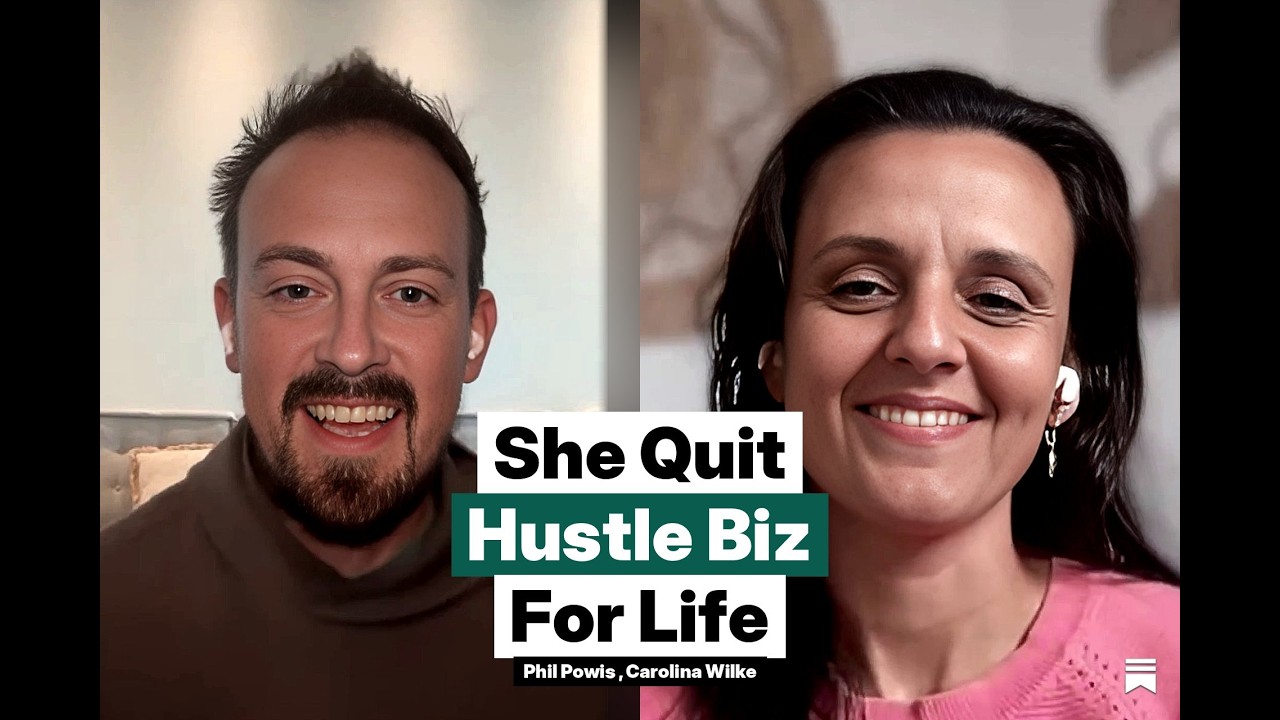
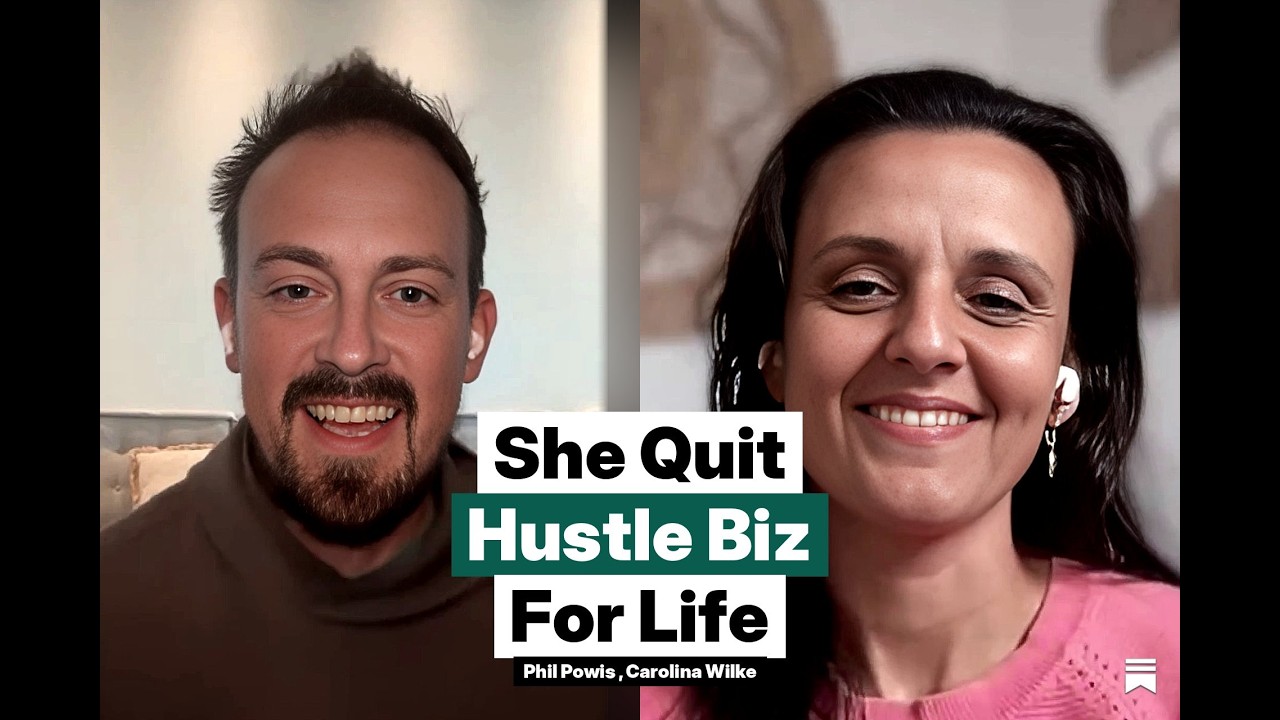
In this hour‑long live coaching session, Phil Powis and co‑host Carolina (co‑founder of Sacred Business Flow) explore how to build a business that serves one’s life rather than the other way around. The conversation begins with participants sharing the business advice they feel resistant to, then moves into Carolina’s personal story of launching a bio‑energetic practitioner practice while juggling a full‑time airline job, language‑based identity challenges, and a reluctance to adopt mainstream social‑media marketing. She describes how she initially followed a "power of one" approach—focusing on getting the next client—without a clear vision or structure, which led to both rapid growth and later stagnation. Together they discuss the cost of lacking a vision, the importance of pausing to clarify purpose, and the distinction between "force" (hustle‑driven action) and "devotion" (aligned, joyful effort). Practical tactics are offered: limiting consumption, cataloguing existing skills and certifications, creating a wild 25‑year vision, breaking it into tiny actionable steps, and seeking external counsel or a personal board. The dialogue also touches on multilingual identity, the emotional weight of visibility, and the need to allow oneself to change and evolve business models. Throughout, the hosts emphasize an "inside‑out" approach—aligning strategy with personal capacity, emotions, and life circumstances—so that business becomes a supportive container for a fulfilling life.
Chapters
Welcome, welcome. Although I don't see the live chat. Do you see that? There we go. Lee, Xenia, Kevin, Douglas, Mia. Good to see you, Philip. This is actually our first time doing this format, so thank you so much for being here with us. And yeah, we would love it if you could just kind of drop in the chat, maybe just to kick things off as we're letting people come in, where you're joining us from. I know we have people really all over the world. It's quite incredible. So yeah, maybe if you're here joining us in the room and you're willing to share in the chat where you're joining from, we would love to hear from you. And then also, as we kind of get into the topic we're going to be discussing, in addition to letting us know where you're coming from, maybe something in your business that you find yourself really experiencing resistance to. Maybe it's something that Someone else has told you you should do. Maybe it's something we've told you we should do. How crazy would that be? Yeah, just anything that you've kind of found yourself having resistance to in business. Would love to hear that in the chat as well. And then if you have kind of tuned into what this discussion is going to be about, which we'll get into in a minute, if there's anything you're hoping we might touch on, feel free to drop any questions you have and we'll try to weave them in as well. We would love for this to be a two-way conversation. Um, so yes, uh, this conversation, where did it start? We were actually a couple weeks back, uh, staying out on this farm. We're both here, Caroline and I are both here in Brazil, and we're staying out on this farm in this converted— I think it was like a grain, uh, a granary or something like this. And there was this beautiful outdoor patio looking out over the countryside, and there's this huge, uh, kind of green bench that we're sitting on, and we're just kind of contemplating life, which is something we often do. If you know us at all, you know that we're, we're pretty philosophical. people, and we get into some really interesting conversations. And then we had this thought as we were sitting there on the bench, how fun would it be just to kind of share this part of ourselves and start to open up and have these conversations in public and let other people join in as well? And so as we were thinking about that, we thought what would be most helpful. And we thought, yeah, it's really good to share these philosophical point of views, but in the end, what we really want to to offer is kind of an action. We wanna be action philosophers, right? So we also believe as much as these kind of conversations can be really fun to have, they're only as useful as we start to apply them in our life, in our day-to-day way, and in this case with our business. And so that's our intention. And yeah, thank you for being here. And yeah, Caroline, I don't know if there's something you'd like to share before we kind of get into today's topic.
Yeah, I just wanna say hi everyone. I see Croatia, Germany, United States, Edinburgh. Thank you so much for being here. We don't have a name for this series yet, but we thought of like maybe sitting on a bench. I don't know if that's what it's going to be. So I'm Carolina. I'm co-founder of Sacred Business Flow with Phil, and I'm very excited to have this conversation here with you. And we would love to have your participation. So questions, comments, insights. We always say with inside our community, like, not agreeing with us is always welcome as well. So, you know, we'll see how it's gonna go. So welcome and thank you for being here.
Cool. And yeah, so today's topic, it's actually based on something that Carolina has written. It actually will be coming out tomorrow. So I encourage you as a follow-up to this conversation to check that out. But really it's about I believe there's this moment that so many of us kind of experience. I kind of alluded to earlier where mainstream business advice starts to kind of conflict or feel wrong in your direct experience. And, you know, if you're here on Substack, it could be— it was funny yesterday, I was just writing a note about how I was dropping scheduling notes because I was totally losing my connection with it. So it could be something like that or being more consistent or following a formula and, you know, or maybe Hey, this thing has proven itself to work really well for this other person, so it should be working for me. And, you know, I think that there's cases where this sort of advice is useful, but for others, I think it can also start to form almost like a state of paralysis that can block you from taking what the next available action is. So today, that's really the conversation with Carolina is about her experience actually going back to beginning, way before we started Sacred Business Flow, when she was getting her practitioner business off the ground and kind of her perspective on what it means to build a business from the inside out and using that practically as a way to make decisions, to create momentum, and in the end, really just build a business that supports your life. Because I would say, and you could tell me if I'm wrong, but for most of us, that's why we're really here. We're here to create something really beautiful for our own lives and then share that as an act of service. And so Yeah, Carolina, I think where I would love to start this conversation is like when you think back to your beginning, and I know, you know, we've known each other a long time, so I know a lot of your story. But as you were kind of— I think at the time you were still working in the airline industry in Montreal. You had just started this practitioner business in bioenergetics. Is there any examples you could give us of maybe business advice you kept hearing or things that didn't really feel true to you at the time as you were kind of embarking on your business journey?
Yeah, like if I go back, like I was building something that was more for in-person. So I had my job full-time, 40 to 50 hours a week. And then I was on Saturdays, I was actually like seeing people and giving sessions and all of that. And then eventually I'm like, hey, I want to go full-time on that. And even though it was like in person, I had the thought that I'm like, I can leverage the online. And I knew nothing about like online business. And actually, like, I knew nothing about building a business. Uh, for me, I was a practitioner and that was it. But one thing was very clear. Um, I was never a big social media fan. Um, and I didn't want to look like the people that I saw on Instagram. Like at that time I was. I had my Instagram account and I'm like, hey, how can I do that without going away from my own values? Like, I felt that what I was seeing, the people that was like succeeding, they are constantly on. And I was kind of like rejecting that. And I did. I opened an account and then I'm like, I don't have 40 hours a week to do this. I don't have the time to record a bunch of content and I don't want my life to turn on into an online soap opera where people see what I'm eating, where I'm going and everything. But how can I start sharing my message with the time and resources that I have right now? Um, so it was more towards that, like, I need to be constant on that. I think I rejected. And then I opened up my Instagram account that I call like my business account. And I decided like how I would play that game on my, um, on my own terms, if that answers your, your question. And I kept, you know, I created my own rules and then I kept following that, uh, throughout like my first and second year on, on Instagram.
Yeah. So I think we can get into that a little bit because, um, you know, even as far as long as I've known you and then when we started to work with, I still don't think that was actually a big, such a, it really wasn't a big part of your business or even how you were getting clients even up to the point where we met. Is that, is that true or am I? Miss, uh, am I correct?
Yeah, the, it, it's, it wasn't like I thought I, I would use the online world to get visibility so people would see where I was or that I existed. And, and that's why I created, but the one advice I got from my bioenergetic teacher was like the power of one. And that was the thing that I was loyal to. And then connecting to, I kind of like rejected his structure and then maybe we could go back into that. Like I didn't have a plan. And I think I paid the cost of that. Like I didn't have a plan. I didn't have a vision. I was just like, I want to get to this number of clients a week and I just need one person today. So that took me far and I was following my intuition. Like, how do I get the next person? So then I created workshops and then I invited people into my world. And then I asked friends to invite their friends to get to know me. But my only focus is like, what is the one? person, the next person, and how do I get seen or make myself visible to new eyes? Um, you know, so the online was trying to support that. That's one thing that came to my mind that I was using Instagram, but then in the in-person thing was, so then I need to go to this institution, then I need to go to, um, creating, you know, like little talks and inviting people. And, and that was kind of like my— my first 2 or 3 years, that was my only business advice I followed and it worked.
Yeah. And it's—
but I paid a price. Yeah.
Well, we'll talk about that, but I mean, I, you know, in the end, what's really interesting is that, well, anything we teach, anything we share, anything I believe in, like marketing strategic, marketing strategy, it's not out of alignment with that, right? So that is actually at the core of what I believe most everybody should be doing. It's just that, you know, building this, you know, building a proper foundation for that is, is also valuable. But kind of back to— so your experience seeing what other people were doing, would you say, was it, was it really just the time? Was it like more like, hey, I'm a busy person, I don't want to spend all my time on social media? Or did you— like, I know, like, you're way more comfortable on camera than I am, like, probably even right, right now having this conversation. So was that any sort of a resistance for you, or is it more just like, I Like, did you feel any resistance to like identity-wise, like being that person, or was it more just like, I want to protect my time and, you know, I think there's more useful ways that I want to be experiencing life? Or yeah, maybe you could share more around that.
If I'm very honest, it would like both. So I think like if you only have a few hours a day or a week to build a new business, you need to kind of like protect your time and use your time wisely. I don't think I was doing that. I was actually using all my time to see clients because I didn't have the vision and the aspect of like building a business. So I was like, all I need is one more client and filling out my time with that. But one thing I shared, um, sometimes, which is, it's very interesting. Like I, I was building my practice, uh, focusing mainly on, uh, Brazilians in Montreal. So I was building that. Mm-hmm. In Portuguese, and then I was translating to English and French, as you know, maybe you know, but Montreal is like a bilingual, multicultural place. Um, so I did not have resistance sharing my new identity so much in English, uh, but I did have that in Portuguese. And that's probably because I had like a long story of like who I was and how I was being perceived with my friends and people on Instagram, like From, you know, my past. Um, and then I feel that I, I was kind of like hiding too. I'm like, oh, I don't wanna play the social media game, but I also don't want my friends to see that I'm doing energy work. Um, and in Portuguese, resistance was bigger than in English. And if you speak more than one language and you have, you know, social circles in different languages, like there's a lot, it's not only the language itself, like you are a different person. I don't have a past in English the way I have in Portuguese, right? So there's a bunch of things related to the identity that plays there.
Yeah, it's so fascinating how, yeah, we wall off or, you know, kind of fragment these different parts of our life. 'Cause I was just relating to that because I don't plan on spending very much time there because I love Substack so much more in every single way, but I hadn't been really on my Facebook profile in years and for a lot of different reasons. We started this business and we started getting a lot of traction on, on Substack, but also I was going through a lot of stuff in my personal life, you know, going through divorce of all things. And just kind of to your point of what you were talking about, that represented kind of my old past. And, you know, so over here on Substack, it's like, oh, I can just be the new me or the me that I am now. But to go back over there on Facebook and see all the people that are kind of like straddling all these worlds, it was Yeah, it was a little bit confronting, so I resonate with that. But yeah, I just in the last couple of weeks have been posting over there a little bit again, and it's actually been fun. Like, different people have been coming out of the woodwork that I haven't heard from in ages. In fact, I think there was someone here I saw in the chat that was like, maybe knew me from— yeah, Caroline knew me from a different business, Empire Engineering, which was totally run on Facebook. So Yeah, it's been a cool experience of kind of going back over there. But to kind of come back to— you mentioned something. You said that there were some aspects of your experience that I think you used the words cost you something. And so if you look back, you know, from my experience, there's many things you did right. But in your experience now and what you've learned since then, the things that you were choosing to reject in how you were building your business. Well, A, what do you think they were? Maybe you've already spoken to that. I think you've spoken to the protection piece a little bit, but where do you see now that maybe you were getting a little bit slowed down by the pieces you weren't able to look at for yourself?
I think the lack of a vision, and I was like, I think I came from a so rigid structured world, which is, you know, big corporations that you have like the KPIs and you have the numbers and you have this and the metrics and you need to do this and that, that I And, you know, like I, I'm good in that, like I'm good with the structure and all of that, but I rejected all of that and I'm like, I'm going to go with the flow. So like, I'm going to follow my intuition and I'll just do like what's next. And because of that, I thought that I did not need any help. And maybe I didn't because, you know, like that was the beginning, whatever. Um, but I recognize now that when you are your business, which is the case when you are like working with transformation and using your experiences, uh, to help others or to inspire others. We don't see a lot of things. So I, I had like, and as I was evolving, my business was evolving. So I had then later on, I started like teaching, um, embodiment classes online. And then I had the bioenergetic sessions and I never really knew how to combine that. It was kind of like what we call right now, like, and I totally see myself in that, like fragmentation because I was just like, I can do this here. I could do this there, but they're not talking. And I didn't have a vision of like, who am I in this business? I was the teacher and I was the practitioner. And I think if I had that perception at the beginning that I'm like, I'm building towards a business, not only a practice, I would have moved, um, Probably faster, uh, not because I'm in a rush, but I would have helped my clients to get where they wanted to go faster. I would have built a container, um, that would support my life because then I, I hit a wall. I'm like, hey, here I am having my own practice and not desiring any more clients because I was working per hour and I did not know how to do differently. So I think if I had asked help earlier, I would have built a structure that would support more what I was trying to create, but I never really paused to connect with that vision early on my business building adventure.
Yeah. And like, and I think we'll probably get into this a little bit more, but well, you just mentioned pausing, but, you know, I believe much of, you know, we've talked about this, much of what you took on and the path you took to building the business up until the point where I met you was, was like spot on, right? Like, you, you know, you were able to leave your job, you were able to make this like beautiful move to Costa Rica, which is where I met you. And then when I met you there, you did have a thriving, like, full practice, right? And, and so this already is a desire that many people have just to get to that point, right? And so just to give yourself credit for that experience, but You know, where— so what, you know, just to kind of play the other side of the coin, like, where do you think you were able to kind of trust your wisdom and stay the course? Yeah, even just to get to that point, if you know. I guess what I'm trying to get here is how you see discernment, right? Because for so many people, myself included, this is where we struggle, right? And especially like when we can't see inside our own box, um, everything starts to look cloudy and muddy. And so, yeah, I'm curious about your relationship to that. Yeah.
Like, so for example, like, I think a very practical example, like I, the tool that I, the tools that I have, I can help people with many different things. Right. And I was just helping whoever was coming to me, but I was very bad in articulating what I was doing. And I never really asked myself the question, like, how do I love helping people? So I could help people going through divorce. I could help people like trying to do a business transition. I could help people, uh, with health issues, with headaches. Like I help people with cancer. So it's like a huge spectrum. And then I got myself, and then there was a feeling inside of me, like, is this it? Like, I'm going to just like, you have a problem and I can help you with this. And then, and then I raised my hand, never really like pausing it, like, What is trying to emerge? And then I realized that I, like, I can help you. I can help people with all of those things, but I truly love helping people, uh, building a life that they're very excited about it. Like maybe, um, building a business that at the time I wasn't thinking really about business, but like, I think business is a big part of life. Um, working on something that you truly love and the energetics that are, you know, the techniques and the tools and everything that I had, like, It was actually helping people to connect with their intuition, their authenticity. But how do I package that? How do I talk about it? Like, and I had a feeling inside of me that there was more. And then my own intuition said, like, you don't know how to get there. That's when I said that, like, my own guidance, like, you need help, you know, like you got here with all of, you know, the power of one and just moving and helping and saying yes for everything. it's time for you right now to pause and allow someone to reflect back to you. Like, what do you truly want? Like, you know, um, if even though I love the tool and I love the technique, I didn't want to help people with all the issues in the world. And I wanted, like, I had the, like, I want to be clear about how I help people and I couldn't articulate that myself. Yeah.
And it's, and it's funny because, um, Well, for some of you that know us, you won't think this is the strangest thing, but I was just reflecting on my own day yesterday because this is something that no matter what level you're at, you know, we can't see inside our own box. And so my day, you know, we've been looking at some different ways of serving within our business that are connected to our vision and where we want to go next. And so I've actually— Kellyanne and I both have been requesting outside support in that. And so yesterday I had a conversation with a Paco in Cusco, Peru, and we did a traditional coca leaf reading related to what we were creating. And then 1 hour— it was quite a shift. It was quite a shift. 1 hour later, I was on a call with another brilliant business coach and strategist that I deeply respect, that I've known for over a decade, and really seeking to integrate both those parts of the experience into where we're going. And so, yeah, this is not something that, like, in my opinion, this is not something that we stop doing. And it's an act of wisdom to seek outside counsel. And counsel has served me in every juncture in my career. In fact, you know, I have the people that I truly counsel with, and I've always also had this idea of like my board of directors, like the people that I haven't been blessed enough to meet yet, but that I look to you know, their perspective when I'm making decisions. But, you know, where I'd love to go in this conversation next, Carolina, is like, clearly you're not anti-strategy, right? Like, you just declared like that was something that was missing for you, but kind of you're also— you live your life very much. And this has been— I've learned so much from you about kind of being in essence and living from your own internal guidance and Well, really, this term that we use sometimes comes from you, like building from the inside out. And so, yeah, you're not anti-strategy, but you're also kind of like this, what I would say, like anti-becoming a robot. And it's really interesting how I experience our partnership and how we try to find this balance even with how we work with our clients. But like, what's— what is the difference for you? Like, how do you see this difference between what I would label as aligned structure and You know, shifting into, shifting the gear into, you know, moving from force, which maybe isn't necessarily the most helpful thing.
That's a very good question. And I think it's one of the moments that we need to really be honest with, like, where we are and where we want to go. Because that, that's one of the things that we, like, we try, I think, with our, with our clients, like, business is not isolated from the rest of your life, right? So as we were kind of like building this business, like I was going through a lot of things. So there is one world that I can like be pushing against, you know, like I'm busy moving to a different country and trying to adapt my kids on school and like all of those things. And here I am building a business that People tell me that, you know, if you want to have like here on Substack, we hear like post one long-form essay every week and 3 notes a day. But then I have another whole world happening over here that if I try to force that, I might be posting 3 notes a day, but the energy behind is just empty. So I feel that like I need to have a strategy. So I want to build my Substack, for example, and just bringing that to simplicity where I am right now and go back to How many hours I have available? What are my emotions that I'm going through right now? Um, and I don't mean that your strategy will be based on your emotions. So that's, um, sometimes I feel that people are a little confused with that. It's not that I'll do when I feel good and when I don't feel good, I don't do it. But if posting 3 times a day doesn't work, maybe posting every other week, every other day is what works for me. And then I'm going to honor that until I finish this transition because my vision is that I want to get, I don't know, a certain amount of people on Substack, that I want to have a certain amount of people in my community, that I have, I want to have a certain amount of money in my bank account or paying myself every month. So I need to be aligned with the vision, but the strategy that I'm doing today needs to honor where I am. And I feel sometimes people get confused and that's where the force is. They see people, for example, the amount of content that we put out, it's a lot. If I ask one person to do that, it's like, you know, like post 3 times a week, long-form essays. I'm like, that's crazy, but we are too. So then like, what works for you? And I think building a business and aligning strategy has to be waking up your power. And when I talk about your power, it's like your ability to say the things that you said you would do. So if you are busy right now and you need to have a aligning strategy, where's my vision? Connect with that. What can I do today? Post every other day and from my heart. So then you, it's inspired. It's not just empty notes and it's just not from AI. And then you commit to that. And some days you will feel that like, uh, it doesn't feel so good, but I'm going to do it anyways because I committed to myself. And then you keep showing up. And I think this is very different from force. You might need to stretch yourself sometimes to do it, but it's tapping more into the frequency of devotion than hustling and forcing.
Yeah, I really love this word devotion. It's the way I feel about what we're creating. And it's sometimes something I don't always have the right words for it, but it's one of the questions we ask clients a lot is it's a very simple question, but if you follow it as deep as it will take you, It can take you to some interesting places, which is what do you truly want? And sometimes I feel connected to this idea of devotion that, you know, we are, you know, there's layers to this, right? But we're operating on this autopilot of what we think the world wants from us, and we're not tapping into that inner experience of like, what do we want to experience? from the world. And it feels to me that we need to be in a dance between both sides. And sometimes there's just a subtle shift that needs to happen for someone that all of a sudden this— and this is what I kind of experience as a state of flow— that this devotion kind of kicks in because it really is. And it's really hard to put words to this. And maybe you can speak a little bit more to how you experience it. There is this feeling when you're in a state of devotion of leaning in that feels quite effortless. And it's also not something— it's, to be honest, I kind of relate it to the way I also experience my own spiritual journey, which is it's not like a static point, like it's an in and out, or sometimes I like to think of it as like a spiral. But as that becomes more and more stabilized, some of the things that in the past caused resistance for me or like would feel like hustling, they're the exact same things. Like there is a state in which doing 3 notes or 10 notes a day can feel like really, really like hard and hustly. And there's a way that that can just come out of you that it's so connected to your own expression, your desire, your service, that there is zero hustle present, even though it's the exact same act. And I, you know, something we talk about with our clients sometimes is like one of my mentors, I actually got to spend a lot of time with him at the temple.
Wow.
the universe is Michael Singer, and he talks about this idea of surrender at work. And if you think about what we're doing right now, if you're still here with us live, what are we really doing? Well, like, Caroline and I are sitting here in front of a computer. There's a little keyboard, there's a little window into the world, and we've got all these beautiful faces showing up on the screen here in the chat. A couple of people— Anne, I'm going to come back to you. I see you left us a question. But people asking questions and If you really think about it, if you're kind of a knowledge worker or someone that works in front of a computer, you're really only doing one thing. Like, what do you do? You get up in the morning, you maybe you have some practices, you do your yoga, you do, you know, you take a shower, have some coffee if you drink coffee, and then at some point exercise, some point you sit down in front of this little box and you start to do things. And I don't know if you've ever watched yourself, but you can, if you pay attention, you'll just start to notice how Again, nothing's changing. We're sitting here in front of this box and there's feelings coming up and there's emotions. And sometimes it'll feel like fire. Sometimes it'll feel like an unsettledness in the stomach. Sometimes it'll feel like expansion. You're leaning in, but there's nothing really happening. And, um, and I say this because just to give— and I want to hear, Kelly, if you have any practical guidance on this. This to me, uh, when you start to lock into this state of devotion, It's where everything shifts because all of a sudden these things that people will— and this is where, you know, people will talk about like, oh, I don't want to hustle. And I get that. And I don't want to hustle either. And I also don't want to be a workaholic. But there is a way that when you're tapped in, the same activities that some people experience as pain, struggle, hardship, hustle, it's a joyful experience. And so, Carolina, like, maybe you could talk about How you cultivate that in yourself maybe would be one way. And also the discernment, right? Because like I said, there's also a way you can delude yourself. Like, I can say what I just said and it can tip over too far into— and sometimes you call me out on that, to be honest. You're like, hey, like, get out. It's great that you love what you're doing, but like, get out from in front of the computer. Like, stop it, stop it, close the laptop. So yeah, like, anything else you could say about that?
Yeah, like I love what Michelle said. Like, I think our intention makes all the difference and I agree. Uh, I often say that the energy behind the action is more important than the action itself. Um, but I think when we are tapping into devotion, it's when it's not about you anymore. So like I suffered my whole life doing work that I hated and it was like, And I don't even understand why I hated it. Like, it wasn't like I had like amazing jobs, like early in my career, like working like in beautiful locations and managing like a very nice team. And I'm like, that's, that's just not me. But when I got the vision, um, and then my, my own goal for myself was I need to find a job or I need to work with something that brings me joy and brings me money. So those 2 things could not be separate. And then once I found that for myself, I'm kind of like, oh, okay, now I want to help people. And this is my vision. And when you have a vision of like service, if it's like, I want to help people to bring more joy into the world, like, and this is going to be translated into something that's more clear for clients, for people, um, you get off your own way. So I remember like early when I was, uh, in my previous business before Secret Business, like, Hey, you gotta do a workshop and present to this audience here. That's like quite big. And then I'm like, oh my gosh. I'm like, I'm not gonna fight with this voice. I'm gonna just show up and do it. And then the just do it thing. Of course, like if it was a talk that was not aligned with my values, I would say like, no, but life is like inviting you to fulfill your vision more and more and more. And if it requires for me to be live here. So we had the idea sitting on a bench and like, why don't we bring this bench to the online world? This is pure inspiration. But then our ability to follow through is the thing. And this is the devotion. Like, well, I had that idea. I'm going to take action on it. But then if we wait too much, the mind goes like, who are you to do this? Like, you don't have anything special to say. And I'm, I'm over that. If you don't like what I'm saying, like, great. Maybe what I'm, how I'm serving the world is not for you, but if there's something in here and you're looking to create like a joyful business, something that's like, that feels like fun, that fulfills your soul, that brings money to you and you want to help others, maybe there's something here for you. And I'm not here trying to be liked or disliked. And I think this is the energy of devotion. It's not, uh, feeding the overthinker in you that questions all this inspiration that you receive. And we are constantly receiving that. And then we're like, but I'm not gonna do it, but I'm not gonna do it. And you just do it. So it's, it's not hustling. It's, I feel pleasure. Like I enjoy this moment. Like, and, you know, and I don't know, that's, that's the way I see it. Uh, but it's kind of, it's bigger than yourself. You have a vision that's not only about you, but it's probably for something that you suffered or you found a solution for yourself. that now you want to help others, and now you just keep meeting what life is asking you to do. That could be invitation from the outside world, but could also be sparks of inspiration of like new ways of communicating what you're doing and how you help.
Okay. And because, uh, one of our intentions that we've declared for this is we don't want to just be philosophers, we want to be action philosophers. If someone, uh, if what we have just been describing is, is, um, is speaking to someone's heart and they're like, yeah, I really want to experience that for myself, but I, I don't know, I find myself guarded or like I'm protecting, you know, aspects of myself. What would someone— what would be like one thing someone could experiment with, just very simple thing, like to do differently this week if they were to maybe act as if they actually believed this posture? And, you know, maybe it could be related to money, it could be to their growth or visibility, you know, just anything that comes to mind to you. What, what would be a good, good practice people could could experiment with?
Well, I, it could be a shift in energy. Um, let me think like something practical, but I think there is a, um, you said for this week, but what comes to me, it's like for more like a long term. If you have a desire in your heart or you're like kind of like transitioning the way you're building your business. Uh, you've had a business before and you're trying to tap into, uh, into the, you know, something that serves you more than only serving others. I think stop consuming is the big thing. You know, I think it's like putting your blinds on and like, if you could feel with your whole body that you are enough and you have enough, meaning that you have enough information, certification, qualifications, knowledge, Uh, to share what is trying to come through you right now and just try to combine what you already have into something that's uniquely yours. I think that's one of like the biggest gifts that I, I gave to myself. Like I don't need another tool and I love learning tools and raise your hand if you love learning tools and learning techniques. Um, but just, it's a pattern, right? Like it could be. feeding something, but it could also be distracting you from the things that you're already capable of doing. So like not seeing what others are doing and just, if you want to make a list of like all the things that you already have, all the certifications, all the people that you've already helped, um, obstacles in your life that you overcame, exactly where you are right now, it's going to give you so much clarity of like how powerful you are and How great is your ability to help others? And then from that space, like not just for the next week, don't consume anything. Like I did that for 2 years. And then I'm like, now I need to be creative what it's in here. And that's how I like start combining and connecting the dots for stuff that was maybe uncombinable. I never seen people doing that, but I had to come up with that idea from the inside out. Uh, it's very, very powerful.
Yeah, it's funny how as I've been on my own kind of creator journey, kind of, I used to be a massive consumer of information and knowledge and I'm still a voracious learner. And, you know, if there's somebody, I think it was Gary, I don't think he's on this. There's someone in our, in our community named Gary who was talking about all the books he buys on Kindle. And I've got that addiction too. I think I've got something like 3,000 books on my Kindle that I haven't finished yet, but like, So this is something I've struggled with, but it's interesting as I've shifted more and more into creation, my consumption has dropped majorly. And actually there's a few people, like for example, AI is an area that I'm still learning a lot. Mia, who I don't know if she's still with us, Mia Karaki, she has got one of the best publications, I think, for AI. So check her stuff out. So I'm not saying there's not a place for this. kind of learning. But the way I look at it is I like to— I have a kind of a rule for myself. It's just— I call it just-in-time learning. So I want to experience what it is that is trying to come from me, and then I want to put that out there and I want to meet life at that edge of whatever it is. So if it's building something, if it's working with a client like this is— this is true. Like even like if you've been doing coaching or consulting for any period of time, There's an edge at which you just have to be honest when you're working with a client and be like, you know what, I've never encountered that before. I don't know. Like, I think I have a creative perspective and I can think outside the box and help you brainstorm this, but I don't know. And it's in those moments of curiosity that then I go and I seek out kind of like I was saying yesterday, I was seeking outside counsel from people that I trust. But that's kind of how I prioritize the learning and consumption. It's not And so many people, I think they confuse the learning and the consumption as doing the job. And for better or worse, there's been a lot of structures created in the entrepreneurial space that kind of help feed that. And this is why, you know, everything— and we're trying to, you know, I'm not saying we do this perfectly. That was a big part of our conversation yesterday. One of the things that we're really trying to fine-tune with our community is like, hey, like, this is only as good as the action you're taking. So like, how can we continuously refine and build processes that really inspire people to take that next step. Because if you get stuck in this world of just consuming, I'll tell you, I mean, my own personal experience, the places I've gotten lost the most is when I've fallen into a state of victimhood or thinking like something was going wrong and just taking in way too much information simultaneously from too many sources and got lost in the weeds, right? And so, Even that, if you're going to— obviously we are in the business of helping people with their businesses. So I'm not saying this— I've already said this is a very valuable thing. But another thing we often tell our clients is if you choose to work with us or if you choose to work with someone else, bring down the rest of the noise. So, for example, if you're working with someone else right now and you're enjoying that relationship and they're getting you results, maybe you shouldn't even be on this live with us right now. That's a weird thing to say because of course we'd love to be having conversation with you, but this is where I think a lot of people get stuck is just like taking too many things simultaneously. So sometimes I'll even say that, like when we're on a call with someone, we'll say like, hey, like, sounds like you're already working with someone on that. Like, why don't you follow that through? And actually, you know, there was something about that that, you know, you felt the trust to work with them. Why don't you follow that through and do the thing and see where that takes you? And if you still even experience a challenge at the end of that, by all means, like, come back and let's have a conversation. But Yeah, I don't think it's usually wise to be taking inputs from too many places at the same time. So yeah, I kind of went on a little tangent there, but that's just something I can be a little passionate about sometimes. Just to dip— take a dip or take a little break from my questions, like, Anne had a question and it was going back to pretty far in the conversation, but I don't know if you're still here, Anne. If you're not, that's cool. But if you are and you want to clarify what you're asking, you said— About the adaptation in other languages that Carolina was dealing with. How did you experience that and how did you evolve? So yeah, I don't know if there's anything else, Carolina, you want to say to that that could be helpful, but also, Anne, if there's anything more specific— oh, you're still here. Cool.
Yeah.
So if there's anything more specific you want to know about that, feel free to pop it in the chat.
Yeah. Like, I'm not sure if I fully understand your question, but at my early stages, like, I Um, it wasn't how I started, but then I was evolving and I'm like, it doesn't make sense to keep this from, uh, other people because they don't speak that language. So I was, uh, finding ways to communicate in the 3 languages that I was living my life, which was French, English, and Portuguese. So I would, you know, for my online world, I would do a post and then I would do the translation. Right there. And then I start to choosing, like once I moved to Costa Rica, I'm like, I'm gonna just focus on English. And that, that was an evolution, right? So I'm gonna focus on English. And then even if we speak another language, which was interesting, then I started helping people in Spanish, um, which was a whole confusion in my brain, but it worked. Um, but then I'm like, I'm gonna focus my communication to English people because I was surrounded by Uh, mostly Americans. Um, but then I would find ways to communicate with, uh, with people in other languages. But then as I was evolving, I picked one lane and I'm, I'm going to invest, uh, in English. Um, but, and if you have anything else around that, I don't know if I answered your question, but at the, at the beginning I was trying to translate and it was a lot of work.
And also like, um, Yeah, one of the things that's cool about Substack now, this wasn't the case, I don't think, until a couple months ago, but now they have some auto translation, which is really, really cool. So, you know, we have a client in the Netherlands who I believe has something really, really special that people in the American market would really, really appreciate. But, you know, that's something she's been challenged with. But now it's like very cool because Substack will actually translate those messages directly from Dutch into English, which is really cool. And it says energetic level, the words flow and have a rhythm. Yeah, I mean, I thought that was the most interesting thing in our conversations, Carolina, was how you talked about almost like how you had 2 personalities or identities, the one that could, could like be super confident in one language and not in the other. I think that's fascinating. I don't know if— I've never really looked into that to see if there's any specific research about it, but it's— Yeah, it's a really interesting experience.
Yeah, I'm reading more and more people talking about like different languages. Um, I guess as people are like moving all over the world and, uh, we do have different personalities in different languages and also like different fears because of the past and how we think we're going to be perceived. Right. Uh, so then I chose my path like in English and, um, I have less resistance than, than Portuguese, even though Portuguese is my, my first language. Um, and I, and I attribute that because I, my past in Portuguese is not the same as my past in English. Like my life in English began when I was, I don't know, 20. And my past in Portuguese is since I was born.
Cool. Um, so shifting gears a little bit, I think, um, one thing I would love to hear you talk a little bit about, Carolina, is You know, so our name, Sacred Business Flow, these are, these are 3 words that you don't often see put together into one statement. And I also think like when people see sacred, you know, there's a lot of different ways people can interpret that. And I know that there is a version of kind of like spiritual, I'll call it spiritual business advice out there that kind of would say just, you know, hey, if you just keep doing the inner work, the clients, the result, the money, whatever it is you're seeking for, um, will come. And I know that, um, there may be a version of that you believe, but I don't think it's a complete picture of what you believe either. And so maybe you could speak to what you see as the line between trusting life, and I know you talk about that a lot too, and what, you know, what life is showing you, and then actually Creating momentum.
Yeah, like I don't, I think we need time and space too often. Like, I'm not sure if it's often, but when you need to withdraw yourself, uh, and, and see what's happening. And a lot of times, uh, people think that the inner work happens in that, you know, safe container. Uh, but the way I see healing happens in movement. And it's as, you know, like you go up the mountain, you have your insights, you have your clarifications, and you receive, you know, some good guidance and inspiration. But the healing happens when you can come back down and then face life, right? So then the inner work is something that happens as you walk. And I think business is a great tool for healing because it's gonna you know, um, make you face a lot of your challenges, make you face a lot of your beliefs, make you face a lot of like unhelpful opinions that you have about yourself. Uh, but you will only be able to experience that if you're putting yourself out there. And what I mean by that is like inviting someone to have a session with you. And then who am I giving the session? You know, like, Um, and then putting your message on social media and then receiving feedback and whatever it is, or participating in person in like live networks and doing a workshop for like a group of people. And in that action, you start experiencing yourself. And then the inner thing of like, uh, this feels like awful, like showing up online feels awful. And instead of like, I'm not going to show up online because it doesn't feel good. Like, why? Like all of those things, they, they carry like neutral energy. It's like money or workshops or even social media. Like they're all neutral things. And then my resistance with that, it can tell me like, maybe it's not aligned, but it's a different type of resistance. Or I fear being visible because when I was a kid, like every time I was being myself, uh, I was criticized and I don't like being criticized. So. I'm not going to share my opinion fully. Or maybe you're putting yourself out there, but you're being like wishy-washy with what you truly believe because you don't want to make people wrong because you don't want to make people, um, disagree with you. And then you don't really share what you think. And then the world loses the gift of seeing your unique opinion about it. And I think the inner work is like feeling that thing. And like, why am I feeling it? Where do I feel that in my body? And then you do it anyways. And then you see, like, is it aligned? Is it not aligned? Do I, should I refine here? But you only know how to refine, not because you're thinking more. The refinement comes from your interaction with life, your interaction with other people. So it's a combination. It can be just one here, or, you know, like I, I'm going to like, I was very good at that. Like, I'm not going to feel anything. I'll just do it. Like, I'm, I'm a doer. Um, but this wasn't helpful either, right? Like, then you're just on the hustle and just get it done. Like, and, and I got a good career out of that. Is it aligned? It doesn't matter. I'll just do it. But there is another world that like, oh, is it aligned? Do I want to be doing this? Uh, why am I feeling uncomfortable? And often the discomfort that we feel It's not because it's wrong. It's just because we need to grow to a part of ourselves that we haven't met, which is maybe someone that's like, even if you don't like me, I will share my opinion. Like, I don't think you should have a business that doesn't feel good. A lot of people have businesses that they don't feel good, but they are not— they don't need to agree with me and they're not wrong, but they're not my people. Yeah.
And, um, kind of how I relate to this, like doing the inner— I mean, there's different varying degrees of doing the inner work on every level. And I totally agree with you that Well, nothing. The 2 things in my life that have confronted me the most and forced me to grow and to evolve and allowed me to continue to be curious about that are business and health. And at this moment, thankfully, the health challenges are behind me. We all will go through that at some point in life, whether it's early or not. And I'm able to see that as a gift. But then beyond that, business has been the thing. Kind of like, you know, kind of connecting back to various parts of this conversation because we've talked about force, we've talked about state of flow and being into— in a state of devotion. And for me, you know, I think I'm a pretty aware dude, but I have my blind spots too. And this is also where, you know, Carolina and I's partnership is really valuable, is that whether I see it or sometimes she'll call it out for me, which is helpful having other people in your life that can do that for you.
Yeah.
It's like if I recognize I'm in force, like I am really forcing, like I'm not going with the stream, that's when I— it's almost like when I want to let the record stop and be like, okay, I'm in force. Let me go back to stillness. You know, to use your analogy, let me go back up the mountaintop for a second. But when I get there, I kind of know I don't need to stay long because I will start to— first, usually there's a little bit of a hangover effect where I need to kind of let everything just kind of settle because I'm still feeling the, the fragmentation of, um, yeah, just all the, the external pushing energy. And then it's like, okay, from this stillness, I start to usually get reinspired back to that vision. I start to get reinspired by that vision, which connects me back to this state of devotion. And it's almost like, it's not like, uh, it's not hard. Like, it's It's almost like automatically some action will be like, oh, I feel like doing this thing, you know? And it's like, okay, now let me do this thing. And then all of a sudden, that's like being back in the flow, right? And that will carry for a long time. And then it's inevitable we're going to hit these— we're going to hit resistance, we're going to hit discomfort, we're going to hit force. And I think that also the fact that we demonize this and make this part of the problem, is part of the problem, if it makes sense. Like, if you think it's a problem that you are hit, you've fallen into force, or you think it's a problem that you're feeling discomfort, or you think it's a problem that you're having resistance, this can really get in your way. So if you just be like, oh, this is actually part of the experience, you know, and get curious, like, who am I that has found themselves once again you know, beating my head against the wall or whatever it might be, you know, then you can find your way back to center. So that's the way I relate to that. And I think that's, yeah, that's really speaking to— and maybe, I don't know if there's anything else you want to say, Kathleen, about this difference, because there is. And also because you said very strongly, I believe that, you know, a business should feel good. Again, you're not saying that there's not going to be discomfort. Like, Discomfort, like, so I, you know, we both work out at the gym, like, and it's really, really painful. And it's really, that's, that's the discomfort of real growth, right? And so really, any other tips you have for people to discern the difference between that and the discomfort of kind of forcing themselves into something that isn't aligned?
Yeah, like, I love what Rebecca said. And I, this is like something that I take from my life. It's like, let me just try and see what happens, right? And see If this is for me or not. I think the problem is we try to think if this is for us here, and then we create all the scenarios that are not helpful, or we try to imagine something that will never happen, and then we don't try. And I think life, a well-lived life is a life of experiences. So the more experiences you can have, including the ones that you call success and the ones that you call failure, that at the end of the day, they're like part of the same thing, part of the same process of clarification. So just an example, like I, it took me build a practice where I was seeing patients or clients per hour to realize that that's not what I wanted. And that, you know, like that's kind of like, is it aligned? And so I needed to go through that, that experience and then it's okay to change. It's not because I committed to that like 2 years ago. That I need to keep doing that for the rest of my life. And this is where we need to pause. Like for us, like we had a version of what we do now at the early beginning of our business that did not serve us. Like we created this container and this engagement with those many sessions and we had to go through that. And then it's kind of like the discomfort of like, oh, I have all those people right now that I want to give sessions. Like. And it's uncomfortable. So what is, you know, so then I need to sit with that and see what do I want to do? Like, do I just close my thing? Do I change the way I help people? Because the discomfort is telling you it's not about quitting. It's about refinement. So like, oh, I created this package and this is the 6-month engagement and it works this way. And it's not feeling good for me anymore. So then I, the feel, the not feeling good is information. And then I need to pause and like, okay, maybe I can change the container. Maybe I can change the way I price. Maybe I can change whatever it is, or maybe I want to change completely, but it's, it's information. And if you don't allow yourself to be with the discomfort, you lose a lot of the gift. You lose the information and it's hard to clarify because then you're like, you know, you feel uncomfortable and then you jump into your mind, create all the stories why this is whatever, and you're like, this is not for me, for example. And then instead of keep going, you move back and then you create a new cycle in your life, but it's just same old energy. And often we see people like in cycles, right? Because they're not moving through the discomfort and receiving the gift of sitting with that.
Yeah. Something, the thing that came up for me is, uh, and it's related to something a mentor shared with me many years ago. Um, was like, you are always fully in your full authority to change. And it's interesting because I think this is something that we're challenged by in society and life well beyond business. But like this idea that we kind of concretize our belief structure of who someone is and then everything kind of goes through that lens, whether it's like a partner in a relationship or a friend or even a parent or family member, like we have this idea that's kind of frozen in time of what that person represents to us and what they mean to us. And yeah, we could go really deep on this, but the same thing. So we hold people to this idea that they're never going to change. And this to me is a recipe for suffering. But then we bring that same thing to our business, right? And then if we do that to others, then we don't give ourselves permission to change or evolve either. And so I think this is another thing I see people get challenged by in their business because they, especially with perfectionism and things like this, it's like they're afraid of making the wrong choice because I think they feel this sense of self-imposed judgment of like, oh, I can't get this wrong. Or like, once I make this declaration, I am somehow, I don't know, held to this for the rest of my life. But if you start to think of this as like, no, it's like what I'm going to learn from this experience. And there is a way to gracefully, like you can meet your commitments And follow through them. And then you can gracefully tell people, hey, you know what, things are changing. And if you'd like to continue to go on this journey and walk together, we can walk together. And totally fine if, you know, you're turning left and I'm turning right. Cool. We like met together. We had a nice like hug, hung out for a little while, and life is good. But I think a lot of people struggle with, with this, you know. And so I think if you think about how that relates to what you're building, it's another way you can take the pressure off of like, hey, I can do this, I can say this today, and tomorrow I can choose to be something different. And of course, there's practical elements to that and how you communicate and strategize change, but you aren't stuck forever.
Yeah. Like in my case, for example, like when I pause, I'm like, well, this is like having, I don't know, those clients during my week, like it's not feeling good to me anymore. And it's not like connected to the vision that I want. Like, I would love to have more time. I would love to have more time to create. And then I did not change or I did not stop giving my bioenergetic sessions. I just packaged them in a different way. And then I changed the relationship and essentially I was doing something, the same thing, but in a different format. And then that evolved to my next business and then that evolved So that it keeps evolving and I keep doing different, like, kind of like the same thing, but in different ways. And I keep evolving with my tools and all of that. Um, but from sitting with the discomfort and being honest, like, do I want this? No. What do I want? And then it gives me the next, the next step.
Cool. So, wow, we've been, we've been sitting here chatting on the bench, as we call it, for, uh, for an hour now. I had, I have more questions I want to ask, but, uh, I know we'll have plenty more opportunities. And as I shared, for anyone that was here at the actual beginning, this particular conversation is directly related to an essay that Carolina will be sharing tomorrow. So if there's anything in this conversation that, yeah, that spoke to you, I think you'll get some other useful insights from checking that out. We plan to continue doing these at least a few times throughout the month. Maybe we're not committing to a full schedule yet, but you might even see us every week. We'll see. We're also inviting— we're allowing ourselves to change. So we'll see. But for now, this is really fun and it's been really, really nice to have some friendly faces here with us. So thank you for being here with us. And I think, Carolina, just to close, yeah, I think I would just kind of go to— if you were to— and I know I'm probably putting you on the spot a little bit here, which might not be in my best interest, but, you know, if you were to try to If you were to try to distill down, like, you know, something we've been talking a lot about lately is what it means to build a business that serves your life instead of a life that serves your business. So, if you could distill that down into, you know, the simplest definition, what would your answer be to that as you know it today?
I would say, allow yourself to pause and go wild on your vision. Um, just a quick example. Like, I remember on my journey, I was watching like a documentary and it was like this couple living on top of a hill somewhere in Spain. And they would receive people. They had like chalets in there close to their house and they would teach yoga on the beach and they had clients coming to their space. And I'm like, oh, wow, this is what I want for myself. Uh, but then the next step wasn't buying a house in Spain, right? My next step was opening my biodynamic, uh, clinic. Um, so, but if the vision is wild and exciting enough for you, um, and we do like the, the heart vision that we call like the 25-year vision, like allow yourself to go to a space that your mind feels like really, really excited. Your vision is not your next step. But then keep revisiting the feeling of that vision and like, what are you doing right now? Is it taking you closer? So like, if my idea was to be on top of a hill close to the beach, or like it was a nature, like a gorgeous place, then I was in Canada, which is a gorgeous, beautiful country, but it was like cold as hell. Or I don't know if hell is cold, but you know, super cold. Um, Then I had to like be honest, like, I don't want to be here anymore. Not because I don't love this place, but the vision that I have for myself is being somewhere warmer. Like if I see my, if your vision includes you, like maybe traveling, working on a fixed location doesn't work. So it's kind of like just going and pausing and having that vision and then translating to like, what is the one little thing that you could do right now? Um, and it might be creating a business that it's, you know, more connected. And the version of your business right now, it's not the version that you see in your wild vision, but it has to somehow connect the dots. And it's that, you know, that little step that will like accumulate and eventually like you're going to get closer and closer and closer to, to that vision. But if we diminish the vision and then we try to get the vision to a place that we truly believe we're going to get there, that's like, you're just adapting your current reality. Um, so I would say like, if, if you want to connect with that, like work on the vision, allow yourself to dream, go a little wild, um, be excited about it. And then one step at a time. And it could just be like committing to your Substack, you know, because eventually that's going to build up and you might have an income from writing, from serving, uh, in a way that you don't have right now.
Cool. Thank you. I think we'll, we'll bring this to a close. Yeah, we're looking forward to having many more conversations like this. And again, thank you all for being here. And thank you, Carolina, for being open to me poking at you and putting you on the spot. I know I'll be in the hot seat next week, so I'll get a little bit of what I gave. But I'm looking forward to that too. So thank you. And we'll see you all soon.
It was really fun. Thank you everyone for being here. And yes, the essay will be out tomorrow and it's about like business can be created, um, in your terms as well. So I think it's going to be an interesting reading. Thanks for being here and we'll see you soon. Bye.
Bye for now.