Welcome to our live show!
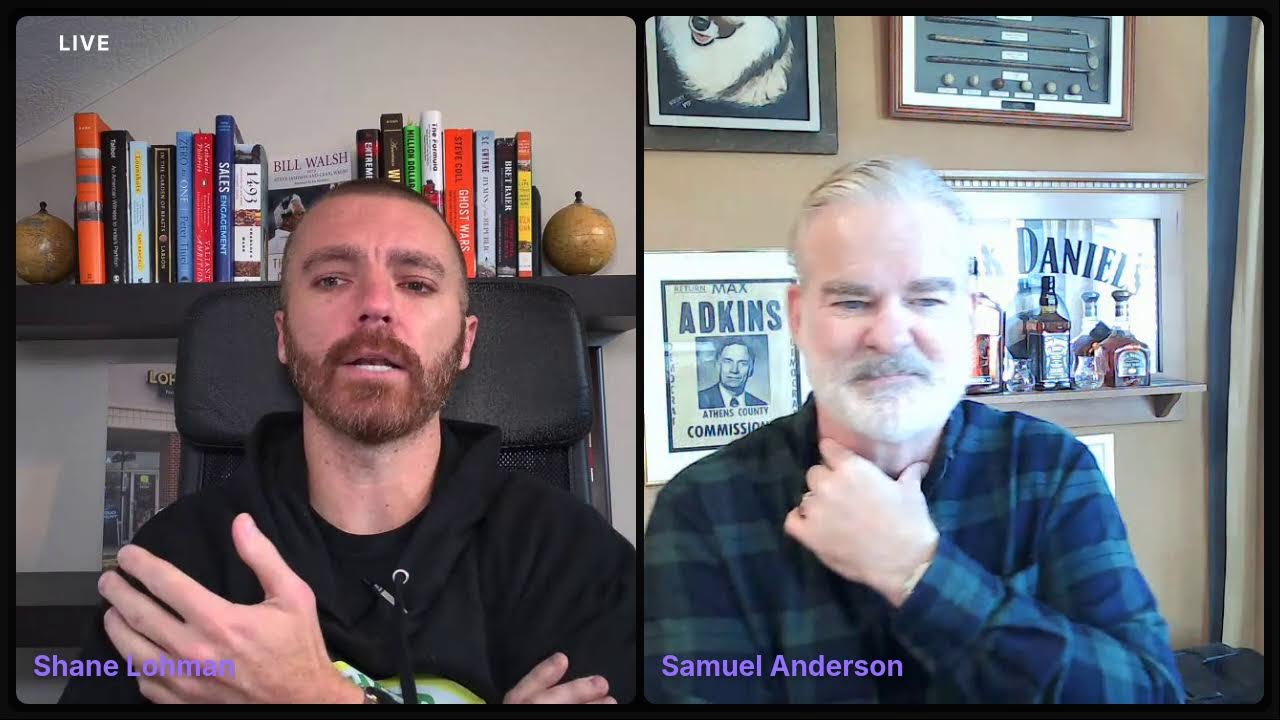
In this live YouTube discussion, host (Speaker A) and industry consultant Shane explore the looming U.S. tariffs on Canadian and Mexican alcoholic beverages. They examine how a potential 25% duty on products like Modelo beer and Mexican tequila could reshape cost structures, pricing, and consumer behavior. The conversation moves through several themes: the need for brands to scrutinize cost‑of‑goods and adjust margins; the tension between push (distribution‑driven) and pull (consumer‑driven) marketing tactics; inventory challenges such as 365‑day dead‑stock lists and discounting practices; possible job losses in brewing and distilling due to reduced production capacity; opportunities for U.S.-made spirits and beers to leverage a “Made in America” narrative; competitive set analysis to exploit price gaps; the importance of a clear brand value proposition rooted in storytelling and experience; broader supply‑chain pressures like port strikes and geopolitical tensions; and the urgency of building a comprehensive commercial plan (ABP) before the tariffs take effect. Throughout, both speakers stress that tariffs are a catalyst—not a sole cause—prompting brands to tighten operations, reassess pricing, and prepare for consumer price‑shopping behavior, while also noting that larger players may absorb costs more easily than small‑to‑mid‑size brands.
Chapters
Decided to come on the air this weekend. We know it's a holiday weekend, but have lots to discuss between Shane and myself here this morning. We've been talking about before we got— we went live, we've been talking a little bit about the tariffs that were— that are possibly coming against Canada and Mexico and what the potential impact could be. Please You know, in the comments, provide your comments on what you think the impact is. Shane, I actually dropped some polls this morning across several of the industry channels. I haven't dropped a poll in a while, but certainly people have a lot to say. A lot of votes are coming in. It's certainly not statistically relevant, but people in our industry have a lot to say about it in terms of what the impact would be. So why don't we get to it, Shane? What are you hearing? What are you thinking in terms of what you think the impact will be?
Yeah, I mean, I think it's an opportunity for a lot of brands to, I don't wanna say reassess their costs, but just pay attention to their costs. I think it's something that I've run into with brands where maybe they don't pay attention to their costs on an ongoing basis as much as they should, where they develop a new product and Shoot, it could be a core product. It's been 3 or 4 years. Maybe if they're lucky, once a year they, they, you know, look at their costs and how they— I think the economy in the last few years, it's been fluctuating enough that, that you should be paying attention to your costs on an ongoing basis and, and how it plays in the market, right? And it— I think it's a point to where you have to look at, at what you're doing and say, do we need to play in a different price point? Do we need to adjust our, our products or our recipes? I think that's the most positive way to look at it because I do think they're going to have an impact one way or another, um, but, but use it as a positive to say, you know, maybe there's ways we can get more efficient. Maybe there's ways that we can adjust our recipe and our overall value prop and our, our business model, um, to be more competitive. Uh, you know, I just think to me that's— that they're definitely going to have an effect, but that's, that's the most positive way that you can spin it.
It's interesting you say that because I, I think it was USA Today, I read an article And what they were saying is the impact is not necessarily going to be all the goods that are coming from Mexico or Canada. Actually, the producers here are going to look at their pricing and they're going to adjust their pricing. So if they see that if you're making a said product here in the US and there's a product coming across the border, and we know that this is going to be more than Mexico and Canada, by the way, but they're going to look at that and they're going to look at the category. And if they can command a price, they will. Or they have to reduce their price, maybe they will. They can find more efficiencies. So it's an interesting perspective for sure. I definitely think there's going to be an impact on costs though. Either the producers are going to make a decision on costs and then the materials that they use to make their products of these tariffs going into effect will go up.
Yeah, and I don't, you know, I don't want to say that people, that brands tend to look at it negatively, but see how you can spin it as a positive to say, you know, I have heard a couple of brands honestly in the past week tell me, Well, we can't continue to put out a product of this quality if our costs go up. I mean, costs have been rising pretty significantly for the past 4 or 5 years. Maybe you do have to knock down your quality a little bit, but maybe on the other end, there's a way that you can adjust your brand strategy. But yeah, I would think that costs are gonna go up and the market doesn't lie. Like I always tell people that if people, if your suppliers think that they can get more money, if they can raise their costs and still drive sales, they're going to do it. It's on you as a business to adjust, right? Because if they can't get that extra money, they'll have to bring it back down. But if they can, it's because the market— somebody in the market's willing to pay it. So you've got to adjust.
Yeah, my, my concern is Mexico tequilas and beers. Yeah. Um, you know, Modelo— I believe Modelo is the top beer in, in the world. I think, you know, they're— I don't absolutely crushing it. If there's a 25% tariff on Modelo, do you think people are going to continue to buy Modelo at a 25% increase?
I had this conversation with someone yesterday. I'm not sure. I mean, I don't think that they're going to buy it at a 25% increase. I think it's going to be on Modelo to adjust, whether they shift their production. Um, you know, if I put myself in Modelo's shoes, the thing that would— that I would struggle with is Let's say that we shift a bunch of our production to the US, right? We can save, save that way. We can not have to go full 25% markup. We can save on the cost. There's a very real chance that 4 years from now that could shift back, and you've invested all of this money to shift your production to the US to where— so that's the part that I would struggle with when you're operating a brand that's, or an organization that's not as agile because it's so big to have to shift back and forth. There's real considerations there. Um, I would think they'd try and find a way to, to keep their costs down because, you know, $50 for a case of Modelo to me is just not going to fly.
Yeah, I, I mean, it's— it'll be interesting to see what people do. I went through this, uh, several years ago. We obviously as a distributor took a position on inventory, especially on like scotches. I know we're talking about Mexico and Canada But maybe distributors need to take position on some of their tequilas, maybe take a position on some of their beers, but they're not gonna be able to take more than 6 months on the floor, right? And maybe the idea is that they weather the storm, because what they're saying is a reason that this is going in effect is because they're trying to obviously protect the borders. I'm not here to talk about politics, but that's the reason, you know, people were coming in the country. you know, drugs are coming in the country. At least that is the narrative that's happening and why they're doing it. Mexico straight up said that they, they're not going to— they're going to leave their borders open, you know, which is interesting. So a little bit of a trade war starting to brew there. It seems like in Canada, the prime minister— I think that's what you refer to the Canada leader— is that they want to work with our leadership here in America. What do you think about job losses? Do you think that— you think this will impact jobs? in our industry?
It's interesting. I think obviously the goal here is to drive, you know, job creation by, by motivating the, the production to— and the businesses to, to be based in the US as much as possible. I think you mentioned inventory. I think it's going to be interesting. I would think that companies like Modelo are going to see a sales bump before the tariffs go into effect because people are going to try to load up on inventory while the costs are still still lower. But I don't know, I think on the whole it'll be fine. I think I just have a strong feeling that Modelo is gonna find a way to adjust. They're just too big and too good at what they do. In any job loss, I think you would pick up somewhere else for different brands. You know, I read something where Anheuser-Busch said, I think 95% of the beer that they sell in the US is produced in the US or using raw materials from the US, so it's not going to affect them too much. I just think these organizations are so big, they're going to— and successful, good at what they do— that they're going to find a way to adjust.
You know, the shift is interesting because there was a— I'll name the poster nameless, but I did respond to him. Um, but he had mentioned that his brands, or his brand, is going to actually benefit from this. because he's made in America.
Mm-hmm.
Maybe so. I, I don't know. I would, I would think, but I also think you just said it. I think people are gonna— I'm not only the distributors, but I think the consumer is going to pantry load this. They're going to be like, oh man, I gotta go get my Modelo or whatever said product or my tequila that I love because I don't want to pay, you know, that increased cost. So you probably will get some benefit, but I do think over time of these stay in And really, I, I think that there will— people are gonna have to reduce headcount because they're not gonna need, you know, people on the production line. You know, things will slow, the whole bit. I hate to be negative, but I do think there's gonna be an impact. At least the Beer Institute says it. That's my source.
Yeah, I mean, I just don't see it. I, you know, every year Bud raises their prices, or almost every year, and people say, oh, they're gonna stop buying it, every, you know I used to hear it from the Bud reps when I did retail. They're gonna stop— Bud keeps raising, people are gonna stop buying it. And they just keep buying it. Like, you know, obviously they took a hit from the, from the snafu a couple years ago. That had nothing to do with price raise. Yeah, I just think now Modelo may lose a little bit of share, but I think somebody else would pick it back up. Um, you know, I just—
Yeah, who's gonna be in the category? We've been talking about this for a while. Is that there's a shift in what consumers are buying, right?
Yeah.
Does this tariff push the consumer even further to say, you know what, I'm gonna get my THC hemp-based product made here in America and I'm gonna pay $19.99 for my 4-pack, which is expensive by the way, but you know what, I'm not gonna have the hangover the next day? And I'm not saying everybody gets hungover when they drink, But does this push them over the edge? Is this does this turn that ripple into a tsunami? Are people like you know what? I can get this. It's made in America. I'm not paying additional 25%. And by the way, the 25% tariff, it probably translates to a much higher price. By the way, it might be 30, 50%. I'm not sure. But I mean, I think that the consumer, this might push the consumer over the edge.
Yeah, I mean, there could be some of that. COVID did it with craft beer where it kind of accelerated the maturation of the market. I don't think that anybody had it as a conscious thought. It's just circumstances led to it. I could see something like that a little bit. I just find it hard to believe that a year from now we're going to be sitting here and a case of Modelo is going to be $55. This is not going to happen.
Yeah, well, I hope NBWA, WSWA, you know, these, uh, you know, I've been members of both for many, many, many years. And I hope that they're talking to our legislators. I'm not even sure how it works. I think the president can just pull the tariffs. I don't think he needs approval to do that, but I could be wrong. Again, not politics here, but it's definitely weighing on my mind. Work with many brands, many tequilas, and tequilas are, maybe it's just a price adjustment because the cost of agave has come down. Maybe it just keeps pricing more stable. in terms of what we do. I mean, I'm not even gonna, you know, we're focused on industry, but this is gonna have, you know, impact across every industry, you know?
Yeah, I think if you've got a tequila brand and this is what puts you out, you were going out anyway. It's the same thing with COVID These breweries said, oh, you know, the on-premises struggle. You were going out anyway. You know, it might be accelerating the process, which sucks, but, You know, that's interesting you said, because I—
one of my things in the poll was, what do you think, is it going to have a negative impact on the hospitality industry? So these restaurants are already hanging on a thread. Think about like their food, their fruit, all that stuff that comes through those, uh, those— their doors, right? Probably a lot of it is imported right now. I know some people do like local sources and stuff, but, uh, to me, I just think it's a bit of a boogeyman thing.
Like, I don't think it's a positive. I don't think it's going to help anything, but I gotta pull up the stat. I think it's, you know, 52% of Brewers Association member breweries, the 52% of the production of those breweries is currently spoken for. So that means, you know, 48% isn't. That's, I mean, that's beer industry specific, but that to me is a very real concern where there's going to be a beer bubble where the market crashes, not necessarily how much people are drinking. You know, breweries have been closing a little bit, but there's going to be a cliff's edge at some point. where some of these breweries just cannot do it, which is going to affect a lot of jobs.
Yeah.
Not that tariffs are going to help, but there are some real issues in the industry, beer-specific, that I'll speak to, that people seem to be glossing over or trying to ignore, that tariffs are just one more thing on top of that that don't help. But it's not a healthy industry when almost 50% of the production space sitting empty. So how do we fix that? You know, again, tariffs is one more thing that we don't need to deal with there. Um, but just, you know, because to me, that's what worries me about the industry is like, if that goes off a cliff, you're going to see a lot of people lose jobs pretty quickly. Um, and that's something like that. It's, uh, 50— yeah, 52%. That worries me.
Yeah, interesting you say that. But that's maybe how you say reinvent yourself. Because, and then also, if I'm— if I have all this capacity, right?
Yeah.
Maybe my pricing is too high. Maybe I need to reduce what I'm charging, you know, suppliers to use me as a contract brewer or whatever. And then also my warehouse, I know there's a lot of warehouse space too because I've been helping a friend with finding warehouse space, but they still continue to take price increases and nickel and dime them. It's like, wait a minute, your warehouse isn't full. So why are you— I'm gonna actually, I wanna pay you 50% of that. So it's better to have 50% of what I'm gonna pay you Versus you're trying to get all this from me. So it's— people are gonna— I think costs may come down in some situations because you're gonna— and maybe that helps or will help, you know, that producer. Like, okay, I'm 25% more here, but I took 25%, 30% my cost on the back end. So people have to look outside the box.
Yeah, I would agree. What's— I'm not as familiar with tequila. What's a good bottle of What does tequila go for on retail?
That's an interesting question, my friend. Uh, an additive-free, non-diffused quality tequila is probably, you know, $50 plus. Uh, but they're, you know, some of the big, some of the big producers have started to, you know, they've just like whiskey, they've, they've, they've compressed the category and brought their pricing down. So you're starting to see really good quality stuff around, you know, $24.99, the $29.99 because everything's compressing down, right?
Yeah.
So with these tariffs, maybe that'll— like I was saying earlier, it'll stabilize where the pricing's coming down and keep it where it was at before. Um, but the problem is there's a glut of tequila and there's a glut of whiskey that are sitting on the shelves at retail that are just not moving. Uh, you know, that's just the reality.
Accelerate that, that inflection point. Again, COVID did that for beer.
Yeah.
But I would think if you've got a, I don't know, $45 bottle of tequila and you're a craft, you know, mid-sized brand, and there's a large brand that's got equal quality at $25, okay, if your bottle's at $45 and it's got to go to $55 because of the tariffs, you had a problem already. This is just accelerating you having to deal with that problem and maybe use it as a way to reinvent Because if you don't have the scale or the capacity of the larger brands and you can't get on the shelf for $30, that's a problem.
Well, we talk about push versus pull, right? And I mean, this is where push versus pull strategy comes into play. I have this tariff that's gonna be put on my tequila that I'm bringing in the US or my Canadian whiskey I'm bringing down from Canada. You know, for years I would just get it on the shelf, you know, do an incentive with my distributor, you know, and the whole bit. I gotta say, I gotta start talking to the consumer. Do some tasting activations, maybe do some social media where I'm actually using influencers, actually resource consumers to drive demand in those, in those stores, or get people to pull them off the back bar. I'm gonna have to be really good about getting on the menu to activate, because the only way you're gonna win is, is that you have to have a pull strategy, or, you know, active— activate your brand with the consumer at the point of purchase where they're at. Because they're— if people are just walking the shelf, they're not gonna know who you are. And then B, you're gonna put in the stratosphere price. Because I promise you this, I predict this, we'll follow this together. I think the big producers will, like you said, they will adjust their price. It's the small— it's the small guys, they're gonna have a more difficult time of doing that.
Yeah, I agree. And like I said, I, you, I saw it firsthand with, with beer, specifically craft beer, when COVID hit. I think it accelerated a reckoning that was coming for a lot of breweries anyway. It just brought it sooner. And the ones that are, you know, continuing to succeed, especially the craft ones, are the ones that took it, tried to use it as a way to improve and, uh, you know, better their brand strategy or their business model, which is Really all you can do.
Yeah, I mean, it's, it's, uh, you know, I'm running— I'm looking at something right now online here. Let's see here.
But if you're a $55 bottle, it's— and I, when I drink spirits, it's more bourbon and whiskey. But if we've talked about this before, when you see an $80 bottle of bourbon, okay, and there's $35 Buffalo Trace, and their Buffalo Trace is as good or better, it's tough to get that $85 bottle of bourbon to pull Now, if you use that in tequila, I don't think it's the tariffs that put you out. They didn't help, but your pricing strategy and your value prop was a little bit— well, it was really flawed to start with. This has just accelerated that reckoning.
Yeah, you know, it's interesting. It's just so far and wide. I'm looking at this right now, like, uh, some of the supply chain, uh, factors, right? So I'm thinking about like stuff coming into the ports. There's probably going to be duties put on You know, and all these different ports as things come back and forth. So all that's going to be passed through. You know, transportation and shipping costs is like I was saying that I think there's going to be a. I think you're going to see that's already up. I mean, you saw the port strike that this this summer, which if you were a brand that were being imported in on these containers, you know that could have been devastating the industry. And that's still going to be negotiated. So now you're going to throw the port strike on top of it, plus tariffs on top of it. My gosh, I hate to be a, you know, a downer here, but—
I mean, I think there's always stuff, you know, the war in the Middle East, you know, Iran is messing with the Strait of Hormuz, we can't get in the Red Sea. Like, there's always stuff. And I've told this to some brands on the distro side and brands that I work with now. If you're selling 5,000 barrels of beer a year and you're blaming Hezbollah for your lack of pull, we've kind of lost the plot here at some point. You know, like, there's a reason that you're not pulling on taps in bars, and it's not because of Hezbollah or Iran or any of that.
There's a ceasefire, so maybe that'll help benefit those 5,000 barrels.
I mean, I lived in LA, 20 minutes from Long Beach. That port shuts down once a year. I mean, yeah, you know, it's just gonna— I mean, the stuff doesn't help, but I think the healthy approach would be to be like, this stuff's always gonna happen. If you've got that core stuff in line, if your pricing strategy is there for tequila, it's $30 a bottle and it's really good stuff, you're going to be able to find a way to adjust. Maybe you take a little bit of a hit, but if you're at $85, people tend to say, oh, the tariffs are what killed me. No, your brand strategy sucked. It's at $85 and no one's gonna buy it because I can get just as good for $30. You know what I mean? Like, it's, it's easy to point to it and say, oh, that's why. It didn't help, but that's not really why.
Well, right. You know, we always talk about it is who's your competitive set?
Yeah.
You know, what channel do you want to be in? You know, that'll inform your price. Well, we all, we know that there's always gonna be something that's gonna happen in the world that's gonna impact your cost of goods. Either they're gonna go down or they're gonna go up. Your demand's gonna— if demand increases, maybe your price goes up. If limited supplies, you have the decision, do you make less but charge more? These are all factors that when you develop a commercial plan, you know, or you're building your ABP, those things have to be really considered. You know, what would you tell a supplier that's maybe a small to mid-sized supplier? What things would you tell them to do specifically, you know, to prepare for this? Because I believe it's coming. I don't think it's a matter of if. I think it's January first, or whenever the new administration comes in, I believe they're going to. This is one of the things they ran on, right? I think they're going to impose it.
Coming. I mean, get your shit together. If it's not together now, it's only going to be less together. You know?
Yeah. Well, don't wait. Don't wait to see what happens. Start preparing now. Work with someone like yourself, Shane. Lay it. Build it in the plan. So you're ready, right?
And there's a, there's a couple brands I've done— I don't want to say financial analysis with, but we'll dig into their cost of goods because it does come into play with your brand strategy. You know, where you— like you said, where you're sitting at in the market, how you engage with consumers. I would just use it as a— whether you think the tariffs are going to affect you or impact you a lot or not, I would use it as an opportunity to look at your cost of goods. Start there. I'm guessing there's ways you could become more efficient. Um, like you said, I think there are a lot of brands who focus so much on margin like it doesn't have any impact on sales velocity, when if you've got empty warehouse space or you've got production space that you're not filling, maybe you do take a lower price. You know, a lower margin with higher velocity, it's just a— it's a good opportunity to analyze what you're doing.
You, you speak my language. You know, I sat inside distribution for 10 years And, you know, one of my main responsibilities was to manage inventory. And when inventory would hit what's called a 365-day list, it would fall on the dead and slow inventory list.
Right.
And what that would mean is we'd have to make a decision. So as a distributor, we would actually take that, 50% of our FOB, discount it and move it out because it was already sunk cost. We've already paid over 365 days, we pay the bank between 5% and 8% interest.
Yeah.
If you take that over the course of 12 months, you've already paid for that inventory. So the best thing we do is get some of our cash back to actually move it. But so many producers sit on their inventory because they're— and they don't— they say, I gotta make, you know, X percent on this, I'm not gonna go any lower. And, and I, I think it's— they're, they're not seeing the forest through the, um, the trees.
Well, it's an interesting point you bring up with inventory. I talked— I was talking with a cider brand this week about this. It is— once you get on this as a distributor, I'm very worried about industry inventory because like you said, it's sitting there.
Yeah.
It's cash tied up that I could be using on anything else. But once I make, make it to the point where I'm going to discount it to get it out, it's really hard to get me to bring in more inventory fresh. Even once I've cleared that out, and that used to be such a frustration with brands, is they would say— we'd send them weekly inventory reports, and it's almost like half of them didn't read them. And it's like, do you need another order? Do you need— No, I've got $100,000 of your inventory on the floor. We need to get it out. And once I've discounted it out, eaten money, like you said, I've tied up my cash to have it sit there for 6 months, then I've eaten money to discount it out, and now you're asking me to bring more product in So I think that's something that a lot of brands need to pay attention to. And it's just one of those things where you look at your distributor and how you're bringing value to their business and like get inventory off the floor, in and out.
Yeah, that is— it goes back to having really good activities, really pull. And with these tariffs coming, to your point, should be a wake-up call. Like, wrap up your business, be better prepared. Don't fly by the seat of your pants with your business. Have a plan.
I mean, you made a good point. People like to flout the margins that they make. And it's like, well, how much are you selling? And the tariffs might be a good opportunity to examine that. Like, maybe you take a little bit less margin to boost your rate of sale. Because if other people are going to have to take more of an increase, you can find an advantage there. But rate of sale— and we talked about this all the time— rate of sale to me is king. I mean, you've got to make a margin. But having a 40% margins meaningless if you're not moving product.
You can be proud of your brand. Hey, I have the world's best, you know, X, and it's specially made. But if there's no demand for it, it doesn't matter.
Yeah, because they just want trucks full. They want trucks full. They want people out selling. They want displays built. And that's why, you know, yeah, it's, it's key to look at your margin because you can have a great margin, and if you're moving 15 cases a week, what's that get you?
Well, I think, you know, with the— with that, I know with these tariffs, if I was a supplier, a distributor, you know, a retailer, one thing I'm gonna do is I'm gonna assess my current inventory I have on hand. If I'm a retailer, I'm gonna look at my shelves, right? What do I have on hand? What is going to be impacted? If I'm a distributor, I'm gonna look in the back of my warehouse. What's moving, what's not moving. If I'm a supplier, I'm gonna look at my inventory too. I'm gonna look at my competitive set. So those things you have to factor in. Now look, let's talk about the, like, US-made goods.
Yeah.
It may be like the guy I talked about said, hey, this is gonna benefit me. Probably. What kind of US-made goods? Like all these, these good— these vodkas, these whiskeys, these beers, these craft beers. Maybe this is a golden opportunity to actually, you know, inject some fuel into the category? And what things can they do?
Yeah, again, I mean, look at your competitive set. It's a good place, it's a good time to analyze your competitors' pricing, to pay attention to it. It must have been maybe a month ago, I was talking to a brand, second or third time we'd met, and we were at— I was looking, asking about their cost of goods? And they said, well, it's within 10 cents. And I'm like, well, if you sell 100,000 cases this year, not knowing 10 cents one way or the other per case is 10 grand. And if you're not worried about 10 grand, why even bother? And I think when you— it's easy to say, oh, it's just 10 cents. Look at your competitive sets. If a vodka that you're competing or a tequila that you're competing against goes up $2 a bottle, is there an opportunity for you to come down 2 or 3 $3 a bottle because now you've created a $5 differentiation.
I love that because I was thinking about that. Obviously, you know, in this economy, good, right, or indifferent, people are shopping price. They are. I shop price. I don't care if you, you know, I mean, outside of a few simple items, but most people will, um, will shop price. So I think it's really good strategy if you're looking who your competitive set is. Maybe they're being imported here, you're not. And it's like, like, hey man, this is an opportunity to actually talk about it on the shelf. Hey man, I'm $5 cheaper, I'm made in America, you know, let's build American jobs. I mean, that's, that's the play they need to make. And look, I'm not attacking people in Mexico, Canada, Europe. I love all those brands too.
I'm not a—
and I'm not an advocate for tariffs, but if I'm going to be in the situation and I'm American made Hey man, communicate it, take advantage of it.
I know it's, it's, uh, brands have had to deal with it in the UK. I've worked with a couple that have had to deal with the Brexit. Like, they used to be able to just send— if you were a UK brand, you could very easily send products to Paris, let's say. And then Brexit happened and it's, it's a lot harder. It's affected their business, but I think you just have to adapt. It's, it's interesting you talk about price. I posted a picture of a craft beer cooler on LinkedIn This week, I was talking about brand engagement, and someone made a very interesting comment on the post and said, this is the craft section. It almost gives me pause that that one at the bottom is $5 cheaper, a 4-pack, than everything else. Because in the craft section, it almost sticks out that it's too cheap. And I don't know if it's the same way in tequila. Like, if you've got a really well-made artisan tequila and it's almost too cheap, is there such a thing as too good to be true? Because it struck me that brands will talk about, oh, we've got really good craft beer. But if you come down too far on price point, it may almost cause a red flag for a consumer.
Oh, I think so. You know, I worked for the Brown-Forman family for many years on a brand called Jack Daniel's. And one thing they did very good at is a couple of times a year, they would take a price increase. I'm not sure where it sits today because it's been, it's been, geez, almost 20 years since I've been out of Brown-Forman. But I can tell you that they were very good about protecting their quality. It's like Rolex. We talk about— you and I talk about Rolexes. What does Rolex do every year?
Oh, they price increase a lot lately.
Yeah, they did. They take price increase and they also select the people that can buy it, right? Yeah, that's the greatest situation you can be in. I mean, I think about a supplier, Mo at Hennessy. You know, they have some great brands. They have luxury brands. And maybe this is an opportunity. People aren't shopping price on those brands. So if you know your brand and people aren't shopping price, 25%, it doesn't matter. I'm still going to go buy my champagne, you know, or, you know, my Dom Pérignon, whatever it is. I'm going to buy it because that's my badge. So there's a lot of that as well, uh, for sure, that has to be considered because you can have a perceived of being cheap of you lower your price too low. I mean, I'm looking at brands that, uh— and sorry, Sazerac, um, I love Buffalo Trace. Where's my Buffalo Trace? I love this brand. You can get this, you can get this for $24.99 now. Yeah, I think that's too low, Sazerac. Take that price back up.
But if you're coming into the bourbon market, and we've talked about this, what is your value And it's the same in any market. What's your value pitch? Because you have— and I know it's harder in spirits because with beer it's easier to differentiate with quality. It's a little bit harder in spirits. But what's your value pitch? If I can go get that for $24.99 or even $29.99, if you're bringing a bourbon to market, you better have a damn strong value pitch to outperform that. Because that's tough. As a consumer, I know that brand, I know how good it is. And for that price point, why would I switch to something else that's $49.99?
You definitely— and that comes down to, we talked about earlier, is the activation, you know, liquid to lips. My value is, it's almost like the Pepsi Challenge. You taste your product against other products and you talk about the quality. I think the other value proposition is the producer. Who is the person behind the brand? Because people don't buy brands, remember, they buy experiences. And they want to know the story behind the brand because that's part of the brand identity that we've always talked about here. And I think this is a moment with the tariffs coming that people need to go look at everything we've been talking about for the last several months, to go back, look at push versus pull, look at do you have a commercial strategy ABP in place, you know, look at every facet of your business, how you can take maybe your costs out of the system and then understand who your target market is. The time is now because, yeah, look, the reality is there's not another election. New administration is coming in. They made it very clear putting tariffs in place. If a miracle happens and they don't happen, great, but be prepared for it.
Harder, right? I mean, it just— I've thought about this a lot in the past. It just, it always levels up, whether it's COVID or tariffs or, you know, inflation, whatever it is, it gets harder. But if you've got a strong brand strategy and business plan, there's ways to tweak it. Maybe it'll hurt a little, but there's always ways to adjust. I think it's an inflection point for the brands that don't know what their value prop is, or don't know their cost of goods, or maybe it's just not as locked in and tightened up as it should be. Yeah, it's an opportunity to do that. To me, it's like, be like if you're overweight and you go to the doctor and say, look, you got to lose weight or you're gonna have a heart attack here. All right, this is The point. I've got to get it together or not here. Um, I know there's consequences if I don't. If not now, when?
Look, I did a post this morning unrelated to this whole thing. Other thing that was related to is— and I had headgear as a kid, okay? I'd wear headgear. And I had a, a 4-second scene with Anthony Michael Hall. He's in the car and the girl slaps him, and he has his— he's having nightmares about his headgear, and he's talking to his mom, right? Yeah.
Yeah.
My point is, is that there's going to be pain felt, but from that pain that people are going to feel, they're going to grow from it. Your point is, you talked about COVID is a great example. But prepare for that pain, prepare for the headgear that's going to be put on your head that you're going to have to suffer through. Minimize your suffering, you know, have some ibuprofen along the way. The ibuprofen is having a plan for it to take advantage of it. And for those that US-made goods, you know, make sure you get all your materials made in the US and minimize your impact, and then talk about it and take full advantage of it. And those goods that are coming to the US, maybe your price was too high. Maybe you can weather the storm, you know, by bringing it in. You know, everybody has to do their part, you know, in this thing. But there's going to be some pain felt, to your point, Shane. But if you prepare for that pain, guess what? You can, you can weather this.
Yeah, and life just has— and especially in business— but life has a way of weeding you out. Like, you pass one challenge, there's going to be another one. So the people that say, oh, the tariffs put me out, I mean, you're probably just kind of looking for a reason to go out anyway. It's just— I mean, it sucks. I— we talked about it. I sold a beverage distribution business and I came into consulting and thought I'd hit the ground running overnight, and it's tough.
Yeah.
You just have to fight through it because if you really want to do it, life's going to to try and weed you out for the people that don't. And I just think it's a— it, it's not great. It's a challenge with the tariffs, but it's an opportunity and an inflection point to tighten up your business. And if you're really committed to it, find ways to, to try and turn it into an advantage or just give yourself a boost when other brands aren't.
Yeah, I love, I love that, Shane. Um, I don't really have any other thoughts in this discussion. I think that was a really good summation. of what folks need to do. I think we do need to talk about it. Don't shy away from it. And I think that we need to plan, you know, because if you don't have a plan, you're not going to get through the pain and there isn't going to be any growth. You're just going to be sitting on the sideline going, what happened to my business? So don't do that. Start to talk about it and start to plan against it. Any closing thoughts, Shane?
Yeah, just please God, know your cost of goods. Use this as an an opportunity, tariffs or not. I mean, like I said, I think it was a few months ago now, I was talking to an orange juice brand and they were like, well, you know, 20 cents this way. No, no, no, that's massive when you're selling it for $3 a bottle. Yeah, so just use it as an opportunity. Know your cost of goods, just start there.
Yeah, that's a great point. Know your cost of goods. All right, Shane, well, it's great catching up with you. I hope everybody's had a great holiday weekend, and we'll see you all next week.
Yeah, be here.
It's good.
Yeah, no, that was good. It was like I've talked— I've been working with a couple brands lately who
More from Samuel





He Sold Pickle Shots Out Of His Trunk. Now He Runs The Co-Packer That Won't Bury You In MOQs.






What market do you think gets overlooked most? #Toronto #BrandStrategy #Marketing