Welcome to our live show!
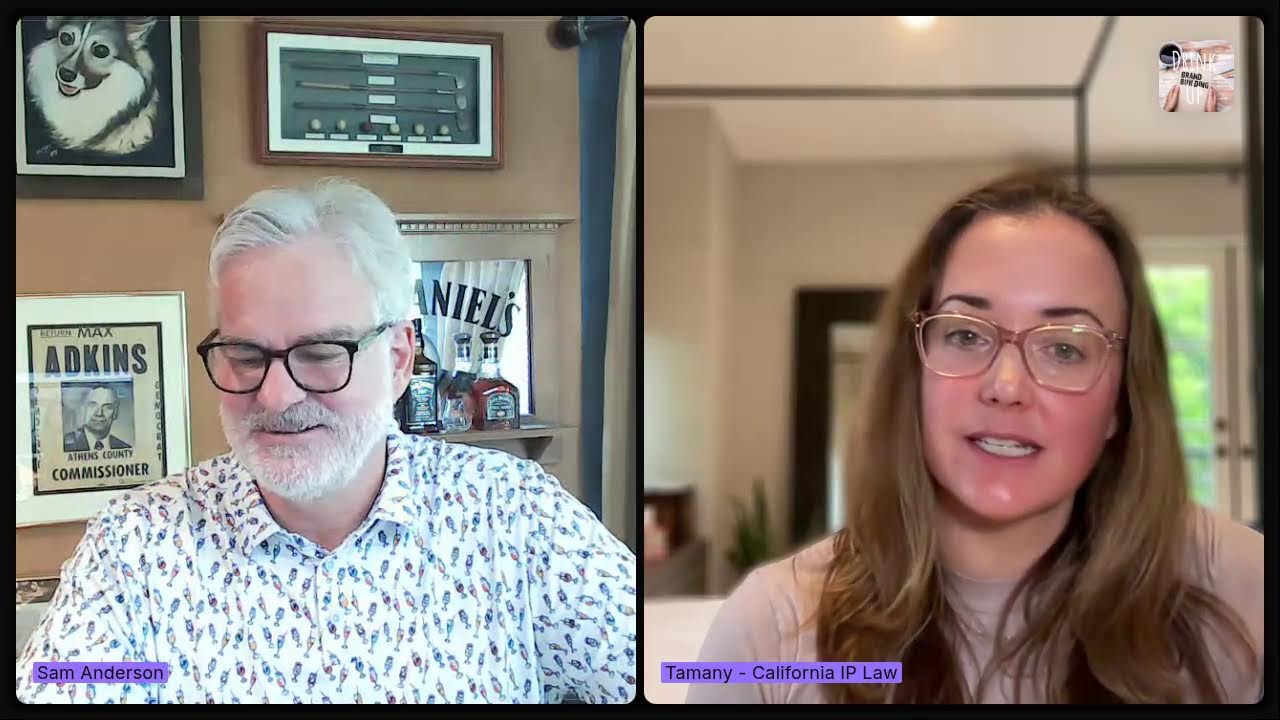
Tam, an IP attorney in Southern California, explains how beverage founders can protect their brands through trademarks, trade dress, and patents before scaling. She left big law to focus on early-stage companies and uses the Prime Hydration litigation as an example of how trade-dress disputes can get expensive. Most startups avoid lawyers thinking it costs too much, but a clear IP strategy early saves money later.
Chapters
Morning at Drink Up, and I got my great friend Tam. And Tam is actually an attorney out of California, so this could be really interesting. This is our second attorney actually to have on Drink Up. Tam, welcome to Drink Up.
Thanks, Sam. It's great to be here.
Yeah, it's early. It's early there, right? You got out and you said you got up like early just to prepare for this.
I, I did. I'm an— I'm a morning person, not a night person, so I wake up early anyway. But yes. I did kick everybody out of the room.
That's funny. You know Andy Poe? You might know Andy. I think I do. Pacemakers. She's in your area. She— I met her through, uh, we were talking about Marshall. Hello, Marshall, if you're out there. But, uh, she was not an early morning person, but she, uh, she, she got up early and met with us. So I know it's like 7:15 or 7:30 your time. So again, welcome.
Thank you.
To us. We had actually met through networking, through a mutual friend, and it's so wonderful to have you here on Drink Up. So, how we kind of roll here, we just have coffee and we just chat, as we were talking this morning. And, you know, we were interested in, as we were kind of warming up, we were talking about why people get stuck. And we'll go back to your journey and everything else, but I wanted to just come back to that conversation. We were talking about like how people have reached out to me and they've lost their job Or they stay in their job and they're unhappy. And yet you were sharing some things about that too. So I'm just curious what you think about that word stuck and what people should do.
Yeah, I think, again, I'm a lawyer and a bit of background. I worked in big law for over 20 years and I think it's probably true in a lot of professions, but in the law, like, you tend to set a goal. So in big law, your goal is to be a partner, be an equity partner, work your way up through the system. And sometimes what I saw was people, like, they didn't want that goal anymore, but they felt like a failure if they didn't achieve it. So that's when you said stuck to me, that's what stuck out. That's what occurred in my head is, yeah, that's what it means to be stuck. You think this goal— you think you have to achieve the goal or you're a failure. In reality, it's entirely possible your goal just changed, and that's okay. That's how life is. Yeah.
Yeah. Well, tell us, I just wanted to kind of start there. People want to say, okay, so why do we have another attorney in a beverage broadcast, right? So I know that you're going to talk about what your firm does in a whole bit, but tell us a little bit about like who you are, how you came to be. You're out of Southern California, I believe, and what your services are. I'm just curious and we'll get into it.
Sure. An intellectual property attorney. In the course, I've practiced at 2 different big law firms, Venable, for anybody who's familiar with it, and DLA Piper. I was a partner at both. I never specialized in a particular area of IP. I was always really fortunate that the clients I was working with had complex IP portfolios and complex IP problems. So I learned and got trained in how different types of IP fit together. And in 2023, I decided I wanted to work with companies that were setting up their foundations and establishing their IP, their brands, whether they were startups or they were just emerging and starting to think about how they fit into a marketplace. I wanted to work with them on those foundations of their IP. And help them understand what it is that they had that was valuable and they should invest in, and maybe what it is that somebody might tell them they should invest in, but it wasn't really going to get them where they wanted to go with their business.
Well, so many companies we're talking about this start and they don't have an attorney. Like, we started our company, and full transparency, we, we didn't start with an attorney. We just put the plane together, we took it off, and We started flying that plane. How many of those type of companies do you run into in brands? Is that normal?
It's, it's entirely normal. But I'll tell you, one of the reasons I left big law and started my own firm was because what I realized is these companies that were successful were paying me sometimes millions of dollars to sort out a problem that had existed the entire time. And had they just talked to a lawyer, when they were smaller, younger, more agile, it could have been fixed. But because it just— because they never did, because I think a lot of people have this perception that talking to a lawyer is expensive.
Yeah, you read my mind because I was thinking about that, like, I can't afford you. I mean, like, we always talk about, like, what are you going to charge to do this work?
Right. And so I think they just go in with the perception that, you know, especially if you're starting a company, Every dollar you spend needs to be meaningful, right? Because you only have so much money when you start out to spend. And so the collective perception in society is that lawyers are expensive.
And yeah, but it's more expensive if I don't have that piece of paper. We were talking about this this morning, right? Like, if I don't have protection, you could lose your business. Someone could take your business away. And you talked about the moat. You want to get into, like, the moat?
Yeah. Yeah. One of my clients actually used this analogy, and I liked it, and said that what I was doing for them was helping them build a moat around their market share. And once we built the moat, then the conversation changed to, could we expand the moat? Could we make the moat around their market share bigger?
Yeah.
And the reason why some people might be saying, why is a lawyer talking about market share? And that's because I work in IP. So I work with companies on how they engage with consumers. How do consumers recognize you? By your name, by your logo, by the colors you use. How is it that you're out there establishing your market? And then let me try to see if we can build a moat around it. So it's much harder for people to cut into your market share.
Yeah, it's amazing. We were talking about Prime too. I don't know if that kind of fits in, right? But You know, that's why we do the warmup, by the way. It gives me stuff to talk about with you. Yeah, but, but Prime, right? These, these, this is like the hottest brand in the world. And all of a sudden, what? Tell, tell everybody what happened with Prime and what's happening.
So Prime, Prime Hydration was at one point fast growing. I don't know if it was the fastest growing beverage company or the fastest growing hydration beverage, but it was fast growing. And then A large beverage company in the United States paired up with Lionel Messi, the international soccer star, and launched a hydration brand. And lo and behold, that hydration brand looks a lot like Prime now. And this is everything I know about. This is public record because Prime then sued this, sued Moss Plus. Um, for intellectual property.
So no attorney-client privileges?
No privileges here. There's no back— I don't represent either of these companies. There's no secrets here. But I did read through the court pleadings, and, and they do look a lot alike. And what Moss Plus said publicly was, look, we hired designers, we, we didn't copy you. Yeah, but there is no denying that they are the very similar color Similar bottle, similar branding strategy there to what Moss Plus had achieved. And so that's amazing. The the question in the litigation is: Can Moss? Can Prime actually protect the color scheme, the bottle shape, the strategy that they put behind their branding, which clearly worked because they were fast growing.
It's just funny because we were talking about yesterday about our company Bev Assets, and I'm like there's like beverage. Assets, there's BevNet, there's BevThis. You know, we're a consultancy. We're not really a brand, but we're kind of a brand because people see us. But we can turn really quick our name if we have to or whatever, because it's more about our services. And then also how we do our SEO is a lot. It's really, if you go to like BevAssets, it actually takes you to Liquor Cells, Liquor Cells Distribution. It's just kind of We're, you know, I, I'm not an SEO guy or whatever, but it's interesting. Um, what happens? Let's get into a little bit of the horror story we talked about. Let's talk about it now. Like, if you don't, like, employ your services, this IP law, what can happen to a brand? Like, what can happen? Maybe some examples.
Yeah. So the horror story is, is if, like, if you don't put some thought into whether Your brand is clear, so nobody else is using it in the market for something similar. Then you could launch a brand, you could establish a significant number of sales, and then someday you get a cease and desist letter or a complaint or a litigation from a company that actually owns that brand, that name, that logo, or something similar to it.
So I have a brand. So there's a brand, it's called Big Ass, and I know the person that owns the right to Big Ass. I'll actually introduce you to Ray. He's in your area, I think he's in San Francisco, but, uh, he owns the rights to it. And we were talking about another brand that actually has Big Ass and it's like a donkey. He goes, oh yeah, I'm gonna have to have my attorneys go send over to this donkey brand, uh, the whole bit because he owns the rights to it.
Right. But when that happens, if the brand doesn't have, like, let's say you're just emerging, you don't have the funds for that fight. Yeah. So then you're making a decision. Do I fight and try to keep the brand that consumers now recognize that I launched with?
Yeah.
Or do I rebrand? And in the beverage space, rebranding is an expensive proposition because you have labels in liquor, you have regulatory things, hoops you have to jump through.
When you say expensive, gimme a ballpark range like that you've experienced.
I mean, assuming you don't have to pay any kind of like penalty to the other company for using it.
Right.
I mean, I would say it could cost you best case $10,000. And that's, and that's, that's to hire designers to redesign. And that's assuming you can negotiate a sell-through.
Right.
So what I try to do when I represent clients in that space is negotiate a resolution that allows them to sell Yeah.
You were telling me that yesterday, like, okay, this is okay. Don't know. You can't produce anymore. Just sell it and go away.
Correct. And usually there'll be a date by which they have to sell. So, you know, the pressure's a little bit on them to make sure they sell through that inventory by that date. But that's your best case scenario. Sometimes other parties won't agree to a sell-through, and then you're in a position of relabeling inventory you already have.
Is it better to have someone like you on retainer? I'm a brand, you know, I've come out with it. Is it good to have like an IP attorney like on speed dial, or is it better to like call you when I need you?
Yeah, so I would say my advice to a company would be have a lawyer that you trust. Yeah, it isn't— that doesn't make you feel like every time you pick up the phone They're charging you $1,000, right? I gotta find that lawyer. I like— oh my God, focus less on what they do, but find that lawyer.
Because I gotta share a story with you in a minute, but keep on going.
Because sometimes when you have a business, you just need to pick up the phone and call somebody and say, is this even an issue?
Oh my gosh, just pick up the phone.
Yes. And you need some— you need somebody, and lawyers are pretty trained to say like, It's an issue and you need Tammany, or it's an issue and you need Roger, or it's an issue and you need this person.
I'm so glad I know you and Roger, by the way, because I we got this thing. Did already. So you know I'm going to be calling you, right? So yes, I'll send you whiskey in the mail. But anyway, whatever. You just tell me hours.
I'll take it.
But but anyway, so we got this like it was a mutual NDA. Every all these mutual NDAs are running. Everywhere, right? So I'm like reading the thing. I'm like, I have no idea. I'm dumping it into chat, you know, saying, is there any risk here or whatever, asking questions. And then I finally just said, hey, Roger, can you take a look at it? And because he's my friend, he did that.
Yeah.
He's like, you have nothing to worry about. There's like really— I mean, typical. I'm sorry to put you in that lump, but he was very like, he called out the risk, but he's like, it's minimal risk. But there's always risk in anything. I think, I think an attorney is always going to see the gray area, the risk, the whole bit. But it's good to be able to pick up the phone and talk to someone like you, have that relationship, right?
Yeah. And the thing that at least my clients understand is they can pick up the phone and ask me the question. And, and if it is something that, that I'm like, look, this is an issue, I'm going to have to look into it. They know I'll say to them, give me an hour. And then in their mind, then they know like this is a quantifiable expense. And sometimes my clients will say to me, nah, I'm just gonna roll with it. I know it's an issue, but I run a business and I take risk every day. So I'm gonna roll with it.
Yeah, but I can't, you know, Tam, I can't afford you. I'm a new brand. You know, I gotta, I gotta, I gotta, I gotta get to production. I gotta pay Sam to go get distribution. I mean, you're not affordable.
So I actually think that that's not true because—
I'm being facetious.
Yeah, no, but what, but I appreciate it because I think people need to understand, number one, I work with a company. I offer like various types of billing. So, a company could say to me, I just need you to be a quantifiable expense every month. I need to know—
Yeah.
I don't— I need to know what it is. I have this much every month. This is what I want to spend every month. And I could say to them, okay, let's do that deal. We'll do that deal. We'll do it 3 months. We'll do it 6 months. You pay me a flat rate every month. Then, you know, sunk cost. Call me whenever you want. I do that sometimes for clients. But I also say to clients, like, I'm— if you call me and say, is this an issue? I'm not charging you for that question. Because I'm trying to add value to your business. When you get my bills, I want you to know that you got something for that.
Yeah.
And to me, it's more long-term, right? I want to be there for your brand when you have legit legal issues that I do need to charge you for. And I don't want you to be scared to call me.
Well, it's just interesting because, you know, you know, we were looking, exploring, like, you know, doing a trademark. We talked about that yesterday, too. We're not going to go down that path right now. But, and Roger put us in contact with some of his trademark people and we got like the costs associated with it. And then, you know, it's funny, my co-host who's not here, Adam, if you're out there, Adam Smith, sorry you're not here. He apologizes. But, uh, he put me in contact with UJ, and UJ, she was very clear. She goes, we charge $495 an hour. This project's going to be probably a 10-hour project, but it's probably going to be more like 2. But she told me the worst-case scenario because I guess you have to go through, and I guess there's things you can inevitably hit a roadblock or whatever. So she's like, I can't give you— we don't quote a total price. I can just give you an hourly price and I can tell you the max and the minimum. Is that kind of atypical?
No, that's not atypical. Some of the— some of what I do is flat rate. So if you came to me and said, I want to trademark this, yeah, I would walk you through what that looks like. And then the app, the process of getting that on file with the government, I do at a flat rate. So whatever it is. So, so, you know, this is what it's going to cost you to get the application on file. Okay. What, like if you get an office action response, like certain things I would charge by the hour on. But the nice thing about it is that if those things happen, I can go to the client and more accurately say, here's the amount of work I would have to do if you want to continue to pursue this and here's what it would cost.
Yeah. Is it true yesterday? I think you told me this yesterday. I don't think I dreamt this, that you founded your firm because you wanted to help entrepreneurs. Is that a true statement?
That is a true statement. Yes.
And why is that? Why do you want to help entrepreneurs? What were you seeing in the corporate law? I guess that's where your corporate law or the big law firms versus, hey, I'm a— would I refer you to as an independent? Like you're like your own solo? Yeah. So why?
Because what I was seeing was companies that I very much— that were very successful, that I very much believed in. And they, they They were working with me because they had a problem that they should have never had, right? There was a flaw in their IP strategy. There was a flaw in their IP. They didn't register something they should have, but they were paying me a lot of money, hundreds of thousands or millions of dollars.
Wow.
To deal with this issue now. When what I recognized was if they had just asked me when they started out, Yeah, we, we could have been in a— avoided it altogether, or at least been in a much better position than we were. And I realized, like, nobody— 20 years of experience in the law is a lot.
Yeah.
And that my experience was better used at the foundational stages of a company at this point than it was, you know, after they were selling hundreds of Millions on the market.
Yeah, it's almost like they— I mean, that's a lot of money to lose, you know. It seems like everybody, um, kind of transitioned off that. So thanks for sharing that. Um, everybody I talk to, the goal is to sell. They want to— they want to test it, build it, scale it, and sell it. I'm just— that's kind of— I still don't know. I'm going to test it, I'm going to build it, I'm going to scale it, I'm going to sell it. And it's like they all want a 10x it. You know, and everybody on LinkedIn is like, I've 10x'd it. I'm, I'm a gazillionaire and I'm only 25 years old. Yep. You know, uh, so kind of talk about that. How do you help and where do you fit in that process? Every facet of it, the beginning of it, the middle of it, the end of it.
So I do every facet of it, but here's what I say to people who, whose goal is to sell.
Yeah.
Because I don't think people think of it like this, and they should.
Yeah.
If your goal is to build it and sell it, it is even more important that you have an IP attorney build that moat. Because if your goal is to sell it, you're selling the brand. You're probably at that point not selling a formulation. You're at that point not selling yourself because you don't want to do it. You are selling The brand and the goodwill that you have built around it on the market. If you didn't protect it, nobody's going to pay you 10x for that.
Right. Because they're going to go to the— I hear this term cap table, and maybe we can explain that a little bit, but everybody goes to the cap table. So when you go to this table, people like you are there, right? These attorneys, these finance people, and they're all like finding problems. Like you might say, hey, my company's worth $40 million, but all of a sudden an attorney comes in and, well, you had this problem back 5 years ago. I've heard this. Now it's only worth $35 million. And then Joe the finance guy shows up. Yeah, you had this other problem, this divorce that happened or whatever. You lost like $8 million. So now it's worth $22 million. Is that like happen in the process?
It does. And I do do some of that work. My lane is the IP lane, so I wouldn't necessarily be looking at the cap table, but I would be looking at a company's IP. And I would be saying things like, you know, they don't have a registered trademark for this, or they don't, you know, there's somebody else who's using, who has this registered trademark. They're never going to own it. So how much do you really want to invest in a brand you're never going to own?
That's amazing. So you really, so many people don't cross their T's and dot their I's when it comes to setting up a business or a brand or the IP.
Yeah. And the other thing I think is, and part of what I do is helping these founders understand the strategy. So, when people come to me, I give them options. Here's your option, you know, and one of those options, and this comes up in beverage a lot and people don't think through this, is trade dress. Trade dress comes up a lot in beverages.
What is trade dress?
So trade dress is how consumers recognize your brand, but it's things other than the name or the logo. Could be a color, could be a bottle shape, could be some unique way that they interact with you online.
Got it.
Whatever it is that is your unique approach to consumers could be trade dress. But trade dress is hard to protect. So you have to have a strategy about how you're going to do it. But if you can do it, it can be very powerful. So like in going back to the, the Prime Hydration case, one of their claims is trade dress and their claim that their trade dress is the fact that the bottle cap matches the color of the bottle.
Interesting. Well, here's a, here's a can right here. It's like Do you see this?
Yeah.
Like, that would be an example of trade dress because it's all about— matter of fact, all their, like, point of selling. He wears, like, shirts and stuff. The founder of Derek sees this, like, it'll be like it fits, like, everything's around what they do with this can.
Yeah, that's exactly right. So the can itself wouldn't be trade dress because there's lots of cans, right? Other aspects of that, the fact that it says you know, the name longwise like that could be on a black can with a red stripe on the top with it. I can't read what it says, but there's some red writing on the top. So those things. Yeah, exactly.
Cosmo.
Cosmo. Okay. So like, that's what trade dress is. So in the beverage space, brands should be thinking about that because— yeah, exactly, exactly. Because what What happened with Prime is that they started coming out with bottles where the caps didn't match the bottom.
Yeah.
And that's being used against them now. So, but that kind of strategy is how you add value. So if you wanna sell a business, to circle back to the main topic, if you wanna sell a business, being able to go to the purchaser and say, I have an IP strategy, I have a moat. You want in on this deal, you got to pay me. Yeah.
So a couple of questions coming in. Thank you. So first of all, my, my business partner Alicia Vargo says hello. Glorious morning. Hello, Alicia. And then Jeff, my friend Jeff from BrandArctica, they've been on. He says trade dress is really important. I learned about this with Van— I'm going to butcher this, Jeff— Van Leeuwen Ice Cream suing Rebel Ice Cream for packaging design similarities.
Yeah, exactly. That's exactly what it is. And in the beverage space, it's so important because consumers are looking at your can and making a split decision. So your can looking different from your competitor is a big deal.
It's amazing. But we don't— none of us actually think about that when we go through the process. Like, here's another one. It's like a standard bottle, but this is like, you know, the label and how they do it. I'm sure they've figured out, you know, what to do. Of course, you can see I love all my little bottles, bringing them up and stuff.
So the classic example is when Coca-Cola came out with that shaped bottle. I, I don't— I mean, maybe it was the '80s, but they came out with a plastic bottle and it had a unique shape, and Coca-Cola has the trade dress on that shape of plastic bottle.
Amazing. Um, let's go back to the, the The moat a little bit. What are the— so we talked about trade dress. Um, maybe go back to intellectual property. What is intellectual property? Can you just give an example? Like, we didn't really talk about that. Maybe some people don't know what that is. I was thinking, does she sell real estate? But no, for real, what is intellectual property? What does that mean?
So it's valuable but intangible. So unlike real estate, it's not Usually tangible, so it could be a copyright, which can be many things, but usually is a design in the beverage space. A copyright might be again how you engage with customers on your website. Could be a unique drawing on your label. Could be artwork that you use throughout your marketing. Trademarks, of course, are your logo, your name. Trade dress is what you look like out on the market.
Okay.
Some beverages might have patents which could protect formulations in the beverage sometimes.
So it touches a lot of— it touches a lot of different aspects of a brand. Does it— you have to be a brand to have intellectual property, or can you be something else?
Every single company that that makes money has some intellectual property, whether it's their company name or it's their intellect. It's what they sell. If you're out there doing business, you have some intellectual property.
Got it. That's good. Well, thanks for the definition of that. Let me transition to another topic. You're a founder.
Mm-hmm.
And it takes a lot of guts to go off on your own. Um, what's been your— I'm gonna have a follow-up question, but what has been your— the hardest thing you've gone through starting this? You weren't an instant success overnight doing your firm.
No, not at all. Um, but honestly, the hardest part was making the decision to do it. Um, fortunately, once I made the decision, there were a lot of people that I could engage with, take to lunch, pick their brains, get information. So I felt— I didn't feel like I was starting from nothing. And all of those people were very gracious in helping me out. And so I had people I could ask questions of. But the decision to leave an equity partnership that is one of the biggest in the country and Yeah, that's, that's amazing.
So for me, I didn't start my business until I had to.
Mm-hmm.
Full transparency. I, I mean, I was comfortable until I wasn't comfortable anymore, and I had to make the decision either put food on the table or not food on the table. So for you, it sounds like you weren't— same experience as me, but you had that— you said, you know, you want to go help people. You know, there was a different why. What, like, so, so you had a why, obviously, to go do this. So what is your, like, your business why of, like, why, why, what is your why?
I just felt like I had done a lot working in big law and learned a lot. And I wanted to do something better with what I knew how to do. I wanted to help companies at the outset so they didn't have giant problems when they were successful. It seemed like a better use of my time, frankly.
Yeah. And you said that early on, it's like, you know, rather than losing the millions or hundreds of thousands of dollars, I can help you now. So how do you, how do you get your message out to people? How do people like, like, how do you like, how do they find Tam and IP law in California?
So strangely enough, I do TikToks a lot about this issue. And so, well, I should say not a lot for a TikToker, but a lot for a lawyer. I do a lot for a lawyer on TikTok. I'm on LinkedIn and share some of this information on LinkedIn. And I have a website, caiplawyer.com. And that's, that's how I get out there. But a lot of it is word of mouth, right? A lot of it is people like Marshall saying you should You guys would have a great conversation.
Yeah, that's what we've found is like we have kind of top of the funnel, middle of the funnel, bottom of the funnel stuff. So kind of top of funnel is like, okay, being on LinkedIn, here we are, we're familiar. But really where the real bottom of the funnel comes is Marshall introducing me to you, you know. And, uh, share me a story how that's happened for you and I'll share you one as well. But Where like someone like referred, like how does that work? Like, so Marshall introduced you to someone. How does that move into like doing business together? What does that look like?
So I'll give you— so it, you like everything, it's an introduction. I then do an, a call with whoever the, the potential client is to talk through their issue and see if it's something I can help with. There's not a charge for that call. It's literally like a, Do you— is it, is it in my wheelhouse? Can I help you? Can I add value to your issue? And then do you want to engage me? And if it moves forward, then in my space, it usually moves forward pretty quickly because they have an issue they need to address. So we usually do that within a week or 2 weeks.
Yeah.
Recently, though, I had a new client. They have a rebranding issue. We were able to get them through that issue really quickly, and then lo and behold, they turned around and referred me to somebody else who had a similar issue that they had been talking to. So, um, and it's following very much the same trajectory.
Yeah, I, I, it's funny. So for me, um, earlier this week we met a friend Phil who introduced me from Brett. who's with Beyond Spirits, and Brett does some marketing. And we finally took this meeting, and Phil does, uh, Mex Direct or whatever, so he's doing some tequilas. So kind of the week progresses, right? So we had a nice conversation. This is what we do, this is what you do. So I leave that conversation, and one of my clients, Anne, who owns a product called Art and Revenant, part of a distillery here called Earl Giles— and I think I can share this— but anyway, they were looking for some tequila, right? And their tequila from the border was getting held up. I'm like, gosh, I just talked to Phil from, uh, MexDirect. I'm like, okay, and I, I'm gonna connect you to Phil. All of a sudden, so Phil, myself, uh, Phil's partner, um, Jorge, we're on the, the line. And Jorge's like, yep, I know exactly what your problem is. You've been hung up at the border since April, but we know how to push it through.
Mm-hmm.
But because I took the meeting and had the discussion, I was able to pull Phil out of my my value that I could bring to my client. I get nothing for other than my client's happy. And if my client's happy, they're more apt to do business with what I do a whole bit. So that's how my world works.
Yeah, it's very similar. I think the only difference is for when, when I do take that phone call with somebody to see what their issue is and if I can help. Yeah, that's a privileged conversation. So those aren't conversations that I typically have with other, with, with the referral source or anything like that. It's usually a one-on-one conversation just because I like to get in those conversations, get into a little bit of like how I would approach the issue, which is technically legal advice.
Yeah. But as I'm getting to know you, I mean, naturally, if I, if someone says, hey, I need help with IP, first I'm like, hey, you got to meet Tam. Another example is I had a young man which I need to introduce you to, but Dejour. Dejour, if you're out there listening, Dejour's out in New York. He's coming out with a brand. And we initially met through Circles or LinkedIn or whatever, right? And so Dejour's bringing a brand up and he started out with a different co-packer. I'm like, wait, wait, wait, let me see the contract. What are you doing? Don't sign it. Meet my friends at Earl Giles. And I moved him over there and it was a better price. They're more honest. I'm saying they're honest, but I felt more comfortable with them. He felt comfortable with them and I connected that way. So That's how the, the kind of the net— so you lose a lot. You built your businesses through networking. You built your business through your network.
Yes.
At the end of the day, Jeff has another question or statement. So thanks, Jeff, from BrandArctica again. Also would be good for people to understand that a trademark registered with a state is vastly different protection from registering with the USPTO in specific classes. Can you explain? how they, how these differ.
Yeah, definitely. And thanks, Jeff, for bringing that up. So when you register a trademark with the United States Patent and Trademark Office, the USPTO, you get national rights to that. It is presumed that you own it nationally, that you use it nationally, and that you have national rights to that. If you register a trademark in California, You're only getting rights to it in California.
Interesting.
And trademark rights are regional. So if you don't register it at all, you only have— and you only have rights to where you used it first. So if I launch in Southern California and I never register my trademark and somebody in New York comes up with a brand And they use it and they're second and I'm first, I still only have rights to that trademark regionally. So Southern California where I sold it, maybe I shipped regularly to Colorado and then you might have some rights there. But you won't have national rights for sure unless you actually register it with the USPTO. Most brands have no problem with registering it with the USPTO if you have a clear mark and you're using it and all of that. But the cannabis space has, has changed things a little bit because you still can't get a federal trademark on a cannabis product.
Oh yeah.
So cannabis is a different strategy because you have to use the states to do that. But for everybody else, They should just be registering federally. It should be clear. You should make sure it's clear and you should register it federally. It's a much more streamlined, easier, less expensive process.
Well, hey, Jeff, does that answer your question? If you're out there listening, we're a bit delayed. So if you come in, please answer. But I'll introduce you to Jeff as well. I'll probably bring you into my— it drives everybody nuts. I think I have like 40 people now on my— I do like every Saturday I'm like, hey, please come join us on Drink Up. So there's like 40 people, but I'm like, And by the way, all y'all could probably communicate and say hello to each other, and maybe there's a network opportunity for y'all to do some work together or whatever, or make new friends. But anyway, I always ask people to try to join in, get some questions. It makes it more fun. People come from different spaces. Jeff works with a lot of beverage brands. They're an agency, so I'm sure that as they get to know you, they probably will be reaching out. They have a podcast as well, Pam. Uh, the whole bit. So, uh, definitely. And he says yes. He says yes, great info.
Good.
So I want to go down a path of— I ask everybody that comes on Drink Up, I usually ask it the beginning, middle, end. I'm gonna ask around kind of the middle. Uh, but, uh, what's the difference between success and failure?
So at the stage I'm at I would say success is doing the type of work that I want to do. Failure is feeling like I have to do something I don't want to do just to make ends meet and pay the bills.
I love that because we were talking about being stuck, right? And I was stuck for 57 years of my— well, 57 years of my life. So I guess I've been in it for 40. So at that time it was like 37. But, uh, I just stayed because I was comfortable. I stayed because I was scared. You know, I stayed because I didn't think I could go do it, right?
Mm-hmm.
So I was failing, quite frankly, myself. I wasn't a failure, but I was failing myself of pursuing my dreams. And again, I think most people, like for you, you're very unique. I think if everybody was an entrepreneur, everybody would be doing it. You know what I'm saying? Like, I had to do it, but I had to become an entrepreneur because I had to, right? Now, now, if I could tell my younger self, like, hey, this isn't that bad. But the difference for me for success and failure is pursuing what you want to do, right? But 2 is not giving up. You got to stay in the fight. I mean, I'm assuming that, I mean, you have days that are tough.
Yeah. And days where you're like, is this even gonna work?
Yeah.
Right? Is this even— am I, am I actually gonna have clients next week?
Yeah.
Not because things go bad, but just because when you're an entrepreneur, like, what I realized pretty quickly is it's really hard to predict how it's going to go. It really is. Like, you could have data behind it. I have gathered lots of conversations with people who had done the same thing I had done and started their own firms. Yeah, you don't really know how, how it's gonna go or until you do it. So like the first year, yeah, my firm, I had set a goal for revenue.
Yeah.
Um, what I didn't realize is that I wasn't going to take all of that revenue as income. Yeah, a lot of it was going to be costs of running the business, costs that I did not anticipate. I had in my head what I thought it would cost. It cost a lot more than I thought it would cost.
Yeah.
So, I ended up taking a lot less in the first year than I thought I was going to take.
Yeah.
And that was a shift in my mindset in how I should set the goals for the company, right? It wasn't just about revenue at the end of the day. I had to actually like refine it a little bit in order to make it work.
But you had to hit go. You started. I think that's— I talked to so many people like, okay, we got to do this step and this step and that step. I'm like, look, man, just get on a high dive and jump in and you'll figure it out as you go because you're overthinking every aspect of it and you don't know what each day is going to bring. I mean, I swear yesterday, uh, it started out this one client wanted our, um, you know, our information about our What we talked about earlier, but our professional liability insurance, our certificate. And then there was another client that like, hey, I thought we were going to pay in July, right? So like my partner and I are talking. Meanwhile, she's going through a difficult time. I'm just saying, hey, Alicia, prayers for you and your family, the whole bit. I love you. But the point is, so she's going through that. We're getting these emails. You know what? At the end of the day, it all worked out.
Yeah.
It just, it just did. So my feedback is, if you're a brand, I'd love to get back into beverage brands here a little bit, but if you're a brand and you're going through a difficult time, don't let the morning ruin the afternoon. Just, just work through it. It's gonna be okay. The sun's gonna shine. It's gonna, it's gonna solve itself, or you're gonna solve it. At the end of the day, just like, yeah, you'll figure it out, right? Like, like you had this revenue goal in mind. Maybe it wasn't where you wanted to be, but you figured out along the way kind Kind of how to get there, right?
Right.
And the whole bit. So back to beverages, kind of last 15 minutes or so. I just want to like, what things would you want to share with the beverage brands out there? Some things that they need to be aware of and circles in terms of I'm a new brand, I'm coming to market. Where are the landmines and where are the opportunities?
I think the opportunity— I'll take the opportunity second. The opportunity is to put some strategy behind your branding and not just marketing strategy, but IP strategy, because it can really pay off for you if you want to sell the brand. It could pay off for you when you are highly successful, like Prime Hydration.
Yeah.
But if you do it smart, it can pay off for you. I would say landmines. I'm a lawyer in California. I do work with my clients on advertising issues.
Yeah.
The landmines I see are always advertising issues. It's always, you know, somebody told them they could say something on the label that gets them in trouble. Or, you know, they saw everybody saying it, so they said it. And then when they're successful, then they're in trouble for saying it on the label. So to avoid the landmine, I would say, I would say you can find a consultant to review your label before you go to market, and it is well worth the money.
Yeah, I mean, it's like, it's— I sold insurance for a living. I've done that for many years. And no one wants to talk to an insurance salesman until they need to. And the problem is, when you want to talk to me when you need me, I can't help you. It's kind of like you talk about, like, you have clients that have millions of dollars. Like, I'm like, look, I can't, I can't, I can't, I can't help you with your family. I can't help you, um, uh, with your faith, but I can help you with your finances.
Mm-hmm.
And how I help you with your finances, I can give you protection. But if you go break your leg and you say, hey, I need, um, medical insurance now, they're not going to write you. I can't write you. Just like you're an attorney, I need help with my IP. I can probably write you or help you, but it's going to cost you $1 million versus it could have just cost you $10,000 at the beginning, right? Does that— I don't know if that ties together, but that's been my experience.
Like, I, I— it even could cost you less than $10,000, right? It's just, uh, in California is, is for all these beverage brands, anybody who sells in California understands this. It's like a joke sometimes how tricky these consumer protection statutes are and how easy it is for these plaintiffs' lawyers to catch somebody who got tripped up.
It's a—
and it's like a tax. It's crazy because it's like paying a tax then for like distributing in California, which is terrible. But that's the biggest pitfall I see for beverage companies. Because it is like a landmine. And the second you get any traction, you're getting a letter or got— I mean, Prop 65 too. So like Prop 65 has a whole thing about putting notices online now that tripped up one of my clients, somebody who was pretty sophisticated at Prop 65. And so that too, I think for if you're distributing a beverage, Having, just having, spending a little bit of money on the front end to have somebody make sure you're dotting all those i's and crossing all those t's is gonna go a long way.
Man, Adam would love to be here. Adam, if you're watching this or listening to us, you missed a good one, brother. Because, uh, he, he's like, I, so he'll talk about like the ingredients in the can and there's a lot of stuff and I'm gonna, maybe you know all this, but I guess there's a lot of challenges about what's in the can, not in the can. The whole bit that people get, can get sued or get hung up on in terms of what they promise, like vitamin B12 to caffeine. You want to go down that path a little bit? Do you know anything what I'm talking about?
So I don't— so yes, I don't know specifically the cases on vitamin D or caffeine, but yeah, generally speaking, if you make a statement on your label and somebody tests your product and could even argue that that statement was misleading, you're going to get— you're going to be in trouble, at least in California, probably also New York and maybe Illinois.
It's interesting. Now, Eric Martindale just joined and he said an ounce of prevention comes to mind. So, so Eric, actually, Eric, you can, you can chime in here, but Eric actually helps from an e-commerce standpoint. A brand comes to market He can actually bring it for e-commerce and he actually can drive traffic to the store or to the e-commerce site through like Uber Eats, you know, the whole bit. So he can drive those drivers into particular locations. He does that. And I'm sure, Eric, you do a lot more than that. So I probably butchered that. But anyway, he had a comment to that as well.
I think that that's true. I just think what happens with brands when they're young Is they see other people on the market saying it, so they think they can say it, and they don't really realize the risk that the other company might be engaging in.
What's your promise, right? So, you know, in the cannabis space, it's really interesting. One of our founders, I'll remain nameless, but, uh, they had an issue where, which actually the milligrams of the hemp Delta-9 in the can wasn't there.
Yeah.
So often wonders like 25 milligrams, 5 milligrams, Do you really know unless you have like something to test it to say it's really there? Right. How do you know?
I mean, I would— in the cases I have had, it's the manufacturer or the co-man that has told the company, here's going to be the end result. And they may have some regular testing to back that up. But then what happens sometimes is I've had companies change co-mans.
Right.
But they don't change the label. And so that's where things start to get kind of disconnected. So they, they continue to run with a label that might no longer be accurate because they've changed commands now.
Yeah. So that's where you could come in too, to help them with that as well, to make sure you got everything soup to nuts. So actually, Marshall says you have the best guest. So Marshall says, Thanks, Marshall. And then Connor— Jeff talks about how, um, so Eric Martindale makes a pizza, by the way. You'll meet all these folks because I'm going to put you on my, my Drink Up podcast, like, oh, who are these people? But you know, it's people you want to meet, by the way. But Eric makes a pizza and he does a pizza post and he does a beef post. Eric, I don't know when your posts are, Thursdays or Tuesday, but he always posts a pizza. And, uh, but, but his pizzas are Are fantastic, but he's like a protein guy. He's all about protein, but he's figured out how to make protein pizza, I believe. Again, probably butchering it, but all these people need your services, by the way, because how to make a pizza or how to do the proper post.
I need the protein pizza. So, um, that would be— yeah, we can exchange some information.
Yes. So Eric Martindale, did you hear that? We need the protein pizza coming in. All right. So, you know, kind of the last minute, kind of what, what, what is, what do you want to leave everybody with in terms of we've had this conversation today? Thank you so much. It's been, it's been, it's been delightful, by the way. But what do you like? What do you like? If you were going to leave a couple of things with some folks, what would that be?
First and foremost, it would be don't be afraid to ask a lawyer. Yeah, right. Don't be, don't be afraid. It can be me. It can be another lawyer. Just don't be afraid to ask the question and see if it's something that is an issue or not an issue.
Yeah.
That's step one.
Yeah.
The second thing I would say is if you— if I were to ask you what's your strategy behind your branding for your beverage brand and you can't answer that question, then you need to have a conversation with an IP attorney, especially if you think you're going to want to sell the company down the road.
Because you're going to talk about how we build the moat.
Correct. Because you need to know, how did you build the moat? Because honestly, like, if you were— if you put yourselves in the shoes of somebody who's going to pay millions of dollars for a brand, think about how much more motivated they're going to be when you walk into that meeting and you, and you say, here's how I did it. Yeah, here's how I did it. Here's the strategy behind it. Here's all of the valuable things I'm going to hand over to So you can expand it.
Yeah, I love, I love the moat. I'll send you— we'll do a little clip of that about the moat and how you build that moat. And if you don't have a moat, you're unprepared. If you're unprepared, you're setting yourself up for risk.
Correct.
Yeah. So do you have a moat success story that you can share?
That's it. That's what I'm thinking. I'm like, do I have one that I can share that's public, really? I don't know that I do. You do, but I don't know that I have one that's public that I can share, because I don't want to share a client strategy without their permission. Yeah, how we build it.
Yeah, we sign like our mutual NDAs and stuff. We can't share a lot of stuff.
Yeah, but what I can tell you, I'll tell you this one because I think this is a This was a challenging one. And it wasn't a beverage brand. It was a fashion brand.
Yeah.
But what we were— a fashion brand with very limited resources. So technically speaking, I would have liked to go get design patents on certain aspects of what this fashion brand was doing, but we couldn't afford that. So we bootstrapped it with less expensive copyrights and trademarks in order to try to build their moat. And so far, knock on wood, the moat has succeeded in getting knockoffs off the market.
That's interesting.
So that's one I would call a success story. I wish, you know, obviously fashion is getting hit hard because of some of what's going on with tariffs and getting things out of China and all of that. So I wish her business was in a better place to be what I would consider a success story. But from an IP perspective, we have been getting knockoffs off the market, which is a pretty big deal.
Yeah, I think the best money, as I've gotten to know a couple of my attorney friends, is the best money that you could ever spend is to hire an attorney. You know, Can you share your fees, or is that just based on the opportunity?
No. So if I charge hourly, it's $525 an hour.
Okay.
Which, to put it in context, when I was at my last law firm, I charged $1,200 an hour. So I— my lack of overhead now that I don't have a large firm has been passed on to my clients.
That's good.
Yeah. So that's a— that for somebody with my expertise, that's a pretty good rate. The flat fees vary depending on what we're filing, but they're pretty commensurate with what flat fees other firms would charge. But I would tell everybody, if you have a lawyer and you feel like you can't call that lawyer because they're going to charge you so much money, you should get a different lawyer.
That's so true.
If you feel like they're nickeling and diming you, then just get another lawyer. There's lots of lawyers.
Yeah. Develop a friendship at least. Like my dad, this is what— this story I was going to tell you early on, but I'll just tell you. So he had a friend, I guess, supposed friend, and he asked him some advice, but it was just a conversation. And then lo and behold, like this was back in like the early '80s, a $300 bill like arrived on his— in the mail.
Yeah.
I got to think that's like, just be upfront. Like, hey, if we're going to have this conversation, Let's go further. This is what my rate is. Happy to give you some general, um, you know, uh, feedback. But at some point, I mean, look, we face that too. Like, I can't tell you how many people, like, get us on a phone call and we're talking, but at some point it's like, look, okay, I want to help you with commercial strategy, but if I do the whole strategy right here, then you got everything you need. You don't need me.
Right. 100%.
So I think they're happy.
You don't charge them for the initial, like, I don't charge them for the phone call where I say, okay, here's— if you want me to, to deal with this, here's what I got to do and here's probably how much time it will take me.
Yeah. Like I did a whole like— so we'll benchmark brands and we do like based on population, we'll index based on the— to do forecasting. I can do that in my sleep, quite frankly, with all the tools I have now. So I'll, I'll give that one away for free because I know there's a lot more to route to market, right? There's like, you know, distributors, pass-throughs, brokers, Right. There's a whole lot more in the mix, different channels you go to, the whole bit. So if I have to do indexing, we'll do it all day. Like, you know, that's, that's, that's value that they get. And they're like, okay, these people know what they're doing. So we'll do that as well, which I think on the same standpoint. Well, thank you so much for today. I'll ask you to remain on the line. Thank you, Jeff, Marshall, Eric, Alicia. Uh, the people that you can't see, they joined us in the chat today on my chat. So thanks for joining, Tam. And I definitely will connect all of you to her. She'll actually be in our Drink Up podcast, drive you all nuts. But again, Tam's like, oh, Sam's like, uh, come join the podcast. So I'm gonna try to put everybody's pin on the podcast in that chat on LinkedIn. So I hope everybody likes it because there's people that are like us who are trying to bring value. to the beverage industry. So thank you so much for joining us today.
Thanks so much, Sam. I really enjoyed it. It was fun.
Yeah, good. All right, I'm gonna hit stop. Happy Saturday, everybody.
More from Samuel





He Sold Pickle Shots Out Of His Trunk. Now He Runs The Co-Packer That Won't Bury You In MOQs.






What market do you think gets overlooked most? #Toronto #BrandStrategy #Marketing