Welcome to our live show!
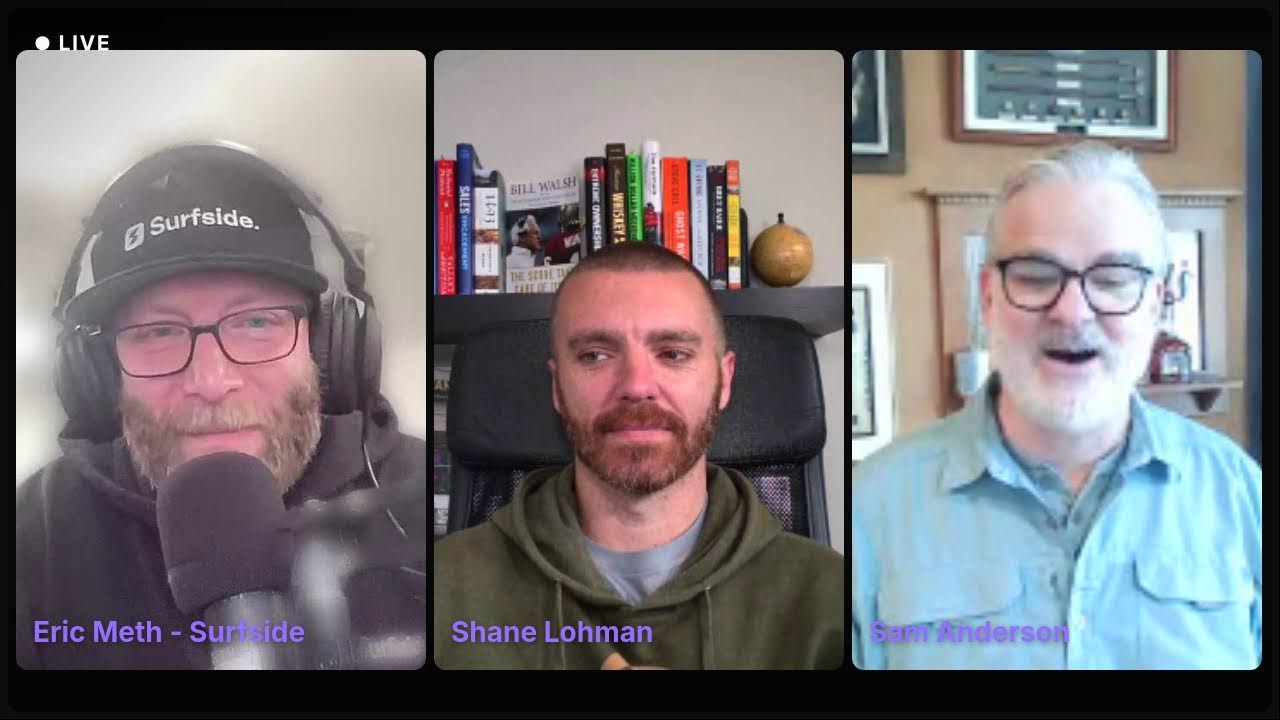
In this live podcast hosted by Samuel Anderson and co‑host Shane Lohman, Eric Meth, Chief Revenue Officer of Surfside, explains how the company helps regulated consumer brands (cannabis, beverage alcohol, hemp‑derived RTDs) market through an omnichannel, data‑driven approach. He describes Surfside’s audience graph of 300 million consumers, the use of first‑, second‑, and third‑party data, geolocation and points‑of‑interest targeting, and retail‑media placements that mimic Amazon’s sponsored listings. The conversation covers funnel‑based marketing (upper, mid, lower), activation of brand awareness into in‑store purchases, measurement of ROAS, budget scalability for small brands, and the company’s role as a data refinery that refines raw consumer data into actionable audience segments and media campaigns. Eric also discusses DTC possibilities, regulatory constraints, and the importance of measuring what matters. Contact information for Surfside is provided at the end.
Chapters
Hi everybody, yet another live podcast with Drink Up and my co-host Shane Lohman. We have a guest today, Eric Meth from Surfside, and I'm real excited to have him on because we're going to talk a little bit about the omnichannel e-commerce and what Surfside is. Eric, welcome to the podcast. This is actually being broadcast on LinkedIn Live. I think, I believe Facebook, YouTube, and everywhere else around the world. I don't know, Shane, if I missed anything on that part, but welcome, Eric.
We're enchanting the ear holes of people everywhere. Thank you, Sam and Shane, for having me. Yeah, as you mentioned, I run sales. I'm the Chief Revenue Officer for a consumer marketing and advertising platform called Surfside. We have played in traditionally the cannabis vertical and we have been expanding into, I'd say, other regulated channels. Beverage alcohol is one. It's provided some fun exchanges as we've announced ourselves in different accounts. And we're not the RTD drink, but we aspire to help those RTD drinks market themselves a little more effectively and efficiently. But yeah, we've been at this for about 5, 6 years. A lot of us come from the digital advertising and marketing space. I come from the consumer packaged goods and retail marketing space. And we all had a common vision to bring a better way to allow brands and retailers within these regulated spaces market like a traditional consumer packaged good advertiser and marketer wants to.
Well, what you do is incredibly important. Before we actually went live, we were talking about a post that Brian Rosen did this week, and he took a picture of this, uh, back bar and had all these, uh, whiskey brands on it. And the— and Brian, if you're listening in, I'm sorry if I get this wrong, but the question was, how do you compete in a crowded space? How do you know, like, when— how do you get— capture that consumer before they ever go in and into that establishment? Do you have any thoughts on that and what your company does and how you would play in that?
Yeah, I mean, when you look at like funnel marketing, right, and again, this doesn't have to be beverage, alcohol, cannabis specific, this is just when you're marketing something, you've got those sort of 3 tiers, right? Upper funnel, mid funnel, lower funnel. Upper funnel, you are trying to make people aware that you exist. So this starts well ahead within that path to purchase of ultimately trying to get the consumer at the shelf in the store. and then reach for your brand versus another brand. So you could look at this, automotive advertisers do this, traditional CPG advertisers do this all the time, where they're doing national campaigns and they're blanketing everybody about this new toilet paper that they just came out with, or this new SUV that they just came out with, all that tier 1, you're seeing it on Major League Baseball, you're seeing it on national television, cable, et cetera. Then you start getting into the sort of downline. Once you've attracted those consumers, now you're capturing, whether it's digitally, whether it's through social platforms, you're really starting to hone in on the people that that message, that top-level message is sticking to. Now you have that base of consumers that you could start driving further and further down the funnel, and at the end of the day, it could be the purchase that you want to get them to conduct online if you're going direct-to-consumer. Plenty of that going on, especially in the beverage space. Plenty of platforms that are enabling brands to do this. But then you also have to focus on those channels where you're driving consumers into a real-world location. Yeah, so I'm pretty good at going to bars, restaurants, retailers, liquor stores.
I don't understand if there's any other place we need to be, but I mean, so You said top of the funnel, bottom of the funnel. You know, a lot of this is Japanese to me, full transparency. Okay, so just break it down. I'm a consumer, and today I'm going to go out to lunch, and I'm going to go to my favorite establishment. They happen to have a bar. And how would I— what are you going to do in order to get my mind to focus on a particular brand?
So from a service standpoint, perspective, we can do a few things. We could look at points of interest. So if we're working with the beverage alcohol brand, they're looking at both on-premise and off-premise. They want to capture those consumers, and sometimes they're doing a lot themselves, right? They're putting glassware in the bar, they're putting tap handles in the bar. We as Surfside have an opportunity to influence those consumers by looking at those points of interest, those bars, those restaurants where this brand is looking to drive more consumption of that specific brand.
All right.
We can identify where those consumers are. So we have what we'll call like a, call it like a God's eye view, 300 million consumers that we see as part of what we call our audience graph. So it is, it's not Sam, it's not Shane, it's Surfside ID 3629374 and Surfside ID 45679. But there's profile information that we have about that. We understand that your Surfside ID and your Surfside ID fall into a gender category of male, fall into an education category of college educated, fall into a household income level of X, Y, and Z. So you've got these general demographics that we certainly can see. We aggregate a lot of this, call it second and third-party data that's available online. We could purchase this data through different resources, and then we use that to chop up those 300 million individuals into more meaningful segments that resonate more with that brand, with that retailer. Then you start layering in other elements. If it's location, points of interest, we drop a lat-long. This is bar 1, bar 2, restaurant 3, restaurant 4, and we start putting digital ads in play. So the devices that are attached to your search identities, your mobile phone, your connected TV, your MacBooks, all of that, you're online browsing on a lot of sites and a lot of apps that are advertising supported. So based on our identity and identifying those consumers within those segments attached to those devices that they have, that's when you start seeing digital advertising appear on your phone.
You're geolocating people too, so I'm walking by Shane's distributor and all of a sudden, uh, um, Marc Anthony, um, White Claw could pop up on my, my phone based on that?
Correct, correct. And you see this too, even with the apps that you use, the Starbucks app, if you have location turned on, you walk by a Starbucks, pop in now for a cold brew with sweet foam. Like these are the things that marketers can use. We can also influence those consumers again while they're in the location. There's plenty of digital at a home, what's called programmatic advertising. We we can buy into those screens that you might see in the bathroom, at the bar, within the establishment on digital signage. continue that influence. Drink this.
Wow.
Brian Rose is listening to this and all the people that follow Brian. I'm giving you a shout out, Brian.
I don't—
Shane, if you have any thoughts or follow-up questions to what this was shared, but this God's eye view, I was thinking about Oz behind the screen in terms of pulling the levers and where you want to be. But, and I'm looking at that back bar and I see all those people, but now I have my cell phone, I'm in there, and guess what? Surfside has actually captured me and said, hey, look, Go find this product called Probatas Rum. And all of a sudden I'm like, oh, I just saw Probatas Rum on my phone. But that's the work you guys are doing. Shane, you have any thoughts or questions on what he's shared?
To build a brand identity or a brand strategy from the ground up in terms of what consumers are looking for, where the opportunities are, or is it more just taking what they have in place and using it to engage the consumer?
It's more the latter. I'd say where you know we're not we're not creating brand identities. We certainly work with a lot of agencies that do, and it's really important. And those are really some of the good relationships that we've been able to develop where they have this blank slate. They're getting charged by you know a large operator that has this concept that they want to create this brand identity. It could be attached to a celebrity. It could be attached to the story. a founder of that brand. But once that's incepted and when we can be part of that process, Yeah. that's the best way to do it, right? Because you're building it kind of organically. It's not to say that obviously we work with a lot of brands that have already established themselves and it's just like, look, I'm in the market, but I'm number 8 out of 30. I want to get to number 4 and ultimately number 1. How can we take what we know about the consumers that are already consuming our brand or visiting our retailer And use us to help us find more of them.
Yeah.
And especially ones that they have not— it's going into cannabis for a minute, which we obviously have had a lot of experience with. That's a whole other, right? There's a lot of false, you know, false perceptions, misconceptions of what cannabis is. But at the end of the day, it's a product that people can get benefit from, and you're seeing a lot of cross-pollination, especially now with the hemp-derived RTD space getting in and deeper into the beverage alcohol retail space and the distribution channels both on and off-premise, where in some states you're seeing taps with THC beverages. That's a whole other realm which we could certainly get into, but there's a lot of education that has to happen there because again, it doesn't gel with consumers straight away. They see these products that look a lot like the products, especially in beverage alcohol, And the consumption method is the same, but they're curious about the taste, they're curious about the effect, obviously, the aftereffect, and that has to be done in a way that really introduces the background of the product. And you can argue the same thing for some new products that are coming out, adaptogen-based products that come out and you see in the beverage alcohol space. But yeah, I mean, we can do either. It's better to do it from the ground up.
Yeah.
But the whole idea is, how do we take what we know about the consumers that are currently buying your product, use what we know about those consumers, and then start finding more consumers that act and conduct themselves the same way, birds of a feather type of situation? And then more importantly, measure. Did we see the desired outcome? Did we see sales that were attributed to the media spend that was done by Surfside? That created that effect. That's how we've been able to operate for the past 5, 6 years.
Wow. One of the things that Shane and I've been talking about is push versus pull. That was a podcast we talked about, right? So a lot of what I do is push, push, push, push, push. Matter of fact, my founder is like, you need to activate the brands, right? And the only way I can activate my brands right now is through tastings, right? Director of Education, he does a little bit of stuff on social media. You know, we get, you know, some things obviously written up in various, you know, wine enthusiasts will get a score of like 92 that we'll share. But then the day— What's interesting about you is, I mean, how would you help a brand that's relatively unknown, you know, and Shane has several of those brands. How would you actually go about actually activating that brand, you know, at a liquor store, a restaurant? What does that look like?
That's a great segue into— I want to call it a relatively new platform, but a product that we launched last year. Again, Again, back in on the cannabis side of our business, retail media, right? The concept of, and you experience this every day, I'm assuming both of you are like Amazon shoppers, right? Who isn't? You're surrounded by ads when you go to Amazon, as you are when you go to Walmart, as you are when you go to—
Alexa just talked to me this morning and said I was outta stock on something and I ordered it.
Yeah, I mean, yeah, Alexa knows, Alexa's taking information from you, but that's also, I mean, for real, It is listening, and then you're seeing that in the form of sponsored ads and sponsored listings, product listings, right, that Amazon is serving you. Those manufacturers are bidding on your attention in that lower part of the funnel while you're about to make that purchase, or they're influencing you because Amazon and most retailers know exactly how close you are to a specific type of purchase. If it's a flat-screen television, they also know how far out or how close you are to getting— excuse me— to that purchase. What you're seeing is then a variety of ads that look like product listings for HTC and Sony and Vizio and Panasonic. Each one of them is bidding for your attention. Amazon is making a load of revenue, and not just revenue, but high-margin revenue off of that advertising. that ultimately leads to a purchase of that Vizio TV versus the HTC TV, and it's worth it to them because they keep coming back and paying to do it, and Amazon is getting the sale, the brand is getting the sale, Amazon is making far more margin on the advertising related to the sale than they are the actual sale of the product.
Wow.
And then when you do that at scale, it obviously works. So not a novel, you know, it's not a novel concept, this has been going, on for decades at this point, and it's one of the biggest areas where digital media spending is going. About $27 billion right now being spent within this retail media ecosystem, and every retailer that you go to has some type of retail media play. The way we translated that when we started with the cannabis industry, because obviously had a good head start with lots of retail relationships— there's roughly 10,000 storefronts in the US of cannabis retailers.
Wow.
We cover about, with our commerce media program right now, about 25%. So, you know, significant. But we did the same thing. You know, we are agnostic when it comes to being able to integrate into the e-commerce experiences for these retailers. We're simply doing the same type of Amazon play where we're now running ads for brands that influence the consumers that are shopping online for those products. And it's not, it's a combination of hitting them while they're in that lower part of the funnel. They're actively on the site, they're looking for products. We're in the background recognizing this is a consumer that purchased edibles in the past, or these specific types of edibles. We've got 5 edibles ads ready to go. We're gonna serve that one edible ad at the top of the page, much like you see that ad on Amazon at the top of the page, and it drives them further down into the product detail page, it drives it into the cart, and then we're measuring what the effectiveness is.
So, so can I interject real quick? So this sounds really expensive. I'm a new brand. I don't have a lot of money. There's— I can't afford you.
Yes, you can. Uh, define expensive. I mean, what's, what's your base? What are we talking about?
I mean, I just like, you know, that's, that's the question that, you know, Shane will get, I'll get. I'm like, yeah, that's a great idea, but I can't, I can't afford to do a social media campaign, e-commerce and stuff. So I mean, it cannot— can a new brand coming to market— I don't think they cannot not afford you. They should afford you because If you're not doing that, I don't know how you're building your brand, right? That's just the question a brand's gonna ask is, I can't afford these services.
We could work across multiple levels of budget, um, and we prefer to work smaller and then build on that. Show proof, show the proof is happening. If you're in, let's just say you're a new brand, there's, you know, 2,000 accounts in the state and you're in like 50 of them, that's your starting point. We can look at 10 of those 50 as a starting point and say, let's start there. Let's look at the 10 most—
You can go that small to like 10 and build from there?
100%. So this whole concept of retail media, we are now launching within the beverage alcohol space. We have to do some tweaking just based on, yes, it's highly regulated. I'd argue beverage alcohol is even more regulated, especially from a marketing and advertising standpoint. Yeah, no, it's, I mean, yeah, Tide House and everything else that goes along with it, but it's still doable. So that same concept is being applied in the beverage alcohol retail space with a little bit of a different tweak on the back end on how we run those ads, but the same element applies. But yeah, so what we want to do is focus on those level of accounts, and a lot of times what we'll do is say, all right, if it's If it's 20 accounts, let's look at the killers that you have right now. Like, let's look at the 5 that are working really well. You want to stay at that level. We want to make sure we're putting that level of influence to the consumers and keep that going. And then you've got your new accounts that you're, you know, you really have no baseline yet because you're brand new. But we want to put that same element into effect where we're running ads both outside the store, meaning we're finding those consumers in those markets, And we're doing this for, you know, a couple grand a month maybe to start. In some cases, we're running, you know, tens of thousands of dollars a month because we've shown that it works and we're showing that the return on ad spend is there and we're showing that we're utilizing it. Again, it's like once we make that happen, we're a managed service, meaning we're doing the work for the brands, the retailers for the most part, certainly work with agencies as well. But as we know, especially new brands, They largely don't have a media agency that's doing all this work for them, right? We become that media agency, that media partner, and we have the technology and we have the know-how and we've got the case studies to say this piece of creative worked really well. We served it on these apps and these sites around this demographic in these points of interest, these geofenced areas. We saw activity. Location is something that we look at as well. So we're seeing people at their house, at their point of, you know, place of business, responding to these ads way out here. Because location targeting, we can say we saw movement from that consumer, from their home, from their place of work, from wherever, crossing the threshold of that store.
You need to be teaching a master class next week in Chicago with Brian Gildenberg. And, uh, I don't know if you and, uh, you and Mark connected, but—
We did.
That's good, because I definitely think you have a lot to add to them. I think you could actually be one of the experts on their panels eventually in terms of, of what they do. It's Retail City, Shane. But what you share is so incredible. First of all, thank you. I purposely asked that question because I do think people should be able to— be the best $2,000 you'd ever spend with Surfside. Um, as you— I know you know Jim and Vicki Hunter over at, um, Hybrids Premium. You've talked to Amanda, uh, the whole bit. And I think this would be something for them to take a look at, and, and plenty of other brands. Shane, you have any Thoughts on what he just shared?
I mean, I like the fact that you guys figure out what works and then scale it for brands because I've seen so many brands that just get in and wanna throw money at something. And if you don't have proof of concept, then you can't really scale it until you have that and you're just throwing money down a pit.
Yeah. And it's, you know, with the, especially like the parlay between retailers and brands, I mean, that's, The company I started prior to Surfside was called Good Harvest Company and had a logo like 3 connection points, right? Consumer, brand, retailer. We're constantly trying to concisely and specifically connect all 3. That's the path to purchase, right? So, you know, we ultimately hook that inside of Surfside, but I mean, again, it's not a new, it's not a novel concept, but we want to— be able to use first and foremost, what we say is we're mostly a customer data platform first, meaning we're harnessing information that's coming in. Retailers and brands have an incredible amount of first-party data that mostly don't realize exactly how valuable it is because they don't really have a mechanism to activate against it, right?
Yeah.
We become that mechanism. We onboard data. So this could be as simple as a loyalty program with any retailer out there. There's certainly a lot of beverage alcohol retailers that do a really good job, and that's a lot of times that's their main source of marketing because they understand, and if they're doing it really well, they can do a lot of segmentation with that active consumer base that they have. And then they have a new product that comes in, a new seltzer comes in, infused coconut water, they're gonna start looking at that data to say, all right, how many consumers of ours purchase those SKUs, and what is it about them? What's the rest of their basket analysis look like? What are the things that they're doing? We can then take that data, and we're not interested in the first-party element, we're not interested in the Shane Lohman information or the Sam Anderson information, we're interested in the Surfset ID that's attached to you guys. But what we wanna do is then take that as an audience segment and say, how can we amplify that message? Usually when you're doing things like customer relationship marketing, through loyalty, it's very one-to-one, right? You're sending a text, you're sending an email, you don't wanna do it too often, otherwise you're gonna get a lot of people not happy with you and they're gonna opt out and you're gonna lose your numbers. So you have to be a little tactical about it as an owner of that really good data. But when you look at what we can do, we could take that information, we can match that profile based on that email, we de-identify it, we attach it to a Surfset ID, which is also anonymous, And then we can start running parallel ads again while people are checking the weather on WeatherBug, while they're playing Sudoku, while they're reading an article on the New York Times. And all those ads that are being filtered through those apps and through those websites, we start buying that ad inventory against those consumers and influence them. When you do that in combination with the text, with the email, with the digital ad, and then you start tracking who is responding to it, certainly a lot of people get get text messages and you're like, delete, I'm not interested, it's not the right time. But if we then hit them again outside, that might be the touchpoint that goes, oh wow, I saw that text message. The next time I go in the store, I'm going to buy that coconut water. Like, and even better if you have—
So many people are missing the boat on what you share, and this is so incredible. And I, I, and I hope people were listening, you know, certainly we'll be back on our, on the podcast and we'll push it out there. But what you share is so incredibly important because the, the big question I always get is, how many feet on the street do you have? Or, I need people going on to sit on bar stools. You know, I always talk about bar stool shynosis, but sit on a lot of bar stools, talk to a lot of mixologists, which is important.
Mhm.
But you can't be everywhere, and you can never scale your business sitting on bar stools one account at a time. What you do is you can literally scale your business because you have the God's eye view, as you say, right? I like to call Oz behind the curtain.
Yeah.
But you have all these people and you can segment them based on demographics, based on location, you know, based on a variety of things. And then you can communicate with them. So I don't know what brand would never want to, you know, participate in what you do because, you know, Retail Cities talks about it. And I'm not, you know, not trying to do an ad for Retail Cities, but I know you're going to be part of these guys. But if you're, if you're not where the consumer's at, you're never going to grow your business. So what Surfside does is pretty important. Do you do any DTC on this thing, direct-to-consumer? Like, do you have, like, I'm a brand, I bring it to you? Do you, like, do you actually activate it from the point where you're communicating them over in the channels and all the social media to, okay, I'm gonna hit the Shopify button and purchase it? Do you Activate that too?
Yeah, we certainly do, and we've seen more of that, I'd say, in particular coming out of the cannabis side of the business. Obviously limitations on even e-commerce is not— I wouldn't call it official e-commerce, it's pre-purchase, right? So in that world, you can't run a credit card like you can through Shopify. There's specialty platforms that allow for a transaction to occur, and then the transaction gets pushed into a point of sale, and then you're picking up that product, but the take rate's still pretty high, right? You do have people that like say they're gonna buy it, then they fade away. We discount them, but then we focus on the conversions that we can activate. Obviously different in beverage alcohol, you know, it's federally legal, how about that? But that allows for obviously a different type of commerce opportunity. But like I said, you know, you've got platforms like Flaviar, you've got other types of platforms that are enabling brands to go direct to consumer, The hemp side, the hemp-derived THC side, which is a massive category, you're seeing it explode in some markets, particularly ones like yours, Sam, in Minnesota. You've got accounts that are seeing, you know, north of 10% volume coming from this category, which is exceeding past traditional verticals.
Top 10 has become like the, I guess, the evangelist of the category. They're always talking to him, John, And, uh, and he's dedicated a big part of his store to the category. Absolutely.
I was actually—
it's amazing though. I was in the Lakeville Liquors yesterday and—
Oh, they have a huge section. Except you gotta pay cash. You gotta pay cash when you go to Lakeville.
Yeah, it's funny 'cause I was just— you just read my mind. I'm like, and it just says cash only. I took a picture of it this morning and, uh, posted it. But, but like, that's a lot of money to go through the cash register for cash only.
But, uh, yeah.
Yeah.
But, you know, but what it represents, and that's one— I mean, for us, we were a little more deliberate when we were saying, all right, we've got it, we've got a good more than a foothold, we're, you know, thigh, hip deep on the cannabis side. Where can we go, particularly with the retail media angle? And that's why it made a lot of sense, right? We're seeing in the beverage alcohol industry, obviously they're recognizing the fact that you're seeing a decline in consumption, right? Some of it is based on lifestyle changes, a lot of it is generational, Gen Z drinking less, I think when I saw a figure like Diageo, a point and a half down globally on their last earnings, it's like, yeah, that's a reason that bells should go off. But on the same side, you're seeing a lot of these massive suppliers like the ABIs and the Constellations. Pabst is a good example where they have, and Sam Adams for that Boston beer company, they have divisions that are dedicated to understanding how do we develop really good formulations and products because we see that shift happening. We see when states go legal with cannabis, and I'm interested, super interested.
It's not a ripple in the pond, man. It's, it's a tsunami.
But what I'm saying is like, we as Surfside, we can see that transfer of consumer behavior and we can help find ways to influence those consumers within the beverage alcohol space that are curious about something like hemp-derived THC beverages. And then, you know, you mentioned John and Top 10 doing a fantastic job with brand days and bringing his consumer base in and having them try it because again, like sips to lips is the most important thing you can do. And then I also feel, and I'm personally speaking here, it's like focus group of Eric, I'm a big believer in the non-alch side as well. It's a massively growing category. Diageo is just picking up brands like Ritual, undisclosed amount, I'm super curious. If you know, you could tell me. I won't tell anyone. I'm just curious to know what they value the company at. But now I see a good opportunity to hybrid those 2 categories together where you could take a cannabis-derived beverage in a can, mix it with a non-alc gin or a non-alc bourbon or whatever. Personally, I feel that's the best way to do it because on their own, they're terrible. Like if you— they're terrible in the sense that—
You haven't tried Highbridge Premium yet, by the way.
No, no, no, no, no. It's not, it's not, not, not the, not the RTDs. I'm saying that the non-alcoholic spirits are generally like from a taste perspective, especially when you're trying to say this is an alternative to bourbon. It's absolutely not an alternative to bourbon from a taste profile standpoint, but it's not a bad category and it's not— it's a category that's growing, but you just have to adapt to it. And that's why I think engaging with consumers, showing them that you— and then, you know, from a retail standpoint, Now you've got, you know, a 3-SKU bundle that you're selling to somebody with a non-alk spirit, a hemp-derived beverage, maybe they're buying, you know, bitters and now they're making a really cool cocktail because you've got a cool mixologist that's sitting there educating the consumers on this new category that they can partake in. What we want to do is work with someone like Top 10 or other retailers and say, let's look at that massive consumer set that you have. Let's take a look, let's analyze it, let's understand everything about those consumers that you're already reaching. And then keep amplifying that message to those market areas that your stores are in with that same message to activate more consumers to come into your store.
Oh man, there's just so much. I mean, I, I think it's— I posted this morning, it's gonna, it's gonna be like a $100 billion category in, you know, the next 10 years or something crazy. But yeah, you should be talking to ABC, BevMo, GoPuff, Total Wine and More, Target. I mean, hopefully some of those folks are watching this. I know Shane probably has craft beer on his mind here at some point. He specializes more than just craft beer, but he does, he does, he built like a— I don't know if you have any ideas about the craft beer segment, Shane, and how this relates here and some of the customers you deal with.
I'm just curious what the balance is of what you think brands should be spending in this area as opposed to traditional advertising. whatever that would encompass, or maybe traditional advertising is just not as effective, which it may be true. I mean, you know, to spend on a billboard as a craft brand, what's that gonna get you?
Yeah, I'm a little rusty on the overall percentages. I mean, general rule of thumb when you look at CPG is about 20% of your top line should be earmarked for overall marketing, right? So then you could break that down into event marketing, into sampling, into digital, into traditional channels if you have the, Ability to run radio, either terrestrial radio or satellite. All that gets broken down into, again, it's also based on like, are you going more direct-to-consumer, are you going more to drive consumers in-store? So, you know, if you use that as a blanket element, then it's a matter of like, all right, let's do, and if you're doing it well, you're gonna then really start assessing where am I getting the most return out of? Obviously things like—
20%.
So if it's a dollar, 20 cents of the dollar.
Yes, from your top line as a general rule of thumb for overall marketing. And there's variability in that. I believe, I'm fairly confident it's close to like 12 or 13% for beverage alcohol in general. I think some of that is just based on the fact that there's more limitations on what you can do, just again based on regulatory requirements and things like that. But it's just really a matter of figuring out what is, what's, you know, the end goal is obviously getting more brand awareness. And just the biggest thing is just really understanding, like, you go into a store, you start getting people buying, and it's not so much the people that are buying once, it's what's making the people come back.
Yeah.
And even if you have a very small subset of that consumer base, and some of it is sitting on the bar stool, a lot of it is sitting in the store and often the sample and getting them to try it and taste it, but having that retail relationship is equally important and being able to, you know, help and kind of co-sponsor some of these things. And again, I understand it's harder to do in the alcohol space because of no pay-to-play and no direct influence, but again, we become a good third party that can help arbitrate some of that and help activate some of that as well.
Interesting.
Yeah, I mean, it's got to be great for, I would think, for especially smaller or newer brands. That's more effective than when you start to get to radio, TV stuff, YouTube ads. That's more for brands that are trying to go regional, national, that are at the next level. For a newer growing brand, I think what you're offering would be super valuable to come in and do it at the local level.
I love the fact that you could distill it down to out of 50 stores to 10 stores. Because a lot of products like, oh, I have all these influencers, and they'll spend all this money with these big influencers. And what are you really getting it for that the person's putting— and I'm not discounting what an influencer can do, but they put, um, you know, the tagging and tag on— I don't know if that's really what you do is more like focused, and it's going to be broader in terms of capturing a bigger audience, I believe.
Well, it's, it's It's surgically finding the right consumers within that wide pool. And if that wide pool is Meta and you're looking at the consumers that are on Facebook and Instagram and they're using a level of influencers to promote, that's one thing. But those consumers are doing other things when they're on Meta and LinkedIn for that matter and other channels. Like we expanded, right? When we built and we continue to build this business up, we had to do a couple things all at once, right? We had to convince, especially on the cannabis end, we had to convince a lot of our advertisers initially that yes, we can do this, we could run digital advertising, yes, we could tell you that what you spent generated an outcome, and that was fine. So we had, in some ways it made it really simple because one, there was like less places that we can go to secure advertising inventory. COVID changed that a lot. Um, all of a sudden when these big publishers don't have travel and they don't have entertainment, they don't have And the things that are essential are beverage, you know, adult beverages and cannabis and gas and groceries. Yeah, they're gonna find ways to take other advertising as a result. I'm sure beverage alcohol saw the same thing, um, back in, back in that dark day. But, um, what, what we can do—
There's no dark day in beverage alcohol, man.
Never, never. Yeah, people are depressed, they drink. People are happy, they drink. Same thing, the same thing for cannabis. But the, yeah, but overall, yeah, you're right, Sam. The ability for us to, you know, kind of surgically find those consumers within this wide pool, that's really it. And hooking into like what's making them tick and then building around that, that's how we've been able to expand what we do. Like 5 years ago, unheard of that we would be able to run like podcast advertising for any brand that we worked with just because One, it wasn't, it really wasn't available at the time, but secondly, we had to build up to get there. We had to start, you know, crawl, walk, run, like they say. And if you're an edibles consumer in cannabis, it's like start low, go slow, right? It's like start with what you know.
Yeah.
Start understanding what makes those consumers tick that you've already captured, that already like you, that you've already delighted, and then start looking at the data associated with those consumers And then start understanding how you find more of them.
Interesting, interesting. Well, I know there's a lot— I know a lot of brands that come to mind that I'll be introducing them to you, and hopefully, uh, they, they can see what the, the service you offer here. Um, you know, we're— you know, we'd like to run these about 30 minutes. We can go a full hour. This is really incredible. But I wanted to maybe— if you were gonna share like what Surfside can do for a brand. What are the 3 most important things of a brand? Why should they seek you out? What are the 3 reasons why they should seek out Surfside and take advantage of your services?
Firstly, we can absolutely help them better understand the data assets that they currently own. That's it. Data is gold. The challenge I use, like, the raw data is kind of like you know, raw petroleum, right?
Yeah.
It's crude oil. You need to refine it, right? So think of us as a refinery where we could take that crude oil, we can refine it, and then it becomes jet fuel in some cases, it becomes automobile fuel in other cases, it becomes motor oil in other cases. Like, that's one thing that we do really well, and that's what we kind of started everything with. It all starts with the data and understanding, more importantly, how to utilize it and activate it. So the activation layer is the other thing that we do. We have the expertise and again, when we're— and we work across the board, right? We can work with agencies, we work with marketing directors directly because we have the team à la agency style, managed service style that allows us to take that data, create deeper audience segments, find ways to build on those audience segments and then run those ad campaigns effectively. And then thirdly, it's the measurement part, right? So we took a lot of time early on to get integrated into the points of sale, into the e-com platforms, into the CRM, the loyalty platforms, so we can again use that as a way to ingest information, but more importantly, associate. Again, think of the Surfset IDs. We're looking at Surfside IDs that we paid $5 to reach. Did the outcome generate a $25 basket ring or a $30 basket ring off that $5 that we spent to influence them with a marketing message? Again, while they're playing Sudoku, while they're reading an article online, while they're seeing an ad on their connected TV. That's where we start understanding even more about them. It's like, okay, we created the opportunity, we influenced them the right way. Again, if it was out of the store, at the upper funnel side and we jam them down into the funnel and we saw that connection point, we're like, yes, what was it about the creative? What was it about where we served the ad? What was it about the audience segment that made that tick and how many other outcomes looked the same? So then we lather, rinse, repeat, and it's just about building. And the nice part about it is, again, client retention is good on our side. Like we haven't, and we frankly, we've bested a lot of companies some much bigger than us, that just either try to do too many things at once. We've just stayed very focused on, you know, again, utilizing the first-party data, utilizing the excess second and third-party data that we have at our hands to help these brands and help these retailers use what they know about their active consumers, find out and figure out what's making those consumers convert, and then using the same process to expand those audiences and find ways that we can attract more. And a lot of times it's just understanding too the difference in the message, right? The difference in the message with someone while they're way out here, you know, watching Hulu, watching The Bear on Hulu, and they're searching their phone and they're checking a sports score. You know, you have a lot of distraction, but it's like, get that consumer at least associated with that ad because of those sort of predispositions that we've said. They fall into this target set, they've done this, they've done that, they look like these active consumers. And then we start that process through that path to purchase to get them into that point of sale, whether it's online, direct-to-consumer, whether it's in-store, whether it's in a bar or restaurant. That's that whole process.
Wow, very, very detailed. So I gotta ask the question, it's probably a stupid question, but I gotta ask, how do I get my Surfside ID?
How do you get it? Well, you can certainly opt out. We definitely have a system in place that adheres to privacy advocacy. Um, but, um, yeah, we— there, there's a, uh, there's a little link that, um, I could send you if you wish to, uh, you know, become, become ultra anonymous or off the grid. Off our grid anyway.
No, I want to be— I want to be on your grid.
Oh, you already are. You already are.
I didn't realize that.
So yeah, no, you bought it. You bought a, you bought a, uh, a mobile device. That's one way to get into our grid. But, you know, there are people that don't want to be in the grid, so we provide a way that they can get out if they don't wish to be targeted. But they might just get a lot of ads that, you know, don't make sense to them. We try to be purposeful.
Shane, any closing thoughts from you?
No, I don't think, but it's super insightful. It's something that I don't have a lot of experience in, and I can see the value that it would bring, like I said, especially to startup or smaller brands.
Sure. Yeah, crawl, walk, run. That's our— that's, that's crawl, walk, run. And I always tag things in LinkedIn and other places. It's measure what matters. Like, if you can't measure it, like you said earlier, we can't just throw stuff at the wall and just see what sticks. I mean, we have to be especially—
Measure what matters.
Measure what matters. Measure what matters. I also heard a new one. I heard a new one the other day. We were— I was talking to someone more on the, on the data side. And he goes, yeah, my hashtag is #TalkNerdyToMe.
Well, Measure What Matters is incredibly game-changing because there's a lot of just noise. There's a lot of information. And they never turn that data into action. So If you measure what matters is really an important message for all suppliers out there and to take advantage of your services. You could help them get there because there's just a lot of data that sits there. No one ever does anything with it or they don't know how to look at it and actually aggregate it and actually take action against it. We had a lady on the professional, Courtney, and remember what Courtney said, Shane?
Yeah.
What'd she say? Do you remember the one incredible thing she said during our discussion?
Remember a couple things. Uh, I don't know which— which—
Can the distributor repeat your message?
Yeah, totally.
So if you take what Courtney said, can the distributor repeat your message and measure what matters? Oh my gosh, we got to get you and Courtney together, Eric, because—
Let's go.
Yeah, let's, let's go. But thank you so much, uh, for joining us today. Uh, this was incredibly helpful. I hope everybody out there And enjoyed, uh, this live podcast this morning, uh, please reach out for Eric at Surfside. You want to, uh, give any, uh, contact information, Eric, here? Or I can put it on the, the podcast later on too.
Yeah, I mean, my, my email is just very simple, eric@surfside.io. E-R-I-C. Um, you could visit us at surfside.io. Um, hit us up, we'd love to talk. Great.
Thank you so much for joining us and wishing everybody a great Saturday.
Thank you all. Couldn't have found a better way to spend my Saturday morning.
We're all
More from Samuel





He Sold Pickle Shots Out Of His Trunk. Now He Runs The Co-Packer That Won't Bury You In MOQs.






What market do you think gets overlooked most? #Toronto #BrandStrategy #Marketing