Welcome to our live show!
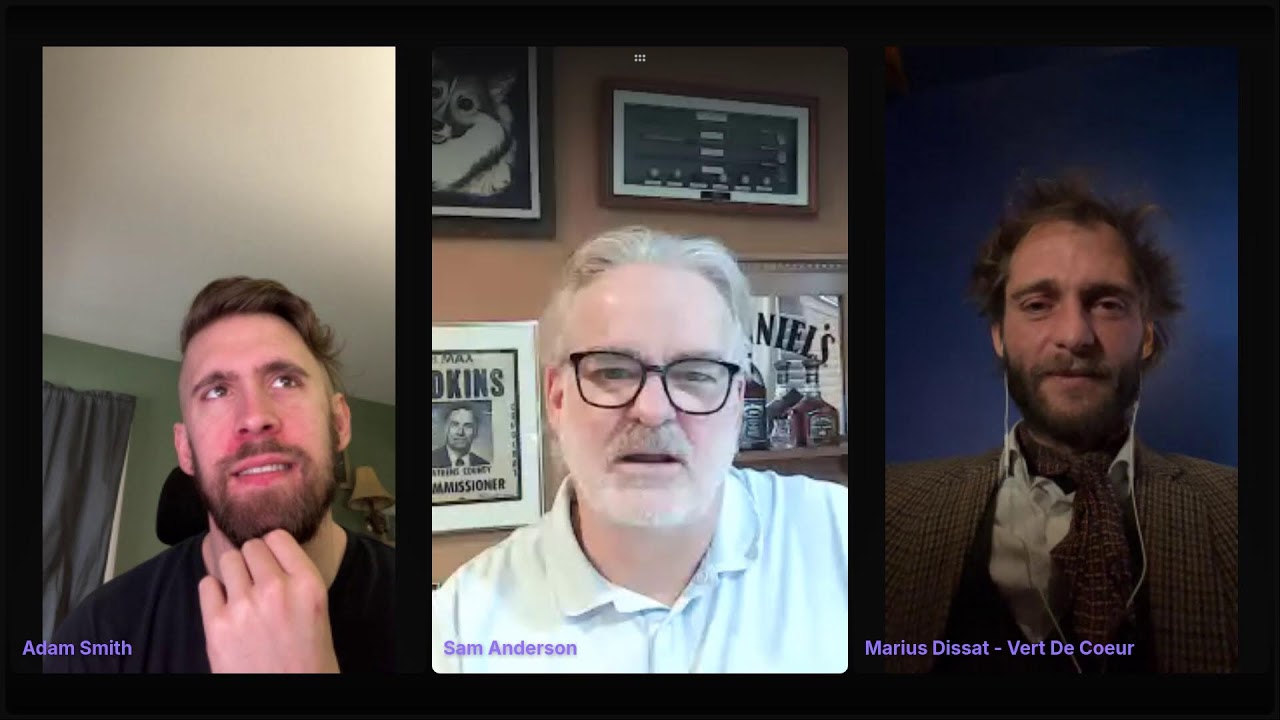
In this episode of the Drink Up live show, host Sam (Speaker A) and co‑host Adam Smith interview French distiller Marius de Sotte, founder of Verticaire. Marius recounts his peripatetic childhood—living in Kathmandu, traveling across Asia, and solo trips to South Africa—before discovering a family tradition of moonshining and hospitality that led to his first small‑batch distillery in Ushuaia, Argentina. He describes how his grandparents’ alambic work and his own studies at the CDIS in Cognac shaped the creation of Verticaire, a 50‑liter, 45 m² craft distillery that produces a core line of five spirits, including the signature 108 liqueur (108 plants, 108 g sugar, 108 bottles per batch). Marius explains the cultural resonance of the number 108 across religions and pop culture, and how he translates that into multisensory themed events where food, music, and drinks share a single concept (e.g., an “acidity” night). He details collaborations with elite chefs—most notably a bespoke gin for the three‑starred Troisgros family—through white‑label, small‑batch production. Looking outward, Marius outlines a sustainability‑driven expansion plan: producing the 108 liqueur in the UK to cut transport emissions, leveraging local distillers (e.g., André Bernard) and a network of chefs, mixologists, and musicians to recreate the experience terroir‑specifically. He also shares broader ecosystem ambitions—glamping eco‑lodges, artist residencies, club‑ambassador programs, and a digital ERP platform (disti.life) aimed at empowering craft distilleries worldwide. Throughout the conversation, Sam and Adam probe the challenges of managing a limited‑product catalogue, constant innovation, and marketing an experience‑first brand rather than a formula‑first product. The interview closes with Marius emphasizing his “why”: freeing artistic creation from commercial constraints, fostering a collaborative community, and scaling a model that blends gastronomy, music, and craft spirits while minimizing ecological impact.
Chapters
Marius de Sotte out of France. It's actually around 5 o'clock there today, and he has a busy time of year. So Marius, thanks for joining Adam and I today on Drink Up. Also meet my co-host Adam Smith. I'm going to start with a little video if we don't— if you don't mind, everybody, and just watch this. This is something actually that Marius created. He's in film. Food, spirits, and music, and everything in between. Love it. That was absolutely just a great, great job with that. So introducing Mars Desat, you own a distillery and founder of— I'm going to butcher— Verticaire.
Yes, perfect.
So I've been working, I've been practicing that this morning, everybody, for a long, a long time. So why don't you tell us a little bit about your journey? I was reading your bio. It seems like you did some cooking with your dad. You've traveled the world. You were born in 1990, and it seems like you've packed a whole bunch of stuff, you know, from 1990 to 2024.
Yes, I've been quite lucky with the experience that my parents allowed me to to try. So I started traveling quite early into Asia with my mom. We, we lived in Kathmandu for a year when I was 5, and that's the first memories that I had— the jungle of Kathmandu and high peaks, living in the jungle. So, and me roaming some street of Kathmandu, and it's always been like a, a strong It gave me the taste of adventure, so it always walked through me since this time. And so all my youth, we traveled through Asia, and at 16, I had the chance to travel for the first time alone to South Africa and rediscover life and nightlife also. So it was really like a big jump into my independence. And so since this moment, I've been just roaming a bit, uh, every little piece of the world that I just have been pushed to go.
Oh, that's awesome. So how did, how did the distillery come to be? We were talking about this last week or earlier in the week. How did it come to be?
Um, so it's, um, there is like a notion that is really important for me. It's my grandparents That is our great-grandparents. It's really linked on my way of appreciation for knowledge, history, anecdotes, you know. It's really a big part of my life, and I've been lucky to be doing those type of products like liquors. I was doing it with one of my grandparents. I've been behind an alambic squeezing some apples to do apple brandy with another one. And so when I reached South America and I discovered they were selling 96% alcohol, you know, the high proof, they sell it in supermarkets. And in France, it's not allowed. So with my granddad, we were doing it a bit moonshine, you know, going to the pharmacy because he had old friends, packing it, holding it on scooters. So in South America, it's a family affair.
This started with grandpa and then now you're, you're doing it.
Yeah, yeah, my, my family was into hospitality. So in the center of France or on the Côte d'Azur, they were working in palaces and as directors or, or stage like this. So it's always been really strong in my family how you receive, you know, those meals with the 3 different knives, 3 forks, straight, like all the rules and etiquettes. So I always been inside this. And so when I discovered the alcohol and my love for mountain and trekking and cooking, I just mixed them all together and ended up doing some tour in the— in South America until I Discover Ushuaia, where I wanted to open the southern, uh, distillery in the world. Back then, it was 10 years ago now. Um, and yeah, those tours, my first client that tasted the liquors, they really pushed me saying, professionalize yourself into those liquors because they're really good. And so I choose to focus on that to reach other dreams.
Wow.
Wow!
Well, who's this? Can you see the screen?
Yes.
So you have my.
Tell me a little bit about your partner.
So my partner in crime, we met on my. So I spent two years in Ushuaia making liquors and guiding. Went back to France to study in the CDIS. That is the Center of International. Spirits. It's a school in France that is in Cognac, so quite a renowned school for distillation. So I came back to France, studied, went back to Ushuaia to open it, and on the path I met, uh, I met, uh, so Lavinia Gavrilovic. It was, uh, 7 years ago, and, uh, and we arrived together in Ushuaia, tried to make, uh, make it work again, hit a big crisis, and now She's here with me in France and we're having the D-Series. She's our producer officially now for the last 2 years, so I'm really focusing myself on my creative side. So creating recipes, creating a design or concept, you know, to put it to the market.
Well, if I understand it correctly, when we were talking and You actually are creating experiences— music, food, libations— and you've actually taken this recipe that you've created and you've actually gone into the UK, right? Talk about how you want to expand this globally, and I think your first stop is the UK, if I'm correct.
Yeah, so basically in France, uh, it's been 4 years. We managed to, to find the hamlet, a lost hamlet that we refurnished entirely and we started to try our concept. And so we did a first theme night 2 years ago where it was acidity, the theme. So we had cooks that were— chefs that were cooking meals on acidity. So we had like a pulled pork with agrumes and a risotto. Some raspberry tartlet with balsamic vinegar cream on top, some homemade pimps, for example. The music was acidity as well, so acid pop and acid tech with some video projection, a super cool artist that is really flashy. And the drinks and the distillation, the spirit used, were also linked to this theme. So, and it's the first time I really conceptualized that it was, uh, so meaningful to have all the senses playing some on the same theme. You were involved in it.
So you said something about you were in a Michelin star restaurant, the original or the oldest Michelin star restaurant. Tell us a little bit about that because this is part about the creation, right, with—
Yeah.
Vibrations and music.
So basically, because we, we work on a 50-liter still, um, and, uh, and we have only 45 meters square for moment as a lab. I always worked with small batches and white labels, so I can produce for a chef on a menu any type of liquor from 6 bottles to 180 bottles quite rapidly. And so we have the family Troisgros, that is the oldest 3 Michelin-starred in the world, that is right next to our— next door. And they contacted us to create their own gin that was based on things they were growing or Really enjoying the menus, so they gave us a box, you know, of ingredients that was a Sichuan pepper that they grow here next to the restaurant, some fennel, some pop's buckwheat, you know, like pop's buckwheat. Vanilla, angelica roots, currant, black currant fruits, and I'm missing one. But, and so we invented one of the— so it's out from since the last month and a half, and we have quite of a good feedback because, ah yeah, it's dry prunes. You know, dry prunes works really well in gin.
Hmm.
And so basically, because I'm a traveler, I had the chance that my products were tasted in a lot of different places. And about 2 years ago, when Chartreuse announced they were capping their production level, it created a shortage around the world. Even the New York Times had a beautiful article that made me realize the importance of Chartreuse in the cocktail bars. And so I decided to act on it because one of our— one of my most beautiful recipes is called the 108. That is a liquor of 108 plants with 108 grams of sugar and 108 bottles per batch.
Yeah, I was going to ask you about this because we talked about this the other day, the significance of 108. Adam, this is really interesting because there That number. So, I know I stopped you and you were telling the story, but I mean, tell us, tell us the significance of 108.
So 108 is a sacred number that I found in a lot of different continents. So for example, if you go to India and you break your leg, you call the 108 for good luck because it's called the fireman, you know. And it's because on the head of Buddha you have 108 snails for good luck. But you find it also in Taoism, you find it in the Middle East, you find it in Amazonia, you find it in the Inuit culture as well. And in pop culture, you find it in Lost also, you know, the TV show. So now I'm tracking down 108, but for me it was symbolizing something that was common to everyone, you know, like, uh, yeah.
Good. We got a person on the line. Dave Moore actually joined us. Hey, thanks, Dave. If you're out there, glad to have you. I don't know if you have any questions, Dave, but we're talking about 108. Sorry to interrupt, Marius.
No worries.
But we got some a couple of friends joining, so at least want to call them out. I think we're delayed a little bit, so I don't know if Dave will see it. So the 108 is really significant. So it's it's everywhere, right? That's, that's just something that's significant. And you have this 108 liqueur. Um, you know, Adam, I don't know if you have any questions. I'm going to pause, uh, for a second in terms of—
No, I'm, uh, I'm feverishly Googling as we're talking.
Um, you know, I can see you're a thinker, so the thinker, he's over there thinking right now about everything you're saying.
Well, so yeah, the, uh, uh, you know, one of, uh, the sun roughly 108 times a day. No, the Earth is roughly 8 times the diameter of the Sun, or the, the distance between the Earth and the Sun. Um, Hinduism. I mean, yeah, that's— I'd never heard of that. That's fascinating. Um, I'm curious, and I mentioned this before we, before we started recording, Marius, I Googled your, your facility just to kind of see where it sat in, in space in the countryside. I noticed there's a— is that a river that runs behind it?
Yeah, so we're quite lucky. We managed to, to bought a farm with a bit more than 15 hectares with 2 small streams. Let's call it stream, but we, we have 2 holes as well. Not holes. Wow, I don't know. You know the one you dig in the, in the ground where you get the water with buckets back in the days? Yeah, well, a well. Thank you, I forgot. So we have 2 wells as well that are pretty full into water, so we, we're quite blessed on the area, uh, hidden from the wind. And the land is quite tough though, so growing things is quite hard. Okay, but magic still happens, you know, mushrooms, veggies.
So I mean, that was where— and I, I don't mean to completely change topics, but that was where my question fell. I mean, you mentioned, obviously I see on the website the, the spirits you have And you mentioned the restaurants that you do small batches for. I mean, how— and maybe this is your partner manages a lot of this, but I mean, having managed a small facility myself in a different beverage realm, how do you manage your everyday offerings, the things that are on the website, and the small batch offerings and constantly be coming up with new stuff? I mean, that's a lot of work even for 2 people.
So I'm quite an extensive creator. So when I start creating, it's like an impulse and it's flow. So I'm really into— for me, it's I create the packaging, the story, the recipe, it's all packed together. And after we producing most— we have 4 different jeans that are here over time. and the 108. So that's 5 products that we always have in stock. And after, I have a small batch of liquors that come out, uh, every 2 to 5 years that are like 100 bottles. Those ones are not even really on the website.
Right.
Um, it's like conceptual spirits, you know, like, uh, something that takes time and You need to, yeah, only time can do that. And after, I try to have 2 or 3 clients on my white label that are really specific with the demands. So here you have the Troisgros family, we work with some palaces as well, or other brands. Um, just 2 or 3, like the big one that require a lot of my attention on building the recipe. And after, we have this white label gin that I say it's a white label, but it's if you have an enterprise or a bar, you can just call me and I put your, your label in it and you have like a really nice gin and it's still your branding on it. We do it for, for bands as well. So when they pass, they can get their, their face on it and sell it out to the next gig, uh, you know. So it's all how you divert a bit the—
I think the answer to the question, but, but whether it's— excuse me— whether it's the restaurants, uh, the bands, the, the Limited release every few years, right? The 100 bottles every few years. Do people just have to know who you are and call you? How do you market this? I mean, that's a lot to work on, which it sounds like you enjoy.
He's on Drink Up today, so millions of people are seeing this right now. So it's gonna it's gonna go viral.
It's this podcast, obviously.
So basically, for about four years. I was not— I was really— I wanted to do it the old style, you know, so no social network, no website. I had no driving license, so basically I was wearing my free pieces suit and my old leather box with my spirit hitchhiking the road around my distillery to go to those quite luxury places in, uh, in the Alps. And to let you— the first distillery I had in France was 4 meters square, so I had like no room for error. Like every bottle I produced had to be sold.
Right.
So, you know, it was, uh, but, um, this approach, uh, let me really the time to really test a lot of things, uh, be really creative. I distilled so many different things in the last 10 years, uh, Yeah, like it's, it's really—
So I'm gonna try to— how I understood it when we were talking, Marius, is, um, so you're in London. So the idea is— here's the idea, and please correct me about— and if I'm wrong— but the idea is that he's going to take his playbook, right, and his recipes, and he's going to take that playbook and recipes, and he's doing the UK right now. So the products will actually be distilled in the UK. And then the approach with the libations, the music, the food, all that coming together behind this creative mind, Marius, to bring it to life in the UK. And he's already talking to the French consulate, I believe, in the US, right? Did I get that correct? You want to explain a little bit kind of what the playbook is here, what you're trying to do?
Basically, uh, I did a, a small analysis of my ecological impact, and with the size of my alembic, the approach I try to put in place, uh, the, the most impact I can have, it's on transportation. And so I was, okay, uh, pretty sure I can find someone that produced my 108 in London. And because I had studied over there, I've got all my network over there. So 2 years ago, we, we left with a small team with a pastry chef, a cook— I mean, a chef— a mixologue, and a small band. Uh, went there and organized in a bar in central London that was owned at the time by the Vietnamese. So he imposed the theme of Vietnam. We created a Vietnamese menu based on the 108 supported by cocktails, and that made like quite a really good feedback. So I met a really good distiller called André Bernard that is from a gin and tonic distillery in East London. And so I was like, okay, so since I opened Verre de Cœur, I tried to create another, um, distillery. I tried in Italy with a friend. I went up to Indonesia to create some gin as well. It didn't work much, but at least I went and tried. Uh, so this time I was like, okay, I'm externalizing it. And so I'm creating a team at the moment with, um, uh, barmans and DJs, uh, and so next year we're gonna organize a lot more 108 parties in London.
Um, so you have a connection with the artists and the food creators that you can bring over to the distiller, right? So you eliminate that transportation thing, so you, you, you minimize, you know, being obviously Reducing the footprint of transportation across the board, which I think is brilliant because a lot of people are looking for products, you know, that, that they want to, you know, um, be part of. But I'm like, 108, you know, liqueur is not being shipped from France to the UK, it's being produced in the UK.
And the interesting point is because you, you're using, uh, water with a different still and a different— you have the, the taste of the distiller itself. So the 108 in London, you can smell and you can feel it's a 108. 108, but you still have the impact on the, the taste. And that is really exciting for me because it means it would be like a lot more collectionable. So for people that really enjoy 108—
108 US, 108 Indonesia, 108 France.
Exactly.
So Adam's, you know, kind of grew up in this, this space. I know, Adam, this is ringing with you. Have you heard of anything like this?
No, and so it's fun in the, in the world that I work in, in beverage, my section of the beverage world. I was literally just talking to a group about this 2 days ago. Everybody's so focused on— and I'm not saying it's wrong, it's just I think it's kind of what some parts of the US market is. Especially in products that are focused— this is gonna sound like I'm talking ill of them, but I promise I'm not. I think the US market, when you think about liquor stores and grocery stores and gyms, the products are based more on the product themselves and less around the overall experience like what we're talking about here. Right now, there's sometimes you just need a coffee because you need a coffee, and sometimes you need a coffee because you want to sit down with 8 of your closest friends and share stories, right? And those are, those are 2 perfectly fine scenarios. The point I'm trying to get at is it's fascinating to me, a lot of the brands I talk to, they want to develop a formula and a recipe that is, you know, they'll use reverse osmosis water, for example, right? So that it's repeatable, whether you make it in California or New York, it's the same exact product. And that's what people are chasing. And so there's nothing wrong with that. There's a lot of really good things with that from a quality and safety perspective, right? Ease of supply chain and consistency, production instructions. There's a lot of good that comes with that. But I think when you flip it and you're focused less on consumption and more on experience, right? being able to say— and I think it's, it's a beautiful, um, plan, you know, beautiful ideology— you just don't— I don't see as much of being able to say, hey, this is, you know, the 108 brand, but because, you know, the, the, um, organic materials came from this location, the water came from this location, it's going to have its own, you know. I mean, I'm I'm covered in tattoos, right? I go to different artists every time I get one for a reason. I don't want everybody's perspective to be the same, right? I'll give an artist, you know, every time I go to a tattoo artist, they're like, what do you want? I said this. They're like, well, do you just want that? Do you want it to be a copy paste, or do you want me to kind of put my own flavoring on it? I'm like, do your thing. Like, I'm here for a reason. Do your thing, right? Um, so yeah, I find the whole profile fascinating of varying from country to country. And I think especially when you're talking about an experience-based consumption as opposed to just consumption-based consumption, I assume it'll really resonate with people.
And, uh, and to also get, uh, because we're developing, um, we created such a beautiful cocktail around based on cider, we, we also really interested to have an RTD, um, that would go, um, together with it. But we at the moment focusing a lot on the cocktail bar scene in London and in UK and mostly in 5 liters. So same, always pushing a bit, trying to optimize as much as we can in this industry, you know.
Sure.
Well, I think, Adam, you said something that's really compelling, and then Dave actually said consumers today are more interested in how the brand makes them feel, right? And you were talking about your tattoos. The most brilliant thing you just said here is that you go for a different artist for a different experience, right?
Mm-hmm.
And Marius, you have to probably appreciate that, being that you're in your creative side, right? So as you create this 108 and this, this experience across the globe, uh, I believe you're gonna create a movement. I, I believe— trust me, I, I talk about this all the time. Adam and I talk about it and You know, people are— they don't buy brands anymore. They buy the experience, and they want to have the experience with their friends and their family and their loved ones. So they want to go to your place and they want to experience it in London. And it's like you create a 108 movement across, you know, across the globe, for heaven's sakes. This could be something that's really tremendous. And what is it that you really want to accomplish? Like, what is, what is your why at the end of the day? What are you trying to accomplish by creating this? Because this is not for the faint of heart. Creating a distillery and trying to create brands is a tough go.
Me, my, my why was really to, to create a foundation, a strong foundation to let my artistic creation be totally free of this burden of when you're an artist, you need to sell. So you don't really— you're not free. So you do something that— or it's totally like a marketing move, like a banana on the wall. You know, or so, so for me, I created, uh, my— the ecosystem I created here in the Hamlet, which is really based on that, like promoting the art and the gastronomy and supporting artists. So the— for example, I envisage to create a club of artists in London where they kind of my ambassador, but they also unlock some recording session in my place, artist residency. I can do some consulting, put them in with other partnership. And when you see it really as an ecosystem, it's where it starts to be really interesting because you merge industries. And having few of them like this, it means you can organize tour also, you know, like create an entire experience that is moving and Yeah, that's, that's my why.
So basically you have this— you want to connect artists, help artists out, you want to have them the experience, uh, through your brand, correct? Is that— did I capture the essence of it? Adam, any follow-up questions on what Marius was saying?
I mean, no questions for now, as much as just the Oh God, I'm trying to think. You remember, this is gonna sound so crude by comparison, so forgive me, but, you know, this was before my time. So Mario, so I was born in '89, so you and I are very similar in age, right? But, but, you know, you see the documentaries or you read the articles, the Playboy Clubs, right?
Mm-hmm.
They would have the Playboy Club. New York, the Playboy Club London, the Playboy Club— and again, crude example, but what I mean is the, the— it was a brilliance in the sense of, okay, people knew what experience they would get in New York, and it would be that brand, but it would be the New York style.
Oh, I know. And then, right, it needs to be really linked into the terroir, you know?
And that, that's where I think your Your— what you're doing is similar in the sense of having it in multiple locations and having kind of a single brand scoping the globe, but it's— It's terroir.
He just said where it comes from. That's so— when I'm having 108 in London, I'm gonna experience it from that standpoint versus 108 in, you know, France, right? Here, I'm gonna add something. So Dave just made a statement here, and I don't know if you saw on the screen, many suppliers still focus on their formula or process as part of their USP and fail to figure out how to connect with their customers on an emotional level. What we're talking about here is connecting with the customer, right? At the end of the day, is that— Marius, is that what you're trying to do?
Make that connection? Yeah, exactly. Because one of the favorite moments I have at the moment and where we We create our stronger customers. It's when I organize, when I cook my courses home. So basically it's small tables, up to 10 people, and I cook one dish per spirit. So like this, you have the tasting in the distillery, we go to my living room with a fire pit, and we share our stories of travels and spices and And you, you get to taste in your mouth what you, you drink just before. And, and, you know, it, it really connects to the people. So if you push it even further and you have someone that compose the music you're listening on the menu that you're gonna eat, that is on the spirit you're gonna drink, all the senses are hit at the same time. So it's, it's really creating a strong bond. to our brain. At the moment, it takes quite a bit of time. But that's the direction I've been choosing since the beginning.
I absolutely love it. We talked and again, Dave's been a great friend here today. He just compared it to going to a Pearl Jam concert. And the reason he did it is because he just went to a Pearl Jam concert. And it was more about than watching the music, it's about, you know, how, how you experience that show and watching Eddie Vedder sing and the band play, right? It's— I mean, that— it's like, if you've been— I haven't been to Pearl Jam concert, Dave. It sounds like it's a wonderful concert, but maybe you have Pearl Jam down at Verdugo, you know, and they experience this with you, right? Would that be awesome or what?
I wish.
Well, that's just— everything's possible. You never know. He might, uh, Eddie and the band might, uh, might actually, actually see this, but it's, uh, it's Brilliant. I know, Adam, your head's spinning again. What do you— what are you thinking?
I just— I mean, again, I just keep going back to, you know, I mean, okay, so my wife and I have friends in town, and we went out for dinner last night and, you know, went to a couple bars and had some drinks and, and had a grand time. But, but we've traveled with these people before. We've done Colombia, we've done Mexico, a lot of South and Central America. But I think about it in the sense of, you know, going back to the whole, you know, 108 or just the multiple locations around the globe, right, of, hey, if I travel somewhere and I know I'm going to get a unique dining experience, a unique drinking experience, a unique musical experience, a unique visual experience, right? Based on, you know, all I have to look for is the 108 brand, right? And I go there and I get all those things. And then a year later, when we're taking our next trip to a completely different country—
Exactly.
Look for the 108 brand again, and I'm gonna get just as unique an experience. But I know that if I go there, that's— you will have curated it for me, right?
That's how I see it. Like A-Team, you know, this TV show with, uh, when we were kids? Like this gastronomic gastronomical and cultural eighteen, and I boom boom, and that's that's how I see it.
You mentioned, and I'm Sam will give me a hard time for this because this is the world I come from. You mentioned wanting to get more into RTDs at some point, right?
Yes. Oh, that's that's uh so imagine that's the first alambic I built to be able to distill lost in the mountains. So it's built on camping gears.
Wow.
What?
Do you still have that equipment?
No, unfortunately it's been lost, lost into translation. Um, yeah, we, we are really considering it, um, because at my last travel in, in UK, I discovered that Erythritides is really eating up a lot of shares in the market. In France, it's not really the case right now. It's really small. It's only in bottle of glass for the moment. So we're really far from the aluminum can.
Right.
And so that's why I'm really interested. And when I love brainstorming on different ways of creating experiences. So when we went to UK this time, I was like, they drink a lot of cider. We need to have a cocktail of— on ciders. And we have like a beautiful Ciders 108, and it works so good. Also, that's the first bottle of my first brand, illegal moonshine brand in Ushuaia. So it was called Elixir de los Tampanos.
Oh cool.
And you have—
okay, I'm bringing up different brands just to share with folks.
Ten years ago, and it was so yeah five different recipes. Had mate liquor that was not made in Argentina that worked really good. We had celery liquor, lemon and type of pepper from Ushuaia, and we had a dry tomato, canela and red.
Oh wow, wow, wonderful.
And to, to, to— for a little secret, I still have some barrels that I went and hide in the mountains 10 years.
I'm just flowing through the pictures here looking at all the stuff you sent me. It's pretty incredible actually in terms of, uh, these, uh, renderings. Um, here, I'm gonna show you this next picture. This is the creativity behind Marius. By the way, by just got to figure out how to drive this darn thing here.
Here we go.
So I'm curious about this picture here.
So yeah, that's Laguna de los Tempanos. So it's where I was doing my dinner. So basically, it's about two hours walk from Ushuaia, and I was bringing everything by foot with the people cooking the entire meal in front of them and going. inside my hidden place to get the bottles and do a tasting with bottles that stayed hidden next to the glacier. That is such a—
set up a whole food experience sitting right there with your products, right? Yes, glacier.
Yeah, that was the first food concept I had to bring because I love trekking. But I hate sport food, so when I go, I have a bigger bag, but when I arrive, I can eat a bolognese or carbonara or make popcorns.
So if Adam and I show up with our wives and we're gonna have this experience in France with you?
Yeah, I can actually do that, and we have a glamping— no, we have a glamping area, so instead of sleeping rough, we can really have not a 5-star experience, but we have this glamping eco site that is a project I'm hosting on my land where we build some— I call it bubbles lodge, eco lodge, you know, with rainwater collector, solar panel, an incredible view. And I can come, come with my friend, we cook, we make the The tasting, and after we leave, you're in the middle of the field but in a nice bed, you know.
So I have to ask then, and this kind of goes back to my other question. You mentioned you traveled to, to the southern tip of South Africa. You're living there, you're, you're moonshining basically, and you're doing these, these tours for folks. You're making them food, you're, you're Curating this experience, albeit just by yourself at that point.
Yes.
How did you— I get— how did you sell your services then? I mean, how did you convince people, hey, let me take you on a hike and feed you? And I mean, how did you start that conversation?
Uh, the best thing was because I was okay. How you find tourists in a touristic place? You start being the reception dude at night. in hostels. And so I was hosting them at night, and during the day I was like, let's go trekking, I cook for you.
And I love it.
And after you have this, uh, I started in the Israelis hostel, uh, and they have a strong community. So when you have good comments, they really give the name to the others. And so you start to have a kind of a reputation and And after you had some people coming from a loco francés, sort of a crazy Frenchman, you know.
Oh, you're definitely not. You're very innovative. Your approach is game-changing. I'm sure people out there in our industry are thinking, you know, it's a very competitive industry. There's a massive shift from consumers away from a lot of bev-alc, you know, into other better-for-you brands, right? So how do I keep them? How do I get them to come back and actually enjoy the experience on my brand? So what you share is really incredible when you talk about food and music and libations and actually protecting the environment, you know, watching your footprint, how you expand things. Those are things that resonate with brands or with consumers that want to buy brands. They don't buy brands anymore. So I believe you're on to something. If you were going to, you know, you know, kind of wrapping up in the next 4 or 5 minutes, What would you want to leave everybody with about, you know, your distillery, your brand, and what you're trying to accomplish, Marius?
So I have a few, few points because, um, so I've been really brainstorming about all my concepts, trying to really put the essence of how we created it, why we created it, and why we believe it's such a good opportunity for um, the liquor and gin segments to live like this because I realized that I have this 108, but I can franchise or royalties, I don't know how to name it. But, um, but I have also all my expertise and the hundreds of recipes that I created from different places around the world. So I want to share also that inside the 108 and people that I'm gonna work with them. It can be a new distillery and I can come and set up a the terroir gene for you and do the label with you. And, you know, like, I have this expertise that I want really to share because it's gonna make grow— we can all grow together if we're really smart, you know. Like, I do really feel that we can spread a different approach to this industry, and especially that it's not— if we can impact ecologically a bit better, at least on the product that not, uh, don't rely on so much terroir as cognac or the new whiskey label you get, guys, with the American, uh, you had—
Today is coming out, um, the, the, you now call American whiskey. Um, actually the post just dropped, uh, I just dropped a post on that just recently, and then Paul from few spirits announced as well, but there is actually a new ruling for sure. So if I understood you correctly, Dave asked another question. If I'm hearing Marius correctly, his brand is much more than the liquid in the bottle, which is a great, which is a great product, I'm sure. But it sounds like he wants to find customers that want to go on the journey and experience it with Marius. Does that sum up what you want to accomplish?
Yes, and I can add little things that I'm cooking and I'm quite excited to share with you. It's more for the distillers and the producer. So in my country, we have a lot of pain tracking all the process of production and have an ERP that is really suitable for a distillery. So it's been 6 months I'm creating one, it's gonna be soon out, and I really thought it as a international model. So I have all the process that is suitable for all the distilleries. It's really not defined on my process that are a bit weird, let's say, or different. I try to add a really general for us to really— I want also to have an impact for all the craft distilleries where they, they're a bit drawn against the bigger distillery. They don't take the digital tools that we have on hand at the moment. I'm really pushing this trend in France and try to bring that to other distillers or craftsmen. So if you can, if we can say, you can join us to this small revolution and to get the craft distillery in shape, optimized, and fighting the bigger dude, if you let me say that. Uh, it's disti.life, uh, so you can put yourself on the newsletter. I've been doing, uh, I jumped on the occasion to be with you guys to launch it, so it's super rough, but the backend is a lot on, uh, on the work.
And sure, and when I actually publish the podcast, I'll actually share that. If you can send me that information, I'll put that on the back of the podcast for people will, uh, to join up. Um, actually, I can put it in the chat too. You want to spell that out for me?
Uh, yes, let me— I write it.
So go ahead.
There you go.
So it's in the chat right now, everybody. You can, uh, see it and, uh, uh, please, uh, join the movement. I, I'm a very big supporter of craft distillers. I think everybody has a place obviously in this world, but if you really want to experience like the food, the libations, the entertainment, and the experience, I always enjoy going to my local craft distillers up here in Minnesota, and some of those experiences are fabulous. In closing, Adam, do you have anything for Marius or any closing thoughts?
Oh, I have several thoughts. I won't ramble with them. My only question, I guess, left for now: when do you sleep?
Hey, sir, I have this powerful mind. I work when I sleep. My dreams are important for me. So at all times, you know. That's so brilliant.
That sounds like me. And then I don't sleep then. So I'm like, I'm working, I'm sleeping, my mind is racing.
So yeah, it's— yesterday night I was like, wow, so many things to share with you guys. Where, where should I start? How I should, uh, bring the project. And so thank you very much for this opportunity to share with you our story. And is it the end right now? I'm quitting too quick?
No, no, you're good. We're just wrapping up. So thank you so much for joining us today on Drink Up. And Adam, as always, thank you. And everybody, thanks for joining us on Saturday. We'll see you next week.
Of course. Thank you, Marius. Thank you, Sam. Take care.
Thank you very much. Have a good day.
And then you don't have to— you can stay on, Marius. There you go. I just stopped it. So that's good. So I can send you the
More from Samuel





He Sold Pickle Shots Out Of His Trunk. Now He Runs The Co-Packer That Won't Bury You In MOQs.






What market do you think gets overlooked most? #Toronto #BrandStrategy #Marketing