Welcome to our live show!
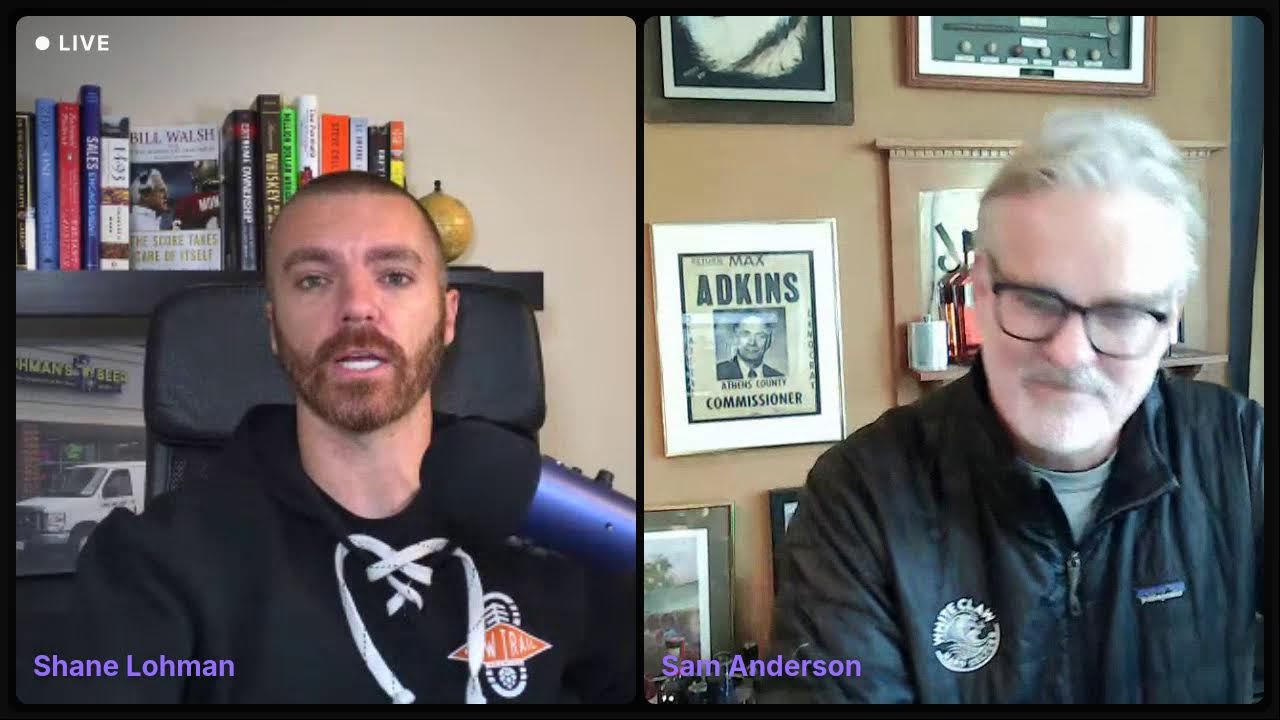
In this YouTube live‑stream, host (Speaker A) and industry veteran Shane Lopeman discuss why distributors are essential for beverage brands and how to build effective supplier‑distributor partnerships. They cover the logistical and financial benefits of using wholesalers (23 % logistics cost savings, 15 % reduction in out‑of‑stock risk), the need for collaborative annual business planning (ABP) and measurable objectives (MBOs), and the importance of giving distributors a clear blueprint for execution. Real‑world anecdotes illustrate successful collaborations (e.g., Mark Elamy of Map Distributing securing Velo Tequila) and pitfalls such as poorly aligned promotions (the Big Green Egg giveaway). The conversation also explores challenges with self‑distribution, distributor hesitancy toward “work‑wiz” rides, the role of accountability and target‑driven incentives, ego dynamics, and the necessity of matching a brand with the right wholesaler. Practical tactics like sampling, yellow‑tag shelf features, and leveraging distributor expertise (SOMM staff, consumer education) are discussed, along with a checklist of questions brands should ask potential distributors. The dialogue concludes with examples of rapid scale achieved through strong partnerships (Stateside RTDs) and a reminder that the right fit between brand and distributor can dramatically accelerate growth.
Chapters
Shane Lopeman here again on Saturday. Uh, we're actually live streaming. We're learning the technology, so bear with us. If you ask questions, we may not answer right away, but we're going to attempt to try to figure it out while we're here, uh, live. And we're going to continue to live stream every Saturday, and we'll probably send communications out this week to let folks know that we'll be on the line around 10:30 AM Eastern Standard Time, 9:30 Central Standard Time, and you can figure it out wherever you're at in the world. How hard is it to do? Yeah, what time it works for you. But we're going to be live here. We've been talking about annual business planning, you know, working with suppliers, having an effective plan. But this morning we were talking about distributors, and we just wanted to spend the next half hour or so just talking about the importance of distributors and distribution and why a supplier needs them. Shane, what are your thoughts?
Yeah, I think it's— I don't know why, but the dynamic of the relationship, it's so easy to take them for granted as a brand and a supplier and not realize what they do. And I think that was probably one of the most frustrating things for me running a distributor was always, yeah, just that there wasn't much appreciation even when you were doing really well for a brand and driving huge numbers. It was almost like they assumed that you should just do it, you know, that was the expectation, of course. And it's just, there's so much hard work that goes into it on there, on the distribution end. And they really can be your biggest strategic advantage for scaling your, your brand. And, uh, you know, if you approach it like a true partnership, you know, they can— it can become that for a brand. But that's when you see these big brands like Stateside or you know, Montucky's taking off, or, you know, we're just talking about Blake Cider. It's because they're with great distribution partners and they're, they're using that as the way that they scale. That's how they create that level of scale and success.
Yeah, I was looking at some figures this morning I shared. Um, I believe the numbers— um, a wholesaler actually can save a supplier 23% savings in terms of their logistics and distribution, and also They can actually help a supplier minimize their out-of-stocks, 15% greater less chance of you having an out-of-stock of your brand because they're in those stores, right? And let's face it, as a supplier, we're covering like North America. You can't be everywhere. But if you go into a particular location, like you said, you're coming to Minnesota to meet with a wholesaler, uh, with us, with a supplier, uh, this coming week, right?
Yeah. Yeah, and you know, it's frustrating to me because especially as craft beer got popular, and I'm sure it's the same with spirits, the suppliers will just look at it and say, well, I don't want to give that 30%, so I'm going to self-distribute, right? I mean, the amount of work, time, effort that you're taking away from growing your business to deal with self-distribution, I mean, it's such an effort. I feel like it's a deal that you're only giving them 30%. I mean, I know it's money, but, um, the way that they can scale your products— and you were just talking about it, especially in big beer, they have that scale and infrastructure in place, those big houses where they can go in and, and plug and play your product to where you can force multiply that. It's, it's just so much legwork that they do for you.
Yeah, I mean, it's, uh, so, so you're gonna meet with this wholesaler in, in Minnesota, right? I believe you said you're doing the ABP, which we've been talking about, annual business planning.
Yeah.
But what is it that you're expecting out of that wholesaler to do for you when you meet with them? So are they already a wholesaler for this brand then? They already have them secured? Okay. But within the annual business plan, what are, you know, what are you going to ask them to do? Because that's what I was talking about this morning, what they do. They merchandise, they go out and they actually call on accounts, they stock your product and make sure you're in a cold box. But what is it for this particular wholesaler you're going to be asking of them this week?
You know, we've talked about it, but you've got to give them the blueprint because, you know, a lot of brands struggle when they walk in and just have expectations. They'll provide a volume number and say, hey, we expect this much growth or this much success this year, good luck. And the distributor kind of looks at you like, what are we supposed to do? So you've got to give them the, the blueprints to execute your brand and set out some expectations. And ABP to me should really be a collaborative process of, you know, what's possible, how are we going to get there. And, you know, it Gives a foundation for you to, to have some accountability in the relationship, but also to get feedback in terms of, you know, what works, what doesn't, what's possible, what's not. But it should be something where you're giving them a plan, but asking, you know, how can we make this as successful as possible? How can we support? Because it is a partnership, and if you're with a good distributor, they're going to be your biggest asset. They really are.
Yeah, I agree. You know, so here's some real-world stuff. So, um, here's how it's working for me. I have a guy, his name is Mark Elamy. He owns a company called Map Distributing, does work for Altamar Brands, and he's down in Nashville right now, and he's been down there since Wednesday, you know. And the awesome thing is, on Wednesday he started texting me.
Yeah.
And he goes, man, I just secured, um, a Velo Tequila in the well. And I'm like, holy cow, Mark, you need to come work with me. Show me how to get it done to get in the well. He said, that's 125 cases, um, a year that that's going to generate for Avelo Tequila.
Yeah.
And I'm like, that is an awesome one. We call it buttery biscuits. I'm like, that is a buttery biscuit that we want to share, um, with the, uh, founder of Altamar Brands and what you did for his business. But you know what he said to me when I was talking to him? He goes, it wasn't me. And I go, what do you mean? He said, it was the rockstar distributor rep that I'm with. She is a craft expert. She knows all the key accounts in Nashville and she knows where to go. And she's taken me in there and all I'm doing is just adding a little flavor to the conversation to talk about the brands to help close the deal.
Yeah.
So he clearly called out the wholesaler and that is the power is they have the relationships. Let's face it. We can think as a supplier we're going to go in the marketplace and go call on John, this account, Shirley, that account. But those reps are in there every day. And if you can develop a relationship with them, they're going to actually help secure that appointment. But you got to come prepared to actually enhance, you know, that rep's effort. But I just thought it was kind of real world of like he's out there, he's working the market. Kind of to go back on this, do you find it hard to get distributor work within the marketplace? And we're talking about the importance of distributors. Do you find it hard getting workwiz?
I mean, it depends on the distributor. I think some of them are a little— maybe hesitant's the wrong word, but they just hate to keep doing these workwiz. You know, we talked about it before where there's no plan. They're basically just sending their rep out with one of your supplier reps for the day. You're gonna go have a long lunch. You're not gonna— their rep's not gonna get their normal work done that day. So I think it's easier if you lay out a plan and just kind of reassure them that, look, we're not gonna—
Yeah.
We're not going to dilly-dally all day. We're going to make this worth your while. Here's the goals. I always prefer when a brand hit me with goals. Here's why we want to do the ride with. Here's what we're trying to achieve, and you know, here's what we're going to do for the day because that made me feel like it was a worthwhile investment of you know a salesperson's time and effort, and was worth you know committing their day. So I think just giving them a plan, but some wholesalers are for sure more hesitant than others because they've just. They've seen it time and time again.
Right, right. Yeah, I think having a plan— so just going back to our, um, our discussion, the importance of a wholesaler. So you're meeting with a relatively large wholesaler. We're remaining nameless just purposely, but you're meeting with a large, large wholesaler here. Um, you know, are you going to get in the market with them while you're here? Is it just a business meeting?
No, I mean, for me it's, uh, I've been working with the brand for 2 or 3 months, but I haven't been in market physically.
Yeah.
Even if I may not go with their team, but even just to start to hit some retailers, to go out and talk to a couple buyers, just to go to a couple bars, just to kind of get that boots-on-the-ground feel for, you know, what's going on in the market, what the feedback on the brand is. It's something where, uh, it's the first time I'm meeting with the distributor team and I don't want to say I'm nervous, but there is a part of me that thinks maybe you're only getting one side of the story from the brand. And I, I don't think I'm getting the wrong story, um, but there's always just another side to it. Um, and I think the brand is a great brand. They're strong. Nothing's wrong. I think it's going to be a big year in '25 for them. But just know, coming from that distributor side, I kind of know, you know, they're going to have their 2 cents to put in, probably rightfully so.
Yeah, maybe we do. Here's some advice maybe to you and the, the brand owner that you're coming in with is, uh, what I always do when I go into a marketplace, if the distributor's not available, one thing they always do, and it's really incredible, is they'll say, hey, these are accounts that I want you to go see.
Yeah.
So ask them for those accounts, and I could probably guess where they would send you.
Yeah.
Um, to go see those accounts. And then I know they're also willing to do, um, spot appointments too. But one thing they will do for you is they will tell you Uh, where to go. And 2 is they will give you feedback. And that feedback, like you said, you're gonna go on there and they're probably gonna give you, you know, good and maybe some opportunities. I'll use that word in terms of what you need to do for your brand. And if you're willing to listen, uh, great. And then also lay out a plan. They'll go out and execute for you if you're really clear, for clear, right? So distributors are very tactical.
Yeah.
At the end of the day, uh, you know, and maybe, you know, I sat in distribution for 10 years and maybe they don't like this and you were a distributor. But I don't see distributors as strategic. I see them as tactical, blocking and tackling distribution, shelf merchandising, pricing, getting that product on the shelf in danger of being sold.
Yeah, I mean, it is— when you say logistical, I think people think of putting cases on trucks and driving them around. Yeah, the logistics though of running a distribution operation, you've got to have, you know, you said your merchandisers, where are they at? Your salespeople, I mean, you're marketing people in the office that are doing your printing for signage and salespeople and drivers. I mean, it's just such where you almost have to run it. Obviously, there's no fighting, right? But like a military operation where it's just so, you know, everything has to be structured out. And I think that's one of the things that we talked about with these business plans, where if you don't have this structure with how you're operating your brand, it's just, it can't compute for them. There's no way for them to operate.
Yeah.
Without structure and expectations in place because of that.
Yeah. Yeah. Okay. So you were a distributor.
Yeah.
Let's come back to this. So what is it that you felt that you did really well? What is it that you felt you brought value to your suppliers as a distributor principal? And what did your team do specifically to help grow the business? Maybe 3 or 4 things that you could share and then walk us through those 3 or 4 things.
Yeah, I think the biggest, the biggest thing for me was, was the accountability for the targets. So that if we said, you know, our goal is to sell 2,000 CEs of this new cider at a release for a spring presale, you know, we're gonna do it and we're gonna hold our people accountable for doing that. And if this bar rep's available, uh, supposed to be accountable for 5 promotions and an off-premise rep for 5 displays, we're gonna make sure we do that. And that's an expectation of, of being a part of the team. And I think Brands appreciated that. And a big thing was just relationships. Our salespeople were really good at building relationships, like you said, so that we tried to keep a selective portfolio to some extent. I always hated when I was in retail, I hated the distributor reps that came in and said, please just take 5 cases of this. I need to get it out for promo incentive. I'll come back next week and we'll get rid of it. But just please. I hated that because it just seemed cheap. It's like, you're not really helping me out as a retailer. So I think when you had a portfolio where you knew that the brands and products were gonna bring some value to the account, it helped build that relationship that when you needed to ask them for a favor, like, we're launching a new beer, can you take a couple of kegs for me? It's gonna do well. You kind of built up that trust, and brands could see that. And I think there was value there to keeping the portfolio at least a little bit selective. So the accountability was big to hit the goals. And I would say the last couple years I got a lot better at owning the fact that this was a partnership. I think there was too much ego on— if you ask any of our brands the first few years what my downfall was, it was that there was too much ego on my side that like I knew we were a good distributor, but I had the view of like, you need us, you can't do better anywhere else at a distributor. And there's kind of, you know, there's that learning process or that middle ground you need to find because like I use Blake's as an example a lot, but a brand like Blake's, they were an incredibly fast-growing cider brand, and we were making that success even more so, but we both needed each other. And it's like a partnership, uh, you know, easier said than done because there's just human nature and ego on both sides.
Yeah.
But like realizing the value that you bring as a distributor and that the, you know, the brand brings to the distributor, it's that to me Is it's, it's like, it's big because there's got to be that collaborative effort.
Yeah. So knowing the target and going after it, being accountable, right?
Yeah.
And then being collaborative, right? Open, pushing the ego aside to listen. So here's another real-life one. So I literally got this email. And this often happens with our partner. And it's a great partner out of Illinois. They cover several states for us, but I cover the Midwest. And they said, hey, look, we're targeting country clubs.
Yeah.
For your brands. And we're gonna be doing these dinners. And I'm thinking, wow, my products would do really well in country clubs 'cause they're expensive. And people that can join a country club obviously have money so they can buy my product. And they just simply said, hey, man, I just need some samples to go to these events. And can I pull a case of these products for the rest of the season? Because, you know, Actually, country club season, believe it or not, you start now for spring.
Less golf and more of the eating and the drinking inside.
Right, yeah, but you're even planning for next year, but you have the eating for sure. But you're starting, you know, obviously the golf, but yeah, but you know, the, the point is my distributor reached out to me and said, I have an opportunity. So I think that's another one is they're going to see the opportunity in the market And they're— if you're open and they're going to say, hey, I need these samples to do this, I will tell you all day long, if your distributor is asking for samples to go in the market, give them to them. Oh, it's the best thing you can do.
I mean, just spend a couple hundred bucks a month on samples. I mean, keeps a 6-pack in their car and they take it to a party with their buddies, handing them out. I mean, samples is, is everything. And Oh man, I don't have one here. We used to make sample cards where we would take— it would have the product info. I think I've told you this because I hated just leaving a business card. You leave a sample and you leave a business card, it didn't say anything about the product.
Yeah.
Now this buyer, this bartender, has a can of beer with, with no info on it. So we used to make business cards, but on the other side we'd put like a little bit of product info, the price, what the product is, so that they actually But samples are huge, especially— you just got to get them.
That's something the distributor could do. They could actually enhance. They could say, hey, look, the one thing that I'm noticing in the market, you as a distributor notice, it's like we leave a business card, you leave, guess what happens? Nothing, right? But then you develop this sample card. So yeah, distributors are going to tell you, here's how you execute your brand effectively in the market. You know, I, I spent a lot of time sitting on bar stools talking to a lot of people. And a lot of times, you know, the conversations are great. I love your brand. I'm gonna bring it in. And I leave. Guess what happens?
Nothing.
Nothing. Right now, I have to do some work with my wholesaler to go back and say, hey, look, we went to that account. Did you follow back up on it? But I own it too as a supplier. Next time I'm in that market, I got to go to those places I've been because now I'm familiar and now they know me. So it is a partnership. But it is important to know that once you leave, if you have a really good— and you said it, it starts with the ABP, it starts with the MBOs, it starts with all that. If you have a really good plan and you're supporting that plan with the $200 a month, the sampling, whatever it may be, they're more apt to go back to that account to actually have that conversation, drop off the sample card, you know, you know, see what happened to this sample, everything else. It's just so incredibly important. In terms of how they build your brand. And oftentimes, you know, there's a lot of frustration from the distributor to the suppliers, like, they brought my brand in and nothing is happening, right? But you got to understand what it is they do. And what they're really good at is getting that product from the distributor to the store account and getting it placed on the back bar or the shelf. That's what they're really good at.
Yeah, but like the accountability on the side of the supplier, it lets the distributor know that you give a shit about what you're doing, right? Like, I'm gonna hold you accountable. We've set these MBOs. I'm gonna hold both of us accountable to make sure we reach them. Yeah, it's gonna give off a sense of, oh, they care, you know? And I always— I could feel that from brands, and I would kind of work harder for those brands because I knew they were going to hold me accountable for it. Um, so that when you go into the market for a ride with, what are we getting done? Did we sell anything today? I hated those ride withs when the rep would come back and be like, oh, we saw some good accounts. Like, you just took my rep for a whole day. We didn't sell anything.
That's, uh, yeah, you know, that's, that's the million dollar— I mean, it happens, and it happens more often than not, is that you go out and, uh, you don't sell anything. So you definitely should have a— if you're gonna go spend the day with, um, you know, the rep and the account, or in the car going to see accounts, definitely have a target. And I think your distributors will tell you that if you're listening. They'll say, hey— It's a question you ask your distributors: what is the best way to optimize my time with your people and in the market? And guess what? They're going to give— they have the knowledge And they're going to say, this is how the best way you can come to my market and do A, B, C, D, and E.
Yeah.
They're going to tell you. Now, some suppliers are not wanting to— they won't listen. But I'm telling you, the knowledge they have, they're going to tell you where to go. They're going to tell you how to present to that account because they have knowledge of it. They'll even go deeper. They're going to tell you the personality of the person that you're talking to, that account, and what you need to do to get past that gatekeeper to get them to say yes.
Yep. Some of the brands you work with, is it especially in spirits, wine and spirits? Do they also kind of look at the distributor as not a nuisance? That's the wrong word. But I don't know, so many of the brands I've worked with, it's like, we've got a great brand, they should be selling more.
Yeah. So, so that, that is the attitude or the flavor right now, or the underlying tone. is that a lot of, um, you know, uh, smaller suppliers like Altamire Brands, we don't believe we're getting the focus we need. So what Altamire did is they actually shifted from a larger wholesale— nothing against the large guys— Oh no, yeah. To kind of a mid-tier to smaller wholesaler. So I was, I was thinking about this this morning, or maybe I texted you or someone, I can't remember, but basically, um, Distributors are important, but not— you're not always going to be a fit with all wholesalers. So, right, I could show up at, you know, a large wholesaler called Reyes or Southern Glazer Wine and Spirits, RNDC, but I don't know if that's a right fit for my brands.
Yeah.
Because those, those wholesalers, incredibly important, they're focused on the big guys, you know, to get distribution. Not that they don't focus on the small guys, they do, if you have a really good plan. And it's a fit, you can fit in there. But I'd like to— so as you're planning out your wholesalers, you should know those principles. You should know the reps, how they're compensated, how they go to market. And if that fits within the DNA of what you're trying to do, then great. But I'll tell every supplier is you have to own it. And every distributor is going to tell you, when you sit across the desk from them, they're going to ask you, what kind of support materials do you have?
Yeah.
Do you have people in the market actually go call on accounts to activate your brand? They're going to ask you to do those things. And that's just the, the hard reality these days. If you are going to come to market with a brand, be prepared to invest on feet on the street. Be prepared to invest in brokers that are intermediaries between you and that distributor or consultants. Yeah, because at the end of the day, you have to focus on sales and marketing your brand on a 32,000-foot level. You need the people on the street to tactically go out there and execute. But yeah, it's just— I know I'm going deep, but I'll shut up.
But no, no, I mean, it's, uh, I think that's one thing I'd say about the market. There's so many brands now that it has empowered distributors, especially when selecting through smaller brands, to be a little bit more demanding.
Yeah.
You know, and I tell brands this, it's a good thing because if you have your stuff together, it's a higher bar to hit. But if you hit it, you're gonna stand out more because so many of the brands don't have that. And it's not— it's one of the things with some of the brands I've started to work with now on the consulting side, it's one of the things I've told them where we're gonna feel out the relationship and it may just be the— not be the right fit. It's no knock on your brand. It's just maybe not the right fit. Maybe they've got 7 massive RTV brands and they just don't have a space to allocate attention to yours. We can still do well. We can find another relationship. So I think just having that empowerment to know that it's not necessarily a brand issue.
Yeah, it's funny you said that because Mark, who I talked about earlier, Mark covers Indianapolis, Louisville, Nashville, goes over to Memphis. hits those major markets. And he was looking at our wholesaler in Indiana, a great partner. They just came on board. But he's like, did you look at their— what's in their book?
Yeah.
And I go, yeah. And he said, well, there's a lot of stuff in there. And I said, I understand that. But he said, well, you think they'll focus on our stuff? And I stopped him and I said, look, they will tell you where to go.
Yeah.
Which they did. They gave us a— gave him a list of accounts. This is where I want you to go. And I said, but you have to do the next step, is go there, execute, get them to buy. And guess what's going to happen? That wholesaler is going to start paying attention, and they're going to start doing the things they're great at, you know.
And you've got to have that faith that it's going to happen, because I think a lot of brands get stuck. They want the assurances up front. If I do this, will I get this? Just do it and know that it's going to come. And if for some reason it didn't, you've built value in the brand, and someone else will see that.
Yeah, yeah. So we've been talking about what distributors do, right? They can minimize your logistics at 23% according to National, um, Wholesaler Association. They can actually, um, as a 15% greater or less chance of you going out of stock, uh, for your brands in the marketplace. They call on accounts, they have relationships, all this great stuff. What don't distributors do?
Distributors don't— they can't build your brand for you. You have to do the first step. Like, you have to have a brand that has a plan and that engages consumers on some levels, and they can take that and scale it. Their, their job is to scale, not build the brand from the ground up. We'd have brands come to us when I was running my distributor and our rate of sale is not good enough. Well, rate of sale is a brand problem. I can get it distributed. And if it's— they— if there's some rate of sale momentum, I can help you increase it. But if there's no rate of sale, you've got to do, you know, you've got to have a brand identity that resonates. You've got to— and I've— especially in the craft space, as a lot of the craft brands have come into the distribution world, or, you know, scaled their— tried to scale their brands.
Yeah.
They sit there and it's sold at our local brewery, 2 block— you know, 2 blocks from our brewery, our stuff always sells on the shelf. Well, you're 4 states away. You've got to have some kind of brand identity, and the distributor can't create that for you. They can scale it.
I love it because this is the push and pull we talked about a few weeks ago. As distributors push— yeah, I'm gonna get distribution, I'm gonna place it on the shelf, I'm gonna— if Harry wants it delivered at 8 o'clock on Thursday, my driver's gonna be at the back door, he's gonna pull it off. the truck, pull the cases in. That merchandise— merchandiser is going to arrive, grab that, uh, bottle, put it on the shelf or on the back bar. That salesman's going to go back in and they're going to get the order, and then the cycle starts over again. But they're not going to do the pull. So if you have the wholesaler doing the logistics, right, and getting the distribution, pushing it out there, and you give them the tools to do that, right, You own the pull.
Yeah.
So what kind of pull things, as you were a distributor, what kind of pull things do you think a supplier could do to help enhance the chances of that product actually, after it's on the shelf, being pulled off the shelf?
It's one of those things, I think we talked about it maybe within the last month, you had talked about someone who had gone to a VFW sampling and people were— yeah, the product. It just goes back to square one of what is your brand? How does it engage with people? A lot of people have started to talk about owning occasions. So I think I put content up last week, the week before, that Heineken with their NA beer Heineken Zero has gotten in with the gaming community because so many young people— I feel old saying this, but it feels weird that people socialize through Twitch and Discord, but that's what they do and that's fine. And Heineken has capitalized on that by marketing towards people that stream video games late at night and they're drinking NA beer.
Yeah.
That's how they engage with the brand, you know. So you've got to find— I'm sure there are a lot of people that are up at 2 AM drinking Heineken Zero playing, you know, I don't know, Call of Duty or whatever, but that engages and they've got that built in their mind. So just finding a way that it engages. We had a supplier that made kettle sours. It was good, they were good, $250 a half keg sours, really good, but they were giving away Big Green Eggs as their summer promotion at on-premise, and it just didn't really resonate with the brand. It's like, you're a high-end craft brand making 8% sours, why are you giving away smokers and grills? And we invested $10,000 and the rate of sale didn't go up, and I said to the brand, stop, I'm done pouring money into this. And they were pissed, but they just didn't know their brand identity. They didn't know how to engage with people. So as a distributor, I couldn't scale it.
Well, that was the push, because you know why they did the Big Green Eggs? They were looking for a display the gatekeeper would take that grill home. You know, that's exactly what that is. I mean, that's just a— I'd rather see them doing sampling events, tastings, talking consumer, or take the Big Green Egg and put like a text-to-win where you basically— the consumers can put in for a raffle where they can win the big green egg, you know, whatever. Or there's some type of loop video there that shows, you know, them enjoying their, the product at the green leg and someone talking there, you know, to bring it active. And that's what the supplier really needs to own. The distributor will give you certainly ideas. Here's what my other suppliers are doing and this is how they've been effective. But then the day you, you got to step up. Look, I— one of the things I've learned in my— and I always talk about Illinois, but I'm doing, um, basically creating a yellow tag.
Yeah.
Because when you walk the account, I've talked about this before, this is the pool. As I got distribution, I took an inventory of every store in Chicago down through Illinois, and guess what was happening? None of my products been moving very fast.
Yeah.
So the one thing I'm doing is I'm creating a feature, a yellow tag, because what happens is if I'm walking the shelf, if that consumer's looking for a deal, they're walking the rum section or the whiskey section, that yellow tag's gonna draw, draw them to it. And I hadn't been doing that, so I'm gonna go with a yellow tag strategy at least every quarter, the last 30 days of every quarter. I'm gonna do, you know, so I guess one month at every quarter. So that'd be what, 4 times a year? I'll come back with a Yellow Tack strategy to get a feature on my brand. You can do things like that. And then I'm gonna back it up with tastings.
Yeah.
So people coming in and talking about the brand.
Yeah. When you do the bigger stuff without a plan in place, like the Big Green Egg is an example, it almost— there's more risk than reward because you don't have a brand identity in place. Yeah. And if distributor goes and invests 10 grand in your program and it doesn't boost the rate of sale, Now you've lost them. And if you go to an account and say, hey, can we get 5 tap lines, or can we get 50 case displays, we'll give you this giveaway, and it doesn't work and your product doesn't move, now it's just illustrated for them how lacking your brand strategy is.
But you told that— so you— this is, this is an example when you were a distributor, right? You told them, hey, you put $10,000 into this, there's a better use of your funds, right?
Yeah, they didn't like it. There was a lot of ego on their side. They ended up buying out of the contract, which was fine. I'll take them. You know, you— it's like, that's— it just highlights that point. It's got to be a partnership because I'm giving you actionable feedback. You may not want to hear it, but it's the truth. Can you take that and use it to put us all in a better position to succeed? Because it's not— it's nothing personal. It's the market's just responding, and we've got to tweak our approach. And if you're not willing to do that, it just makes it tough.
Yeah, you talk about ego a lot in our conversations, and that's important because You know, suppliers are awfully proud of their brands and distributors are awfully proud of their houses, right?
Yeah.
Like, I'm, I'm the big distributor in this market, or this is how I go to market and this is how I take care of my people, and this is what I can do for your brand. But from a collaborative standpoint, you gotta both be open. You gotta understand what are those services that particular wholesaler is gonna offer you. They certainly, like I said, the big thing is they get your product from the warehouse onto that shelf on the back bar, and they make sure it's in stock. It's placed in a place where it's endangered of being sold. But at the end of the day, there's a whole bunch of stuff in between that we've been talking about this morning, and it has to be the right match. Like, you're going to come up and meet this wholesaler in Minnesota. I'm— since it's already wholesale, I'm sure it's the right match. Or you're going to take your other clients and you're going to say, tell me about who you are, what your story is, and what it is that you want to accomplish, because that's going to the type of wholesalers I'm going to introduce you to, right?
Yeah. And if you're with the wrong wholesale— which this brand isn't, but there's another brand that I work with that, that has been putting a lot of money into their marketing every year in terms of like supporting the wholesaler. And I said, look, when we go this year, we're going to ask for that to be, you know, returned on some level. You know, we're going to ask for $1 a CE, which is kind of the norm in beer. And they say, well, what if they say no? Well, then, you know, you might be with the wrong wholesaler, and it's better to know that now. If that's the case, that's the case. It's better to know that now so that we can pivot because the brand will be better off. But you owe it to yourself to ask. And I think just having that confidence to know that if, if they're not the right distributor, it's not a brand problem, not in this case, that we'll just find a better distributor. But it's, it's like I said, not everybody's the right match.
That's, that's something you could create, Shane. It's like a list of questions that you would ask your wholesaler as you're interviewing them.
Yeah.
Uh, to consider distribution, uh, for your brand. Now, to be fully transparent, the other way around, the distributor is going to interview you too.
Yeah.
Because they're, they're not taking all brands. I mean, matter of fact, the word on the street is a lot of wholesalers have just basically called a timeout. I'm not taking any brands. But the reality is, if you have a good story, you can get past that.
You have to have worked with a— there's wholesalers out there that are brand collectors. You don't want that either. You want them to, to ask you the right questions, because if you just say yes to the first distributor who will take you and you don't ask any questions, the amount of wholesalers I've seen that'll launch a brand for a month or two, get the sales bump, and then forget about it— you don't want to go to a brand collector.
No, no, you, you don't. Uh, and you know, uh, to be fair to the distributors out there, because I, I I worked for one for 10 years.
Yeah.
A lot of times what happens is they come in, there's a lot of excitement. You do the kickoff, you get some distribution, and then the next supplier comes in or the next priority is put on the list. Or I got all these chiefs I got to take care of. That's why it's important to have the right match to understand what you're going to get. Because one question you could ask is, how many general sales meetings do I get a year? How many workwiz am I allowed to get in the market?
Yeah.
Do you share in samples with me? If you can't work with me, do you provide me a list of accounts? What type of feedback do you give me on executing in my marketplace? How much access do I have to you and who's my main point of contact? I mean, I can go through tons of questions.
I think I told you this. I worked with a brand for a month and they— their distributor would not give them a list of accounts to go see in the market. And I just told them, guy, this is the wrong fit. I don't know anything about us else about the relationship, but I can tell you this is the wrong fit. That's a massive red flag to me. They don't want to work with you, that's one thing, but if they won't even give you a list of accounts, that's a red flag, right?
Because that's one essential thing a distributor can do for you. They know where the business is being done.
Mm-hmm.
Right? And if they're not willing to partner up and be collaborative like you said earlier, then that's not the right— that's not the right distributor. I'd also say that if you're considering distributors, I mean, they're all— I actually think every distributor, it just depends on the brand and distributor. I think you can— it just depends on if you're a right match or not. Because it was funny, I was talking to, um, a brand, and I told the brand I went to this wholesaler I'm even going to remain the state nameless. I'm excited because this distributor is really executing really well, uh, for the business. But this brand is like, oh man, I pulled from them, they didn't do anything for me. And that— isn't it weird? So he had a horrible experience.
Yeah.
And my experience is my business quadrupled. So my point of view on the wholesaler is they're getting me in distribution, I have access to the VP, I, I can, I can get work with anytime I want as long as I give them a week's notice. They're receptive to programming and they actually participate with me on those programming. But the other guys, like, you know, I pulled from them. They just didn't do anything for my brand.
It's for sure a fit thing. I mean, if you asked some of the brands that we distributed, they'd say couldn't have done it without Steel City and Shane and his team. They, they made our brand and helped our growth. Yeah, other brands that would, you know, probably want to take me and hang me from a tree over here. I mean, it's just, it just depends on, you know, the fit and how things go. But, um, yeah, just asking the questions to try and get a feel for what the relationship— just the accountability, you know. What are you gonna— what's the expectations on your end? What do you need from me? What are your expectations on my end? What do I need from you? Um, yeah, and I, you know, I think it is, it's good to just highlight how crucial distributors are towards creating growth and scale for brands. Because when you find the right match and it's a productive relationship based in accountability and you're both investing in it, it is the quickest way to scale a brand.
Oh, 100%. I was, uh, watching my friend Andy Wesley. Sorry, Andy, I'm calling you out here, but Andy is, I think, senior director of education stuff. He's very knowledgeable. I think he's like a WSET 4 or 5.
He's—
but he's just an aficionado when it comes to like spirits, whiskey, wine, beer. I mean, just tremendous. But I saw a post the other night and Andy was, um, as a distributor, actually had an audience with consumers and he was going through whiskeys with them. That's another value.
Yeah.
Distributors have people in their shops.
Yeah.
So depending what type of brand you are, you might want someone like Andy to actually go out there and represent your brand to consumers in the marketplace who's extremely knowledgeable. Some distributors have SOMMs on staff. If you're a wine, maybe you want those type of people to represent you. That's where you kind of match up. But distributors, you know, I want to do them a service. They have other things. They're very tactical, but they have people like SOMMs and whiskey aficionados, and, uh, you know, they can help you with strategy, uh, you know, when it comes to like, here's your route to market and what you need to do. And this is— or your go-to-market and your route to consumer. They're going to tell you in their market how they get it done. And that's how you kind of match up with what you're, what you're trying to accomplish versus what the distributor can do for you, as long as you understand that. But I just don't— we all need to stop being frustrated with distributors.
Yeah.
You just have to understand that maybe it's just not the right match. You need to move on. And the distributors need to communicate that too. Hey, look, your brand's just not the right match. I'm gonna release you. Yeah, you know, I think sign that release.
It's one of the things that I've enjoyed the most is being able to— when I sit down with a— when I'm working with a brand and sit down with a distributor, credibility is the wrong word, but the distributors feel good about the fact that I'm coming from the distribution side. Yeah, the net, you know, so many these craft brands that come in, it's like, I got a guy that worked at, I don't know, AB or Sam Adams or whatever, wherever.
Yeah.
The distributor, I just thought to myself, here we go, another brand guy, you know. And so I— it's nice to be able to kind of bridge that. But I actually had someone tell me last week that they feel like sometimes I'm anti-distributor now. I'm not anti-distributor at all. They're the biggest resource a brand can have. You just know what there should be you know, a certain level of expectation and accountability there. But if you find the right partner, you make their team look better, their team makes your brand look better, and it just builds.
Yeah, you know, I did some deep thinking because I've made statements like distributors are doing a disservice to suppliers. And all my distributor friends out there, I didn't mean it. Because that's why I wanted to talk about this topic.
Yeah, it's not all great. I mean, there's like anything, there's bad apples out there. But for the most part, they do underappreciated work. Nobody really knows who they are, what they make happen.
100%. I mean, I was just looking at the figures is I don't have to worry about that truck backing up to the door at that retailer and getting that product off the truck on the shelf. That's 90% of the game is getting me on the shelf and getting me visible.
Yeah.
I mean, let's just start there. They're so important and it does save suppliers money. And I actually think it allows them to scale more effectively because they can, because they can spend those dollars differently. You know, anywhere between 25% and 30%, you're probably giving a distributor's margin, right, in the marketplace. I would say that's the best 25% to 30% you can ever spend all day long. Because if you were doing it yourself, the cost of doing that would be through the roof.
Let's just start with the time that you'd be spending driving kegs or product around cases that you're not investing in your business, growing your brand.
Yeah.
Not to mention the truck payment or the van payment, the gas, the insurance. I mean, just—
I talked to that guy yesterday, remain nameless again. So he, he self-distributes, right?
Yeah.
And he has a really cool brand and he has a box truck. And he was explaining to us how he goes out and delivers. He has like 200 accounts he goes to with his box truck. That is like so incredibly expensive, the time and attention that he's going out and hitting account by account by account. So for 25%, giving someone a piece of the action to actually go execute your brand That's what I love about wholesalers.
And, and just to touch on the underappreciated work they do, I've done it. There's nowhere I want to be less than a bar basement, going down those stairs when it's 22 degrees outside and snowing and the keg's frozen, right? Touching the cold aluminum. And it's like, you know, I say take care— just little things to take care of distributor driver teams or salespeople or merchandisers. You're throwing $20 because they helped you out, or you take them and buy them a beer. Those people are frontline people that are in the accounts every day. They're talking to the barbacks and the bartenders and the buyers. And if they— if you take care of them and they're a fan of your brand, they're going to be on the front line pumping your brand up, and it's going to make a huge difference.
Yeah. Well, in closing, you know, my closing thoughts are this: I love wholesalers, but you have to have the right— your brand has to match well with that wholesaler. And as a brand, you have to ask that wholesaler, what is it that you do? And then based on those questions you ask, does that match up with what you're trying to accomplish as a brand?
Yeah.
But then today, every wholesaler, if you're just looking to get distribution, get that product from your, you know, from your location to their warehouse, from their warehouse to actually the account distributors, most of them are good at that. Right. But then you got to just dig a little bit deeper. Does it match? Do they have a strategy around craft brands, or they want to deal with ciders? You know what, you know, do they have too many ciders in their portfolio? Do you match well? How many Chiefs they have, uh, the whole bit. So it's incumbent as a supplier for you to actually understand all those other services that a distributor offers. Any closing thoughts on your side, Shane?
No, I think the same thing is just Realizing what a valuable resource they are to your brand's growth, success, scale, um, and just finding out what the distributor does. I had a guy that used to work at Founders and now he's at Blake's Hard Cider, and I asked him, you know, I'm pitching a brand, I'm trying to get a brand from the distribution side, how do I pitch to them? And he said, dude, anybody can do logistics. I mean, you do it well, but, you know, Amazon could do that if they just wanted logistics. They could go to Amazon. I mean, they couldn't, but, you know, And yeah. What is it that you're gonna do to grow the brand? That's what you need to tell them. And I think figuring out what distributors can do, which ones can do the things you need, because there are so many good distribution teams that do so much to grow brands and just finding out what they're gonna do beyond those base level logistics. Because if you find the right relationship, it can do, it's almost indescribable what it can do for your brand. And the last thing I'll say is, You look at stateside, those Surfside RTDs, I think last year they did 1.3 million cases and this year they're going to do close to 5.
Holy cow.
That's the kind of scale that— I mean, even if it's 5,000 to 100,000 distribution, if you get the right partnerships, they do wonders and they can scale your brand quick.
Yeah, I mean, it's funny. And I'll just say another closing statement. RTDs. Yeah, if I have an RTD brand I will go to a beer wholesaler over a wine and spirits wholesaler. Sorry, man. And the beer wholesalers own the cold boxes, man. They know how to get it done.
Stateside, I, for the most part, I think uses the AB wholesale network. And you know, it's worked for them in beer. You got to have your stuff together, which they do. But if you do, it can pay off for you.
Yeah, 100%. Well, Shane, thanks for the, the time today. We were live. We did— I don't know if we got any questions or not. I was looking at chat over here on the right, so I'm not sure how it gets fed, but we'll— we're learning here. Yeah, at the end of the day. All right, see you, buddy. Have a great weekend.
You too.
More from Samuel





He Sold Pickle Shots Out Of His Trunk. Now He Runs The Co-Packer That Won't Bury You In MOQs.






What market do you think gets overlooked most? #Toronto #BrandStrategy #Marketing