Welcome to our live show!
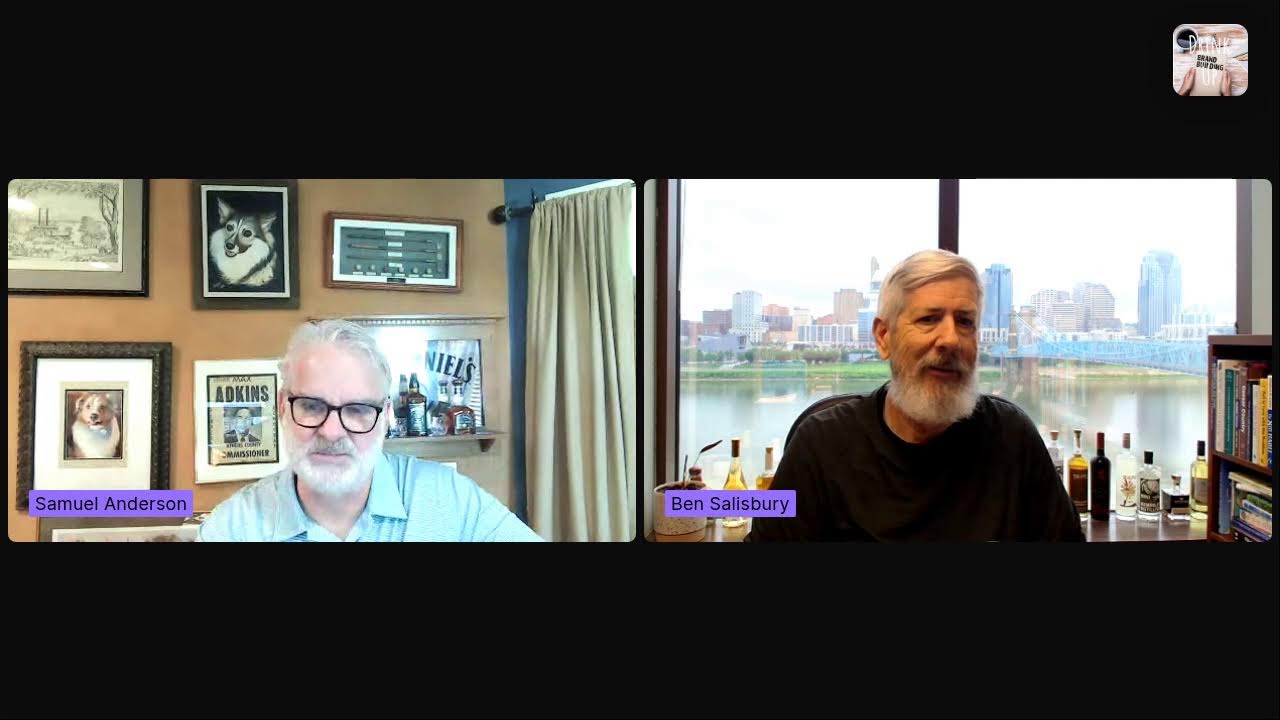
In this live episode of the Drink Up Live Podcast, host Samuel Anderson welcomes industry veteran Ben to discuss the dramatic shifts in the beverage market since the 1980s. They trace Ben’s career from restaurant work to senior roles at St. Michelle Wine Estates and Constellation Brands, highlighting how the explosion of wine, spirits, RTD, and functional‑beverage brands (estimated 175,000 wine brands) has outpaced the shrinking pool of distributors. The conversation pivots to a new, buyer‑first sales playbook: moving away from distributor‑centric, product‑feature pitches toward deep customer research, AI‑driven prospect profiling, and a narrow‑and‑deep account strategy (focus on high‑reorder, “golden egg” accounts). They critique “ghost distribution,” stress the importance of velocity, reorder rates, and KPI alignment, and showcase practical tools – AI‑enhanced LinkedIn research, SaneBox email triage, Zoom transcript analysis, and a proprietary CRM that tracks account activity. Ben recommends Daniel Pink’s To Sell Is Human and his own free book Up the Down Staircase for brands seeking double‑digit growth. The episode ends with actionable take‑aways: measure meaningful relationships, prioritize five‑purchase accounts, and adopt modern, data‑driven outreach.
Chapters
Even better. Good morning, everybody in LinkedIn land, and I guess YouTube and Facebook. Welcome, Ben, to Drink Up Live Podcast. Ben didn't realize that this was a live format, so we caught him off guard. Often we do that. We don't want to tell our guests that they're running live, raw, and real. What we love about that, Ben, is we don't know what's going to happen. I'll tell a little story real quick and I'll get in some introductions, get you going a little bit. But I had, um, uh, one wonderful woman from South Africa, Samantha Skyring, and she has a brand called Kalahari Salt. And I don't know how I found Samantha or Samantha found me. It's probably on LinkedIn because I'm constantly talking to people just like you, Ben. But she comes on the podcast, right? And she's in South Africa and she's sitting there and we're talking about her product and her product sold at Whole Foods, everybody. And I get nothing for this plug, by the way, but Samantha, I'm going to plug you anyway. You can find it. I use it every day and You know sodium is not salt, and it's real salt, and real salt doesn't rise your blood pressure, by the way. So just look it up. Promise you there's salt is actually good for you. So don't believe everything you read out there. But anyway, Samantha's sitting there, and she starts going cacao, cacao, cacao. I'm like, what the? What the heck are you doing? She's like, well, I'm trying to communicate with my son. I'm like, that's how you communicate with your son? Yeah, I got something I got to show you, and that's our cacao call. So my point is, is we don't know what's going to happen here, uh, and that's okay. But that's the fun of it. That's the rawness of, uh, you know, what we are and what we do. But, uh, Ben, welcome. I got to call a couple people that sponsor us. Have you heard of this cat, Jay Williams from Freebird?
I have not.
Oh, you have not? Now that's amazing to me. So Freebird— I don't even know how Jaybird and I found each other. I don't know if it was from Eric Martindale. Calling him out, but he is the unofficial beverage sponsor of Drink Up. And the reason I do it is for free product.
Nice.
Yeah, but he's into NASCAR, big in the Southeast, just got into Walmart and Publix. And he started in Georgia with United Beverages. And Jay's been on the podcast, been a great friend. And Jay, I love hugging you. So I don't know if he catches this podcast or not. And then my partner and co-host, Adam Smith, who owns Alias Advising. So if you think about everything operations, Ben, like, and he's very an RTD expert. So can, you know, lid formulation, he knows everything. You know, I don't think all these words escape me, but MOQs, minimum order quantities, all that. So he's somewhat made me an expert because I just get to hang around with him every week. and learn about that. And then Alicia Varga with Bev Assets. So Alicia is a sponsor of us, and at Bev Assets we do commercial strategy, you know, much like you, and we help brands. And then I think Rocks Advising with Ryan Hellemann, and that's a group of folks led by Ryan where they basically help a community of people come together. they may need logistics, they may need formulation, they may need commercial strategy, but a brand can come into his ecosystem or his community and they can tap into those resources.
Nice.
So those are the, those are the niceties of people that have been so kind to sponsor us. But Ben, thank you. I, I don't know how we found each other, but I've known of you for a long time. But Ben, tell us a little bit about like who you are, what it is you do, and how you got in this wacky world of beverages.
Yeah, well, it's a long story because I've been doing it for 42 years, but I'll keep it brief. I mean, I, as a teenager, I started working in restaurants. There was one in our neighborhood. I grew up in a seaside resort community in southern Rhode Island, and so I worked at a restaurant called the Top of the Dock. And when it came time to go to college, I wanted to go to culinary school, so I did that. And then I started to mature and realized I really needed a bachelor's degree. So I stayed on and got my bachelor's degree in food service management from Johnson and Wales. So I always thought I would be in the restaurant business. That's where I spent, you know, my formative years working in restaurants, both front of the house and back of the house.
You got the chef look.
Yeah, I guess so. But in '83, 1983, I moved to Houston with a couple of college friends, and one of those people, his dad had some money and a fantasy to open a restaurant. So I went down with my 2 friends to help run this brand new restaurant in Houston. And it was there I started— I was in charge of the wine list and the cocktail program, and I started interacting with distributor salespeople. So this would have been early summer of 1983. And that's how I got introduced to wine and spirit sales, distribution. And after about a year and a half, I left that restaurant and took my first job selling wine and spirits in a sales territory in Houston for a pretty good-sized wine and spirits distributor. So that's— I've been doing it ever since. And I got, I got focused on chain restaurants somewhere around 1993.
I was a Glaziers distributor's very first on-premise chain Have you ever come across a Ken Leiser or Jay Cummins or Phil Johnson? I'm assuming you know all those guys.
Yeah, absolutely. And in the early '90s, there were 2 distributors who had their own national accounts people. Southern Glaziers, of course, and Young's Market in California. Glaziers was the 3rd big distributor to put an on-premise chain person on the field, and that was me. So for the next 21 years, I focused on chain restaurants. I spent 12—
all on the distribution side, carrying the bag, 21 years?
No, the first 4 and a half years on the distribution side. Then I became the vice president of on-premise chains at St. Michelle Wine Estates in '97. Spent 12 years there. I had a lot of success, really matured as a business person. And working for a publicly traded company really helped me understand business acumen and the importance of you know, having a plan to achieve your goal. I had so much success there, I drew the attention of Constellation Brands. And in the summer of 2009, Constellation Brands, as many may recall, they were collapsing their 3 operating companies into one, and they were going to assign the whole book to one lucky distributor in each of the major markets. So I was brought— I was brought on at that time as part of the new structure. So to pry me out of St. Michel, where I was very happy and content, to come to Constellation, they gave me a huge tranche of stock options with a strike price of $15.35. So if you look at the price of the stock now, uh, I mean, it— 5 years there, it allowed me to quit my job and start my own consulting company, which has been a lifelong—
Man, that, uh, like, hey, that's, that's awesome. I wish I could say I've done that. I have not done that, so congratulations. Is that Austin behind you? What are you— where is that?
That is downtown Cincinnati.
Oh, since you're in Cincinnati, okay.
Yeah, so I spent 37 years in Texas, but I moved to my wife's hometown, Covington, Kentucky, about 5 years ago. So I'm on the far—
Yeah, are you— so you're heading over to Party Source? Do you go to Party Source quite a bit?
Yes, well, when I first moved here, my wife and I, uh, rented a a condo in Newport, so we were right around the corner. So yeah, she's from here. She went to high school here. Her family's here.
Uh, and I bet your wife knows some friends of mine. I went to school at Bowling Green State University, by the way. I'm sure she probably— if she grew up— what town in Cincinnati did she grow up in?
Covington. Well, Covington. Okay, Covington, Kentucky.
Okay, interesting. Yes, I went. So a lot of, a lot of, um, uh, young men and women, uh, from the Cincinnati area went to Bowling Green State University. I would— I graduated high school from Hudson, Ohio, which is outside of Cleveland.
Yeah. Well, small world. Small world.
Yeah.
So that's where I'm in Cincinnati now. I don't— my business does not require me to travel. I refuse to travel. I do everything via Zoom. Last year I logged 700 Zoom calls. And it takes— because I have 2 million miles on American and I traveled 40 times a year for 17 years, it takes a lot to get me on a plane.
Yeah.
Oh, it's funny.
I have, uh, I have a little setup. I mean, I work out of my home and, and I have a little desk I bought from, uh, this is my office I'm in now at home. But I have my main office where I work every day is in a chair and my, um, and my, uh, oh, we have like an open concept, but I have this like cool desk that raises and falls. And Susan's like, can you get all those computers out of the way? And I'm like, no, this man, this is command central. You know, I got like an Apple over here, PC, I got the monitor in the middle, you know, I got my microphones, uh, working. She's like, what are you doing? I'm like, hey man, I'm running a business. This allows you to go to Starbucks.
Well, my wife will not have me office at home. That was the one, one of her conditions of me quitting my job and starting my own business was to have a real office away from our home. And so that's What I do. I rent a small space here.
Yeah, you know, Bob, you know, our mutual friend Bob McLaughlin. So Bob catches, catches this. Hello, Bob. But I mean, I love what he does because I went down and visited him in Texas, obviously, and, and just getting a little spot. I've thought about that, but it's nice to just kind of be at home. I love my dogs, having my dogs at my feet. I have 2 Australian Shepherds, and I just like to be here. You know, Susan kind of lets me do my thing. We don't have kids running around. You know, it's just Susan and I now. Um, the kids are all grown. So, Ben, let's just— so 1983, so you're about 4 years ahead of me. I started my, my career in 1987 in Los Angeles. So, you and I have kind of the same era, right? In terms of how we started.
Sure.
And we'll get into, like, you know, your business. I want everybody to share kind of what your expertise is and what you want to do. But I did want to get into A little bit about like the drinks business today versus yesterday. And this is— it's not a loaded question. It's probably a complicated question, but we can get it down to simple. I'm curious, in 1983, when you started carrying the bag in the market and then you had this trajectory to St. Michelle as a leader and then the Constellation move and then eventually enabled you to do your own thing. which is awesome. What's changed from 1983 to now? Now, there's a whole lot of change that happened between there, but like, right, like right now, like everybody talks about COVID I think it's more than COVID, quite frankly. But what has like changed from the time in 1983 to now in this business?
Yeah, it's really pretty simple.
And all—
and I'm always shocked how few people really stop to consider it, but the sheer proliferation of brands. Wine brands, spirits brands, RTDs, functional beverage, cannabis, hemp, all that. I mean, there are so many more brands today. I saw a quote from the CEO of Kendall-Jackson a few years ago. He calculated there are 175,000 wine brands for sale in the US. I believe that. And at the same time—
175,000, not 175, 175,000 wine brands for sale in the US.
Yes, and most people have really not paid attention. It's kind of like the frog in the pan, you know, where the change happens so slowly you boil to death. But if you really study the numbers, and it's not easy to do, to get these hard numbers, like how many wine brands were there in the '80s, '90s?
I think we could name them on our hand, right? Gamut, Gallo, Amazon, Almaden. Engelnick and Taylor in the middle, Colorassi weaved in between with Franz.
Yeah. It's just massive. So that's what's changed. Distributors— at the same time, there's distributor pool of distributors has shrunk dramatically. So right now, whether you're work— whether you're with a small, medium, or large distributor, you're in a very crowded book. Now there are some exceptions, of course, but the environment for selling has changed a lot. But very few people have changed along with it. They're still running plays out of a playbook that was built for another time.
Yeah, you did a post about it. I think this is the post we were going back and forth on. So yeah, the playbook back in the day is like, I started with Gallo in 1983 and thank you, Gallo, for giving me his shot. I still have my Gallo sales book and my Gallo field marketing book and my Gallo sales manager book. And I play that playbook. I mean, I think there's a lot of good plays, but not all those plays from 1983 or '87 for me are the plays you got to play today. So when you say they're trying to play the playbook, what are they trying to do that's not working? And then I'd love to get into what do they need to do to make it work?
Yeah, I would love this too. I love this discussion. Well, I look at it this way, Sam. The big change of too many brands, too few distributors has created a— the need to play, you know, run different plays out of the playbook. You shouldn't be depending too much on distributors, uh, nowadays. But there's another big change too that we haven't talked about, which is also part of the new playbook, and that is the ability of any buyer, wine or spirits buyer anywhere, to access the information they need. It used to be the only way they got that information if a salesperson brought it to them.
Yeah.
I mean, In the old days, if you went to call on a grocery chain's headquarters, you brought your Nielsen data with you. You brought information about your portfolio products with you. There is no access to that. I mean, you and I go back to the days before the internet, but even since the internet's arrival, the idea that a buyer would need a salesperson to communicate information about products is just ridiculous. They can know a few They're just a few mouse clicks away from finding anything they want. So the way—
Yeah, I could blow your mind because I grew up in category management and about what we were doing for, like, you know, Mitch Odo. You know Mitch, right? Mitch Odo. You know, God bless Mitch. He's deceased now and his family, but call out to him. But the things we had to do back in the day with the buyers, they didn't— even though they had all the scan information, they didn't know what to do with it. We used to take scan and use Access, dump it in Access and create like these big thick books of reports. So when the suppliers would come up and call on Mitch, he'd be like, no, you don't have to tell me. I know what the movement is. Anyway, sorry, go ahead.
So that's the thing. If you're selling, if the way you sell is to talk about your products, their features and benefits, that's the old playbook. The new playbook is understanding the customer's needs, what they want, and dialing into that. I believe the sale happens in the customer's world Not the salesperson.
So when you say customer, you're not saying consumer. I want to differentiate. You're talking about like, so if I'm going to go call on Kroger, they're in Cincinnati, right? You have to understand how Kroger works. Is that what you're saying? Or—
Whether it's a major national chain, a smaller regional chain, an independent on-premise or an independent off-premise, your sales approach should be based on the buyer. It should be a buyer-first focus, not a product So the modern playbook has 2 parts. What you— the role you see of the distributor is one part, and the other part is the approach you use when you're in front of the buyer.
Those are 2 gatekeepers. If you don't know them, you're never going to reach that third, is the consumer, right? And then the consumer could be the shopper. You're not even necessarily— you have to reach the shopper, right?
But, uh, you, you see this every day on, on social media, right? Yeah. Brands are not speaking to customers, they're speaking about themselves. This, it just, it bothers me to no end that brands don't get this right. If the customer isn't the hero of every post on social media, then you're not going to make— get anywhere. The customer has— and there's a book, Donald Miller's book, um, Building a StoryBrand, is the cure.
Okay. For this.
It's, it's, uh, for $14, you could change your fortunes. But most wine and spirits brands don't ever bother. Uh, they're so—
I gotta— I'm gonna buy that book. I'm gonna— remind me to ask you about that book, and we can post it out there for everybody to get. That's, that's a treasure trove. You're saying if I read that book and follow the principles in that book, I can change my world?
Absolutely. Oh wait, let's— if you and I were to go on to a couple of random websites, right, for a while, maybe we look at one winery and then we look at one distillery. Yeah. You know what we would see? Do you know what we would see on the website? The brand, the bottle, the packaging, our story, our vision, our mission, what makes us special. It's all focused on themselves.
Oh yeah. Here's our vineyard. Here's our tasting room. Here's our point scores. Meanwhile, like I was on a call with Sheetz. Sheetz is a convenience store out of Pennsylvania, right? And we had a brand called Mason-Dixon Distillery. So hello, Yanni out there and Brandon. But we got a meeting with Sheetz, right? And Sheets called us, which was great, or called Mason Dixon, not us. I advised them. But anyway, we got a meeting with Sheets and he just, you know, he's like, we don't promote or advertise. We're just looking for a product of good quality. Can I get it? I can't take much in my warehouse. So if you give me a solution to actually be able to deliver it to me where I don't have to keep so much in the warehouse and it's a good price, I'm interested. It was that Like that, that simple. We, we weren't talking about Mason Dixon's awards. He was talking about all his like issues of like where he could store it. He's looking for good quality. He needed a local product because he had all the national products like, um, you know, High Noon and, and Cutwater seems to be taking over the world. And our friends at Carbless with Adam, they're taking— but he's like, I need a local craft to go on my stores.
Mm-hmm.
So 3 problems he identified: I need a local craft, I need someone that can handle storage and needs to be a good thing. Is that what you're talking about?
Well, yeah, that's certainly part of it. That's certainly part of it. The focus should be on the customer and what they want, not on the features of your product.
How do you identify that? How do you, like, how do you, like, find out what they want?
Well, it really isn't as hard as most people think. The first step is taking the focus off yourself and realizing that the sale happens in the customer's world, not yours. If you don't ever make that mental shift, then forget about it. You're, you're, you're toast.
The sale happens in the customer's world, not yours.
And so the game, so the game becomes, Sam, to answer your question, is how do I get into the customer's world? Well, you have to read and research quite a bit. And thanks to AI, this is, this takes a lot less time. But I want to, if I'm getting ready to make a sale to a customer, or I have a customer in my sights, whether it's a trade or a consumer— I mean, the consumer is a little bit different, but let's just talk trade for a minute. I want to research everything I can about that account and all the people who work there, which I call the cast of characters. That's not my term, it's from Jeff Toole's book Mastering the Complex Sale. But when you do the research on the people, what influences them? Where do they go to school? Who do they listen to? Where do they get their credentials? Who do they report to? Where do they used to work? How long have they worked there? What's important to them? What are their values?
So wait a minute. So in LinkedIn, you could actually— so you could identify the buyer for Sheets. Sorry if he's listening. Then you could go and say, where did he go to school? What his interests are. So get to know them. It's kind of like a buyer pyramid. Are you talking about a little bit or no?
Sort of. But what I would do is go to AI and I'm a ChatGPT Guy. I would click deep research. I would upload the pro— so you can download anyone's LinkedIn profile as a PDF. I would upload that to your prompt and say to AI, I want you to research everything this person has ever said or done that's publicly available online, every comment.
I did that on you, by the way, just to let you know.
Well, hopefully that you found a lot of—
It was good. That's how I created— that's how I created the post of this morning, quite frankly. I said Yeah, tell me a little bit about Ben and his background. And then I have a— I used, uh, I used, I used chat to do this. I have like a prompt and like make my LinkedIn post. Yeah. And that's— and it, it hit on the subjects I think you're interested in.
Well, and that's exactly right. So you do all this deep dive research. Now for some people there's not a lot to find, that's true, but if it's there, you should find it. And then you take the research and you re-upload it AI and say, I want to reach out to this person in a way that meets the following criteria. One, no whiff of self-promotion on my part. Number 2, it's got to be 100% focused on the buyer and what they want. And number 3, it needs to offer some kind of value. Like, they have to have a reason to open my email or to— and email is really good for cold outreach because They can, uh, they can dispatch it when it's convenient for them. But so the subject line becomes important.
But if you do it that way, they get like— they might see it, might sit there, might fester on it for a while, like, well, who's this guy that keeps on contacting me? Um, yeah, interesting. You know, it's— I, I sell robotics, by the way, as a side gig. So cleaning machines, we, we could like— we like, you know, doing some work with Walmart, Tropicana, Procter& Gamble. You're right, right where you're at. But, uh, you know, I'll DM, like cold DM through LinkedIn Navigator, um, and I mean, get very little responses. How we really do it is through relationships and network, quite frankly, as people know people in industry.
That's always the best way. But here's a practical example. I have a client who imports wine from Spain and Argentina. She lives in the UK and she is Jamaican. But she's going into the Northeast now. She's found a great broker who in turn has great distributors, and it's time for her to start finding customers in the Boston area. So using AI, she's researched— show me all the women-owned restaurants, the Black-owned restaurants, the Jamaican cuisine. Like, she's looking for common ground. She's a Black woman Jamaican business owner in Importing wine. So she's looking for affinities, and she has identified something like 10 restaurants that meet most of that criteria. Then she uses the system I just outlined to do the research on them and use AI to craft the perfect cold outreach email. And Sam, do you know how many of those 10 have actually replied to her?
How many?
6. 6 of the 10.
A conversion of 60%. So I did 10 LinkedIn DMs using Navigator on this robotic thing. I've gotten zero response. So I need to use your system.
Here's why. Because it's all about making them the focus and you have to say the right thing. And the human brain, while we all— you're smart, I'm smart, a lot of smart people, right? But we're not as smart as this machine. So if you feed it the right information in the right context and you tell it what it is you're trying to do, which is I need them to open this email. And I just want to reply. I don't need an appointment. I don't need a pitch to attach a pitch deck. I just want to reply. So that's why there's such a high conversion.
Well, you know what's interesting is I was thinking about my friend Dana, and Dana owns Gold Crush Cocktails, and she started in New York, and we've been trying to help Dana and, and love her, love her to death. Um, but she's Jamaican, she's an attorney, And I'm thinking, the first thing I'm gonna do is like, hey, you should catch the podcast today, Dana, and listen to what Ben is saying. And you should reach out to Ben because he, he knows the business, which I'll absolutely do that. Because, you know, she's sitting in New York, right? And she's opened up some accounts. We got her into Georgia with a distributor down there. Um, and we want to get her into some other areas. She's still on a bit of a journey, right? I mean, it's like a wing and a prayer. I mean, she's—
Yeah.
But if she, you know, like, if she did this approach, like you said, like, Find like restaurants that kind of meet what her— she is, because it's about Jamaican cocktails. It's about really good quality, you know, product in the can. And if she could get on that human level to relate to those people, then she's going into those restaurants or packaged liquor stores in and around New York. That's probably going to help her. So her conversion at like 60%, if you did 10 of those a day, my gosh.
Yeah. It works. And I have example after example after example. But there's a key to making it work. And most people really have never really thought about it. I have another saying, Sam, which is the more you act like a salesperson with something to sell, the less you're going to sell.
So it is true. Everybody says on LinkedIn, like, stop selling me.
Yeah, well, it's, it's absolutely true, especially, you know, in 2026. So I write about this a lot. I loathe the idea of Making an appointment, making a pitch, working on overcoming objections and closing. I detest that way of selling. To me, that's not real sales. Sales is not about persuasion. It's not even about the product. And those opinions are formed by a couple of reliable sources. Number one is Daniel Pink's book, To Sell Is Human. Every salesperson should read Daniel Pink, To Sell Is Human.
Man, I'm going to leave here with all these books. So I gotta pivot a little bit. So were you on the Business of Drinks the other day?
Yes. And this is what we talked about. We talked about selling, modern selling, real selling, customer-focused selling.
Right, right. So I told Erica in a message back and forth, I posted something about distributors and also said that you're going to be on the podcast today. So maybe we can continue a little bit of the discussion. This is like on, like on her post, I posted something about like being human, everything else. Uh, I want to get into like distributor strategy and field execution because I put— I— so, um, she was talking about like Bar Covenant and BCB. That was her post this morning. So I'm just calling out the Business of Drinks. Love the podcast. Uh, you guys want to be on a great podcast and great information, please go there.
I don't—
I've not— I've talked to, I think, Erica once. But anyway, uh, everybody thinks that when they get distribution, the job is I'm curious what you think about that.
You know why they think that? Because that's how it used to work. Yeah, it really did. That used to work. But the keyword is used to. So it's not a function of— like, today's distributors are overwhelmed, okay? So it's not a function of more education, more incentives, more pressure. It's, it's a function— none of that really works. They are Just simply can't give small brands the attention that they need. They can't even give the big brands the attention that they need.
So my first exposure, well, I guess my second exposure, I would talk about distributors and what's in back of a warehouse. I don't think people realize, and what's in a book and then what's on a computer, but sits inside a salesman's bag, right? Which is a price on a sheet that is never gonna be mentioned, right? So I was working for Gallo about a year. I got recruited. To go work for a medical supply company. That didn't go too well after 4 days, and I ended up at a place called Product Tool. And I eventually went back to Gallo, by the way, but I had a brief stint for 6 months at this place called Product Tool, and I would sell to the aerospace industry. And Product Tool was this huge, like, industrial supply distributor. We'd sell, like, mezzanine equipment, sandpaper, you know, um, you know, tools, you know, screws, anything. And you'd walk the warehouse and there was thousands of products. Thousands, right?
Yeah.
And my job was to go out into Los Angeles to go call on these tool and die master mechanics to actually fill, you know, solve whatever. I mean, Northrop, when they were building, you know, this top secret stuff, I'd be able to get in there with some clearance and everything else. And I would get these guys to buy this product. But I can tell you what I learned really quick is The brands I focused on were the suppliers that showed up. So guess what? When the 3M supplier was showing up and working with me, or Milwaukee guys, I was selling their product because they were getting me to focus on their brand. And then obviously I was selling on the products that the distributor, Product Tool, was having me focus in on, right? I did not go in my bag randomly and just grab stuff because I wanted to. I was grabbing stuff because there was people working with me in the marketplace. Is that what needs to happen, or is there something totally different? Am I missing the mark?
Well, I think it's more nuanced and complex than that, but it starts with the understanding of what the distributor's capabilities are. There was a time when you found a good distributor, you partnered with them, you did a general sales meeting, you did some ride with, you nurtured the relationship, you supported them. And the distributor would unleash their, their powerful leverage, which is a large sales team and their customer interactions. That was how it worked for many, many years. I was part of that system for a long time, both as a distributor and a supplier.
So I get distribution and my job is done. It's like, oh man, I'm with Southern Glacier Wine and Spirits. I've done the hard work. Is that why so many brands spend— this drives me nuts— they'll spend $100,000 on their can, they'll spend $100,000 on the social media campaign. They'll spend $100,000 on a PR campaign. They'll put like all this nice stuff on social media. They arrive with us and like, hey, will you work on commission?
Yeah.
Have you experienced that? This is about the frontline business. But my point is, they did all this investment upfront. And by the time they arrived to us, like, hey, you know, you're the most important— I think it's one of the most important jobs is The person that sells your product, they want them to work on straight commission.
Yeah, well, I mean, that can work, but it's, it's not typical, right?
Yeah.
But I think, I think, Sam, a good way to look at this is if you think the distributor— actually, let me back up. I love looking at job descriptions on winejobs.com. I love to see what companies think it takes to be successful selling in the 3-tier world. And if you look at a typical job description, they'll say things like hold the distributor accountable, manage the distributor, work with the distributors, all oriented towards getting the distributor to take action. And this just shows the cluelessness of the average brand right now.
Alicia lit me up a few weeks ago because we're like, I sent a job description out for a frontline employee and I had all that stuff and they're saying, that's not what we do. No one manages the You—
that used to work, but it doesn't today. So the burden of building sales and distribution has shifted from the distributor back to the supplier, but most suppliers haven't got the memo and they don't—
You post about this all the time. I mean, so, so when you say shift, what has shifted?
Well, there's another thing that goes along with this. It used to be get your product in as many store doors as could come in behind it with great marketing and, and help sell it through. Well, that don't— that used to work when there were far fewer brands, but today there's just too many brands, and that's not the model anymore.
That's, that's interesting. We could go down that, that rabbit hole together for sure, because, uh, the, um— so I call that ghost distribution. So you get distribution, you go away, and you don't support it. Is that what you're saying?
So this is related to your question about what you expect from your distributors.
Yeah.
Don't expect your distributor to go and put your product in everywhere because it's not going to happen. And even if it did happen, it's, it's not the right thing to do. Suppliers that take control of their own destiny, who acknowledge that the burden of building sales and distribution has shifted away from the distributor back to the supplier, what they do is use a narrow and deep approach instead of a wide and thin approach. So become more— how do I as a brand become become more important to fewer but well-qualified people. I love it.
I think there are people listening to you, by the way, like Yave Tequila. They're out of Texas. I talked to the founder the other day, and I mean, they're doing a great job. I think he's like in 500 accounts or whatever, but he goes, they don't go in an account unless they get a feature on the menu. If it's not activated and they want to be part of like a margarita program and they push like their jalapeño, really nice guy. And then I talked to a guy that sells an RTD out of Atlanta. I think his name was Ryan. Talked to a lot of people, so forgive me if I forget names. But Ryan's like, I'm not trying to be everywhere where I'm at. I want to make sure that I'm activating, I'm getting reorders. So they have a very focused, you know, in Georgia. Then they're going to go to San Diego because he's like, Georgia, if you're a brand, don't go into Georgia because there's no chains. We could get into that.
Yeah.
He goes, I'm going to go to San Diego so I can go get some chain business and work that market. And then he goes, I can't get the distributors to pay attention for the life of me. I have to go work it myself. And hence why I'm calling you.
And that's only going to get worse. But if you are— if you have a brand and you want to have success in the market, you have to accept a very uncomfortable fact, which is distribution does not equal demand. There's a thinking, there's a school of thought, Sam, that if I get into enough accounts—
What is that?
If I get into enough accounts, I will create demand. Well, that's just not true because there's too many brands. So it's— everybody's measuring new pods, even incentivizing the pursuit of new pods, but very few are measuring velocity, sell-through, reorder rate. That's not as sexy, that's not as fun, but that's what people should be measuring. The primary KPI is—
I've resorted to dog videos now on LinkedIn, by the way, with Pumpkin talking to me, talking about velocity and reorder rates.
I, I, you know, I am fortunate I have a front row seat to many, many brands and what they're doing in the, in the world. And so I have access to their VIP account. Yeah, I have a good relationship with the folks at VIP. I love what what they do. But when I go in and when they tell me about a new distribution incentive they ran where they got 100 new points of distribution, what they don't do is go into VIP with me where I can show them that most of those placements were very, very temporary.
Here's, here's what, here's what I do. I love it. You and I need to talk a lot more, Ben. We should probably get on like a, like an ongoing conversation. So we have a brand out of Colorado. And they've been around for 12 years. And I'm like, how many accounts are you in? They go, 400. I'm like, great. How many of those are reordering? I don't know. I'm like, send me your data. So I looked at their data, plowed through it, and I used the power of AI, by the way, to aggregate data, which I love.
Yeah.
And I was able to identify that they had about a 50% reorder rate. Not too bad. I think it should be higher. But what I, what I, what I convinced them to do is like, rather than going from 400 to 450, there's 200 clients that know your product, have bought it before. Let's focus there. So what we did is we ranked, we did platinum, gold, silver, and bronze, and we ranked them based on like the number of months they reordered. And then, then we moved them from a distributor to another distributor that's a little more crafty and focused. And now we've laid out by account, by rep, where to go, actually go focus on those areas because if they could go from 200 to 250, they make their year.
Yeah, that's right. The 80/20 rule is real. Most people do not accept it. They think it's a clever marketing theory that doesn't really work in the real world, which is a mistake. Let's stick with Colorado, for example. It's the land of independent liquor stores. But do you know what percentage of those liquor stores statewide drive 80% of the business? It's a very small There's a handful of accounts and you know the players. That's where you should be focused. If you can't win there, getting more stores to carry your product isn't going to help.
It's funny. This is making me think about the CRM that we have, and I'd love to show you what it is. So basically, we put every account in North America in our CRM. We've talked to LilyPad, VIP, Account Touch, Outfield, all of them. None of them do what we created.
Hmm.
So we have every account in North America and we made it so super simple that when the rep goes in, they can pick the account, they can save the account. Once they save the account, they can put their contact information. They can actually choose a product within the product. They can actually put information in on what's happening. Right. But I'm wondering if I'm attacking it wrong. because it's about— because we promise brands activity, and activity is calls and pitches, right? So we say, look, we're going to go to 20 to 30 accounts a week. And I'm not— I don't know if it's wrong or right, but that's what brands want. And then add that we think it's going to convert, depending where you're at in your brand's lifecycle, it's going to convert anywhere from 4 to 15%. That's the conversion that we see in the numbers. But I'm wondering, rather than saying we promise you number of account calls, we promise you quality calls. Maybe we should change that approach.
Yeah, well, I am not a believer that activity equals achievement. I'm not a fan of, okay, you know, making— measuring the number of sales calls, because whatever you measure, you get more of. So if you measure how many sales calls you've made or how many accounts you've touched, you're going to get a lot of account touches. But if you measure sales results, especially reorder results, Then you're going to get reorders.
So is a better approach to say, hey, look, you're going to pay this guy a fraction to have it put into his or her bag. They're going to pitch you where appropriate. And, but I can't, I hate to say the word can't, but I don't have a crystal ball to say, because maybe it's like, well, how many cases do you think we're going to do this year in Texas? I don't know that number. I can, I can— we can put a goal out there, but the reality is I'm going to hit these accounts based on the criteria and the support that you're going to give me. But I talk about the golden egg. This is one thing we talk about. Once you get that first distribution, treat it like the golden egg.
Hmm.
In other words, like I have a brand in Tucson, Arizona, Black Tie Imports. He has a really cool loofah. It's like the loofah spritz. And he's a teacher by day and he has an importing company and he's building loofah in Tucson and he has 10 accounts. I'm like, those are your goal next. Go on those 10 accounts and get reorders, create the demand. Is that what you're talking about more like that?
I'm talking about switching from a wide and thin approach to a narrow and deep approach. I don't care how many sales calls a salesperson makes. I don't care how many accounts they touch. What I care about is how are they identifying the richest accounts to focus on? And more importantly, how are they approaching them? That's really where this model you've described—
Well, then you talk about, like, so we have 2 great reps in Texas. I'll call it Tony and Patrick. And they both, like you, they've grown up in the industry. They know it. And, you know, Tony is like all over us about the CRM. Do this, do do that, whatever, I get it, you know. Um, but he's really good at— he, he knows how the market works. Or I'll just step back, like Patrick has a, a wine, we have a, we have another brand, but he got into like, you know, the whole Texas thing is like really complicated because of the Class B.
Mm-hmm.
But with this guy is he definitely like, he got into like 5 restaurants, but he didn't get like the yeses. He actually followed back with a Class B to make sure that those restaurants delivered, and he actually developed a relationship with these guys over here, and then also working with these guys over here. I mean, he gets it, and he's working on getting into like a, you know, a program with them, right? Like on the menu and getting activated. Is that what you're talking about? Kind of like that stuff?
Very similar. Here's another way to put it, Sam. I like to believe— I like to use the saying that I— until they've bought it 5 times, you don't really have distribution. So tell me how many Yeah, tell me how many accounts have bought your product 5 times. That's what I would be measuring. I wouldn't be measuring how many accounts you called on. I would be measuring how many accounts in your territory have purchased my product 5 times.
Yeah, so some of the problems we have if you're new to market, so I call them foundation brands, right? That's like putting the rebar and the gravel down and building the foundation. And to get to— the first step is to get it into distribution first, right? And then once I get into distribution, treat it like the golden egg. And to your point is like, you got to nurture it, develop it, and invest in it, right? And that could be what— what are those things that you need to nurture and develop and invest in? How do you get to the 5 reorders? What do you, what do you have to do there to get that to happen?
Well, there's something else we've left out of this discussion, Sam, and that is you— the idea that you can pull product off the shelf after you've made a placement is a bit of a myth. What I'd like to do is tap into volume that already exists. So if you identify accounts, let's take sparkling wine for example. You need to be in the biggest brunch locations. That's where all the sparkling wine business is being done. High volumes of sparkling wine are in the higher-end, very busy brunch venues. Have you identified those venues? Have you done the research on them? Have you established trust and rapport before you tried to pitch anything? Because when you finally do get into one of those accounts, you're going to sell so much product. So it's not really about let's go get a bunch of accounts and then let's see how we can go deep with them. It's about identifying the accounts you should be in the first place. And it could be argued, well, everybody wants to be in those accounts. Yes, they do. And so you better be on your game when it comes to selling to them. them because you shouldn't be using a product-first approach. You should be using a customer-first approach. So this is—
What does it take to invest in an account though? Maybe I missed it and I wasn't paying attention. So I get this account, they take my product. I'm like, great, got my product. I'll see you later. Like, what is it like to purchase a menu? Do I put a card up? Do I go do a waste after? Like, what, from your vantage point, what is it the brand has to Yeah, that could be part of it, but most people miss this.
You know that there's 3 things every restaurant wants, every restaurant everywhere: grow revenue, control costs, and improve guest satisfaction. So if you're not— if your placement isn't helping them achieve one of those, then you've wasted everyone's time. If you get in based on that criteria, you don't have to do quite so much to support it. Restaurants hate running out of stock.
stock.
So unlike a retail establishment where if you're out of stock of this Chardonnay, no problem, we got 20 other Chardonnays right next to it. Nobody cares if you're out of stock in a retail store, but they care greatly if you're out of stock in a restaurant because they've got the products listed on the menu. It's printed on the menu. They don't have a large selection. Well, I learned this calling on national restaurant chains. You know, if you have the middle Chardonnay by the glass at the Cheesecake Factory and you run out of stock, that is absolutely anathema to them. That's like taking money out of their pocket and sending their customer across the street. They have no tolerance for out of stock. So if you want to get into the Cheesecake Factory, you must be able to provide an uninterrupted supply chain and perfect pricing integrity. That's nothing to do with how the product tastes.
Yeah.
It's assumed that it tastes good.
So I think it's that way for off-premise too. Forgive me for challenging that.
Yeah, it's service. It's, it's all about service and dependability. Yeah.
So I got a, I got a text message last night or an email from one of our partners. We work with a client mutually together and we got them into 10 accounts. I'm going to try to talk in general here, but we got them into 10 accounts and they wanted the accounts reordered and the people go, we have to get labels. And I remember he's like, I hope they don't delist this. I'm like, yeah, I know. Like, we worked hard to get those 10 accounts, 10 very important accounts in a very well-known entity. And they're like, yeah, I got to get my labels. I'm like, I don't know what you have to do, but go freaking buy the labels, print the labels, put them on the bottles, and hand deliver them to every one of those accounts.
Yeah.
Because I don't know what the number is. I've read it. I think one out of stock in an account, uh, across like multiple stores could be like hundreds of thousands of dollars in lost revenue to the account.
Yeah, so the sale is not won based on the merits of the product or the attributes of the product. The sale is won by aligning with the business needs of the customer and ensuring that those things are addressed. So no out-of-stocks, no jerking around on the price. If you have a problem, here's my cell phone number, here's my home phone number, here's my Email. I mean, being service is how you tap into these big volume opportunities, not by the merits of the product. The average salesperson isn't really looking at the world that way, and certainly sales leaders aren't looking at it that way.
That's right.
They want to make sure their salespeople are calling on a certain number of accounts per day, which to me is absolutely ridiculous because that's not what sales— that's not what leads to sales success.
That's amazing. All right, so I'm gonna— so with the remaining time that we have, about 15 minutes or so, I want to have you share with— what is— so you kind of— I think people are getting a sense of your business, but, uh, what is— what's your sweet spot? What do you like if a brand says— and I'll put up how they find you— but if a brand like needs your service, what is your service for brands or services?
Our service is about having the right Teaching our clients how to have the right strategy. Okay, we help our clients get clear on the strategy that works and the strategy that doesn't. So we always start with an evaluation of what they're doing now. We look at it from every angle, and we have a discussion about whether that's really the best strategy for a lot of people.
So are they coming to you after failed launches then? Basically, they've like, they've been out there trying to figure it out. Are they new to market, or is it a little Is it a little bit of both? New to market, been in market, it's a variety?
It's a bit of both. I get a lot of calls from people who are getting ready to launch a brand and they want to make sure they do it right. Those are my favorite clients because we don't have to spend money or time undoing anything. But I have a lot of other people who followed a path that they thought was the right path only to find out that it wasn't. They read an article or watch a video and I'm talking about, I'm making a list of things you should never do and they're like, holy crap, I'm doing all those things. Maybe I should talk to I've been to figure out what I should be doing. Here's a good example. You know, I have nothing against large national distributors. I don't. But they hold themselves up to be like a one-stop shop, like, come with us, you'll have one point of contact across all these states, and, you know, we'll leverage our national presence on your behalf. That's not exactly how it works, right? Each of these states kind of operates independently. There's no big advantage To going with a national distributor, except that the chains, the national chains—
You know, and God bless RNDC and stuff, but I think their strategy of having business managers across multiple states and then trying to make a central decision on the business, because I always— this business, because of how it works, especially in a bev business, beverage alcohol business, it's a, it's local, man. And each, every, you know, that's where I think beer companies or beer distributors have done so well because it's so fragmented in terms of people are in the same community, they go to the same churches, they play on the same softball teams, and the beer reps and the beer distributors seem to be a lot more successful in terms of building brands. From my vantage point. Yeah, I know a relatively large distributor. We'll name nameless, but they're going with that RNDC playbook where they're taking business managers across multiple markets. This one guy was like, yep, I got 100 brands I'm dealing with. I'm like, how many markets? He goes, 25.
Yeah.
I'm like, you're not going to be successful. How are you going to manage 25 markets across 100 brands? And they're all long-tail suppliers. They all got into distribution thinking, oh, I got a national distribution. And he has to tell them all, you get no incentives, you get a craft GSM, and you don't get WorkWiz. Like all the barriers that he threw up. And I'm like, he goes, what do I do? I'm like, send them to me. We'll put a rep out there or talk to Ben and you'll talk to those brands about the strategy, right? Like, they're just like, it's amazing. But it seems like the distributor Distributors are so— they're, they're still putting some of these processes in place, which— is it a hindrance to the brand, or the brand just has to accept it? Look, they're just a company. I mean, distributors are our lifeblood, by the way, but they're— you got to call it what it is. They're going to get it on the truck into the shelf. I mean, I don't want to just— there are great distributor salespeople, by the way. Awesome people.
A lot of people think I'm anti-distributor, and I'm not. I'm anti-dependence on the distributor. I don't see distributors as the primary sales engine that it used to be. It used to be the primary sales engine, second to none. It's not today. And if you think it is, then you've got some adjustments to make. If you're not hitting your sales goals, then you better take a hard look at the role the distributors are playing in your world, because the times have changed. They got too many brands to say grace over. So taking back a little more control of your own destiny is step one to weaning yourself off too much.
Well, I think step one is to find you, because I'm gonna go, go for a walk and listen to all this stuff that you've shared with me. And you have a treasure trove of newsletters, by the way, that I discovered that people can literally just subscribe to.
And here's one germane to this specific topic. I go to my blog, winesellsimulator.com. Go to my blog and look for—
So how do you spell simulator, please?
Wine sells stimulator. Okay, S-T-I-M-U-L-A-T-O-R. Wine Sales Stimulator. It's for spirits too, but I have an article called Ten New Rules for Partnering with Distributors. It's I pretty much give you the keys to the kingdom in that article. If you're not happy with the performance of your distributor, you should go read the article. Ten New Rules for Partnering with the Distributor.
Is that at winesalesstimulator.com?
Yeah, that's it. That's exactly right.
Yeah, so I, I discovered that and you, you motivated me. So I, I created— I don't know what I did, and it probably was like— it's probably somewhere in the World Wide Web, disappeared. But I created like a whole like bunch of guides that people can plug into. I don't know how to— I don't even know, I can't remember where I posted it, so I gotta figure out where I found it. But you, uh, you, you like— I'm like, God, this is like a great like information. I'm like, I'm gonna do the same thing Ben did. I was following your lead. So I'll keep on streaming this too, because what that information is like a, like it's a masterclass that you don't have to pay for. It's like it's free that you're giving to these folks.
Free. Hundreds of videos, hundreds of articles, webinar recordings, how-tos, downloadable guides. It's all free.
That's amazing.
I think I really see part of my— so I just turned 66 this month. I'm nearing that stage of my life where I want my life to have meaning. I want to leave a legacy. So a lot of what I do, a lot of the time and energy I put out into the world, is to help the industry. The industry needs help right now. I wrote— I just published my first book last month called Up the Down Staircase: How Brands Are Growing in a Down Market, and I'm giving it away for free. I didn't write it to make money. I I wrote it to be an aid, a badly needed aid to our industry.
I love it. I love it. It's just funny. You and I are cut from the same cloth, man. I, I mean, it's like I'm— I, I have a little tagline, said, just pick up the phone. I put my phone number out there. I'm like, if you want to— it's like, look, I may not answer your email, but if you call me, I'm going to answer. I'm going to see that you called. I'm terrible at email, just to let everybody know that's listening. Like, I'm 150 emails deep. I try my damnedest to get to people. So, like, I think I need to put, like, when someone emails me, like, reply, like, look, if it's just really urgent, just pick up the phone and call me, 952-239-7768, right? I don't care.
Like, I'm the opposite. I'm the opposite. It is impossible to get me on the phone. I prefer email because it's, uh, you can work asynchronously. But I also have a virtual assistant And an AI managing my inbox. I use SaneBox to manage both my inboxes. And oh, can you train it?
I tried like with Perplexity, so I had created a chief of staff and I did the connectors to like my inbox and everything else. And it just, I cannot for the life of me figure out how to get AI. So what is, what's the name? What is it called?
SaneBox. SaneBox, one word. And it is magical. So when I check email in the morning, Sam, I just go to 1 or 2 folders. That's it. Because I've trained AI to reroute the inbound emails to where it needs to go. So I don't spend any time going through my inbox. I just go straight to the folders that are important. So SaneBox to me, and I looked high and low for an AI-enabled inbox management system and I couldn't find it.
I'm gonna be looking at that today. I'll text you and let you know. Same box. Yeah, it's funny. I, um, I'm, I'm like, I'm not anti-email, so I'm the opposite. I'm like, if you want to have a conversation, don't have it on email. Have it with me live.
Yeah.
Like, like, like email, in my mind, I think email should be to give you information. That's it. You know, but I'm like, literally, but everybody's like, I'm going back and forth with, uh, you know, a client about a contract, right? And I'm like, yeah, thank you. Boom. I'm like, can we just like— can you just call me? Like, because that's 15 emails now that we've gone back and forth on this agreement. Like, I don't want to have a conversation with you, but that's, that's just me. I know the world works differently than, than that nowadays.
Well, for me it's Zoom. Like, if you want to— if we need to nail something down, let's Zoom. And I love Zoom because I record every single call. I have the transcripts of every single call. And I use those transcripts, I use AI to comb through the transcripts, give me follow-up. In fact, it will comb through the transcript of a call and put the reminders on my calendar. I mean, that is game-changing.
Who are you using? Who are you using to do that?
Well, it's a, it's a workflow. So I have the, the ChatGPT version that costs $200 a month.
Yeah.
Because I get access to a lot of these other things. But this is the world we live in. If you— I, when I talk to somebody, it has to be for Zoom because I want, I want the electronic notes, I want the transcript, and the things I can do with that transcript are remarkable. I had a call this week with a prospect, a winery that wants to work with me. At the end of the Zoom call, they're like, well, how soon can you get a proposal in my hands? I'm like, well, within that, within 30 minutes. Because I took the transcript, I have a protocol and a framework set up in AI to— I have a special way that I put proposals together.
Yeah.
And it's based on a certain framework. So if I have the transcript of the call and I conducted the call properly, all I do is give the transcript to AI and it will take my framework and give me back a proposal.
So you can create a scope of work that's exact to that conversation with that client That's amazing. All right, so before— so I got a couple questions. One, is there anything that we didn't cover today that you want to convey to our audience, our mutual audience, our community?
Yeah, well, it's been really fun having this conversation with you. I would say this one thing: if you're still operating today the way you did 10 years ago, yeah, oops, you're in trouble. So I want to challenge everyone listening to this, to look, take a hard look at how you're doing things today. Because if it looks like what it did 10 years ago, you're already out of sync. You're already out of touch. You're already on the downward path. So, that's my message. And there's no shortage of not just me, but people like you and others who are singing from a new song sheet. Tune into that radio station and start listening to that.
And you can find you on LinkedIn, obviously. You put a lot of great information winecellstimulator.com. So I gotta ask you the most important— I gotta say it's the most important question now, and then we'll wrap up.
Sure.
It's— we ask everybody that comes on our podcast this question. Um, what is the difference between success and failure?
Uh, well, that's a big, big question. If I had to give it to you succinctly, I would say that the— in our industry specifically The difference between success and failure is not how many sales calls you make, or how many accounts you touch, or how many accounts you're in. It's how many accounts are you meaningful to. If I were to make— if I ask you to make a list, tell me the accounts that you mean something to them, you matter to them. If you were to go away, it would bother them. That is the difference between success and failure in our industry. It's not about store doors or pods or It's about how many meaningful relationships do you have.
I love that. I love the brands that I talk to and I'm like, how many, how long you been around? Like 3 years. Like how many accounts are you in? I mean, 20. I'm like, 20? He goes, yeah, but they're reordering. They're loyal to me. I'm on the menu. I'm like, that's great. And then I had another client in Pennsylvania and we got into those 10 stores. So you can put the math together, by the way. But I'm like, treat those 10 stores like gold.
Yeah.
You know, be meaningful to those 10 stores. Know every manager of that store, that they know you and they know your brand. Is that what you're saying?
Yeah, that's right. So you want to measure something? Measure how many accounts have bought 5 times. That is a powerful, eye-opening metric. And if you focus on getting more of those accounts, You're going to be successful.
How many accounts have bought 5 times is the metric.
It's super easy to do. Take just a few seconds in an iDig report to run a report that show me— let me show, show me sales by month for the last 12 months and then export it to Excel. Put a couple of what-if formulas in the spreadsheet and it'll show you exactly how many customers have bought 5 times.
Man, you just, you just, you just changed my world today. Well, thank you so much. Ben, we really appreciate it. I'll ask you to remain on the line. For me, is a lot, lots to think about. I'm gonna get the name of that book, the book that is going to change my life. Can you remind me of that book?
Uh, Daniel Pink's book, To Sell Is Human?
Yeah, Daniel Pink's.
Not to be— because I'm giving my book away for free, I don't feel bad about plugging it.
Oh yes, please.
But go to Amazon, or actually go to Wine Cell Simulator and you'll, you'll be hit with a pop-up and you can get the book for free. If you want the book for free, go to winesellstimulator.com. The book is called Up the Down Staircase. It's free. I— it's got—
I think I ordered it. I'm gonna go there today. I think I ordered it. It comes in PDF, right?
Uh, it's a Kindle only, but you can get a PDF. Yes, you can get a PDF or you can get it, uh, An ebook, you know, Kindle file. If you have a Kindle, you can get the Kindle file. When you sign up to get the book for free and you fill out the little form, you'll get an email with all the different ways that you can access the book.
That's amazing. I, uh, I will be reading the book today on my walk. I really appreciate it. Well, thanks everybody.
Thank you.
Is there an audio version?
I'm going to put out an audio version soon because everybody seems to request So are you, uh, are you gonna—
it's gonna actually be you reading it, your voice?
I think so. I think that's the best way to go.
Yeah, that's amazing. Um, you can— I mean, yeah, because I think you're very well spoken and actually get into your, your head a little bit because you're, you're, you're writing it from a place of how many— 42 years in the industry. I can't imagine the stuff that's in that book.
Yeah, well, it's the 7 things you need to do to have double-digit growth. I don't know how much more plain I can make it.
Man, well, every one of our clients are going to be buying your book and using it. Everybody I meet, including myself, I'm sure it'll help Alicia and my business as well to follow those principles. So we very much appreciate you. Thank you so much for coming on. I was so excited to have you, uh, to have someone of your stature join us. So we're truly blessed. Thank you so much.
Thanks for having us.
Have a good day, everybody. Uh, get to your weekend, and until next week, we'll see you soon. Should stop here.
More from Samuel





He Sold Pickle Shots Out Of His Trunk. Now He Runs The Co-Packer That Won't Bury You In MOQs.






What market do you think gets overlooked most? #Toronto #BrandStrategy #Marketing