Welcome to our live show!
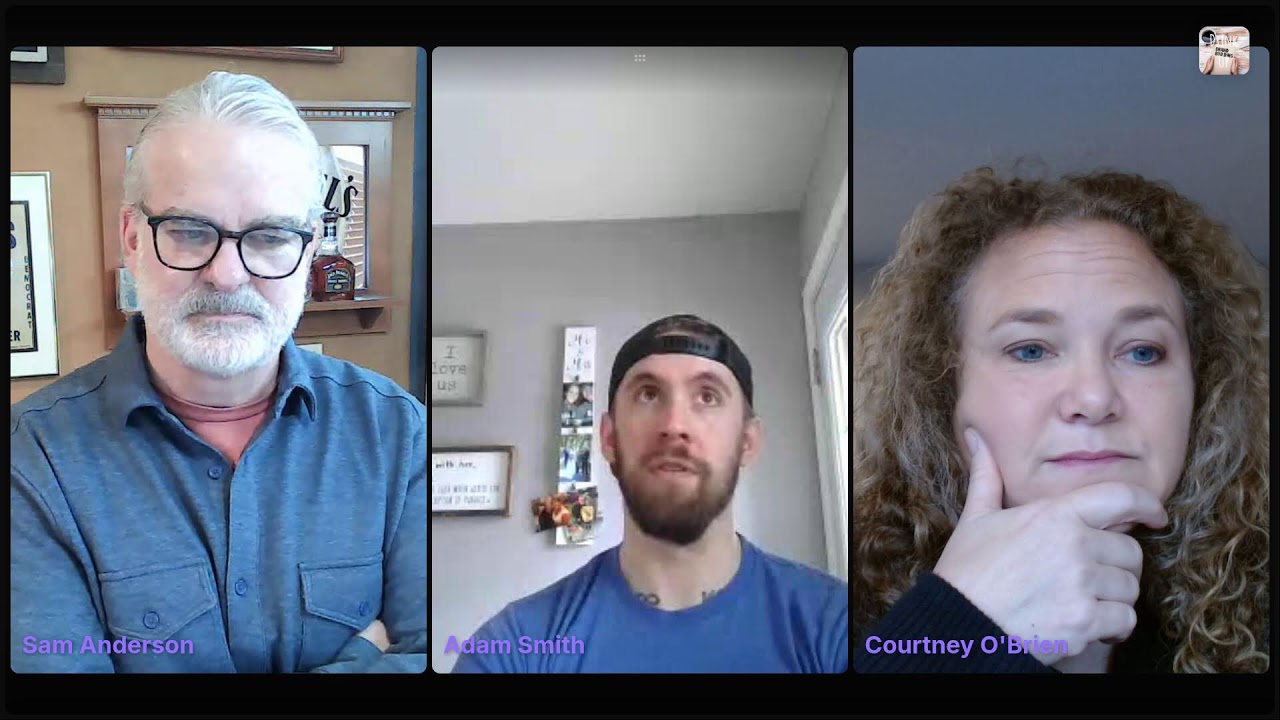
In this hour‑long live‑show, hosts Sam, Courtney, and Adam (joined by occasional audience comments) dissect the current state of the beverage industry, focusing on how brands navigate distribution, branding, and market dynamics. They discuss legal constraints that force different product bases (beer, wine, seltzer, RTD) into separate distribution channels, the explosion of SKUs, and the importance of a distributor’s ability to repeat a brand’s story. The conversation moves to margin expectations (40‑50% from brand to distributor, 30‑35% at the distributor level), the rise of niche distributors, and the shift toward D2C and social‑media‑driven brand building. Courtney shares insights from her experience at Gallo and teaching wine marketing, emphasizing clear, concise messaging, the need for brand‑marketing‑sales alignment, and the challenges of over‑production and changing consumer preferences (younger drinkers, single‑serve formats, non‑alcoholic alternatives). The panel also touches on operational hurdles in functional beverage formulation, the role of fractional marketing teams, and the importance of hospitality‑style outreach (tasting rooms, pop‑up events) to reach consumers. Throughout, the tone is conversational and enthusiastic, with occasional critical observations about legacy distributors, siloed marketing, and the difficulty of scaling margins.
Chapters
States certainly still care legally, and who's going to be the best fit to get your brand where you want it and serviced as often as you want it is really important to the supplier.
Yeah, I mean, um, you know, my thinking was that we always separated a beer person, a wine person, a spirits person. I still think that's necessary in some cases. But in not all cases, right? You'd mentioned something that like, so accounts or consumers don't really understand the difference between the brands and stuff. I mean, can you talk a little bit about that? Like, in other words, they don't really relate that it's a wine, beer, spirit, that it doesn't really matter to them in terms of the base. Yeah.
Well, I think, yeah, I mean, seltzers, I think, confused it even more where they're all different bases. But they might have the same occasion as each other and similar branding. And you expect them all to be in the same place and in the same store, but they can't be legally sometimes. And state to state, there's different places you can buy certain ones versus others. I mean, this, this was going on with Bartles and James in the '90s. You know, half— I managed the Bartles and James portfolio and half of it was made out of malt and half was made out of— wine because of the legality of where you could distribute it. And consumers didn't know or care. It tasted the same. You didn't know which one you were drinking unless you really looked at the label. But it was really important to have it in the right place depending on the state you were in. And I think it's happening more and more.
Interesting.
It is interesting. I don't want to throw shade or ask a question of, you know, tell me who's better. whether it's RNDC or Reyes or anybody else. But given your background, Courtney, um, maybe this is going to sound like a very amateur question, but I'm going to ask it anyway. We talk— we've talked several for the last several weeks on here about how folks, you know, we had Dave Moron and his new book and just folks understanding that, okay, getting distribution as a brand is step one. Right, like the fight has just begun, right? We have that conversation all the time. Um, given your experience and kind of your angle on the world, if you will, like, do you think maybe whether it's the Tito's move or just in general brands selecting distributors, like, obviously it's about logistics and the pricing and the contracts and the relationship and all that, but, but is it also about the distributor's ability or their willingness maybe to be a storyteller? in tandem with the brand owner, right? Does that make sense in terms of me talking about like the occasion for certain beverages? Maybe one distributor is more focused on a certain occasion and telling that story. Does that make sense?
Yeah, I don't know if I have experience with that being the case. Maybe, I wouldn't say no. I think it's more the size of the distributor versus the size of you, the brand, and the amount of attention you're gonna get therefore. And then I think it is 100% on the brand persons and the suppliers to do to get that story to the distributor.
Sure.
And even coming from Gallo with a lot of power with our distributors, you get 1 second to tell them your story. And it better be repeatable and concise and they better get it because it's a game of telephone. That's only your first stop, right? You still got to get that guy to repeat it to the retailer. You got— I mean, it is— it has got to be so simple and so clear. Um, and I think that's your message.
Your— her message is, can the distributor repeat your message?
And does it even get his attention? What's in it for him?
Yeah.
Oh, I, I mean, yeah, I mean, we've been— it's fun. So, uh, Sam, I'm sure you have a copy too, but I, I delivered a few days ago. I bought Dave's book Right.
Oh, no, I got a copy.
Yeah. And I've been reading through it. And that's— it's like 30-ish pages in. And that's one of the things I read the other day is, right, like, how are you going to incentivize them? How are you going to make it simple? Whatever, you know, there's— he lists 4 or 5 things, right, that will strengthen that relationship, if you will. Right.
Yeah.
Yeah. And I find that a lot of— I know there's even companies that have popped up to to help with that because there's a lot of stuff that distributors don't do for brands anymore that still needs to get done. And brands seem to think it's not until you do a work with that you really see, you know, still cars full of random point of sale and how little time you get in that store and the best intentions, but really not understanding how it gets to the last mile.
So maybe, you know, for the sake of myself and others, and I know we're— you and I are meeting kind of for the first time on this call, but I've been in the industry for— this fall will be 8 years, right? Heavily steeped in RTD beverage, lots of cans, a little bit of glass bottles for beer, a little bit of glass bottles for spirits every now and again, some like ready-to-mix stuff, but mostly canned high acid RTD. That's my world, right? Um, so if you were willing to indulge me, um, something you just said of distributors do— I don't want to cast aspersions, but do less or have less time to do now as much as they used to. So, you know, 8 years deep, what did it, what did it once look like and how did we get to where we are now, if that makes sense?
Yeah.
I'm sure you have insight on this too. Right, given your background.
But yeah, Sam has an even longer point of view on this than me.
Yeah, I really, really aging me now because he did 8. I got 39 in.
So we all acknowledge 8 years in drinks is still a baby. But that's fine.
Yes, that's true. And then Courtney mentioned when she was in the '90s, I'm like, well, geez, I was in the '80s when it was like the Gamma Scallop.
Okay, so I noticed that I misspoke there. I did not manage Bartles and James in the '90s. I was in college. But when I did manage Bartles and James, it's been done back to the '90s. I should have clarified.
And I was like, I was building— like, I met Frank and Ed, you know, the 2 actors or whatever. The guy was like, uh, I don't know, they were like business people and somehow they became Bartles and James.
Oh yeah, yeah, yeah.
I mean, even met Charlie Rossi, right? He went by Charlie, but yeah, back in the day. So it's I'm gonna really date myself, but that's an interesting question, Adam. I, you know, Courtney certainly can answer it. I have an opinion too.
Yeah, I'll take a stab. So, I mean, it's the— I see it as the explosion of SKUs. And I would love to look at the actual data of when we started, you know, on this crazy curve of exponential explosion. But I came from Coke. We had one competitor. We only cared about what one other person was doing and the whole aisle was one of those 2 brands, basically not that long ago.
Sure.
And now, I mean, wine especially is such a fragmented category, always was, but now even soda is so much more fragmented than it used to be. So, um, you get, you get no time to actually build a brand in some of these categories. You really— and I could go off on so many different tangents here, but if you're the supplier and you're trying to build a strong brand that's going to make the distributor and the retailer take notice and have to have you and have to be able to repeat what you're saying in the point that it would get to the consumer someday in some kind of a hand sell, you have to be so crystal clear. But not only that, you almost have to build your brand Outside of the store at the same time. I mean, we're seeing like kind of the opposite now, people building it in D2C and having these big communities, and then the distributor comes to them because that's what gets their attention now, is you've actually got some kind of following. Because consumers have such little time in store with these insane shelves, like that's not where you're going to build loyalty and affection.
Oh yeah, I got to call out Eric Meth over at Surfside. We're going to meet over at at, um, WSWA, but he showed me a campaign. I won't mention it to be fair, but it was around cannabis products. And then he was showing me the conversion rate of what he's doing, and he partnered up with a retailer here in Minnesota, uh, to do it. And I'm like, wow, I got all these brands that I'm representing that, you know, that help go, go to market, but it's a battle getting wholesalers to think of you, right? So there is a different path for these brands to get in either D2C or some social media presence.
Yeah.
These experts like my friend Duncan from Far Belly Marketing, the whole bit, or you, Courtney, like telling, you know, what you do. There's this— there's different paths and how you get there. It's just interesting too. And then not everybody has to go— if I'm a wine, I don't know, I no longer have to go to these 4 people. I have a— I have a bigger path to market and how I get there.
Yeah, well, what can you control and what can you own?
Yeah, to that end, and I'm curious again for both of you, and I don't know why this question hasn't popped into my mind before, but so again, from a, from an RTD guy's, you know, perspective, right? I'll use the example of, uh, I was at NBWA, right? So, so the beer counterpart to WSWA, about a year and a half ago. And a lot of these beer distributors, big or small, family-owned or, you know, larger companies, were very interested in— I was with a non-alcoholic brand at the time, right? But it was a non-alcoholic brand that had zero issue messaging and positioning as a mixer if that was the case. So it's like, okay, you know, kind of rising tide and all ships and how the rest of that goes, right? And there was definitely interest, but I'm curious, you know, for both of you, We've seen, or I've seen, I'll put it that way. I've seen the willingness of existing distributors to expand their portfolio to account for, Courtney, to your point, more SKUs, right? But obviously then you do have to get specific and you have to get very focused. You have to understand who's what and so on and so forth. Do you think in the next several years, and maybe we're already seeing it and I'm just not as close to that side of the equation, but— Do you think we'll see a growth, an explosion, whatever, of niche distributors who, for your example, like, oh, we only do probiotic sodas? Because you could still have 30 SKUs in-house.
Hey, by the way, I'm just monitoring comments here. So I know, Courtney, you're going to answer his question. But Duncan Elney, he does Firebelly Marketing. He says, does Adam have an invisible hand?
So he's picking on me.
Duncan, I had to call you out again. And for some reason, I call— I mentioned Duncan's name, he goes, what the hell? He's like, I literally just turned you on and you called my name. That's funny. Sorry, I digressed. So I'm monitoring the comments here, everybody. So if you want to put comments in, we're getting better at responding. The first few weeks, Courtney, we were on, people were sending messages to us, but I wasn't responding to—
Oh, that's frustrating. Um, I think we'd both have a different answer on this, but it's an interesting question, Adam. Um, I think there's a huge gap in the market, and I'm not a distribution expert, but from what I hear from clients that are struggling to find the right fit with the distributor, um, if there's one thing most people I talk to seem to agree with is that they're frustrated with their distributor and are trying to find somebody that can— it's not so tiny. And I think it's less about whether you're as specific as a probiotic soda and more about who you're trying to reach and where you want to be placed in what stores. So if your only relationships are with tiny little bottle shops in a certain state, and that's where you've got the power as a distributor, I— that limits who's going to be interested in going with you.
You said something really powerful though, because I'm learning this and, um, from a A couple of the brands that I'm helping and my partner Alicia Vargo, hello Alicia if you're out there, they're not going all in with any one wholesaler.
Yeah.
Like they're asking the question to the wholesaler and think about this is what customers do you serve? And especially cannabis products and NA products have the flexibility to actually do that. So depending on the channel, so like if you service the big grocery accounts, I wanna be with you, but are you going into the craft cool accounts?
Right.
I wanna be there too. So they're actually—
I mean, how much power do you have in those places?
Not only, not only are you going there, but how much power do you have there? You know, what's your portfolio that you have a relationship with who at that store that you can get me into the right box and not get me lost by the guys that actually have the power in there that are shoving me to the side an hour later?
That's really interesting.
So I think there's a medium, a medium opportunity.
I was talking to a supplier the other day and they're out of California, San Diego. So they'll use like the Cahies of the world and the Unifies of the world for different channels. But like, they don't do anything in the liquor channel.
Yeah.
So like, we'll use you to help make contact with the liquor wholesalers and beer wholesalers. So I'm like, okay, I'm down with that. That makes a lot of— that makes a lot of sense to me that they would, uh, they would do that. So I'd encourage you, uh, whatever brand you have, is don't You know, be— distributors should be open-minded too, right? In terms of how they approach brands as well. Sometimes they want to wrap up everything, but when you wrap up everything and do nothing, is that fair?
And do nothing well.
Yeah.
Then there's even the soda wholesalers. I mean, because we're crossing categories so much with the non-alcoholic alternatives, I think there's a ton of Again, like, you think about the occasion. If my occasion is Friday night relaxing with the girls and I want a 0%, but it's not available, I've got to go to a second place to get it. Um, I think we're going to see much more melding of that stuff over time.
Yeah, well, I mean, I definitely think about— then there's just different paths. Now you have the whole thing with— because, you know, I work for Coca-Cola too for a brief stint. And I had, uh, called, you know, I was a sales development manager at the time, so I managed the customer relationships where they had the business development managers that managed the bottlers, right? But all these bottlers out there, that is a path to go talk to them because they're probably looking to put things in their book. Because NBWA, a couple years ago, it was, it was, um, to be able to be on the floor where you can actually get distribution. I was talking to a buddy of mine, Matt Giese. You might know, you guys might know Matt. that Matt has a brand called Funny Water. And I remember when he was early on in his journey, he's like, I just got 17 distributors from just being an MBWA.
Right.
So is there an equivalent of that for the soda wholesalers where these people can actually go talk to them? Right? Because there's a lot— I'm going to WSW on the 3rd, 4th, 5th, and 6th, and there's a big floor of all these brands. I, I don't know if that's going to be fruitful for them or not. Maybe it will. Maybe RDAC is going to be open because they just lost Tito's. I don't know. I'm sorry about what happened, but maybe they're more apt to look at brands to develop themselves.
Certainly want to fill trucks.
Yeah, that's, that's, uh, that is key. And you work for some of the smaller brands— I've done work for a little brand, Althamar Brands, and they're not truck fillers, but it's really good stuff, right? They make really good distillate, and, uh, you know, it's clean and it's consistent, and it's, you know, Great stories that they can tell about the brands, but they don't fill trucks.
Yeah. And these small brands, that's— I mean, that's not what I do. That's more what you do, Sam. But I, in addition to needing to understand what their brand stands for and how to market it, so many of them are lost when it comes to distribution. Like, what should I do? Or they're just hanging out for months at the mercy of these distributors who promised them a meeting, and that, you know, they think they're going to get in multiple states, and then you just keep pushing it back. And now there's fear because of potential upcoming tariffs, and let's just put it off even longer. And they're just, they're just, they're just lost with how to best distribute their product in the face of all the big powerful guys.
Yeah, you got to be a partner with your wholesaler. Wholesalers are critical. Um, Adam, I think you emphasized that last week, if you'd mentioned that, you know. And you have to invest in the market, you know. When you get the shelf placement, that's when the work begins. So many think, well, introduce me to the wholesaler, they take me in distribution, I don't need you anymore. Yeah, I got, I got news for you. That's when the actual work begins, you know, looking at like feet on the streets. Like, we have solutions, as you know, Courtney and Adam, where we have over 2,000 W-2 workers in the hospitality industry. We can— hospitality industry, we can activate them. I would encourage people that are new to market, if you have the money, make sure you spend it there to get those people to go, go to the stores and go to the on-premise accounts, have the conversations to create that, you know, a little bit of push, but obviously you have to have the pull too.
And you need the margin structure in order to be able to do stuff like that. I mean, you can't scale your way out of a bad margin structure.
That's the part of the company.
So what are you hearing about margins? It's interesting you say that. Have you like—
I wanna hear what Adam is gonna say about it. Go ahead, Adam.
What are you hearing about, what are people, what does the margin landscape look for retail and distributors? What can people expect, Adam?
It's my— the way I always phrase it, because, okay, so again, Courtney, to give you a little bit of background on me, um, and I would love to pick your brain more later. As Sam knows, I'll ramble if left unattended. Um, so the brands I work with are typically, you know, either, hey, I have an idea, up to, hey, I'm making a few million cans a year, right? Um, so very green, um, but good people, very passionate, right? And I dig it. Um, shout out to, you know, I won't name them because I haven't asked if I can, but if anybody's watching, you know, shout out to the folks I'm working with. Love you guys. Um, my shoot from the hip number for them is 40%. I'm like, if you can get to 40% from you to the distributor— and this is even non-alc, right? Like you to the distributor, distributor to the retailer, retailer to the customer— like you're sitting pretty. And I say 40 because I've seen in as recently as last year, I've seen people be okay with 25. Again, this is all non-op. My last company was a non-op functional, right? I've seen people be okay with 25. I've seen people look us dead in the face if we don't and say, if we don't get 50, we don't want it. Which astounds me.
I mean, it's a little bit of negotiation, right? So I always ask the question, what are your expected margins from us? And I like the answer.
50 is more of a direct import, private label type of, we're gonna really push you because you're giving us that much margin. But yeah, I would agree, at least 40% is what we, is what we look for.
So to that, to that end, and I read something and I forget where, but it is another kind of piece of the conversation I have with brands because as you both know, right, and whether, whether you, um, get into the weeds as much with sort of first commercial production as I do or not. I tell people that and they go, oh my God, well, we're not, we're not there right now. I'm like, I know, right? But is it realistic to— like, we can do the math now to think, is it realistic to get there in a year and a half, right?
Right.
Because— and this is the second part of that story, or second piece of several— is like, hey, you might not have 40% from you to the distributor now, Maybe you've got 20, but if you can get 20 and you can be growing at 20, you know, someone called it the, the 20/20 or the 40 rule, right? Like, if you can get 20 now, be growing at 20 every quarter, know that you're gonna get to 40 and be making the distributor 40 to the retailer, the retailer 40 to the customer, like, that's not a worst-case scenario. That's okay too.
You're, you're gonna perk them up. I was in a distributor, to remain nameless, uh, in Texas just recently, and I asked what their margin requirements are, and they're like anywhere from 30% to 35%. And he said, the more margin you give us, the more time we're going to give you.
Yeah.
And that— and the more inventory I'm gonna buy. So if you can come in at that 40%, it's game-changing. You're more apt to probably get considered to come in. Not saying you have to do it in every way, every, every time. Now we, we usually go anywhere from 25 to like 32%, and we kind of settle in around, uh, 30%. That's what we recommend a lot of brands to be. But yeah, it's, uh, look, we know what's happening, and according— this is your world— but the consumer's changing drastically, right? So, and you talk about trucks, if I can't fill my trucks, I got to make money with the brands I pull in, right?
Yes.
Because there's been— I don't know how much wine declined last year, right? I don't know what the percentage was, but they declined.
It's down.
So now how much was it?
Down a few points, but it's such an average, you know, that hides the double-digit declines and the double-digit growths on certain brands.
Wow.
Hey, I gotta call out, um, uh, uh, one of our persons. You see that, Adam? You want to call out, uh, Olga? Uh, I'm her comment. She goes, "I love the part of the show where you talked about harmonizing priorities. My mind was blown.
Never thought of it that way." Oh, so yeah, I had to refresh my page to see it.
Yeah, I can't see the chat.
Yeah, there's a chat on Riverside here that we're recording on. There's also a chat on LinkedIn, so it's the LinkedIn.
A lot of people are going to LinkedIn, and then Duncan wants to meet you, Corey. Courtney, so if you could put your information in, in the chat, or that way that he can find you. I'm sure he'd love to have you on. He's— so he does like— so I'm gonna butcher this, but he has expertise that you, you two could definitely have a chat for sure.
Great.
Yeah, I mean, to Olga's point, and, you know, Courtney, and maybe this leads me into asking, like, for example, you know, I creep in your LinkedIn as we're talking and seeing, is it Washington University, Washington State?
WSU, where I teach wine marketing, yeah.
Yeah. So the preface to the question is, that's all, you know, harmonizing priorities is a beautiful way to say it, but that's my version of that conversation is, you know, operationally, like for example, Brands will, you know, functional brands are notorious for it, and, and no knock to them, it's just, it's something they don't know. But they'll come to me and say, hey, you know, I have this functional beverage, it's got A through Z in it. And I look at the formula, if they have one, and I go, cool, but there's 12 different functional ingredients in here that are like, they're not water soluble. It's gonna take forever to get these to mix, right? They're not readily water soluble. They go, well, what is like, what's the problem with that? Like, I want these vitamins, right? Like, I want these vitamins in my beverage. I think you want to do it. They do. Yeah, but you have to think about the guy or the girl who's actually taking every 50-pound bag and dumping it into the tank. Like, that's gonna kill their back, and they're not gonna look upon your production favorably, which doesn't sound like it matters maybe, but they're gonna charge you more for it, right? They're not gonna have the greatest eye for detail if they're not in a good mood because you've got them hucking around all these bags, right? Like, those are the types of—
I haven't thought about that.
That's interesting.
Yeah, like those are the types of priorities that, like, you get a premix, you get one bag to rule them all, right? You go from 20 ingredients down to 10, and you just made that person's life immensely simpler. So now you're on the same page about stuff. Your pricing's probably gonna look a little bit better. At the very least, production's gonna go faster.
Along the path of creating a brand and bringing it to market, you have to harmonize your priorities along the way.
Courtney, I'm interested in your perspective from a marketing Yeah, I thought you were going down a different road. So, but it's, it's, there's multiple problems with how you set up, you know, with the setup. What are you trying to achieve? What are you trying to offer? What's your one, what's your one idea? Is it that you're going to make people sleep better? Is it that you're going to give them energy midday? Like, you put the kitchen sink in it because you've heard it, you need this and you need that. And so-and-so wants this. And I want this.
It's everything.
I just worked on a brand that did that, and I came in and they were ready to go to production. It was all done. I was just working on the marketing plan. And in order to work on the marketing plan, I was like, what are the ingredients? What's the efficacious dose? How does this compare to competitors that are already on the market? Oh, you want to charge a dollar more? Well, I assume it over-delivers on something then. I finally, I just got, you know, I just went directly to the formulator. By the end, and we were working together, and he's like, no, none of these, none of these can claim anything because they're not enough of anything. And I'm like, you're gonna get into a poppy situation, and you don't have as much caffeine as this person, you don't have as much that as that per— like, what is the end claim on this product?
Mm-hmm.
Consumers are looking for, you know, a simple idea. not, well, this has a little bit of that, a little bit of that, a little bit of that, like that. That's just setting you up for such a convoluted message. So you should put as few ingredients into something as you need in order to achieve the benefit you're trying to claim and the position you're trying to own.
Yes, I preach. If you can be one thing, be efficient. I love it.
That's another quote from Courtney. That's just game-changing, by the way. You can show up here every week, Courtney, because you just bring great knowledge to the conversation. So you do that too, Adam. But that's just Brilliant.
No, it's fantastic. So Courtney, I'm curious, going back to the, the teaching aspect, and it looked like this has been a relatively new endeavor for you. Like, how do— I keep telling Sam and my wife, because she's switching careers, but she used to be in marketing, I'm trying to get involved in the TikToks, right? As a 35-year-old, it missed me a little bit, but I'm trying not to get, you know, rusty on, on new wave technology, AI, TikTok, all that. So like, when you're talking to people who are going through a school program now who are obviously in, you know, the early stages of their career, like, how do they respond to whether it's that or anything else that you're teaching them about the industry? Like, does it make sense? Are they an open book? They're like, okay, cool, this is the way. Do they not get it? Like, how does that conversation go?
And this is a program really for— it can be executives, so they're not all like 19 years old. Um, they're— a lot of them are winemakers, um, that need to learn. So it's a wine business program. And I teach the marketing part of it. So they could be starting a winery or, or whatever. And honestly, the way that I get into— that's a tactic, right? TikTok's a tactic. It's a 4-week course. And I really go to the basics. What is marketing? Why do you even need marketing? Because wineries are notorious for thinking they don't need marketing.
Right.
You know, I've got, I've got a post idea coming up, Sam, in the next couple of weeks. If my product is so great, do I even need marketing? I mean, I, I talked to a beer, a major, major player in the beer industry less than a year ago. And their claim to fame was, well, we've never even needed marketing up until now. And now things are turning down. So I guess we need marketing.
Everything's marketing, Noah.
Right.
It's like a badge that if they come to you, that's even better. And you don't have to lower yourself to actually doing marketing. Which is, I mean, look at Adam's face. I know. I mean, marketing is telling people you exist and being clear on what you do. Like, I think that's table stakes. Now, do you have to spend $100,000 a month on paid ads? Maybe not, depending on what you're trying to achieve. But to me, TikTok is a tactic that you deal with much later. I go into how do you position a brand? Um, and, and I've always marketed from the standpoint of a brand owner. So I've always owned a P&L. You know, I've never worked in a marketing agency. So I still do that. So how does it affect your— what does your choice of price do to your brand? What does your choice of channel do to what you are proposing to the consumer? It sends big signals. All of it needs to be aligned. And what space are you going to own in the minds of who? And then we get into all the different marketing tactics you could choose, why you might choose them, how expensive they might be, and what you need to do as an MVP versus, you know, way down the line.
Well, so many people just show up, they don't even have a tagline.
Adam looks like he had a really good cup of coffee with that face.
No, I'm just—
Adam, he's thinking. So this is what happens. So get ready.
You are the, you are the second person again. 8 years in my infancy, right? Okay. But in 8 years, you are the second. And the first one I talked to the first time 2 months ago, right? You are the second marketer, uh, outside marketer— worked at BevSource for a while, shout out to Jen Hirschfield, Rachel Farr, love those folks dearly, but it was a little bit of a different game there. You were the second marketer or agency owner, whatever you want to call it, that I've talked to who takes what I will call— and I mean this as a compliment— an operational approach to marketing, right? Meaning, you know, marketing doesn't mean, oh my God, big splashy everywhere, everything vague deliverables. No, like marketing lives in the details just as much as anybody else. And if you can't answer those questions, you're hemorrhaging money from something that doesn't provide value, right?
Yeah.
And somebody, so shout out to Miguel, gosh, I'm blanking on his last name. I talked to him yesterday, um, with, uh, Co Studios. If you're familiar with them, they're based, uh, I think also in the San Francisco Bay Area, actually. Um, I should introduce you guys. But anyway, I was talking to him the first time and he said for brands at like who I work with, super early stages, he's like, your marketing should likely be fractional. You don't need to hire a $200,000 a year CMO when you're in the first 6 months. That's a waste of money.
Right.
Right. It should be fractional. You should— it should be beholden to sales, meaning those 2 should be very closely related. Right.
I don't know about the word beholden, but very closely related.
Yes.
Right. Like his point being, you don't need to go out and have, you know, a quarter of a million dollar marketing budget if you're only selling $80 grand.
Of course.
Right. Right. You need to be focused. Right. Or they need to be beholden to one another. Right. And it's, it's, it's gotten better. But my last company and others I've worked with in the past, there was just this— I'll use an example of like, oh my God, we won this award at this trade show. We put all this money to do that.
I'm like, to me, it's to what end?
All right. All due respect, who cares?
Unless, yes, when I do a marketing plan for people and marketing is such a misunderstood word. I think if you take off the -ing, it's all about the market. You know, head of market. I would rather be called the head of market than the head of marketing.
You just came out your new title, head of market.
Yeah, this isn't just something that just came to me. I've batted this around with other CMOs before. But, and I think there's a difference between branding and marketing. So, and what I do more than anything is the brand. The brand development, the brand reinvention when it's not working. And brand touches everything. It touches— I mean, if you call up and you have a crappy customer service experience, there goes your brand. I mean, it's not just what you decide to put in, you know, call marketing. Your brand has to be singing from one hymn book and one core idea. And that's kind of my specialty is helping you come up with that and then doing a 360. What does that mean? Then the marketing tactics that bring that to life. Absolutely need to be in tandem with sales. And I had the benefit of growing up in companies where that's non-negotiable. You are out there in the market with sales.
I'm sorry to interrupt. Effectively, I mean, some things popped in my head, but what brand, like, who does it, like a small brand, a big brand? I mean, like, who does it really well? Like what you just described?
Creating a brand or just like the whole—
Like marrying those topics that you mentioned, right? Who's doing the balancing act, singing from the same hymn book well in your opinion? Big brand, small brand?
It's hard to know without being in there, right? Like when you get in there, it's like, oh my God, you're not doing it well. Or you— I mean, and you would be amazed at the number of companies that are big companies that marketing is so separate from sales. You know, there's so many large companies I've talked to where they're like, oh, we are so disconnected. Sales has no idea what marketing is doing, and marketing's off doing these random like musical tours that don't drive any interest with salespeople or with retailers, and they're barely hitting the consumer. So, but I am also a big believer that marketing is not schmarketing. You know, everything is not what the sales guy wants by any stretch, you know, but if you're going to spend money in an area and part of your goal is to drive sales in that area, you better be on the same page with what the consumer and retailer and sales guy thinks is going to work in that area. But I'm also a big believer in brand-driving initiatives. And I don't think everything is just performance transactional buys that, you know, are going to deliver immediate ROI tomorrow.
So for me, I mean, again, I'm a rookie in this, this world. I mean, I've stepped in marketing for a few years. But it was more trade marketing, which is marketing, by the way. It's actually connecting marketing to the sales guy, by the way.
We call it commerce.
There you go. But I think Coca-Cola does it really well. From my estimation, it's like you see— like, I haven't seen them in a while, but you see the commercial with the driver or the truck driving around with Coca-Cola on it, and then you arrive at the store and boy, there's the Coca-Cola guy merchandising the shelf. And you just feel like, like somehow it just like From, from the truck, you know, from the commercial to the truck to the bottler to— I'm a consumer at the shelf and I've seen this guy like loading this shelf. It's like, it's like in your face, you know?
Yeah, they've got such a huge operation. But yeah, like there's a reason why you see Coke signs at your local ball field. It's not because the brand manager is everywhere. It's because they've got a ton of field salespeople that are targeted with showing up in key markets. They've got a whole division now that's even thinking about how— because Coke trucks go to more places than medicine reaches, you know, in some countries— how can we use some of those trucks to deliver medicine, which again even elevates their brand even further. Yeah, yeah.
I mean, and I think about small guys. Small guys to me, this probably goes back to the Tito's day before Tito's became big. Like, like there was a message. It was very consistent. It was in the back. I remember, like, if you flew and you looked at the back of the Delta magazine, you would see Bertito Beveridge with his dog on the back of that magazine. And this is before they were anybody. But I mean, somehow he became the craft, you know, like the, like the leader of craft. And he just stayed consistent on his message.
Consistent on your message. Yes. Yeah, that goes so far. And they must have known who they were targeting too, to have invested in an airline magazine, right?
Yeah. Yeah.
I mean, you know, they must have known who they were targeting. They stayed consistent on their messaging. And that was for years. I mean, they would come calling on me and I'm like, look, I'll give you 2 meetings a year. You know, you don't get any work with us. To now distributors like, hey, man, I gotta have Tito's. I mean, it reversed, right? So it's a bit of a journey, but they got there with some really good marketing.
They had—
they started small to do it. I guess from my point of view—
Small and local, you know, they were known for, for the local.
Yeah. So you don't have to be— you don't have to be a conglomerate, right? I know you're talking to— we have like a mutual client that, you know, you're working with and the whole bit, but maybe you can help them do that right out of South Carolina. Like, you know, to be known, you don't have to be the biggest or the baddest or the biggest budgets.
And that's not what consumers even want nowadays. I think the big guys are at a disadvantage now with trying to come out with small, new, authentic brands because people see through them. I mean, this has to do with like the whole Simply line extension into probiotic sodas. that I just posted about a couple of weeks ago. Like, I mean, yeah, if I was going to pick a brand within the Coke portfolio to do that with, it would probably be Simply.
Yeah.
But, and they've got a ton of advantages obviously over the small guy, but they're super late and they're just not, that's not what the trendsetting consumers are driving and are drawn to nowadays of this authenticity, this startup mentality that This fewer ingredients, this non-corporate that ends up being something that the corporations want to buy someday.
Yeah, we've had a lot of people stopping by, by the way. So all of you out there that are watching this, if you have any questions, we got some experts on the line in Courtney and Adam, and I'm playing co-host here, but they certainly could answer. I mean, you know, yeah, I'm gonna kind of change course a little bit. We were talking this morning, Courtney, you know, going back to the news. You just got the big recap out of some wine deal. What was that about? What was the—
Yeah, it's a Silicon Valley Bank state of the industry for 2025 that the industry always eagerly anticipates ahead of Unified Grape and Wine next week.
So what is— so what were your key— what are the key takeaways to share with everyone? What do you— what's it saying?
Funny you should ask. I was just outlining what it was saying for some LinkedIn discussions. Um, give us a preview. I'll give you the top 5 things that stood out to me. So it's not rocket science. None of these are going to be things you've never heard before, but the, the shift in consumer demographics and preferences. So boomers are what they call sunsetting. Um, you need to replace them. with younger drinkers, and it's not happening right now in wine. So newsflash, wine needs to do better with younger consumers, and it's not optional anymore. And we need to think more out of the box than we've been thinking. I just woke up the other day, it was so random. I just bolted out of bed a couple days ago and, and had this like, it was half a dream and half like waking thoughts. And I've said this before, but it just became even more salient for me the other day. Wine is sold in a 5-serving container. If I'm moderating or if I'm only drinking a couple of times a week, which these younger consumers are drinking less alcohol, and it's going to spoil in a couple of days, that is a huge barrier to me choosing that product when I've got so many one-serving products out there I could choose. That are marketed arguably much more effectively toward me also.
Yeah.
Sutter Home does a pretty good job of that, right? Uh, Trinchero and that brand, they still, they still have the 4-packs out on the shelf.
That is not targeting younger people, Sam.
Oh, it's not?
Okay.
No. Shame, Sam. Shame.
It exists.
I'm the boomer of the crowd. I'm like, well, you should have the bottle. You have an opener. I mean, come on.
Yes, the 4-pack exists. That's about all I can say about it. So I think that's, that's one thing. And then there's a ton of different discussion about how to do that, but doing is better than talking at this point. I think a second thing that I'm going to write about this week is D2C and tasting room challenges. Tasting room visitation is declining. Young consumers are less likely to engage in these experiences and they need to be rethought. My whole point, I'm a huge believer in Unreasonable Hospitality by Will Guidara. And kind of my extension from that book is that we are all in hospitality, and hospitality is not sitting in a remote tasting room waiting for people to show up at your door. Go to them. They may not live in Napa. Go where they are. Bring your tasting room on the road.
Ah.
Do partnerships with their favorite restaurants. Get in the festivals. If you're in an area like Washington where wine country is hours and hours away from the population centers, have a remote tasting room in the population center. Then you're competing with the bar next door, right? So then when there's some really interesting models popping up—
Wow. So you could like almost like an event too, right? So then there's a lot of event companies that can pull that together for folks.
Yeah. And partnerships with the next door pizza joint to deliver within your your tasting room that's in downtown Seattle, for instance.
Oh, that's awesome. Wow.
A lot of discussion about overproduction and supply imbalance. I mean, it's catching up, especially in California and Washington. The, the years of kind of overplanting versus demand is catching up to everyone.
Are they gonna stop planting as much? Pulling back?
Oh, it's already, it's already, there's growers that are just letting it rot because the cost to harvest it is less than the cost they could charge for it on the market. It's not a pretty picture right now. So how do you drive demand? You know, I can't help people with the supply choices, but how do you drive demand and how do you build a true brand, which very few wine products are true brands, is even more, I think, of an important question right now. A lot of discussion about the rise of alternatives. Non-alc, low-alc, RTDs, cannabis-infused. And what I took from that is the competition is not just who sits next to you on the wine shelf, and it hasn't been for a long time. What are the other things that your consumer could choose and is choosing more often, and why are they choosing it, and what can we learn from it?
What's funny, I look— I've been looking at a lot of menus lately, right? So, um, and seeing what's on the menu because I always look to see if there's a non-alcoholic offering. But when you think about it, everything on that menu you're competing against, everything on the shelf, you walk in the store, you're competing against.
Oh gosh, yes. And at Gallo, toward the end of my tenure at Gallo, we kind of had a realization about that and started looking at the menu and saying, why is a glass of wine that I can buy the same thing at my local store $14 a glass? And my competition is this really cool cocktail. That makes everyone in the restaurant turn around and look at it as it's delivered with all sorts of cool ingredients that I could not easily make by myself at home. And it's cheaper. Like, who would choose? You gotta— your value prop is not there.
Yeah, there, that's a, that's the big question in general about what an on-premise account charges for a product versus what you charge in a store, right? Because in my estimation, I'm paying a tip for my service, by the way, so why do I have to pay more for my food?
Well, they use, they use alcohol to, to make up for all the labor costs and food costs increase.
Got it. Well, that's fascinating. Anything about distributors and that, um, any like the importance of distributors from your takeaways?
Are you not— that was not really one of the focuses of the report. I didn't get much out of that from distributors. You know, the last couple of things I got are like luxury trends. The top quartile of premium grew by 22%. Strong D2C strategies. And then the longing to have the new French paradox happen or the next sideways. Like, how can we, you know, what are these moments in time that made wine skyrocket and how can we engineer the next one? Which probably isn't gonna happen.
Well, to that end, do you think, um, and it's only because, uh, if you guys are familiar with the, the book, uh, and I forget the name of the guy that wrote it, but the book Bowling Alone, basically just this general idea that, that as a society over whatever, several years, I think the book was originally written in the early 2000s, maybe late '90s, the idea that we're doing less socially Oh yeah, with the society, right?
Um, I mean, even more so since COVID and he wrote it that long ago, huh?
Yeah, and we're all on this thing here, man. This is how we're communicating, and that's part of the point.
And, and the question comes up when you talk about the wine industry trying to figure out what the next, you know, whether it's French Paradox or whatever the next sort of evolution is, um, when you talk about the servings in a bottle Right. And I bring it up because my wife and I went and had dinner with several friends last night. I think we killed 8 or 9 bottles, right?
Uh, oh my God, your dinner?
Hopefully it was more than several friends.
I mean, 3 of them.
What?
There were 9 of us, and I guess we— it was 6 bottles, so not 8 or 9 bottles. So yeah, we had more people than wine, but we drank a fair amount. We were also there 4 hours, right?
Yeah.
So like, but we had a great evening and we consumed several bottles of wine, right?
Yeah.
And I think from, from an outsider's perspective looking at it, I will be curious to see, and if you have any thoughts on it right now, I'd love to hear them, but like how the wine industry as a whole, not an individual winery, not a distributor alone, but as a whole, maybe looks at that as like, okay, can we, can we through marketing or whatever it might be encourage more social gatherings, because in my experience, right, personally, that's typically when the most wine gets consumed, right?
Like, well, that, that insight right there led to the, the wine industry coming up with this Come Over October. If you heard of that?
I have not heard of that.
Come Over October was kind of an indirect contrast to Sober October. I mean, there's many in the wine industry that think that this this neo-prohibitionism where no amount of wine, no amount of alcohol is safe. You know, there's something else that just came out from the Surgeon General is the reason that we're having such struggles. And so kind of directly combating it with a, you know, forget about your Sober October, here's a Come Over October is the way to go.
Sure.
Um, I am not of that belief. I think that it's just yet another challenge and we know life has challenges. Focus on what you can control and about driving people to your brand by making your brand really strong and all about the consumer.
Sure.
That's always what I go back to. I don't think anyone is to blame for your decline if you're declining. Consumers are— there's trends happening and fighting, trying to fight consumer behavior and consumer shifts is not a winning battle.
Yeah, but you got to go where they're at. You got to meet them where they're at.
And that doesn't mean you all have to produce a no-op. Why? Like, the answer of whether you should do that should stem from your deep understanding of your consumer and your positioning. But you do have to acknowledge where your desired consumer is going and where their head is at.
Yeah, I just talked to a producer yesterday. He's a gentleman, director of training. But I said, well, your business is off, right? He goes, no, we had a stellar year. We were up 10%. So I'm like, wow, you're like not the norm, you know. And they import some really, uh, you know, uh, wine into the US and have some, you know, really good, uh, model through this. A lot of the big guys. So that's a great success.
There's definitely winners, you know. The, the average of down 1 to 3% is very much hiding the fact that there's big winners and big losers.
Yeah. It's interesting. I thought it was actually more. So those are some fascinating numbers. Well, look, you know, in the interest of time, I know everybody joined us on Saturday here. So thanks everybody for joining us. Uh, you know, thanks, uh, Curtis, Olga, Duncan. Um, have I missed anybody here? Uh, Adam? But, uh, I don't think so. Joining us, uh, today. And Alicia, as always, I think Alicia, you need to come on the show and, uh, join us at some point. To talk about what you're doing and your story. We'd love to have you. Alicia Vargo calling you out if you can hear us. But I'm going to give you the floor, Courtney. Any closing comments? And thank you so much for joining us. I'm hoping you're going to join us more. So to have your commitment.
I just got to go to bed earlier on Friday nights. I'm in California, man. It ain't easy getting up this early.
Any closing thoughts? I mean, so a lot going on. I mean, maybe an update what you're doing and Anything you just want to share?
Sure, yeah, I mean, closing thoughts are it's a whirlwind out there of all these beverage events going on. I mean, I'm talking to Sam about the different things he's going to and the different things he's reading versus me. There's more than enough things to think about and so many ideas for discussions to provoke. I think it's fascinating talking to you guys that are doing different things within the beverage industry, and for me it comes down to branding, which is Beverage and anything else, and it all has to be aligned in order to navigate your way in this crazy complex environment we're in. So I'm having a lot of fun working with a variety of beverages to do that.
That's awesome. Well, thank you so much. Thanks for the insights as well. I'm hoping everybody out there actually enjoyed that. And then Adam, any closing thoughts? By the way, Alicia, it's like the only reason she'll come on the show is she wants to meet you, not me.
But I've never met her.
Yeah. So, so we had to arrange this where we're gonna have you and Adam with Alicia. I think it's gonna be a really good day.
What's that?
You could take a vacation day that day. Yes.
We'll do it in the evening. We'll have wine. It'll be a party.
Yeah, we should. You know what? Let's do that. Let's do a virtual wine tasting.
That'd be fun. Everyone brings their favorite bottle.
Yes, yes. I might invite some more friends to the conversation as well.
That'd be fun. Yeah, I mean, closing thoughts for me and Courtney, I'd love to pick your brain on this later because we don't have time for an answer. But I think that what you called out in terms of sales, marketing, and branding each needing to be their very each needing to be their own thing within a brand, but needing to work very closely with one another, right? And how you frame that for folks that are trying to do a better job of keeping them separate, but keeping them connected, if that makes sense, right?
Yeah.
I think that just generally speaking, that insight for any new brand and any brand I talk to, anybody that's listening, I think it's phenomenal. To think about and consider how you do it. And then obviously for folks like Courtney who can kind of walk you through the details, like, I think that is— you can add ops in there too. Obviously they've all got to be related, but to your point, those things have such a tendency to meld and become this non-working amalgamation of each other. And so it's kind of sales, it's kind of—
In silos.
Branding, right? And none of it's getting done, or they work in such silos that the left hand doesn't know what the right's doing. And, you know, as with anything, you have to find this middle ground, but I think those 3 are just so primed for that potential pitfall, right?
Yeah.
So yeah, I thought that was a phenomenal point that you made. So that's my closing comment.
And what you do too, you know, is your functional stack driving the bus? It shouldn't be, right? Like, I mean, it's very important, but it doesn't come from what functional stuff am I putting. It needs to be driven by an idea, right? Otherwise, what are we Just, just brilliant.
So thank you, Courtney. Thank you, Adam. The knowledge you bring here every week is just incredible. And just, I feel truly blessed to have 2 of you as my friends. I'm gonna— Alicia, you'll appreciate this. I'm gonna harmonize my priorities now. So that's my— I'm going to do it.
Great line.
I'm going to do that now. I'm going to harmonize my priorities, and she'll appreciate that. And we'll talk more about that later on. But hey, thanks for joining us, everybody. We'll see you next week and have a beautiful weekend Saturday.
Thanks, everyone.
I'm not sure if it's stopping or not.
There we go.
Okay.
That was my whole— I was like, do we actually stop this time? We did.
Yeah, it's uploaded.
More from Samuel





He Sold Pickle Shots Out Of His Trunk. Now He Runs The Co-Packer That Won't Bury You In MOQs.






What market do you think gets overlooked most? #Toronto #BrandStrategy #Marketing