Welcome to our live show!
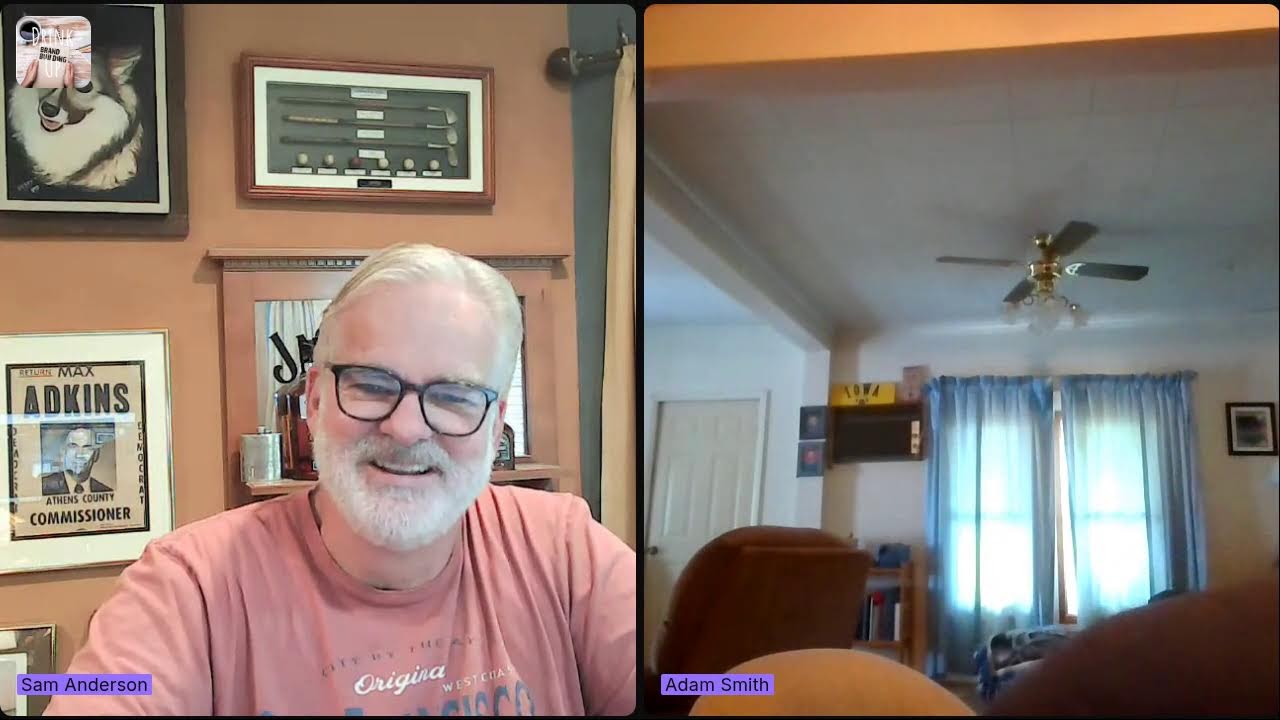
Samuel Anderson and Adam discuss why CPG founders rush to scale before validating their core market. They recommend starting in one zip code like Tampa, using 50ml samples and limited drops, then expanding only when that market is saturated. Accurate landed costs and distributor negotiations matter more than influencer spending.
Chapters
Back, and again, we're we are going to talk about founders, but we are testing as well to determine how we go live, not go live, the whole bit. So if anybody did join us, we we apologize if you've seen what the heck are these guys doing? We're it's our test day, right? We'll just call it test day.
Exactly.
And what we're doing, and and when you do these these live events, we're trying to figure out like, you know, pre-event, during event, and post-event. And then trying to figure out our invisible producer that we can see here, but no one else can see. Chris, sorry. It'd be nice to be able to have you come in occasionally. So we got to explore that. Would be good, actually.
We've got to work on that. But also It's a good thing I'm not the producer, because if I knew that only you two could hear me, I'd just whisper inappropriate shit for the whole hour and try to break you on camera.
Well, that's a good thing too, by the way, because Caress, you could probably whisper stuff in our ear and they can't see it. Hey guys, keep on pace. You might want to go back and ask this question, right?
You know what I'm saying?
You know, speaking of which, you know, it's funny when I do that sometimes with the founders we talk to as well. So, and I'm sure they do the same because we love you all in general. So maybe let's just get into why Crest continued to test and Come, you know, just figure out what we can do or not do, uh, with this, uh, this mode. But we're live, I can see it. Uh, but let's talk about founders, Adam. You were gonna— you were gonna ask me a question. I shared with you a story about a brand, um, you know, that ran out of money. And—
Yeah, um, also, uh, apologies in advance for, you know, blowing my nose and hacking up a lung. I'm, I'm almost out of the woods getting over a cold, but I've still got it a little bit. Yeah, I mean, long story short, we were talking about, you know, every founder of any type of business, I think, struggles to some degree with trying to figure out pacing, I guess.
Yeah.
You know, understanding how to be slow and steady and effectual and not overcommit and underdeliver and try to run too fast or get over your skis or whatever analogy you want to use. And so, Um, you know, we all go through it, but I think in, in CPG and, and beverage or anything that's customer-facing on the shelf, you just see so much of, you know, the LinkedIn posts or the Instagrams or, you know, this brand got into this store, this brand got into this store. And so for you as an early-stage founder, you're like, oh, I have to be doing that. And so I think it's really easy to fall into that, that trap. And so I guess, you know, the question to Sam is like, what do you think What do you think either, you know, causes brands to fall into that trap, or, you know, what do you think are the things that help them avoid falling into that trap? Right.
Hey, can you reframe the question in terms of what the trap is from your perspective?
Yeah, yeah, I think the, the trap is, is trying, trying to do too much too fast is the simplest way to say it, right? Um, you know, trying to open 5,000 doors before you've proven velocity at 5, right? Or, you know, trying to, to go argue margin with a distributor before you even understand your landed COGS, right? Stuff like that, right?
Yeah, it's funny. I was on a call last night late, just going through like cost of goods and the founder made a beautiful spreadsheet and I was comparing it to my spreadsheet and they weren't lining up. He was, from his perspective, he was looking at everything from, you know, Mexico to the border, the whole bit. And I said, all I need to know is all that into one bottle. What is your cost of goods?
Uh-huh.
So I don't even know anything else, right? Um, so sometimes there's a disconnect there. I, I, it's funny, I think both sides of the equation as a consultant or a fractional leader you know, feet on the street. We all own it too. And sometimes we all want to go really fast.
Mm-hmm.
And we just need to slow down a little bit and really talk about what is it that, you know, as a founder, do you want to do with your brand? But the reality is everybody wants to— many want to go into New York, California, Texas, you know, Illinois. And it's like, you know, Why don't you just go into Tampa?
Right.
There's millions of people in Tampa. Build your brand in Tampa. So we're getting, we're getting better at that. From my perspective, we're starting to be more vocal to really ask, you know, what is your funding? Who is your competitive set? Where is pickup? Why do you want to go nationwide? And then, you know, and then ask that probably 5 times, the 5 whys, to really kind of unearth what, you know, peel the onion back, however you want to say it. Why is that? Many will come back and say, well, I want to build fast, really quick because I want to 10x it in 2 years.
Right.
You know, so they all saw the Poppy deal or Olipop or whatever you call it. Everybody thinks they're going to 10x it and make $5 billion, $1 billion. And that's just not reality.
Yeah, it was. I gotta jump in there because before we went live, um, and shout out if you're watching or, or if you catch this afterward, there's a gentleman I've met on LinkedIn recently who's with, uh, Force CPG. That's his, his company. Um, his name's Stephen Dotichny, and he shared with me— if you go to the Force website, you'll see they've got a book called Margin or Death. And I was reading through it the other day. He was kind enough to send me a copy and Um, it's a, it's a quick read. It's super insightful. There's some really good, um, um, like mathematical exercises to figure out, you know, are you capturing your costs effectively? Are you truly, you know, is it everything? Are you, are you accounting for everything in your numbers and just, you know, best practices and stuff? A lot of the same things that I'll echo. He said it, you know, he's got some really concise points, but one of the things he said in one of the chapter headers was You shouldn't scale because you want to. You scale because you need to. And what he means is you scale not because, you know, it's new and exciting and you're trying to get to that exit. You scale because your, you know, your brand can't grow unless you scale. Meaning like you have owned this nucleus. as, as fully and as, as you've saturated this as much as you can. And the only way for your brand to grow further is to scale beyond it, right? And I think that's such— it's a, it's a short phrase, but it's such an insightful point. It ties in so much with what you're saying, Sam. Like, so many— and I mean, just like you, just like me, just like every other, you know, fractional person out there, we've all got our list of brands who are like, oh well, I'm gonna be in 6 markets. And if you don't know if you're successful in one, let alone a portion of one, let alone the store down the street that you're in, like, let's start there and then figure out how we, how we build it off of that, right?
So I, I, I, I absolutely love that. And it just, it makes me think about the young man I talked to out of Jersey about his brand. And when I was telling you about, he's going to do about 7,000 cases this year of an RTD brand.
Yeah.
And he essentially told me what you just said. I got to the point where I know that I gotta invest in someone like you to build my brand. And what was brilliant about his approach, he's like, I built out Jersey and I know Jersey has a season for my brand, so I'm gonna go down to Florida and I'm gonna build my brand down in Florida. And I, you know, I'm looking at Miami, Orlando, and Tampa. And I'm talking to 3 Anheuser-Busch distributors, which he got 3 appointments. Good for him, right?
Totally.
He said, he goes, my number one is I'd love to get Miami, but if I don't get Miami, I'll go after Orlando. And if Orlando, then I'll get Tampa. He's not going to do all 3. He's only going to do one, right? Yeah, one market in Florida. And then he's going to spend his winters in Florida and then go back up to Jersey when it's in the season to do that.
Well, and I think I'll be We should remember this. We should put a pin in this. And, you know, for our silent partner here, Caress, this is a reminder for you to help us remember. I would love to know, for the sake of the story, in a month, a week, two, whatever, however long it takes him to have those 3 meetings.
Yeah.
How does he respond if all 3 of them say yes? Right? Because that's, that's what usually becomes the nail in the coffin for people is they'll say say, you know, you get, you get different buckets, right? You get some brand founders who are like, I'm gonna go into several markets. You get some who are like, I'm gonna meet with several markets, but I'm only gonna go into one. And then you get some who say, I'm only gonna go, I'm only gonna meet with one. I'm only gonna go into one. Right. And so, you know, brand I'm currently working with, brand I used to work for, like they were, when I came on, I was like, how are you guys intending to grow this brand? They're like, oh, we're only gonna go into, you know, 1 to 3 markets to start. I'm like, okay, metered approach, love it. And then sure enough, 3 months in, I'm like, hey, why are we opening like 50 different markets?
I think you caused it. I saw you at MBWA, you were, you were shopping. Yeah.
And they're like, well, they all said yes. I'm like, oh, you, you're not comfortable telling people no, right?
Right.
You know what I mean? And so I'll be really curious, like, okay, they go meet with these 3 markets in Florida. What happens if they all say yes? Which 2 do you tell no to and why do you accept the one that you do?
You know, it's funny, I told you this story and I'll— the brand will remain nameless. Yeah, I talked about the relationship that just got paused and I actually respect them for it because I think they realized that, look, we got to retract back into our home market and win there. And I think that's, that's so important what we're talking about. Is, uh, I always use this example, and eventually we'll get him here. Maybe he'll catch this podcast because I'm actually going to post this one because we didn't, we didn't promote this today, by the way, but I will post it this afternoon. But Carbalas and Adam, you know, we've been trying. So he built it right.
Yeah.
This is a great example you're talking about. And, and Adam, if you catch this or you see an excerpt from it, we get it wrong, please set us straight. But my understanding is you built in Wisconsin and Minnesota. You built, right? You built a really tight thing, and then you— now you're at the point where you're expanding it out, and you have a, you have a nice business. Everybody knows who you are. Well, matter of fact, I think you're taking it, you know, you're going right after High Noon.
I love, I love that you bring up Car Bliss because, as you can all tell, I'm not in my normal surroundings, right? Yeah, uh, this is my parents' home in the lovely town of Sheraton, Iowa, uh, the, the birthplace of Hy-Vee, the The distribution center, the main one, is literally 2 miles that way. Um, but I bring it up because— and I text Adam, so I've known him for a few years. I try not to bug him too much, but every now and again I find myself in, in the bumfuck parts of the world, right? I mean that in the most loving way possible. I grew up here. Um, but you know, the towns that are a little more off the beaten path, right?
Yeah.
And every time, every time they serve carbless. Right. And it blows my mind because when I was growing up here, you know, obviously I wasn't of age to drink before I left for college. You still— I mean, it's a small town. You go into a bar to get lunch, right?
Yeah.
And you go into a bar to get lunch, and the only thing I ever saw them serve in 20 years was bottled beer. No tap, no draft. No, I mean, cans if you were cool, right? But it's, it's bottled beer. And I come back now in my mid-30s, and every one of them Every one of them fucking serves cardless, right? And I love it because what it tells me— and I text Adam every time I see it somewhere new— because what it tells me is he took that approach of like, oh, I want to open Iowa right now. I don't know how true this is, but some version of it is at least partially accurate, right?
Yeah.
Oh, I want to open Iowa. Sure. Are there accounts in Des Moines? Are there accounts in Waterloo? Are there accounts in Burlington? Are there accounts in the Quad Cities that I want to get into because Those are denser population areas. Sure, of course. But am I gonna go make sure that the town of 5,000 and the town of 2,000 and the town of 4,000 and the town of 10,000 all know that I'm the seltzer they should be buying?
Yep.
Because it's a lot easier to go have a bigger impact in those cities, and then you've just captured 4,000 people, 10,000 people, 2,000 people, right? And so all of a sudden, then you go talk to the city and you're like, yeah, I moved 10 cans a week. 20 miles from here and they have a population of 5,000. It's a pretty easy sell, right?
Yeah.
Yeah.
Well, he— but it's the tortoise and the hare story.
Yeah.
He didn't run out of the gates really fast. He ran out of the gates really slow and he sped up. Now he's speeding up. I mean, I saw him. He was hiring a— or hired a director of national accounts. I mean, he, he's hiring someone every week and then he has that big check. He'll post and he'll have like his employees or his ambassadors and he'll celebrate them being there for a year. So, I mean, if I'm a brand, if you're a brand, you should do what Adam does. Watch Adam.
Yeah.
Because that's, in my estimation, that's the exact way to build a brand. And if you're, you're a consultant, you should tell people to watch Adam.
Right.
And you should be upfront with them because You know, look, I'm not going to say we're perfect. It's like we can open up a market. It's like, let's go do it, right? A lot of times we get excited as well. Let's put 9 people in California. Let's put 2 people in New York. You know, we ought to step back and say, okay, what is— what are we trying to accomplish here with that brand, right?
Right.
At the end of the day. Yeah. So the question from our producer is, what happens when a brand goes viral? Do you want to take that, Adam?
Yeah, I will. And I want to start before we get too far Away from LinkedIn comments. Good morning, Robert Cogan. Good morning, Alicia. Robert left several comments, but I'll call out the one he said. Steve D. Steve handles verticals for many brands. A couple beverage brands I love: Gingerbugs and Balloon Sparkling. Building it brick by brick. So again, shout out to Steve Dotichny. Pleasure to have met you recently, and looking forward to talking more. He said he'd be interested in being on the podcast, so that'll. I'll tee that up later. As far as virality, right, from an ops perspective, there, you know, and I'll pick on, it's the low-hanging fruit for me. So it's a good example. I'll pick on like Liquid Death because I think they've, you know, with their merch, for example, they do a really good job of this scenario. Scarcity is a great marketing tool, right? And I know I just said that I was going to give the ops answer, but that is the ops answer, right? In my mind, right? So if you get, you know, oh my God, you know, everybody loves you, nobody can find you. Okay, like, you can tell a good story about that if you say like, hey, we're gonna have, you know, we're gonna set aside X number of units every week that are sold online. It's this time, you know, you gamify it, right? 10 AM every morning, that's when the 100 units drop. And if you want them, fucking be ready, right? Yeah, there's still gonna be people that don't get it. And some of that's gonna fall off, but it creates hype. And, and this is why it's the ops answer. It manages the spend, the burn, the cash flow around all of that, which is all I'm interested in is the ops guy. So that's my answer for it.
Yeah.
Yeah, I think— oh, go ahead, Sam.
I don't know if I have an answer. I think that was a good answer. I, you know, sometimes we get behind the hype really quick and I'm a sales guy, right? So from a sales perspective, I get really super excited and I'll run out of the gates really quick and go, okay, let's take advantage of this opportunity right now.
Yeah.
So I mean, I'm just being, I'm just being frank here. I mean, we're going to— the opportunity is here. We're going to go seize the moment. But the question is, you got to step back and slow down. And Alicia, Hello out there, and Robert, and actually Peter joined us as well. Peter, thanks for joining. Pretty amazing that people joined us. We didn't even promote this today, which is great. So thank you, friends, for coming on board.
Hell yeah. No, I mean, I think— oh, it's a phenomenal point. Peter said scarcity, i.e., the Disney Vault. That's another phenomenal example of, you know, I remember the commercials as a kid of like, you know, for the first time in 20 years now you can get Bambi or whatever the hell it was, right? Like phenomenal example. Um, Karas, you put something in our, in our internal comments here that I want to go back to. That was, as a brand, shouldn't they take the time to see who their buyers really are and then target them? And I think the short answer is yes. I'll go back to, uh, Mike from, from Food Service Octopus. who gave the example of like Lululemon and their CEO's answer, you know, Chip, on who their customer is and how specific it was. One of the things, going back to Carbless, that I love about, you know, when Adam will post or when he'll post interviews that he's done, it's almost always if he's talking about a sales scenario or like a pitch to a bar or whatever, he very commonly gets the feedback when he walks into a new account, oh, our customers don't like seltzers. We don't— seltzers don't sell here, right? And he'll go, it's fair. Do me a favor, try it. If you hate it, I'll pound sand, right?
Yeah.
And most of the time— and I won't talk to his numbers because I don't know them, so I'm not going to say 9 out of 10, but, you know, clearly he's growing— so most of the time they're like, oh shit, okay, like, I, I do enjoy this. I would be willing to to carry this. And then Adam and his team clearly know what the fuck they're doing in terms of supporting those accounts. And so you end up— the point I'm getting at is they have clearly defined that at least one of their target customers are people who will tell you they don't like seltzers, right?
And they're up for the challenge. Like, okay, they're up for the challenge, right? Take this. It's funny you said that. We're working with a vodka out of Texas. Um, and Alicia knows who she is, and I had a wonderful conversation with her yesterday about pricing.
Sure.
And, uh, this woman, actually, you need to meet her. Actually, I told her I'd introduce you to her, but she owns a— she has a— she has a distillery, she's a co-packer, she does several brands, but she has her own brand in Texas, and it's a vodka.
Sure.
And her dad owns a packaged liquor store.
Okay.
So every time someone comes into his packaged liquor store and they buy Tito's, he takes 2 50mls of her product and he drops in the bag and he says, this is on me. I promise you, you'll come back and it's much better than Tito's.
Right.
And she said they come back 100% of the time because it's much better. And by the way, she's like $2 to $3 below Tito's.
Sure.
And it's a much better product. Again, they were up for the challenge, right? Right there on the spot. Her dad drops 2 50 mLs in the bag and it's a challenge. So I think that aligns with your conversation.
So I think if you can get it to where a family member owns a liquor store, that's the way, that's the way to grow.
100%. And, uh, her name's Crystal. Uh, Alicia, that's who I'm talking about, is Crystal. And Crystal's, uh, you know, ready. She's ready for Missouri and, uh, the whole bit, you know. But that's, you know, part of the plan is we're going to do the 50 mL plan. With our liquor stores. So you don't have to wait for your dad. You can say, hey, I'm going to give you— if you buy this case, I'm going to give you these 50ml. What I want you to do is when they come buy Tito's, please just drop this 50ml in the back or any other vodka. Sorry, Tito's, I love you too.
But I mean, I think that's— and you know this better than I do, Sam. I think, you know, for a new brand, obviously if you have that relationship with the store, it's a little bit easier. But like It's a phenomenal example. So even in the non-alc space, if I've got a protein brand, a canned protein brand that I'm working with, and so somebody comes in and buys a Muscle Milk, hey, drop one of my products in there and go, you know what, try it. It's free, it's on me.
Right.
Now, as the brand owner, obviously you got to be careful because you're not trying to upset the— if the store owner really loves their Muscle Milk and how well it's You don't want to affect them, right?
Yeah.
But you could say like, hey, I'm going to pay for you as the store owner to give away 30 free cans, right?
Yeah. I mean, I think it's, I think it's a strategy. We're onto something. Hey, before I forget, so Peter has a question. I think he has to leave. Hopefully he's still here. He said, my question would be, what would it take to get customers to buy seltzers here? You want to take that one? That's kind of like your specialty.
What would it take? Let me read it. Also, uh, that's my grandmother. She's adorable and we love her. Her name's—
Hi, Grandma! You're gonna come on screen and say hello?
Hi, sorry to interrupt. You are fine, Nana. Stop it. Uh, so let's see, he said— let me refresh my— was that on LinkedIn, Sam?
Uh, yeah, it's, uh, he— why would, um— well, he has a couple things. Why— but why not leave a bunch behind Uh, for the owner to do that, uh, although it might be risky, no guarantee they will. Um, that's about the 50 mLs. But then he asked about the seltzers, and the question about the seltzers is— my question would be, what would it take to get customers to buy seltzers here? I'm not sure if Peter, you're here, but you want to expand on that?
If he's still here, we'll see if he can. Uh, that would be my question to the store owner. I'm assuming he means when we were talking about, you know, you know, carbless and, and, uh, going in and selling to people who don't traditionally drink seltzers, right?
Yeah.
Um, it'd be an amazing question if we had, you know, the man, the myth, the legend, Adam Croner himself. But I think, uh, you know, from my perspective, speaking more from the, you know, guy who grew up here and, and knows the bars fairly well, um, uh, I think it's, it's a, I think brands tend to, as we all do, because otherwise, like, there's just too much information. We'd be overwhelmed by it. But, you know, if you're a brand and you're a seltzer and you think of the people that drink seltzers, right? Like, you ask anybody, like, who drinks a White Claw? Who drinks a Carbless? They're gonna tell you.
Yeah.
soccer moms, they're going to tell you, you know, people in their 20s, right? They're not going to tell you, you know, 40-year-old blue-collar folks who live in a small rural town. That's not going to be the default answer. I almost guarantee it. Right. And so I think, you know, again, what Adam might say, and this is my educated guess, is that, that people everywhere, if you give them the option, have a lot more very, you know, you give them something good, as an alternative, because taste matters. You've got to hit that first, right?
Yeah.
But they have a lot more varied palates than I think some brands or some markets or some industries give them credit for, right? Um, I just think that's the case. And so when you, you know, you come to a place like this and you go to, you know, the bar that's literally— this is a story I love telling. My wife and I were talking about it the other day. There's a bar, uh, On the way to the square—
I'm just saying, you go to a lot of bars, Adam. We should have a talk.
Yeah, I'm not at one now. Calm down. Um, but there's a bar on the way to the square here. It's been there for, I'm gonna say, 50 years. Uh, it's now called the Hurryback 3. It used to be called the Hurryback, then it closed for reasons unknown. New owners came in and reopened it. It was called the Hurryback 2. Then it closed again for reasons unknown.
Yeah.
New owners came in and reopened it. Now it's called the Hurry Back 3, right? Like, it's exactly what you think of. It's dimly lit. All the fixtures have been there for fucking decades, right? It does not look like a place that's gonna serve something like carbless, but there's a fucking carbless sign in the window, right? And so I think that's it. I think that's how you get people who maybe wouldn't, you know, be typically open to it, is you just go in and you meet them where they are and you go, hey, Maybe it won't sell. And you know what, I'm not going to take offense to it, but maybe this community is looking for something different after half a century, right?
Yeah, I mean, I believe that's what his team does and he does. They go one account at a time, one barstool at a time, and they're up for the challenge. You said they, you know, they'll, they'll lead the— hey, look, you know, if you don't like it, great, um, we won't be back. But I promise you, you will. Or Crystal's dad that puts the 250 mLs in the bag Right. And, uh, it says you'll be back.
Yeah.
And you'll buy this product and it's right here at a really good price.
Yeah.
You know, so there's probably onto something that we talk about, like brands building in like a zip code, right? Like, take your— rather than expanding all your resources, we call it what, a mile wide and an inch deep? Why don't you go an inch wide and a mile deep and do things what we're talking about?
Yeah.
You know, go into that packaged liquor store, give them the 50 ml. You know, do the tasting, you know, sit on the barstool, do them, do the, the, those things, you know, right here, like you said, really tight. And then when you get to a point where you're like, you know what, I can't go any further, that's called scaling, right? You scale it because you don't want to. You scale it because you have to, right?
Yeah, yeah. No, I mean, I think, I think it's, again, I think it's spot on. I think it's something that, that You know, even so, I'll— okay, so not entirely talk smack about, about, you know, brands maybe running too fast. I'll pick on myself for a little bit.
So like, well, we're part of the problem sometimes, right? Absolutely.
Um, you know, I think from a, from a, even from a, you know, fractional consultant, whatever derogatory phrase you want to use, right? Um, I'll get asked I mean, I think I shared it a few weeks ago. I'll get asked where people like, hey, do you, you know, I got this friend, like, I'm, you know, I'm working with a brand owner on a beverage. They go, hey, I got this friend, they also have a brand, you know, would you be interested in helping them? And I'm like, of course, I'm like, I'm happy to talk to anybody. Okay, cool. Uh, their product is dill pickles, right? Now don't get me wrong, I got bills to pay. I want everybody's money, right?
Yeah.
You know, big money, small money, I would love more money. But even for me, the stuff like that comes through and I'm like, the first question that goes off my head is like, shit, could I figure out dill pickles? Right? Like, could I extend myself into something that I know I know nothing about for the sake of a check? Right? And I really want to, don't get me wrong, right? Like, I absolutely want to do that. But then I go, yeah. That's not gonna end well for me or the brand, and I'm gonna piss people off, and it's gonna be clunky, and let's just not, right?
Yeah.
But I go, you know, people are gonna give me shit for this because they're like, well, Adam, you're LinkedIn. The answer's never no, the answer's how. You're spot on. I don't tell 'em no. I tell 'em, hey, not me, or not me entirely. Talk to my friends who do food, and if they want me to help project manage overall, but have people as technical resources and freight resources or whatever, God bless, happy to do it, right?
Yeah.
I think that's, you know, going back to the, the brand side, right? Like, if you get those 3 yeses in Florida, you tell one of them yes, you tell the other 2— it isn't a no, it isn't a hey, I'm never coming back, it's a not right now, here's why, right?
Yeah.
It's a not right now, I'm gonna go prove my velocity in Orlando, I'm going to crush that shit so that when I come back to you, I know good and damn well it's going to be a success in your market. Like, that's a perfectly respectable answer.
I believe so. As a matter of fact, when I, when I talked to this young man who I was very impressed with, I'm going to share that with him actually, that this is a strategy that I would, that you should consider. Because, you know, one of the things we do is a lot of times, you know, Alicia and I will, you know, work with a brand. I'm like, look, before you go into our Feet on the Street program and expand nationally and go into this market, that market, why don't you just like engage for the next 30 to 90 days and let's look at your plan. Let's just tear it apart, look at it, and then from there, we can kind of make some decisions of kind of this is where you're at, this is where you want to go and develop, this is how you're going to get there, right? We lay out the map based on where you want to go. But so many people are just going a million miles an hour, including myself. I'm reminded daily. That I need to slow down and see what's right in front of us versus trying to chase down something that we can't even see.
Hey, Nana, would you mind running these out to Bree?
Yeah, this is called live, by the way. Um, I'm gonna call out Robert while we had that commercial break. It's hilarious how some consider seltzer a newish category. Lots of love. Club soda with a twist, Perrier. San Pellegrino, etc., etc. Seltzer is a thousand or more year— thousands or more year old. You know what? God, touché. It's funny is because it's just repositioning of what something is in the can or the bottle. What it is, matter of fact, we were talking, Rosa, have you ever captured— I captured this episode. Rosa is one of our partners in Tampa and we were talking about a brand that she represents that happens to be— you'll know who it is. I'm not going to say who it is, but it's a tomato-based product in a bottle.
Sure.
Yeah. And we both, uh, proceeded to say it's just tomato juice for a Bloody Mary, but it's repositioned as, you know, this, this product. And that's fine. And people talk about, like, you know, bottled water. A bottle of water in a grocery store is a buck. On a plane, it's $8. Or I guess it's free on a plane, but in the airport, it's $8. So depending what you're— depending on your situation or how, you know, hits you, you know.
I think that's the, you know, again, I'll pick on because it's top of mind because I've been trying to speed read my way through it because I'm really excited to post about it and talk to him more. But, you know, again, going back to Steve Steve Dotigny and comment he made in his book, it just echoes so much what we're talking about. The, the fallacy of, of brand owners taking the cost structure and the COGS and the margin and all the math, even if they have it set in stone and they truly understand it deeply for one market, and then carbon copying that to another market without going through and doing the due diligence of Okay, how different is the freight from market to market? Because the landed costs might be different. How different is the, you know, expected distributor margins if you're going from, to your point, Sam, I'm selling it at a grocery store, you know, in a densely populated area versus I'm selling it at an airport in a rural community, right?
Mm-hmm.
Like, those are entirely different structures. And that doesn't mean you can't do both. But if you're trying to carbon copy the math from one to the other, it's just not going to track. Right. Yeah.
Now it's funny, um, you know, you haven't met the Ruby Pro Software folks.
Oh yeah.
Oh yeah, that's right. Uh, so we need to have Tom Harris. Yeah, we have to have Tom on the, on the show to talk about it. But we do a webinar series actually, and actually once a month, and we talk about pricing and we talk about just that is not every structure is the same by market. But it can be depending where, how you want to play, right? So we talk about rivers, streams, and oceans.
Yeah.
So many people want to play in the ocean, but I mean, I tell brands constantly, why don't we just stay in the rivers and streams right now?
Yeah.
You know, it's much cheaper. Matter of fact, you probably get a bigger fish, a better tasting fish. So why don't we stay there? But that's what they do. They allow us to kind of look at the big picture and then really truly look at profitability. We took one of our friends that you do some work for. You know, through a structure, and it was eye-opening to them.
Yeah, actually, no.
And we were looking at like pack sizes, 4-packs, 6-packs. At some point, um, Anne came across and said, hey, we need to maybe look at a 36-pack, maybe it's more profitable for us.
Which maybe it is, but I just, I have to laugh at the, like, over the last few years, the 36-packs, the 48-packs. I'm like, they're so fucking heavy, just The tensile strength of that carton has to be insane. But that's a conversation for another day.
We digressed.
Right. No, I mean, it's exactly that. And I think the fun part of my day, again, even as the ops guy, right, the fun part of my day is just helping brand owners see that kind of shit, right? Because again, as a consumer, and it makes sense, know, I'm not, I'm not speaking ill of them because it makes sense, right? If you've never done this before as a consumer, like, oh, it's— yeah, everybody knows if you go to like the airport, it's going to be more expensive, right?
Yeah.
Generally speaking, you go buy a Pepsi in Chariton, Iowa, you go buy a Pepsi in Los Angeles, California, it's about the same price for that Pepsi, right? Might be a little bit different, but, you know, a 20-cent, 50-cent price on the shelf As a consumer, you don't think because it's a Pepsi, you don't think twice about all the different cost structures and the volume of production and all that. And so as a brand owner, it's again, it's a really easy trap to fall into of like, oh, well, it's just not a big deal. It's same, same, except it very much is not, right?
Yeah.
Yeah.
Yeah. It's, it's an interesting subject that we can definitely get into on future podcasts. We had a guest, everybody, today that Decided that they weren't ready to come on. They were a little nervous because we do go live, so we decided to pivot this morning and do some testing. Kind of wrapping up, you know, Caress, I know you're, you're invisible. I don't know if you're able to come on the screen to test that out or join in, if there's a way to join in live.
You cannot.
But you've been, you've been— it's funny. So Caress is sitting right in the center. That's where I took her, by the way. I put her right in the middle of us, so I see all— I see Cress and you, Adam. So you're like over— you're like the overseer. You're the Lord. That's right. So she can stop and pause us at any time, the whole bit. But, uh, I'll let Adam— I'll let you kind of bring all the closing, uh, this morning. And then, uh, and Cress, maybe you can actually stop it after we're doing this. We can experiment here to see if you actually can stop the recording. But I just want to thank everybody for, you know, having an impromptu conversation this morning. I think it was really interesting to talk about founders and what they expect and what we expect of founders. And, and the reality is, the message for me is we all have to slow down to speed up. We're running a million miles an hour and maybe just stop and look what's in front of you and what you have versus trying to chase the dream that's not necessarily there. Not saying you can't go to it. But what you said to me really rang true is, you know what, scale up because you have to, not because you want to. And that's the message that I love that you shared, Adam.
No, I mean, I agree. Like I said, I shout out to Steve and the Force CPG folks and the Margin or Death book. Because I mean, that's it. I think it's, it's, there's no simpler way to say it. I think that's truly the answer. And I think that's the trap that a lot of us fall into. Honestly, the final point I'll leave with is, Sam, you mentioned Ruby Pro. You know, if you're a founder and you're listening to this, I think Ruby Pro is great. I think Pentane and Adam Callanan, he's doing a lot of really cool stuff. He just posted, I think it's 8G, or it's a company he partnered with recently on Pentane to help make their data more robust, which is super cool. And I'm playing around with that. And then there's DOS and some ERP systems. And I'm behind on all of my software friends. I told them, I'm like, hey, I want to play around. I want to give you guys feedback. And I do. I've been traveling for— this is week 2 of 3 and picked up a cold and I've got to get back to that. But point being, if you're a founder and you're listening to this, there's all sorts of very affordable tools out there for you to be able to run these numbers and understand your metrics. And so if you, if you don't have them, reach out, we can share them with you. If those ones don't work, we'll help find you other ones. But there's all sorts of available tools. It's not something that you've got to go spend thousands and thousands of dollars and months of your life on. Like, it can be a very simple solution.
I love that. We should do a show just basically, like, we go through each one, show like a link to where to go to get it. And then everybody can see that because I was thinking about that. You don't have to spend We talked to a founder that spent $100,000 last year paying influencers $5,000 a post. And I'm like, like, do you think about that? Like, people like Promalytics, you know, we had Lisa on as an example, or Vidlo or Mod, people that were, you know, talking about all these different people, Adam, Ruby Pro Software. Like, think about the money that that poor person spent on some influencer for a $5,000 post. I, yeah, it's just like, it's amazing.
I don't want to speak ill of influencers. I have a couple friends who are, you know, I'll call them minor, minor level influencers in, in the like Chicagoland area, and they're wonderful people. But again, if you're a founder and you're listening to this, if you're in the first, I'm gonna call it 5 years minimum of being a brand, do not pay an influencer, period. Just don't, right? Like, it's not— you don't have enough brand identity. You don't know who your customer is well enough. Like, just save your money, right? Yeah. Um, Chris is saying we're frozen, so— but the live's still going. So who knows? Maybe.
So we are live. I think Chris is frozen. So I'm gonna stop, tell everybody, hey, happy, happy, um, Saturday. Before we exit, I just got to call out our, our sponsor, Freebird J. Williams. I'm working through my case of water. I probably need another order to send it. Uh, you have my address. And maybe some, some hats and some t-shirts. But thank you, Jay, for supporting Drink Up. And then Adam with Alias Advising, thanks for the sponsorship. Sponsorship. And then obviously Alicia, thanks for supporting us with Bev Assets. You can find us all on the World Wide Web and know how to reach out to us. And on our future posts, we'll probably put ways for us to Connect. And Caress is back. So, Caress, do you want to stop the show? You want to try to stop it? All right, see everybody.
More from Samuel





He Sold Pickle Shots Out Of His Trunk. Now He Runs The Co-Packer That Won't Bury You In MOQs.






What market do you think gets overlooked most? #Toronto #BrandStrategy #Marketing