Welcome to our live show!
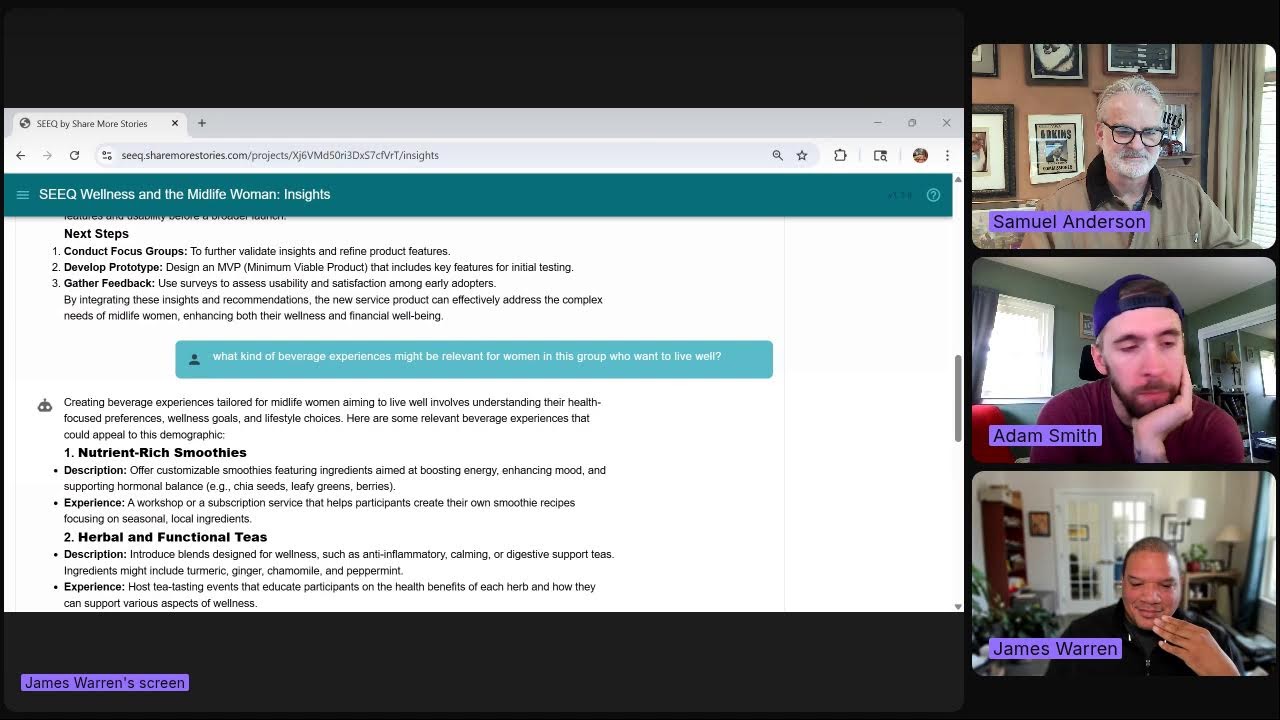
James Warren, founder of Share More Stories, explains how his platform Seek captures consumer stories and codes them for 55 emotions to surface what people really want. The tool works for CPG brands, events, and startups testing new ideas, delivering insights faster than traditional research.
Chapters
Everyone, happy post-Halloween. I hope everybody survived Friday night. I know we did. We didn't get many trick-or-treaters. It sounds like, James, you had a ton of trick-or-treaters in your area.
I did.
So success to you and Adam. Welcome, James Warren, to the show. Before I formally introduce you, we just have a couple things we always like to cover off when we get going in terms of some of our Unofficial sponsors, but one as always do every week is our friend Jay Williams at Freebird. Again, I'm still out of Freebird, Jay. You must not be catching these shows because again, this is a cam from two weeks ago. I'm gonna have to go out somewhere in Minnesota and find some Freebird, which I'm sure I can. So thank you for the sponsorship. As always, Adam at Alias Advising. Thanks for sponsoring us at the Drink Up Podcast. And Alicia Vargo from Bev Assets, thank you as well. And Ryan over at Rocks Advising, appreciate you supporting the show as well. But with that being said, we got all those out of the way. We welcome James to the show. I think you were supposed to be on a few weeks ago and we had to reschedule, so it seems like you've Got yourself back ready to go. So excited to, to have you here. So welcome to Drink Up. Adam is always welcome. And then Caress, you're somewhere out there invisible floating around. Thanks for keeping us organized and going. So look, we just— I don't even talk about it in our warm-up, but we just, you know, go with the flow, James, here. So maybe tell— introduce yourself, tell everybody a little bit about yourself. And your company and what it is you do, and we can get into it.
That's awesome. Well, thank you both for having me. I'm really glad to be here. Again, my name is James Warren, and I'm the founder and CEO of Share More Stories. We are a human experience insights company. So we use basically storytelling, which should be obvious because it's in our name. But we also use AI, which is probably not as obvious, to develop deep consumer insights into people's experiences with the brand, with the product, or sometimes inside the organization. What's really driving them? What's fueling them? What are their hopes, dreams, and even fears? And then how can we as brands or companies or organizations better meet them where they're at? Because we better understand them. We understand what they care about. So yeah, that's— every day is a different kind of day. And I get to love what I do because I get to help people share their stories about things that really matter to them and then help companies make better decisions with that.
I love that. It's interesting. I got— and I know Adam's going to be taking helm here, but sorry, Adam, I just had this thought. I had this debate. I didn't realize I was having a debate on LinkedIn with my— I don't know if it was a debate because I'll call her out because actually she's probably right. I don't know if you know who Courtney O'Brien is. You might know Courtney.
We've had her on, haven't we?
Oh yeah, she's been on the show a few times, but I've been posting about, you know, so I, my partner and I, we have a company that basically has Feet on the street folks that go out on the accounts and they sell a pod, a point of distribution, a display, a menu, you know, all equals cases, right? So they activate the brand and the accounts. And her communication back to me is that's, that's not marketing, that's business. And I'm curious because she's a storyteller too. And I think marketing is all about getting your story right before someone like me goes out and executes. the plan. So how do you feel about that, by the way? Do you think the selling team is a marketing team, or you think they just execute what marketing develops? Loaded question.
It is loaded, but it's also one I've been on both sides of that coin. When I worked at Altria Group, I was brand manager before I was section sales director. So, you know, I think some of it depends on the company culture. You know, is it brand driven? Is it manufacturing driven? Is it sales driven? sales-driven, but all those companies should be, you know, return on investment driven. All those companies should be, how do we, how do we stay in business for the long term?
Yeah.
Meeting the needs of our customers and, and also contributing, you know, in a meaningful way to society. But that said, I think when you look at sales and marketing, very traditional view of mine, they're really two sides of the same coin. You can't do anything without both. And so I don't see them as one being taken precedence over the other. I really see them as more interlocking and fit because you can't just come up, especially nowadays, you cannot just come up with a marketing plan and say, all done, handing it over to sales, go execute and expect to be successful. The market is too dynamic. The competitive pressures are emerging differently every day. Frankly, half the time your sales team is the best source of market intelligence you can have because if they've got really good relationships with the trade, they're spotting things and telling you about things before they show up in your syndicated data. So I think, I think brand managers and sales team managers have to have a really, really strong partnership if either is going to be successful and ultimately if the company is going to be successful. But I, but I get the point, you know, marketing is about, you know, what is our message, what is our— what benefits do we deliver to the consumer. But I think that that same thought process has Happens in sales too, because we're not just going in to execute. We got to have something that benefits the retailer. They've got to say, this is why I'm going to preference your brand. This is why I'm going to really put muscle behind your brand. Because otherwise, you already know, if you don't have that, you're not getting very good placement, you're not getting very good pricing, you're not getting very good distribution. So—
That's interesting. So share more stories maybe is applicable here in this conversation. Uh, for sure, right?
So absolutely, because you, you've got the, you've got the experience of a lot of people in there. The folks doing the work, as you said, feet on the street. But the customer who's, who's buying your stuff and selling it to the consumer, they have their own experiences, they have their own things that they're trying to get done. So you got to understand it.
I love it. All right, so Adam's in deep thought. You're at home, buddy.
I'm just curious, and we're talking a little bit about this, you know, before we get on, so I'll Speed it up for the folks out there in podcast land. I've said before the give a mouse a cookie paradox that anybody who's any kind of good at anything they do goes through. Somebody asks you a question, you help them out with the first part, they go, okay, great, what else do you do? Or, well, what about next? You go, well, next is this. Well, can you help me with that? Yes. Well, what about next? Well, next is this. Well, can you help me with that? Probably, right? You play that out long enough, or the, you know, the demographic piece we were talking about of, you know, for a long time, even for me, right? Like in college and early business and whatever it was, it was, okay, what are our demographics or what are our psychographics? And I think people tend to lean too hard on one or the other, or they don't blend the two effectively. Right? Or other things, right? That's not— those aren't the only 2 buckets. So my question with all that is to get people up to speed on my train of thought. New brand, new somebody comes to you, like, how do you start? Is it first kind of you and your team taking maybe an audit of where they are in a snapshot and then going, all right, here's what we're seeing, here's what we think you're going to get out of what you're seeing, Here's what you're telling us you'd rather be getting out of what you're seeing, and here's the plan from there. Like, is that kind of the general overview?
I love the way you got there because there— for us, our ideal customer is an organization where, you know, the leadership team is basically saying, hey, we, we recognize we're not achieving all the goal we want or having the greatest impact we want or the growth we want. It's probably not a case where things are horrible because frankly there's other things you need to do to fix Fix a sinking ship, but they're not great, and they could be better. You kind of have that assessment either in the data anecdotally, but really leadership usually has that conviction. I feel we could be doing better in this category or with this brand, and they usually got some rationale or reasons why. So then what we start doing is asking, well, you know, what are your consumers telling you? And what we're trying to do there are two things: we're trying to get an understanding of like what do they literally know about their consumers. consumers and their experiences, but also where are they getting that from. And that usually creates the opportunity for us to say, well, it sounds like you're really, really clear on the who, what, when, and where, but you're already saying you've got some challenges or problems that you're facing, and it seems like you don't know why. So you've got to ask why questions. And the why questions are hard to get at when you're just pulling in lots of observed behavioral data. They're hard to get at when you're just doing surveys and focus groups. You've got to find another way. And that's usually when we have the opportunity to say, listening to the consumer in their own words tell you their stories about their experiences, it changes your whole thought pattern in terms of what's actually happening with our customer and the brand. So that's usually what happens for us. Folks who are like, everything's great, then we're not for them.
Right.
Or folks who don't believe that the experience matters deeply, we're not for them. But those folks who are really, really interested in figuring out how to grow through better experiences, We're for them.
People don't buy brands, they buy stories.
Absolutely. And the brand is, is a combination of people and their stories. I like to say a brand is people inside a company and outside a company solving a problem together. It's not just one direction. The brand manager should think about themselves as part of a larger community with the consumers that buy. It's not separated. That's just an artificial line. That's where the money goes, but But the reality is there's a relationship. And if you really want to meet your customers' needs, if you want— we all see these people at the end of the day on social. And we're like, man, they've got so many influencers on their brand. Or they've got so much— they don't pay any money in advertising. Look at all this organic earned media they have. Well, that didn't just fall in their laps. They cultivated that. They grew their brand as a community to get there. And when you do it that way, I think you get a different kind of conversation happening. There you go.
That's what Jay— you describing Jay Williams.
That's awesome. So you mentioned—
I'm gonna try and paraphrase it— is maybe they're listening, but they might be listening in the wrong— maybe listening to the wrong songs, right? Um, or the wrong artists, right?
Um, James is the Led Zeppelin of Shear Moisture.
They need a different playlist. They're on the wrong playlist.
You're right.
So they need my vibes playlist. That's what they need.
So help me out as a novice, right? So when I think of just experientially, not a marketer, don't play one on TV, never intend to, but experientially, when I see brands I've worked with in the past talk about where they listen to customers, it's the things you mentioned. It's social media, it's sales team reporting feedback from in the market, it's trade shows or feet on the street type, hey, handing out samples types things. And for sure, Those are all ways to listen. But again, I'm assuming those are all kind of like in your world, those are like, well, okay, those are given, right?
Are you asking how he captures information? What are you asking?
Yeah, like, what do you, how do you, what are the, what are the buckets I'm missing, I guess?
Yeah, it's a great question. I think there's 2 parts of what you're saying. One is on average, you know, like you said, they're hitting all those, they're hitting all those major buckets. They're doing proactive research at the front end, but they tend to see research as a point in time. So that type of listening doesn't happen on an ongoing basis.
Sure.
Then they have, you know, typically social listening or some platform similar to that. They might be getting their NPS, their customer satisfaction scores, little quick surveys, rate us on 5 stars. It's a data point. And to your point, I love some of those more organic, people-driven inputs. What is the sales team telling us? What are we seeing when we go do a market walk? The challenge is not so much I don't have enough data. The challenge is I don't know what to do with all the data I have. And even when I have a sophisticated operation and all the integrations we need, it's still not always telling me that why question. So what we do is we ask those consumers to come into a platform, we give them a prompt, and we say, tell us a story about your experience related to X. It could be like right on the nose related to that brand, or it could be more at the category level, or it could be more what we think is the problem level that they're trying to navigate. But they will typically open up really quickly. They get very emotional about their stories in a good way. Like, they get descriptive. Yeah, yeah, yeah. They start bringing the senses. This is what I remember smelling, tasting, touching, hearing. By the time they're done, they will email us afterwards and say things like, I had no idea this was going to be this way. Thank you. I feel like I was in therapy.
Right.
Um, that's not our job, but, but the notion that there's stuff they wanted to tell people particularly people they buy from or people they work for, that they weren't being asked seems to be always this aha moment for the participant and for our customer because they're like, wait a minute, I didn't know you got real stories. I thought you just meant like a sentence or two, like this happened, it made me happy, and, you know, the end. I'm like, no, they're right. They're telling you rich, deep stories about their experiences with you.
So, James, I got to come and interrupt because we got a lot You're popular this morning. I don't know if I captured— catch all this, uh, uh, Adam, but we got, uh, Alicia Vargas in the room.
Oh shit.
Greg Needham.
Just updated my comments and it went—
Yeah, Winifred, uh, uh, uh, Atafu, if I mispronounce your name, um, uh, she's asking what's this live all about. Uh, maybe you could take that, uh, question. And I just want to welcome AJ Navarro and, uh, Cost of goods. Robert's here and Greg Needham. So you're popular today. But what is this all about today?
I think it's about listening differently to your consumers, to your customers, and, and getting them— getting to a place where you're learning about what they really, really need and care about so that you can have better differentiation, more successful brand launches, brand execution in the market. That's what I think it's ultimately about. Listening better, listening differently so you can produce better results and have bigger impacts. And I think we're doing that through stories. And because that's because stories are so human, they're so fundamental in this like world being overwhelmed with so much data, so much AI, at least for the foreseeable future. Our humanity is almost like that's all we have left. Our humanity is what we are. And I think our stories are such a big part of our humanity. Um, it's also a way to keep the customer engaged.
So is— so let's get into this AI stuff. I know I was researching you a little bit and you were talking about AI. I think AI is important, but it shouldn't replace our voice. It should help us become more efficient and effective in what we do. Like, I love taking data, aggregating it, utilizing AI, but at the end of the day, I'm going to look at it and curate it in my voice.
Yeah.
So is that what you do with Share More Stories?
We're using AI in a couple of ways. And for us, it's no shade, but it's not new for us. We've been doing it since the very end of 2015. which is a funny story in and of itself. But we were using— we started with IBM Watson, and we were using AI to basically quantify the emotions in people's written text, their stories. So we're like rating 50 different things, you know, all kinds of attributes about their needs, their values, their feelings. And we then had to build our own platform, our own algorithms, to continue to work in that space when the The large language models we've all heard about became popular. We were able to get far more efficient, process lots more content in a much more efficient way. But then the other thing we are, we are doing now is we're not only predicting the emotions in those experiences, we're now using AI to make the reporting and analysis much, much more efficient. So if you go back to this fundamental premise of if I could talk to 1,000 of my customers deeply and hear exactly what they care about, I would. But the problem is I don't have the time for that or the money for that. It's not efficient. It's not scalable. Well, if I can create a place where they can share their stories with me and then I can understand those stories, I can understand why those things matter to them, and then I can report on that in no time. That's a huge opportunity for brands to leverage to get smarter, better, faster. So that's how we're using AI, both in the predictive way and then in the sort of synthesis and analytic way to produce reports and analysis. Great.
Let's go through some of these questions in our audience here. And Adam, you take a few. I'm going to take the first one from AJ. AJ, we need to catch up, man. It's been a while. He's the founder of Breeze Drinks out of Spain. Great person, by the way. I have a strawberry gin, 5 distillations, and London dry gin in Florida for several years. I would like to grow, but it's very complicated from here, Spain. So I'm not sure how could Share More Stories help someone like Breeze Drinks in Florida?
So I'm not seeing the question, but it sounds like the question— what they're really asking is just basically, how do I find ways to grow? Yeah, I think it always goes back to you got to marry up your vision and your strategy for the brand with the market. So the market is the ultimate determinator of whether or not you've got something that they want. Also, I would say just because you're not finding— if you're not finding that perfect fit right away, it just means you haven't found it yet. It doesn't mean it won't exist. It doesn't mean you can't do it. So I think vision and strategy, listening to the consumer, and then, you know, the persistence of execution, because anytime you're trying to create something new, it is By definition, you're trying to compete with 99.999% of what they already know, and it doesn't include you. And so you've got to find a way to become relevant, to become interesting, to both capture their interest and attention, but then deliver on the experience that they're craving. And I think it's a learning journey as much as an execution one.
Yeah, it'd be interesting. You should go check out his website and his brand. There's a story there, and he kind of started telling it a little bit. and its communication to us. Robert Cogan asks, and I'll let you take the next ones, Adam.
Yeah.
Too close to home, lots of love. How do you feel about— what's that? How do you feel about bought impressions when a brand goes hardcore on creating, buying a social media festival? Does it need constant dollars to maintain a following that was bought in the first place? And I can repeat the question.
So, so it's how do you feel about bought impressions? Or maybe I guess the way I take that, folks, is, is do you see brands that come to you that maybe have a following already, but it's, it's, I'll call it a false positive because it was, it was purchased impressions, purchased followers. You're maybe getting stories, but they're, they feel inauthentic, or you're having to chase dollars or continue to throw money after it to get stories out of people as opposed to it being more effortless or flowing better, right?
Yeah, I mean, you want me to chime in on that?
Yeah.
Yeah, I think that, you know, getting stories from your audience and your community to share, for example, on social is great, and it's also a function of what kind of relationship you have with them. Are you trying to create sort of a, hey, here's our message, we want you to amplify it, Or are you creating such a relationship with the brand that they can't help but want to talk about their experiences that they're having with it? You want the latter, obviously. But that doesn't happen overnight. I don't think that means you can't use investment to disrupt their normal attention cycle, because sometimes that's the way you get in front of them. However, if that's what you're doing, you've got to make sure that there's something sticky on the other side, because if the only way they pay attention to you is when they see a paid ad, you're going to be spending a lot of money over a long period of time.
You've got to find a way to get there.
That's a good takeaway from this show. Word of mouth is, as corny as it sounds, in many respects, when done right, social is just one gigantic word of mouth engine. People talking about their experiences. The best ones are when you're not controlling it. Honestly, that's also where legacy brands really struggle because they're so used to in control. Um, they have a really hard time letting go of control and letting the consumer really chart their own path.
Yeah, we've talked to some interesting people. I have to connect you to, um, what was that company? But it's, uh, basically they do— it's called MOD. Um, basically, basically fans— they basically let the fans develop like the, um, artwork and stuff. And, uh, so basically they put the fans in control and then they're all over Discord.
Yeah.
They're communicating, which I think that's a new frontier for many brands. I don't think they're there. They should be there. They're not. Yeah. So I got to call out Greg Needham. Hey, Greg, I owe you a call, man. Maybe we can have lunch today or something. I know we've been trying to get in contact, but Greg actually, first of all, he says IBM, IBM, IBM. He does some work with IBM. His statement was engagement direct from the shopping aisle. Why or what in real why, and what in real time? So I'm not sure if he's asking a question. I think he's just supporting the fact is, I think we should probably get real-time engagement from the shopping aisle or that place. How do you get that information?
I think that's a great point. And again, to me, it's not all or nothing. It's not an or, it's an and question. Getting real-time engagement, point of purchase, point of decision, huge part of of what's missing from many brands and companies, sort of insight funnel, data stack, what they know and what they don't know. And by the time they get to a point of purchase, subconsciously, much of their decision's been made. There's opportunities if they're saying, I'm not sure what I want, you can be the solution to that problem. But if they're going in with a preconceived notion of what they want based on what they've already consumed, advertising, messaging, content-wise or their own experience with your product and they're loyal, then you have to be really, really disruptive both in your messaging before they get there and in your messaging at retail. And I think that's just— that's true for a lot of categories, but I think that's especially true, you know, for fast-moving goods categories where there's new brands coming in fighting for shelf space all the time. You've got to have a way that says, I'm connecting with this consumer right here. And if you have data that you can capture as they are assessing that decision, making that decision, um, or right at the point of purchase, by all means get it. Because all you're really trying to do is paint the most robust picture you can of who your consumer is, what they do, what they care about, and why they do it. Um, are you doing it with like QR codes?
Can you see that, like, like something like that on the cans?
Yeah, you know, you— we, we've done some things at like live events, even at like conferences and stuff, where you hit the QR code and you go right into sharing your story or experience. I will say our type of research and listening is not as, hey, tell me how you're feeling right this second. It's more about let me understand what you care about, what motivates you at a maybe deeper level. And they usually need a little bit more time than that. That said, we just started testing finally our audio collection capabilities. So it's a, it's a little bit faster, easier, lighter experience. You can come right in, just start sharing thoughts. And that I think is going to give people a lot of different use cases for what kind of feedback we capture, when and where, especially like new product testing, journaling. You know, that's a big piece if you've got a new product that's in development and you really want to know how they're using it, how it's fitting in their lives. You got to give them ways to make that, that data capture easy.
Do you have a brand? So it's funny you read my mind because I was going to ask for like a use case, and you can share the screen if you want to, but do you have like a brand or Like how it works with how they would work with you and how you bring the story to life with the brand?
Do you have an example? Yeah, I'll pull something up here in a minute, but I'll give you the high level. You know, when people basically say we need to understand what the consumer is really looking for, or in some cases the employee, you know, we set them up in our Seek platform. Our Seek platform is not like a wide open to the public app. It's a web-based app that we use for the customer that they use for themselves. And what happens is the first thing we want to know is like, what business problem are you trying to solve? Then we figure out what's the research question that we need to ask and answer for you to make progress on that business problem. Then we say, what's the story that we want from people that will help us answer that question? So that's called a learning roadmap. And basically, as we go from— we have that, we start recruiting their participants. Either they're recruiting them through their own customer database Or on social, or we're recruiting for them in more like a traditional research approach. And then those folks just come into the platform, they get an invitation, they click in, and they share their story, and then they're done. But then behind the scenes, you're seeing all of the emotional data that we're creating. I'll pull it up here in a minute so you can see what it looks like.
Yeah, I'd love to see that vision. I'm a visual person, so—
Absolutely.
James, real quick while you're doing that, um, our, uh, our, our Producer that we can't see said Riverside's telling her you've got multiple tabs open for Riverside.
I saw that. I don't know how to answer that because I don't.
Oh, well, okay then.
This this one with you guys. That's it.
I think we're. I know we're recording, which is good because we've done this episode when we go live, it goes live, but sometimes we miss the recording. Carlos Benjamin, welcome to the. the chat. He says, this is so great, Sam and Adam. Hearing James speak about what he does confirms the work HPL does nationwide. Happy to make that introduction, by the way.
Great guy.
Absolutely.
Strategy and on-the-ground execution, which is why we do many retail sampling campaigns. People go right to the register and purchase after engaging and trying these products. I don't know if there's anything else you see out there, Adam. Any other comments? Yeah, I was gonna—
so Carlos followed up with Can you ask him what his thoughts around brands doing guerrilla marketing as a way to reach their target audience in a mass way? What is his thoughts? Does he find that effective from his experience measuring impact?
That's a nice question. I would say the idea of getting your brand ambassadors in front of and in places where your consumers naturally congregate and where they're going to be. Still one of the more effective ways, especially if you're, if you're a new brand, still one of the more effective ways you can introduce it to them. Because the reality is, when you're trying to break into their, their mindset, you're trying to create awareness, education, and communicate them on your benefits all at once. So you get to do that in an in-person experiential way, in a way that very, very hard or takes more time to do through, you know, one-directional channel communication. You get to create even a micro moment of relationship between the brand and them. However, to be successful, context matters. I mean, this is like context matters for everything. AI, context matters. Brand consumer engagement, context matters. So where are you having that interaction? Are you making it better for them, or are you getting in their way? Are they trying to get to the bar and you're like, hey, excuse me, excuse me, I'm Let me let me bring you over here and introduce you to this new product. You know, it sounds good to be interruptive until you realize most people don't want to be interrupted. They want to do the thing that they're doing, and so you've got to figure out a way that makes sense and is relevant so that you're not just getting in there. And now you have to overcome this negative emotion that you just created, this sense of annoyance. You have to get that back to zero before you can now introduce a positive message. So how do you how do you create the right space in place. I think that's huge and important to do.
Well, these sampling events that happen, especially in the spirits business and THC business and what Benjamin does, you're out there in the wild, are you doing these events? I think you have a captive audience that you could start. You're not interrupting them, they're engaging with you.
Events is a huge way to do it when you can show up in a place that's, that's where the consumer is doing something that they like to do anyway, or offering them an opportunity to do what they like, maybe with a greater benefit. Now you're already becoming a problem solver. You're relevant. And I think sometimes brands forget, like, you're competing with other brands that provide a solution to them, whatever it is. If they're putting their money down, it's because those other brands provide a solution to one of their needs or wants or help them avoid one of their fears. It's just that primal. So you have to figure out, how do I do that differently first and better first So that I'm not just seen as, you know, same old, same old, but I'm also providing maybe a better benefit than they would get otherwise. While we're doing that, I'm going to pull up my screen so we can just show you real quick how this works.
We love show and tell here.
Absolutely. So I'm going to show you— this is some stuff more from the YMCA because it's a project that I can show. And it's a pretty good one. We did some work with YMCA over a period of about a year and a half where we focused first on their employee experience. Then we went and looked at their customer experience, meaning members, volunteers, donors, program participants. And then we went back and did another round of looking at their employee experience. And so you're able to really compare and contrast how employees are feeling about their work year over year. But also, you're really able to start drawing connections between the employee experience And the customer experience, which is huge. So the first thing I would say is what usually shocks people is when we say we're collecting stories, they don't get it. They're like, wait, what do you mean? And, you know, this is one that I have as like a demo, right? You can write a whole story in here about your experience. This is when I started running again, getting fit, you know, ran a half marathon, which I'd never done before. But people write all kinds of stories, and then they answer a few questions about themselves. So you have a little bit of like behavioral They might also choose these things like, who were you with? What were you doing? What did it take? What do you remember smelling or tasting or touching? These are called sensory cues or hints. And when those stories come in, as you see, they start accumulating. You've got lots of stories. You see the word counts. You get a sense of like, wow, people have a lot to say about this.
Mm-hmm.
But here's where it starts getting really interesting. When I say we're coding those stories for emotions, we are measuring 55 different emotions across Every story. We actually take the story and we break it down into smaller pieces, and then we code each of those pieces. So when I say you get an emotional map, this is what we mean. Like, what's—
You find the why really quick in this.
You, you totally can, because you see that notion of achievement, right? Like, people at the Y are working out, trying to, trying to make progress on goals. You see things like activity level. You see altruism. The Y is a, is a brand that's community-based. People join the Y specifically rather than, say, Gold's Gym or American Fitness because they not only want to achieve their goals, they also want to be part of community. So you see those things showing up, and then you can see other things like their demographics as well as how they've answered some of the behavioral questions.
Here's a question coming in real time. So Greg asked, James, do you map and build the consumer journey in your storytelling initiatives that hit milestones?
Absolutely. We built out new consumer journey maps, new engagement frameworks that are based and rooted in the actual stories that people are sharing. And that's huge because now it's not me sort of imposing that framework on the consumer, it's actually building that framework with the consumer. We've co-created where is the consumer today, and for the consumers that are achieving their goals with the brand, what does that look like when it's all said and done? All the way through. So then you can start to say, hey, some of my consumers are here, some are here, some are here. And it may not be the more detailed buying journey. It's more of the, hey, this is how we move somebody who doesn't know us to somebody who loves us and wants to advocate for us. This is how we move from somebody who just met us to somebody who's really happy and satisfied with their purchase or their experience, right? So it's more a little bit of a higher strategic layer, but you definitely want to be able to connect it and execute it. So this is the last part of like Seek where we're using AI to actually analyze the stories in real time. So let's say I just wanted to do like a real quick top line, you know, think about it as you normally have to go to the research department or the HR department. Now, if I'm the CEO, I'm the founder of a startup, I can collect these stories and ask these questions right away.
Oh, so if I sign up for your service, this could be a service and I can use this to ask questions. So I'm a market brand manager. Over at Gallup, I can use your stuff, this stuff, to do this.
Absolutely, because what you're doing is you're— you start up a project, you start bringing people into that project, and, you know, we say start slow. You don't have to go get 500 people overnight. Start with 20, listen to what they have to say, maybe change the question and go to the next 20 or 30. By the time you're done, in the case of the Why, over a year they collected 500 stories, which you probably wouldn't go do focus groups with 500 people. You probably wouldn't go do 500 one-on-one interviews. But you can hear from 500 people in this way, and they start to tell you, you know, if I just say, hey, real quick, top line. Now this is really important, right? In traditional research, I'm not getting a top line for at least 2, you know, 1 to 2 business days, and the first top line might be a few bullet points in an email, and that's going to come after my, you know, after they get home and they get a chance to review their notes. I'm also not necessarily getting a more in-depth report for couple of weeks. AI has definitely made that faster, um, even in traditional research. But now we've designed all that context right into the platform, so you don't have to stage it.
You put all the prompts in already.
It's all in there. I don't have to explain the data. I don't have to remind it, no, you're giving me the wrong answer, that's BS. You know, that's the most frustrating part of using GPTs is we were doing so great for the first 30 minutes of this chat, now shit's going off the rails.
Stop it.
You know, I I don't know about y'all, but I cuss out my GPT all the time.
No, no, no, I have conversations. You know, you can talk to it and it talks back at you now.
I love it.
I love it. So this is just an example. Like, you could keep going deeper. You could say, you know, what are some of the key drivers of better experiences at the Y, right? And it'll start answering these questions. So if you're the brand manager or the product developer, or the market manager, and you just want to be able to start bringing the voice of customer just into your decision-making, just into your leadership. You know, you start getting more specific. Here we had some high-level themes. Now we're getting a little bit more specific. What are the key drivers? What do I need to actually build? I might say something like, if I wanted to design a better wellness experience, What should I focus on most?
I love this.
So James, while you're, while you're going through that, and I want to go back to a question Sam asked, um, for my own clarity, like, do you see instances, whether it's with something like the Y or, or, you know, CPG type products, where maybe the brand comes to you and they're like, hey man, we're drinking the Kool-Aid, we get it, we love it, we want to do it, let's go. But then the question comes up of, well, okay, we have a fairly large footprint. Yes, we have brand managers in different markets and so on, but could we actually just share, you know, maybe give a login or something or share this tool with like a close distribution partner or a formulations group so that when they want to ask questions of this tool to inform conversations internally so they can say, hey, your tool told me this.
Totally.
I think for our next round of formulation, we should approach this, and they can kind of be more proactive. Do you see those types of partnerships happening?
Absolutely. You know, there's so many use cases once you get this, you know, in your own organization. There's so many use cases for what you can do with it. Like engaging your own partners is brilliant because in many cases, that's how you form a deeper relationship with the distributor or the supplier. Like, hey, we want to share insights with you. I used to be in that role. When I was with Altria, you know, one of the biggest things that the trade comes to the industry leaders for is help us understand what's actually happening in the market and with the consumer. So when you can do that faster, better, with more sort of more light, literally more enlightenment on it, then you're, you're a bigger resource to them, you're a bigger partner to them. And now you're putting this tool in the hands of— you don't have to be the biggest brand in the world to do it. You could be the challenger brand, the startup. You could be coming and saying, hey, You know, we're, we're building our brand and our community on deep understanding of consumer wants, needs, hopes, and dreams, and we're going to share that with you. We're not just going to share it with you with a report. Yeah, we'll let you have access to— if it's, if it's, you know, allowable and permissible, if you get the right permissions up front, you can have multiple folks on your team have access to it. It's a great way to think about it.
How does one get in contact with you to actually sign up for this? Is this a service? Is this like a SaaS?
Yeah, that's a great question. So a lot of what we've done up till recently has been project-driven. You know, like when you're selling something new, it's hard to just get everybody to buy some gigantic B2B SaaS platform. We tried. And if you don't have really, really deep pockets and you haven't done that 10 times already, that's— that delivery model becomes the barrier. So we started doing projects like you would if you were doing the research, and in many cases those customers would start start to say, oh wow, now I see how I could do this in this department, and we do another project. Or they'd say, hey, I think I want to get to a place where we could do this over the course of a year so I can collect stories over time and see what's changing. And that's, of course, you know, the best use case scenario. But in other cases, we've had folks now starting to just sign up for some of our basic, you know, sort of subscription-level packages. So the best way for people to get in touch is just hit me up at james@sharemorestories.com. And we can have a conversation about what they're looking for, share our solutions, a couple of case studies and some pricing, and see what works for them.
So, so I want to, um, I want to ask this question before I lose the opportunity. And this is— I find all this fascinating. Um, I work with a lot of— myself and, and, you know, the, the friends I hang out with most professionally work with a lot of brands who are brand new, totally green, never done this before, right? And so, you know, I think the— not to be cheeky, but the story you're telling, the insights you're offering, right, obviously hugely impactful. But how do you work with— because I'm sure there's an answer— but how do you work with folks who are truly at square one, who are like, I don't know who my customer is yet, but I I have this product I think is cool. I think it could be for these folks, X, Y, and Z. What do I do now?
It's funny you say that because I didn't know you were going to say that, but I said let me go over here to this more startup VC example.
Here's the startup package, folks. Pay attention.
This was working with a VC who said, you know, there's a segment of the marketplace that is underserved. And they started really— it's called Listen Ventures. They're in Chicago. And they are a VC based deeply on consumer listening. So what they try to do is identify big theses like, hey, we think this is a big market that's nearing a tipping point. We want to get in and we want to help founders who want to be in this space or who already are building in this space be successful. So they said, hey, we've done our high-level research. We've identified midlife women as a group that is underserved. You know, huge buying power, products and services generally not designed ideally for them but adapted to them. And so they said, we think there's a chance to really go in and say, hey, what do they need from a wellness, health and wellness standpoint? Well, small project, 50 stories, right? Over— I think we collected them in 3 weeks. And these women shared so many things that, let's face it, the, the 3 of us don't qualify as midlife women. When I did this project with our team, when I came back to my wife, she said, I'm really glad you did this. And I said, oh, no, I get it. It's really important. She goes, no, no, no, no. I'm glad for you that you did this because now you know just a little bit more. And she stressed the little bit. So there's always sort of a tangential benefit, right, when you're listening at scale.
Totally.
You get to learn things that you wouldn't otherwise know. But what was happening in this case was these women were— They took this opportunity to share about what's important to them in wellness, and they created a whole picture of their lives. They talked about caregiving. They talked about how they are, many of them, in the sandwich generation. So they're taking care of parents and kids. And they talked about their jobs. They talked about relationships. They talked about food and what they do for pleasure versus what they do out of necessity. And so this was at the beginning of even thinking about this category. let alone your own company or brand. But once they had these stories, they were able to go deeper and say, okay, so now we've actually figured out there's maybe 2 or 3 pathways in here that represent big value proposition sort of territories that we can go after. Startup can do the same thing. They could say, look, I think I want to go in this space. So we write the prompt very broadly, you know, like, Mm-hmm. Hey, I'm interested in figuring out, you know, which people use Active beverages versus alcoholic beverages versus other beverages and why, and what do they do with those from a lifestyle perspective. That may sound like a very functional story, but you'd be surprised, it's going to get emotional really quick.
Mm-hmm.
You know, you might say, tell me about the most— if you know you want to be in the active category, tell me about the most memorable experience you ever had with brands like X, Y, or Z, and they will start writing about those or now recording those. And so then when you have those stories, you can just start asking different questions if they're relevant to what you captured. Like, let's say— and I only happen to know that this is something that they care about— let's say I wanted to design a product or an app that combines both wellness and financial services because they were looking to say, these are big problems in my life and I would love some integration in the solutions.
Mm-hmm.
So you could ask, this is my question, you could come up with your own. And there's quotes that kind of help you understand how these things are rooted in the voice of the customer. So it's really, you know, then you can say, well, what are some of the product features I need? Some of these might sound basic, but then at least you're saying either I already knew this and now it's validated, or if I'm starting from scratch, I don't know and I don't want to make any assumptions. I want to hear from the consumer what they think is really, really important. How would I position it? You know, where would I go to— and you might say, well, let me, let me start to map out what the product features might look like to satisfy these key drivers. You could keep going in this space.
Okay.
So I have to, I have to say, maybe you saw it already, but Caress said bring this to Des Moines. Uh, let's do it. Right. So my question then, you know, the follow-up to that is, and Sam usually ends up asking this one, is like, okay, so again, new brand, very green, wants to get started. Is that a, is that a, they come to you and you go, okay, you know, it's project to get you started and here's the way we're going to do it and here's what we know? Is it, it's just access to this tool and you can play around with it, ask some questions, and then kind of let me know once you think you've got something and then we can dive a little bit deeper? Is it, you know, a little column A, a little column B?
Yeah, if it's, if it's a very, very early startup, um, I would say they need a little bit of help, but they also need to be able to explore on their own and see what's working for them. They don't need the layer of Here's all the consultative support you need and all the expert guidance you need because, you know, it's almost like anything else— context. They know more about what they want to know, even if they don't know what's, what's filling in the blanks. They know more about what they want to know than we do. So let's not waste their time trying to get us up to speed on that yet.
Yes.
First piece is, hey, you have a hypothesis, you have an assumption. Let's test that. Let's ask some questions of your customers or your prospective customers. And see if you're right. Or, or you don't even know if you have an assumption. You just have an idea and an inspiration. The first thing you got to do is start figuring out what is the potential problem in that market that we could solve. And this will help you at least identify that in terms of experientially. This is what people are living and doing and experiencing in this category. This is where there might be some opportunities for us to carve a lane.
We have many brands that could probably use your service. I mean, there's one brand, Vivintus, which is part of our company called WENDY, which is We're Not Dead Yet Incorporated. So Wayne, if you ever capture the— catch this episode, I always want to say capture. If you ever catch this episode, I'm calling you out. But, you know, we say we want to go after the 55+ consumer in the beverage business and offer them, you know, a product that has ingredients in it that are going to help them live well. Yes. It'd be interesting actually for you, myself, and Wayne to have a conversation to see how we could get some information because obviously it's early, um, early seeding of the brand in terms of how we, um, develop. I have to talk to you, Adam, too, because I want to try something different just to get this thing made.
Anyway, you know what, that— I love that idea because the first question that pops in my mind is, what does Live Well mean to those consumers? Because if we can figure out what they think it means, not just what we think it means on the brand and product Yeah. Then we can say, hey, we should, we should try to be as aligned as possible within the context of our vision and our strategy, aligned as possible. The only time you need to shift your strategy is when you can't align with the customer. The customer wants this and you don't, you want to build this, then you don't have alignment and you can't, you can't make them buy it.
But your data validates it though, because we were on with Josh Sizemore. He was on last weekend and Josh was talking to Wayne and I and he asked some really important questions. He asked the whys.
Yes. I mean, you know, it's, it's, it's a little cliché, but it's the truth. That's, that's what clichés are, right? Like, the why matters. And especially when we already have lots of who, what, when, where, whats. Yeah, the why is what's missing from most of our decisions. Um, but yet humans make lots of why decisions all the time. You're like, that doesn't make any sense to me, because you didn't understand why.
That's the value of the story, right? Bringing it into the conversation. You try to get an investor. By the way, we should connect him up with, uh, Josh as well. On his journey with what he's doing. Those two should have a conversation for sure. But yeah, I love it because the application and what you do can be used in a lot of different ways. It can help inform your marketing budget, can help inform how you're going to develop your brand. Because, I mean, I love it when you go who, what, when, where, why. I mean, I talk about it every week. Who, what, when, where, why. Right. So I may go through it. I always miss the how. Everybody's like, well, you got to have the how in there too.
You do. I'm the same. I have like the how is like the stepchild to me. I'm like, all right, yeah, I know. We're gonna figure out the how because there's no way to get from here to there without the how. But if you don't know who, what, when, and where, you don't have a how. Yeah. And I would say if you don't have a why, your who, what, when, and where, it might be a really, really nicely— nice, nice deck, great plan, but you're missing like this really, really big piece of what's motivating them and what's, what's their barrier.
Yeah, well, let's do this. We have a few minutes left. We always have to— I'll take the question that we always ask everyone here. And it's really important. It's a really important question. So, and we can repeat the question as well. But James, what is the difference between success and failure?
The difference between success and failure, I would say it's if life is a day, it's just what time it is. It's just the time of day. That's the only difference because we're going to fail and we're going to succeed all day long. It just matters where I am and which side of the coin am I on. I would also say, I guess from that point of view, success and failure, the difference is just perspective. I fail at least once a day on something because if the failure means I want to achieve this, I want us to make this progress, I want us to help this customer or do this, and we don't get it done to the degree we believed we could or even should, I see that as failure. But I also don't see failure as, as a problem. I see failure as a pathway. So, you know, and some of these, again, these, these things really tune me up when I see like some quote on Instagram that says, you know, this means you're that much closer. You know, if you knew you had only 25 more failures to go through to find the right product-market fit, how fast would you get after them?
Oh, the no, no, no, no, no, no. I'm like, crap, man, it's not— no's coming. Where's the yes?
Yeah, it's like, if I know it's right around the corner, I'm going through them failures really fast because I'm not afraid of them if I know success is at some point in the future. And I think that for a lot of entrepreneurs and founders and any kind of creator or innovator, it is— this is the stuff though that really, um, Prevents so many people from pushing through. It's they take those failures. I've done it. I've taken those failures deeply personally at times, sometimes way too personally where they get in the way of doing the work because you're like, "I'm a failure. We're a failure." No, I'm not a failure, and we are not a failure. This thing we tried didn't work out the way we planned. What's next? Some days I'm really good at that. Some days I'm not. But our team is amazing. My My personal support system in terms of my spouse, my wife, she's amazing. So when I'm a little on E in that space, maybe it's maybe the string of failures. It's kind of like at bats, you know, take Shohei Ohtani, you know, batting in the, in the what, you know, below .100, .200, and all of a sudden he starts hitting. Here's the game of history, you know, 3 home runs as a way to break a slump is pretty incredible. Never mind striking out 2 pitchers.
That's a great example. Oh my God.
You know, it's just where are you in the average. At the end of the day, the average is calculated when you're done. You can't say I'm batting 0 for 10 or 10 for 50 and say I'm a failure because you get 10 more hits, all of a sudden you look like Babe Ruth.
So the average is tabulated at the end when it's done, is that what you said?
That's right.
That's a great way to look at it. You might have a horrible 2 weeks, but the next 2 weeks are good, the next month's good, The next month's bad, but at the end of the day, it's the tabulation of all that effort.
Yeah.
If you look back on all that effort, it's probably pretty darn good. And I always talk baseball because baseball is a great way to look at it. Look, if I'm hitting .200 or .300, that's good. Hell, if I hit .100, I'm probably not going to complain.
Right.
You—
I love that too, because I think one of the things that people sometimes don't have if they're in this journey is they haven't decided for themselves and their business. What are those indicators that are different from my results, that are different from the impact that I want to create? They get those things confused— the indicators and the regular day-to-day measurement from results, which are just tabulating those things over a period of time to see if you got what you said you're going to get. And even that's different from impact. Impact might not be easy to measure right away. But if you don't even know what your early indicators are, you are, you are literally on the emotional roller coaster. It's either good or bad.
Mm-hmm.
The indicator helps me know the— that day's result wasn't what I hoped it would be, but the indicators are showing that we are still doing 8 out of the 10 things we need to do the right way. So we shouldn't revamp everything we just did in the last 2 weeks. We should zero in on those 2 indicators that are not showing we're going the right way. See if fixing those changes the result. It may or it may not. You may have to go find a different indicator, but at least you're not throwing— I used to say all the time, don't throw the baby out with the bathwater. Somebody's like, what the hell does that mean? I'm like, you didn't hear that growing up? That's all I ever heard from my mom was don't throw the baby out with the bathwater, which means don't throw the good part out with the bad part. So to me—
You're resonating with Adam here. He's like holding his head. He goes, oh my gosh, you're right. Must have been a rough week, Adam.
Not a rough week, just a, like, it's actually a really solid week. Um, it just, it, um, every brand owner, and I won't name names, and, and I love you all dearly because if you're listening, you're gonna know I'm talking about you. But especially when you're new to this space, and I know, you know, people listening and both of you will resonate with this, uh, you'll start, like, uh, prime example, right? You'll start a conversation with a potential co-packer.
Okay.
Potential production facility. And you'll tell the brand owner, hey, I think their pricing is going to be in line for you, their equipment is going to be in line for you, their location is going to be in line for you. Like, I think they're gonna be a really solid partner. Not that we're not gonna vet a few, right? But I think this one's gonna be a solid partner. And then something will happen, like, you know, uh, you'll send them an email or you'll have a call and they'll go, you know, the partner will go, all right, you know, I'll get you more information by end of day tomorrow. And then end of day tomorrow comes and goes. And you're getting texts from the brand owner late at night. Hey, if these guys can't communicate right, you know, we should just move on. This relationship is 30 seconds old. Can you breathe for a hot minute and just let us have this conversation?
Right?
Again, babies and bathwater. Like, maybe they had a family thing come up. Maybe their equipment went down. Maybe they forgot. You ever forget? Happens to me. Like, It's okay right now. We've not even signed a contract. Just breathe. Right. And over and over and over and over and over again. I'm like, guys, I'm not saying don't vet multiple partners. I'm not saying any of that. I am saying like, give people the same credit you would expect in return because of exactly that. Right.
I love that.
Yeah. Oh, it's wild.
Um, so, oh, go ahead. Go ahead.
No, no, go ahead. You're gonna ask the same question I am.
Well, then go, go for it.
Uh, so we've gone over it a little bit, but for the sake of, of, you know, helping us wrap up, uh, how do people find you?
james@sharemorestories.com is my email, or you can just go to sharemorestories.com and hit the contact us and you'll, you'll get right to us.
Is that right there on the screen there?
That's perfect. That's it. And then email and LinkedIn are my favorite ways to communicate. So. Hit me up there, and I'm a little old school in that regard.
And so, uh, uh, another question we like to ask at the end: is there anything we haven't asked that you want folks to know?
Um, why do I do this?
Sure, please.
Um, I think it's mainly because I have a deep, deep, deep passion for helping people get connected. to themselves, to others, to some sense of purpose. I mean, that's— that is the thing that fuels me. And I think that the stories that we have in our lives are— many of them are just dying to get out of us. They're just dying to be expressed some way, somehow, because I think we all have that fundamental need to be, you know, known, seen, heard, understood. And so every day, the reason why I love what I do is because I get to help people individually and collectively Through groups, through teams, through brands, start to get a little bit of that connection through the stories and the insights that they reveal.
That's awesome, man. No, I think there's going to be a— hey, it was really good talking to you. Super insightful. I think what you've built is incredible, and clearly so do a lot of folks that were listening this morning. And so hopefully we'll have a few cool introductions coming your way.
I did one last question while you all were getting ready to wrap up. I asked, What kind of beverage experiences might be relevant for women in this group who want to live well? Do you want to see it?
I would love to. Yes.
Yes.
I don't know if this is, um, I don't know your industry like you do, so this may, this may feel like that's right on the money, or where the hell did that come from?
But no, I can't wait to see it.
Interesting.
Well, this is in real time, everybody.
So tailored for midlife women aiming to live well involves understanding the health-focused preferences, wellness goals, and lifestyle choices. Here's some relevant beverage experiences that could appeal. So again, it's a way of just taking these stories and asking some focused questions that give you a place to go.
Mm-hmm.
It's not all the answer, it's an answer that you can start to say, is it this, is it that? You might say, I'm just looking to see if I'm even in the ballpark. Then you could take this and say, give me some quotes that justify these, these potential pathways.
Well, yeah, I mean, we could, we could spend a whole other hour on this, but even as you're scrolling, I'm like, I could almost name a brand I'm either working with or have talked to for each one of those bullet points.
That's awesome. So I think that gives us some sense that, you know, the voice of the consumer matters. You've also got to be able to put, like you just nailed it, you've got to put a human who's an expert, or at least the expert of their own domain. If their own domain is just the idea I have, you're the expert on your idea. Pair that up with what the insights are telling you, with what the voice of the consumer has to say, and you're off to a really good pathway. Totally.
Very cool. Super cool, man. Thank you for sharing that with us. Like I said, I think it's fantastic. And there's a couple folks, again, even from the brand side that are very green that I think, you know, I feel like you'll get a kick out of this. So the woman before we got on who said she gets thousands of kids in her neighborhood for Halloween. I sent her a couple emails last week for some other folks that we've had on the show and said, hey Maria, you know, it might feel like you're a little early stage to be working with these folks yet, but it was, um, Pentane and Ruby Pro, Sam. It was those 2, Adam and Tom.
Uh-huh.
And I said, it might feel like you're a little early to be working with these folks yet, but they've built some really cool, um, dashboards and planning tools that I think could make, uh, you know, be helpful for you. And, uh, The brand owner works in cybersecurity, and her exact response is very brief. She goes, you had me at dashboard. Who do I talk to? That's all it said, right? She's just like, when can we get on the phone?
Okay, cool. Yeah, amazing. That is amazing. Yeah, well, thank you so much, uh, for joining us today. Uh, you know, for me, uh, you know, it's all about the story, even though I was debating a little bit with Courtney. Sorry, Courtney, how I'm calling you out. You can come on, we can debate sales versus marketing, but I think they all work very closely together. One can't live without the other is what resonates with me. And then this is an incredible service that you offer. So certainly we'll make sure that we connect you with the folks that we know for sure. Any closing thoughts for the two of you?
James, go ahead.
I'll just say thank you. Really grateful for the opportunity to be with you guys today. This was awesome and so much fun, and I love the format. I love the way you all just create a space to— let's just explore some stuff in real time. Too many people are afraid of that because it's like, if it's not perfect or if it's a fail— but look at us, we just had a conversation. 3 of us just met and we went some really interesting places together. So yeah, thank you. Many thanks.
Great. Yeah, no, it's phenomenal to have you on. I'll just go back to what the, the, you know, uh, title of your website, right? sharemorestories.com. I tell people all the time, like, what's your retirement plan? I'm like, I want to get paid to tell stories.
That's, that's it.
I want to, I want to be good enough that people just want to hear what I've done and they pay me some amount of money for it. And that's about it. That's my retirement plan. So I love that. That's what I'll leave people with today.
That's awesome. Well, both of you remain on the line because we're doing the download from somewhere in the the, uh, uh, the, what do you call, the data lake up there in the sky, the cloud, whatever you want to call it. But, uh, thanks everybody for joining us today on Drink Up. Enjoy your post-Halloween, uh, Saturday and eat all that candy. And as James, I guess you can work with your kids to figure out, you can color code and figure out what the inventory is of the candy.
Take inventory. It's the only way you can manage those books.
Gotta know what's going in before I'm gonna go take inventory of my candy. We know— so I have plenty of candy bars. I'll eat a few of those today as well. So thanks, everybody.
Awesome. Thanks, everyone.
More from Samuel





He Sold Pickle Shots Out Of His Trunk. Now He Runs The Co-Packer That Won't Bury You In MOQs.






What market do you think gets overlooked most? #Toronto #BrandStrategy #Marketing