Welcome to our live show!
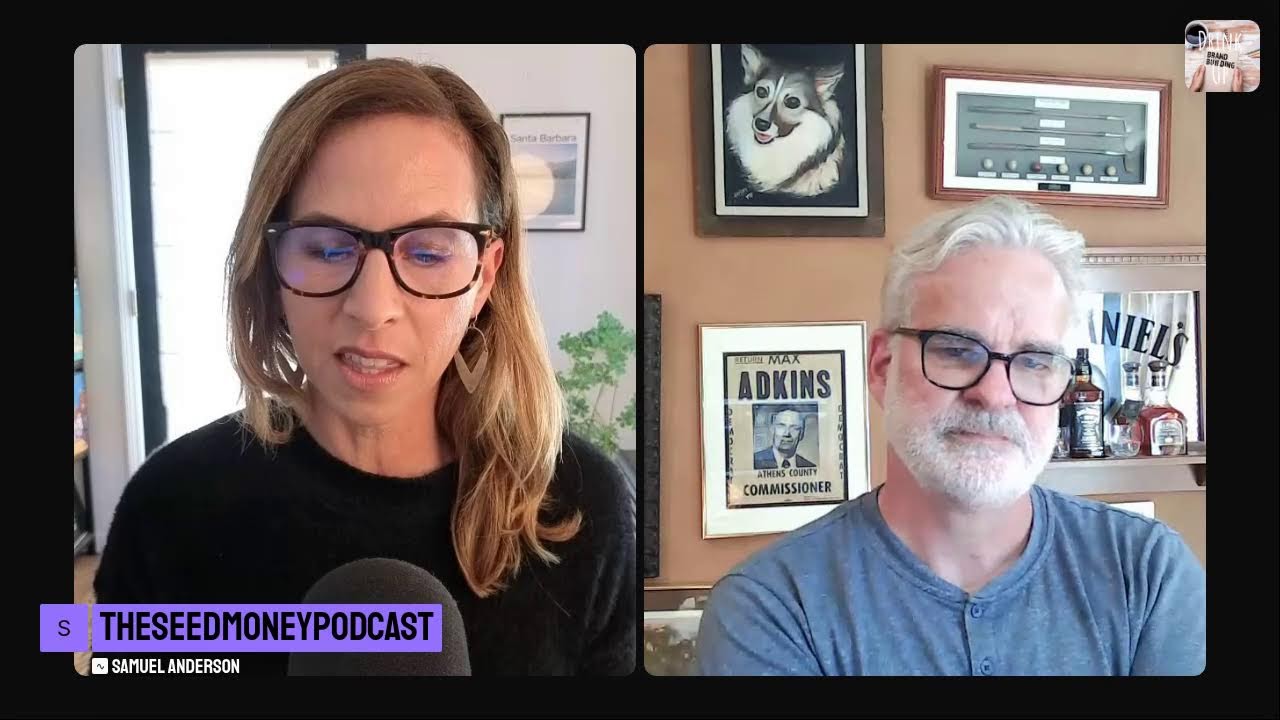
In this 45‑minute live interview, host SPEAKER A chats with Jayla Siciliano, the founder of a low‑/mid‑alcohol spritzer brand that spent a decade navigating product development, co‑packing, distribution, and fundraising before appearing on Shark Tank and securing an investment from Mark Cuban. Jayla recounts how she launched the brand with no industry contacts, burned through personal savings, faced costly bottling mishaps (including a $100 k inventory loss), and ultimately raised $500 k through a lead investor and convertible notes. The Shark Tank appearance acted as a “hail‑mary” that generated sudden demand but also exposed the company to cash‑flow strain and market‑timing challenges, as the hard‑seltzer boom arrived after her brand folded. After closing the beverage business, Jayla pivoted into real‑estate investing, hospitality, and mentoring, launching the Seed Money Podcast to help early‑stage consumer‑product founders navigate fundraising without a Silicon‑Valley network. She shares practical advice: focus fundraising on specific milestones, leverage personal networks first, maintain transparency with investors, and avoid over‑expansion before capital is secured. The conversation also touches on personal health, work‑life balance, and the philosophical view that success and failure are intertwined, concluding with resources for listeners (LinkedIn, Seed Money Podcast, upcoming office hours).
Chapters
After lunch and a little just try to stay awake. It is hump day, right, Jayla?
I've got tea.
Yeah, you got you got tea. That's one of my favorite things to go to. So Jayla Siciliano, did I pronounce your name correctly?
Siciliano.
Siciliano. Okay, say. All right. So a guy from the south trying to pronounce, but welcome to Drink Up. I had the dubious pleasure. to be on your podcast, Seed Talent Podcast. Is that the right name? I think I was on there.
Seed Money.
Seed Money. See, I'm thinking talent, seed money, seed money. And so I've already butchered the start of this. So stick with me for 45 minutes, everybody. Jayla, don't run off on me. But before we get started, I just wanted to call a couple of our sponsors. We always do this. Jay Williams from Freebird. We all love Jay Williams. He gives me free product, so I'm one of the first people to actually talk about his brand. But Jay is blowing up. He's just gotten into Walmart, as an example.
What's the beverage inside?
It's water.
Oh, water. Cool.
And it's called Freebird.
I love the can.
Yeah, and it's called Freebird. You know, Lynyrd Skynyrd, Freebird? Yeah, they did not have a trademark on the name Freebird.
No way.
Yeah, exactly. No way. And he's into NASCAR as well. But hopefully Jay caps, you know, sometimes he'll join us in the thing, but I'm sure he's out trying to sell some water today and continue to expand his empire. And I know that you can appreciate that. Also, I'd like to call my company Bev Assets, my partner Alicia Vargo. Hopefully introduce you to her one day. And then Adam Smith, tardy again, Adam. Uh, but, uh, Adam had, uh, uh, missing one of the best podcasts of the year, uh, with Jayla. But Adam owns Alias Advising and, uh, he's an operations guy. So if you're looking to get the product in the can, find a can, the label that goes on the can, talking to the formulators, the co-packers, you'd want to talk to someone like Adam Smith. And then finally, Rocks Advising with, uh, Ryan Hallerman. They're a group of folks that basically it's like a community of folks that have come together and have a brand looking for co-packing, commercial strategy, money. That group tends to, to help. But with all that being said, all the advertisements are out of the way. We have Jayla. By the way, just real exciting, this is our second Shark Tanker. That have been on the podcast. So we had, uh, Adam Kalanine from Bottle Keepers, which is, uh, he made a product to let you know that basically it was like a bottle that you could take a bottle, not a can, but basically kept it cold. And he developed that, him and his wife, and, uh, he developed several companies since then. But, uh, I think it was one of the top episodes on Shark Tank, but that we're not talking about him today. We're talking about you, and I had the pleasure to be on Seed Money with you, and we were just talking about the journey. I thought we'd just continue our conversation once you tell us a little bit about who you are, you know, and, uh, and, you know, why you want to be on Drink Up and the whole bit. But then I would like to get into the journey of a beverage founder because I'm sure there's a lot of information that you could share with this group. Because one thing you told me was after 10 years you decided to Yep, I did. Right.
Happy to share that story because not enough people share it.
Yeah. So let's, let's, we'll get into that story, but a little bit about, okay, you know, who are you? How do people find you? You know, why DrinkUp and talking to our community?
Yeah. Um, so I think first and foremost, I've always been a product person, you know, way, way back. I started my career in product development. And then I had this brilliant idea to launch a beverage and I thought it'd be so easy after being in product development and design for shoes and bags for 7 years. You know, one beverage, one SKU, that'd be super easy to do. And so I basically gave that a good 10-year run and it was an absolute roller coaster. That's, you know, what landed me on Shark Tank. I went through the whole fundraising process in 2008, which was super fun. And then, you know, I totally, my idea of success success has significantly shifted over the years. And, you know, where I'm at today, I kind of overcorrected after that experience. I went back to corporate for a little while. And then I was like, what am I doing? I don't want to work for anyone else. And I realized, you know, I started that company with this goal of selling it for $100 million and, you know, blah, blah, blah. And I don't even know why. I just thought that's what you were supposed to do. But today, you know, I'm a mom of a 9-year-old. I prioritize, like tonight I'm going to Outrigger. I'm training for a race, um, you know, which is basically like team sport canoeing out on the ocean in Santa Barbara. Uh, we just got back from Fiji. So my life priority at this point is really like travel, exercise, my family.
And your blood pressure is down because you told me your blood pressure was very high when you went to— we'll get in later, but that you had to make a decision For yourself, right? Yeah. So now you're having fun, man. You're just living life, right?
Yeah, living life. You know, I'm still building. I went into a totally different industry, so I still have my own company and got into real estate investing. But yeah, I realized I was killing myself. What was I working those 16-hour days for, killing myself? Um, and so yeah, I've had a big— a couple big shifts and pivots. I've zigzagged, but it's all kind of landed me where I'm at.
You're working 16-hour days? Wait, you know, beverage, man, you have to work that hard. You just find a distributor, right? And, uh, it just magically happens. Or maybe if the distributor returned your message. I think I returned your message, but maybe I didn't. Yeah, I think I do have that email too. I still have that DM, which is— I gotta screenshot that. That's funny.
Yeah, that was like, uh, yeah, like 15 years ago, I think we said, right, that I reached out to you for distribution.
So yeah. And I didn't respond.
Yeah, no, I think you did. And I don't know what happened. I'd have to go back and look.
But yeah, probably a typical distributor move. Hey, you know, Jayla, you know, we have a lot of stuff going on. This happened to a brand, by the way, just so you know. So I have a brand, I'll call them out, Mason Dixon. They did, they'll do 10,000 cases this year in Pennsylvania. And then I will not name the distributor, but the distributor sent a, you know, we've been going back and forth, sent a nice note. Hey, look, it's not you. We're all full up now. I'm like, you're full up. So now, like, you only, like, what's the window to get into distribution? 2027?
That's crazy.
Yeah. Right.
Wow.
So what is— so, so, so where are your journey? So you Fiji, um, and I'm sorry to interrupt. So this is how we roll, by the way.
Yeah. Oh, all good. No, keep it going.
Yeah. You got the 9-year-old, uh, you're in Rigger, something Rigger with, uh, you doing this stuff out in the ocean. Um, but your, your day, what's your day job? Like, what do you, what do you do now?
So my day job is we started investing in vacation rentals. Um, and I ended up building up a management portfolio, one on the East Coast, one on the West Coast. I sold the East Coast portfolio last year. So right now I'm still managing the properties we own as well as manage for other people. I've got it highly automated, so I probably spend about 15 hours a week on that. But it's pretty darn lucrative for, you know, the amount of time and effort and stress. Working on expanding that. And we're, you know, always looking at buying new properties. So I'm always just kind of scouting out. We're developing some land in Vermont, stuff like that. And then, but you know, all of that is great.
I can call you and maybe get a kind of a deal on a vacation rental somewhere.
Yeah, of course. I want to go set up shop and do the podcast in Vermont. Yes, or come out to Santa Barbara. Yeah, it'd be fun in the middle of the—
Oh man, Susan, I told you the story about Susan and I would drive from LA and we would drive up and we would get some wine and we'd sit on the coast. We'd go up the Pacific Coast Highway and we'd go up to Santa Barbara and then, uh, we'd do that, uh, what is it, the, uh, the big parade. They did, uh, summer or winter solstice or something.
Oh, summer solstice. That is my favorite holiday here. It's the best parade ever. Yeah, it's coming up in June. Yeah, super.
I'm inviting myself over. I'm inviting— Susan and I are going to come see you soon.
Yes, please. That'd be awesome.
Yeah.
Um, yeah, so all that is great, but—
So you're, you're, you own property all over the US?
Yeah, but it's— the problem is I'm not really doing much to help people, and I've always And it's not really, you know, it's kind of boring business, right? There's not that much excitement around it. Like, I do enjoy the real estate side, but I always loved that startup environment, but I have no desire right now to start another startup startup. So, and I've always had people asking me for help on how to raise money after Shark Tank. I was mentoring for the Founders Institute years ago. And so, I kind of was like, this is great, but I'm not doing much to give back. So, that's what led me to start the Seed Money Podcast 2 years ago as a way to really help early-stage consumer product entrepreneurs. Because when I was raising money, I always felt like the outsider. I felt like everybody in tech had the secret sauce and understood how, you know, startup fundraising works.
Right.
I didn't live in Silicon Valley. I didn't understand. I didn't have a big network. I didn't have wealthy friends and family. And I felt like such an outsider. And so much of the content out there is from this VC perspective. And I wasted so much time pitching VCs. And so I felt this obligation to come out and like bridge this gap for early-stage CPG brands and entrepreneurs who need funding to grow, but either aren't positioned for VC money or they just don't know where to start. They don't have wealthy friends and family to get started. And so I just felt compelled to help And, you know, shed some light on that.
Are you open for me to introduce you to some folks that kind of need that knowledge base?
For sure. Yeah.
Okay. Yeah. Like I was talking to, you know, my friend in New York and we represent his brand and I won't say his name out of respect, but he's like, I got 3 months worth of runway.
Oh, it's so stressful.
Right. And I'm sure you've been on that path. And I'm like, hey, man, I hear you. I want to help as best I can. We're actually looking at a company because we do like a commercial strategy. We'll do like route to market. But, you know, we're not, we're not the money people. We don't know that world. We can introduce them to people that know that world. But most people, they have limited runway. So maybe we can get into that too before we get into— I mean, I don't know where you want to take the conversation. I know where I want to go is—
Yeah, up to you.
Everybody I talk to is looking for money.
Yeah, whatever you want to cover, I'm happy to. Yeah, I think that's—
Okay, well, let's— so, you know, Cindy comes out with a brand, you know, or Bobby has his brand, right? And they have this ambition and they're going to scale it and sell it to 3 to 5 years. And I think that brands, there's kind of 5 things that happen with the brand. There's the test it phase, there's foundation building, there's actually growth, and then the 4th stage is actually scale. And then the 5th stage, if you ever get there, is to actually sell it, right? And within there, there's about a 93 to 95% failure rate. But everybody needs money somewhere in there. And then the money probably looks different in each one of those stages, I'm assuming, right? So I'm a brand and I just started. How do I— what's the first step to go get money?
Well, I think the first thing is there's no one-size-fits-all way to do it, right? Everybody's situation's different. Here's what I see. I'm going to say what I see people happen and what I— or what I see, you know, people do and what happened and what I did that was kind of a mistake and how I would have done that differently and what I tell people now. So I think you get this idea. Everybody has this like, I need $2 million or I need $500,000, right? That's this like number.
Yeah.
And they've scrambled together a pitch deck, right? Or pay somebody through the nose to do a pitch deck, which you don't need to do anymore.
I've been there, done that with a brand called Vivintus, and we can get into that, by the way.
Yeah, yeah, lots to say on that. But I think people end up trying to raise money for like step 4 and 5 that you're talking about of those 5 steps. And really, you want to start off— I think there are a few companies that scale really fast and really far. And if you get that momentum for whatever reason, who knows, maybe you get some like crazy marketing plug or celebrity endorsement that really gives you a huge boost, like, or something you couldn't have predicted necessarily, right? But you don't want to plan on that, and you don't want to try to raise money for that because everything—
I think that happened to Adam with Bottle Keepers. I think something happened where they got some immediate exposure. I believe him I have to go back and I'll get you— send you the podcast. But I think that happened, like something happened and went viral. I think he posted something on Facebook and all of a sudden, like, oh my God, like they have a thing. And they were lucky a little bit, I guess, right?
Yeah. And that's great. And I think what happens then— and I just spoke with a woman the other day who fell into this same thing— then you start going, oh, the money's going to start just coming in. We're going to start spending like we're a lot bigger than we are. And so, so much of it is almost like raise some money, but spend and budget like you're bootstrapping because that's how you can avoid being in that position of we only have 3 months runway left and we're—
Cash burns real. You need to protect the cash.
Yeah. And it is so hard to do because distributors, people in marketing are telling you, you got to spend, you got to spend, you got to spend, you got to expand. Yeah.
And then you arrive at someone like me. I'm like, yeah, we have boots on the ground, but we We're a retained agency. This is what it's gonna cost. Like, I'm like, it's less than the cost of a dishwasher. But in most, a lot of cases, like it's too expensive for them.
Yeah. And so I think staying focused. So first, you know, I guess if you need some money, look within your own network first, but find out what is the exact amount you need to hit the milestone that's gonna make you more fundable. And the milestone you're trying to hit is something that is going to be like repeatable traction. So not just getting on Whole Foods shelf, it's like—
Yeah.
If I pick one retailer, what will it take to get sell-through consistently? And then use that traction to go raise a bigger round. But I think people try to go too wide. I did it too, too wide, too fast, and spend too much out of the gate. And you just end up like, you know, your options become so limited because you're too, you're under-resourced for what you're trying to do. So I think staying focused, raising money based on the next milestone that you need. And then once you do catch that momentum, then yeah, you can go out and try to push a bigger round. You know, if that's—
Is there a playbook people can get from you in order to do that when they talk to you? Is there a playbook you discuss with your clients to say these are the steps you need to go through? I mean, are you available to have those discussions with folks?
Yeah, I do. So I've, I've got like some freebie things on seedmoneypodcast.com, like a pre-fundraising checklist and stuff like that. And in May, I'm going to launch office hours where I can get on and just start answering because it's really hard to give general advice because everybody's situation is so different, you know.
Right.
And at a certain point, you just need to know, like, here's where I'm at, here's my resources. I have a great network or no, I have no network. What's helped me talk through different options and strategies. So I'm going to open up office hours in May because I feel like I can do all this free content on the podcast, but it's like ultimately everyone's situation is a little bit different.
You know, I love that. You know, we consult and we'll do like, you know, a 30 to 90 day sprint. And it's super inexpensive because you got us like on retainer. Like, I'm like, look, like, yeah, we have a scheduled like weekly meeting, but if you need to call me on Saturday, I'm going to pick up the phone because you're my client. I'm retained. And you got that either 30, 90 days or longer. And some people keep us on for a low retainer just because they need advice. They like need to be advised, hey, I'm going into this distributor, how do I handle this? You know, or I need distribution over here. So we do that work. So I think that's an excellent idea. When you, when you actually come out with it, if you could share it back with us would be great because we'd love to share with our community. Um, and there's certainly people that I was thinking about you today and I was thinking seed talent, I was seed money. But I think people don't know where to go. They're like, I'm trying to raise money, you know? And we've tapped into certain people that, you know, that I think we've talked about and they help. But I think we're going to people that are going to later stage. Like our brand Viventus is, we just need $500,000. That's it. And we're having a hard time finding it.
Yeah.
You know, and there's a story, there's a backstory behind that. But the reality is, I think we all realize that if we want to do it, we got to put our own money in. That's maybe the first round. I don't know if that's true or not.
Yeah, I mean, I did a whole episode on the importance of showing your own skin in the game. Like, if you're not willing to put, you know, some decent risk towards what you're doing, it's really hard to expect other people to do that unless you're at that point where you've got like momentum. But, you know, that's a much farther— like you said, those are further down conversations. Typically, if you're looking for $500,000 under $1 million, you got to have some skin in the game. And it takes just a lot of talking to the right people, you know, which it takes research. Like, it's effort. It's not a quick— it's not a quick process.
Do you have a list of like family offices and all this stuff? And I'm like, I've certainly I mean, you probably know Josh Wan, and I mean, I have people that, you know, that guy knows everybody. I mean, he would do that. But Josh will tell you, I don't come to a cap table for $300 million or less. I mean, he told me that. I'm like, yeah, it was like an eye-opening to me. I'm like, really? I'm like, you don't want to make like a couple million dollars off this deal? This is a great deal. He's like, no, it's not worth this. You know, he was polite and he talked to us because he's my friend, but man, it's just, it's, it's difficult. So what are they— so So people, you have the podcast, you, you're, you have this, you're this global person across the US, you know. Um, but like, let's, let's get into beverages if you don't mind. Can we pivot a little bit?
Yeah.
It's like, like, what are the— so you founded a beverage, you contacted me 15 years ago. Hopefully I responded. I think I did. I can see the DM still, like I said. But like, what were the, what were the things, what were the steps that you took in order to launch this brand all of a sudden? You end up on Shark Tank. Did Shark Tank— was that the defining moment that your brand, like, all of a sudden you've, you've, the light opened up and, and, uh, and the rest is history? Kind of walk us through your journey, kind of, you know, what happened?
Yeah. So, um, I was always really active and healthy, but I also, you know, grew up loving to party and have fun. And I worked for Diesel Footwear and Burton Snowboards, and there was no shortage of drinking. Did you go to San Diego State too?
Is that probably where you went to school?
Oh, at UCSB Santa Barbara. Yeah. So, okay. Um, but yeah, it, you know, it was heavy, heavy drinking environments that I worked in and I was teaching like kickboxing at 6 AM.
And so, you know, I'm partying at 7 PM then, or at the happy hour.
Yeah. Basically like, you know, sleeping 2 hours and going to teach kickboxing really, you know, can't, can't pull that off at this age. That's for sure. Barely pulled it off then. But, you know, I think the non-alcohol thing, I mean, there was a lot of pressure to drink then. There was no like, I'm not drinking tonight. That was not a thing. Or at least maybe I wasn't strong enough to say that, but it wasn't a trend like it is now. And all you had were like the wine coolers of the '80s and then regular wine and alcohol and beer. And I wasn't a beer drinker because I just got like too full. So I started making wine spritzers, like soda water in my white wine, and I could sip on that. I spent a lot of time wakeboarding. I could hang out. And then my guy friends were asking me for a wine spritzer, and I was like, why is there nothing on the market? So this was back in 2004 to '07. And so I saw this gap in the market. Skinny Girl Margarita had just sold, and I was like, I'm going to create this product. This is so needed on the market, you know, and I want this for myself. So I quit my job and then I realized, I was like, oh my God, what did I do? And all my friends and family are like, you have to change.
Can you hold that thought for a minute? I apologize, we're live. I just want to make sure my dog isn't doing something stupid.
Yeah, no worries, no worries. My dog is sleeping behind me.
That's what happens when you go live anyway.
Yeah, go ahead. I just said my dog is back there sleeping behind me. Um, so yeah, so I, you know, I quit the dream job and, um, I had no idea where to start. I had no connections in beverage. I had no clue how distributors worked. I had no idea. So I realized I kind of Bit off more than I could chew, but this like sheer determination was behind me. I had told my friends and family I was going to do this, and I was so determined to do it. So over the course of probably two years, I was like writing a business plan and talking to bottlers and distributors and just trying to talk to people, pick up the phone. And then I realized, wow! I have blown through all my savings. I've cashed in my 401k. I've run up credit cards. Like, what am I doing? You know, this is, uh, like, this is not sustainable. I went back to bartending at night. I was like consulting. I was just doing whatever I could to make ends meet.
So you blew up your entire career in your universe?
Oh yeah, totally blew it up. Yeah, quit the job way too early, but just thought— I thought I'd have it off the ground in like, you know, 6 months to a year, just Totally naive what it actually took. And also, you know, with alcohol, it is easier now, I will say. Then you had— I had to have licensing in all 50, you know, in any state I was going into, even to ship direct. Half the bottlers, they have— you have to have a license to do sparkling. You know, you have to have a license to do below 6% or 6.5%. That falls under FDA guidelines, not, you know, so it was, Figuring out it was— it hadn't been created yet. It was really a new category. So fast forward and I'm like, oh my God, I need to raise money, I guess. Okay, I'm going to figure this out. And I ended up going back to school for my MBA because I was like, I don't know.
You're broke, you have no 401, you've launched this brand. Now you're going to go spend more money to go get your MBA.
Yeah, let me go take out loans.
How much pain do you want in your life? But okay.
Yes. Seriously, we are so ridiculous, the things we do. So, I was like, I need— I don't have a wealthy friends and family network. You know, I grew up middle class, comfortable, but I wasn't gonna go ask my parents for a bunch of money and, you know, my friends and, you know, extended family. So, I was determined through the MBA program to go to every networking event possible and just meet people. And I ended up in a pitch competition. And I ended up, it was like $125,000, $150,000 to figure out how to raise money, which is ridiculous. Nobody should spend that. So all that to say, I finally, after 18 months of pitching investors, I mean hundreds of nos. The things that I had men say to me like, well, I would invest, but if you get pregnant, You know, I'm going to lose my investment. Oh, you wouldn't believe the things people say. And, you know, those things like creep into your subconscious too. Like later I thought, I can't have kids. I have to put everything into my company. You know, it's crazy. The investor feedback creeps in because you put them up on this pedestal. So 18 months later, I found my lead investor, amazing woman. She was the former CEO of Wendy's. She had invested in other beverage companies. And she agreed to be my lead investor and put in $100,000. I think it was $100,000 if I could round out the full $500,000. So I was like, okay, I got my lead investor, I've got my terms. We were doing convertible notes and I went out and found the rest of it and, you know, finally closed that $500,000. It was off to the races. We were ready. The only bottler that would take me at the time was in Michigan. Nobody in California would take us on. So I flew to Michigan.
You mentioned bottlers. So bottlers. So explain that. Is this like you're talking about like the Coca-Cola network? Are you thinking like a, like a co-packer?
Co-packer. Yeah.
Co-packer.
Okay. Got it. Yeah. Okay.
Because I, I work for Coca-Cola, so we'd always refer to the— we didn't refer to distributors. We refer to them as bottlers because we would ship them the, the, the syrup and then they would bottle it. So for all intents and purposes, they're co-packagers.
Yeah, yeah. I mean, well, we would ship all the ingredients there and they were bottling it, so.
Okay.
Yeah. So anyway, I, um, we ran our first production run and the first bottles, you know, start coming off the line had tomato floating in them. They didn't fully clean the lines. I was like, oh my God. So we lost a bunch there. Finally got that cleaned up.
Did they charge you for that, by the way?
Um, not for the bottling, but I lost all the raw materials. You know, it was a lot of raw material. So got that cleaned up. And I can't remember how many cases we ran, but it was a lot. They shipped them back to our warehouse in California and we start shipping to customers and the boxes are showing up soaking wet. The caps are leaking. And I lost $100,000 worth of inventory, which less than there, but their minimums, they were—
No 401. You got your MBA.
Yeah.
You know, you lost $100,000 worth of inventory and you kept going.
Kept going. Well, I had to. I mean, you know, you don't have a choice at that point. Or I didn't feel like I did. So that bottler ended up going out of business 6 months later. I didn't know they were in a downward spiral. They had a lot of issues, you know, going on. So I went back to the bottlers in California. Now that I had a fancy website and a customer, you know, lined up. I found a bottler in Northern California that was willing to take us on. And then I had an advisor who was like, you need to go on Shark Tank. And I'm like, I don't want to go on that show. And now luckily, let me back up a quick second. So through all of this—
Sorry about that. My camera went off.
Yeah, all good. Through all of this, I will say the one thing I did is I was totally honest with my investors. I kept them updated every month. I did board meetings. Like, I didn't hide any of this. I was fully transparent. with the issues, and they ended up reinvesting. And so, I think it's an important lesson to be transparent and keep your investors updated. You know, a lot of entrepreneurs don't do that. They hit problems and they just hide, you know, to some degree. So, don't do that. So, anyway, long story short, I ended up on Shark Tank, got a deal with Mark Cuban. But this was like my Hail Mary, you know, because I was on the verge of going out of business. Hold that thought.
I'm sorry, my dog. I got to get him in here. I would just— All right.
Go for it. Do what you got to do. All good.
So you, you go on Shark Tank.
Yeah, so Shark Tank was really kind of the Hail Mary because at this point we had spent so much money on legal to get licensing for alcohol inventory. So we were, you know, running out of money. But I had gotten into Whole Foods after getting rejected 3 times. I finally got Whole Foods to give us, you know, a test, a local test market.
Was this before Shark Tank or after Shark Tank?
Uh, this was before Shark Tank, right before I was like Had just— when I— when my episode was recorded, we had just shipped in like our first— well, I say shipped, hand-delivered our first cases to our local Whole Foods.
Wow.
And so I went on the show and you know how the show works. Like, you can't ask for that much money if your valuation's in the toilet, right? And so I was pretty honest on the show and I practiced like crazy to prep for the show. And I mean, I was in a really bad spot. So, it was either that or we were basically gonna have to close the doors. So, I was only asking for $150,000, which in the beverage space is like nothing. At this point, I had, you know, raised, I think it was like total $750,000 was in the company. And Mark Cuban's like, my wife would love it. I'll invest. So, he invested and he was way more involved than I thought. And after years of, you know, trying to get distributors and trying to get retailers, Shark Tank airs and all of a sudden everyone's coming to you and wants to carry the product. And we ended up going, you know, too far too fast for the money we had. I was killing myself because I have to like prove, you know, Mark Cuban's like watching. You are really trying. I mean, he had—
Were you on speed dial with Mark Cuban then? Would he call you and say, hey man, what's going on?
Yeah, he was really involved. Yeah, I thought I would never talk to him, but he was actually involved. And I would talk to him, email with him, and he would help and open doors. But he wouldn't do further equity investments. So he was financing inventory runs. We were paying it back. And we had a good few years, but it just— we needed more money to— we were trying to— we did an aluminum bottle, trying to go into Vegas, but there was no shelf space for for this at the grocery store. So we were mixed in with all the wine. Now there's a whole non-alcohol, you know, low alcohol section that people go to. But I was trying to educate the consumer from the main wine section with, you know, 200 wine labels. How do I get them to know what my product is all about?
Just by— So you were too early.
Way too early. Yeah, I think I was 5 to 7 years too early. So the year that I decided to close it up, And it was the most— it was one of the hardest decisions I've ever made in my life. You know, it's not easy. And luckily, my main investor, she just made it so simple. She's like, you're under-resourced. It's not for lack of hard work. Yeah, the category isn't proven and you don't have the resources to educate an industry, an entire customer group. It's very expensive to do that.
Right.
So that year that I closed it up, White Claw launched. And that was really the first one that came out, and they, they really established that category of a like trendier, cool, lighter alcohol option, you know.
Yeah.
A different option from the wine cooler. So had I waited a few more years, might have been a different outcome, but is what it is. You can't always control market timing. That's— there's, there's things that are out there.
Yeah, things happen for a reason. Things happen for a reason too. I mean, you know, it's funny, White Claw. So I was with a distributor, Breakthrough, when they launched, and we represented, uh, Marc Anthony at the time. And I remember they asked for like our forecast for the year. We said something like, yeah, 10,000 cases. I think the first year we ended up doing like 100,000 just in Minneapolis, by the way.
Oh my God, no way.
And I think they do over a million cases a year. I think it's gone down a little bit because of all the different entrances and the whole bit, but We're at a point where we're doing a million cases a year just in Minneapolis, not the whole state of Minnesota. Minneapolis.
Oh my God. Yeah. So when I was meeting with distributors—
I expected that to happen, by the way. What's that?
When I was meeting with buyers and retailers and distributors, they would be like, nobody wants less alcohol. Then everybody was like chugging Jäger and Fireball and, you know, all these things. And they're like, nobody wants less alcohol. Less alcohol.
That's so— now everybody does. That's like the whole market.
Everybody does.
Yeah, it's like, I mean, I mean, you know, it's like, it's like you think it's like every time you open the headlines up, it's like Armageddon.
Yes. Now I know I can't get over now, like, the no alcohol. I was having a hard time selling 6.5%, and now it's like the no alcohol trend is huge. So, um, so yeah, it was, it was pushing a boulder uphill for a long time, and A lot of hard lessons learned, a lot of fun too. But at a certain point, you know, my health was taking a toll, my relationships were taking a toll. And as you know, my bank account was not, you know, seeing any—
Yeah, I've been doing the math in my head. I mean, that's just, it's amazing that you were able to pivot though. And so when you hung up the cleats, so to speak, what was the first pivot? Was it right into the property business or you had a hospitality business, didn't you? Or something like that? Or is that—
well, so I was, um, I decided at that point, okay, we've put off having a family and because of, you know, I didn't think I could do both, which was ridiculous. Um, yeah. So I, I had my son. I took a year off to just like decompress. I sold through our inventory. I wound everything down, which is an extremely painful process, like go through all the stages of grief. You know, it is not fun. It's a lot of soul searching.
Yeah.
A lot of yoga. Like, I don't even know what I'm good at anymore. Like, what— I, I don't even know what the heck can I do.
Yeah.
And, um, so I was like, I just need to get a paycheck for a while. So I went back to a corporate job. Um, I took a job with a winery for like 6 months, and then they went under. There's like so many wineries go under. So then I took a job as a VP of sales and marketing with a music company here in Santa Barbara. And the CEO there was this amazing woman. The founder was very challenging, but the CEO that I reported to, she was amazing. And she really gave me my confidence back. And I really realized how much I learned through that process and how resourceful I was and like all the out of— what a great out-of-the-box thinker. And, you know, I could multitask like you wouldn't believe. And then I realized, like, I don't want to work for someone else. I'm totally capable of running a business. I overcorrected going back to corporate. And, you know, once I got out of the baby fog a little bit more, I was ready to, like, take on a new challenge. And that's when I started the hospitality business and started investing in short-term rentals. So.
That's amazing. You know, it's funny, I think my partner, Alicia Vargo, I told her the other day, I might cry, by the way. But, you know, I lost my job about 4 years ago. It'll be 4 years. And I didn't become an entrepreneur because I wanted to. I became an entrepreneur because I had to. Right. So I have ultimate respect for you and others that just dive in and do it. I'm pretty much risk averse. Like, I wanted the paycheck on the 15th and the 30th. But man, I've been doing this thing for going on 4 years, and it's the most amazing thing. But it's not easy.
Mm-hmm.
You know, and but my, what my partner did, much like your CEO did of the company, She lifted me up and she helped me believe in myself and like my self-worth. And I'm like, I can do this. I have, I have, I have almost 40 years experience to share with people. So I just very much appreciate that. All right. So with the remaining time, we ask the most important question and then we'll ask anything that we didn't cover that you want to cover off with us. But can I ask you a question?
Sure.
It's the most important question.
Okay.
What is the difference between success and failure?
Ooh, the difference between success and failure. I don't think you get one without the other. I think you learn better lessons from failure. I mean, you learn, they might be harder, but they're life-changing lessons that shift your whole, like, person, everything that you are. Successes are fun and they should be celebrated, but the failures are where you're, you know, that's where you grow. And without those, I don't know, I think you don't become as of a full person as you potentially could be. You have to have the failures to be challenged through those situations. So I don't know, that's my answer. No, I love that. Based on real life.
As a follow-up, To that, you obviously shared your journey with us this afternoon, which very much respect it. You know, a lot of people aren't as open about that. I'm very open and appreciate your openness because it's not always rosy, right? So with these, these failures you had along the way and obviously great successes, what keeps you going?
Oh, that's a good question. I mean, I love helping people. That's like really like I love to doing the podcast. I met with 2 founders yesterday who are going through like some really severe challenges and they reached out and, you know, just being able to share like my experience and what got me through those things makes it all feel like life is worth it. So that keeps me going. And I think obviously my family and my son, you know, I just— it's so fun being a mom. He's my best creation, I always say. But yeah, I think it's just, I love creating. I love being challenged. And I love, like, I'm such a lifelong learner. And for me to keep learning, I have to keep being challenged and trying new things. So I have no doubt, like, in 10 years, I could be doing something completely different 5 years from now. And I also love the uncertainty of, I have no idea what I might be doing again in the future.
Who knows?
You know, so that's what keeps me going. It's just like the fun challenges and growth and learning. It just, it keeps life interesting.
Well, you have a lot of positive life energy. I can even feel it coming through the screen towards me. So you're a light of brightness that I think you bring to the world. And, and for the trials and tribulations that you've gone through, you know, you launch a brand, you're $100,000 in the hole before you even begin.
Right.
You know, and then you go, then, you know, after you kind of fast forward, you get your MBA, another $100,000 probably that you put into it. Then you go work for this winery and you're, you're, you cashed in, you know, and then you decide after 10 years of this struggle that you close down the brand and now you're here and you've built a very successful business and you're bringing knowledge to the world. And that's very much appreciated on my part. And hopefully people that I find, you know, this podcast can find you. What didn't we discuss today that, you know, first of all, like, how do people, like, find you? I guess that would be a question. Like, if they want to find you, what's the best way to find you?
LinkedIn is probably where I'm most active these days. So connect with me on LinkedIn.
Okay.
Send me a message. The Seed Money Podcast, if you search that on YouTube or any, you know, podcast platform, I've got tons of great interviews. and tons of strategies. You know, I really try to listen to what challenges people have. And if you have a question, I just started doing this, you know, I'll cover— do an episode covering that topic and background on it. And I just love studying this stuff. So I stay pretty in the loop on kind of what's going on in the world around fundraising. But yeah, LinkedIn is probably where I'm most active. Great.
Okay. And then, uh, how to— like, what didn't we— like, anything you want to leave with the audience, um, today, um, that, that, that we didn't discuss that you would want to maybe convey to everybody?
Yeah, I think that, you know, starting a company is hard, um, and the thing I've learned is like if you can master like holding on to this vision while also remaining a little bit detached from it is such a powerful place to be because you can't always control the outcome of something. But you have to hold that vision in order to keep going. You can't do what we do without having this vision. And if your vision is to be a billionaire and whatever, that's fine too. That's not my vision, but that is fine. So, whatever, if your vision is just to have a lifestyle brand and make half a million a year, that's okay too. Like, it's so easy to get caught in everyone else is doing this, I should be doing that, that should be my goal. But really, like, dig deep and figure out what, like, your personal— what you want your life to look like, and then hold that vision. But, like, at the same time, be detached, because it might not be this venture that gets you there, it might be the next one. But if you just stay focused on, like, that entrepreneurship path. Like, it'll all work out some way, shape, or form. I just— I— and I say that because I never would imagine— have imagined that I'd be doing what I'm doing now, but I'm so, like, happy where I landed, you know? So it's just interesting how life works out.
I love that. I always use the word destination. You got to know where you're going in order to get there, and then you got to have a map, and that map might change along the way. Like you kind of said, it's like I, I don't, you know, it's funny. I get up every day and, and I don't wanna sound like I'm Forrest Gump, but it is like a box of chocolates. You don't know what you're gonna get today. Mm-hmm. I mean, at noon I could be being fired by a client. At 2 o'clock I've signed up 3 clients.
It's like, you know, highest of highs, lowest of lows every day. Yeah. What's that? Entrepreneurship, highest of highs and lowest of lows every day.
Yeah, it's, it's true. But you gotta, you gotta jump in. It's funny. You know, I don't know if you've met Josh. I think I mentioned Josh Wan, but always I call him out occasionally. But I remember when I started this journey, the first person I called was Josh Wan. I mean, I knew he was an entrepreneur. He founded Forest Brands. He developed, you know, beverage brands, you know, and now he's like, this is Founderland. Are you familiar with Founderland?
No.
You should go participate in Founderland. Just Google it and I'm happy to connect you up with Josh, but they're selling tickets right now. It happens like in October. down in like Los Angeles.
Oh cool.
And they bring all these— the people that you want to go talk to, they're there. Oh fun.
Yeah, I'll check it out.
Yeah, so you should just reach out. I'll make an introduction to Josh, but you should reach out. But, uh, you know, I don't even— I lost my train of thought. But, you know, it's, you know— but he told me, he said, uh, this is what it is. He goes, you got to be willing to play in the mud.
Yeah. Oh, that's—
yeah, great point. I'm like, okay. I'm, I'm, I'm ready. I'm mud ready. And there's no safety net. I mean, it's like, you know, there, there isn't because you don't know if there's like a $100,000 deal that closes or whatever. But I'm learning a lot. And this was, this was so awesome. I'd ask you to remain on the line with me. You probably know how this works. We got to make sure everything downloads.
Yeah.
And I want to thank everybody that joined us today. Um, this will be a podcast in the near future. I'll probably move this one up in the line because I just love it. And I'm going to do like you do. I'm going to do a little newsletter or whatever, and I'm going to use your person to help me go do this. But this was great.
Yeah.
Uh, you can find Jayla, uh, the Seed Money Podcast. You can find her on LinkedIn as well. Um, reach out to me if you have been struggling to find her. We very much appreciate your participation with us on Drink Up. It was fun. And thanks for joining us on hump day.
Yeah, thanks for having me. And thanks for doing what you do. I think your service can help a lot of people avoid a lot of mistakes that they can be making on their own. It's tough. So having good people around you who know the industry is important.
Yeah, I appreciate that. We were— you know, I tell a lot of founders, I'm like, you're not ready for us yet. And they go, what do you mean? I said, you know what, the best thing you can do is go in the market like this. I'll just tell you a story quick. It was India, and India founded a whiskey brand. I said, India, the best thing you can do is move to Houston and you actually build your brand yourself the first year. Go find 100 accounts. And then after you get 100 accounts, when you're ready to actually in a growth phase, that's when you should hire me in the growth phase.
That makes sense. Yeah.
Yeah.
Love it.
Well, thank you.
Happy Wednesday. Thank you. Bye. Bye.
More from Samuel





He Sold Pickle Shots Out Of His Trunk. Now He Runs The Co-Packer That Won't Bury You In MOQs.






What market do you think gets overlooked most? #Toronto #BrandStrategy #Marketing