Welcome to our live show!
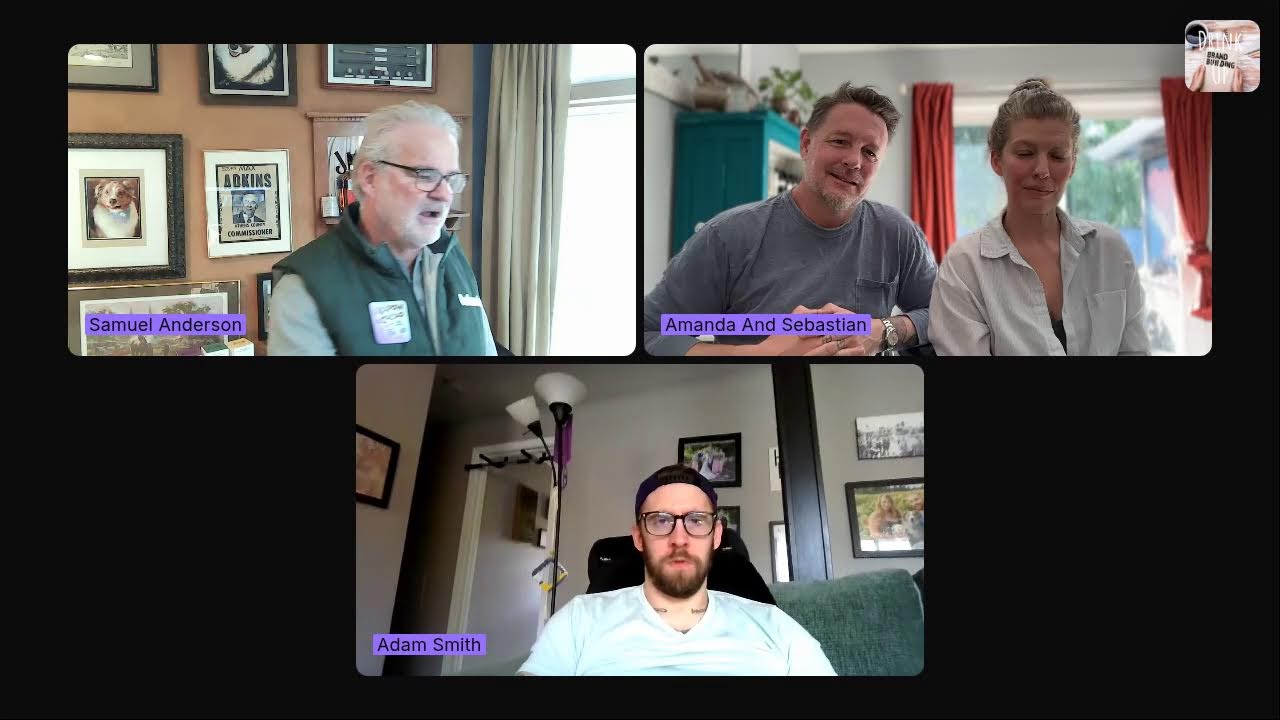
Amanda and Sebastian founded Balaveda, an adaptogenic shot brand, after leaving NYC for a 15-acre farm in Nashville. They pivoted from smoothies to shelf-stable immunity and energy shots with ashwagandha and cordyceps, priced at $39-40 for a 12-pack, and are expanding from 250 to potentially 8,000 U.S. stores.
Chapters
Cast this Saturday. For those of you that decide to take your Saturday, Saturday and join us, we very much appreciate it. Before we get started, just want to call out a few of our sponsors. Always Jay Williams, thanks for the text messaging last weekend in Arizona at the NASCAR event. I'm out of Freebird, but Jay, thanks for your, your sponsorship of us as always. And then Adam, thank you with Alias Advising. We should, we should probably put a logo up of Alias Advising here at some point. I can never pronounce it right. And then Alicia Vargo, thanks for the sponsorship of Bev Assets. And then why don't you call out Ryan, our friend there, Adam?
Yeah. Shout out to Ryan Halliman and On the Rocks Advisors. I was on the phone with Ryan for 2 and a half hours yesterday.
Well, there you go. So, so he sounds like he said start sponsoring us on his, uh, podcast would be, uh, would be a good thing. But, uh, welcome Amanda and Sebastian. We must be related because my mom's maiden name is Smith. I didn't tell you that, but, uh, welcome to the, uh, podcast. We really very much appreciate y'all coming on. It's been a while. I know I started talking to Samantha, man, I think it's been about 6 months ago and we finally made this happen. So I'm excited to have you both on. So welcome.
No, we're very happy to be here. Thank you, Uncle Sam.
I get that with the name Sam, I get a lot. So we just want to get into it today. Why would you, why would you ever want to come on with a podcast with Adam Smith and I called Drink Up? Maybe tell us that and then a little bit about yourself and then we can get into it today.
Yeah, well, I gotta be honest, you know, as we are building our company, um, you know, one of the things that we found to be the most difficult really in the very beginning is getting our name out there. Um, I think for any young brand who is just starting out, um, the name of the game is like get people to know who you are. And so this represented a great opportunity to obviously meet the both of you and, and get our name and, and our mission out in front of your audience.
That's great, that's great. And then, uh, so Wisconsin roots?
Kind of, kind of Wisconsin roots. So, uh, we have a lot of family up there, but we actually, uh, were living in New York City when we first really came up with, um, this whole idea around like food being medicine and food sovereignty, right? So why should you only be able to afford good, healthy, amazing foods that are great for the body if you are a multimillionaire, right? So, and this was really the start of our mission, but it wasn't really the start of the beverage company.
Got it.
And so, yeah.
And so I'm like, I'm rummaging through the box as you're talking, by the way. I'm thinking, okay, this is good for you. I'm gonna get out my box this afternoon and start making all kinds of stuff today.
Yeah, so, uh, our story really started, um, when we moved to Nashville. So we got pregnant with our third, and, uh, Amanda had said, you know, we, we really don't want to raise 3 kids in New York City, and, um, And I was thinking, oh, this is great. I mean, this is such an opportunity to move someplace sexy, like let's go to Paris or let's go to, you know. And she's like, no, no, I got a better idea. Let's go to Nashville. And I was like, I was like, really? Like Nashville? That ended up being one of the best things to ever happen for us. So we went to Nashville and my career as a photographer and director exploded. I ended up shooting a lot of celebrities down there and getting a lot of work traveling. And so, but I think the traveling part really is where our story actually starts.
Yeah, so we kind of did the opposite of what we had in New York City, and we bought a 15-acre farm. And we were like, let's raise—
Nashville?
Yeah.
Oh, wow.
So we were like, let's just raise our kids on a farm and they can learn where their food comes from and all this stuff. And so we had, um, A dozen sheep and 60 chickens or 90 chickens or something like that, and ducks and geese and all this land and, um, growing all kinds of stuff. And it was great. I loved it. Um, but then, like he said, his career took off and he really started— I mean, he was traveling 250 days a year. Oh, good Lord. Um, so I was forced to. I had 3 young kids, this— all this farm to take care of and responsibility. And, um, what began to happen was that I obviously started to backburner myself, my health. It was kind of survival mode. And I started to develop a lot of, um, uncomfortable physical symptoms. Like, I wasn't sleeping, I wasn't I had anxiety, I was very stressed constantly, and just felt generally horrible. I was living off of, like, I think I was drinking at one point, like, 5 cups of coffee a day just to sustain.
Oh, wow.
And I knew that that had to change. Like, I was Slowly just fading away.
I'm looking at all these, like, these, like, the adaptogens that you— I'm just looking at all these. So I'm gonna have to get into this. You can't sleep, you're drinking coffee, your husband's left you for 250 days a year.
Yeah.
By the way, my wife needs to talk to you because I was the same way back in the day. I would get on the road on Monday and come back on Thursday, like, what happened? She goes, a lot.
Yeah, it's a— it's actually, you know, it's a really common story.
Yeah.
And a lot of women do find it very relatable. Um, so what I did was a lot of research and found adaptogens, which you just brought up, Sam. And adaptogens, uh, saved my life.
Yeah, so much so that I had come back from one of my trips and I saw Amanda as I walked through the door and I was like, wow, I mean, this is not, not the person I left, right? She looked confident, she was glowing, she seemed very happy, very healthy. And I was like, what happened when I was gone?
Wow, that's amazing. So I mean, I'm looking at 1, 2, 3, 4, 5, 6. I know you probably have more now. But, uh, which one basically changed you, or all of them, or a combination of?
Well, actually, we started— I started by putting all the adaptogens in my smoothies, my daily smoothies.
Oh, and smoothies with this?
Well, Sam, the story started with— we actually launched with smoothies, not shots. Okay, so yeah, it was a pivot. But, um, what had happened was we, we started with our smoothies. They were great. We went out to San Diego to launch them, um, and it went amazing. Every store said yes. Every, you know, they were like, you guys have the next big thing. This is amazing. Let's get it in the stores and set up demos and all of this, right, Adam? You know the story of how that goes. And then—
Mm-hmm.
We were getting ready to start all our demos and COVID locked down.
Oh.
So we were not allowed in the stores. And all the stores that had placed orders canceled them because they were like, you know what, we're not going to take any new products right now. We can't focus on that. We need to stock toilet paper and Rice, beans, flour, all the above, right? So we're sitting in our garage in San Diego and we've got these refrigerators full of smoothies and we're crying. And then we're like, what do we do?
Like, yeah. So we start going through this list of like, all right, adaptogens. We know that they help the body. They know that the body's great equalizer as well, right? And they can bring you into homeostasis, but outside of that, what can they do? And so Amanda started listing these things. Well, they're great for like heart health and liver health, and they can give you energy, and they help with immunity. And it was that immunity right there that really made us stop in our tracks. And we decided that night after we had that last store canceled that we are going to start making immunity shots.
And so we destroy all your product in your garage? I'm just curious.
What? Say, say again, please.
See all the smoothies in the garage? Did you have to just destroy all that?
Yeah, we drank so much.
We drank as much as we could, and then we cried while we dumped the rest.
Yeah.
Oh my gosh, I bet your neighbors don't have a super long shelf life.
Yeah, they were HPP'd, so there was like a 3-month shelf life on them.
Oh.
And in that 3 months, I don't know, would we have like 5, 6 smoothies a day?
Yeah, it's like breakfast, lunch.
Oh my God.
It probably really helped us mitigate the stress of having them all over.
Your vitamin C or whatever it was was just through the roof, right? Many thousands of times.
We were so happy, but sad.
You can make the argument. I've met with brands that basically was supposed to help with nitric oxide with, you know, and help you fight COVID.
You could have come up with like a COVID message. Hey, drink our smoothie.
is this going to help you prevent COVID? Actually, immunity does, by the way. So if you help your immune system, you know, anyway.
Yeah, well, I think the thing is with the stores though is they knew that the education piece behind adaptogens was just massive. You know, we were one of the very first adopters of adaptogens in a beverage. Um, I think the only one before us was Rebel, maybe.
Rebel, I think.
Rebel or Remedy, one of those. And so, I mean, we were literally like pioneering a, a, a market, or I'm sorry, category that was so brand new that nobody knew what they were. So if you think about it, like, let's say kombucha, right? So 10 years ago, nobody knew what a kombucha was, right? You couldn't find them anywhere except for like Jimbo's or, you know, these specialty stores, right?
Now you can get them at the gas station.
Yeah, now you get them at gas stations. So—
Adaptogens basically did that, right?
Yeah, so adaptogens is going through that same thing right now where, I mean, they've been around for 5,000 years, but, um, they're just now starting to, you know, find their time in the, in, in the sunshine, you know, where people are starting to say, oh, like, what are these things? You know, like, I've heard this, you know, tell me more about it. People are very interested in it. And so this puts us in a great position to be able to now sort of educate about the adaptogens, but also with the shots that we rolled out, you know, there was already category definers in there that paved the way for us. So like, we have a part of our line is an immunity line, right? So we have immunity shot. Everyone knew what an immunity shot was, right? So there was no education behind that. The only thing we had to do is then sort of follow up with like, Oh, but this is what makes us different. So we're using these and this is how it works on the body, right? We also have an energy category as well, which I'll say I think that we have the healthiest energy drink on the market right now. And I like to, I like to say that I believe our energy drinks, when you drink them, you're healthier after you've drank them than before. And I don't think there's any other energy shot on the market or energy drink on the market that you can say that.
Can we step back a little bit? So when I first started talking to Samantha and Amanda, I believe I have 6 adaptogens and then I have this is what you sent me, but you have much more than that now?
We have one additional shot in that category. We wanted to have 4 energy shots. And then we have 2 new powders that are rolling out right now. And Amanda can tell you about the powders.
They haven't actually launched yet. They're getting ready to launch.
So So I'm curious, from, uh, can you guys hear me okay? I'm having connection issues.
Yeah, you stopped for a minute. Are you back on now? Are you recording?
I think so.
Can you see— is it saying uploading on your top right of your screen? Okay, good. That's happened before too, Amanda and Sebastian. We've— it runs live fine, but to go back, I, I did a whole podcast and I was like invisible.
Oh my gosh.
I mean, I went back to do it, not during the live broadcast because we stream live on YouTube, Facebook, LinkedIn, TikTok, Substack. So you're— the world is seeing you right now, just to let you know.
So you're like the John Cena of podcasts, man.
I mean, you're— I mean, you're the one that's the producer, director, and stuff like that. But no, not quite. We got about 5 followers, so we're doing really good.
So, so I gotta— Cogs, I know you're out there listening. You gotta hit us up in the LinkedIn chat, man. I can only— I can only track so many message platforms. He's sending me direct LinkedIn messages, and I'm trying to check as That's why my eyes keep darting around. I'm trying to check 6 different spots. So first, big step back for everybody that's listening, which is a fair question, Cogs. What's the brand name? What's the overall brand name?
The brand name is Balaveda.
Balaveda. And what was the impetus or why that name and not a different name?
Valavera is Sanskrit and it means the wisdom of vitality. And adaptogens help you feel that vitality. Adaptogens are herbs of longevity and they're in every single one of our products. And so, yeah, that's why we named it that.
Very cool. And so you mentioned you've got the You've got the shots, you've got the powder— singular for now, plural coming soon.
Yeah.
You mentioned you transitioned from smoothies, so, so how long did the transition from smoothies to shots take, and how long did the, the creation of the powders take, and how long have those things kind of been in existence up to now?
Yeah, so, you know, we've been running on this, this saying that everything costs twice as much and takes twice as long, right? So when we started this, so we— when we started the smoothies, I think it took us maybe a year and a half really to get everything just perfect. I mean, we were extremely particular. And then—
Sure.
When we launched the—
Right, we started working on those in 2018.
So yeah, okay. And so when we transitioned to the shots, we thought, oh man, we got this now, we know what we're doing, you know.
But still takes time. Getting something from the kitchen to the shelf is usually around 2 years.
And so, but we ended up knocking it out within, I think, 9 to 10 months on that. So, um, Yeah. We really, as soon as we decided we were gonna do that, we, I mean, we jumped right in the kitchen, we started working on it. So Amanda has, she formulates all of our stuff. And so, you know, we had just 2 conditions. One is the efficacy had to be there. I mean, it has to do what we say it's gonna do. Otherwise, it's, looks like, you know, a woo-woo, or looks like, you know, we're trying to pull the wool over somebody's eyes. And 2, it has to, it has to taste great. So, and that was, that was my, you know, because so many times I think like healthy, a lot of people assume healthy isn't going to taste great.
Sure.
You know, it's just half the time, I mean, I drink stuff, take stuff all the time that I'm like, this makes, this is awful. But you know it's good for you, right? So you're like, I'll just suck it up, right?
Right.
And so, um, so those were our really our 2 conditions. Um, oh, and that— well, actually there's 3, and we had to go in glass. Um, you know, we are by nature, like, we are a family that like surfs, we love the beach, we love beach culture, and we really don't like garbage in our waters. And so—
Well, there's a— the, the plastics are getting in people's brains, by the way.
Yeah, yeah. I mean, there's that too, endocrine disruptors. So You know, we knew that we wanted to go in glass, so I think that we've created a high-end boutique product that's disguised as affordable, if that makes sense.
Totally. No, I want to touch on that here in a second. So, so before I get to the price, because I do, I want to get to that, and I have an example, and I won't, I won't speak ill of your competitors by name, I'll just do it generally, uh, from a From a, uh, supply chain standpoint, I guess. Um, and I'm trying to poke around on the website, my computer's not liking that I'm trying to multitask. Um, are these, you know, uh, ambient shelf stable? Are they cold chained? Did you guys have kind of a moment of inflection where you had to decide which route you wanted to go? Because I know from a formulation standpoint, that can oftentimes be a— just a challenging conversation, right, of which, which route you want to take.
Yeah, absolutely.
Yeah, that was—
Well, we knew we couldn't continue to HPP, um, because that's not a process you can do in glass.
What's HPP?
High-pressure processing. And so it breaks glass because the pressure is so high. You can only do it in plastic. And so we knew we needed to pivot away from that because we, we had our hearts set on glass. I had my heart set on glass. So, uh, sure. From a formulation standpoint, yeah, you, when you're formulating, Adam, you have to back into so many things. There's probably, I have a list of about 20 to 30 things that I have to, um, work backwards towards. Whether it's, you know, pH, sustainability, you know, shelf stability, color, flavor, efficacy. I mean, the list goes on. So there's a lot of things that are factored in that no one would ever know that picked this up on the shelf what actually went into that.
So.
Yeah.
So for the the current products are— go ahead.
Oh, I'm sorry. So to answer your— to finish out answering your question is, yeah, so they're shelf stable up to 15 months. You know, we have not done a— we've done a validation study up to 15 months, and so we feel very comfortable with that. Realistically, we probably could go 2 years on that. But, you know, then that starts to affect things like taste, color, and so forth. And so, you know, but we move product fast enough that 14 months is more than enough for us.
Yeah, no, that's— I, I asked because I, I assumed I knew the answer, but you guys are, are, you know, just several little nuggets here that, that— I mean, you said it before we got on, either, either, you know, Things you've learned by doing it wrong the first time, or, you know, just trial and error, whatever, you know, however you want to say it, right? Um, stuff that a lot of people don't— as somebody for like me who works in mostly ready-to-drink beverage, so 12-ounce cans, 8.4-ounce, a lot of aluminum, a lot of glass, but, but single serving, 12-ounce, 16-ounce, that kind of thing. Um, you know, I had a group the other day, hey, we have an idea, we want to be to market in 6 weeks. No, no, not gonna happen. Um, like, we can go quick, but not that quick.
Um, I'm working on the brand that we have a 24-month plan, by the way, right? Yeah, 24 months. We've started now, and he's bringing it in from, uh, uh, Beirut, Lebanon, believe it or not.
But anyway, well, and that's, you know, so there's that. There's, you know, Amanda, to your, to your call out on, um, I think the, the And it's funny, I had drinks with a friend last night and I told him some of this stuff, it's difficult for me to, to remember how I thought about things before I knew the industry, right?
Yeah.
So like, like pH, right? If I try and think back to, you know, what did 22-year-old Adam know about pH? I knew it existed. I knew it had something to do with water. Uh, That's probably about the extent of it, right? But doing what I do now, to your exact point, right? It's like, well, okay, like, are you above or below about 4.5? Even if you're below 4.5, are you below 4.1? There's shelf stability and micro reasons for that. If you're below a 3 and you're super acidic, well, you know, if you're in aluminum, that still might be too acidic. You need a special liner. Glass is more robust. If you're over a 4.6, you're probably talking coffees or teas or mid-range. Like, the list just goes on.
All right, so you can tell Adam's He's geeking out right now.
Right.
I love it.
So the question that comes from all that, kind of flipping it from, you know, the granularity of formulas to what you mentioned on affordability, right? A competitor who shall remain nameless, right? Their MSRP, their regular price for a 30-serving packet of, for example, their sort of Uh, coffee alternative morning kind of mushroom powder beverage is $65.
Wow.
Yours is not that, and I'm gonna let you explain what it is. But the question that comes with it is—
The price out there just now, I think, right? Correctly.
The question that comes with it is—
What's the D2C price? Is that your question? Sorry, interrupted.
You're good.
Uh, you know, if you guys want to share your, your D2C price for like your, your, um, Kapow Cacao and how you are able to keep that affordable.
We're not greedy. Yeah.
Yeah. I mean, that's—
Good answer.
That's it, man.
I mean, we really want this in people's hands.
Okay. So I will tell you, you know, from the very, very beginning, and we had this conversation is, The, the money isn't important to us. It really isn't, man. You know, like, if we never made a penny from this, we would be okay with that. You know, the most important thing is like, let's get like healthy products into people's hands. So in reality, like—
Disrupt the market, you know what I mean? Like creating, creating these energy shots that are super healthy, organic, in glass. adaptogenic. I mean, there's nothing really out there like that. And so we really wanted to give people a choice. Like when you walk into a gas station or 7-Eleven or something like that, you don't really have a choice. It's like, do you want garbage or do you want garbage? Or it's like—
I have to introduce you to Tina, who owns Tina's Organic Vodka, Amanda and Sebastian.
Yeah, I'd love that.
Mission about, um, and forgive me for not knowing the term she talked about, I'll email it to you, but she's on a mission to actually have truth in labeling and have really good ingredients in what's being sold to consumers because she's saying people are getting poisoned.
That's right.
Yeah, I mean, we want to be the gold standard of what energy drinks are measured against. And so with the powder, since we brought that up first, or since you brought that up first, you know, The thing is, yeah, I mean, you know, we use really high-end ingredients and it's not, it's not cheap. But we choose really as a company to take a hit on our margin.
Sure.
So we can get like a good, healthy product out there. Yeah, I mean, we could charge $60 for that. But like, I don't feel like—
We like to sleep at night.
Yeah, I wouldn't, I really wouldn't feel good about that. And this comes back to our food sovereignty.
Yeah.
You know, mission where let's get healthy products into people's hands and, you know, make it affordable. Make it affordable.
I'm gonna find— before we get off the podcast today, I'm gonna find that term. But I was looking, uh, so I'm literally gonna make my— so I do teas in the morning, so I'll probably add this to my tea. I'll say you can do that, but this does— this has 6 adaptogens in it.
Yeah.
Which is amazing. Uh, uh, Reshi supports body systems, cellular support. I'm gonna butcher this. I'm Amalaki. Amalaki.
Amalaki. Very good.
High oxidants, strengthens immune system, gently removing toxins and vitamin C. What's the Astra? Here, why don't you take us through this?
Astragalus.
Okay. And what does that do?
So astragalus is like Uh, it helps boost white blood cells in your body, so it's immune defense.
Caress, you hearing that?
Hmm, yeah, that's fair. Yeah, our, uh, our producer who's having some technical difficulties, Caress, uh, her daughter, uh, Rhi, who I love dearly, unfortunately has some, um, autoimmune issues. She's had them for years, but, uh, yeah, could be, could be something worth looking into, even if it's just a, you know, what do I want to say, even if it's just a, uh, an at-home way to assist with, you know, everything you're doing at the hospital.
I need ashwagandha for stress.
Yeah, ashwagandha is amazing for stress, and it's kind of like the adaptogen when you think of like when you're tired but wired. like you're exhausted but you can't sleep because you can't shut your mind down, um, which—
oh, okay—
in today's world kind of feels like everybody. Um, ashwagandha is a really good, uh, use for that.
Alicia, you need to listen. She'll say, yep, I had my 3 AM ideas, and I'll get up about 5 AM and I'll see about 30 emails from her. I'm like, oh man, you did have some ideas. So that'll slow your mind down then.
Let me stop you to just It just calms, it just calms your nervous system so you can, um, and that was a big, a big one for me when Seb was, was working so much and traveling so much, is that that's where I was at.
Okay.
And so it really just calms your nervous system to the point where you can— the stresses don't go away, but you can handle them better.
Um, and then licorice, is it licorice?
Yeah, licorice is like a great synergizer, so it brings them all together. Adaptogens really work, uh, great together. The kind of the more you have, the better they work, and the longer you use them, the more they, you know, they increase their efficacy. So, uh, yeah, licorice is just a really great, like, pulls it all together.
Yeah, but I will say, for those people that don't like licorice, you don't taste it in the—
Oh yeah. It doesn't taste like it.
It's gonna be my first question.
Yeah, and I've been talking to my friend David over at Golden Eagle Partners and Skunk Works. He talks about cordyceps. That's like a thing now, right?
Yeah.
It's like there's many— are there like— there's like a lot— there's more— there's a lot of different ones, or how does that work? What are cordyceps?
Cordyceps are mushrooms.
Okay.
Um, there's a couple mushrooms that are adaptogens. So adaptogens, there's not a lot of them. There's not a lot of proven adaptogens. I think a lot of people claim that, you know, oh, turmeric's an adaptogen. Well, not technically. It's not on the list. It hasn't made the list quite yet.
Right.
So to be an adaptogen, basically you have to meet 3 criteria, and that's you have to have a nonspecific response in the body, meaning like You're good for everything.
Okay.
Not just this one thing. You're good for everything. 2, it has to have like a harmonizing effect, a normalizing effect. So if you are, let's say, if you have anxiety, it brings you down. If you have depression, it brings you up. It normalizes, it creates homeostasis, basically. And 3, it has to be non-toxic. So you can consume as much of it as you want and you're not going to kill yourself or end up in the hospital.
So I can have this whole thing today and I'm okay?
Yeah, I mean, your poop's gonna look funny, but that's it.
Yeah, yeah, I definitely have, uh, we definitely have customers that drink 2, 3 cups of this a day.
Yeah, so the one thing about cordyceps, and this is what, what This is why I love that we use it, is it's great for athletes because cordyceps itself actually boosts your VO2 max by 13%. Oh, and so this is why we use it in our energy shots.
Is there nitric oxide in it? Does it convert to nitric oxide or anything like that?
Or I don't know the sciencey part, I just know the—
It frees up energy is what it does.
There you go. She knows the sciencey part. There you go.
Yeah. So it, it's, it's not necessarily like an energy booster. It's like an energy freer. And so that's why runners just love it.
So, so Cokes asked a question and you guys mentioned it too, as far as like the gas station example, um, uh, whether it's from a, whatever route you want to take, whether it's, um, price or taste or feeling you get or all of the above. Um, Cog's asked the question of, you know, how would you— if somebody were asking you for the elevator pitch on how is, uh, the Balabeda shots, how are they different than like a 5-Hour Energy?
Oh God, go for me. Oh man, this is really a 2-hour, uh, pitch, but, um, he said elevator, you've got 90 seconds. All right, 90 seconds. All right, so first off, take everything that you know about 5-Hour Energy, let's say, and do the complete opposite, right? And that really is, is your basic definition of why it's different. So first off, you know, we're not using anything in there that is unnatural. We're—
Very transparent on our label, and you can read all the ingredients and pronounce them.
Yeah, everything's organic. You know, we have a health-first mission with all of our beverages. We are— I— we're not using synthetic anything to make it taste better. We're not hiding. And now, you know, I'm not slamming 5-Hour Energy because they have a lot of lawyers.
Sure.
You know, I mean, we're not fighting the FDA to keep our ingredients or formulas from, you know what I mean? Like, you know, like what you see is what you get with us. And, you know, like with some of our drinks, I'll be honest, our, our, um, you know, our Tropic Rush, which is a matcha, pineapple, mint, and cordyceps drink, right?
Yeah.
So this is a 90 milligram energy shot. Right? Um, well, it's 90 milligrams of green coffee bean extract. Uh, as you can see, I mean, it's a little brown, right? So it's not that pretty of a color.
Which one is that one? That's the green one here? This one?
Yeah, yeah. So, but the thing is, like, it's super tasty. Um, and yeah, we could in formulation, you know, use like added colors and things really to brighten it up. And, you know, but Like, why, you know?
Yeah.
Why do that? I mean—
I found the term, I found the term, by the way, Sebastian, it's called the MAHA movement, uh, Make America Healthy Again. Have you heard about the MAHA movement?
I have.
Are you guys part of the MAHA movement? Do you want to be part of the MAHA movement, or?
No, I mean, we were doing this before MAHA, so.
There you go.
I don't know, we just—
Do I have to get a red hat?
Oh God, no, there's no— this is, this is Maha movement. But, uh, yeah, I just, uh, I mean, it's, uh, it's about truth and labeling and what's in it. Like, because I'd love to see that you didn't put that stuff in here.
Yeah, I think we just kind of naturally fell into— I mean, the collective consciousness is moving that way anyway. I think they want some healthier options, they want transparency, they want to know what's going in their body, they want to know why they're feeling like crap. So like, um, we just by proxy kind of fell into that because that was what we wanted. So yeah.
I like truth in labeling. I mean, you look— and I have no idea, and we always get into— because I was looking at the back of what's in your, in your product, right? And it looks all natural on the back here. There's nothing that would be bad for you in this product. But sometimes they put filler in this stuff There's no filler in here.
No, no fillers.
Well, I think it's, you know, and I'd be curious, you know, Amanda and Sebastian, to, to hear your perspective on this. But, you know, the, the story I tell folks all the time, and I'm not speaking ill of consumers, I'm not speaking ill of big cereal, which is who this story is based around, right? But I talked to, to early stage, like kind of day one style brand owners all the time. Who will talk about, um, the, the color or the, the visual sensory component of their product, right? And they'll feel a certain way about it. And I'll say, look, it's all about how you frame it for people, right? And they'll go, okay. And I'm like, here's what I mean by this. It was like 10, 12 years ago, General Mills, Kellogg, Post, one of them, forget who, might have been a few of them. Um, there was kind of this groundswell then as well of, of artificial colorings in cereals, because we all know that cereals are neon colored, right?
Did Froot Loops have artificial coloring in it?
Do you think? Uh, and so they took the colors out, right? And then the cereal looked like you would expect it to when you take the artificial coloring out, right? Like it looked a little more gray, a little more beige, a little more just grain-colored, right? Whatever you want to call it. And sales plummeted because people weren't— they didn't want something that looked, you know, more bland, right? And so they put the colors back in. And I find that story fascinating because to exactly what you just said, I think, you know, 10 years, 12 years, whatever it's been, the, the conversation has proceeded and now people are understanding, oh, like Stuff's not supposed to be neon pink for 10 years, and that's okay, right? Like, it browning over time doesn't mean that it's bad or wrong. In fact, it actually probably means the opposite. Now, depending on how it was preserved, make your decision accordingly, right? But what's been your experience with your product and your consumers? I'd just be super curious to hear, like, what your— What your experience has been there.
Yeah, so I think besides the Tropic Rush being a little bit more on the, um, brown side— I guess it's brown— um, like, I think that we haven't had any issues as far as people, you know, with the coloring, uh, um, of our beverages, right? So, but we also know that, like, we wanted people to see the juice in there. Okay, we want— that's why another reason why we use glass, we want them to see the product.
Yeah.
We want them to, you know, be able to know, like, that that's what they're drinking. Like, we're not trying to hide anything. So, but the sort of to your point with the coloring and things like that, we also understand that that's incredibly important. I mean, you know, I mean, if you see Froot Loops on the shelf and it has— it's the one with all the color and you see the Froot Loops and it's a picture with all of it looking gray and, you know, beigey, you're probably going to gravitate towards the color.
Yeah, people are visual buyers, but that's one of the reasons that like our labels look so bright and vibrant and interesting and totally, um, exciting colors.
You just named this. Which one was the— each one of these has a name? Because I'm seeing—
They do.
You talking about Tropical Rush, Sam?
Yeah, they do have names.
Yeah, so we are— that one's called Radical Beauty, and that's our collagen shot that you're holding.
It's watermelon.
Uh, watermelon.
There's the name right there, Radical Beauty. There you go.
Okay, right. Yeah, okay.
Adam, did you get any to try?
No, but I would gladly take some. I was gonna buy some cacao, uh, uh, later today, but I would gladly take some. I'm not, I'm not, uh, I'm not too proud to beg.
We'll send you some.
Yeah, we got you.
Yeah, or he's driving down. We live in the same, uh, same, uh, Minneapolis area, so he'll probably just drive down here and grab it.
Yeah, no, totally. There you go. Cogues asked on, uh, on the thread, and we touched on it a little bit as far as the— you, you— as far as the source of the caffeine, uh, but Cogues wanted to know how much caffeine, like from a milligram perspective, is in the energy shot.
Right. So we have 2 different levels.
Okay.
We have a 90 milligram, uh, green coffee bean extract. And so that is roughly about About a cup of coffee, right, worth of caffeine. And then we have a 180 milligram.
Which is our 2X.
Yeah, which is our 2X. And so I think that you'll find though, when you drink these, is the way they're formulated and because the way the adaptogens work, like you get long sustainable energy, no crash and no jitters. And so if you want a better explanation, so the coffee bean extract gives you your kick, right? Then we use L-theanine in there, which works with the caffeine, right? So that gives you really good focus.
So, and calm energy. It's not like spastic.
Yeah, exactly. And so, and this is where the adaptogens come into play, because as we said before, Adaptogens meet you where you are, right? And so because you have this spike of energy, because you have this focus, the adaptogens come up and work with those in order to actually give you longevity in both of those areas.
So I wanna, I wanna call something out quick as a— you guys will know this and what I'm about to say will make sense for you, but I wanna call it out to, to people who are listening. Uh, just as again, like an applause of how you've chosen to, to formulate, right? So you see a ton of energy drinks will have, you know, caffeine, L-theanine, taurine, right? The list goes on.
Right.
Um, what a lot of people, consumers, which again, it's not the consumer's fault, they're, they don't know, they don't work in this industry, but what a lot of people don't appreciate is You know, because every, every energy drink company— and I'm not saying they're doing anything wrong or bad— but they'll say same thing, right? Like, oh, we've got, you know, caffeine but then L-theanine to even you out. But then you go turn the label around, right? A lot of people don't know ingredient decks are ordered by, um, inclusion percentage, right?
Right.
A lot of people don't know that. So, you know, you'll see a 300 milligram caffeine bomb energy drink Where caffeine is like the second or third ingredient, and then you'll see L-theanine way down at the bottom, right? So it's in there, but is it really doing anything to help offset the mountain of caffeine you just consumed? Maybe, maybe not, right? Whereas when I look at— because this is what I was doing while you guys were talking— I look at the back of the one of the energy bottles. I'm not sure which, which, uh, one I'm on, but It's blueberry juice, apple juice, L-theanine. Like, L-theanine is the 3rd ingredient. And then the caffeine is— what number is that? 2nd up from the bottom, which tells me, like, again, you're focused more on, yes, I want you to have energy, but I want it to be balanced. I want it to be paired with focus. I want it to be right. And that's— it's little nuances like that that, you know, my friends hate me when I get on my soapbox because they're like, dude, shut up. Like, let it go. We don't work in this industry, but this is the kind of stuff I find fascinating because it's useful to know, right?
Absolutely.
Yeah.
Our whole point in formula— like, formulating the way that we did is that we want these to work with the body.
Yeah.
Not hijack it. We're not trying to hijack your energy. We want you— we want your body to create more energy on its own. We want it to feel Supernatural.
You know, shot. So like, I just opened it up. Like, what's a shot? Like, uh, like a half ounce, or what is, uh, what is a shot?
2-ounce shot.
2-ounce shot.
So you'll drink, you'll drink the whole thing. Now you're about, you're about to drink the elderberry. Did you shake it?
Oh, okay, so I can do this right now. Okay, we're gonna do this live. Okay, so shake it. Now it's—
that's— you're drinking the elderberry coconut, so That's an immunity shot. That's immunity shot. So true to elderberry, it's going to be a little bit tart on the front, and then you're going to get like—
So I can do this like this?
Yeah, yeah, go for it. It's good.
Yeah, I like it.
Thank you.
And so tell us before we run out of time, uh, because we were talking about this a little bit before—
I know, we didn't even talk about price— prices, right?
Uh, uh, well, so, so we'll, uh, we'll rip that bandaid. So I think, what is it? $39 regular price, $39.99 for a 12-pack of the shots online. And then the, the, uh, I'm gonna, I wanna say this in the right order. The Kapow Cacao.
Yeah.
Tongue twister I wasn't expecting today. Uh, is about $33 for a 30-day or 30-day supply.
Correct. Uh, there's 22 servings.
Yeah. Okay.
Do you do— how many of these do you do? How many scoops do you do?
Just one scoop.
One scoop.
Aren't you impressed?
I was ready for show and tell today.
And so tell us a little bit about, um, because it's fairly recent news, right? Tell us a little about the, the Keihi Golden Ticket program that you've been invited into, um, how you, you know, came to that conversation, how you vetted it, how you, you know, the, the grow-up plan that you were kind of walking us through before Right.
Do you want me to take this?
Yeah, sure.
Okay. So, uh, for those of you that don't know, uh, KEHE is one of the—
the—
it's one of the biggest— yeah, it's one of the biggest distributors in the United States, right? So they have roughly 33,000, um, doors, uh, in there, uh, underneath them, right? And so, um, they every year They have a golden ticket program where they take the most innovative products that they feel have the best ability to scale for the next year. And we submitted to that along with hundreds of other products, and we got selected in 3 different categories.
This is like going to Willy Wonka's Chocolate Factory.
Totally. We— I mean, in the lead-up to it, we were singing the song around the house and everything, you know, like we just We knew we were gonna get it, you know, in our heads. We, you know, we like meditated, manifested, you know, just talked it into positivity and it happened. So, um, now what's unique about this is they help, uh, really scale you. So it's a great opportunity if you have the ability to scale. Um, it's a great opportunity to get in front of a ton of new buyers into a bunch of new stores. They open up 5 distribution centers for you across the United States. So you have 2 years to open up the 5. You can select which ones. You can really plan all your marketing efforts around each one as you open up. It's, it is a unique opportunity to become a household name with a partner that, that really cares about growing you in a smart way. So now what does that do for us as a brand? Well, you know, that takes us from where we are now in California with about 250 stores to more of the national stage where we're thinking probably in the next 2 years we should be in potentially 8,000 stores. Um, because of this, uh, you know, obviously it takes a lot of planning to get there, but, you know, we have this idea that if we are— if we go slow, grow organically, uh, and do it in a smart way, we can become a household brand within the next 2 years.
The tortoise and the hare.
Yeah.
You're the tortoise. Congratulations.
Yeah.
Some people want to go a mile wide, an inch deep, and they run out of business 2 years later or out of cash because cash burns real. So I think if you do it smart, that's good because it's not like the account's waiting for you to arrive, right? You got it. Once you get in one account, you got to work that account. How do you— how do people— how do you get people to pull you off the shelf? What do you do for your pull? You know, you got your push, but what are you doing for your pull?
Yeah, so first off, we are doing demos, right? So we're not afraid to do demos at all. Uh, we're not afraid to pay the extra money to get on the end caps. Um, if I go into a store and I see that we're not in the right place, I'll grab our product and I'll just put it in the right place. You know, I'll ask for forgiveness later. You know, I'm not afraid to talk to the store manager and be like, hey, you know, this really would do better here right next to these other shots at the cash register. I know that you charge extra for the cash register. Will you just try it for a week? Just put us there. Let's see what it does, and you'll appreciate the box.
I love where you're going with this story because so many brands get distribution, they disappear. I got the golden ticket, I'm in distribution, you're going to arrive on that shelf. And if you— when's the last time you went into a grocery store or— and then looked at what's on that shelf? How do you separate yourself and That's exactly what you just said. You went to that retailer or that account and said, hey, let's move it over by the register. Hey, you invested in a display and then you're doing samplings to get it into the people's, you know, bodies so they can experience it, right? Because if you don't do that, it's just going to sit. So congratulations. Yeah.
So listen, our, our return customer rate on our website is 89%.
Holy shit.
So liquid to lips, we sell all day long.
So you convert 89% of people that try you?
I mean, they come back.
Yeah, they come back.
Yeah.
That's wild.
Uh, I think because like in the— and so here's the thing, so we have, we have military pilots that have used our drinks before flying. And we've heard from them that said, we have never ever been more focused.
Felt sharper.
Felt sharper is actually what they— what he said. We've never felt sharper than when we had— because, you know, those pilots will drink an energy drink before they fly. And so it's things like that. It's people, you know, it's physicians that are using it, physicians that are approving it for their— you know, we have 79-year-old people that are drinking these for energy during the day. And their doctor's like, yeah, I approve everything in this.
Yeah.
Right.
You know, we have, man, everything from like, we've had sports professionals use them that say that, you know, they love them. We've had, you know, moms just all over the— I mean, from every, you know, part of— I'll say from every demographic you can imagine, which also you can imagine makes it very difficult for us to really focus in on a particular demographic when doing the marketing.
Yeah, it's funny. I mean, but you know, that's where the world's shifting. You know, everybody got really big into THC and hemp, and we represent many of those brands, but functional is where everything's going. Yeah. And everything you're talking about— adaptogens, cordyceps, all that stuff— is where people are going.
Organic, clean. Yeah, that's what people want. Sustainable.
Yeah, that's exactly. So you're sitting like in a really good spot for your brand. Plus you got the golden ticket and the Willy Wonka songs going off in my head right now as well. So, which is brilliant. I wanted to, you know, so with a little bit of time left, I, I, can I ask the question, Adam, today?
Please do. Yep. I was gonna, I was gonna let you take it anyway.
All right. Thank you, man. Um, so we ask everybody that comes on our podcast a very important question and, uh, I'll ask it now. Is, uh, Sebastian Amanda? What is the difference between success and failure?
Oh, and that is a great question. Um, I will tell you.
Okay, so I'll tell you.
I don't, I don't actually— you want to go?
Yeah, well, we may have the same answer, so Uh, I'll tell mine, then you tell yours.
Yeah, sure.
So like, I don't really think that there's a failure moment for us, you know, in terms of— at least for me, like everything I've ever done, and whether it's the, the photography or the filmmaking or, uh, the beverage company, um, every time I had, let's say, what somebody on the outside would consider like a failure, you know, I've I always just try to learn from it.
That's so interesting because I was gonna say there's no such thing as failure. There's success and there's learning, which are both successes. So yeah, we did say the same thing.
Yeah, yeah. I mean, I, I think if you look at things like failure as, you know, whatever the, the Webster's Dictionary version of what failure might be, then, you know, you're doomed to keep repeating that, you know. But if you look at, you know, everything as being, you know, success or something you can learn from, man, I mean, I, I think that you learn and you go on and you, you don't repeat those mistakes. So, I don't know.
What keeps you going?
Passion. So in love with what we're doing right now. Like, I love the product. I love that I get to work with my wife and—
Mission.
Yeah, I love the mission. Yeah, I mean, it's— I, I think for the first time in my life, I am happier than I've ever been. Yeah. That's awesome.
Yeah, I would agree with all those things.
And remind me, what is your mission?
Go for it.
No, you go for it.
All right, so our mission is to get the healthiest beverages we can into people's hands so they can truly feel a difference in their world.
Yeah, we want people to feel supernatural and not superficial.
Yeah, I love it.
I like that. I like that. Supernatural, not superficial. I dig that.
Yeah, that's going to be a clip that I'll send to you this afternoon, by the way, that you can play over and over again. And how do people find you?
They can find us online at balaveda.com, or they can find us in grocery stores in the— sorry, we have kids running around right now. They can find us in grocery stores in California, Oliver's, Molly Stone's.
Amazon.
Amazon.
Oh, okay. Yeah, God, we could spend a whole hour talking about Amazon. Is there—
Whole other hour.
Oh my God, yeah, it's another double-edged sword, as is distribution. Is there anything we haven't asked that you wanted to talk about, or just anything that while you've got, you know, 5 minutes or so left here, you want people to know?
I think maybe the only thing I would want to say is like the next time you feel like going and getting a Red Bull or a Monster or a 5-Hour Energy or a Stacker, you know, like give us a try. I think you're going to be very surprised how amazing you feel after you've had our beverages.
Totally. Very cool.
Yeah.
Uh, Sam, any, uh, I'll do this piece because it's It's usually you that starts it off. Any, uh, any parting thoughts from you for the day?
Well, I'm gonna go be making my, um, Kapow Cacao today, so this could be my breakfast. I can— I'm assuming this could be a breakfast. I can add a little bit of, uh, like a protein shake with it. I'm assuming that's okay.
Yeah, the beautiful thing about the powders is that they're so flexible. People put them in their coffee, people bake with them. People put them in smoothies.
People put them in pancakes.
Yes, I make pancakes with it. Um, so they're super versatile. And yeah, or you can just have it in a cup with some hot water and some creamer or a little bit of honey. Yeah.
That's awesome. Now, I'm really— I really enjoyed, uh, having the two of you on today. Really do appreciate it and, uh, learned a lot. I think that The business, the, the, the, everybody's moving towards healthy and, and giving people a healthy option to help them, you know, live a better life. You know, I'm someone that's 60 years old and we always talk about is like, look, I think it's the new 30 in my mind. So I'm gonna— so something like this, if I can have some immunity and, and just get up and live well, then I'm all for it. So thank you for what you do. Really do appreciate it.
Thank you.
it because you're doing a service to many in the community. So thank you.
Oh, you're gonna make us cry. Stop.
Thank you, Sam.
That's awesome. Thank you so much.
Yeah, I'll, uh, I'll piggyback on that. I think, um, first of all, I'm gonna, I'm gonna say it because I found right before we went live, uh, Cate Blanchett, Amanda, is who I was thinking of.
Ah, I'll take it.
You guys look like— we got on and I was like, Michael J. Fox and Cate Blanchett was the That was true, right? I can— tell me about it. Uh, I think that, you know, to add to Sam's comment and to yours on, on just not being greedy and wanting to, you know, obviously run a business but, but truly be of help to people, I think, you know, I think about like— I don't remember their names, but the, the guy who does, um, what is it, not Peace Tea, tea and not the Arnold Palmers, but the, the, the 99-cent, like, 19-ounce Arizona. Thank you, Arizona teas, right? Um, that gentleman, or, or the former, uh, CEO of, of Costco who was like, change whatever you want, but if you raise the price of these hot dogs, there will be hell to pay, right? Like, that's—
I'm going from a $1.50 hot dog today and it's Footlong.
Yeah, right. Oh, it's one of my favorite stories the last few years. He was like stepping down or retiring or something. And he told the new leader that was coming in, he was like, you can do whatever you want with the business, you know, scale it, make changes, grow, whatever. He's like, but if you change the price of that hot dog deal, I will physically have a problem with you. Like, wow, which I find hilarious for several reasons. But no, I mean, I think it's cool that you guys are doing that for a lot of reasons. And I just think it speaks to the ethos of like, there are options out there if people are willing to put them forward, right?
Yeah.
It's truly as simple as that. And that doesn't mean that there's not still work to be done. But yeah, it's just people like you guys that are willing to do the work and make the smoothies and realize that's not going to work and then pivot and do the things. So yeah, I really enjoyed our conversation. I appreciate you guys being on with us.
Yeah. And by the way, Kogan keeps on, he's like, what's the Canadian plan? So, uh, Robert, I heard you, I saw you in the corner of my eye. Uh, so we'll introduce you to Robert, but he brings brands into, uh, Canada. He actually does these cool boxes. By the way, Robert, I haven't got my box yet. By the way, maybe I haven't sent you my address either, to be fair. So, but, uh, we'll make some introductions to those guys.
It's funny, we were just talking about Canada. Oh, and what that would look like. Um, but of course, you know, we're just not sure with the tariffs and, and, you know.
You need to meet Robert. He'll, he'll, he'll go through all that with you.
Or just take it over the border.
Awesome, guys. Thank you so much. This really was such a It's great meeting you and great talking to your audience. And, you know, of course, if there's anything that you have questions about or anything you want from us, or, you know—
Adam, send your address.
Yeah, absolutely.
Absolutely. Yeah, it's coming, it's coming here in like 5 minutes for sure.
All of us remain on the line because we have to download the video. But thanks everybody for joining us on Saturday. Robert, I'll connect you. Just looking at some of the comments here so we don't miss. Carlos Benjamin said, getting that kind of feedback from audiences have been a high alert is golden. A sampling campaign targeting essential workers, flight personnel, learning institutions, military, and drivers would be a major brand driver.
I love that.
Yeah, so we'll introduce you to Carlos as well. Anything else I'm missing there? Adam, in terms of comments?
I don't think so. No, I've been trying to stay up on it, but I think we're good.
Yeah, so, uh, that was a really good recommendation actually. And then there's, uh, we'll have you join our podcast community as well. We'll talk about that momentarily, but thank you everybody.
I love it. Thanks guys.
More from Samuel





He Sold Pickle Shots Out Of His Trunk. Now He Runs The Co-Packer That Won't Bury You In MOQs.






What market do you think gets overlooked most? #Toronto #BrandStrategy #Marketing