Welcome to our live show!
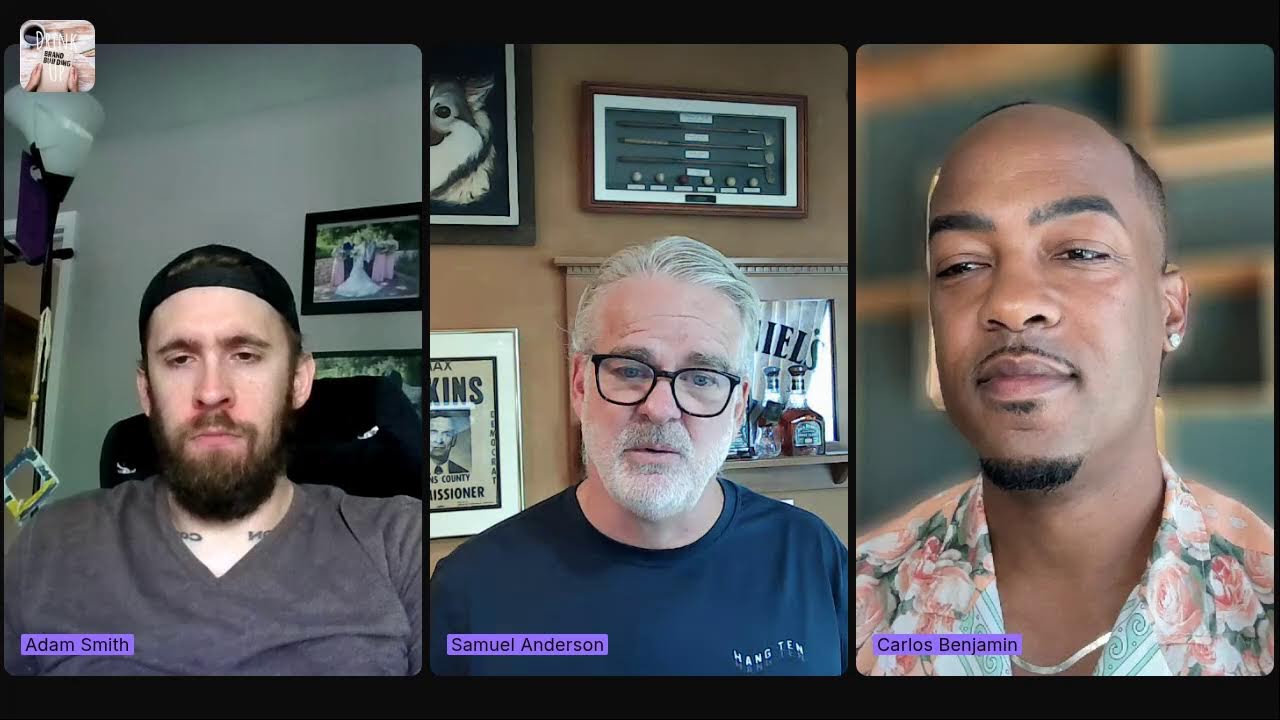
Carlos Benjamin, founder of High Profile Lifestyle, staffs and manages experiential marketing events from red-carpet galas to sports activations. He built the company from freelance modeling work, focusing on mentorship and clear communication. He's also launching Freelancers Unplugged, a festival for the experiential marketing industry.
Chapters
Podcast. I sometimes say broadcast podcast. I'm Sam Anderson. Welcome Carlos Benjamin, our special guest today, as well as Adam Smith. As always, welcome to Drink Up. And for those of you that decide to join us this Saturday morning, even better. I hope you join us in the chat. Adam and Chris will be monitoring that. Maybe Chris, you can actually stream the questions. Actually on the screen so we can see them. But before we get going, I just wanted to call out our advertisers, our supporters. Always Adam, thanks for supporting the podcast with Alias Advising from Adam Smith. And then calling out— always call out my partner Alicia Vargo from Bev Assets. Thanks for supporting us with Bev Assets. You can find Bev Assets and Alias Advising on LinkedIn and the World Wide Web and YouTube and Facebook and everywhere in between you can find us. But I always every week, and I know Jay, if you're ever going to show up to actually see all the great advertising we do for you, but actually have to call our friends at Freebird. I'm almost done with my case, Jay, so probably need to send some reinforcements here. But Freebird with Jay Williams. I don't know, Carlos, if you ever see Jay Williams out on LinkedIn. He's alive and well, and he's a well-known entity. And always appreciate the water on Saturday mornings. So thank you, Jay. With that, welcome, Carlos.
Thank you so much, Sam. Thank you very much.
Yeah, yeah, thank you. Thank you for coming, coming and joining us. We got a chance to chat for about 20 or 30 minutes this morning before going live, and, and would love to just have you introduce yourself to the, uh, our audience and tell them a little bit about, uh, who you are and what it is you do and why the heck you would ever come on Drink Up Podcast.
Absolutely. So my name is Carlos Benjamin. I'm the founder and CEO of High Profile Lifestyle, which is also known as HPL, and we are a multifaceted talent staffing and event management agency. And what we do is offer a wide array of professional and brand development services across talent management, event management, event staffing, and then we also specialize in logistical services for clients that need to move things across the country, or they have these unique needs about, um, to make sure that they are prepared for the upcoming projects and having all the things in place for smooth execution. Um, with my company, we really thrive on Freelancers, because this makes up our talent base, and these are individuals who really thrive on public engagement, giving their all, and just showing up authentically. These are also some very heavy problem solvers. So it's like inviting a bunch of problem solvers to your campaigns to help you figure out things that you may not have even noticed or things that you missed. And that's what we do.
Oh, that's amazing. We were talking earlier and I was talking about, I went to the 3M golf tournament here in Minnesota and we were talking about all those people that were guiding you on your journey from the parking lot to the check-in, you know, to go through security. And then once you got through, there was someone trying to offer me free samples of something. So your team does a lot of that work.
Yes, my team is definitely heavily involved in the directional flow of event experiences. So from the moment you step out of the vehicle to entering the red carpet, if it's a red carpet event, if it's just a food and wine festival, there's a line for VIP, there's a line for general. Where do you go when you get on the inside?
Right.
We would rather not have people be lost looking to find their way. Instead, they have a presence that's right there to say, oh, welcome. And a lot of times, with certain technology, we're able to know who's walking up to us before they even get there if it's a registered attendee event. So you usually get a pleasant voice to say, welcome, Samuel, so glad you could join us. And people are like, oh wow, how'd you know my name? And sometimes they have a name tag on, didn't realize they had a name tag on, and we're paying attention to all the details. But yes, my team is heavily involved in the event experience flow and just making sure that consumers And attendees are able to really just come to these functions and just have a blast, man, and not find themselves looking around figuring out what to do and where to go.
Well, I'm going to be your guide this morning, by the way.
Yes.
Center yourself in front of the camera a little bit. So be aware so I can see you. So sorry about guiding you, but that's what your people would do. They're like, hey, Sam, for this experience, you need to do X. So why in the world— I asked you this earlier— This is your business.
It is.
And we ask every founder this: why in the world did you want to start a business? I mean, it's hard, right? It's not easy.
Yeah, that's such a great question. I wanted to start a business because I spent about— let's see, I started my freelancing career in 2010, actually 2009, right? And Once I started this career, I started to meet other freelancers, independent contractors, people who were like producers and artists. And these people have been doing this for quite some time. So I got a chance to learn some of the things that were attractive to me about having this type of career path. And as I got involved in being a model, and then I started working in the film industry as a production assistant, Fortunately, I was able to land a mentor who was a Hollywood filmmaker, who still is a Hollywood filmmaker actually. And she took me under her wing, started to help guide me into this independent workforce, right? Take me out of the corporate America background that I was so used to and speaking corporate and, you know, acting corporate. And like, no, this is, this is a chill, you know, environment. Yes, people are kind of owning their own thing, but It's very chill, right? And so once I got a gist of what that really looked like for me, I really just started to own it, man. I started to own it, started to work a lot of film projects and commercials in New York City. And then after a while, I ran into the experiential marketing industry. I met some people who were asking me like, hey, would you like to do the type of like, Actually, they asked me if I'd be interested in working for some brands as a, as a promotional model. I'm like, well, what does that look like? And then they explained, well, it's a little different from the film set. You know, on film you have to be quiet and you have to like, you know, hurry up and wait, all these things. But you— I have a really big personality. I love to make people feel good. Like, I love to engage and network. And so they basically explained to me what I would be doing for different brands, which is giving people a good experience. Hey, welcome. How's it going today? Can I help you with that? You know, opening the door, closing the door. And so I tried it on. I did like my first promotional modeling project. I think it was for Axe, the body spray brand, and they had just got acquired by Salesforce, something of that nature. And so my job was to demonstrate to the new sales team some of the games and technology that was curated for these attendees. so that they can learn more about the Axe body spray brand as they create campaigns to sell it in, you know, all their different ways. And after I— while I was working that project, there was like 10 other promotional models on this project. And I'm like, hey, how'd you guys get this job? And they're like, oh, this is what we do for a living. And I'm like, for a living? How? You know? And I'm like, I want to do this for a living. I'm giving out gift cards, welcoming people, like, you know, offering them food and drinks. It was so fun, right? And so after doing that, I went on to do a few more projects. And then eventually I became a tour manager. And this is the guy who's really in charge of the campaign, taking it all over the country. And after doing like tour management for like 7 years, what really made me wanna start my own business is that while I was on tour, I had a talent agency who was a part of the, the brand's marketing agency, right? The talent agency would provide the talent for my tour. And a lot of the times they didn't really provide people who cared. They just, a body is here, let's go, right? And I'm the one that gotta train them and make sure that they're delivering properly and all these things. And so as the years went by, I found myself staffing my whole tour because I want quality.
Yeah.
At the end of the day, if this doesn't go right, these people are gonna be asking me like, what did you do? it's gonna be a reflection of my leadership. And I didn't know how to stay during those early times, like, no, this agency is just giving me shitty people. Like, what do you want me to do? So, um, I started to really use my network of talent that I had worked with, you know, throughout the country as I was doing projects. And at some point, one of my friends, or maybe my mentor, started asking me, like, why don't you start your own business? You're pretty much already doing it. Like, you're, you're doing the job of the agency and the job of a tour manager. but you're just not getting paid for the agency portion. And I'm like, well, it's fine because at least my tours are going great and my clients aren't complaining, right? And so as I took that in and I started to really get clear about some of the pain points between, like, people in the field and the expectations of clients, I really just took it on myself to establish my own company because I had gotten confidence from my friends that, like, you're already doing it, man, you might as well just get paid for it, is what they told me. So I created, you know, the vision for my company, the mission, the core values, and then I pretty much launched my agency. And thankfully, I was able to do it after I've built such an amazing roster of talent that I can personally vouch for, that I knew would do a good job if I pulled them on any of my projects. Man, you're just—
you're describing kind of what we do with our Feet on the Street program in a lot of ways. You and I need to have some off, uh, Conversation. So a couple couple things. One of the questions is, you know, since we're talking about leadership and your team and a whole bit, what's the most important lesson you've learned as a leader? You know, you're leading this agency.
Mm-hmm. Yeah, great question. The most important thing that I have learned as a leader, I would say for me, it's been the same thing for many years, and that's just. Lead by example. Like, what made people really love me that has worked under my leadership throughout all the years is that I was never that leader that's just like, oh, you do this, you do that, you do— you know, I'm always like, hey guys, welcome, let me show you what I want you to do today. And then I would get out there and show them because sometimes I would be dealing with talent who was much older than me, you know, and they've been doing this much longer than me. And so these people would have, you know, thoughts in their head like, who's this young guy going to tell me what to do, right? Instead of telling them, let me show you. And after showing people what I wanted from them and how to go about doing it, people really started to acknowledge me for just bringing that to the table, which was a lot different from their other experiences working with leaders. Everyone is always just telling them what to do and not really showing them. So that is what has, um, been one of the most important things for me in leadership, is just leading by example.
So we gotta— hey, I love that answer. And, and you kind of answered it already, but as you were talking, I realized I've been on mute this whole time. Uh, well, I was—
there was some, there was some like fuzziness, just to be aware, Adam. So, you know, it's not now, it went away, but for some reason it was just some background noise. That's why I was, I was muting you.
No, you're fine. If that's the case, I appreciate it. I'm gonna blame it on my dog because I have no idea why. Um, uh, the, the thought that came to my mind is, and it's not even a question, there's a couple of other comments from, uh, from COGS on LinkedIn, but, um, the thought that came to my mind was hospitality is one of those words that, you know, I, I liken it to social media, meaning Hospitality, like social media, is one of those words where you say it to people and they're like, I can do that, right? I talk to brand owners all the time, right? I can handle social media. I can handle experiential marketing. I got that. I'm like, but do you? Do you understand? Like, right? We all know what good hospitality looks like, and we all know what engaging social media looks like, and we all know what the reverse looks like, like bad hospitality, unengaged social media. a poor experiential experience, right? Or poor, like, you know, in-person experience. And yet still we talk to so many brand owners, and Sam knows this firsthand, who are like, I can figure it out. But can you? Right?
Right.
Do you want to take the time to? Because it's not going to be a short process, right? Um, so, and I know I'm preaching to the choir there. So to get to Cogs's comments, uh, 2 things. The first one's quick. He said, what city are you based in? I believe that's New York from your LinkedIn profile, right?
Yes, based out of New York City.
Perfect. So based out of New York. And then the other question was, he said, there's a huge need for event activation marketing. Carlos, have you worked on sports events, major and/or collegiate/minor league? I assume the answer is yes, but I would love to know if you've got a good story or two from those days.
Absolutely, I do. So I have worked in sports. I've actually gone to, I've been flown to Saudi Arabia to support Aramco. Through my clients, you know, I work with quite a few agencies. Production agencies are usually our number one client, and they usually have access to many other brands and stuff that they're doing initiatives for. So I've been flown to Saudi and Dubai to support some of the sporting projects they've done there. I have also worked in volleyball tournaments for Adidas. I used to work with a vitamin brand, SmartyPants Vitamins, and their target audience was US Olympic sports teams. Also track and field. And then I also worked as an athlete and fan experience manager for Athletes Unlimited, which is a sports league for all female athletes. And they have, I think, 5 different sports now: basketball, volleyball, lacrosse, softball, and forgive me, I'm missing one of them. But yes, I have worked in many different sports arenas. And what was the question? Um, that came up about the experience?
The question was just— so I'm gonna tag team it because we got another one from, uh, uh, Jeff, who's another longtime listener and friend. The question from Robert was, have you worked on sports events, major or minor? And then the question from Jeff that I think maybe ties into what, uh, what Robert was getting at is, do you use a tool or a wireframe to map out the experience for each type of attendee at an event, and how do you make their experience unique and memorable?
Nice, that's really good question. So I answered the question about yes, I have experience in sports, a lot of experience in sports, love it. And in terms of how do we map out the experience, so it's really a collaborative effort, right? The production agency would come up with the location, you know, they'll work with the venue operations team to get clear about what's the typical flow. for events of this size at this particular location, right? Once they get all that stuff down pat, my team comes in at the very end when it's execution time.
Mm-hmm.
So they would have already kind of created what they think is a good experience flow, right? And then they are presented to me. I will look over the experience flow and I would just Just from my experience and wisdom of just large crowds, and I'm talking like Comic-Con, US Open, you know, like large crowds of people.
Mm-hmm.
I would just tap into my experience for doing all— from doing all these different projects and really get clear on what do I think would make an amazing consumer experience or attendee experience from the moment they walk through the door. So I don't often necessarily write it down. I would just kind of go through it in my head, which my team is now spending more time pulling all of the solutions out of my head because they're like, there's no way you can house all those things there. What if something happens? Constantly pulling all this, you know, the juice out of my head. But I would make— I would take notes on what I think would be the best experience, and then When I get with my team, which is the talent who's going to be managing this experience, I'll stage everyone where I want them to be. And then I'll say, guys, let's do just a trial run. I'm going to walk in and I'll lead by example. I want you to say, oh, hi, Carlos, welcome. So glad you could join us. Love your shoes. You know, I'll kind of give them some things just to make it exciting from the moment people enter. And once I go through that walkthrough, If it feels good to me, which most times it does, I'm just like, there we have it. But if there is some type of, you know, kink in it, then I would go back to figure out like, okay, maybe there's too many people at the entrance. It feels like I'm scared to walk in here now, you know? And so I would just design the experience based off of what feels the best, relying on my previous experiences in all these different arenas. And also just my observation of attendees going to festivals and premieres and all these kind of events. And usually, man, one thing that I can say is when you've been doing something for so long, there's this thing that when you know what you know that you know, follow your intuition. And I'm an intuition guy. It speaks to me, and I just know how to listen now. So I literally just— when I know what I know and I stand on it very confidently, I'm also very open to suggestions and feedback and, you know, other collaboration. But I have just done it so many times where what I come up with is usually like a very strong way. And, you know, even if I start something a particular way, if I need to adjust it, I'll go back and adjust it. I'm not afraid to say like, oh, wait a minute, this is actually not working out. Because things could change when you're doing live events. It could just happen. So I'm always willing to adjust things as needed, and that's typically how I would create what the consumer or attendee experience should be like.
Well, you've had a heck of a ride. A couple more questions to add. What drives you to keep going in the toughest moments? Because all the stuff you're describing here, I mean, I'm sure you've had some easy moments and tough moments, but so what keeps you going?
That's so good. Tough moments are always going to come when you're doing live events because it's just— you're live, right? The Wi-Fi could go out, somebody could start all of a sudden have a crisis, like anything could go wrong. Broadcasts could have the wrong schedule, so now they're not showing up on time, and all the things in between. But what really drives me during my toughest moments is, I would have to say, I typically lean on the personal and professional development that I have learned. I've done like 2 very powerful personal professional development seminars. Landmark Forum is one of them, and then the other one is Momentum Education. What those seminars, you know, placed in me in like a 3-day period has just been like just forever lasting. So, and I love the fact that, you know, just professional development alone is designed to help you think beyond your normal capabilities, right? So when— anytime I have challenging moments, like, these programs have taught me how to produce a breakthrough in the midst of a breakdown. So anytime I'm having a breakdown, I'm always able to tap into the methodology that taught me how to produce a breakthrough. And instead of just giving up, I tap into like, okay, what are some familiar actions that I could take in the midst of this moment? I get clear about what I would normally do. I would scream, I would cry, I would call for help, panic, whatever those things are, right? And then I start to think—
Describing me yesterday.
Right. Okay. And then I started to think, what are some unfamiliar actions that I can take in this situation? And that really requires for me to look a little bit deeper, right, to see like, What are some unfamiliar actions? Like, I know what I would normally do, but, hmm. And sometimes I have to work with one of my colleagues, like, hey, this is a complex one. I'm trying to get clear about what are some unfamiliar things that I could do to kind of turn this around. And once I get clear about what are those unfamiliar things, those are usually always the things. that I do that really keeps me going and turns the situation around. So what was a breakdown has now become a breakthrough. And so just tapping into that.
That's, that's really interesting to me. You're resilient, which I appreciate you sharing that. And I'm assuming, you know, with the teams that you have, I mean, you'd mentioned earlier before we started to go live that you've— many of your team players have been with you for a long time. So they're high-performing teams. How do you, how do you keep them like engaged and keep them going and involved in, in your business?
Yeah, that's so—
Adam, you can take the next one, by the way.
Yeah, yeah. So what I would normally do for my teams is I really invest in, in our people because I think about my position when I was just, you know, coming up in the industry as a promotional model, a brand ambassador, an MC, product specialist, like production assistant. Doing all those roles gave me access to all the different people who were in the leadership positions. And just from learning from what those people's experiences were, how they handled things, you know, I took that stuff all in. And once I got a taste of personal and professional development and just how impactful it is to just Anyone who wants to make a difference in their life. I literally just started to investing into that kind of development for my teams. Like, it— and to even see that, like, when I think about Lululemon, I think they send a lot of their people through the same professional development seminars. I think with also— what's the— Panda Express. Like, I don't believe any of their managers can manage unless they've gone through, you know, Landmark Forum. Which is, I think, is so powerful.
I'm going to go to my Panda in Burnsville and I'm going to check that out today.
You should. Yes. Because they know that if you can help people on the inside with what they may be struggling with, the barriers that are in the way, especially self-imposed barriers, you can really give people access to their life if you can get those things out of the way. So I really like just as a company, I'm always investing into personal professional development for my teams. Again, leading by example. Don't just listen to what I said has done for me. Let me give you the experience so that you can see and you can tell us what it's done for you. And when we get feedback from our teams about, you know, hey, how did it go? A lot of them was like, oh, I didn't even think I needed this. I was thinking, oh, what is this, you know, professional development?
That creates the experience, right? Because one of the things we wanted to ask is about, you know, what You know, because you're about experiences, right? So absolutely Panda Express, if, if that manager's actually making his team happy and engaging with them and doing the things you're talking about, me as a customer is going to walk in and the team's going to project what he's projecting to them and my experience is going to be great. So you kind of answered this question. Yeah. So in your view, what creates a truly successful brand experience? You're kind of talking about it right now.
Yeah, exactly. Um, but, but there is more to add to that when it comes to a successful brand experience. I would say it is how did your consumers and your attendees feel when they— like, how did they feel when they left the event? Did they feel fulfilled? Was it chaotic for them? Was it exciting? You know, did they leave feeling moved, touched, and inspired? That is one part of, like, you know, what makes a successful brand experience is like, how are people feeling? I could give an example. I went to a Netflix premiere and for a particular movie, and we were invited by like the studios. You know, we came and the studios told us what the dress code was, right? We showed up looking amazing, black tie. And there were some people who just— they obviously didn't get any kind of dress code because they just showed up how they showed up. And so we were— I was a little bit shocked, like, oh wow, I thought this was like exclusive, you know, and the dress code was this. But okay, I see that it wasn't, so cool, we're just gonna, you know, represent as we always do. And then as we, um, checked in, we saw the big step and repeat, and I'm asking the people like, oh, um, can we take a picture there? And the check-in people were like, oh, I don't know. And they started looking around like, um, oh yeah, sure, it should be okay. And then when I walked over there, I saw the photographer. I was like, Oh, hey, can we step in and take a picture? And he's like, yeah, sure. And so we started to walk around. Somebody came and said, oh, no, go the other way. And then I'm like, okay, sure. And then I'm like, is there somewhere to sit my jacket? You know, the welcome packet you gave me? We had to sit it on the floor.
Oh.
I was like, oh, this is supposed to be like premium. So, you know, I go into experiences already like being a little critical, like—
So you're aware of the little things around you.
Always.
Those little things can add up to big things if you don't, uh, you know, cover it. I want to take a little pause here because Adam's monitoring LinkedIn and we have a lot of activity going in.
Okay, sure, sure.
That's cool, Carlos. So maybe Adam, you can take some of the questions and comments because I can't— I, I'm like, my, my phone's not keeping up.
Yeah, I got you, I got you. So I think, yeah, that was codes. We got that one. So I'm gonna apologize in advance for a guy named Adam Smith. Every now and again, again, a name catches me off guard. So, so I'm gonna say, uh, Hey, yo. Amara, and I'm shortening it, but, uh, thank you for the comment. Uh, said, good morning, Samuel, Carlos, and Adam. Uh, I'm Claire, so she goes by Claire, an administrative assistant, and I'm excited to be here to learn from you all. So thank you for joining us.
Yes, thank you.
Thank you for having us. Um, I think the question for me, and it's, it's— Sam knows this, but I've been writing a lot of, um, operational SOPs lately, right? And, you know, the things that come up with people who maybe aren't— and I'm not saying I'm, I'm not at all saying I'm the best SOP writer in the world, but I am neurotic and paranoid, so it helps. Um, for people who don't do that or think like that, I think about it a lot in terms of the, the event marketing perspective of, you know, you said setting stuff on the floor, right?
Mm-hmm.
Uh, I'll get into an SOP and I'll do things like Okay, you know, if the SOP says step 5 is do this and it's on a computer, I've literally got later today, I'm gonna be working on it again, a screenshot that I have highlighted, click here, then click here, then like idiot-proofing it, right? Oh, where do I put my jacket? Right fucking there, right? Like here's a picture of where it's going. You know what I mean? So my, my question that comes out of that, I would love, 'cause Caressa and I met doing radio back in the day, so we've got a little bit of that under our belt in terms of going out and doing events is, you know, a black tie event like the one you just described, people that are attending something like that, I have to assume, want to leave with a different feeling than maybe somebody that's going to a South by Southwest or a Comic-Con, right? There's a different level of, you know, hey, I still want to leave feeling fulfilled and taken care of. That part I'm sure remains the same.
Yeah.
But, you know, setting something on the floor at a black tie event versus sitting on the ground to watch a concert, right? Both those attend— you know, one attendee may be bummed they had to set their stuff on the floor, the other one may be like, I love sitting in the grass and watching music, right? And so how do you, how do you lead your team through understanding all those various variables?
That's a good question. So it's really knowing— for me, I think it's just knowing the audience of the event And I think that when it comes to just like the basics, like if you're doing any kind of high profile, you know, my company is High Profile Lifestyle. So it's like you're gonna— you can expect to come to some high-touch, high-end kind of events, right?
Sure.
And so we're just already going to think of these little things because we know what kind of experience we want to give people. Sometimes our projects aren't even high profile. But we make it that because of the experience that we bring. The client probably just had a very small vision in mind of like, oh, I just want people to come and have a good time. Well, for us, what having a good time means is like coming in, having somebody that can take your picture if you look amazing. Because at that premiere, we walked in and I'm like, oh, there's no person to take our picture in front of this amazing branded wall. And I asked the security person like, hey, can you take our picture? There was nobody to secure at the moment. They were like, no, we can't take pictures. So to me, that killed my experience because I'm showing up looking amazing, and then I have this opportunity to take a photo and you're not even willing to do it. Like, how do you want people to be excited that they came to this function if you can't even take their photo or have somebody that can do it? So again, I lean on my experience and think about what would I want if I walked into this Experience, even if it was like not really the highest profile. I definitely want a table, you know, that I can prop up on if I need to. If there's drinks involved, I definitely want to be able to hang my thing. If there is, um, um, if it's a cold environment and people are wearing jackets, you know, if it's summer and people are outside, they're a lot open to this stuff.
So your, your staff are pros, all right? So one of the things, you know, kind of one of the questions Is, you know, how do you, how do you allow them like to step outside the box, right? You can't be there. Like, they're gonna have to think on their feet, right?
Yeah.
And do the right thing at that moment.
Like, yes.
How do you empower them to actually do that? Or do you train them for that? Or you have to be really quick on your feet because I'm going to show up differently than Adam does. I'm feeling spicy this morning, right?
Yeah.
Adam's not spicy this morning. So, right. I'm going to be a totally— how you deal with me is going to be totally different how you deal with Adam right now.
Yeah, that's so good. Let me tell you, I used to ask myself that same question, like, how am I going to get all the— I have 150 people to lead today. How am I going to get them all to think the same? So for one, we would do some very amazing trainings. We do the personal professional development and our trainings leading up to projects. So that's one way that we do it. And the biggest secret to having all of my team members and the people that are under my leadership operate in this particular way is really through our core values. We have 4 core values, and it's integrity, streamlined communication, transparency, and complete work. Each one of those core values have a definition of what it means to HPL. And so we have a performance coach that would do these trainings and really just submerge everyone in our core values, giving examples and having them give feedback and share. And after going through these series of trainings and really making sure that people understand our core values, they're living and breathing it. And we also have our teams hold each other accountable. It's like I can't be in California for you know, the Grammys thing to lead you guys because I have something else going on.
You go to the— you're in the Grammy— you go to the Grammys?
I have not, so I'm just manifesting right now. Love it.
Welcome to my world. That's cool.
Yeah, but these are events that we have covered, you know, we provided staff for them, but I'm not often always able to go. But to ensure that whoever does go to represent HPL, I make sure that these are like— we call them our elite roster. And these are the individuals who have done like over 14 projects with us. So they really understand like just all the different things that come up, you know, the different pivots, how to solve challenges, and they really know our core values. So it's not just you remembering what you need to do, it's the whole team. So that if you show up out of alignment today, you can count on my— Somebody from our team will let you know like, hey, Adam just came in here late. Um, Adam, is there anything you want to say? You know, because we don't show up late, we show up early so we can work out those kinks. And it's just not a situation where we're going to just turn a blind eye to anything that just doesn't align with our core values. And we teach people.
It's a really competitive industry. I mean, how do you— I mean, you kind of answered this question, but how do you make sure your team delivers at a higher standard than the rest?
Is that—
I guess it's the accountability, right? Because I just showed up 15 minutes late and I just got caught up by the entire team.
Uh, yeah, so I mean, I'm curious.
I'm curious to— and, and I'll give you an out because I want to be respectful of, you know, your comfort level in answering this question. Yeah, I, I'd be really curious to know either A, what the either dollar figure is, or what the, you know, percentage of your Budget goes to professional development for your team? And the reason I asked the question, right, is, is purely because I think for a lot of folks I talk to, for a lot of folks Sam talks to, going back to kind of one of the other questions I asked, everyone assumes that you can get the assassin, the expert, the gold standard on the cheap, right?
Mm-hmm.
And anybody who's done it for longer than 5 minutes knows that's rarely ever the case.
Right.
Um, especially when you're trying to— and I'm a big fan of— I mean, I'm, I'm a personal success story of— I didn't know anything when I came into this industry. 8 years later, I know enough to make a living out of it, and I'm thrilled about that. But it was not a short road, right? And people had to take time and money and invest in me and personal development, all that. So I'm curious, just to give an example or a benchmark for people, like, how much of your either time budget, your financial budget, whatever, do you put toward that? Because obviously it matters to you.
Right. Yeah, it does. Let me tell you, I spend thousands on my people, but I don't have any kinds of regrets about it because I think about myself. Like, if it wasn't for my Hollywood filmmaker mentor who took me under her wing and just encouraged me, you know, like, Harlow, I need you to do this professional development if you want to— if you want us to seriously do things together. I need to know that you're ready for that. You know, I don't want to waste my time. I'm high level. I'm just not starting out, you know. So just her believing in me and sharing with me, like, one way to be able to step into my future sooner, that really just impacted my entire career trajectory. So I can't ever forget that. And even though she didn't pay for it for me, I did it for myself. I found value in investing in something that I've never done before for myself. And when I did these experiences and I saw that companies were paying for their employees to go, I was just inspired. Like, man, I hope one day I have a company where I can pay for my people to go, even my whole family, right?
Yeah.
And so I spent thousands of dollars on this investment, on this type of investment, because these are the people that make up my company. You know, if I, if I can't care enough about them, then why would they care enough about me? So, and I've worked with so many agencies and, you know, half of the people don't even believe in professional development. They're like, oh, that's not for me. But your agency is on fire and going down and everybody's talking about it in the most negative way.
Right.
But, you know, they don't want to hear that. And for me, coming from the field and then becoming the CEO of my own company, like, I just know what's there and I hear it all the time. So I have the advantage of You know, just my field experience and people that are still working in the field, and then just now this new realm where I'm connected to more business owners and CEOs and they get to share their situations. And I just take that and really come up with a solution so that we're not struggling with the same things. And really just my investment into my people has just made such a difference because it comes from such a selfless place. Like, even if you're not working for my agency, I would still, like, if I was talking to you guys today and you communicated, like, you know, a deep struggle that you just cannot figure out, because I believe in what it could do for people.
You're talking about an earlier conversation?
I don't know all your struggles. I'm sure there could be some deeper, but because I believe that, you know, I could introduce you to a performance coach or a performing— a performance team that will make a difference for your company. I don't care if I don't make a dime off of that. Me knowing that I was causing the matter of, you know, Samuel and Adam being able to take their company from $1 million to $10 million, that is all the peace and pleasure that I need, even if it has nothing to do with me. So it's like paying it forward.
Karma is so real, man, in this world. You eat what you sow. So yeah, I can say the word, but that's so appreciative. Um, let's transition a little bit. Um, let's, let's get into, um, some things that maybe you want to share about your company with everybody that's listening today. But before I do that, you want to take Amara's, um, comment, uh, Adam, that she said?
I'll take a couple, her and, uh, and Coke. So, uh, uh, I believe she goes by Claire if I read that. Yeah, I'm Claire. So Claire said I love it when I can communicate effectively, respectfully, and receive feedback respectfully too. It encourages respect and productivity for the most I've seen. Love it for you and your team, Carlos. Um, and then, uh, Coke said, has your company done events or activations in Toronto? Again, I'm assuming yes, but maybe I'm wrong.
Yeah, so this is a Canadian connection. So, uh, yeah, I call him Cost of Goods, by the way. That's his new name with me.
I love that. We have not done projects in Toronto. We have been hired by Toronto agencies to help them with projects in the US because they need a US execution partner. So we do have clients in Toronto, but it's mostly to support them with their, their US projects. I mean, we could support them in their market, but, you know, they know their market, I guess, a little bit better than we do. So they haven't— I haven't gotten many clients with the need for our support in the Canadian market, but we're open to it, of course, if the opportunity presents itself.
Great.
Cool. Well, there you go, folks. Reach out.
Yeah, I sure will.
Yeah, definitely. He's definitely a real— so let's, uh, let me ask a couple questions. Um, first of all, um, how do people find you?
Yeah, so you can find me on LinkedIn. I'm under Carlos Benjamin. Um, yeah, I'm under Carlos Benjamin on LinkedIn. I don't think there's many of us And if you have an issue, it's gonna be the brand strategic partner. You can also find us on Instagram under High Profile Lifestyle. And we also have Facebook, which is also High Profile Lifestyle.
Okay, we can stream that too, Caressa. I'll put it on the screen. But do you have a website that people can go to and book you?
Yes, of course, highprofilelifestyle.com. How could I miss that, right? So yeah, highprofilelifestyle.com.
That's why I'm here. I added value today. Uh, so let's, uh, Karras, maybe put that into the chat and then I'll stream it or you can stream it. Um, would be good. There we go. So it's coming momentarily.
All one word. All one word. We gotta correct that. I'm trying to post it on LinkedIn. It's not working, but it's, yeah, all one word. There's no dash.
Yeah.
Oh, no dash. Let's try that again, Karras. So people are gonna be trying to go, they're gonna go to the wrong place. So we're moving business over there. Um, what are your, what are your costs? Like, what are the typical costs on this? Is it, is it by gig? Is it by opportunity? I mean, just can small brands afford you? Like, we have many small brands that Adam and I work with. We're talking like, you know, I talk about 4 things every time, every week. I talk about test it, build it, scale it, and sell it. We're usually anywhere between the test it and build it phase of a brand is where we, Adam and I, sit in our businesses.
Mm-hmm.
Can those brands afford you?
Yeah, I would say so. Um, we're always open to just hearing what brands are planning, what they're thinking, just so that we can even kind of help guide them to making the most of what they're looking to do from our experience. So yeah, our cost, I mean, it, it really ranges from— it could be from $5,000 all the way up to, you know, multi-million dollars. We've done all these kinds of, you know, campaigns with these type of budgets. But let's say if we're working with a smaller brand, like we support nonprofits often, right?
Yes.
They have all kinds of social impact projects that they wanna do. We also support organizers who are doing like smaller festivals and doing these festivals, they may only need like 4 additional staff members to support check-in and, you know, gift bag registration or the point of sale. whatever that is. So, you know, those are some smaller budget kind of projects that doesn't require, you know, a large budget. But when we get into the bigger campaigns that are gonna be like something more than a day and it's like weeks and months, obviously the price will increase, but it's really based on the need for staff. Like how many people do you really need to help make this come together the way that you want it to go? So we would just consult with them get really clear about their marketing goals, and then we would present a plan based on what they're trying to achieve and let them know how we can support them with doing that. And there may be steps to it. It may start off as a small situation, but as they get a return on their investment, now they have a budget for a bigger project. So it really varies depending on like how they're looking to start. Some clients are looking to start big Some are looking to just, you know, kind of inch up to it. So we just work with them on a consulting basis to get clear about the need and take it from there.
Great. Alicia, my partner, had a comment. Awesome. No matter if our paths cross in business, we're always here.
Absolutely.
I think I got this.
Sam, I want to go back to— so Claire asked one more question, and then I think timing-wise we should probably get to our finale question.
Yes.
So Claire asks, and it's a good— I love that she brought it up. It's something that especially anytime you talk about training and development, the flip side of the coin is always what Claire's asking, which is how do you respond or how do you handle whichever approach you want to take to it, folks who might bring up the idea that like, okay, you spend all this time and money and energy investing in your team, what if they then go elsewhere? Right. Or how do you, how do you manage that? Right.
Yeah, that's such a good one. You know what, man, what I will— what I know to be true is that generosity is never forgotten, for one. And when you give the world your best, the best will always come back to you. So when I invest in these freelancers who really work on pro— I mean, these people work for all types of agencies, not just mine. But if I can be causing the matter of them getting access to power, working under my leadership, and then they get to take that in other places, this same person or these same group of people may become, you know, next year's brand managers and event producers. And you know who they're going to call to support them with their clients when they really want to have a sharpshooter that can get it done the right way the first time? they're going to call us, you know. And even if they don't, I'm still okay with that. So I have peace of mind knowing that I can just be causing a matter of people again just doing better in life and just figuring out their way, whatever that looks like. So I just consider it as like a good deed, just planting seeds. I don't look at it as if like, oh, what if they run away? Like, I don't care if they run away, you know. If you run away, then obviously something isn't right.
Mm-hmm.
But people usually run to us and want to stick with us. Just because they're getting an experience that they just can't find elsewhere with the level of care from the CEO that is just sometimes unusual. So yeah.
I, uh, the, the names in this story will remain nameless for, for posterity reasons, but I had a, uh, uh, a boss through the BevSource days. Wasn't Janet. Janet, if you're listening, I love you dearly and I hope Florida's treating you well.
I was gonna ask, is it Janet?
It wasn't Janet. No, I love, I love Janet to the moon and back. Uh, it was a different, different boss during the VevSource days who, uh, there was a particular thing that I, I argued we needed to train another employee on. And this boss said, well, no, because then what if they leave? And I was like, if that's your concern, they should just leave.
They've already left.
Right. That's, that says more about you than it does about them or anything else. And it frustrated me.
I don't want to spend the money on my talent to take care of them. Um, yeah, they're, they're just talent. Actually, someone told me this the other day, and Laura, I actually very appreciate what she said to me because she's, uh, she works the market for— she's one of our partners in Chicago. And she said, most suppliers treat us like trash.
And I'm like, man.
Mm-hmm. Because what she does is very specialized. She goes into places and she goes to bars and she sits on bar stools, and it's a very important skill because she's about community. And she drilled that in my head yesterday. So I very much appreciate that too, Adam. And I know, I guess I interrupted here on the flow of the conversation, but—
It's good. No, I mean, again, right, it's that, and you said it, Carlos, beautifully, and I'm going to butcher the paraphrasing, but the, the, if you're spending time training and developing people and they still leave, it's in my opinion, I think you share the same one based on what you said. Then your training and developing and your connection to them wasn't as deep and thorough as you thought it was, right? And even if it is, sometimes just an amazing opportunity comes up that people can't pass, and who are we to stand in their way and go, oh no, don't do that because it'll make my life harder for 3 months?
Yeah.
Right? Like, no, please go, go do what's best for you. And to your point, they'll call. It might be a week, it might be a year, but they're gonna come back and call and go, how can we keep working together?
Yeah, I would love to connect a couple of people here in Minnesota. Have you ever come up here? I don't know if you're looking for other—
Always.
I'd love to just connect you.
You know, you want to ask our— you want to ask our million-dollar question?
Yeah. Are you ready, Carlos, for the question?
I'm ready, guys. We stay ready over here.
Yeah, I know we seed planted it earlier just to give you— often we don't, but I want to ask this question. It's really important. for everybody here that comes on to Drink Up, and we ask every founder this, every leader that comes on, is what's the difference between success and failure?
Mm-hmm. Yes, so that's a good one. I love these kind of questions. For me, the difference between success and failure, I would have to say it's really how you define it, right? We have the world's view of what success is. and failure is, but what does that actually mean for you in your definition of success and failure? And so what it means for me is, like, success, I would have to say, is really giving your all into a project, you know, being clear about what it is, what's your responsibility, what's your, your role, your deliverables on a project. Also, getting clear about how many lives you can touch as well, you know, like positively impact them. And if I'm able to do that on a project or just in my daily life, just going out meeting with people as I come across people, success to me is like leaving those people moved, touched, and inspired. Inspired in some way. That is success for me. And then failure would be— it's really just giving up. Like, it's so easy to give up because, you know, running a business, you can just deal with— especially when you have a business and you have campaigns that are going on in like 15 different states, all the different time zones, you got 20 people in each market, like, or more. And it's like It could be a bit chaotic, you know. So I would have to get clear about what's going to be the communication protocol so that we can streamline that. Like, when I think about success and failure, I all— I always tap into what are my core values.
Yeah.
And that is like, I would have to refer back to that because that is the one thing that I can look at if something is wrong to determine where can I make this right? You know, if it— if in— if in any moment I'm a little confused about like, oh, this is just horrible, and like it's just not looking good, and it's the end of the day, I start to think about like, where— where is integrity missing? Where is streamlined communication missing? You know, where is complete work missing? Maybe we didn't do something that we thought another partner was supposed to be doing, you know. Complete work is like communicating that, Samuel, I know you said you hired Adam to take care of the front of house, but Adam is missing in action. So I've had my team step in.
That's true.
You know, you know, so it's really like, um, just analyzing like what is the definition of success for you. Some people just want to You know, feel good about what people have seen, you know, like they don't care about the internal feedback. It's just like, oh, I can see that people see a good thing and that's it, you know. But for me, it just goes a little deeper and it varies also. It's not just one particular thing. It varies depending on the situation, um, like what it is that, that I'm doing, who's involved. But that's really the way that I look at success and failure. It's like like, did I do the best that I could do? Were my core values present, you know, in this situation? And if I did all that I can do, then it's a success, you know. And there will be some situations where people just, um, they won't feel that it was a success for them. But do I need to be hooked by that? No. My performance coaches taught me how to be unhookable. The only time that I'm hooked by something that's being communicated to me as a problem is when there's something that's incomplete for me. So if Sam came to me to say, well, you know, Carlos, I don't think you guys did a great job. If I'm reactive, like, what do you mean? We did all that we could do. Like, I'm a little bit hooked. But if I know that we did a great job, then I can, you know, I can get a little bit more clear. Well, what's not good, Sam?
Mm-hmm.
Can you just kind of walk me through? Because you— it just could be a disconnect sometimes, and sometimes people don't know how to distinguish where are the disconnects. And when you can get clear about that, that's when you can discover that, you know, success is really all around. It's just really how you define it and how you look at it and how are you measuring success.
Wow, I, I love that. The, um, hook and unhookable. What do you think, Adam?
I mean, again, to paraphrase, right, like What I heard from Carlos was, what's the difference between success and failure? And what I heard was the, the level of specificity with which you measure it, right? And I go back to one of my favorite quotes, and a, a general manager I'm still close with, I had years ago at Best Buy, um, so it was the first person to, to tell me this phrase, and I've repeated it for years since: clarity is kindness, right?
Yes.
If you're going to talk to somebody, if you're going to ask somebody for something, if you're going to give them feedback on how they— how well they did or didn't do, if you're not abundantly specific— why, when, how, who, all the— what are we doing?
That's so important.
Yeah. So no, I couldn't agree more for sure.
I'm going to use the hook and the unhookable. And it actually made me reflect because there's some things I do owe a few clients and I'll get those done this weekend. If anybody's watching, they're coming. But then, and then to go back and rather than being like up against the wall, it's like, well, where is the disconnect? And then let them talk and then say, well, I did communicate that and we were clear on this. Or yeah, you're right, I'll own it. We missed it, you know.
Mm-hmm.
And that way it just, you get in the moment. Okay. So with the last few minutes, I want to, we usually go around the table I'll start with Adam with any closing thoughts, and then Carlos, anything that we missed today, I want you to share with the audience, anything. And then I'll just— I'll close it down for the weekend. I'll ask the two of you to remain on the line with me because we're going somewhere in outer space with this technology and go from there. So Adam, why don't you start?
Yeah, I mean, I think the takeaway for me on this is Event marketing or event management and all the things that come with it are such a great analogy to a lot of things. And again, the level of care I think that you express with yourself and your team and your dedication to specificity and personal development.
Mm-hmm.
whether it's in event marketing or anything else.
Yeah.
Life.
Yep.
You know, diet, exercise, seeing your family. I mean, whatever the thing is, like, if you let those principles guide you in whatever you decide to do, I'm not saying it's going to go as good as it possibly could. Maybe there's other things you need to improve, but it's not going to go poorly, right? Um, I think that's my, my nutshell takeaway for today's show.
Yeah.
Carlos, what would you like to leave everybody with? Uh, what things do you want people to remember about you? Yeah, your company.
Yeah, I would say if you, um, you know, to all the people listening, if you are working with a production agency or you're a brand or like emerging brand and you're looking for impact, you're looking for a solid team of individuals who are really experienced and have done like, I mean, so many projects to where they just know how to deliver streamlined communication and high impact, I would say reach out to us. You know, highprofilelifestyle.com is where you find us. Um, the other thing I would say is, um, we're also— I'm in the process of creating a flagship series of festivals It's being called Freelancers Unplugged, and this is something that would basically help pour into the experiential marketing industry. And my goal is to really involve a lot of personal professional development into these festivals, and there are some celebration elements as well, but it really becomes like a networking event where people who are coming, which are brands, talent, you know, from all the different industries— production, um, technology, beauty, fashion— these people will be able to leave better than the way that they came. And so as we are building this out and packaging this, if anyone is interested in learning more about it, keeping up with it, if there's any brands that are potentially interested in partnering or sponsoring, you can visit freelancersunplugged.com. to be able to leave your email so that we can keep you posted. And then you can also Google Freelancers Unplugged, USA Today, or CEO Weekly. These are some of the publications that we're in where people can read a little bit more about our plans for Freelancers Unplugged if they're interested in participating. If any talent is interested in being recognized and being a part of this as well, I encourage you to visit freelancersunplugged.com.
So I guess—
You can learn more.
So I can send my 2 people to that and then I can maybe connect them with you directly, hopefully.
Yeah. Yeah. I would say connect them to me directly at this point because we get quite a few inquiries and I want to make sure that if there's a, you know, a direct connect that I get a chance to, you know, connect with them directly so that they don't get lost in the sauce and then discover it next week, you know. So that would be the better way.
Get lost in the sauce. Some of the stuff— so I usually go go back and listen to this entire podcast. Um, so was there anything else you wanted to convey? I interrupted you. Anything else you want to share?
Yeah, yeah.
The last thing I would just say is like, I'm open to helping, um, all brands and companies really expand and elevate. You know, sometimes it could just be a conversation, you know. So I would say if you're looking for a partner that is, um, you know, full of integrity and really has the experience like working in the field and just actually working my way to this position. I just encourage you to reach out and let's just like discuss what you have on the table and see how we can collaborate and work together. If anybody wants to look good, we're good at making you look good as well. You could be new to a brand, and I've had quite a few brands where they have a revolving door, and it's like these people may need more than just the help they have internally. Like, we could also support you internally. We may have somebody from our team that can, you know, work internally with your team to really help set your internal team up so that you can have this external support. So yeah, that's, that's what I would say. I'm always open for conversations and collaboration, so feel free to reach out if there's anything on your mind after listening to this, and let's talk.
I love that. Well, thank you so much, Carlos. Thank you so much, Adam. Uh, for me, guys, the, the biggest thing that rang true— 2 things. One is Uh, you know, just the willingness for you to help people even though there's nothing back for you was just so awesome. So thank you for that. So people know how to find Carlos, DM him on LinkedIn, reach out. I'm sure you're one of the people that'll actually pick up the phone and answer. So many don't these days, but I'm sure you will, uh, which is good. But, uh, generosity is never forgotten.
Absolutely.
Is the quote of the day for me. And I'm gonna go back and listen to that segment. But generosity is never forgotten. I think if you give, the world will open up for you and the opportunity. So thanks for being a giver. Thanks for being here today. Thanks, everyone. Thank you for being on Drink Up again. Remain on the line. Everybody have a great Saturday. I don't know if we're on any for any weekend show or weekday shows. Chris will let, let us know and we'll see you all later.
Awesome.
More from Samuel





He Sold Pickle Shots Out Of His Trunk. Now He Runs The Co-Packer That Won't Bury You In MOQs.






What market do you think gets overlooked most? #Toronto #BrandStrategy #Marketing