Welcome to our live show!
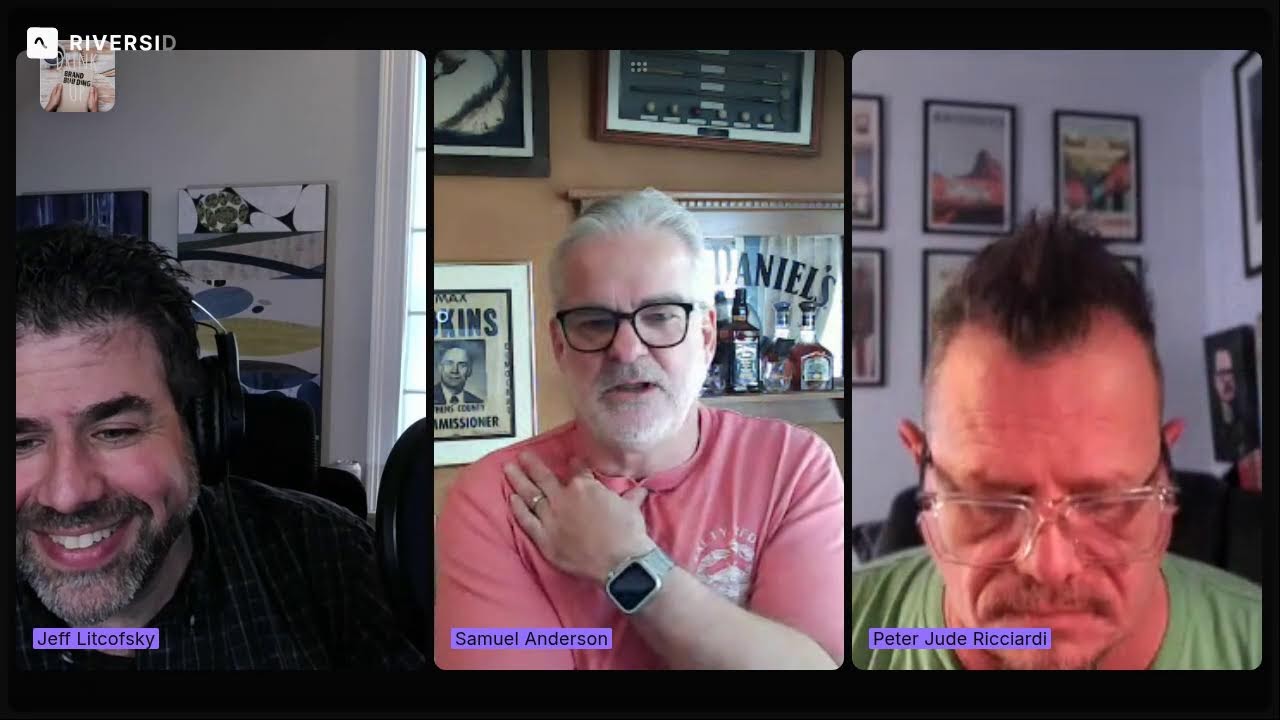
Sam hosts BrandArctica partners Jeff and Peter for a live discussion on branding and marketing. They explain the agency's "Always Be Helping" mantra, share how Disney's emotional design principles apply to brands, and use David Bowie and Prince as examples of successful reinvention. They cover practical tactics: consistent messaging, in-store sampling, and founder personal branding.
Chapters
April the 12th, income tax weekend. My birthday is April 15th. Yes, and it's income tax day, so no one can forget my birthday. And I had a nice birthday gift to the IRS as well. So, so much about being an entrepreneur. But please welcome my co-host Adam Smith and our 2 guests today, Jeff and Peter. from BrandArctica, uh, and, uh, and they're going to tell a little bit about who they are, what they do. Uh, a little bit of Disney in here again. We have another Disney guest, Adam. So, uh, so, uh, Vance, uh, Morris, I think you knew Vance, but Vance was, uh, he does Disney tours. So I'm interested in your, uh, Disney, um, your Disney, how it ties in with your business. But, uh, welcome, Adam. I don't know if you want to say anything before they get started.
Sure.
I think just this will make more sense once Peter and Jeff give their background, but I have several questions, most of which tie into, you know, brand owners and their emotional connection to things and how they can either take advantage of that or maybe let go of things, but we'll get to that later.
That's awesome. Well, tell us a little bit about, you know, I don't know who wants to go first, Peter or Jeff. You guys can arm wrestle for it, but Who the heck is— is this like a brand in Antarctica or something? I mean, is there like a penguin mascot going? What's happening here?
So BrandArctica is really, you know, it's funny because when looking for a name, everybody knows that finding a name on the internet that's available is like impossible. Everybody seems to have taken the time out of their day to buy every single phrase and word available. In this case, which is one of the things I love to do, is name things. Yeah, Brandartica was all about, yeah, I was like, what do we do? We do branding. We're artists. Those 2 things start to make sense. And then how does this tie into Antarctica? Well, A, I'm a huge fan. B, it's such an exploratory, adventurous space that, you know, There's risk, there's danger, there's things to discover, there's education, there's science, there's mythology. And to me, it just made sense to sort of take BrandArctica and tie it all together as an agency that is all about exploration, that is all about risk-taking, that is all about, you know, bringing people on an adventure with their brand and their messaging and their opportunities and possibilities and expanding Expanding on that and taking them to places they've never been before.
So that's exciting. I'm ready to go on an adventure today with you.
Yeah, yeah, we've been working on our, our new elevator pitches, you know, because when somebody asks Jeff and I what we do, it's like I'll go on for 20 minutes, then Jeff will prattle on for another 17 minutes, and we're like, what is happening?
Well, you know, you know my favorite ride at Disney is, right? The Adventure Ride.
Oh yeah, of course, right?
Did you just— you designed that, obviously, right? Was that you? Was that—
Yeah, he designed that.
Yeah, no, Yeah, I did have a lot to do with some of the audio components that go into the parks and some of the programs that went around the world.
That's great.
So I did have a hand in some of those things. The funny thing is, Sam, I had never been to Disney in my life. Poor child. I had never been to Disney before in my life, and I had already worked there for like 8 years. It's the first time I actually went to Disney, and I was like, what the hell? These people are insane.
Hey, by the way, Duncan is just firing off questions from India. So, but keep on going.
So, oh my goodness, what time is it there?
I was—
yeah, I don't know what time it is, but I don't know if he's back, but he's been like a globetrotter. Anyway, I'm sorry I interrupted. I just want to call him out.
I had told him last time I went to India on my honeymoon and it was a ball. Yeah, absolutely a ball. So anyways, yeah, yeah, yeah, yeah.
Peter, you didn't— you weren't one of the singers for It's a Small World though, right?
Uh, yeah, I was the singer.
Oh, okay.
Yeah, no, that was me. There's also several animatronics, um, you know, that have been removed in my likeness. It's such a, it's such a crazy place because, you know, working there was an opportunity to learn so much about what, like, not just every other brand in the world, it was really learning about their brand and how they approached the concept. And I love it. I, I don't think it's, it's really hard for other businesses to just emulate and do that because, you know, there's a lot behind it. But when you look at the strategy, just for an example, as to, you know, the way the path to the— what is it, Cinderella's castle, somebody's castle, you know, is tipped down slightly and, you know, inclines towards it, makes it look bigger and kind of drives you to it. And to walk away, you're walking on a slight incline.
So it's like—
It sounds like a Disney tour is in the makes here.
Yeah, yeah, but it's that weird, like, who thinks of this? We're going to make it more difficult for you to leave. And every, you know, we talk about this with clients all the time that, you know, when you go on a ride at Disney, where does it end? It always ends in the gift shop. And so for a brand, you know, it's so important I think it's important to remember that when someone engages you and you have some kind of transitional transactional relationship, always kind of want to find a way to drop them off in the gift shop.
Yeah.
Well, let's see.
Let's hear from Jeff, Peter. You know, Jeff's out there patiently, you know, it's your partner in crime. So how we play here, I'm going to just, I'm going to chime in and then Adam's the thinker, but you know, he gets aggressive sometimes too. We're gonna pow pow pow at you. And then Duncan is sitting here at 8 o'clock, and he's like, he's like fired off like 6 questions that we got already.
Holy—
um, so I'll give you, I'll give you the Reader's Digest condensed version. So I, my background was in the consumer electronics industry and audio video products, um, and I worked for a, a holding company that had a bunch of brands. And you know that I was in the marketing department and I had— we had an agency, and so I was on the other side of the agency. I was the client. We had, you know, a PR agency. We had production people doing, you know, graphic design. We did everything for the product. We did owner's manuals, packaging, everything that you can think of, all of the trade shows, all of the— all the stuff that goes with, you know, with marketing a brand. Once people started listening through their headphones instead of big floor-standing loudspeakers in their living room, that industry kind of started heading south, right? You know, because we had iPods and iPhones and stuff happening. So I, I left to join a startup. So I got to see like the whole, the whole part of, you know, bringing a brand to life from dust, right? Like everything, um, for a couple of years. And then I decided to start my own business as a marketing consultant, which didn't pan out really well. And as soon as I switched gears and went back to what I was really passionate about, which was web development, having that background with e-commerce and all this other stuff that I had and strategy, I started my own web development business and I did that for about 8 years and it really grew that. I was able to work with other agencies as a web developer and, you know, and help them with their user experience on their websites that they were building because they, you know, a lot of, a lot of the creative is great for a website, but it, you know, it has to convert, right? So you have to have that user experience understanding, you know, what are the paths that people take.
By the way, Duncan is just spewing stuff out here. I just— oh, okay. Reader's Digest version. Sorry.
Oh, that's okay, that's okay. So anyway, at some point in time, Peter and I worked together, and then he was like, you know, we've done a couple projects together, we really should, you know, join forces here. And, and that's kind of how— what is it, 4 years now at least?
Um, so did you adopt Peter? Did Peter adopt you?
No, Peter adopted me. Yeah.
I think we adopted each other. Yeah, I think Jeff told me, uh, at the time I had a partner that was, you know, a mistake. Um, uh, not, not exactly a happy accident either. Um, but like, Jeff was like, yeah. I, I was like, you should come on board. And he's like, not until you sort of extricate the issue and remove it.
And I was like, oh, okay.
That's right. Adam dropped in with me for a brief minute, went away for a while. He's like, okay, he's pretty cool, I'll come back and hang out with him. I got a great partner in Adam. I just wanted to call you out, Adam.
So important.
Thank you.
It is. It's really important, right? Because it has to, you know, and just to touch on that just quickly is that a lot of times people say there's only 2 partners. How does that work? You guys must be fighting all the time. And the thing is, we both have really good lanes that are defined. There's some overlap, of course, but But we know where each other's strengths are, and I think that's where it really works with a partnership.
Yeah, well, you guys play well off of one another. So before we get to Duncan, I want Adam, you know, obviously he had a lot of questions going into this, and then we'll get to Duncan and go from there.
Okay. Awesome.
Oh, you're putting me on the spot, Sam.
Hey, this is a Disney thing. Just ask about, okay, why did the road go down and up, and then what was the methodology behind that?
Well, I think, I mean, honestly, and I always love to ask kind of general questions on behalf of maybe some of the brands I'm working with, and they're all very new, very small, very still trying to be very scrappy. And so I guess, you know, from, from you all's perspective and everything you've seen and done, and I, I do love the, the, you know, many layers deep example you give of like who thinks about putting a sidewalk at a slight downgrade for the sake of just, just that extra little bit of keeping people where we want them, right? Like, so for a new brand, obviously, you know, whether it's social media or, you know, marketing in general or your conversion rate or what— I mean, there's all these things to think about. There's all this data.
Uh-oh, we lost him.
Uh-oh.
See, this is what happens when you're live, raw, and real.
Lost a little bit of your question.
Just a little bit.
And you're still— you're—
so the question is, for somebody who's so very green to all this, if there was one position from which you tell them to start, what is it?
Jeff, I'll start and then you go.
Okay.
I would say, uh, identify who the hell you are.
Okay.
Not who you think you are, but who you are.
That's a post.
Yeah. Um, and then second, I think you have to build a certain amount of consistency before you get— start getting fancy style, right? So you've got to keep some consistency across design, messaging, voice. We talk a lot about brand identity on our side. And one of the things that comes with brand identity is not just imagery and logos and color palettes and whatnot. It's a big part of that is verbal identity. So how does that— not how do you speak, how does the brand speak? Jeff, things to add?
Absolutely. Um, yeah, if you're starting— if you're starting out and, you know, most, most brands, especially in beverage and food, and, uh, they're probably thinking like, I'm gonna do D2C, right? DTC. And I'm gonna, you know, set up a Shopify site. I'm gonna sell. The thing about it is that everybody knows what their experience is in terms of brick and mortar. And, but somehow with the website, they look at it as a different thing, but it's so similar. And here's an example. Like if I was, you know, talking to a founder—
New York just joined the line.
Just to let you know.
Oh, nice.
You know, everybody gets the flyers from their grocery store. In the flyer, there's sale items, there's regular items that they just want you to buy and come in. And you walk into the grocery store and there's end caps. There's, you know, there's different things that are happening. Like you hear, oh, there's a sale today. You hear it over the intercom. If you thought about your website in the same way and merchandise it the same way, thinking about it like this isn't just something I'm gonna build and then forget about. This is something that I'm gonna work for me. I'm gonna see, use seasonality. I'm gonna put in some offers. I'm gonna put in some bundles maybe, and things like this. This is, this is stuff that everybody as a consumer knows and experiences. So it's not, it shouldn't be something that is, um, and that, you know, you guys are popular, by the way.
I'm sorry. I'm, I'm, as you're talking, I'll let Adam ask the questions. I, I just, you know, Jay Williams is a showed up on—
Oh, but then that's it.
Like, I mean, uh, Miss Marco, um, Duncan.
Yeah.
Uh, and then, oh my gosh, uh, Robert from, uh, Cogan.
Oh yes, Robert Cogan. Yeah.
Yeah.
So, so it's like, hey man, you guys are like rock stars.
But, but I'm telling you, Jay is— Jay is the most famous person I know. Um, but I had to get that out there. But, but I guess, I guess what I'm saying, Adam, is that you can work with stuff in a small scale, but I think Peter has it right. Like, What this is about in the beginning, it's about building community, right? And building community doesn't mean posting about your product on social. It means—
We gotta answer your communities right here.
Yes.
You're asking a lot of questions.
You gotta interact with people, right? You have to get them to know you and tell— you're telling your brand story to them for the first time. So you can start small, but you have to have that fundamental stuff done, the foundation done, Before you can go out and reach other audiences.
Couldn't agree more. And it's, you know, I say this, I feel like I say this every week. You know, I've— we were talking about this before we went live. You know, I've not been doing this 20, 30, 40 years, but I have friends.
All right, we keep on losing them. So why He comes back. Why don't we go to some of the questions from the— we just talked about community.
Yes.
Let's go, let's go to the community. Let's start with Duncan. Duncan, I know it's late out there and you're probably ready for bed. It's 8 o'clock, sir, so you probably want to get to bed. So he's, uh, let's start with Duncan here. I'm gonna try to go through my phone here. Uh, he's, uh, well, I can't say this, but his show is so, um, effing hot, I couldn't miss it. Um, Jeff is always laughing and crying at the same time, right?
That's true.
I can just see if I can get to his questions. Lots of love. Okay, so he asked a question here. Um, Peter is able to speak about what brands can learn from David Bowie. He speaks Bowie fluently. So why don't we like, let's, let's go to that question, Duncan. And, uh, David, Peter, if you can answer, that'd be great.
Sure. Um, what was the question? That I— do I speak it fluently, or, or why?
He says, yeah, he said you, you speak in David Bowie. And I'll go back to it again here, make sure I get this right here, because I don't want to, um— let's see here. Um, he had— he fired off so many questions, I was like, I gotta just keep up here. Um, all right. Peter is able to speak about what brands can learn from David Bowie.
Yeah. I mean, I think what brands can learn from David Bowie, David Bowie was the chameleon. You know, he was a chameleon. He was able to inhabit and become so many things, but they all tied back to the one core brand of who he is. He's David Bowie. And what's interesting, and I've been talking recently a lot about people like Prince, David Bowie, or Elton John, and going, you know, they were masters at reinvention and masters at sort of rebranding without losing their core audience. So many businesses are afraid to rebrand because they don't wanna offend anyone. And we've gone through this and said, dude, look, if you've got a core group of loyalists, right? And they don't wanna— they're gonna stop buying your product because you changed the color, then they're not fricking loyalists in the first place.
Don't worry about them.
Right. But the people that are, They're going to stick with you. And the only way to reach new audiences is to evolve. So someone like David Bowie had such a mystical, magical way of having no fear and just changing with the times, not kowtowing to an audience, not cow—
Is that a song? Changing with the Times, by the way? I don't know.
Changing with the Times. I don't know.
Changing.
I'll work it afterwards.
But all of those artists had something in common, which was they had a core brand and they were able to evolve it without losing any of their base audience. Um, and they, they changed with the times. That's why they lasted for decades and decades and decades. David Bowie, great example. Even after death, he's still a force to be dealt with.
Yeah, I think, I think I couldn't agree more. Like, it, you know, one thing, one thing that always struck me, um, I was a musician for a long time.
I'm doing this for Duncan, by the way. He's like, how much is Starbucks paying for this?
I don't, I don't understand though, Sam. You're holding up a Starbucks cup and you're saying Dunkin' at the same time. It doesn't make sense to me. Um, okay, but we got to work on my branding here.
So, right, this should say Adam's company or my company on this. Adam, we need to do branding here for our—
Um, but I was just gonna say, with Bowie, what was interesting is like when— yeah, I don't know if you remember, but probably dating myself, but Modern Love had come out and it was a big hit. Um, but it was, it was introducing him, uh, David Bowie, to a whole new audience. They didn't know Ziggy Stardust, they didn't know any of that stuff. They were just like, oh, I like this, this, uh, guy David Bowie now. Um, because, you know, he was able to reinvent himself time after time. And, and I think, I think brands are like that. We see it all the time. We see Oh, here's a brand refresh. Sometimes it's a brand refresh, sometimes it's bigger. But I think brands have to evolve over time to reach new audiences.
Okay. Now, again, Duncan keeps on firing here. So this is— okay, so Brandy's another audience, but he's asking the question, you study psychology, Jeff, and evidently you made a 3-point shot at Duke. Are you a basketball player? And how does that tie into brands? Duncan, I'm not sure, but I'm gonna throw that out there.
You you did a twenty twenty.
Yeah, what's the story behind this?
I don't know.
Talking about Jeff Leftkovski.
Yeah, yeah, maybe. I I mean, I do I do love I love basketball, so it's not far off.
But it's I'm sorry to throw you guys off. I'm just pitching stuff here.
No, I know.
Jake Williams just put in there. I hate the term pitch slap. I don't even know where that's coming from. Did we say? Did we just say pitch slap, Adam? Did we say—
I don't know. I mean, I like Hitch Slap because I used to listen to, uh, Christopher Hitchens, but, but pitch slap, yeah. But, but I was just gonna say, you know, it's funny with sports, the thing that, that I admire most about sports is that there's— it's the teamwork part, right? Because you can always identify, especially with teams that have a really amazing player on them, but the rest of the team isn't really supporting each other, you can tell. Like, that player could still get 30 points on a basketball game and they would lose every time. Um, and the point that, that I see in that, in, in that is, uh, something I always like to talk about, which is the relationship of sales and marketing. So sales and marketing, it's always, uh, this thing where there's some confusion on, on what role each one plays, but they can't play well unless they're playing together.
Are you a psychology major for real?
No.
Okay, because it sounds like it. Um, Adam, I know you're coming in and out, man, so I don't know, we're gonna check your, uh, your bandwidth. You're back now, so—
Yeah, is it okay?
Yeah, yeah, yeah.
The question, if you want. Um, and I'll pretend I understand it.
If you can read lips, I'll accentuate it.
Yeah, yeah, yeah, yeah. And help me fill these questions, Adam, while he's going, because I got Allison on my right-hand screen. I got Peter, Duncan, Jay's like throwing stuff out there. So if you want to fill some of those, great. Go ahead, Peter.
Sorry. Oh, me? No. Yeah, I think, Adam, you were going to say something. Yeah.
Yeah, no, I got one for you. So I'm curious, you know, and I love the Bowie example. And, uh, of course I no sooner send you a connection request on LinkedIn and I get the Where the Dogs of Society Howl invite, which I love the callback to Elton there. Uh, so my question is, when you talk about like Bowie and knowing his core and then expanding from there, right?
Yep.
As a brand, again, new brand, how do you know when you've, when you've created your foundation and it's time to expand, right?
Yeah.
Because I think a lot of brands go through that, like, like, yeah, I want to create my foundation, and then they either think, oh shit, it's not working, I need to jump to— and I need to leapfrog to another island and try to see if that works, or they get, they get dialed in like you said, and they get, we're only going to be this one thing, and then they die on the vine. So how do they know when the right time is to expand?
That's right. Before you answer, this ties into Jay Williams' quote. He quoted Bowie, by the way, before you answer, Peter. He said, my senior quote in high school was Bowie, and these— okay, so, and these children that you spit on as they're trying to change their worlds are immune to your consultations. They're quite aware of what they're, they're going through. So how does that tie in answering, uh, Adam's question?
Jay must've been extremely popular in high school.
I bet.
I've seen pictures. He was.
No, he was cool in high school. He was like the quintessential collar pop dude. So my answer to that, and that's a great question because I don't think there really is a silver bullet or foundational solid answer to it without trying to eke out of it really. I think that, you know, a lot of brands I see come to market And they're popping, they're banging, they're ready to go. But there's elements of what they've— their brand design or their brand story that aren't ready yet. So they've kind of gone out in front of a huge audience, right? Let's use the music thing again. They've gone on stage in front of thousands, tens of thousands at Wembley, and then they're fucking tuning the guitar. Nobody's here for that, right? So you got to have that shit done at soundcheck. So I look at it and I go, how does a brand know if it's ready to go out on stage. First, sound check, sound check, sound check, tune that shit up. Make sure you're ready to go. I don't recommend approval by committee. You cannot ask your— you can, but you really don't need to ask your tax preparer, your wife, your cousin, your sisters and uncles, your cat, pooch, what they think. Because really, unless they're part of your core audience, it really It really doesn't matter what they think. Plus, once you've involved all these other voices in your head, you don't know what to do. Now you're being pulled in multiple directions. So I think for a brand to know it's ready is to really focus hard on that consistency and that brand story, who their audience is, and what they're trying to communicate to them. What's the value? What's the benefit?
That's first.
And then I think after you've been in market for a while, you'll start to notice stagnations maybe, or huge huge growth spurts. And those are the things that start to inform you of where you are. I think you do have to settle for a while. Brands don't just come out of the womb, you know, walking, talking, and selling. They have to learn to crawl first.
Well, so when I first met y'all, I mean, we've known each other for a while going back and forth. I don't know if Peter, it was you or Jeff. I think it was you, Peter, and maybe Jeff, but You, you, a brand said, hey, what do you think about my package? And you're extremely honest. I think you said like, no, it sucks.
Yeah, I think about that once in a while. I'm going, you're such a dick. Why, why, why can't you just be kinder? I, I can. Um, I, I learned that there's sometimes reading the room. Well, no, reading the room is the most important part.
Well, someone has to be honest, right?
You're not working to get away with that in that industry.
Plus I had driven 2 hours, so I was like, dude, you know, he's cranky.
Um, anyway, uh, yeah, I think that, uh, sometimes brands, uh, are, are missing out on an element of design that, uh, when you have a founder who insists on the design work themselves or driving it, it's interesting to me because you may hire an agency that cost you a good amount of money, and this is what they do, and this is all they do. You really need to learn to trust those creative partners. You need to learn to have one that's reliable and trustworthy that you believe in and follow their guidance. You know, that's the point, is that they're not really— they're not there— they shouldn't be there just to make a fast buck off you. They're there to help you succeed. You know, I've had— we've had Plenty of clients that don't ever end up on our portfolio, and there's a reason for that. And that's heartbreaking to know you've done a lot of work, but you're not gonna show it because it ain't what it should be. Um, so I think that they've—
I'm streaming your friend Allison. Can you see the stream I'm putting on? She's talking about you, by the way. So I'm just, I'm learning as I'm going, as you're talking.
So good, good.
Adam will keep me honest. I'm trying to answer all these questions. You guys are so popular that my phone is blowing up. Keep on going.
So, um, you know, the only thing I would add too is, um, you know, there, there you have to be slow and steady with a lot of this, that there isn't, uh, there isn't this, this magic, you know, thing that you're gonna throw into the mix and all of a sudden you're gonna be poppy, you know. It's just not gonna happen. So like, I mean, that's not the usual. So what's most important really is, you know, we talk about this all the time, is that, you know, push and pull, right? So the idea that if you're constantly pushing, it's probably because you haven't done like the fundamental stuff with— we, you know, again, going back to community, building your community, right? So building that base of people that love, love you locally, maybe you can expand regionally then, and then think about going, you know, national. But the idea here is, is that You have a community of people that, you know, they could talk to each other without you even involved, right? He's got props.
Um, but hey, man, no, that goes really well on the algorithm of LinkedIn. If you do yourself holding the sign, yeah, by the way, you can get like 20,000 likes.
I know.
So that one, you should, you should picture that one, post it, and you're gonna— your, your, your, your funnel is gonna fill up today. Sorry, Jeff.
No, that's okay. Like, sometimes, sometimes if you post— it's funny, sometimes if you post less, you get more. Like, that's just the way it works on LinkedIn. Like, if I— I'll post today, I'll put tariff and nothing else on the post and see what happens.
I try to keep up with you. You post a lot. I mean, I don't know, I'm like, I'm like, okay, I got to get to Jeff, my friend Jeff.
He's a serial poster.
I have, I have, uh, this team of Oompa Loompas that take care of, uh, things for me. Anyway, but I guess what I'm saying is that you build slow and steady. Curtis Knight, who has a Lemonyicious product, he's like, he probably should do a TEDx talk about slow and steady. He's really building his base for his product. He's going to like all of these, you know, fairs and, and, uh, in, in different places in person, right? He's getting, he's getting the community together before he expands through retail. And I think, I think all, most brands need to do that. They need to do that work. Um, even when we had, uh, on as a guest, uh, Chris Kirby from, um, Ithaca Hummus, and, and that's how they got started. They were at farmers markets selling hummus. And look where— look how far they've gone. But they had to start somewhere. And I think that's the hard work. You have to do the work on the ground, do those samples, get in front of people, have those discussions and everything before, you know, you can really, like, really grow and expand your brand.
All right, I'm thinking. You're thinking over there. Go ahead, you're it.
So I'm curious, when you talk about, um, uh, you know, uh, uh, tuning the guitar at band practice, not at Wembley, right? Again, I love the analogies. What is that from a, from a brand stand— like, it's easy, it's a very easy thing to conceptualize from a musician standpoint, or like being a stand-up, right? practice your jokes in front of the mirror before you go do them on stage. But like, from a brand perspective, I think you're right. I think a lot of brands are eager. They're like, oh, we want to go play a show. It's like, dude, you don't know a basic chord yet, figure that out. But what does that look like? What does that work actually look like to practice, if you will?
I think in the beverage world, it's, it's, you know, developing that, that the flavor profiles and the process with which you are creating creating the product.
Sure.
You know, you're gonna have to start there and you're gonna have to test. You're gonna have to test sort of— I think in some ways you test silently, you know, you quietly background, backchannel it, and you get people to see what's working, see what's not. And then, you know, you may move on to what kind of packaging this is gonna go in, what works, what doesn't, what's effective. You know, if you're coming out a sustainable, you know, earth-friendly product that is in a plastic bottle, you've already made a huge effort, let's say, right? Or if you're coming out with some kind of, you know, liquid yogurt drink in a paper carton, it's like, whoa.
Right.
It's a little dry heaty. You know, so you have to start with those basic things. And then I— it's interesting to me because Because sometimes people pull up and they go, we're ready. And my Aunt Hilda designed the logo.
Put it on.
Let's go.
See, Adam loves this stuff because he goes, he'll, he'll get into that. Um, I don't know. So, uh, I'm gonna, I'm gonna put Allison's question on the thing to see if y'all can read it. This is gonna— this is in real time. So she has a pretty big question about sprouts and national. Jeff or Peter, you want to take this one?
But can you see it?
for example, to increase market awareness. I often worry about these fantastic brands who launch but then get disco'd. Disco'd?
Yes, discontinued.
You want to start with that?
Yeah, I mean, again, I think, I think that, um, if, if you're, if you're launching there, you probably need to set up, you know, some in-person marketing, right? So some, some samples and You know, here's the thing, here's the thing. Just even going back to the previous question, how important, like with the tuning at Wembley, uh, you know, when you're doing an event, um, when you're planning an event, plan what, what you think the experience will be for the person who's gonna, gonna approach your booth or, or go into your space or whatever it is. Like, think about it, think about it strategically where Where there's a, um, you're trying to develop an experience, right? The experience isn't just, oh, we're gonna have these flyers they can take, right? Because that isn't an experience. The experience is like, what's the interaction going to be like? What are the points that you're gonna, you're gonna make? I mean, salespeople do this all the time. They, you know, they create a list of sales, uh, points, uh, that they want to cover. They want to make sure that they cover. But it's important for a brand too to communicate what it's all about to people. And I think— yeah, go ahead.
I wanted to add to that too before I forget it because my mind is like a sieve, right? See, I already forgot it. No, you know, that experience of like getting into a store of that size and then sort of getting disconnected and plateauing and sort of becoming a background player all of a sudden. And you were talking about sampling. And one of the things I remember we did really well at Disney, we weren't a sampling company, but a lot of times we had teams out in supermarkets, huge chain supermarkets all over the country, and they would do a show and a thing, and it was usually sponsored by somebody that paid for them to be there. And we were shilling, they were shilling whatever cheese while they were doing it. But here's the thing, when I go to a store and see a sample thing, you know, it's somebody standing there walking around around awkwardly with a tray of cheeses and we don't know how long they've been out, but there's one thing that happens. I get a toothpick, I stab a piece of cheese, I go, mm, delish.
And they go— I'm heading to Costco after this call, man. I'm heading to Costco.
Here's the thing.
When you have a little table set up, this is one thing that I always learned. And this is a back for brands and back for building your brand and your strategy. When you see those tables at a supermarket, often And what you'll see behind it are boxes of product all laid around in a skew and some trash on the floor, someone's sweatshirt hanging on the edge of a chair. That's just garbage marketing. You know, I look at that and go, the whole experience of walking up to that table and I can see underneath the skirt of the table all the bullshit under there, that's no good. So I look at that as something as simple. You've got a great product, right? It's balls on. Everything about it is great. The packaging's stellar, but the table and the space in which I am experiencing your product is messy and grungy. Someone's got a piece of pizza on. No, you never eat behind the table. So I look at it and I go, part of this experience is, try my cheese. Okay. Did you like it? Great. Tell me why you liked it. Tell me what you don't like. Answer a trivia question and I'll give you 3 coupons to go get in aisle 9.
Right.
And they go, oh yeah, I love trivia. Bang, bang, bang. Now I'm engaging. The longer you're there, I give you something, you get something, you go away, and nothing draws a crowd like a crowd. So instead of just handing out cheese or, or, you know, beef frank nuggets, um, you know, make an experience, make it a conversation. People will see that someone's talking to you and something's going on and they got something and they're laughing and smiling, they'll come over. And that's how you move it. That's how you get going. That's how you push the brand further out. That's how you become not disconnected. And that's how Sprouts goes, what the fuck? What's going on over there? We gotta get those guys on an end cap. That's my thought.
It's funny, I have a brand that we represent and they got into Sprouts. We're gonna sell like 100,000 cans. But you're right, you know what happens after you sell them, right? And then I've talked to another brand owner. He was around for like 8 to 10 years out of Chicago. He was in Target and all the big places. He had coal boxes, the whole bit. He closed down his shop, you know, in the last 60 days, you know, after like an 8 to 10 year run, you know. So it doesn't— it just doesn't happen magically at the end of the day.
And there's nothing to stop an owner or a founder because, look, you know, these smaller brands often have limited Resources, right? They're a 1 and 2 person crew, or maybe just a skeleton crew. You know, Sam, there's nothing to prevent someone from the brand going into that store, you know, or Big Y, or, you know, whatever it is, Sprouts. And, you know, you find your product on the shelf, you clear them all off, put them in the basket next to you, just clear it out, maybe leave one there, and then take some TikTok videos of just how it's selling out and how it's going. And you could put them all back and go about your business. about your way, but you're creating sort of this fault, this urgency. And I'm not saying lying, you know, but you're creating the scenario. You go, how could I do that? I can't do that because it's not actually selling. No, you just make— that's advertising. You appear, you make it appear as you need it to appear. And you say, you know, we've got— we had 80 cans here last week. Now we've got 2.
Wow.
And now people are going to go, oh shit, I better run down there and get one.
I love that. I don't know if you know Boone's Bourbon, And, uh, you know, I don't represent him or anything, but he always does a video where he's like, does a taste and he's walking into like a Total Wine and More or stuff like that. Then he shows his bottles and the consumers around it and he's showing like things are happening. And, uh, he's, he's, I think it's genius on his part. He, uh, he's building on, uh, LinkedIn, but he has quite the following on like YouTube and, and Instagram. But he does what you're saying. He's, he, he He's constantly out there talking about his brand, how he's doing his tastings. He's down in Tennessee, the whole bit. Is that what you're saying? Stuff like that? Yes.
I mean, you don't need a huge team if you can't afford it. Look, the reality is, is that if you can afford big— if you can afford Arnold as an agency, great, go nuts. You should be able to alleviate an agency or some kind of team that helps you that's supposed to alleviate stress and day-to-day. So I think it's important that people realize that you don't have to have all that stuff. You can create the situations that you need. And again, like the Disney thing, you know how— you know why they put, uh, Snow White back in the vault for 20 years? Because nobody was buying it. So what do they do? They put it in the vault for 20 years, they take it back out, and everybody wants it now.
Yeah, here's— oh, we got a carrot!
So you can create, no matter what size business you are, I think you can create— yes, senses of urgency. You can create the hype. Um, if there's 2 clubs and there's a huge line in front of one and no one in front of the other one, which one are you going in? Right, you're going in. Yeah, you're gonna go get in the line. I, I—
Adam, too, uh, another thing too, uh, and we, we ran it, and I'm sure, you know, this is the case But you can start small even with an agency. Um, you know, it's, it's, it's not like we talk about this all the time. You don't have to get married, right? You can date first. Um, so, so the thing, the thing about it is that every business is at a different place, right? When they approach us. And so it's not cookie cutter, right? So a company that's making, you know, $500 million a year, And revenue is not in the same place that, you know, of a startup. And the idea here is, let's give them enough so that if they're doing it themselves, let's say like social media, give them enough direction and enough ideas for interesting campaigns, let's say for advertising, that they can go and run with it and then come back when they need some more. Uh, this isn't about— it's not about like doing everything all at once because, because it's— that's impossible in terms of resources, right? But as you build, as you keep building, um, there'll be more resources to put towards marketing. I mean—
That's what you said to me, Jeff. I think when you and I and Peter were talking is that you can grow with your client, right? Like we— my partner Alicia says this. I know Adam says this all the time is What is it you say about clients? It's like, I know you don't have a lot of money or whatever. I can't remember the term you always use every podcast. I should know this in my head.
But the, uh, the, uh, well, so, so the, the, I don't know if it's PC, but the, the industry term is pre-revenue, which I fucking love because it means broke.
Right.
Right.
And that's, you know, so it's that. And my, my comment to folks is always like, I'll meet you where you're at. Like, if you've got several thousand dollars and you want to retain me to do everything under the operationally, God bless, right? If you've got $150 once a month and you want to talk to me for an hour-ish, we can do that too. I do not care. I purely just want to be of the most assistance I can for where you're at.
But there's one thing you always say, it's like, don't tell me how much money you don't have. What is that you always say? Like, of like, I, I like, I know, let's just call it as you don't have money. There's something you always say if you think about it. I mean, you say it every podcast. Podcast when we talk about brands.
We need to— I'm sure it'll come to me the minute we get off the phone.
Well, that's fine. I mean, if you think of it, just blurb in and, uh, and, uh, interrupt us here.
Yeah. And just one last thing too, in terms of like, it's, it's, it's, uh, is it broke? Oh, it could be broke, right? No, I was just gonna say like, in terms of like, yeah, it's, it's a nuanced thing. It's an expense, right? Marketing and advertising, all that stuff. But It's not. It's an investment. It's just like buying a machine that, you know, that's going to make your product. Having a realistic expectation in terms of where— how you're going to grow your company and not having what's considered like industry standard of, let's say, 5% to up to even 20% of your revenue used for marketing. If you don't have that kind of realistic understanding, like maybe you do need more investors and things like that at that point, but— The point is, is that you can't go to market— anyone can't really go to market with a brand new product and not have like at least 10% of their revenue earmarked for marketing. You can't.
One of our, one of our partners there, Big Agave, um, they have like access to every agave distiller in Mexico that Alicia and Bev Assets is partnered with. But they talk about one of the things they do is kind of the pre-conversation with brands are like, hey, these are the things you have to do 20% marketing, like you said, 10% in trade development, you know, and packaging this. And if they don't have it, they're like, look, we're not the right stop for you. That's right. So they prequalify them.
Yeah.
Quite frankly, I was going to go back to something Allison— she was talking about Saratoga Water.
Yeah.
And Cheers and what they were up to. But— and she asked me about the club analogy. And I want to give you an example of entrepreneurship, I think, at its best. And I rarely think of it this way. And I go, yeah, that's what this was. You know, so I was in a band for many moons and played in clubs all over Boston and in California. And that was our lifestyle. That was our thing. Now, at the time, everybody and their brother was out on the street handing out flyers for their show, for their show, for their show. And the last thing anybody ever needs or wants is another flyer, right? So one of the things we did when we realized that this was just not going ever work the way we wanted it to. The band was called Throat Culture, and what we did— now you got to get all the paper, you got to make some artwork, you got to print these things in the thousands. 50,000 flyers will probably get you about, you know, maybe 1,000 people if you're lucky, you know, probably closer to 500. And that's not cost-effective, nor is that time, you know, it's also time-consuming. So one of the things we did in this band Throat Culture was we went out and bought throat depressor sticks, right? Those cost, you know, 80 cents for a box of 1,000, right? So as young musicians, we have no money. We're eating ramen if we're lucky. You know, there's an expense saved. So we've got that. What did we do next? We stamped the— we used a rubber stamp to stamp the name of the band and the date of the show and the club on it. Bang, bang, bang. We could sit there with our friends and drink beers and do whatnot and just stamp these things all evening, and we'd have thousands of them.
So at the tasting table, should I bring a stamp at my tasting table and just start stamping people?
But I mean, I would go out on the street with the gang, if you will. We were like a gang. We would go out on the street and just hand these things out in the thousands, and everybody was like coming over to get one. People that weren't even even ever gonna come to the show.
Right.
They just wanted whatever it was. What is it? And that's how we packed clubs. And it was innovative. It was different. It cut through the bullshit of the flyers, what everyone else was doing. No one could duplicate it because they weren't named Throat Culture. And, you know, it was just a way to reinvent the process. And this is what, Adam, I think, you know, a lot of startups need to think about is how I reinvent simple things? How can I take the simple steps that are traditional or status quo or expected, and how can I look at them in a different light and leverage them in a different way?
And that's—
if you need a partner to do that, you find one.
You know, we're— all the brands we market, by the way, Adam is our target audience, by the way. So just know that we always talk about— I'm not. So we're actually going to do a Gen Z, boomers, and Gen X kind of podcast.
So nice.
At some point we'll invite you guys on. But anyway, he is the target.
A lot of great questions in here, a lot of great comments.
Appreciate it.
Yeah, can you see that? Can you see the questions coming in?
Yeah, yeah, when you bring them up.
Yeah.
If you guys want to— if you want to kind of help me field these things, um, you know, Duncan was, uh, trashing us earlier, but it's all positive trash, by the way. It was good.
Yeah.
And Duncan, thanks for being here. Bring some questions on for these guys. I know you know them.
And, uh, one in the chat, I don't Okay, I'm not seeing the—
I can see our— Adam can field some of this stuff to see. Um, Robert brought a lot as well as Jay Williams. Um, you know, people prefer honest feedback. Uh, Robert Tallwater Duncan. Uh, see, uh, I don't know, I was trying to see if I get back to Duncan here, but he might be in bed. But he actually— someone said, uh, Robert said, uh, he speaks U2, U2 and baseball.
Yeah, man, I love it. You know, U2, obviously, uh, a long-term incredible band. They've come a long way since their, their tight, you know, tapered jeans and, and big poofy hair. Um, you know, they've, they've changed with the times. Unfortunately, I think they may have, uh, hit a bit of a wall since—
Yeah, I mean, I mean, U2, the thing about U2 is, um And for Peter and I, because we grew up around the Boston area, that's where they were introduced, you know, with such a huge, um, Irish community in Boston. And, and they were— that was the first entry point into the U.S., was, was through Boston.
Yeah, they actually played the Rat, which is the place I had the Rathskeller.
So Adam found something in the, uh, in the, the thing he had when he was gonna ask a question.
Well, I, uh, and I'm trying to, to ride the line between being able to field, uh, comments and read these and losing my bandwidth again. But something we had— I forget who it was— is someone we've had on the podcast before made the comment, and I've always loved hearing this, that going back to what you said originally, Peter, the brand's voice or the, the brand itself is not— like, you as the brand owner are not the brand. They're 2 separate entities. And I love hearing people talk about that because again, as somebody who helps work in this space, like it makes sense, but I think for a lot of brand owners, they feel like they have to be one in the same. Right. And so maybe, maybe give us your opinion or your feedback on that.
I mean, it's rare that a founder or CEO or brand owner is actually their own audience. I mean, it happens. But like when when you're trying to do something as simple as social media for a client or or someone on the team is in your internal team is doing social media for you, and that owner is hawking over them, watching every single piece of text and needing to change a line. I don't like the picture, and I don't ba ba ba ba. That's gray because you know what? These organic Posts are gonna disappear off the feed in about 90 seconds. So let's make sure we spend 2 weeks trying to get it perfect, right? Because it doesn't sound like me. Well, it shouldn't sound like you because you, sir, Tom, Bill, Frank, Sally, you're not the brand. You're not a package of noodles. You're not a bag of coffee. You're a human being that owns a business. So stay the fuck out of it.
I got a question from Jay Williams. All right, so I get— I'm fielding questions, so I'm not doing a good job of paying attention over here. But, but does a brand need to be shocking or provocative to get attention like LD does? Well, Liquid Death, I guess what he's talking about.
Yeah.
Or should it build a community? For example, a brand like Freebird. Yes, great call out, Freebird fans. I gotta get That's my new sponsor, by the way. He doesn't know it yet, but Freebird is our new sponsor.
Oh, nice. Send him the bill.
Have you heard of Freebird? Yes, Freebird again. The impressions you're getting today are incredible, Jay.
I'm gonna fill my pool with it this summer. That way I can swim in this cool, crisp, southern water, and I can drink it while I'm in there.
No, I'm gonna give you a pump.
Oh my God.
Yeah, I know Duncan is.
Duncan is losing his mind in India right now. He's like, oh my gosh, I'm losing my mind. Jay, I'm gonna take over the podcast again.
I'll send you my address, Jay. You can send me the check invoice.
Right?
You got you got two sponsorships. We got one for Brand Arica and Drink Up, and then whatever next. So it's great.
I love it. I think Jay's got a great point, and I do think it leads back to what Adam had asked us at the very beginning.
Yeah.
Who are you? As the caterpillar asks Alice from atop his mushroom stool. Who are you? Liquid Death is wildly interesting and crazy and nutty and off the wall. That's their thing. Freebird, on the other hand, and this is really interesting because Jay is one of those people that has as a founder and owner, he's not in any way, shape, or form— and we've talked to him on our podcast, you know, he's right in there in the mix, and he gets it, and he knows which lane he should be in and when to duck in, duck out. And I think he's very good at it. I was saying that the brand of humor they're using on their website, I love, because it's very snarky, it's subtle, and it's cheeky, and it's clever. You know, it's not the same thing. So does a brand need to be combative or combustible or shocking to make it? No. Who are you? If you're an emotional brand and you're pulling at the heartstrings, then be that. You know, not everyone is funny. And being funny, by the way, and we all know this, is one of the hardest things to do because it's so subjective. It's a huge risk take. So if you go the let's be com— let's be wildly outrageous and funny, you know, you better be freaking funny.
Yeah, I can't keep up with, uh, Jay, honestly. I, I, I saw like 3 posts. It's kind of like Jeff. He's like Jeff. They were there. They post like every hour, right? And I literally don't have like someone in India posting for me. It's me and my wife. And you did a post on this, by the way. So I'm posting. What are you doing? I'm like, Well, I'm trying to reply back to Jay, you know, and then Jeff, I'm trying to reply back to him. You know, it's like 10 o'clock at night and I'm trying to, you know, power post up just to try to keep up with it.
Well, you know, that's a, that's a good point actually, Sam, because, because there is a difference between— so the founders having their personal brand is, is important to me, I think, especially on, on platforms like LinkedIn, but even on like Instagram and, and TikTok, you know, you that there's an opportunity there. But the personal brand is different than the brand. Those are the 2 different things. And we see this on LinkedIn especially. You know, Unbun is not Mark Samuel, right? Those are 2 different things. It's his business, but he has his own persona, his own personality, his own personal brand. on LinkedIn. And I don't think of his brand directly when he makes a post because it's typically not about his brand, it's about him. And I think in the end, what's important for a founder is to establish a personal brand because people like to work with people. It's not about working with a brand, especially in the B2B space. It's about the people. And so the, the trust in the people is gonna lead to a trust in the brand.
Yeah. And, and that's what, you know, to that Jay's point is that I, I agree 100%. I do think that a founder does need to be involved on social media.
You scared off my, uh, co-host.
What the—
I know what happened.
He like disappeared.
Where did he go?
I know he'll, he'll come back. Um, he said, uh, he goes, uh, he goes, uh, he goes, hey man, I'm having internet issues, so I'm gonna hop off, but I'll message the guys and Tell them thanks while I go put on my tech support hat.
Oh yeah, no, I think I love that. We even recently had—we have a bank client that I was saying, you know, your bank is just like all these other banks in the region are experiencing the same opportunity. And I said, you know, what drives me nuts is that you guys are not taking advantage of this. And I'm seeing the president. of other banks come onto LinkedIn and actually share their information and say, you know, we know everyone's concerned about this, that, and the other thing. Here's my direct line, here's my direct email, and if you have questions, I can explain and help you, you know, get through this thing. And the client of ours said, well, the CEO, the president, he doesn't really like social media, so he's not going to do that. And I thought, it's not about you. I don't care if you like social media or not, but you are a human being. You're the head of the snake. You need to be visible and you need to be available. Otherwise, how can you claim to be a place with a human touch where community is important if you're unwilling to participate in the conversation? So I think for founders and CEOs, absolutely. You are not the business. The brand page does one thing. You do another, you feed each other, and that's important. That makes success.
Yep. Let me fire another question here, and Jeff, you can take this one. All right. This is from Allison again. I'm gonna put it on the screen. How can you encourage a founder to get more vocal in their own personal branding experience?
Yeah, I mean, it's funny, you know, you don't, you don't have to be like front and center and, and, and speak to a camera because it, You know, even for myself, like, you know, doing videos of myself talking, that kind of thing. I think you can start, you really can start small. A lot of it in the beginning could even just be relevant content that you're sharing with people, right? So, you know, just being able to start off by looking at some content that, you know, is going to not only connect about who I am, but connect the consumer or, or business partner, potential business partner in terms of, of the business that you're, that you're running, right? So your brand, it's, it's about, it's just about not, and again, not thinking like you're going to have to create these very clever posts every time. on social. You— it can be about your, you know, leaving your 2 cents, your point of view on things, on things that already are part of the discussion. And that's a good way to start, is the— is to just, you know, look at it like, you know, what's your hot take on something? Because that's how people get to know you. They get to know you by, by what your opinions are, what your— what your thinking is, your strategy is behind Uh, the decisions you make for your brand, right?
So BrandArctic is a brand, right? So when I, when I follow you and engage you, as a matter of fact, it's funny, when I get up in the morning, there's just certain people I want to go talk to. Uh, Peter, so you're— get ready, I'm going to show up on your feed at like 11 o'clock at night, right? Is he sleeping or whatever? I'm like, so give me some love. And by the way, uh, you know, Jeff, you gave like all these other people call out and love today. I'm like, how do I get my name and the call out from Jeff?
You'll be on the next one.
Hey, William's just caught up by everybody. But it's great.
You know, I'll just add to that really quickly is that I think that what a lot of people and founders and CEOs or anybody for that matter, you know, when you're looking at how do I work my personal brand into this, look at your ands. Look at your— now look at your profile headline. You know what? I'm a CEO, I'm a founder, I'm a designer. What are you beyond that? Because nobody Nobody cares. Okay. Everyone wants, they want to know you. So anybody can claim to be, you know, CEO, founder, president, but like, what else are you? And this is where you get into the interesting part about the ands. I am, I am all of those things. And I'm a father, I'm a husband, I'm a son, I'm a brother.
Yeah.
A gardener. I'm, and those are things I can now talk about. Those are things that are now relevant. And when you— the other side of that is for anyone, if you're going to do— if you think about your content, what your expertise is, and create one core big piece of content on that, now go through that piece of content and chip away little elements, each mini content pieces, and now you've got more content. And then you take that layer and chip it into smaller pieces, and now you've got 2 months worth of content out of one piece that you can just put out there. And that's how you build a process for this.
That's so brilliant. What I do is I essentially— some guys are going to knock on my door and my dog's going to lose their mind. Anyway, that's so important. You know, it took me a long time to find out who I am and what I'm about. And matter of fact, I know you're familiar with the House of Brick guys and Michael. I call him Mike Sensei, but He gave me the brutally honest truth. He goes, no one cares you're in the C-suite. No one cares you were the vice president. Who are you? Like, they want to know you, like the authentic you. So, Michael, if you ever watch this podcast, I don't know if you give us some time, he might be drinking apple juice with his son. That's his favorite. I think today, driving his Volvo around New York.
Nice. That's awesome. Yeah.
Yeah, so a couple things just to wrap up. I know it's 10:30 on the hour, so I want to be respectful of y'all's time. First of all, thank you for joining. This is by far the best Drink Up podcast ever hit, so you guys are like rock stars. So thanks for doing us an honor to come on, um, uh, the podcast.
Oh please, thank you for having us. I said I'm coming on that show.
I know, I got the email like yesterday afternoon. It's like, is Peter invited?
Peter's fucking freaking out again.
Peter's like my woobie. I can't go anywhere without him.
Yeah, he's nicely asked. I'm like, well, of course I, I'm gonna disinvite you, Jeff, and we're gonna bring Peter on.
That's okay. Oh, sorry, my dogs are gonna definitely lose their mind.
A lot of tandem things, and we do a lot of things together. And as you experienced in the very beginning, sometimes we need to be like, just, you know, muzzled, like stop talking. Right. Well, that's why you got me.
I'm just gonna just come in and just interrupt you.
You gotta, you know, there's nothing worse than a guest, Sam, right? That doesn't talk. Right.
Well, especially when you're live, raw, and real. Like I have people, well, do you have a script? Uh, like a, a thing that you follow, an agenda? I'm like, no, no, you just come on, have coffee with me and, and the whole bit. So, uh, it's a dog. Yeah. But, uh, yeah, that's right. As the dogs, as the dogs bark, you know, I'm losing my mind.
Peter, those are dogs of society. This is live, Robert.
I'm just gonna let them just see. Hold on a second, you. I'm gonna let them.
I'm gonna let them out. Hold on a second. Okay. Yeah. Sounds like my dog talks amongst yourselves. Jeff, how are you today?
Huh? Pretend nobody else is here.
Oh, oh, I'm fine.
Thanks. Thanks. That's how we go. So just to wrap up, guys. Sorry about that with the dog barking. That's what I love about this. I was. I kid you not. I was on with Duncan. on his Firebelly, uh, Social Hour, and he had me on, and he records it, right? He does a really nice job.
Oh yeah.
And this black cat flies over, and he goes, oh, I'll edit that out. I'm like, no, no, no, no, you got to leave the black cat in. That's what makes this authentic, man, the whole bit. So yeah, but, uh, serendipity. So I want to give both of you both the floor, right? So each of you, what would you want to leave everybody with about your company, about your experiences? Great information here. that you've shared this morning. But what do you, like, what do you want to leave, like, the people to leave this conversation with today?
Jeff, go. You first.
Well, I think, you know, one of the things is that we're super accessible. Like, this isn't about, like, you know, set up a meeting with us so we can bill you a ridiculous amount of money. Like, we're accessible. Ask us questions. Like, I always ask people, just, you know, reach out to me if you have a question. I'm here to answer. Like, both Peter and I have a lot of, a lot of experience with way, way big companies. Like, these were big billion-dollar companies, and, and we took a lot from that, and we're able to share it with other people. And it's not about, like, you hiring us and getting that, you know, us getting that retainer from you. It's not about that. It's about that, that we're very passionate about, about helping brands grow. And that's the bottom line.
Yeah. So that's like the pro bono work we all do, right? That we generally— we're like, you don't have to pay me to talk to me, right? No, really good information, insights we'll give you. And look, if you want to take it further, great. Which I love that. That's great, Jeff. That's really good.
Yeah, absolutely. I agree with everything Jeff just said. And, you know, where we're concerned, I guess, is just being good partners. for people. And they used to say always be closing. Glengarry Glen Ross. You'll get the fucking steak set, the steak knives, right? Number 2.
Yeah, the steak knives.
I always say always be helping, you know, always be helping. ABH. It's not as catchy, but always be helping people. And finally, I guess, you know, when we look at BrandArtica, we go, look, we're loud, we brand loud, we brand weird. We— our brand has bite. And, uh, you know, if you're looking for a safe option, something that's traditional and gentle, we're not really that.
It's funny, I talk about the 5 people in a circle. I did a post, uh, you know, obviously it was ChatGPT, and I'm like, tell me my 5 or whatever. But I want to put y'all on my 5 because one thing for sure, you're going to tell me, hey, look, your brand sucks. This is what we need to do and help us reinvent the whole bit.
Yeah, that's it. I mean, we're thrilled to have been here today. We've recently— we've got our podcast, The One Seventh, and we're talking to weirdos left and right and getting into their brains and figuring out what in the hell is happening up there.
Takes one to know one.
Guess I'm not weird enough to get on. I'm going to work on it.
You're on the list there, my friend. Yes, I'm editing it also. So we're a bit behind. The newsletter is Where Society's Dogs Howl. Is that it? Where society sucks?
No, Where the Dogs of Society Howl.
Hence my dog's barking. By the way, Allison said, who here doesn't have a dog? Question mark. Yeah.
If you want to sign up, subscribe, it's out there. We're trying to do some LinkedIn Lives at the same time. We're having fun. This is all we know, Sam. This is all I know.
Yeah, we can't do anything else.
So yeah, if you guys are on the market to help, like, I'm looking for a producer. You want to produce my show?
Right.
Yeah, if you find someone, uh, let me know. But thank you so much, both of you. I, I, you know, it's funny, I go back to a post that, uh, Marina did, um, when she— you went out and visited her. You took the time To go visit, and she was so proud. And I just, I just, for some reason, it just stuck with me. And she's been so, she's been so proud with learning about, you know, the whole bit, the whole bit here. So this is why my wife's asking for a checkbook. All right, so she comes in. Hey, can I have a checkbook? She's like someone over a bit. That's not for the IRS. Completely. But I just think about that post she did, and you guys are really genuine, really good people. You took the time to go visit her. I know she has a brand that she's trying to develop. Maybe you're working with her on that.
We didn't even talk to her about that.
No, we didn't talk to her about that.
Yeah.
We talked about family mostly.
Well, that's good. Well, then, you know, let's say you're real, right? You're authentic, and then maybe it transfers to something else. But, and she's, and I had a lovely time with her as well. But thank you so much for joining us. Thank everybody. Thanks everybody for joining us on Drink Up this Saturday morning. Wishing everybody a great weekend.
Yes.
And we'll talk soon. Guys, stay on the line with me. A lot of times people forget when I hit stop, they go too. I'm like, no, you got to come back.
Yes. Take a screen grab of us for posting later.
Yeah, go ahead. Do screen grab. Yeah.
All right. Make a face. Give me something. Give me some love.
Are you screen grabbing?
It's grabbed.
Okay. There you go. All right. Here you go.
I don't know.
Jeff looks like he's struggling to survive. I'm not sure what's happening there, but we'll figure it out. What?
Oh no, that's okay.
Now, so the funny thing is, so we did a podcast with CoolMox, uh, Danielle, and Happy
More from Samuel





He Sold Pickle Shots Out Of His Trunk. Now He Runs The Co-Packer That Won't Bury You In MOQs.






What market do you think gets overlooked most? #Toronto #BrandStrategy #Marketing