Welcome to our live show!
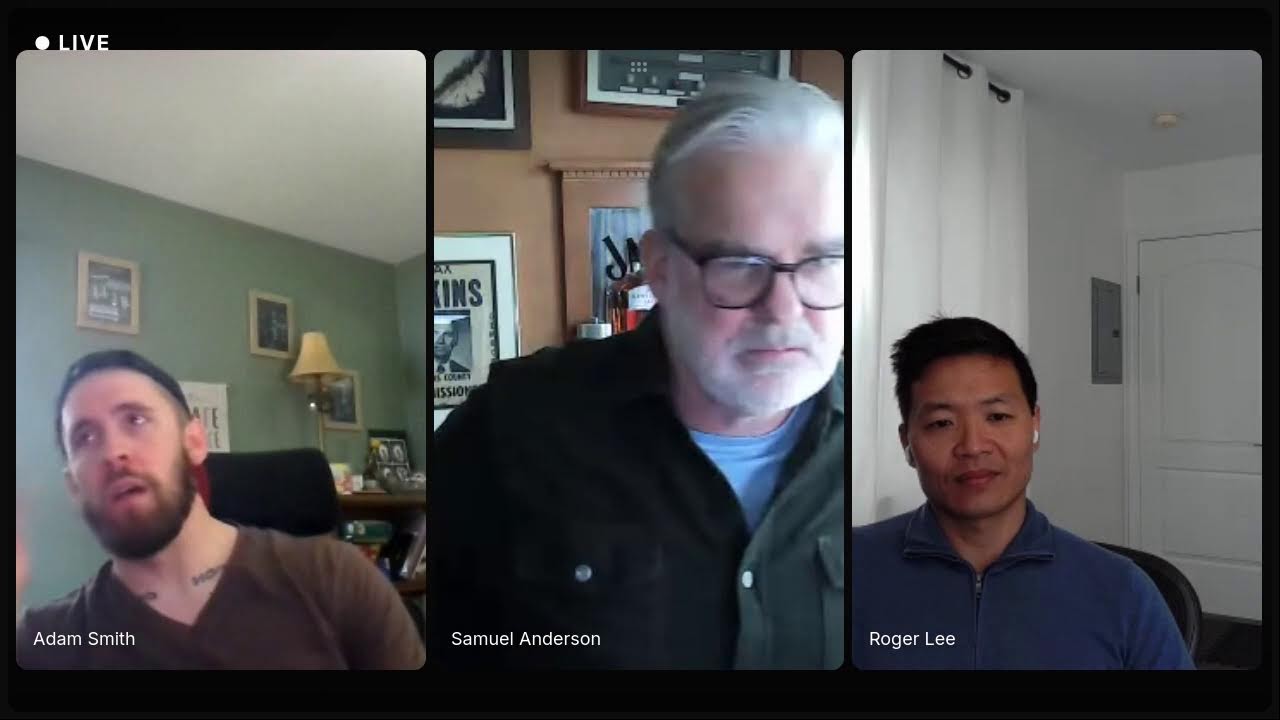
Samuel Anderson, Roger Lee, and Adam break down Expo West: booth costs run $10-12k with total spend hitting $25-30k for small brands. Functional beverages and protein dominate the trends, but many founders don't understand MOQs or extract solubility. Networking and buyer badges matter more than flashy booths on a tight budget.
Chapters
The Drink Up Live Raw and Real and have another co-host with us. Roger Lee's gonna be stopping by quite often, but we wanted to give an update to Expo West. And both Adam and Roger got to go to Expo West. I was banned. I tried to get in, but I, I did not get in on my media pass. So maybe next year's the The code word. But welcome, Adam. Welcome, Roger. Uh, welcome back. Looking forward to learning a little bit about Expo West. Who wants to start?
Well, I just want to say thanks for having me back again. Um, I have half the talent of Adam, but at least I look better than him, so that's why I'm here.
I'll agree to that. I'll agree to that. Oh, that's funny. Uh, yeah, I mean, I can kick us off. Um, we were just talking about it before Before we went live, uh, it was my first time and, you know, everybody said like just prepare yourself for the, for the, the spectacle. So obviously in your head like you build it up and even still it was bigger than I thought it was going to be. Um, it was bigger than I thought it was going to be. And then, uh, uh, I think just the first day, not even of the show, but the day before where they did all the trainings and stuff. shorter version of a story I've been telling. Like, the amount of brands that were there truly that were very green, like didn't have a booth, were just walking the show, like truly that were super green and just looking to learn, really surprised me. And not in like a bad way, I'm glad they were there, but I just didn't expect that as far as the attendance.
So yeah, that's awesome. This was my, uh, either 3rd or 4th Expo West, um, and I agree with Adam, it is quite a spectacle. I expected it to be busy. I felt like it was busier this year than in the years past, although as I was saying, it actually rained during Expo West, which it does not ever do in Anaheim, California. And I think that took a lot of the people who hang out outside inside, and it just made everything feel a little more crowded. But I think that that actually was a good thing because it sort of centralized all the energy, and I really enjoyed that.
So I'm, I'm curious, um, a couple of things. I'm obviously curious in your key takeaways because I wasn't there, so this is for learning for me, everybody. Uh, but, uh, what were the— what kind of type of brands and categories were there? Like, who was— who was Expo— who, who goes to Expo West?
So there's— you sort of— in my mind, I divide Expo West into certain sections because it is a huge show. Right? Um, you have the— I wish I can get the, the what they— how they categorize it correctly, but essentially you have this sort of new hot brands area. And Adam, if you recall, that would sort of be that downstairs Hall E area and also the 3rd floor area, right?
Mm-hmm.
Then you have a lot of the bigger brands and they, they take up most of the show. A lot of international brands and a lot of— and then a lot of national brands that you've heard of, right? You've got the, um, You know, the Perriers, the, you know, California Cheese and national brands you see on every market.
So big brands actually show up there. It's not just developing brands, it's everybody goes to this.
Absolutely.
Oh, yeah.
Okay.
Absolutely. And, you know, I like to speak because I work with a lot of smaller private companies and we're looking to talk to founders and learn what they're doing, what they're, what what they're feeling and how they're, you know, what they're struggling with. We spend more time with the hot young brands and, you know, also sort of seeking out the folks that Adam just talked about, the young brands who aren't— don't have a booth but are walking the show to also learn what's on the market and see what's out there.
Yeah, I mean, I should kind of echo that point or provide some clarity, like the I'm struggling to even come up with, um, hang on, I think I've got a business card. Shout out to— oh, Be Amazing. So they do— I saw them because they were showcasing their line of beverages, but they've got food and drinks and snacks. And, and, uh, it's shopbeamazing.com. Wonderful woman who's a creative director named Selena Morse was kind enough to let me pick her brain while I stood there and tried stuff. But again, just for me, first time, like, you walk the show and you think, oh, it's Expo, like, it's only going to be the biggest of the big. And then, you know, that 3rd floor, like Roger was talking about, like, that's where Selena and them were. And I'm like, I mean, again, and it wasn't a 40-foot booth. I mean, it was a very standard, you know, whatever it is, 6-foot, 10-foot, whatever it is. But they had 3 or 4 people working it. They were giving out samples. Oh, okay. So I think it opens your eyes to who's, who's maybe successful enough in the space to be there, right? And then, you know, even, I mean, I ran into a couple people that like, I mean, the picture I posted on LinkedIn of seeing Mark Samuel down the back alley of Hall E, right?
Yeah.
It was wall-to-wall people through every row until you got to the side, and then it was like almost the service row. Like, it backed up against the— it backed up against the warehouse that I brought everything in from, so it was a little bit quieter. And I saw him walking, and I'm thinking in my head, like, why doesn't he have a booth? Like, I see him doing everything under the sun, right? So you had this— it was just, you know, eye-opening for me in terms of the back and forth of, like—
Was he looking for clients or something? Is that what Mark Samuels does, or—
No idea. So Mark owns, um, I know him through LinkedIn as CEO of Unbun. So, um, uh, like protein-packed bagels, breads, stuff like that, right?
Yeah.
That is not by any means his only endeavor, but I— and we had, I mean, it was a 10-second interaction because he was clearly making a beeline for somewhere. And I was like, dude, I gotta get a picture. And he was, you know, kind enough to stop. So I assume he was there on a recon mission, right? Just like most people were figuring out who's who's in the zoo, what's going on, you know, saying hey to friends. Um, but yeah, I mean, again, it was just surprising to see who had booths and who was walking, not for good or bad reasons, but just, you know, you come with a conception in your head and then you realize like there's more to it than that, right?
Well, what were, what were brands looking for, Roger? Like, what, like, what are— they're there, they pay this— I don't even know how much money they paid to be there, but are they looking for investors? They looking for consultants? What are brands looking for? What do they get out of this?
Yeah, so let's talk about the cost. Um, I have not exhibited at Expo West because I have no need to, but clients who have, they often tell me the booth itself runs somewhere around $10,000 to $12,000, and it can go much higher than that depending on how big of a booth you want, right? But the folks that Adam's talking about in the hall upstairs, the sort of new brands, Oftentimes they have a smaller booth, which basically is a tabletop and a backdrop. The founder is manning the booth. They've brought their sister, their mom, the brother, the neighbor along to help man the booth because they're not— they don't want to pay anybody for it. So these are really small brands, and they're, you know, stretching to make every dollar work. So to your point, Sam, they got to try to meet the people they want to meet. And so who are they trying to meet? I did hear a lot of them trying to meet investors. But more importantly, when they come to these shows, they're looking for buyers and retailers. They want to meet the guy who's from Gelson's or from Safeway, right? And try to get on the shelves of the markets. And so everybody has a color-coded badge. And so you can tell who are the retailers and who are the buyers. And those are the folks that are the most in demand.
Do retailers and buyers actually go to this place to actually make decisions?
They do because they know that this is where they see a lot of the hot new brands that they might not be able to see anywhere else.
So if you can't get into Safeway or Albertsons or Whole Foods or Gelson's, to your point, the odds are if you're there, you're going to at least get your 2 minutes with them. So you got to put your best foot forward.
You might, yeah. But again, you know, we're talking right when we started how huge this show is. So you've got to really stand out somehow. And that's probably the most difficult part for a brand is just standing out, especially when you're working on a budget. This might be your first show. You've already brought in all your friends to help you man the booth, but you've also got to design the booth and that costs money too, and to fly out to California. It's local for me, so it's a very easy trip for me, but if you guys were to have a booth there, you guys have to ship a whole bunch of people and stuff. Stuff and bring samples, and samples cost money too, right?
Yeah.
So it's an expensive endeavor, but if you, if you find the right buyer, it all pays off.
Was there like an award show or like a competition, different categories like best NA product, best hemp product? Did they do stuff like that while you were there?
So there were actually several groups that do their own sort of— they sort of glom onto Expo West and they do, do events around Expo West and have awards around Expo West. One of the award winners— so I'm a part of 2 groups, I guess, that sort of do that and have events around Expo West. One is Naturally, the Naturally Network, which I think I spoke about last time I was on the podcast. And I'm actually part of Naturally LA. And so we had our own event. We had a minority showcase, so minority-owned business showcase. The other, the other group I'm part of is called Project Potluck, and they're also sort of a person of color group to sort of— and I'm very new to this group, I just found out about this year. So I went to their lunch, but they're, you know, they're really trying to foster a community of minority-owned businesses as well, try to help them, you know, help them see that everybody sort of Dealing with the same struggles. And so, yeah, the more you meet people, the more you network, the better it is for you, right?
Yeah, 100%.
One of the— and I wish I remember what the actual award was, but one of the companies I'm gonna have to give a shout out now, Adam. One of the companies I'm very excited about is an El Salvadorian pupusa frozen foods company called Zinca Foods, X-I-N-C-A, and they actually won an award And I will say that winning an award is a really great way to, to sort of stand out in front of— in the, in the whole crowd, right? I was talking with Cynthia, who's the owner of Zinkabooz, and she said, yeah, winning that award, you know, really, there were buyers that sought her out because of that award.
Wow.
So you wanna, you wanna— if you're a brand, you want to find out where the awards are, what the awards are, sign up for the awards, and try to at least get like an honorable mention. Even that will help. Right.
Yeah. Do they put the award like on the table or is it announced on the screens?
They do.
Yeah.
So I think the award portion of it was on Tuesday night, which, you know, Adam was sort of mentioning that was the sort of the half day, the beginning day. And the, the big days were Wednesday, Thursday, Friday. So she had her little award on there, but there was also a press release that kind of everybody kind of knew who the award winners were by the time the show actually started.
So if you're a brand, okay, so like you said, like mom, sister, brother, It's working this booth, it's $10,000, and you have the cost of, um, going out there, then the cost of actually the material to make the booth. You're probably $25,000, $30,000 into this thing or more, um, and you're a small brand, I guess. Is it— so you said it's worth it. I mean, is it?
Yeah, if you can stand out enough to find the right buyer, right? Then it's worth it because it might be somebody who you would have not otherwise met. Right, you don't have the connection to Gelson's, and I apologize if I'm using sort of regional, you know, regional people because I don't, I don't think Gelson's is, um, is national, but they're a, you know, kind of a high-end natural supermarket here in California.
Yeah.
Right, so if you don't know anybody at Gelson's, Expo West might be the best way for you to try to meet somebody from Gelson's, right? So it would definitely pay off if you We're able to meet that.
Oh, okay. Got it. Adam, what were you finding in terms of category? Like, what was the hot category out there? Let's just talk beverages, if you don't mind. Also, the food sounds wonderful. Maybe we can get them on the show, Roger, and we can do a co-host with your— that call out.
Roger, what was the— I don't think it was that one, but what was the Like Southeast Asian, or I forget what, what it was, like sesame ice cream or something. Remember what I'm talking about?
There was a, there was a black sesame spread.
Yes, that.
Yeah, that was really good.
It was, it was good, but it was, it was a flavor I'd never had before, which at 35 you don't come across a lot, right? So I just, I had to bring that up because Because you're the only person who's gonna know what the hell I was talking about. No, as far as beverage goes, Sam, I mean, it was— and I'm gonna, I'm gonna say this with the face that comes with it, and I don't mean it in a bad way— it was a lot.
So a crowd— it's a crowded show of beverages, kind of like when you walk the grocery aisle or liquor store, you see all these beverages. So how do I stand out? So I was curious who stood out.
It was a lot of beverage and it was a lot of functional. I mean, when I was walking with Roger and Marshall, there was a— and shame on me because I'm blanking on the name of it, but it was— I don't even know if you'd call it a beverage, but it was like a gel, almost Jell-O in a pouch that had like a little bit of caffeine and like theanine and stuff like that. And it was supposed to be like an energy gel or something.
Like, so if you're a runner or a biker, you just pop that in after 27 miles and go another 27, right?
Yeah.
Um, but it was unique. It was something I hadn't seen before because, you know, here in Minnesota, I mean, we see people running all the time. Grandma's is coming up this summer, but they— it's like the— it's very syrupy. Yeah, gels, right? Whereas this one again was a little more Jell-O, it was a little more water-based. Um, but, but yeah, I mean, it was just— it was There was a lot of, a lot of functional beverage across.
Was there any hemp-based products there? THC? Was that a crowded sea of products?
There were, but not a whole lot. And actually the only one— and Adam, maybe you saw something else— but the only one that I saw actually wasn't, wasn't in the main show. It was in the, their, what they call their Innovation Tent. And the Innovation Tent was, was open, I think, again on that first Tuesday where the Big Show hasn't started yet, um, and they had a, they had a booth outside where they had the, the drink had a CBD-based, you know, chill-out soda and also an energy drink. Now, take that back, now as I'm thinking about it, there were other, um, gummies that I saw that were, you know, they had the focus version, the energy version, and then the chill-out version, and I, I think that the chill-out version might have been CBD-based.
Got it, got it. It's, it's interesting because we get calls all the time, uh, late of different cannabis, THC, hemp-based. We're even exploring to actually do like, you know, the little packets, right, as an add-on to the beverage.
Yeah.
Uh, to take to market because it— I shouldn't say this, I won't say the name, but it doesn't cost that much to make these like little gummies. I guess it's like really easy to to make this— these products. They're not— it's not expensive.
My understanding about the gummies is it's actually very difficult. It's easy to make, but very difficult to ensure that you're getting the correct amount of whatever you're trying to put in there, right? The correct amount in each gummy. That's the hard part.
Yeah, well, that'd probably be anything in beverages too, right? Because you'll see like 10 milligrams, 5 milligrams. How do you really know that you're getting those milligrams? Because you're doing a vat, right? So you're, you're doing everything in a vat and it comes out of the vat and then you go into the filler, right? So you're going to fill it through the can line. How do you know you're actually getting that percentage in the can? How does that work? This is an Adam question, maybe.
I was like, I can tell you it's not a fun answer for brand owners, or it's not a, it's not a low-cost answer. Um, overages and a shitload of testing, right? A lot of those, you know, so, so not specific to THC, but, but, um, actually, oh, any functional beverage.
If I have B12 and I have 50 milligrams of whatever, how do you know you're really getting that in your drink?
So I'll pick on, um, on Selena and the Be Amazing team, and I'll call them out, you know, as a shout out. Uh, their product I don't think had any, you know, like the B12s or anything like that, but the, the The story remains the same either way because it was a greens beverage. So it had all these juices and vegetable powders and mixes and all very healthy, right? Very health-forward, low sugar. And I said, is this pasteurized? She goes, yeah. And I'm thinking, oh God, this is going to taste like old baked juices and vegetables that have been oxidized and heated because that's typically what happens, right? And I tried it and it was very good. And I said, the reason I wanted her card is I'm impressed. I want to meet, you know, the person on your team who put this together and give them, you know, a round of applause. And, um, she's like, yeah, they put a lot of work into it. It took a lot of R&D. But that's what it comes down to, right? So regardless, I mean, whether it's something simple like a juice or something more involved like maybe a mushroom extract, right?
Yeah.
Um, there's, there's different things you can do for raw materials. So like, for example, If you just go buy very straightforward mushroom powder, there's too much protein in the material itself. And so, it's notoriously not very easily soluble, right?
Well, it's funny you said that because I have mushroom powders and I tried to stir them in my tea and they just kind of float up to the top.
So, here's the distinction though, right? So, for example, lion's mane, the active component within lion's mane is called beta-glucan.
Okay.
So if you actually go get— if you just go get beta-glucan, it's going to cost more because you're buying a specific extract, but it's a lot more water soluble, right? So if you're a brand, you're like, I want lion's mane extract in my product, great, go buy the good shit so it's easier, the solubility is better. Then when you blend it, make sure that it's fully solubilized. Then when you package it have shelf life testing done because inevitably the heat and time and other things are going to degrade it. And so if you put in a 10% overage to start and you realize, okay, that's good for 6 months, I'm still hitting my label claims, but at 9 months I'm under them, well, great. Next time put in a 15% overage or whatever, like work the math backwards from there, right?
Wow.
It's very, it's very breadcrumby in terms of how you get to your sweet spot depending on your product and your ingredients, but it can be done. Right.
Wow, you should be a speaker at the event so you go for free. You know, I know they had like an education, um, component there. What was that all about? Like there was, um, or a university or something that people like instructors there or something, or what was that?
We should get— so saying they're local Minnesota folks, we should see about getting, um, Johnny and Asa from FoodOps here on the show.
Yeah.
Um, so they were the ones, you know, again, shout out to those guys. They were the ones who gave me my ticket. And yeah, the first day— so it's again, question that started this rabbit hole was a lot of functional beverage across a bunch of different things. You saw everything from like sort of the standard, you know, L-theanine, B vitamins, stuff like that, like things that we're more used to. You still saw caffeine, but you also saw some caffeine alternatives. You saw mushrooms, you saw Just a myriad of things, right? Um, uh, but on the Tuesday, so the training piece, and I, I, the reason I say we should have them on is they would know more about what it actually was and how it was intended to be structured than I would. But from the look of it, it was like every conference room between both hotels, so the Marriott and the Hilton, um, every conference room had a Uh, like panel roundtable back and forth for 6 hours. I don't know, some, some lengthy amount of time, right? Started in the morning, went to the afternoon. And so it was— they would set it up where they'd have 4 or 5 people go up on stage. They would do a panel discussion on like— the one I sat through, one of them was, um, artwork changes, right? And so they would talk about, you know, Milton's, for example. I forget the name of the woman, but she was up there. She's like, Yeah, like, you know, we realized several years ago we do consumer surveys and be like, hey, do you buy Milton's product? And people would say no. And then we'd show them a picture of a Milton's product, they'd be like, oh, I get that at Costco every week. Okay, so we have a brand recognition problem, right? Um, and so they do the panel and everybody would talk, and then they would break everybody out into— it was like 20 tables at like 10 people a table, and they would do Roundtable discussions on something that was going on on the panel or whoever was hosting that particular table. So like Johnny and Asa at FoodHubs had their own table and they were talking about how to know when you're ready to go to a co-packer, right? But the point of all of this being, right, like there were rough math, right? You think 10 people to a table, 20 tables in a room, It's 200 people a room. Call it 15 rooms, it's 3,000 people for a day, right? Like, just for the people that can afford it, just for the people— because the, the educational seminars each had another like $120 price tag, right, to get into those. Um, so yeah, there was— I, and I will not sit here and tell you that I know every topic that was discussed through all of those rooms, but I bet Johnny's got a list.
Um, yeah, I'm just curious because like Roger, like when you came on the show a few weeks ago and you were talking about your services and what you do and what a brand has to prepare for, right? Where that— when you were talking to people out, when you were out about and talking, you said you have these, um, your groups you're part of. Are you talking about what your services are to these clients when you're with them and the reason they need to employ your services and your, your, your firm?
Yes, sometimes I am. Um, you know, going to Expo West, there's a few reasons I go. One of them obviously is to prospect for new clients, but the other one is just to see what's out there, sort of education for myself, right? What's out there? What's hot? Um, what, what, what are my clients going to see in the market? I want to see that too, right? I want to see who— you know, I have a company that does non-alcoholic wine. Well, I want to see what other non-alcoholic wine companies are out there. Right, things like that. Um, you know, different snack companies that I work for, I, I want to see what other snack companies are out there, if they're doing anything similar to my clients, right? And then it's also an opportunity for me to meet with my existing clients that have a booth, but it's also a time for me to meet with other people that I don't get to see during the year, like such as like Adam, right? We got to walk the show a little bit together. Marshall, I see Marshall fairly often.
I feel so left out right now.
I feel just really left out.
That's okay.
Yeah, yeah, I see Marshall fairly often. Uh, we, you know, we do a lot of work together, but it was so good to see and walk with him. And, you know, in walking with Adam and Marshall, I can introduce Adam and Marshall to people I know, and they introduce me to people they know that we just kind of come across walking the show, right? So there's a lot of value in that too.
So the real power of the thing is— we always talk about it, we talk about community and networking— is that the real power of the show, is to just, uh, You know, make those connections with folks in real time.
Absolutely. I mean, you know, I would say, you know, I collected a stack of cards, right, coming back from Expo West. I'm sure you did too. And also a bag full of snacks. Um, but—
I got a follow-up question on that stack of cards.
But the real value was just, you know, you tend to trust people that you're introduced to, not just a random stranger that walks up to you, right?
So it's like the LinkedIn DM. It's like they friend you, then, hey, you want to buy my service? I'm like, well, can we meet first? Maybe, but I haven't— I don't even know who you are.
Exactly, exactly. Yeah, yeah, yeah. So the Expo West really is a, a giant networking event. Yeah.
How many, how many cards did you get? In all seriousness, like, how many people did you meet?
Oh, I don't even know. I mean, you know, so what I, I— one thing I do also is when I get home, I sort of divide the pile up into the interesting pile and the not so interesting pile.
Hey everybody, I'm sorry if you're the non-interesting part of Roger, you'll be relieved. But I mean, come on, he's an attorney, everybody's interesting to you, right? Because you're just doing the textbook stuff, man.
Well, also the other thing is when, when I'm visiting these booths, I want to talk to the CFO or the founder, and a lot of times it's the sales director or just a contractor or the mom, right? Um, and the mom might not have a card, but the sales director does, and I, you know, I'm— if I were from Gelson's, again, I'm using Gelson's as an example, that card would be interesting to me. But I'm not the buyer, I'm not related to a buyer, I don't represent Gelson's, so that, that is one of the not interesting cards to me.
Yeah, yeah.
I also think, uh, and, and I mean, Roger's spot on. I think it's, it's obviously a massive networking event. I also think, like, you— we all know this if you think about it, you know, Whatever, hypothetically. But it's just fun. It's fun to see it. And again, fun to get a very real sense for, like, you know, the Be Amazing that I've called out, or the group that had the gel shots, or the black sesame treat that Roger and I tasted. Like, there were some booths where you'd stop by and it didn't matter who you were talking to. And in some cases, I never knew what their title was, but they they were really good at telling a story and getting you excited about their stuff, right?
Yeah.
Now again, I know, you know, nothing about making gel pouch energy, energy, you know, squeeze things, right?
Yeah.
But it was like, clearly they made an impression. I'm talking about it now, right? Like, it was cool. Um, you know, and then you'd stop at other booths, and I'm gonna say this nicely, but like You'd realize, oh, you need to work on your story. You need to work on your, you know, like somebody— you need to wear a different hat. Somebody else needs to come to these things because you'd be like—
Introduce them to Courtney O'Brien. Was Courtney out? Was Courtney out there? I'm assuming she probably— I think she was.
Yeah, yeah, yeah. But that's the thing is like, you know, you spent $25,000 to be here and like, right? You can tell they want to have a conversation, but maybe they're a little green, maybe they don't want to say something and be wrong or whatever. And you just like—
You tell them, like, when you're, when you're talking to these people, like, you know, do you say, hey, look, you know, you need to work on your story and I can help you? Do you, do you get like that, uh, direct or not?
Not that direct, but I, I like, again, I, I'm picking on her a lot because we had a really good conversation. Uh, Selena would be amazing, the, the green string. You know, I was badgering her very politely on ops questions because I was curious, right? She sparked my interest and she was like, well, what do you do? And I said, you know, I'm a consultant and I do fractional ops or advising, whatever word you want to use. Her eyes didn't glaze over, but you could see that look of fear in her face and like, oh God, he's going to try and sell me something, right?
Yeah.
He's going to try to sell me on, you know, working for us, right?
Well, you were— the way you were approaching it at first, and Roger, I got some questions on that too, is maybe it's a series of questions like, do you have— do you— do you have a trademark? You know, whatever. Um, or what is your trademark? So it's not less threatening, and you just kind of— they get them to think about it a little bit. Then maybe they say, what do you do? Hey, I'm, I'm Roger, you know, this is what I do, and, uh, lovely meeting you today. I wish you the best of luck. And then at least you plant that seed. It's like, well, This person really made me think about, you know, my story, or do I have a trademark, or do I have that— my— is my business properly set up, whatever it may be, right? Or I'm with Naturally— what's it called? Naturally—
Naturally LA or Naturally Network.
Naturally LA. Like, hey, I'm happy to connect you with these folks who probably could help you, whatever.
Yeah, I mean, you know, Roger, I'm sure you do something similar, but I'd be curious how these conversations went for you. Like, I met another guy and his wife who own a hair care line, right?
They had hair care products out there? I thought this was food and, uh, beverages.
They had some personal products.
Yeah, but yeah, he— I mean, consumer packaged goods, pick your poison, right? So like, okay, but he was walking the show, and, uh, I told him the same thing I told Selena, the same thing I told several people, like when they would hear consultant. And if I You could catch it, right? There's a twinge in the eye and you're like, oh hell, they're scared now, right?
Yeah.
My immediate response was like, look, if I can help you and we can figure that out and that happens at some later date, obviously cool, right? Like, we all got bills to pay.
Yeah.
But also, like, if I can be a cheerleader from afar, or even better, like, if I can introduce you to somebody who can be helpful, great. Like, I'm not here to try and insert myself into your business. But we'd all be lying to ourselves if we thought that like we didn't need to know 10 more people and that that wouldn't be useful to us. So like, this is me offering that if I can, right? And that was the way I chose to approach it. Most people, when I said that, like you could feel a temperature drop and like they got, they got a little more comfortable again.
So, so here's been my situation. I go to conferences, right? So I'm looking at my stack of cards, right? Most of them don't answer once we reach out. Like, oh yeah, sure, give me a call, the whole bit. About 80% of them don't answer, which is really bizarre to me. So I'm thinking about next time I go, hey, look, I'm gonna exchange cards, but I don't want to exchange cards unless we're really serious about— like, I don't want to waste your time, I don't waste my time, I'm a busy person. Is that too direct? But I mean— I mean, Or maybe when they're ready, they'll eventually answer, right? I can go through these, uh, cards and stuff. But, you know, it's—
I mean, I do something similar to what Adam does. And, um, you know, being a part of Naturally LA, I, I'm able to speak about it a lot, which I obviously do. I'm talking about on this podcast. Um, and that's, you know, I feel like if you come to them and tell them how you can help them rather than how they can help you, that helps. So one of the one of the questions, if they're open to a conversation, one of the things I ask them is like, hey, look, what are you struggling with? Right?
Yeah.
And maybe what they're struggling with isn't a trademark, isn't a corporate formation, isn't anything corporate, but it's some operations issue. Then I can be like, oh, well, give me a call. I know somebody who can help you. Like, I'm not gonna get anything out of this, but my friend Adam can help you, right? And then they appreciate that connection. But then that also, for me, that brings them into my ecosystem. Right? Because I know that when he's talking with Adam and then, and he realizes there's some legal issue, Adam's gonna say, oh well, you should call Roger, right? That's how it then ends up benefiting me.
Yeah, that's how we run our company. And Adam knows, I think you do too, Roger, we have partnership companies. Like, we want to put you as a partner because if we need legal advice or operational advice, I don't do that, but you do. And if I can connect those clients to you at a really great entry price and you can grow with them, which I love because you're a firm that's founded by entrepreneurs, I believe. Right?
Right.
So, I mean, that which I think is brilliant. So we do the same thing. So I do think that's the right approach. Let me switch gears a little bit. So I'm sure people are dying to know is your key takeaways from— I'll start with you, Roger. What were your— like, what were some of the kind of key takeaways from I know we've been talking about it, but your key takeaways from the expo?
So sort of riffing on what Adam mentioned earlier, protein and functional everything— drinks, snacks, supplements, everything. And not only functional, but also personalized, which is kind of a new-ish twist on that, I think. We've also seen And I think a lot of that is driven by social media, quite frankly, um, to target an audience that's younger than me, younger than Adam, um, but a good audience to target. Um, one thing that I found interesting that was missing, or I didn't see a lot of, was non-alcoholic beverages. There were a few spirits-based non-alcoholic beverages, um, and I'm not talking about, you know, the waters and the, you know, anything, but I'm talking about sort of the Alternative drinks, right?
Wow!
We've been hearing.
Go go go go ahead. Sorry, listen.
In my opinion, we've been hearing so much about these non-alcoholic drinks in the market and how it's such a big booming industry, and for it to be so absent at FOS, I was a little bit surprised.
That is really surprising here because I was expecting the two of you say we saw all these NA beverages from wine, spirits, the whole bit. Matter of fact, later on this afternoon, I'm dropping my monthly newsletter. And I'm doing about the, the category of NA brands. And, you know, and I, I mean, I'm not saying spirits is going away. I represent spirit brands. We love representing spirit brands. They're gonna— they're, they're, they're, they're doing just fine. But I could tell you, you got to have the NA option in every facet. And it's fascinating that there wasn't a lot there.
Yeah, there were a few. Don't get me wrong, there were a few. I, I expected more. I really did expect more.
Yeah.
Well, who were the brands that were there?
Do you remember? So I met a guy, I want to say his name was Marco. He runs the Non-Alcoholic Beverage Association, and I could be getting that name completely wrong.
Oh yeah, Marco. Yep, yep, that's him.
You guys know him?
Yeah, yeah, he's been on TED Talk too, by the way. Great guy.
Okay. Yeah, yeah. So, you know, we talked a little bit because I'm also very interested in the non-alcoholic space, and I've got clients in that space as well. So they had a booth and they had some of their clients with sort of a little section in the back. Um, and so I walked that little area, but that was kind of it, right?
Um, yeah.
So I, I just, I really thought there would be more than that.
What were you seeing, Adam? Are your key takeaways—
It's hard for me to not go back to what I've been telling everybody, which is just the I mean this in a nice way. I know it's, it's the only word that's popping into my brain right now, but just the ineptitude of, of a lot of the, the brands that were there. And again, I don't mean ineptitude as not—
Give that example. You were— I was with you and Ryan at lunch, uh, like a couple weeks ago, and you were talking to me about you're at a table, and that's a great example, I think, right? So what, what is that example that you discovered during the training class And you were thinking people didn't know the difference between something. Um, what was that?
Yeah, so, uh, uh, yep, so it was Tuesday and I was sitting there with the Foodwatch guys at that kind of panel roundtable I was talking about. And, you know, again, I obviously didn't know who everyone in the room was. And so again, I don't call this out to say that like, oh my God, I work in this space, you should know all the things I know. Like, that's why I have a job. Like, this is not me speaking ill of anyone, um, but like, again, I just went to it assuming like if you're spending this amount of money even just to attend, you have a certain level of foundational knowledge in what you're doing, right? So thank you, baby.
Yep, I got you.
Um, so I'm sitting at this training or this, this, uh, educational seminar they're doing and At our table, again, we're having the co-packer conversation and people are nodding along and they're taking notes. And behind me, I hear a gentleman at the table behind him. He's got his 10 people, you know, we're all doing our thing. I hear him ask, who at this table knows what an MOQ is? And I thought—
Can you tell everybody what an MOQ is, by the way? Because I don't know what an MOQ is.
Yeah, so, and minimum order quantity.
Minimum order— I should know that. Okay, now I know, right?
Um, and he goes, who here knows what an MOQ is? And I thought I heard it, and again, he's behind me, and I went, I gotta see this. And so I turned around, and at a table of 10 people, 3 of them raised their hand, right?
Yeah.
3 out of 10 at a trade show specifically focused in commercial packaged goods, right? I was like, holy shit. And then he went on to say that it means minimum order quantity. And I'm still looking. I'm sure he thought I was mad-dogging him, and I wasn't trying to, right? But I'm still looking, and he goes, it means minimum order quantity. And still, probably 3 or 4 people at the table were like, that doesn't help me. What does that mean?
So is this like for like packaging, lids, the whole bit?
Not to, not to totally derail us from Expo, but like, I think, I think this is This is my hypothesis. I think for some of the very green brand owners, which again, it makes sense if you've never done this before, but you go to the grocery store, you go to wherever, and you think, I need a razor, I need a bar of soap, I need a granola bar. I go buy one.
Right.
And you get used to, as a consumer, that being the purchasing relationship, right? And so then you hear minimum order quantity, like, well, my minimum order quantity is just whatever I want, right? Like, that's what I, I want one, so that's my minimum. That's my minimum order. No, right? Like, you have to buy 5 of a thing, you have to buy 20 kilograms of a thing, you have to buy a 55-gallon drum of a thing, right? And so it's a super useful conversation, but it just flows It floored me how many people, even at that table, but when you extrapolate that out to the show, how many people were sitting there and standing there and walking around that didn't have that, that base level, what I consider to be that base level foundational knowledge, which as someone who sits in my seat doing what I do, I'm like, perfect. There's tons of folks out there that I can help educate. That's great news.
So your takeaway was there's a lot of people there that need to learn, and it's probably a good investment to go to these seminars to actually learn. I'm a new brand. I don't know what MLQ is. Your takeaway, Rogers, like, you know, it's surprising not to see like these NA products that supposedly a hot category, hotter than hot. That's all. I was just literally not related to Expo West, but I was at the Valspar Golf Championships with a brand called Even. Shout out to Derek. And we tasted 3,000 consumers and every consumer we talked to— I was there, by the way. this is, this is true. They all like, hey, yeah, this is such a great option. I need to be more mindful about what I drink, right? So to hear that there, there's just a small section with Marco, which he's a great ambassador for the category, not being there is really surprising to me. Um, switching gears, so what would you have liked that— so what was the greatest thing? I'll start with you, Roger. What was the greatest— what was the biggest learning that you like from, or you got from the show, one. And then 2 is, what would you like the show to actually bring in the future that was missing?
Um, I think the, uh, uh, what's, what's, uh, what's missing from the show? The show has so much. I think the show needs more time. Or maybe I need more time, not the show needs more time, because You know, uh, what, I was there Tuesday, Wednesday, Thursday. I actually skipped Friday, but even by the end of Thursday, I was beat. I was done. You know, I had so many snacks and my feet were— I was walked out, my shoes were burned out. Um, and if I'm being completely honest, so, uh, one of the other— you know, we talk about XOS as a networking event. Um, in any trade show I go to, a lot of times the most valuable, you events I go to are the after-trade-show events. That isn't Expo West, but it's the, you know, it's the accounting firm that puts on the evening happy hour, right? And then I go to that and I meet lots of other people who are in the space, maybe not the brand, but other people who work in the space like you guys do, right? Those are a lot of times those events are the most valuable events for me, not necessarily walking the show. And All of this is to say, on Thursday I was so beat, but I had so many events on Thursday night to attend that I ended up going to my car and taking a half-hour nap to recharge before the evening.
I've done that. I've done that before. Just find a corner just to close your eyes. I don't feel so bad. I thought I was the only one that would do that. I always just disappear for a minute and just get my sea legs back, because when you talk all day, man, you lose it. So you would like to have more time. What did you— and you also, what you liked about it is these after events that you could go to and network. But this— but you found yourself burnt out by the end of the week. What could they do differently to help with that? Or maybe what you— what could you have done differently to better prepare?
There's always a lot of pre-planning involved. And I did a lot of pre-planning for this as well, kind of lining up who I want to meet, who I'm talking to. And honestly, a lot of my my quote meetings are my meetings that I— similar to meetings I had with Adam, which is let's meet at this hall and let's walk for half an hour together and just kind of chat and see who else we meet, right? Um, um, so, you know, it's— I, I think it's more incumbent on the person attending the show, right, to kind of make sure you take care of all that so that you're not just kind of showing up to the show empty-handed.
You have to— you have to just bring Marshall along because Marshall had this special backpack and the whole process.
He was— he had the Swiss Army backpack rolling. He had his magnetic name tag. I mean, dude was ready to rock.
Oh, that's— how about you, Adam? So what was your— what was your favorite part about the show, and what would you have liked, uh, Steve done differently?
Yeah, I mean, again, so, so take my feedback with a grain of salt with it having been my So I'm comparing it to, you know, nothing and/or maybe other much smaller shows. But I think, you know, the stuff that they did well, um, there were obviously vendor, you know, like the booths, folks had samples and stuff. But I thought there was a good option for, you know, water stations, food. Like, they tried to make sure, you know, it's 60,000 people or however it was. Like, it's huge. It's a football stadium, right?
Mm-hmm.
They had food trucks and they had bars and they had water and they had coffee. And so like, I thought they managed as much as you could in that space. I thought they managed it really well. Obviously the app's super cool, very useful. I thought that was really, you know, all of that was really well done. The only thing that I think maybe— And maybe this is more on the like individual booth or brand side, but like The— it still kills me at any show I go to when you go up to a booth and you'll talk to somebody, it's like, oh, you know, give me your card. And it's still a very personal exchange, which there's nothing wrong with that, have a conversation. But like, have just a big plexiglass box there, throw cards in that thing, right? And then just hit like— Because inevitably, right, like your wallet gets full, you throw them in your bag, like, oh shit, where'd I put that, right? Like No, just have a receptacle, right? So which again, that's more—
So if I'm a brand, have a receptacle. Yeah, throw your card here and got it. That's a good idea.
Something so that it's, it's that and it's less, uh, it's less like, oh, I have to hand you something because maybe they're busy, maybe they're talking to people and you're like, oh, I really want to give them my card, right?
Well, I've been bumping phones. Have you heard about the bump the phone thing? Well, the problem is when you bump the phone, you exchange, you don't remember that you bumped the phone. So then they disappear in this whole sea of of, uh, of Connects, right? Yeah. Or like, he's my poppy. I'm like, I have no idea if I talked to you last week or the week before, but I bumped the phone. It's really cool. I'll give you a call next week. And then next week comes and I don't call them. Yeah, true reality, man.
So totally. So yeah, so I think, and again, that's less about— not that Expo West is going to enact that, but that's more about individual booths. Just if it were me, that's how I'd do it. And then for them as a whole, I think Having like, again, first-timer, right? Having something on the outs. Like, I knew where Hall E was, right?
Yeah.
But like, my, you know, I had to pull my phone up to figure out what the hell Hall E was gonna be in terms of who. So like, something, it could be very general, but like signage in terms of like, hey, and maybe it was there and I just missed it. That's very possible too because there's so much to look at. I very possibly missed it, but like, hey, this building is generally going to be these types of products. That could be very new brands, that could be beverage.
Oh, they didn't do a good job of describing what was in the hall?
I'm not saying they didn't do a good job. I'm saying, and again, it could have been an inequity on my part, I didn't know where to look. There was so much that like I didn't know where to put my attention to figure out. Like, even though I'm on my phone I mean, shit, I wandered Holly for like 20 minutes thinking I was going down the right aisle. Again, wall-to-wall people before I realized, oh shit, I did the math, I did the numbers backwards, right? Don't get me wrong, got my steps in, right? But I was like, same thing with Roger. By the end, I mean by Thursday middle of the day, I told you guys this before we started, like my voice was gone, totally gone. Couldn't do it, right?
Yeah.
So the, the, I mean Thursday afternoon into Friday, like, I met up with a couple people and whispered at them over coffee and beers, but that was all I could do, right? So, wow.
I will bring up one other thing. Um, Expo West has been around a very long time, and I'm sure it'll be around much longer too. It has gotten exponentially expensive, it feels like. Um, and with a lot of people I spoke with too, it's become unaffordable for the new brands. And I know we, we spent this whole hour talking about new brands at Expo West and, you know, exciting brands and all, but, um, they seem to have closed the door on a lot of the new and upcoming brands by becoming so expensive, not only for service providers coming in. And I get it, they want brands, they want buyers. That's really their target audience. Their target audience isn't me, right?
Yeah.
But even, you know, my clients that are startup clients, they, you know, we talk about how expensive it is to go to Expo West now. They can't afford that, right? but Expo West was supposed to be the place for these guys to exhibit, you know, not necessarily for Procter& Gamble, right? Procter& Gamble, they'll have their ginormous, um, booth that you can walk into and it's like a whole— it's like a whole little house, whole little, you know, warehouse showcase.
I love what you said. There needs to be a space for just new brands. I mean, honestly, there just needs to be a space for new brands and it should be affordable.
Yeah.
So maybe there's an opportunity for us to create that space. I don't know. Something to explore for sure, which is tremendous. So you'd like to see, you'd like to see more affordability from them?
And can I just bring up my visitor here, my dog? This is how involved in the food and beverage space I am. His name is Whiskey.
I got Whiskey behind me, as you can see.
But that is a brilliant name.
I have 2 Aussies, so one JJ, Jesse James. Another one is Pumpkin, and they're behind me as well. So they, they join me every day. And I know you guys have dogs and you dog sit as well, Adam, right?
Oh yeah, we, uh, it's just R2 here right now. It's a pretty chill weekend, but, uh, we had Wednesday this week was our busiest day. I think we had 5 here including R2. Wow.
Yeah, that's, uh, that's, uh, brilliant. Was there anything else kind of just wrapping up that we want to discuss on Expo West? I've missed Or that you'd want to tell me about? Because again, they wouldn't allow me in, man. I— my media pass was denied. But maybe since we did this podcast that they'll give us a, a free access because we could do everything Expo West for them. Yeah, in the future.
Yeah, I mean, I don't know. I'll, I'll pick on a couple things we've talked about. I have no idea how this would get arranged And obviously, you know, people do need to get paid to some degree, but right to the point of like trying to make it accessible for smaller brands, like, I would— It would really fascinate me if there was a way to figure out, you know, whether it's one of the seminars or it's just like an information booth in one of the halls where you go to, you're like, hey, I'm, I'm Joe, I have a brand and I think I need help with X thing. You just go, okay, Joe, like, Here's a list of 50 consultants, or here's a list of 50 people that would love to hear from you. They may or may not be able to help, but they can help piggyback or daisy chain you to others. Go, right? Again, total off the wall. That's not a fully formed thought. It's very much in its infancy. But like, that, that to me is the value of going to those shows. And so like trying to formalize that a little bit to make it even more beneficial, I think it'd be really cool.
So if I can once again plug Naturally Network, totally, I think that their showcase, which it was minority-focused, but their showcase does do that because these— the brands that we saw at the minority showcase, they're, they're too small for XOS. They can't afford it, right? But the showcase is paid for by Naturally Network. It was at the Hilton that we talked about, and you just had to show up. You, you had a very basic booth you know, brought some product and that was it. There was no big backdrop, none of that fancy stuff, right? But it also gave them the opportunity to be in front of buyers, investors, other service providers, and, you know, sort of give them the Expo West experience without being actually at Expo West. And there are other groups that do that as well, I think, that maybe I'm just not aware of, and maybe you're not aware of either, Adam. But seeking out those groups, because there are communities sort of, you know, that want to help the brand succeed, right? So you have to seek out as a brand, especially as a new brand in such a competitive marketplace, you've got to seek out these communities.
Well, I have a challenge for the 3 of us. Why don't we create a list that we could share with everybody here? Let's work together where people could plug into, like, obviously the network you're part of, you know, kind of a, um, here's who you call to get involved, because I don't think many people know, like, I'm part of a group. I can't say the name, but it's with Deborah Brenner, and they have a group called Diversified Power Brands. It'd be interesting to actually introduce Deborah to you, Roger. She's part of the Women on the Vine and Spirits. She's just connected, but we do work with her as well. But to help these brands, these developing brands, what do you think about that challenge to create something like that?
I think that's a great idea. Yeah.
Yeah, I mean, I like it. I also think I want to, uh, uh, Sam, I don't know if you know her, and I don't— I'm not sure if I still have her contact info, but if not, we could get it relatively quickly because we know a lot of the same people. Um, uh, Allison Hone, who is the—
Yeah, exactly.
We should see if she's interested in joining us. Her or, um, Kate Labrosse, who was the interim director while Allison was on maternity leave, but Those 2 women are just, I mean, they're wonderful people, but they're just, I mean, forces in the networking space, especially in Minnesota. So it'd be cool to get them on and get their take on it.
Yeah. Yeah. You gave yourself an assignment. Go for it.
Perfect.
I'll dig up an email for one or both of them.
All right. Well, I'll leave it to the 2 of you to have some closing remarks. It was just great to be back. Uh, with the two of you. And, and Roger, you know, you're always welcome to come on every week if you want to join us. We enjoy you. And, and another, uh, topic, let's pick it and, and, uh, let's, uh, let's continue the conversation. But any closing remarks?
Uh, you know, for all this— not so, not so much bad stuff we said about Expo West, but all the stuff that we can complain about— Expo West, I think, is still very much worth the trip. Um, you know, the networking opportunities, But just seeing what's new, what's hot, you know, I really enjoy it. I really enjoyed this conversation talking about Expo West, so I'm, you know, looking forward to more.
Awesome. I gotta sneeze.
There you go, it says it all.
Sorry. Yeah, right. No, I mean, again, having been very fortunate and being offered a ticket, I would say if you can, Afford it, whether to have a booth or to attend, and you truly take advantage of going and soaking it all in and learning and telling a good story and making connections, it can mean— we think about it, and this is the way I frame it in my mind, of like, had I paid for the ticket, right, $4,000, whatever it was, right, and the hotel and the flight and all the things, if I get one client out of that or one good relationship or one good connection, even if it doesn't, you know, pay off until years later, it paid for itself, right? Yeah. So yeah, I mean, I think it's— it was a super fun show. I think it can still be very useful. But again, if a $4,000 price tag is outside of your budget at the moment, which is perfectly viable, right, and perfectly understandable, by all means then seek out folks like the 3 of us or the Naturally Network or others, because there are other ways to still have that impact.
So That's right.
I love, I love, I love those takeaways. Thank you both for joining us today. If you could actually give me the contact information for your networks, Roger, Adam as well, I think we include that and, uh, and we put this actually as a podcast. And thanks everyone for joining us, uh, this Saturday morning. I think we're gonna have snow, uh, this coming week, Adam, in Minnesota. It's a high of 40. It was in the 70s, 60s and 70s the last 2 days. Now we're It's winter's back, so we'll try to survive. But thanks everybody for joining.
All right, stay well, guys.
Thanks.
All right, bye-bye. See if it stops there. All right, we're stopped. That was good, good stuff, guys. I'll give you
More from Samuel





He Sold Pickle Shots Out Of His Trunk. Now He Runs The Co-Packer That Won't Bury You In MOQs.






What market do you think gets overlooked most? #Toronto #BrandStrategy #Marketing