Welcome to our live show!
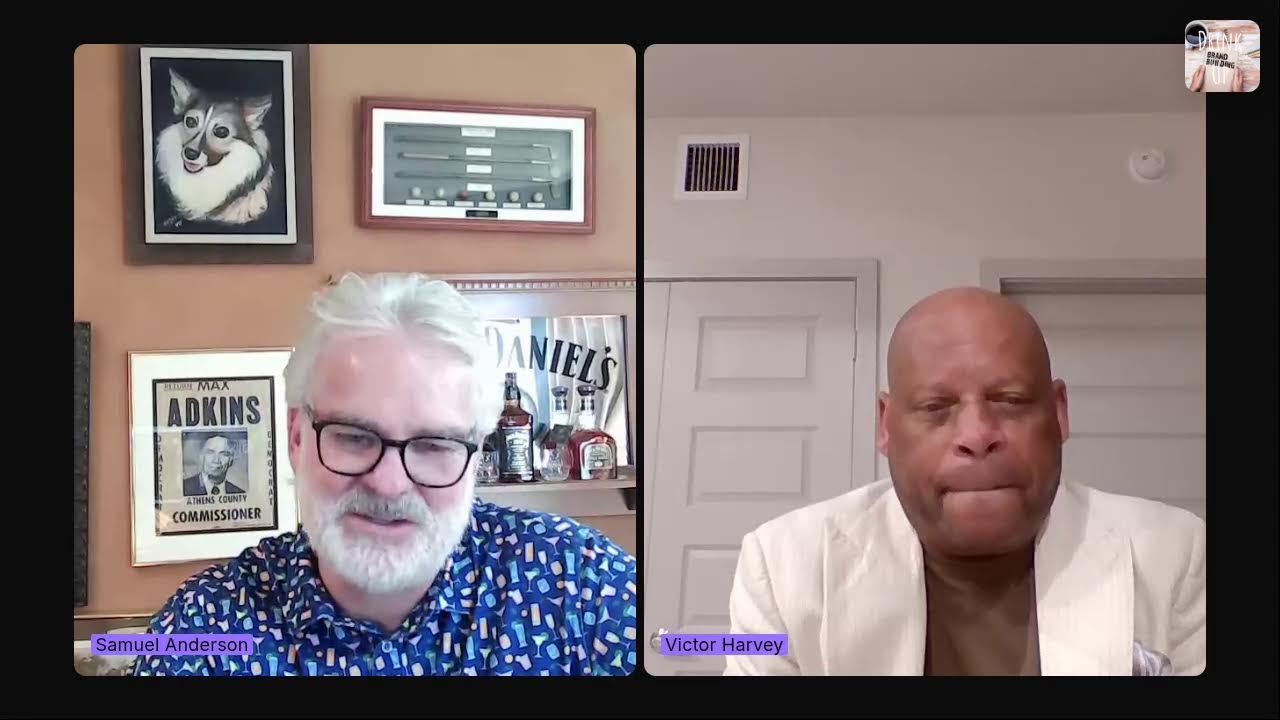
Victor George, founder of Victor George Brands, went from pro football to real estate to launching a Black-owned spirits company. He started with 10,000 cases of vodka in Florida, expanded to 17 states, and won double-gold for his rye whiskey. His caramel vodka came from his daughter's idea.
Chapters
With Victor George Brands. Victor, welcome to Drink Up Live.
Hey, glad to be here, man. Thank you.
Yeah, I'm glad to actually have you. We got the opportunity to meet each other at WSWA last week. Sounds like you had a really fruitful show. I'm interested maybe having you share that with the community. But before we get going, we always have a couple sponsors that we like to call out. We always call our friends out at Freebird. Jay Williams, a big fan of the show, and we're a big fan of Freebird. My partner in crime, he couldn't be here today, so he sends his apologies, but Adam Smith with Alias Advising. He actually helps people from the operations side. So if you think about what goes in that can or that bottle, Adam probably can help you do that from the SOPs all the way to Uh, you know, cans, bottles, lids, distillate, uh, formulators. Uh, he does all that. And then obviously, thank you, Alicia Vargo, if you're out there with, uh, Bev Assets for helping us, uh, uh, support, uh, Drink Up. And then finally, Rocks Advising, uh, with Ryan Hellerman. Uh, thank you, everybody. It's always good, uh, for you guys to support us being here every week. Uh, we have a special, um, uh, podcast today because we are— we normally don't run during the week, but we do happy hours for special guests. And Victor, thank you so much. I had the opportunity to actually try some of your products at WSWA and met an old friend, Stacy. So tell me, why the heck would you get in this business, number one? And 2, maybe tell a little bit about your company and your brands.
Yeah, I mean, thanks again for having me on here. Um, what got me into business is that, uh, You know, I come from a, you know, sports and entertainment background and a real estate background. And so I started investing early in real estate in Miami. And I was, you know, able to acquire some hotels in Miami Beach and things like that in the early 2000s. And when the whole recession came, You know, in Miami, we don't— Why the heck did you get in this business, number one? Yeah.
Sorry about that. That was me.
Oh. So in Miami, like, we don't experience recessions or, you know, things like that, like other parts of the country might sometimes. And so, you know, I was involved in a nightclub at the time, and I saw, like, you know, how people were still coming in and spending, you know, ridiculous amounts of money on You know, liquor and things like that. And I said, wow, you know, we're supposed to be in a recession, you know, um, real estate market tanked. And, you know, our primary customer at that time was a lot of celebrities, a lot of professional athletes.
So I gotta ask, is this when you shifted to become a rap singer, by the way? Because I'm—
It's actually after that. But, you know, I maintained all those relationships and developed some new relationships through that. And I said, you know what? There's no one that I knew of that had their own alcohol liquor company, liquor brand that looked like me. And I was like, you know what? So I'm starting my own liquor company. No idea how to do it, where to go, anything like that. And so long story short, I met some people out of South Carolina and they were getting into the distilling business. And so I went over, I met with them and You know, vodka was the hot thing back then, so I figured that's what we'll start with. And this is when you did the 10,000 cases you told me about, right? Yeah, yeah, yeah. And it was— I mean, it was— it went from the first sample being the worst thing I've ever tasted in my life till number sample number 132 a week later that we went through. You know, I'm highly intoxicated. And but I said, this is it. And so we came out with DiGiorgio, which was the first line. We had a couple flavors that went with it. We had one with guanabana and cranberry, and then we had one with acai, which was a hot product back then. And so we released those and yeah, we did about 10,000 cases in our first year. And that's just in Florida.
Was that just you? Was that just you doing the 10,000 cases too, or?
Well, no, like, I mean, Southern became our distributor.
Okay.
And, you know, we had some boots on the ground, but it was just at a— I think it was timing. that really set it off, right? 'Cause again, nobody was doing it. And so, you know, when your friends, which are celebrities and pro athletes, and, you know, they're consuming it, then people started drinking what they're drinking. And we made it a Miami thing. So you came from, you know, anywhere else, Vegas, New York, Minnesota, it didn't matter. You came to Miami, you were drinking DiGiorgio, and it just blew up for us. Wow.
Now let me— your path to this, you were a professional athlete as well?
Yeah, I did one year in that. I played at Bowling Green and then I did one year over there with—
Wait a minute, wait a minute. Bowling Green, Kentucky or Bowling Green, Ohio?
Bowling Green, Ohio. There's only one Bowling Green.
Oh my God, man, dude. Like, oh, okay. I'm a BGSU grad.
No way.
Yes. What years were you at Bowling Green?
I was there from '85 to '89.
I was there, graduated in '87. Now I know who you are.
Yeah, we probably hung out, bro. Uptown Downtown.
Oh my goodness, man. Oh my God.
Uptown Downtown.
Victor, oh my— you know, I, I thought, you know, it's funny, um, Martin Bayless was there at the same time. Yeah, yeah, yeah, man. I used to play basketball with him. I mean, he would school everybody.
Yeah, you're probably out there playing with us too, but, uh, Jerry Bayless, his brother.
Yeah, yeah. And, um, You know, Doug McClure, he kind of fanned out, unfortunately. I mean, he was a great ballplayer back in the day, but man, he went to BGSU. You probably came to some of my parties off— we lived on 320 North Enterprise. I guarantee you came to ours.
All right. I don't know about that. I stayed. So, you know, the first year there I stayed in Anderson, was the dorm.
Yeah.
And then we all, you know, we moved off campus and we moved to 8th Street. So, okay. Yeah, they called that the ghetto of Bowling Green, right?
Oh my goodness, man.
Because it was all athletes. We were all out there just hanging out, you know, it was cool, man. But Bowling Green was a good time.
That is so like— that just makes the whole podcast so much more special. We could talk about— but I lived in Compton my freshman year, and then I joined a fraternity. Then I was in that, you know, in the house for a year, and then we moved off campus the last couple years I was there. But that's the coldest place on planet Earth, man.
Yeah, yeah, we'd have, you know, no mountains, it's flat. You know, we just had that one big hill that we had to, you know, run at 6 AM every morning, but, uh, it was cool.
Oh, that's, uh, that's, uh, that's funny. Well, BGSU, so I knew there was a reason we're talking. I'm sorry I digress. So from BGSU, you, uh, you went into, um, a year of professional football.
Yeah, and then, uh, you know, it doesn't always work out the way you think it does, and So then I got into the music business, which was something that, you know, was a hobby of mine as a kid.
Right.
And so I graduated from Bowling Green and, you know, I moved back to Columbus where I'm from and, you know, said, I'm gonna be a businessman. And, you know, that was cool, but it wasn't what I wanted to do.
Yeah.
And so my sister was living in LA at the time and she was married to Michael Winslow, the guy that makes all the noises in Police Academy.
Yeah.
And, uh, so she told me, she was like, you know, if you ever want to be famous, you got to get the hell out of Ohio, right? And, uh, so I moved to LA, said I'll try it out. And, uh—
We all moved to LA back then though. When I got out of Bowling Green, I went to LA too.
Yeah. So I got, uh, you know, uh, Michael was doing a, uh, a new movie and they were shooting in Miami. And, um, my sister was like, well, you need to have my brother on the soundtrack. He's got great music. this, that, and the other. So the, the people that we were meeting with asked me, you know, did you bring a demo tape? Because that was a thing back then, demos, right? So I pulled out this demo and, you know, I only had 3 songs on it and playing it. I knew they thought it sucked, right?
But that's how Jay-Z started, out of his trunk though, didn't he? Like, go demo tapes to people.
I believe that's just how it was back in the day, you know. CDs weren't very prominent back then.
Yeah.
And, uh, So, you know, I knew that they, you know, hated it, right? I almost hated it myself. But, uh, long story short, they said okay. And, uh, so we got to Miami and they said, we're gonna sign him to our sister company. So I ended up signing to Vision Records, um, in Miami. They took the demo and all those songs that I had, those 3 songs, they threw it in the trash.
Yeah.
And they said, we're gonna start all over again. And, uh, that was my entry into, into the music business. And, uh, My first record I did with them, it became, uh, you know, very popular in Miami, pretty much only. And, uh, I learned the music business. But then, uh, my sister ended up passing away shortly after that, maybe a year later.
I'm sorry to hear that.
Yeah. And she was kind of like my manager, if you will. And so I, you know, at that point I'm like, okay, what do I do now? You know, because unfortunately I had lost my mom at the age of 10, and then my older sister passed away. And I'm like, you know, I'm just trying to figure life out. I'm like 25 years old. And so I took some time and just, you know, started doing my own thing. You know, nobody would hire me 'cause I had no work experience. And I said, you know what?
Wait a minute, you're a Division I athlete, went to a premier college. I mean, I think when you were at Bowling Green, they were in the top 20 a couple times.
Yeah, so I mean, our freshman year we went undefeated. But the funny thing is I played basketball at Bowling Green also. Um, with Coach Weiner, um, if you remember him.
Yeah.
So yeah, so that, that was my coach. So I, um, you know, again, I'm living in Miami. This was right after Hurricane Andrew. And, uh, one of my friends that also went to Bowling Green with me, um, he's from Toledo. He came down, his company came down because he's in construction to help build, you know, rebuild Miami. And, uh, so I stayed with him and then I said, you know what, I'm gonna start a basketball sports agency and take guys overseas. Um, because it wasn't— I mean, it was there, it existed, but a lot of people weren't doing it. I had a lot of connections even at Bowling Green. So I said, you know what? So I looked in the Yellow Pages, which was the way to do it back then, found the closest entertainment attorney. Yeah, I caught a bus to his office. Boom, we talked, blah blah blah, and the rest is history. We started All-Star Sports Agents. It went from that conversation to us becoming number one in the world, uh, at that time. So we had more guys placed than any other agency overseas.
And that's a pretty lucrative business, isn't it, for sports agents? I mean, I'm thinking like Jerry Maguire. That's what you're doing, right?
Well, believe Jerry Maguire, because there ain't no money in it, right? There is, you know, at the, at the highest level, but it's really, it's really babysitting, like a lot of guys, right? So Our guys were overseas basketball players, right? And they want you to get up at, you know, freaking 1 in the morning to go get their girlfriend a pizza. I'm like, bro, I'm not doing it. You know what I'm saying?
So, and these guys have money they've never had before, right? So you got to keep them out of trouble, maybe.
Yeah. So it was cool. It was a good time. And, you know, I ended up having my partner buy me out, move back to Ohio, and I said, I'm starting my own record company. And that's what I did. And released a record called The Rise, The Fall, The Rise that just blew up. And I made a lot of money at the age of 26, and that's when I started investing in real estate. So that's pretty much—
That afforded you this journey you were on from Bowling Green, you know, to a sports agent, to music that afforded you to get into real estate.
Correct.
And then the real estate afforded you to get into the beverage business.
That's correct.
That's a, that's a wild path. And why is— I think maybe you didn't answer it, but why did you want to get into the beverage business?
Well, because like I said, like I was seeing how much people were drinking and there was nobody, at least that I knew of or heard of, that looked like me, that was Black. Yeah. And I said, okay, this is, this is what I want to do. And that's what I did.
What kind of barriers did you face early on when you entered? I'm just curious for all the founders out there, you've been at this for How many years now?
20. This is my 20th year.
That's a really important thing. So you weren't an instant success overnight?
No, no, not at all. It's like I didn't know much about it. I'd never been in the business. And, you know, we didn't have distribution. And so, you know, we just started doing our own thing, getting it out there, and people started talking about it. And, you know, I had some friends at Southern and You know, they said, hey, Vic, we need to have a conversation about your brands. And, you know, I went and met with them and same day it was done. You know, things were done a lot differently back then than they are now in terms of, you know, especially small brands aligning with distributors, especially, you know, big ones. And but you got, you know, you got to do a lot of the footwork yourself, which is what we were able to do. We had a small team, but we, you know, it was a very, very, very successful brand. And that's how we built it, like our own boots on the ground.
So to get Southern to pay attention to you, because I believe that was your first wholesaler, I think you said that earlier, how did you get them to pay attention?
So the way we did it was we had all the hottest accounts and Southern had a very strong presence in Florida. And so when your rep or your manager or whatever sees like, okay, what is this new brand? And, you know, some key account that we have, and, you know, they ask about it and they're like, man, this is hot, right? This is a hot brand. And then you start seeing like, you know, different celebrities, different athletes drinking it and, and things like that. And, you know, we're doing pool parties and we're just doing all these different things to promote the brand. It's like, okay, we got to talk to this guy and see what we can do. And it was a great— it was a great thing. Like, that was the right distributor at the right time, and, uh, it was a success.
So, so does that happen now? Because I've heard celebrity brands aren't the, the thing anymore. Is that true or not true in your opinion?
I mean, in my opinion, I think it's, it's much more challenging, um, because back then it seemed like any brand that any celebrity touched, endorsed, whatever they did became an instant success, right?
Yeah, it's like, hey, I'm Ryan Reynolds, billion dollars.
Yeah, exactly. I mean, and so in today's world, I think that, uh, the consumer looks for, you know, more authenticity. Yeah, they like to see that, you know, celebrities are really engaged in the brand. They believe in it as part of their lifestyle. Um, they're out there, they're pushing it, they're talking about it, they're engaging with it, they're engaging with the consumer and things like that. I think that Those celebrity brands are the successful ones. I think that the days of, you know, just putting your face on something like the guy says, okay, well, you know, let's take my own, like, oh, bourbon. Oh yeah. You know, Fort Mose bourbon. But then you go to the club and he's drinking tequila, right? So it's like, does he really even— is that part of his life? Right? So it's not. So why would they follow that? Right? So yeah, I think—
Well, I heard celebrities too, like, and I got a chance to sit across from a couple of them with a couple of our partners. But isn't the best celebrity brand the ones that invest and show up? You're kind of saying that, right? And they engage with it and they're authentic.
Well, yeah, that's what I mean. Like, and that's what people are looking for. It's like, you know, how do you expect me to go out and, you know, pay for a cocktail, which is an investment in your brand, so to speak, and you haven't put a dime in on it? So do you really even believe in it? Um, you know, there's, there's, um, you know, celebrity brands that have launched and you read about it and then come to find out that particular celebrity doesn't even drink, right? So it's like, but you know, you see like, oh, I just had drinks with such and such at his house. And come on, man, nobody's going for that anymore.
That's, uh, that is, uh, that is funny. So let's get into your brand a little bit. So Victor George Brands, I think you have 3 brands, right? 2 vodkas and—
Yeah, 2 vodkas. And then we have So we got the Victor George vodkas, which is a regular vodka and a caramel vodka, right? And then we have the Fort Mose brand, which has a bourbon and a rye whiskey. Okay, so those are the 4 that we have right now.
That's awesome. So let's, let's go, let's talk about the vodkas. I should have had you ship some over to me. I should have grabbed some from the show. So I had a chance to try the caramel.
Yeah. Yeah.
So what makes that brand— well, first of all, I know what makes it special because I had the chance to— Stacy was like putting it in front of me and I was As a matter of fact, once you start, it's hard to stop on that. But what makes that so special?
Well, you know, we started with the regular vodka, but my daughter, who actually works in the company, was just one day, she said, Dad, she said, and she's been there for, you know, since she graduated college. And she says, we need to do a caramel vodka. And I said, why? And she was like, well, nobody else is doing it. And the espresso martini is the number one cocktail in the world. So she did her research and she's, you know, one of those coffee snobs.
Can you show your espresso martini or did you finish it already?
I finished it, man. Well, there's a little bit left. But yeah, so we had, um, in 2002, I think it was— no, damn, '22— I bought Palm Beach Distillery, moved it to Fort Lauderdale, doubled the size of it. And said, we'll start creating our own stuff.
So you are a distiller?
Yeah, we have, we have that one. So we outgrew that one. And so we're in the process of building a new one, but still right here in Fort Lauderdale. But we came up with the caramel vodka right there in our own distillery. And she was like, you know, Dad, you know, being— she's 20, what is she now, 27? And so she's giving me all the touchpoints, like, you can't add sugar to it. You know, let's make sure the caramel is all natural.
And so our daughters are wiser than us, aren't they?
Yeah, so we came out with it, and, you know, to be honest with you, um, I never thought it would be a hit like it is. And, uh, yeah, it's on fire right now. Yeah, so I'm proud of her. And, uh, you know, so we're continuing to push it, but it's, it's really the wow factor when people, when they try it. I mean, the first thing most people say is, wow.
So where can you find it? Uh, it's in Florida right now, soon to be 5 other states.
Well, right now we're, we're in about 17 states. Oh, geez, okay. Yeah, yeah. But, you know, we have some focus states that we really, you know, pay attention to probably more than others. Um, but, you know, for people that, you know, if it's not in your state or in your store, I mean, obviously you got online, you know, buyvictorjorge.com, and we have people buying it from— I bet we've sold in all 50 states at this point.
Um, so you have a DTC, uh, route to market in terms of how you Yeah, we do.
And, you know, we have a strategic growth plan. For example, just at WSWA, we picked up between 5 and 6 new states just being there. So that— and that's what we went for. That was our purpose for going.
Yeah.
And so we were really pleased with that, the outcome for all the brands. Like we only had even in the taste test, the blind taste test, We submitted the caramel, the bourbon, and the rye. The rye won double gold, best in show. The bourbon got gold, and then the caramel vodka got silver. But there was a lot of vodkas there, so I'm okay with that too. But, uh—
Did that get some distributors to come talk to you after you won your double gold? Did that get them to say, hey, um, Victor, who are you? Did they swing by, or how did that work?
Well, they did. And, uh, you know, we had a couple meetings prior to to even getting there. And then, but it was interesting because, you know, Stacy and I actually met a gentleman on the elevator from another distributor. And, you know, I said, oh yeah, I've heard of that distributor. I said, man, you guys are doing big things, right? And he's like, oh, you know, I hope it's all good as you hear. Don't believe the bad stuff. You know, he was joking. And he's like, so what do you guys do? You're with— and he, you know, saw our thing, Victor George Brands. He said, what brands do you have? And I said, I said Fort Mose. And before I could even finish, he says, oh, I read about Fort Mose. And he was like, I'm coming. You're on my list of people to come talk to. And so I said, okay. So, you know, it's getting out there. Like, people are starting to know what it is and know who we are. And it's cool, man. It's that growth. But we're very strategic in how we grow.
I mean, so you've worked really hard. I mean, you've been doing this for 20 years. I want everybody to hear that. You just didn't wake up one morning and And we talked to a lot of brands and we love them all, but a lot of them think they're going to scale it and sell it to 3 to 5 years. And I just don't think that's realistic. It could happen for sure. I mean, I don't want to rain on anybody's parades, but it seems like everybody nowadays, they're like, yeah, we want to, you know, put $500,000 in, which isn't enough, by the way, and I'm going to scale it and sell it in 3 to 5 years. The thing is, you know, careful what you wish for, right? You obviously have the ability to have, you know, the money to, you know, the capacity to build out because you can get too large too fast, right?
Yeah. And you see that happen, you know, uh, now I would say much more than before because, you know, if I think like, you know, 20 years ago some of these brands would take off and, you know, instantly people were just buying them thinking like, okay, this is never gonna end. And, you know, they're selling for, you know, ridiculous amounts of money, and some of those brands aren't even around anymore, right? Whereas today, I think, you know, if you grow too big too fast, that your end buyer, if that's your goal, is not coming as fast as you thought they were, right? Because there's other options.
Yeah.
And they want to make sure you're sustainable, especially— excuse me— you know, now when the overall industry is down a little bit and there's new innovations with, you know, RTDs and mocktails and all these different things hitting the market. That, uh, to do— I, I tell people, if you got— if you're getting in this business just to think like, this is my ultimate payday in 3 to 5 years, I would pretty much advise you not to do that, right? You know, I'm just saying, man, it takes a lot more than what you think to, uh, to build a successful brand.
Yeah, we were working with a brand in Kentucky, um, and, uh, they did pretty good last year. They got into like 170 accounts. I said, what are your reorders?
They said 80.
Not bad. And I asked kind of what their velocity was, the whole bit. And now we're going to take them into Georgia. And then we said, hey, do you want to go to Florida? But then he stepped back and he was kind of looking at like his operating costs, right, to produce it. And like, well, how many cases are you going to sell in Georgia? And we're like, we'll probably do, you know, probably a pallet, a couple, or a couple pallets, one pallet of each, 100 cases in each pallet to begin with. And he's like, well, that's doable. I'll be ready by April. But no one thinks about the back end of the business, right? It's like, You know, guys like me, I'm a commercial guy. I'm like, okay, let's go sell it in a whole bit. But he, he slowed down. He's like, okay, you know, I gotta do some— how much do you think I'm gonna sell to produce this product? Because you can go get distribution, but if you can't fill that order once you're in distribution, that's death. You know, suicide.
Yeah. Yeah. I mean, you know this, you've been in the business a long time. It's, uh, you, you know, if you, if you promise something to a distributor or even, even at the account level, you better deliver, right?
Yeah.
Because if you don't, that could be your only opportunity. You know, even in control states, if you go in there and you say, hey, we can— can they say, hey, we can put you 100 stores or 300 stores, can you handle it? And you say, oh yeah, it's no problem. And then, you know, you hit, you know, it becomes successful or people like it. And then here comes, you know, a big order and you're like, oh, it's going to take us 4 months to get product. you are done, right? So, you know, you got to be very careful, like, how you scale, and your forecasting is very important. And you got to know when to say no. You know, somebody says, hey, I want to take you in our state. A distributor says, you know, I really like your product, I'm going to put you in our market. You know, sometimes we don't understand, like, you got to support that market now. And if that wasn't part of your original plan, you know, it may not be the best time to do it. All right, that's how I look at stuff anyway.
I love that you said that. I met a gentleman by the name of Adam Corner who owns Carbalist. Maybe you've met Adam, heard of him, but they built a brand, you know, in Wisconsin. Then they went to Minnesota and they built about a $70 million business. I think they're in 19 states now, but he did it one account at a time, you know, and he said to this younger guy, brought it to NBWA last year, he goes, where are you at? And the guy says, I'm in New Jersey. And he goes, well, okay, how many accounts are you in in New Jersey? He says, 150. And then Adam says, well, what's your total opportunity in the state of New Jersey? He said 1,000. And then Adam stopped and looked at Nico and said, why are you here?
Right.
Because you haven't hit your opportunity in New Jersey yet. So why? And then he added, and it's kind of as you said, he's like, you can go send the truck to Florida, but what are you going to do next year on your P&L? Because you haven't established your account base. Right.
You know, it reminds me of the music business. Like, one of the things we used to say is that, you know, how are you going to be a hit? You know, let's just say you're based in Miami, like, like I was. Yeah. Um, how are you going to be a hit in California when you're not even a hit in Miami? Like, if your own people don't even like it, right? So you gotta— you're not on the radio station in your own city, but yet you want, you know, Kansas City to put you on the radio, right? So it's like You know, you got to take care of home first, right? So that's kind of, you know, the philosophy.
That's like proof of concept. I always talk about it as, you know, you got to prove that your brand is working, right? I mean, obviously you didn't wake up one day and go get 5 states. You've proven your brand and where you started, right?
And even that, even as we add additional states now, um, you know, home is always going to be home. So we're going to continue, you know, to you know, to build this market where, you know, we don't want to be in, you know, 60% of the universe. We want to be in 100% of the universe, right?
Yeah.
And then we— then as we look at these other markets, you know, we put, uh, a growth pattern. So like Georgia, we're in Georgia, but we didn't go in and say, okay, we're gonna— we want to be all over Georgia. You know, we look at where we think our, you know, strategic advantages are, and that's Atlanta.
So let's build Atlanta, right?
And that's where, you know, the bulk of Georgia is. And let's get that and then start to, you know, focus on other parts of Georgia as we grow out. So that's kind of what we— how we— that's just our approach to it. Yeah.
What's— so, so let me, let me ask a couple of questions with the remaining 15 minutes. So we ask everybody this question. It's not a hard one, but I'm always— we're always curious what founders have to say about it. What is the difference between success and failure?
Preparation, right? So I got 2 nephews in the NFL right now, and I tell them, I say, and I tell anyone, um, I was just speaking at Breakthroughs, um, luncheon today for, for Black History Month, and I was the featured, the only speaker actually. And one of the things that I've lived my whole life by, success is when opportunity meets preparation. And so if you're prepared, meaning you've thought it through to the best you can, to the best of your ability— we don't always have all the answers— but understanding, uh, you know, that it's not everything's going to be what you thought it was going to be, and you got to be prepared for that. And, you know, that, that's my thing, the difference between success and failure. And then the other thing is having the right relationships. That's very important. Right. And, uh, and maintaining those relationships to help you scale and grow your company or your brand, whatever it is. So that's just— that's my thoughts on it and, you know, kind of how I apply it.
Where'd you learn that?
Well, it really came from, you know, just being an entrepreneur like my whole life, um, and, and having to, uh, you know, like, I don't know if you remember that gas station out there by, uh, I-75 at Bowling Green. But, you know, when you're on scholarship, like back then, you weren't allowed to work. And so—
Is that on the way to Burger King out there or something?
Yeah, right past that, you know. So you got there and you're either going to Findlay or you're going to Toledo, right? So, um, you know, so I had a job there and, you know, and I got fired for no reason. And, um, but, you know, Bowling Green had a great business school and So I go back, I tell my professor what happened, and he was like— just happened to be a human resources class— and he's like, oh no, we're not taking that. And, uh, so he helped me and we filed a complaint, won, and, uh, and I've never had a job working for anybody since then, right? So it was like, you know, you just got to be prepared. And everything, you know, that glitters isn't gold. So you're going to have some setbacks, you're going to have some failures, but You know, as long as your wins are greater than your losses, you're always going to come out on the right side.
That reminds me, I always tell people this story. I don't know if you're a Seinfeld fan or if you ever watched the show, but I always reference the Even Steven episode. And it's like you lose a $20 and gain a $20. And it just seems like that's just life in general. You know, it's like, okay, I lost a $20, but then you just keep on going. Oh, there's another $20. So it's like, for me, it's persistence. And not giving up, right? I grew up as a corporate guy. I got out of school, got a job with Gallo, you know, worked my way up into Gallo, Diageo, Coca-Cola. I worked for everybody until I wasn't working for anybody anymore and I had to work for myself. So, for me, I didn't become an entrepreneur because I wanted to. I became an entrepreneur because I had to.
There you go.
But if I could tell my younger self this, I wish I would have done it a long time ago, right? So, hats off to you. that you've always been an entrepreneur, right? Because so many of us, we fall for the 15th and 30th. And I'm not saying don't go work for someone because most people in the world do work for someone, right? They want the paycheck and the benefits. But yeah.
In entrepreneurship world, and you have to have thick skin, man, because them paychecks ain't coming, right? So there's many, many, many, many, many weeks without getting paid. So, you know, You just gotta have tough skin, bro. I feel you on that one.
Yeah. Did your being an athlete, did that help you learn persistence? I mean, you're at the highest level, a D1 athlete, played pro football. Did that prepare you for this?
I mean, sports in general prepares you because you gotta have a game plan going in and, you know, it doesn't always work, right? Things happen. You know, it's like, You, you prepare the best you can. You're watching film like hours and hours and hours a day, and, you know, you're preparing. But, um, like I said, it comes back to success is when opportunity meets preparation. So you could be prepared as you want to, but maybe it wasn't the right opportunity, right?
Yeah.
That, that day, there's, you know, teams that, you know, not saying they were more prepared than you, but they may have had some better opportunities that particular day. So Yeah, I think that sports gives you a discipline on how to prepare for life. Coaching high school is like, we tell the guys, football is just a tool, right? And you use it for what it is and to get you to where you think you want to get to. But ultimately, there's a lot of guys that aren't going to make it.
Yeah.
guys that aren't gonna make it to college, college guys that aren't gonna make it in the pros, right? And so you gotta play the game for more than just the sport, right? And so we teach them like, use football to help you be a better father, a better friend, a better dad, a better son, right?
Yeah.
And take that from it because that's gonna last you for the rest of your life. Sports is, you know, there's a start and there's an end.
Yeah. I never, I never played at the highest levels. I played football and tennis and, uh, but the last time I played football was my senior year in high school. Right. And, and someone says, you'll never put the pads on again. But I mean, I learned brotherhood is really what I learned from it. Um, is this the respect for the people that you are with? I mean, you're, you're in the fight and I always loved the brotherhood of it, that those were my, those were my brothers. Didn't care where they came from, their background. They were— I don't— I didn't care at that time. I would do anything for them. And that's what it taught me, loyalty and brotherhood.
You know, no, I agree with you on that. And, you know, I always tell people, like, high school is the best time of your life until you go to college. Then that becomes the best time of your life, right? And so most of my close friends are people that I went to college with. But yeah, we've adopted that philosophy in our company, and we're no big company by any stretch of the imagination.
Yeah.
Right. We have about 11 or 12 of us. And, you know, it's like I tell them, treat this company, treat these brands like they're your own because they are, right? Because we're all part of one family, right? It doesn't matter who signs the checks. It doesn't matter, you know, what social media says because it's a team philosophy. And, you know, you could have the best quarterback in the world, but if you don't have Good receivers or good linemen or good running back or a good defense or whatever.
You guys made you made McClure look good, right?
Oh, oh man! He was the shit. He was he was the real deal, man. Yeah, yeah, yeah, yeah.
That's it's funny. All right. So anything that didn't cover today that you want to share with the people that are listening that? that you'd want to just convey about your company? And then 2 is, how do they find you?
So, I mean, you can find us on LinkedIn, but, you know, most— the quickest way people find us is like social media, right?
Okay.
So, and just Googling us. So our websites are fortmosaywhiskey.com, fortwhiskey.com, victorgeorgevodka.com. And then on social media, we're @VictorGeorge, or no, I'm sorry, @VGVodka and @FortMoseWhiskey. So those are the quickest ways to find us. My personal is @iamVictorGeorge. But the one thing I would like to say, and this is like a message that we're driving home this year, is that, you know, we're still here. And with all the shakeups going on in the industry, you know, with much, much, much larger companies. Um, we're very proud of the fact that, that we're still here. Even the new companies been here since 2019, through COVID, through down industries.
And I think Stoli is out, aren't they?
Like, Stoli's gone. I mean, you know, it's public information, right? I don't really talk about other companies or brands, but, you know, there's a lot going on. But we're still growing, we're still expanding, we're still having fun. It's still exciting. And, uh, that's our message. You know, if I had to say anything is that we're still here. So for anybody that's in this industry or getting into it, perseverance. Just hang in there, have a well-thought-out plan, and, and enjoy what you do, man. Like, that's what I do more than anything. Yeah, I'm going to happy hour, and, you know, and that's what I like to do. So.
Yeah. So, I mean, so do you get out in the market and work your brand?
I'm in the market. I'll be in, uh, next Friday I'm in Alexandria, Virginia. Uh, Saturday I'm there, and then I go to DC. Uh, the next week I'm in Columbia, South Carolina, Charleston, South Carolina, Atlanta. So I love getting out, meeting people, telling the story, and, uh, just, just growing the brand. So, uh, that's what we like to do. So yes, I'm out there, man.
That's, that's a really important message because there's so many people, like I think we talked about earlier, it's like, yeah, I'm a, I'm very successful, I'll invest in this brand, but then I won't work the brand. But you're working it. I mean, how many days, uh, are you on the road? Like 50% of the time?
I mean, probably a little bit more than that. Um, you know, it's just, but it's like, it's what I like to do. So a lot of people have these hobbies and, you know, like to take, you know, a lot of vacations. I probably should take more.
Yeah.
When I do, I enjoy it because it's not— it's when I'm out meeting people and telling stories about the brand and different things, it's not really work to me. And if you remember early on, I said a lot of it is about relationships.
Right.
So now you're building these new relationships and that's what I probably enjoy more than anything because some of those people that you meet out there, they actually become friends and that's really cool.
That is awesome.
Yeah, just like I met you. That was cool. I didn't know you and Stacy knew each other for all those years, but you connected right away when you saw each other, right? So that's, that's, that's what to me it's all about.
Who you know and the network. And now that you went to Bowling Green, you're forever my friend, man. You're in the band of brothers.
There you go, brother.
Yeah, man. I mean, I mean, it's funny. People like always think Bowling Green, Kentucky. So I was like, are you talking about Bowling Green, Kentucky, where the Corvette is, or Bowling Green, Ohio? And I always say, you know, Falcons, man. Freddie and Peter Falcon, man.
Yeah, yeah, you know what's funny? Like, I know we're coming to the end, but I, um, I was in a little restaurant here, I don't know, 5, 6, 7 years about— no, probably 6, maybe longer than that, maybe 8 years ago, having a drink, having something to eat for lunch. This guy looks at me, he says, uh, he said, did you go to Bowling Green? And I was like, yeah. And he's like, Are you Victor Harvey? And I was like, yeah. He said, man, I used to watch you play. And he says, I was Freddy the Falcon. I was like, get out of here, right? He's like, my girlfriend was Freda. I started laughing, man. I was like, are you serious, bro? I said, what's funny, man?
You ever play the drinking game where it's like, you know, he's like Freddy Falcon, Fred Flintstone, and you get the first letter and the last letter of the name? It was like a beer drinking name, but I always, always like Freddy Falcon, Freda Falcon. We'd burn through them. at the beginning of it and just keep on trying to go with the name game or whatever.
That was, that was you fraternity guys. We didn't do that.
I, I gotta ask you actually before we get off. So I think it was my sophomore year or my junior year, maybe it was my junior year, but who it was, I, I can't remember his name. He had blonde hair, kind of about 5'10. He was your point guard at Bowling Green. He, he rushed our fraternity and I was, you know, I was gonna be his big brother, but then he's like, man, I gotta go play basketball. I don't have time to do this.
I think he— Oh, you're talking about, uh, What year?
It would probably be either '85 or '86.
Probably Scott.
Scott, that's his name, yes.
Yeah, from Cleveland.
Yes, he was my little brother for like a short period of time, but he decided, you know, I gotta go play basketball. Was he a pretty good ballplayer or?
He was very good. I mean, he was undersized, but yeah, he was great basketball, not great, but good.
Yeah, he was my, I guess he's still, I'd love to say hello to him if you know where he's at, but yeah, he rushed us. We accepted him into the fraternity, but I'm sure like maybe the coach talked to him or whatever, because that's, you know, my daughters were D1 runners.
Okay.
They didn't have any time to do anything else but run and sleep and study. Yeah, yeah, yeah.
It's tough, man. But, you know, it is what it is, right?
So yeah, I mean, it's, it's, it's, it's life. It's amazing how small the world is when you think about it, Victor. I mean, that, that, that you and I went to the same school basically at the same time.
Same time, right?
Right. I'm sure we have— what's that?
Yeah, yeah, we probably got mutual friends and, you know, maybe partied together, hung out, drank together. Because remember when you got there and when I got there, you only had to be 18 to Go to the bars. Oh yeah, we were in the bars early.
Who was your— I can't remember his name either, but I used to hang out with him. He was your kicker, and I'd go— I would go to like, um, a lot of football parties actually, because he'd always have me. He was— he was a— I think he went in the NFL for a brief period too, but he was, uh, I don't know if he's— I think he was your punter.
Oh, okay. I don't remember who that was. Yeah, uh, what year that was, I'm not sure.
Yeah, I don't know if you burned through punters. I mean, you know, I don't know. You know, it just depends. Well, look, it was great. I'll ask you to remain on the line. Um, everybody that joined us today, thank you for joining Victor and myself, uh, fellow Bowling Green grads. Bowling Green State University, the true, true Bowling Green.
Hey, we got Eddie George over there as the head coach now.
Yeah. And I always tell people this, I was there in '84, national hockey champions too. People are like, hockey? I'm like, yeah.
Yeah, I remember that. Yeah.
Yeah. And then who was it? Who was the half miler? Was it— what was his name? God, he was a great half miler. Gold medal half miler.
But I can't remember his name either.
Yeah. Yeah. But great. I mean, the coldest place on earth, but definitely great business school. I ended up going into IPKO Communications with an emphasis in marketing. So business is— that was a tough school, man. So if you did that, congratulations. Yeah, I think it's one of the toughest business schools in America, quite frankly.
Yeah, it wasn't easy.
That's for sure.
Sure. Yeah.
Well, thank you very much. Thanks, everybody. I'm gonna hit stop and then, uh, we'll just remain on the line.
All right, Sam.
See you, everybody.
All right, appreciate you.
More from Samuel





He Sold Pickle Shots Out Of His Trunk. Now He Runs The Co-Packer That Won't Bury You In MOQs.






What market do you think gets overlooked most? #Toronto #BrandStrategy #Marketing