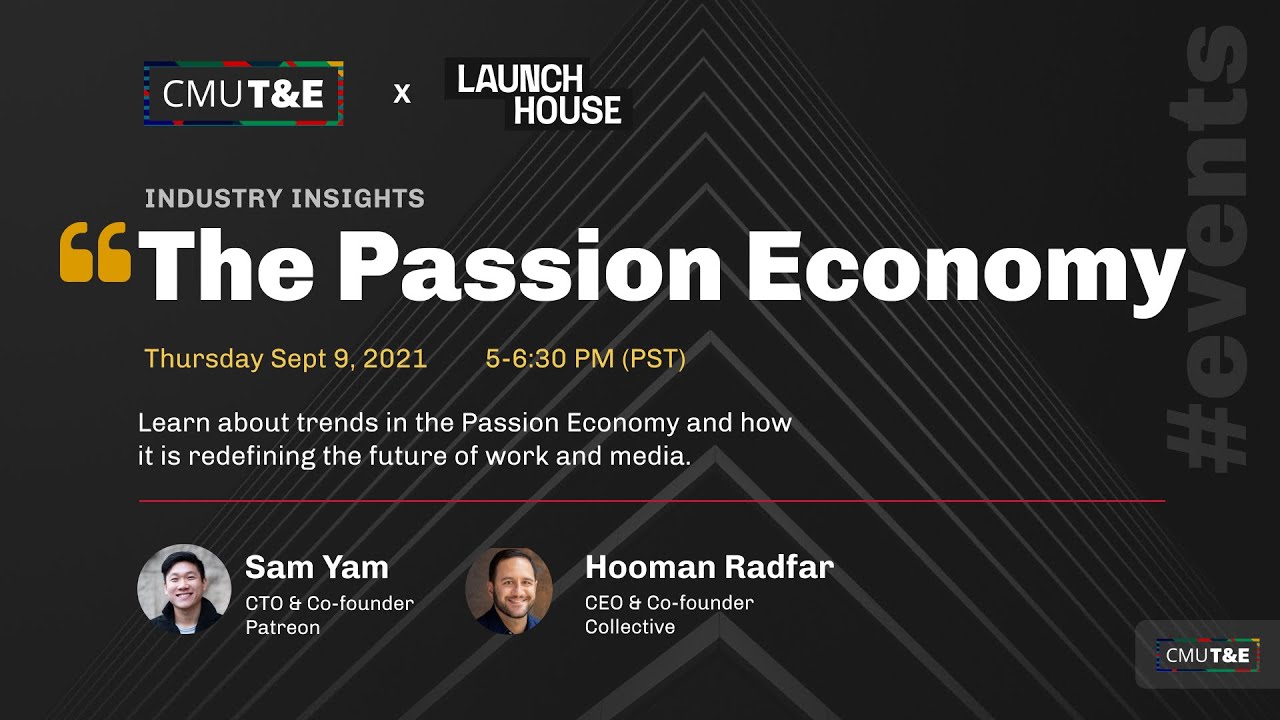
Fireside Chat with Sam Yam (Co-Founder and CTO of Patreon)

Sam Yam, Patreon's co-founder and CTO, went from classical pianist to engineer, meeting YouTube musician Jack Conte and launching the creator-payment platform in 2013. The first three users signed up after 100 creators rejected it. Patreon has paid out over $500 million to 150,000 creators.
Chapters
All right. Welcome. Welcome, Sam. Um, last They're pretty bright, huh? Can't see anyone.
Yeah, I can't see anyone.
Last year, because I was too busy running around, I didn't get to do any of the chats. This year, I was like, if there was one I was going to do, it had to be you.
That's very nice, Chris.
Yeah. So let's get started. The reason being, I kind of consider myself a bit of a creative, and I just love what you're doing in empowering artists. To kick it off, for anyone that— well, let's go back into the background. We already got a bit of background on Patreon. And I'm saying it wrong. It's the Australian accent, yeah?
Yeah, yeah, yeah. That's how I'll excuse that. It's Patreon because we have a lot of patrons of the arts. And so we sort of want to go back and historically, that's how a lot of art was funded. Cool.
So your background, what was it?
Yeah. So I grew up in Pittsburgh, Pennsylvania. Actually, most of my childhood was I was a classically trained pianist, and I studied that at Carnegie Mellon, which is a college out in Pittsburgh. And I actually even did so much of it that I played in Carnegie Hall in New York. And so for me, it was really exciting doing that work, but I could never see a career out of it. So when it came to college and I moved out to Silicon Valley, I was an engineer.
So there must have been a tremendous amount of discipline. Does that transfer over, or is it Patrick Lee and Holly distracting you?
So in terms of, like, deciding what I wanted to do, I think I just have a much more pragmatic mentality. And so at the time, you know, YouTube didn't exist. People were not building online communities, at least when I graduated from high school. And so unless you were literally the best in the world, there wasn't really a career path for many of the arts.
But Carnegie Hall is pretty good. It sounds like you could have had a future in music if you wanted to.
Maybe, yeah. Again, yeah, if I had more conviction, maybe that's it. I'm just weak-minded, so I ended up doing startups instead.
So tell me, what was the first product or service you were after? Was Patreon the very first?
It really sort of depends. When you start counting what I did as like businesses. So in college, I— there's a really popular burger place called In-N-Out in California.
It's big.
Oh, it's big, but it's not— they only keep it in the stateside. So I delivered burgers to campus. I set up a website and people ordered, and I went in my car and I shipped burgers to them. That was the first thing that I probably did.
Uber Eats. Early Uber Eats.
What's that?
Early Uber Eats?
Yeah, you could say I had that foresight. But for me, whenever I was thinking about business, it was just something that I felt like I would want that did not exist. And so that was something that, you know, prior to me having a car, I knew I would want something like that. And there were a lot of other people on campus that wanted that. Later on, when I actually graduated and had worked at a startup for a little while, the next startup I worked on was actually because I'd been building iPhone games. And so we were making a lot of money off advertising at that time. And we realized that there was this opportunity to sort of optimize your ad sales. And so again, it was out of a necessity. That was AdRoll, where we built out this company that just— it didn't exist yet, like, that need, or the solution to that need, where you had all these different app developers, but they couldn't optimize their ad sales. So it's—
You were the co-founder of AdRoll as well?
AdRoll, yeah, yeah.
That's not— that's a big business, too.
We got acquired by AdMob, which was a bigger business. They were one of the advertisers at the time. And that's how I ended up at Google for a bit. But yeah, that was a big business, but I guess less passion motivated. It was just an opportunity. I mean, ads are cool and all, but it was very much an opportunity that I saw.
Just taking a step back—
Actually, ads are not that cool, just for clarification. But go ahead.
Well, if they're making money, it's not too bad. Taking a step back, how do you transition from playing music to what, you just started programming, or was it a passion that you kind of had in your spare time? How did that kind of evolve?
I studied computer science in college, and so that's where I picked up a lot of it. But it was actually more just doing things, yeah, like interning out of school. Actually, the first job I actually had was interning at Marc Andreessen. has a fund— I mean, he started Netscape, and now he has a fund in Andreessen Horowitz. But I interned at his company, Ning, and that's where I picked up a lot of, like, the web development.
Social communities.
Yes. Yeah.
Okay.
You're familiar with it.
Yeah, I am. I think I set one up.
Yeah.
Okay. Didn't go anywhere. But so then was it at school where you met your co-founder?
Yeah. He was my freshman year roommate. Well, he was my freshman, sophomore, and junior year roommate, and he, he was like a true musician. So after he graduated, he continued doing YouTube and built a huge following with his band called Pomplamoose with his girlfriend, now wife. And yeah, it was— I sort of viewed him as like a celebrity actually after he graduated.
Why? Because he kept reminding you of his views?
Well, no, he got a lot of following on YouTube. Yeah, which he sort of emerged with that platform at the time. They had a bunch of breakout hits, like covers of All the Single Ladies and other things like that.
It was cool. And then, so you said, if I got it right, so he kind of had the idea. Was it his idea, your idea? How did it kind of emerge into Patreon? And if I'm jumping ahead, where does Y Combinator fit in? Sure.
So it's all mangled together. What you find out is Silicon Valley is a very small place. The first job I got out of college was at a company called Loopt, and that was Sam Altman's first company. And so that's how I got to know him, and that's how I eventually, because he became president of Y Combinator, got Loopt back into Y Combinator. But as for Patreon, we didn't start that out of college. Jack became a YouTuber. I ended up working in startups. And it was only later on— this was after I sold my first company. Jack came to me, and he's like, hey, I have this idea. What was it? And, you know, I'd done a lot of startups and things like that. I'm like, cool, yeah, share it to me. And he's like, well, what do I have to do? Do I have to sign an NDA with you? Like, this is going to be huge.
Yeah.
And I was like, no, dude. Like, don't worry about it at all. Like, ideas are worth nothing. Like, if you want me to hear it and tell you what I think, that's fine. If not, no big deal. And he's like, okay, I trust you. And so he tells me— we met up at a coffee shop, and he tells me about his thing. with how he has all these artist friends, and they're generating hundreds of thousands or even millions of views, but getting paid like $100 from advertising on YouTube. And it just didn't match the size of the influence that they felt they had. And that clicked for me. I don't know. He was like, how can we make this into a sustainable career, and not like Kickstarter, just these one-offs? How can we build careers out of all these creatives? And I was like, Jack, don't tell anyone about this. We're going to do this tonight.
This is it.
This is exciting.
Yeah.
And so, um, we started— I started coding up that night. Uh, design built it out. Um, it, it was interesting. I mean, this is probably good for, for folks here doing startups. Like, we were so convicted with this idea. Um, and Jack, because of his personal experience and also 'cause he had this network of folks, um, on YouTube, other artists, uh, he created a list of like almost 100 folks. And he's like, we're gonna get them all to launch with us. And he went out and emailed and contacted every single one of these people, and every single one turned us down. So we launched with no one. We were so sure this was going to work out, and nobody wanted to launch with us. And so when we launched Patreon in 2013, it was Jack, his girlfriend, now wife again at the time, and their roommate. And those were the 3 people on our website, and we launched. Patreon to the world. And then Jack's campaign took off, and that's when everyone was like, this is cool, this works.
So did all those other 100 come back around?
Yeah, we got a good chunk of them afterwards. I mean, yeah, that was exciting for us. We didn't care that we got rejected the first time.
So you knew you weren't a winner, obviously, and then basically the first person on Patreon— am I still saying that right? Patreon, yeah, yeah. It kind of takes off. So you must have started feeling good about it after that, right?
Oh, for sure.
Yeah. And then how did it kind of— what happened from there?
Yeah. I mean, we've just sort of been growing since. We've done— it's not pivots. But again, the idea that we had originally was that for the new generation of artists and influencers sponsors are a little bit different than past generations, which were very hit-based and very— you look at a big celebrity, they don't have necessarily direct communication with their community. And so we were under the belief that everyone wanted to get paid every time they create a new song. They're going to create lots of songs. They're not going to create necessarily an album or things like that. What we found more than that is sustainability just means a recurring paycheck. So now a lot of our artists and creators are just getting paid monthly. And so we've seen different changes over the time. We've seen things emerge that we didn't anticipate at all, like groups that are focused on certain types of speech, or even political campaigns, where we've had to really develop a sense of what's right, what's good for the world.
Yeah. And well, yeah, so how did you— Was there also just this— tell me some of the successful stories that have happened that you're proud of with empowering artists. Can we jump there? And then I want to kind of sidetrack to the failures before we get too deep into all the successful stuff. Actually, let's start there.
Start with the failures.
Because there were some good stories there.
Yeah, well, I have some stories around— I think originally we were chatting about what are some of the learnings. that might have happened over the course of all the stuff I've seen. And certainly for me, I think the biggest takeaway I have— and oftentimes it's hard to, like, give advice about what works, because I think it's different for different people, and context really matters. And a lot of people don't know at all, so you look at, like, anti-patterns or things that you know are bad, right? And I think one of the things that I've noticed that is bad is if you're trying to perfect an idea and really get it all ironed out before before getting started, that's generally considered bad, and you'll miss a lot of opportunities there. And so the stories I look at are like— and again, this just shows how small Silicon Valley is, but it's just people getting started. So when I was— this was before I started Patreon, but I was working across the table at this incubator called Dogpatch Labs with Mike and Kevin Systrom, who started Instagram, of course. But at that time, What they were building was Instagram, but when I was talking to them about it, they were planning to build out a suite of, like, sort of lifestyle apps. And so photos was just one piece of it, and they were going to do all these other things. And it just so happened that Instagram became so big, I think beyond anything they anticipated, that that became their entire focus. And so you notice that people don't really have it all mapped out. You just sort of have to get it going and see how things feel. And I have the same story. Funny story again. This just shows how small, again, Silicon Valley is. But I met Ben Silverman, who started Pinterest, at WWDC. And we grabbed froyo a couple times together. And the original thing that he pitched to— prior— that eventually became Pinterest was actually a mobile app that was, like, selling sort of fashion and different outfits. And at this time—
You're like, that's not good.
No, no, no. It obviously was really good. Yeah, at the time I didn't quite get the pieces, which, you know, I just look stupid now, but he was talking at that time already about, like, this psychology and concept of bundling and how people perceive value when they're grouped together. And so I think he already had all these pieces, but it really was just that he needed to get started, get some feedback from folks, and Pinterest, yeah, is huge now, so blew up.
Yeah. So Patreon, yeah, so sorry, so back onto the story around, you know, what I find really cool about it is the ability to, you know, I think we all have this some sort of dream where we can just do what we love, right? And then the empowerment that comes with a platform like Patreon being able to do that, at least if I'm in like the creative industry or doing a podcast or doing art or whatever. So I imagine that you've seen some really cool stories along the way that have really Tell me some of your favorites. Yeah, yeah.
I actually looked up different Australian creators here before I hopped over just to see what we had. And there's a really interesting one called Sailing La Vagabonde. And it's this Australian couple that they just sail around and sort of blog on YouTube about their lives. And they're funding a lot of their adventures through the community. that's, like, participating with them and supporting them. So I thought that was pretty cool. Me personally, I really like some creators, one of them called Humans of New York, and they do, like, very personalized stories of just real people throughout the world. Began in New York, and now they're sort of doing it more globally. Not they're, it's a single person named Brandon Staton doing it globally where he's sort of sharing stories of individuals out through photography of And then I guess the story that I find most heartfelt is this creator named Simone Gerst. And she's a YouTuber, too. She runs this property called Shitty Robots. You may have seen some of their stuff.
Yes.
Yeah, yeah.
It's good.
It's just these robots that don't really do anything. They do something, but they don't do what they're supposed to, I guess, in a lot of ways. And what happened this past year was she had a brain tumor that came back from from remission, and she shared this really heartfelt video where she basically said despite all the uncertainties and how rough things were going right now in her life, the 2 stable things in her life were her patrons and her mom, and that was really important for her in this time where she was searching for security, and I think that that's what— I love about at least what Patreon is able to do today. It's able to get communities to be able to support causes or people or creators that they care about and really create this sort of human connection. And I think it's hyper-relevant. It's interesting that Simone is doing robots because as we're talking about like AI being able to replace jobs and make things more efficient, Like, I think what's going to become more important are things that relate to human connection down the road. I was even talking to someone earlier up in the green room about— I don't know if this is true— in Australia, if you're unemployed, they'll actually like pay you a check or something. So like, we're talking about universal basic income in the US and all that, and we haven't quite figured it all out. But if at some point like we're going to be efficient enough where people can sort of get paid and just chill sometimes. Like, I think it will be really important. I don't know, okay, maybe that—
I don't know how much people are gonna chill. No, no, it's true, but you can't do much because you're not gonna have much money, you know what I mean?
But then instead of doing these repetitive jobs because they've been automated, hopefully folks can focus on like human connections between one another, unique interactions that actually exist.
So human connections, is there any like other common threads that you think kind of make a good Patreon?
Yeah, we've seen everything. I mean, certainly the human connection aspect I think is the most important. That's why we've seen such a rising segment in podcasting. I think just the intimacy that you build in either daily or very frequent conversation with your listeners allow them to really feel like they want to support you when you have an ask or when you're trying to grow out your property. So I think that, that absolutely. I think also just the ways those interactions are happening are pretty interesting. I think traditionally you see things like people just commenting or doing live streaming. But one of the behaviors that I think is also important is that people in communities want to signal externally that they're part of this community. And what I mean by that is, taking away from Patreon, like, you sometimes may go on— I don't know, I listen to a DJ named Cascade, and so he'll have this, like, redo tour that he just did, but it's just that tour where he'll sell this exclusive merch. And you, as a member of the community, want to represent that, hey, I was here, like, I care about this artist. When I'm wearing this merch or this unique t-shirt, it's because, like, I went all the way in and did this thing. And so I think we want to offer people in the community more ways to represent that they're part of this and it's important to them.
Given, like, you know, and I think Rude even had this in his presentation around this trend towards more people being essentially freelancers, that has to only set Patreon up for the future, more and more people landing on, right? Is it good growth, I guess? Yeah.
Again, if you look back, when I was considering— I was never really considering a career in music or— I think I was— truly passionate about in the arts. But that was because you had to be the best, and like everyone had to know you, right? I think today what the internet has enabled is for you to just garner a particular community that cares very deeply about that one thing. You don't have to interest everyone. You just need to be able to gather a following of folks that care deeply about what you care about. And so because of that, I think now, yeah, there a lot of folks that are able to amass that following and get that support from one another.
When people try and draw the similarities between, I guess, Patreon and, say, Kickstarter or whatever, or they say— we had some stupid comments when I posted your— started promoting you. Not a lot. People generally— we packed it out. How many artists don't make a living on Patreon? I'm like, well, I immediately jumped in and said, look, well, it's the same with a Kickstarter. It's the same with anything else. It's not, I'm going to put it on the site and everyone's going to come and I can just sit back because I'm getting $35K a month from all these fans that I didn't know I had. There's really a lot of work to it, right?
Yeah. I mean, we face this question. Internally, we try to set goals where what we want to do is create more creators that are making at least $1,000 a month. I mean, today I think we have over 150,000 creators getting paid. And altogether, this was the first year actually that we passed half a billion in dollars sent to creators. So on average, if you look through it, not everyone's making a living for sure. And it is like one of our goals to make it so that more people, right, can develop a following and monetize. monetize that. I think that's in part too, like, just gonna continue to happen as these other platforms sort of evolve. I think Facebook Groups is doing some interesting things, and of course you have like people now gaining influence on TikTok. So in some ways we're just gonna follow the tide along on that.
I really want to get into TikTok, man, but I can't dance. Yeah, I can't dance and can't do—
You want to say your TikTok. It's not— you want to get into TikTok.
I love TikTok. So where was I going? Well, on TikTok, right? Well, the reason I love TikTok, and I know this is about you, man.
I'm sorry. No, no, no, please. Let's talk about TikTok the rest of the— we only have 20 minutes. Let's go.
Well, what I love about TikTok, right, is that first of all, I think dance, dancing is kind of like global. It just kind of transcends any culture. People can have a good time. Second thing is like It doesn't have that social anxiety thing that Facebook does. I don't give a shit that somebody had a better holiday than me. I'm just like enjoying myself, right?
Okay.
And the last one is that, um, the jokes that people— if anyone TikTok, I can't see you, but if you put your hand up, let's just— anyone on TikTok?
This might be an older crowd. Wow, okay, impressive.
Cool. Yeah, the other one I love is just the, the jokes that happen on there, right?
Yeah, all the memes sort of get like originated and spread and then modified.
Yeah, again, which is like, you know, it's like the whole world can be part of the same joke. So I love that.
Yeah.
But let's talk about Patreon.
Okay, sure. The other thing I do like about TikTok, honestly, though, that is related to Patreon, is there was a New York Times article talking about how a lot of the communities now, even in the schools, are actually becoming very healthy. It's becoming a way instead of bullying happening in schools for a lot of collaboration across these younger children. And so like that absolutely, As you hear about all these things happening now in tech, it's something we care about a lot at Patreon, that the communities we foster are healthy. And so, like, we hope in some way, just because you have to join as a member and you're, like, paying money, that that sort of filters out. And we hear a lot from our creators that the interactions they have with their patrons are very happy and, like, make them feel a lot healthier about the people supporting them, versus when they go on YouTube and people go, you know—
Kiss.
What a shitty ass.
Yeah, yeah. 2 comments. Terrible comments.
It's easy to do.
If I flip to the business side of Patreon for a minute, can you go through some of the fundraising stuff and the steps there and, I guess, what you liked and what you'd do different? We had the alternate funding panel today, bootstrap versus IPO and all that. What your experience has been.
Yeah. So we've raised over $100 million now. I think we— it's like $160 or something in total. But it's very different later on, which is much more metric-based, and like whether you're prepared for an IPO versus the beginning. So I find the beginning stuff most interesting, because either you have undeniable numbers, at which point fundraising is easy, and you don't need any advice. It's fine, right? You're growing like crazy. Or you have to have a compelling story. And I think that's where most people are, and that's the more interesting thing. Like, how do you convince an investor that, like, you have the conviction to do what you're going to do and you have the means to do what you're going to do? And I think for us, A, it was nice that the story was very personal for Jack. And then I think from my side, it was just like, hey, I can build this. But beyond that, too, I would say, and maybe this is more unique for Silicon Valley, but I was reading another article recently that talked about how investors in Silicon Valley basically have this strong FOMO thing because the community is small enough where everyone has either seen personally or knows someone that missed out on that Uber investment because it looked stupid at the beginning. And so there's this sense that, hey, even though I'm not sure, like, I would miss out and then I'm going to look really dumb amongst my friends. And so this played out for us. And the way this played out for us at the beginning was we went to a very prominent seed investor, and we asked to take a meeting and sent this person some information about our company. Got back a rejection. This was when we were raising our seed round. It was a copy-pasted response with the wrong description of a different company. And I wrote back.
The person's supposed to be firing them off that day. No money for you, no money for you.
I wrote back, I was like, oh, we're actually doing this. I don't know if you missed it. And the person wrote back, oh yeah, sorry about that, but we did evaluate your company and it's still not quite a fit. Okay, so we moved on. We talked to another set. Happy to name these folks. Initialized Capital, Gary Tan and Alexis. Ohanian. They invested in us, connected us to another firm over at CRV. I love this guy, Sar, over there, and they also invested in us. And we told them about this first investment that— or this first investor that passed on us, I think because CRV asked, hey, have we talked to these people yet? And we said, yeah, they weren't interested.
Hmm.
And CRV was like, no, they'll be interested in this. Gave them a call, and then we didn't even pitch them. They were in. So it's this sort of like, hey, we don't want to miss out because we trust other smart people. And I think a big strategy that's still being deployed today, in Silicon Valley at least, is this notion of like, hey, you're going to miss out on a huge opportunity.
How do you kind of— I'm guessing you work to kind of amplify that story, yeah?
Yeah. There are weird techniques you can do. I feel like I don't do as much of that manipulation. I know others that do.
Can we dig a little bit deeper for a second? I'm just interested, because I think Rude mentioned in the chat anyway about spinning this plate over here, and then you're spinning that plate over there trying to get it all working. Give me some of the tips, man.
Well, I mean, you've got to time all the meetings that you have at the same time so that they know you're meeting other folks. And if they talk about it, they know that you're chatting with them. Yeah, I mean, in my first startup, I used to write these long responses explaining everything, and like immediately, and it was so exciting that like a potential investor was talking to me. And I think you do need to be more chill about it, because otherwise it just sends this— it's— people say it's like dating. You're just sending the wrong signals, I think, if you're like too desperate on the side that you want money. And so just don't appear desperate.
And then what about—
Because you're not desperate, right? You have a great idea, and it's— It's their privilege to be able to invest in you.
Absolutely. And is there a little bit of the, you know, Ben Horowitz being 5 minutes late, fuck this, I'm out of here?
Oh, well, don't be rude. Is that what you did?
I thought this is where we were going to go.
I know they're big on if you're late to the meetings, you have to like put money in a jar or something like that. They have a whole policy on that. So I'm not saying be rude to anyone.
Okay.
Yeah, yeah.
What's next for Patreon? We talked a little bit around Um, well, you've got a Linktree integration just randomly or something like that. Is that right?
Yes, we got all this.
Alex is talking tomorrow.
Yeah, well, I think what's next for us is, uh, I mentioned like building more of this community direct relationship with folks. Um, uh, I also mentioned, you know, like, as I think of us as like a really long-term play, and so, uh, I think more and more as technology advances like many things that people can do in society and makes things more efficient. Like, the things that we'll care about are like the intimate relationships between humans and communities there. And so that's a big piece, I think, of what we want to focus on. In particular, like a study that they did this year, I think it was the 50-year anniversary of when we first had the human moon landing. They did a study where they asked children, what do you want to be? when you grow up, right, to just see what the answer was. And the number one answer, 3 times more than any child wanting to be an astronaut, was being a YouTuber. And so today, I think that the upcoming generation, what they see growing up is just being an influencer and developing these relationships with their peers and with an audience. And so I think what we want to be well positioned as a platform is, A, making sure these communities are healthy and able to support these sort of careers going forward that I think are just going to be more prominent. I think YouTube said 75% annually, the growth they're seeing, number of channels that have 1 million or more subscribers. So this is just happening.
Wow. In the— just to highlight, go through a bit of the community bit. Obviously, Startup Grind is our bread and butter. And I definitely see a trend towards more of the in-person community stuff. How are you fostering community? Is it more of the in-person stuff, or bringing the top Patreons together? How are you dealing with that?
Yeah, I think it can scale up with these creators. I know we've seen folks do in-person and then also live streaming almost one-on-one. But We also want to encourage creators to be future-thinking so that what they offer their audience is scalable. And so I think it's up to us in the coming months, years to figure out interactions that are meaningful but also scalable.
I was thinking more around, do you ever get your creators together?
Oh, absolutely. Yeah, yeah. We have our own PageRecon. And then this year, we tried to have more folks watching at once by live streaming an event. We find that that community really has a lot to learn from each other. So yeah, we certainly want to bring more of that together. We want to do it different than some other conferences. Like VidCon is a really great conference, but that's more about bringing the fans and bringing them to the creator. We want to just bring creators together so that they can sort of teach and learn from each other.
What's the vision there?
What's the vision?
What are you thinking?
Yeah, I mean, I think everyone's figuring out right now still, like, how do you make a living from having a large audience and a set of influences? Like, right now what Patreon does is focus on this notion of building membership and having people pay you, but there are a lot of ways to make money still. There's sponsorships, there's advertising still as a means, and so We want to be healthy, or we want to be holistic in how we think about people can build out their careers. And so it's an opportunity for creators to talk to each other and for us to listen to.
Can you talk through some of the growth? I mean, we had a brief chat around, I suppose, next step with internationalization, looking at Europe, hoping Melbourne.
Yeah, yeah. Australia is our 4th largest after US, UK, Canada. right now in terms of country. And we're going to do some stuff in Europe first, but then actually planning to this year look at Australia.
Was that a conscious effort to try and grow market share in the U.S. first before you looked overseas?
Probably not that conscious. It's just where we were. Yeah. And today, for instance, we see 60% of the money still still coming from the U.S., and most mature companies, you'll see that flipped. It's like 60/40 or even 70/30 international. And so there's a huge opportunity there. I think there's also some cultural differences that may help us or may not that we'll figure out over time. But certainly right now, we don't even support the international currencies. And so starting next month, actually, is when we plan to roll that out.
Everyone's paying in U.S. dollars?
paying in US dollars and getting converted or being charged fees. It's actually a very painful point. We'll get that fixed.
So when you're looking at Europe, whatever, in terms of putting people on the ground, how do you think about that rollout?
Yeah. It's very personal for us. We send a team out. We've been talking to creators. We've been trying deeply to understand cultural differences. For instance, out in Europe, they care deeply about privacy. They do in the US too, but in a way that I think is a little bit more mature out there, how they think about privacy laws. And then there's other regulations and things that we have to be really aware of too. Things around how we handle consumer data and yeah. So you're saying that General compliance laws.
And in Australia?
In Australia, again, uh, we haven't, uh, put enough of a plan here, but we, we anticipate figuring that out this year.
So, okay, well, mindful that we, you know, we're wrapping it up for the day and keep the energy up. Um, so what's, what's next? What's next for Sam and Patreon?
Yeah, um, you know, I, I mentioned it's like, uh, the thing we're focused on that To date, our strongest value is being creator-first. And so we've been building out a lot of tools for creators. And I think the extension of that is when you talk to any creator, what do they care about the most? It's actually their community. And so we want to be building out a set of tools focused on helping foster a healthier relationship with your community.
So what are those tools?
Yeah, today they look like things like having integrations with Discord where we send, I think, I think over $100 million annually to creators. We don't send it, but people are sending over $100 million to creators with Discord set up. And so we see that as a very rich interaction today, which is this like real-time chat and being able to organize things with your community. I think the other thing that I mentioned is just being able to signal as a user that you support someone and being able to say, hey, I care about this community, and I care about this cause.
Flipping— switching gears, brother, for the moment, let's get— can I dig into Y Combinator for a little bit?
Sure.
Definitely super strong network, and your role is more of a kind of experience—
I do like office hours for different— so I don't have to deal with actually picking out who goes into the class, so I hope people, they don't have to ping me about that. But I do office hours with the companies that come out of each group. So I actually get to see companies at an interesting point, whereas I think before they have to represent just purely strength all the time as they're trying to get in the program and starting it off. And by the time I'm chatting with them, they've already gone through Y Combinator. And so usually I see companies that are dealing with issues or trying to figure out how to get through, like, their current obstacle. It's always different. The best thing I can sort of offer is like some of the struggles we've gone through as a company. But yeah, that's what I do over there.
And is it just like Paul Graham has everyone on call? What's going on? Or Holly now?
I think Holly is here somewhere. She's actually one of the partners. I think Paul Graham's pretty chill these days because it's switched over to Michael. Yeah, well, Michael running it. it now, because Sam also stepped aside to focus on OpenAI. But, no, they've operationalized a lot more in just the past years, and I think Y Combinator has become a much tighter ship lately. There's some— overall, I think it's good, but there's some good and bad with that too, because it becomes much more of a machine.
Does that— is that— do you kind of credit a lot of your early success to being able to tap into that network?
So Sam Altman invested in Patreon, but we actually never went through Y Combinator. But certainly today, I encourage companies to go through that program. And especially if you're a company that does— enterprise is getting really big these days, or has been big for a while. If you interact with any other company, the network in Y Combinator is so solid to be able to leverage.
Yeah. Given Patrick's talk and the— not the focus on focus— trying to focus more, right? How do you— and it's particularly given it's a creative network. Creative people generally have more ideas than they need. How do you stay focused and not burn out?
Well, I like what Patrick said about talking to your audience. Like, we have so many different studies from creators. And it's not that you build exactly what everyone's requesting, because there's just too much breadth on those requests. But being able to figure out how you can actually service those needs— sometimes, like, if someone asks for a thing, what they actually want is a different type of solution. And so ultimately, the answer to this is just having great product people and great engineers working with you who can help think through this. But certainly, we make one of our values in being creator-first talking to our creators and getting feedback.
As you've scaled out— and we're getting down to it now— how have you— it's a question I'm often asked— how do you keep the culture intact? And how have you tried to foster that in the US, and now how are you going to try and take that Yeah.
We have a pretty extensive set of core behaviors that we emphasize in the company. And I would say the main things we try to highlight here is our value of looking at everything with a creator-first lens. But then also— and I think this is an evolution of both how Silicon Valley— well, A, what's good, but also where Silicon Valley is going and also the world. We have a deep emphasis on diversity and inclusion, both internally in the company, throughout the company and in key leadership roles, but then also in the representation of the creators and the artists that we serve, so that we make sure that it's not just a certain type of artist or creator that is able to make a living on Patreon today. And so So I think, to sort of directly address your question, it's like looking at what is right in many ways for the world, and then developing our values around there, and trying our best to move toward that.
And is that about getting a diverse group of people in the room to decide where the line ends?
What line?
The line where you're like, I'm not gonna stand that from a— creator or community rules, I suppose?
I mean, for example, like, we don't— we have, like, zero tolerance on creators that would bully other creators within our community. So if you're going to set up speech that, like, harasses or bullies or exposes someone's, like, personal address, we won't allow you to monetize on our platform. And so that's just, like, like an extension of being respectful, I think, within the community. But beyond that too, we want to make sure that the community is comprised of a diverse set of folks so that the perspective we have is a good one, hopefully. Yeah. Thank you.
I want everyone on their feet this time. Everyone on their feet. We haven't done any of this. So where's Kyle? He's been letting me down all day with this. This is a traditional Startup Grind thing. We haven't done it once, but I want a big, big, big thank you for Sam for coming out.
Thank you. Thank you.
More from Sam

The Untold Culture of Silicon Valley & Starting Patreon | Lessons from Sam Yam

MarketX Webinar Series | Interview Patreon Co-Founder & CTO | What is the Creator Economy?
